![]()
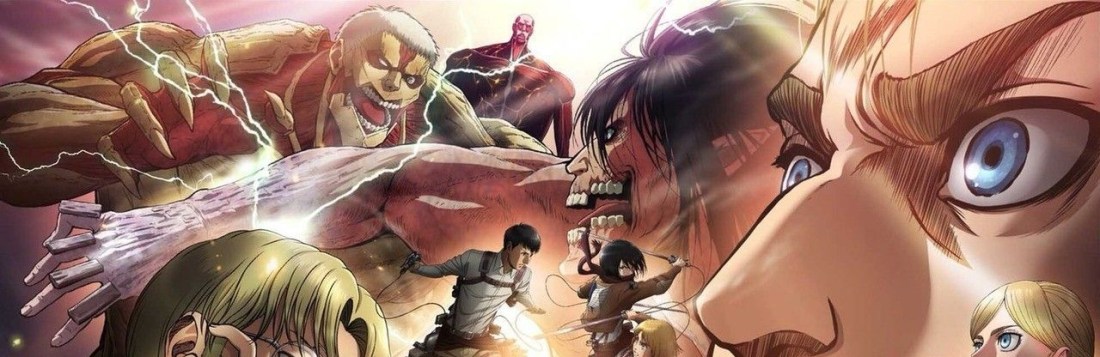
After the fantastic chapter 115, I could not wait to see what Hajime Isayama would do in Chapter 116 of Attack on Titan, “Heaven and Earth.”
Needless to say, it certainly delivered a lot of surprising moments.
I made some predictions about Pieck’s plan in confronting Eren, and where Reiner and Porco were, but I was completely wrong about all of this.
However, rather than being excited at this surprising reveal of what they were all planning, it instead left me concerned about the end of the series.
I will get to the reason for that soon but first I want to talk about Yelena and her interactions with the jailed Scouts.
It has been a while since we last saw these characters so I was glad to see that Isayama brought them back into the story, especially with Mikasa’s reaction to Eren’s cruel words in Chapter 112.
She appears to still be numb from it all, and Armin’s comments about this lead Jean and Connie to two different interpretations of Eren.
While Connie believes that Eren has lost himself and needs to be taken down, Jean believes there must be some reason Eren is doing all this.
Naturally, I think Jean is right here because I still cannot see Eren just turning on Mikasa and Armin like that without a very good reason.
Then, Yelena and Onyankopon walk in and we get more revelations about their characters.
Connie demands that Onyankopon let them out but it seems he is fully on Yelena’s side, telling them they have to stay in their cells until Eren and Zeke meet.
However, I still have my doubts as to whether Onyankopon is truly on Yelena’s side.
At worst, I would say he is conflicted and will most likely come around and release the Scouts from their imprisonment while the chaos is ongoing.
I think this because Onyankopon seems to be against a lot of the things Yelena is doing, like when she shoots one of their fellow soldiers Grior.
But, that said, the jerk completely deserved it after the cruel things he said about Sasha to Niccolo.
It is also a pretty gory panel when he gets shot, with his brains splattered everywhere, and will most likely have to be censored in the anime.
As to why Yelena kills him, she does it in an attempt to gain the group’s trust about their plans to save the world.
She also tells them about Zeke’s euthanasia plan, and it has an interesting reaction from Armin, to say the least.
He breaks down into tears and says he is moved by Zeke and Eren’s noble plan.
I think there are two possibilities why he does this.
The first is that this is some kind of reaction from Bertholdt through Armin, but the second, and what I think to be the most likely, is that Armin just realised Eren’s actual plan and is relieved to discover he has not turned on them.
Before we can get any more information on this though, they are all interrupted by the alarm being raised after Pieck infiltrates the Yeagerists.
Moving on to her scenes with Eren and Gabi, this is where both the best and worst moments of the chapter were.
Getting the positives out of the way, Pieck was the highlight of the chapter.
I said in my predictions for Chapter 116 that Pieck had to have a plan to capture Eren, and, boy, does she.
After holding Eren at gunpoint, Pieck admits she cannot shoot him and acts like she wants to come over to his side, offering to expose Reiner and Porco if Eren takes her to the roof.
Eren does this, handcuffing Pieck to Gabi so she will not try anything funny.
This leads to a funny scene where Pieck meets Yelena and comments on how she is missing her beard from when she trapped Porco and her.
The humor does not last though, because, in an intense scene, Eren demands to know where the enemies are, only for Pieck to point at him.
Then Porco bursts from below Eren in his Jaw Titan form, biting off his legs and forcing him to transform.
The buildup to this moment was stellar, and even more so on my second reading because Isayama subtly places Porco among the Yeagerists when Pieck and Eren are passing through.
However, this is just the beginning because Marley’s forces have arrived, with Reiner, Magath and Colt also preparing to take the fight to Eren, in what looks to be the final battle of the series.
If this is the big final battle though, I am very surprised to see it starting now because I thought it would be at least a few chapters before this happened.
The reason I thought this is because there are so many characters with unresolved plot lines.
Hange is off somewhere caring for an injured Levi, Historia is still pregnant under questionable circumstances, and Annie is still in the goddamned crystal.
These are all characters who are important to the story and yet are nowhere near this final battle, which I find very concerning.
Granted, I do not think Isayama needs these characters to be involved here to make a great ending, but it would be incredibly disappointing to me if these characters did not play a role in how the series ends.
Still, Isayama could find a way to bring them all into the story here but I have my doubts.
Either way, I am not going to hold this against the chapter right now because my concerns have not been realised yet.
What I will hold against the chapter though is Pieck’s backstory.
I said in my predictions post that I was hoping to get some backstory on Pieck because she is one of my favourite characters introduced after the time skip, yet we know almost nothing about her.
Sadly, this backstory had a big problem.
When Zeke’s backstory was revealed in Chapter 114, I criticized it for being too similar to Reiner’s.
Now Pieck’s backstory is too similar to Annie’s, with her father pushing her to become a Warrior to make their lives better, only to feel guilty about it and now Pieck wants to help him.
That is Annie’s backstory to a t.
Still, this was only a small moment so it did not completely ruin Pieck’s character, but it does feel like Isayama is running out of ideas when it comes to character backstories.
Overall, despite my concerns, “Heaven and Earth” is still a great chapter that starts what may be the final battle of the series.
I can only hope that Isayama incorporates the missing characters into the story’s ending somehow.
Category: Review
The Walking Dead, Season Nine, Episode 16, “The Storm” Review: An Interesting Finale.
![]()
The Walking Dead season nine came to a close with its season finale this week, “The Storm”, in a surprisingly anticlimactic end to a fantastic season.
That is not to say “The Storm” was a bad episode but, compared to the other finales the series has had, the episode did not have that much of a climactic feel.
This does makes sense though, considering the episode is following the shocking pike scene from “The Calm Before.”
In fact, “The Storm” not only lives up to its name by a being a continuation of “The Calm Before” title, but by also featuring a snow storm, the first in The Walking Dead show’s history.
This is surprising when you look at how many snow storms have been in the comics, but hey, better late than never.
The previous lack of snow is more than made up for in this episode, with the snow storm being the main threat the characters face.
This new threat, combined with the characters dealing with the aftermath of the pike massacre make for some compelling moments.
For example, the scenes between Carol (Melissa McBride) and Ezekiel (Khary Payton) were touchingly tragic, with Henry’s death having driven them apart.

It made for a sad contrast, with their relationship being established at the beginning of season nine, only for it to end in the finale.
The fall of the Kingdom basically represents the fall of their relationship.
Speaking of Carol though, the way she and Lydia (Cassidy McClincy) interacted was great.
I especially liked Lydia’s growth through her battle with suicidal thoughts in the aftermath of Henry’s death and being ostracized by many of the other survivors for her mother’s actions.
The big highlight of the episode though is definitely Negan (Jeffrey Dean Morgan), with him taking another step towards his redemption.
After Judith (Cailey Fleming) is lost in a snow storm searching for Daryl’s dog, Negan is the first to give chase and eventually rescues her, even though he gets hurt.
His line that she “wanted more Negan time” was a great moment from him that showed the connection between the two.
It honestly feels like the connection Negan had with Carl in the comics, so I am glad the show found a way they could keep that alive, even with Carl being dead.

As for the rest of the episode, it was fairly standard.
With the Kingdom having fallen and the Sanctuary not living up to its name, the group are forced to make their way through Alpha’s territory to get to safety but nothing all that massive comes from it.
It is revealed later in the episode that Alpha (Samantha Morton) and the other Whisperers left for winter, however, this does not make much sense to me because wouldn’t it be winter everywhere else?
In any case, the scene with her and Beta (Ryan Hurst) is basically just a reminder that they are still in the story so does not offer much weight.
However, The final scene of the finale definitely does as someone attempts to communicate with the group on the radio they have set up.
I heard rumors that Rick would be on the radio so it was a bit disappointing to not hear his voice, but I am not going to let my expectations influence my opinion on the episode.

As to who was on the radio, there has been a lot of speculation.
Most people think it is Maggie and this is the way the show will bring her back, but I personally think it is Stephanie, who is a new character that will be in the next arc, after the Whisperers.
This means, when they are finally dealt with, we will be getting the Commonwealth arc, which I am kind of dreading because of how lackluster this arc has been so far in the comics.
Whatever the case, this cliffhangers is still better than many of the other ones we have had in the series.
I am looking at you “Last Day on Earth.”
Overall, “The Storm” is a decent season finale, and director Greg Nicotero did a good job with it.
Not a lot may have happened, but it was still better than some of the other season finales and was a good way to wrap up season nine.
And, with how great this season was, I am eager to see how season ten will turn out.
The Promised Neverland Season One Review: I am Hooked.
![]()
There has been a lot of buzz surrounding The Promised Neverland, both during and since its release.
I heard so much hype surrounding it that I started watching the anime half way through the season and I was not disappointed.
The series instantly hooked me with its gripping concept, characters and direction, resulting in an incredibly intense first season.
Based off the manga of the same name by Kaiu Shirai, and directed by Mamoru Kanbe, The Promised Neverland is set on an orphanage where 38 children live with their “mom” Isabella (Yuko Kaida), until they are eventually adopted.
Our three main characters are the energetic Emma (Sumire Morohoshi), the intuitive Norman (Maaya Uchida), and the sly Ray (Mariya Uchida), who are the smartest of all the children.
However, their happy life is completely shattered when they learn a dark truth about the orphanage and their so called mom.
The three then begin to plan an escape with some of their siblings, all while evading the ever watchful eye of Isabella, who will do anything to stop them getting away.

All twelve episodes are great and full of many intense moments.
Even something as simple as tag is made scary in this series.
What amplifies the tension is how much you grow to care for these children.
Emma, Norman and Ray are all very relatable and well performed by their voice actors.
As for the other children, their adorableness makes you feel instant horror at the thought of them staying at the orphanage with the manipulative Isabella.
Speaking of which, she is a very intimidating character, being able to switch between the personalities of a loving mother to a cruel warden in an instant.
As for the secondary antagonist Sister Krone (Nao Fujita), her nightmare inducing facial expressions will keep you up at night.

But what is most interesting about these two antagonists is also how relatable they become.
They are certainly twisted individuals, but are made much more sympathetic by the conclusions of their stories.
Their sympathetic sides do not make you forget the plight of these kids though, as you will be routing for them to escape every cruel step of the way.
Watching the effect the trauma of their experiences has on them is touching and makes you relate to them further.
This is also helped by the expert direction, with well thought out shots that both amplify the horror and make you care for the characters by placing you right in the middle of their plight.

Combine all this with a great amount of twists and turns, it makes for a stellar season with only a few problems.
These problems are minor and, for the most part, do not hinder the experience.
For example, there was a scene in the first episode with a bit of bad editing, but the rest of the direction was so good that it more than made up for it.
Then there are the episode titles, which, while having no impact the story, are not memorable because they are just a representation of the date.
The final issue has to do with the intelligence of some of these kids, which does seem a bit outlandish at times, but I was able to push my suspension of disbelief above this.
The Promised Neverland is a fantastic anime that looks set to be one of the greats.
Season two has already been greenlit and I will be excitedly watching when it comes out in 2020.
US Review: A Double Edged Explanation.
![]()
Jordan Peele is an interesting director.
He started out doing comedy so it was a huge surprise when he successfully transferred to horror in his first film Get Out, which was my second favourite film of 2017.
So, needless to say, I was very excited to see his next film Us, even more so when I heard the premise.
Us follows The Wilson family, consisting of Adelaide (Lupita Nyong-o), her husband Gabe (Winston Duke), and their children Zora (Shahadi Wright Johnson) and Jason (Evan Alex), as they go on a trip to Santa Cruz.
However, their fun is cut horrifically short when a family of doppelgangers invade their home, intent on killing them.
What follows is an intense battle for survival as the Wilson family fights their doppelgangers.
First of all, I will say that the performances in Us are all stellar.
Lupita Nyong-o steals the show both as Adelaide and her demented counterpart Red, in two very different performances.

And it is not just her because every other actor does a great job as the real person and the doppelganger, pulling off relatable and creepy performances simultaneously.
Another great thing about Us is Jordan Peele’s direction, with him balancing horror and comedy very well.
I remember one scene where the audience and myself were horrified at what was happening on screen, only to laugh seconds later when an incredibly funny joke was made.
The balance is just that good.
I also loved the symbolism and foreshadowing in the film, which were some of my favourite things about Get Out and certainly continues here.
This symbolism and foreshadowing all builds up to the big explanation of the origins behind the doppelgangers, something I had been dying to know for the entire film.
Unfortunately, the explanation we get is a double edged sword.
On the one hand, it brilliantly cements Peele’s social commentary about American society, however, on the other, the explanation makes absolutely no sense.
I was very confused about the logistics of it all when I was sitting in the theater and came up with plot holes every minute while I was driving home.

Finally, there is the way the film ends, which is, in all honesty, very predictable.
Still, these may not be problems for everyone.
If you have a rather large suspension of disbelief you may be able to look past the plot holes of the explanation, and even if the ending is predictable it is still a good one.
It is just that these aspects kind of brought the film down for me.
Us is still a lot of fun though, and Jordan Peele continues to do a great job at creating commentary on American society with it.
The Walking Dead, The Calm Before, Episode 15 Review: Emotionally Horrifying.
![]()
They did it.
They actually pulled it off, thank god.
This is what the season six finale of The Walking Dead should have been.
I remember watching that moment when it cut to a point of view shot, hiding who Negan’s victim was, and feeling absolutely infuriated that they had ruined one of the comic’s most shocking scenes.
Thankfully though, episode 15 of season nine, “The Calm Before,” manages to transition the shock and horror of The Walking Dead’s Red Wedding moment to television brilliantly.
For starters, the episode does a fantastic job of building tension.
It is clear right from the opening minutes that something bad is going to happen this episode, even if you have never read the comics like I have.
Watching the happy life of a married couple in the Hilltop change into a scene from a horror movie where Alpha kills them and scalps the woman, perfectly sets up the emotional horror of the episode.
From here, the episode continues to build and build on the tension by showing many of the shows’ main and recurring characters enjoying time with their loved ones at the fair.
As a comic reader, these scenes were very intense for me as I tried to guess who among them would get the pike.
I wondered if it would stay closer to the comics or try something knew?
The director of the episode, Laura Besley, was probably thinking the same thing because she put in multiple red herrings to mislead us comic fans, which certainly worked.
The scene between Alpha (Samantha Morton) and Ezekiel (Khary Payton) is a great example of this because Alpha leads him away, making me think Ezekiel was going to get his comic book death.
Morton once again stole the show in this episode as Alpha, with her subtle threat that there is going to be “a hard winter” sending chills down my spine.

All of this buildup combined with the red herrings made the eventual pike scene all the more shocking to me.
Much like with the season six finale, I remember the horror I felt reading this moment in the comic, but, unlike the season six finale, this time, the horror was pulled off effectively.
The way this scene was shot only amplified the terror, with the pikes slowly coming into view as Daryl (Norman Reedus), Carol (Melissa McBride), and the others walk up the hill.
After this, the sequence cuts between our main characters’ horrified reactions, those at the fair looking for their loved ones, and the heads on the pikes.
The images of those heads will probably be seared into my brain for a while, with the haunting shots of them with their hair blowing through the wind as their heads lie decapitated on the pikes.
Everything about this scene was perfectly horrifying.
From the sequence of the shots, to the music, to the acting, especially from Reedus and McBride.
The moment Carol and Daryl realise Henry (Matt Lintz) is one of the pike victims is incredibly tragic, with the scene being reminiscent of when Carol lost her first child Sophia (ironically played by Lintz’s sister Madison) and Daryl had to hold her back.

Speaking of Henry, I was surprised to see he was one of the pike victims but I do think it is tragically fitting because of where it will take characters closely connected with him.
Along with this, it means that Henry is not taking Carl’s place after he was stupidly killed off in season eight, which is good.
I think MOVIEidol said it best, “I do think killing Henry right here, first of all does confirm that Henry isn’t the new Carl, you know? Cause Carl can’t be replaced.”
However, it is not just Henry who gets a shocking pike death, but Enid (Katelyn Nacon) and Tara (Alanna Masterson) as well.
I will admit, I was a bit suspicious Enid might be a pike victim, given how much screen time her relationship with Alden (Callan McAuliffe), but I was not expecting Tara.
Her death shocked me, especially since they were really hinting at Rosita (Christian Serratos) before they showed Tara’s head on the pike.
As for the other seven characters who met their fates on the pikes, they were mostly side characters but I still felt their loss due to a fantastic addition to the episode.
In a scene that is completely TV series original, the only survivor from the Whisperer’s attack Siddiq (Avi Nash) tells the communities about the victims’ heroic last stand against Alpha and the Whisperers.
Much like the pike scene, the way this scene was shot was amazing.
Not only this but Nash’s performance, and the tragic music, actually made me tear up, making it two episodes in a row I have done so.

The Walking Dead honestly could not have done the pike scene any better.
It balanced the horrific tragedy of the event perfectly, and added a brilliant scene that highlighted the heroic actions of the victims.
Now, I only wonder how the season will end with the finale, “The Storm”?
But, this said, I have complete faith in Angela Kang, who wrote the episode.
She has completely turned The Walking Dead around.
After season eight and the announcement of Andrew Lincoln’s departure, I was actually thinking of quitting the show but, after seeing where Kang has taken the series, I am so glad I stuck around.
“The Calm Before” did justice to one of the comics’ darkest moments and even added to it, creating an amazing episode that was built off emotional horror.
The Walking Dead Issue 189: Lines are Drawn, Review: More Mediocrity.
![]()
Another month, another mediocre The Walking Dead issue.
In all honesty I have grown pretty tired of the Commonwealth story arc.
Sure, there have been some really good things about it like the discovery of Michonne’s daughter Elodie, Dwight’s death, and the political commentary.
However, all of this good stuff is surrounded by features that bog it down.
Elodie is not very important to the Commonwealth story right now, Dwight’s death has failed to have any meaningful, lasting impact, and the political commentary, although interesting, at first, does not have a very interesting story to go along with it.
This has all resulted in a mediocre story arc that has me less and less excited every time I read the next issue.
Sadly, this mediocrity continues with Issue 189, “Lines are Drawn”, which was hyped up by numerous events in the previous installment, but that hype fails to go anywhere.
I will begin by talking about my biggest problem with this issue, and that is the scenes with Eugene and Stephanie.
At the end of the previous issue, the two were about to be surrounded by a Walker herd that had accidentally been drawn into the area.
The consequences of this?
Absolutely nothing, of course!
Eugene and Stephanie just get trapped temporarily in a train before Eugene uses a fire hydrant to help them escape.
There is only one reason that this is even a plot point in this issue and that can be summed up in two words.
“Artificial Tension.”
Robert Kirkman appears to be worried that people will lose interest in his political fueled story arc so he throws in some random action sequences that have no real impact on the story to try and keep his readers entertained.
However, the fact that these scenes have no consequence makes them very boring and hard to get into.
Speaking of people losing interest in the political fueled story though, it would not surprise me if they did, because this issue once again failed to go anywhere exciting.
Laura breaks Mercer out of prison, just like what was hyped up in the cover, only for the issue to end with him deciding to try and put Rick in power to keep the peace.
I was annoyed to read this cliffhanger because it took all of the exciting buildup with Mercer breaking out of prison, and Rick having to escort Pamela and her family out of the Commonwealth for their own safety, and seems to have settled it too easily.
Also, Rick taking over another community is pretty much a cliche at this point.
I would be surprised if Rick is not the king of the world by the end of the story.
In all seriousness, though, this is a disappointing end to an issue that seemed like it was building up to something big.
There is one touching scene between Rick and Carl that I do like but, otherwise, this is another mediocre issue in a long line of them.
My low rating for “Lines are Drawn” comes, not from it being a bad issue, because it is not, but from the constant mediocrity of this story arc making it very difficult to keep my interest up.
But, who knows, maybe the Commonwealth story arc will get interesting as it goes on?
Hopefully?
In any case we are almost ten issues away from issue 200 so, with any luck, I will be fully engaged in The Walking Dead‘s story again by the time we reach it.
But, for now, I am struggling to stay interested.
Captain Marvel Review: Some Good, Some Bad.
![]()
The reactions to the newest edition to the Marvel Cinematic Universe have been… interesting to say the least.
Captain Marvel is a film that has been plagued by controversy, with people deciding to hate the movie no matter what and people deciding to love the movie no matter what, despite having not seen it yet.
But I want to judge this film based on its own merits, rather than the quite annoying controversy surrounding it on both sides.
Still, coming into Captain Marvel, I did have my concerns.
The trailers had never really wowed me, and I hoped that they were not representative of the final product.
Sadly, for the most part, they were.
This is not to say Captain Marvel is a bad film, on the contrary there are some great things about it, but there are also numerous features that bring the movie down, creating a mixed bag of a film.

Directed by Anna Boden and Ryan Fleck, Captain Marvel stars Brie Larson as Carol Danvers, the titular Captain Marvel, a Kree Warrior who winds up on earth to hunt down the shape shifting Skrulls, and learns she may have had a life there.
What follows is an engaging mystery to uncover her past and what the Skrull’s true plans are.
The mystery elements surrounding Captain Marvel’s character is the highlight of the film for me, providing numerous twists and turns.
The action is entertaining, especially with the CGI, which de-ages Nick Fury (Samuel L. Jackson) and Phil Coulson (Clarke Gregg) fantastically.
The film also makes great use of the Skrulls’ ability to shape shift.
Speaking of the Skrull’s, Ben Mendlesohn is by far the best actor in the film as the Skrull Talos, who is an engaging character with relatable motivations.

However, this is sadly not the case for Captain Marvel herself because it honestly felt like Larson was pulling her punches, acting wise.
She still turns out a good performance with some great moments, like in the scenes where her buddy-cop relationship with Nick Fury is put on full display, but it still often feels like she is holding back.
Whether this is because of her acting or direction, we will not know until we see her in Avengers Endgame.
But Captain Marvel herself is not the only character in the film who is problematic.
There are quite a few characters who feel out of place like Ronan (Lee Pace), who is completely pointless apart from nostalgia value.
Then there are the numerous plot holes that are created for prior films in the MCU through Captain Marvel’s appearance and interaction with Fury.
As for Fury, the way he loses his eye in this film has to be the worst part of Captain Marvel because of how astonishingly stupid it is.
So, Captain Marvel is a mixed bag overall.
The story, action and performances of some of the actors, especially Mendleshon, push it over into the category of a good film for me, but there are still numerous problems like with Brie Larson’s performance.
That said though, a touching tribute to the recently departed Stan Lee in the opening Marvel logo makes Captain Marvel more than worth the price of admission.
Attack on Titan Chapter 115 Support Review: YMIR FRITZ!?
![]()
Well, what a surprising chapter this was.
Coming into Chapter 115 of Attack on Titan, “Support”, I had a feeling that Hange and Floch would most likely come across Zeke and Levi, and save them both.
While I was right about this, I absolutely did not expect everything else that happened in the chapter.
It is a mind blowing read that potentially gives us our first true look at the one and only Ymir Fritz, the most important character in all of Attack on Titan‘s lore.
This is another sign that the manga will soon be drawing to a close but, if this chapter is any indication, that ending should be fantastic.
The reveal of Ymir Fritz is by far the highlight of the chapter, and what she does says a lot about her involvement in the story.
We first see her when Zeke remembers pieces of his past before he dies.
I initially did not notice her because I was too angry about Zeke dying, since I feel he has so much left to do.
But then, after his death, a random Titan appears and, in a gruesome moment, cuts open its own stomach and stuffs Zeke inside.
I was very confused about this so imagine my shock when Zeke emerges from the Titan alive.
This shock was magnified when it is revealed that Zeke was most likely resurrected by Ymir Fritz, using paths.
I am pretty sure this is her, since she looks like the Ymir Fritz from the various artworks, and it will be interesting to see her role in the story.
She clearly wants Eren and Zeke’s plan to succeed, though, because she saved Zeke.
Probably the biggest shock from this scene for me, though, came when Zeke is being resurrected and the panel is an almost exact replica of when our Ymir ate Marcel and turned back into a human.
That means the shot of her in the desert looking up at the stars was actually her seeing the paths.
The fact that Hajime Isayama had this in mind when writing that scene is nothing short of mind blowing.
I have said it before and I will say it again; Isayama has proven himself to be a genius with how he has constructed this story.
The rest of “Support” is just as amazing, with the chapter giving us more of an insight into Zeke’s past, Levi’s fate, an update on Yelena and the Yeagerists, and a surprising ending that has me eager to see what will happen next.
Starting off with Zeke, the flashback before his death and resurrection continues to add towards my level of sympathy for him.
We saw how he considered Xaver his true father, and his feelings when he learned Eren is his brother.
This leads to a scene I have been waiting a very long time to see where the two brothers met in Marley.
Despite their family connection, Zeke and Eren have had barely any screen time together so I am glad the manga is finally delivering on that.
On top of this, Eren tells Zeke that he actually agrees with his plan to sterilize all Eldians.
However, I think this is definitely a lie and Eren is just using Zeke.
To what end, though, I cannot be sure.
As for Levi’s fate, I am fairly certain that he is still alive, just horribly injured.
Upon finding him, Hange tells Floch that he is dead but, given that she glares at him after he asks to check Levi’s pulse and then flees down river with Levi’s body, it is highly suggested that he is still alive.
Even so, Levi is still badly injured.
He has a massive scar on his face, missing fingers, and god knows what else.
Then there is the scene with Yelena and Pyxis, where she has manages to convince him to do what she says because of the contaminated wine they drank.
There are two interesting things to take away from this scene.
The first is that Yelena is using armbands to identify those who have drunk the wine, just like Marley uses to identify Eldians.
Pyxis points this out himself but Yelena says they can learn from their enemies, showing she is no better than Marley.
The second important take away is the presence of Onyankopon.
I wonder why Yelena is so quick to trust him, considering he seems to be on Hange and the Scouts’ side?
I have a theory that he will be the one to break Mikasa, Armin and the others out of their cell.
Finally, there is the surprising cliffhanger of the chapter.
Eren comes to see Gabi to get her to draw out the Warriors by blackmailing her with Falco’s life.
Before he can work anything out though, Pieck walks in, stabs Eren’s guard, and then holds him at gunpoint.
This makes not only for a great cliffhanger but also one that offers some interesting questions.
Where are Reiner and Porco?
What exactly is Pieck’s plan?
Since her Titan is the weakest I cannot see her defeating Eren so she must have something up her sleeve.
Maybe this will lead to her finding out that Annie is alive, who knows?
Whatever the case, this was a fantastic way to end the chapter.
“Support” is a mind blowing chapter with numerous unique twists and turns.
The only problem I have with it is that it raises a minor plot hole about why the warriors did not raid Eren’s basement all the way back in the Shiganshina arc, but this is a nitpick.
The rest of the chapter far overshadowed this minor detail and has me even more interested about where the series will go.
I especially cannot wait to see how Ymir Fritz factors into the story going forward
Psycho-Pass Season One Review: Criminal Commentary at its Best.
![]()
Crime Dramas are some of the most loved and successful shows on television so it was natural for anime to take a stab at it.
But with Psycho-Pass, the genre is taken a step further with Science Fiction, Cyberpunk elements incorporated to make for a great piece of commentary on criminality and justice.
Directed by Naoyoshi Shiotani and Katsuyuki Motohiro, The series is set in a future where Japan is ruled by the Sibyl System, which scans people’s mental states to see if they could potentially become a criminal.
If a person registers as a latent criminal through the System’s scanners, they will either be arrested or killed, depending on the situation.
Those who are not killed are either confined or given the chance to join the MWPSB as Enforcers to work under the detectives and hunt down their fellow latent criminals with high Psycho-Pass readings.
One detective, Akane Tsunemori (Kana Hanazawa), is new on the job and thrust into a world of extreme violence where the system pulls the trigger.

For this review, I will be solely focusing on season one rather than the entire series.
This is because I have heard season two is disappointing in comparison with the first, and since I love season one so much, I do not want it to reflect too negatively on my review of it.
Season one of Psycho-Pass is nothing short of a powerhouse season, with an amazing story, characters and commentary.
The story is absolutely enthralling with its various violent and disturbing cases that push the main characters to their very limits.
However, this also makes Psycho-Pass not for the faint of heart because of the messed up things in this series.
For example, episodes six to eight focus on a teenage serial killer at a girl’s school and this provides some of the most disturbing things I have seen on screen in a long time.

With these constant moments of human depravity, it is no wonder the characters struggle so much, especially Akane, who changes from a naive girl to one of the strongest characters in the series, over the 22 episode season.
We can also see how the cases have affected her fellow detectives and enforcers, with Shinya Kogami (Tomokazu Seki) being a particular focus on how these cases changes a person.
The series even shows how the criminals are affected by the laws, with destroying the system being the main villain of season one Shogo Mikishima’s (Takahiro Sakurai) goal.
Mikishima is a great villain, with a scene between him and Akane in episode 11, “Saint’s Supper,” making him one of the most interesting characters in the series.

Both those on the side of the law and those against it come together in Psycho-Pass to create some truly great commentary on criminality and the justice system.
We see the extreme flaws of the Sibyl System and what it pushes people to commit, and yet, it is the only thing keeping order in Japan.
This commentary makes Psycho-Pass a very thoughtful series.
The season is so good that I only have one problem with it, and that is episode 12, “Crossroad of the Devil.”
This episode focuses on the backstory of a side character Yayoi Kunizuka (Shizuka Ito), who I never found to be all that interesting.
On top of this, her backstory does not serve much of a point in the series.
I felt it would have been better giving a backstory episode to Mikishima, or, better yet, Shuesi Kagari (Akira Ishida), who could have used one, considering where the writers take his character.
Still, even though I did have problems with “Crossroad of the Devil”, it is just a single episode so it does not completely damage my opinion of the anime.
Psycho-Pass is a great anime with some excellent commentary on criminality and the justice system.
It just might be too extreme for some people.
Enjoy it… if you have the stomach to.
Waco: More Biased Than Balanced.
![]()
The events of the 1993 Waco Siege at Mount Carmel Center is one of the most controversial sieges in history.
After a shootout, which left ten people dead, a 51 day standoff ensued between the FBI and a cult known as the Branch Davidians, lead by David Koresh.
The standoff ended in tragedy when a fire burned the compound to the ground, killing 76 people, many of them children.
Much controversy followed over whether the FBI had the right to siege the compound, who fired first, and who started the fire that took so may lives.
The answers to these questions may never be fully known, but last year’s six part miniseries, Waco, developed by John and Drew Dowdle, attempts to provide answers, basing them off the books by FBI negotiator Gary Noesner and survivor David Thibodeau.
My first impression of Waco was that it is a great show that expertly tackles the tragic events.
However, after thinking about things a little, I realised the show is quite problematic when it comes to where it shows sympathy.
I will start with my positive thoughts on the miniseries first, and there are many.
Probably the best thing about Waco is its fantastic performances, which allows the audience to sympathize both with those on the side of the FBI and the Branch Davidians.
Michael Shannon is great as Noesner, who is just trying to get everyone out alive, as is Rory Culkin as Thibodeau, who stays with the Branch Davidians out of a desire to protect those he cares for.
Best of all though is Taylor Kitsch as David Koresh himself.
Kitsch steals the show, making Koresh an extremely flawed yet sympathetic figure (although this is where my problem lies but we will get to that later).

On top of this, the story is gripping, with the final episode being difficult to watch.
A quiet moment between Noesner and Thibodeau near the end of the series speaks volumes of the extent of the tragedy that just unfolded on screen.
One of my favourite things about Waco, when I first started watching it, was how it portrays the events, specifically when it came to the FBI.
Many documentaries and new reports I have seen about the Waco Siege paint many of the Branch Davidians as monsters, while the FBI is viewed as doing nothing wrong.
Looking into the event, however, it is clear to see this is not entirely the case.
While the ATF and FBI did have good reason to take down Koresh, because of him marrying and impregnating girls as young as 14, the way they went about it was completely incompetent.
Koresh could have been arrested when he was out on a run, avoiding the opening shootout, and the rash decision making of the FBI lead to rising tensions during the standoff.
I was initially glad to see this miniseries rightfully directing some of the blame at the ATF and FBI for their actions and hoped for a more balanced take on the tragedy.
However, this was not to be because, rather than laying the blame on both sides, Waco appears to lay the majority of that blame at the feet of the FBI, presenting bias towards the Branch Davidians.
As I said, I feel the FBI is partially to blame for what happened, but so are the Davidians.
Koresh’s actions towards minors was certainly enough reason for his arrest but, somewhat disturbingly, the miniseries seems to brush this off rather quickly.
His marriage to underage girls is addressed but only briefly, as if the writers do not want you to lose sympathy for their take on Koresh.
There is nothing wrong with portraying Koresh as a human being, but providing someone with illegal weapons and statutory rape accusations against him with too much sympathy makes for a slightly off putting experience.
The amount of sympathy directed towards the rest of the Branch Davidians is warranted though, because many were not the evil figures they were painted to be by the media, but Koresh’s sympathy sticks out like a sore thumb.
Then there are the questions of who shot first, and who started the fire.
Again, Waco shifts the blame for this at the ATF and FBI.
I think it would have been better for the series to leave these questions a mystery to the viewer.
There is, after all, still much contention about who did what and it would have made for a far more interesting experience, with the audience deciding who they believe to be ultimately responsible.

But, while I did have a problem with the way blame seemed to solely be placed on the government in Waco, it was still highly effective in delivering its message about the government’s power in American lives.
Waco is still a fascinating experience to watch, but one that is more biased than balanced.