![]()
For a long time, the tenth episode of season two, “Shoto Todoroki: Origin” was my favourite episode of My Hero Academia.
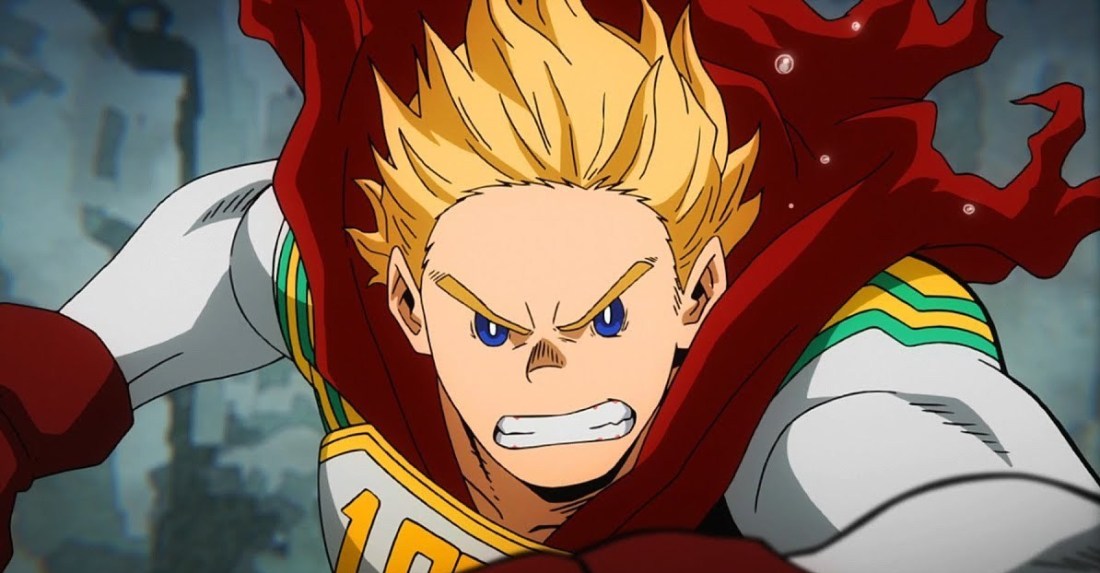
Well, I can easily say that the episode just got beaten by the eleventh of season four, “Lemillion”, which features the heroic sacrifice of Mirio Togata.
Not of his life but his quirk.
The build up to this moment is excellent, with the opening of Overhaul revealing the bullets that can remove a quirk forever serving as sinister foreshadowing for what is to come.
Before this tragic moment occurs, though, the episode picks up from where “Temp Squad” left off with Mimic attempting to crush both the heroes and the League of Villains.
However, this does not go well for him because Deku manages to expose his hiding place, giving Aizawa enough time to disable his quirk and take him off the playing field.
With Mimic out of the picture, the episode then cuts to Mirio catching up to Overhaul and his right hand man Chronostasis, who have Eri.
However, before he can do anything, he is attacked by the two remaining members of the Eight Bullets of the Hassaikai, Shin Nemoto and Deidoro Sakai, who both have pretty tough quirks to get through.
Nemoto’s is confession, which allows him to make any person answer his questions truthfully; a quirk that he uses pretty humorously on Twice and Toga in a flashback.
As for Sakai, his quirk is Slosh, which means he can transfer his drunkenness to other people.
For the brief time the two minions of Overhaul are on screen they have a pretty comedic dynamic, with one gag of Sakai throwing a bottle at Nemoto leaving me in fits of laughter.
The laughter fades quickly, however, as Mirio fights past them and reaches Overhaul, ripping Eri from Chronostasis’ arms and declaring to Eri that he will be her hero.
This leads to Overhaul chastising Eri, cruelly calling her cursed.
Mirio is outraged that he would say that to his own daughter, leading to one of the most chilling moments in the episode where Overhaul removes his glove, coldly reveals that he has no children, and then immediately going on the attack.
On a side note, while I do believe the sub of My Hero Academia is better than the dub, the English voice actor of Overhaul, Kellen Goff, does a great job here, especially with the chuckle of amusement he adds to his voice.

The following fight between Mirio and Overhaul is fantastic, with both of their quirks being brilliantly used.
From Overhaul deconstructing the ground and then reconstructing it as deadly spikes, to Mirio using his permeation to pass through Eri to kick Chronostasis and then shield Eri with his cape only to ambush the two.
Mirio would have beaten Overhaul had it not been for Nemoto who, through his blind devotion to Overhaul, managed to crawl to the battlefield.
Receiving a quirk removing bullet from the young head, Nemoto realizes the only way he will be able to hit Mirio is to trick him into shielding Eri.
And so Mirio’s sacrifice commences, with him taking the bullet for Eri with a smile on his face, comforting her.
We then get a flashback to Mirio’s journey to becoming a hero and Overhaul’s gleeful cry (completely ignoring Nemoto’s pleas for recognition) makes us think that Mirio’s dream is over.
Until this perception is completely shattered as Mirio keeps fighting, despite losing his quirk, and manages to hold Overhaul off and protect Eri until help arrives.
As Mirio says, no matter what he’s still Lemillion.
This is by far the most inspirational scene of My Hero Academia with everything coming together from the voice acting, to the animation, to the music, it’s all fantastic.
The episode really shows why I placed Mirio at number eight on my top 10 My Hero Academia characters list.
“Lemillion” is, without a doubt, my favourite episode of the entire series so far.
Category: Review
Star Wars: The Rise of Skywalker Review – More Like The Rise of Retcons.
![]()
The reactions to Disney’s new Star Wars trilogy have been… interesting to say the least.
It constantly feels like the extreme fans are at one another’s throats with each subsequent movie.
Personally, I enjoyed the first two films in this new trilogy.
I still love The Force Awakens, with it being my third favourite movie in the saga, next to A New Hope and The Empire Strikes Back.
As for The Last Jedi, I thought it was a great film when I first watched it but, upon multiple rewatches, it became clear that it did have a lot of issues.
Even so, I enjoy the film but, sadly, the same cannot be said for The Rise of Skywalker, once again directed by J.J Abrams.
The funny thing is that this review was initially supposed to be positive but I quickly realised that I was writing down more negatives than positives about the film so it did not constitute being called a good film.
I would say that The Rise of Skywalker is the most flawed installment in this new trilogy.
Right from the start, I knew we were in trouble because the opening crawl details things that we should have been shown rather than told.
Following this, the first act is a complete mess that feels completely lacking in soul.
I found it incredibly difficult to care as the central characters of Rey (Daisy Ridley), Finn (John Boyega) and Poe (Oscar Isaac) jumped from planet to planet, searching for a MacGuffin.
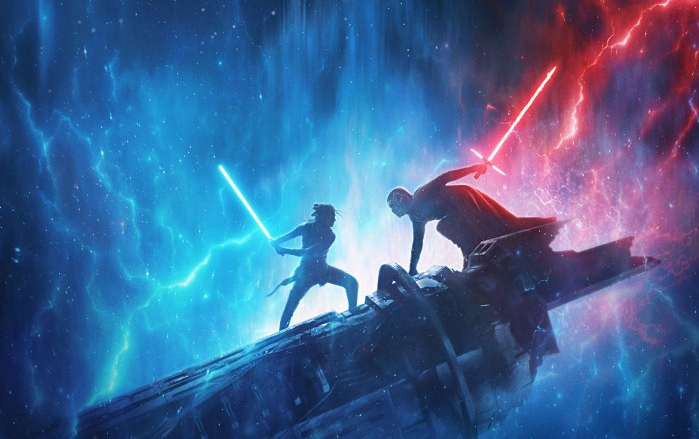
Even worse, when Kylo Ren (Adam Driver) is sent by a somehow alive Emperor Palpatine (Ian McDiarmid) to kill Rey it causes the movie to deliver a whole bunch of retcons to try and undo all of the twists in The Last Jedi that many vocal fans had issue with.
The most evident of these is Palpatine himself.
With Snoke gone, they just shoehorned in Palpatine with absolutely no setup.

And that is my big problem with this new trilogy.
Disney clearly had absolutely no plan when making these films and it creates a story that just doesn’t connect into a cohesive whole.
Look at the prequels.
Those films may be worse than these ones but George Lucas did have a plan on where the story would go.
Granted, he did not do a good job at adapting this plan but he still had one.
However, I will not say that The Rise of Skywalker is awful.
What saves the film from that is that it does get better after the first act and this is in no small part to the connection between Rey and Kylo Ren.
Kylo Ren is the best character in this trilogy and Adam Driver does an amazing job as him.
Although, I personally did not care for where their connection went at the end because it seemed kind of pointless.
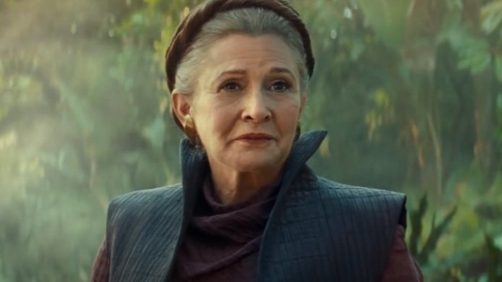
Another positive is Princess Leia, with this film serving as a fitting goodbye to Carrie Fisher who tragically passed away.
She is put into the film using archived footage and it feels very respectful.

What does not feel respectful is the treatment of characters like Finn and Rose.
Finn got dealt a bad hand after The Force Awakens where his arc was repeated in The Last Jedi and is virtually nonexistent here but it is Rose’s actor Kelly Marie Tran who I feel the most sorry for.
She got a big role in the The Last Jedi but was not well received and got so much hate, some of it racially motivated, that it forced her off social media, and now she is pushed into a role as a side character in this film.
You could remove Rose from The Rise of Skywalker entirely and nothing would change.
Another jarring thing is the spy subplot in this film, which was completely pointless and felt like it was created to adapt to changes made in The Last Jedi, just like everything else.
Aside from Kylo Ren, his connection with Rey and the treatment of Leia, there are only a few other things I can say I liked about this movie.
One is the action, which is fun as always but with no standout moment, and some of the jokes that did land.

Other than this, though, The Rise of Skywalker is a mess that does not flow well with the other two films in this trilogy.
If only those running the whole thing like Kathleen Kennedy had put their foot down and tried to put together a plan for creating a cohesive story.
At the very least this should have been done after The Force Awakens.
In conclusion, I will say I consider The Force Awakens to be a great film, The Last Jedi to be a good film with a lot of problems, and The Rise of Skywalker to be a mess with only a few redeeming qualities, all coming together to create a story that just does not flow.
On the bright side, at least this new trilogy is not as bad as the prequels.
Psycho-Pass 3 Review: Incredibly Underhyped.
![]()
I love the first season of Psycho-Pass.
It is a riveting anime with an amazing story, characters, and themes that just gets better every time I watched it.
The second season is, well, none of that.
The only thing I can give it credit for is that it succeeds in being the most disappointing follow up to a great season I have ever seen.
So, when the third season of Psycho-Pass was announced, and with new characters taking the lead, I was naturally concerned.
Sure, the original director was returning, but that did not guarantee quality.
And this was all I heard about the season for a while, until I saw one of the reviewers I had subscribed to on YouTube reviewing the first episode.
It was a definite, “wait, this came out moment?”, for me.
It felt like there was almost no hype behind this season, which is a shame because it is a vast improvement on the second one.
Yes, it is not as good as the first season but it was never going to be.
You just can’t top the level of quality in that season, especially with the great chemistry between the two main characters Akane Tsunemori (Kana Hanazawa) and Shinya Kogami (Tomokazu Senki), and the antagonist Shogo Makishima.
However, the characters of Psycho-Pass 3 are still excellent and, given more time, they could become just as beloved as the original cast of inspectors and enforcers.
I will start with the two lead inspector characters, the quirky Arata Shindo (Yuki Kaji) and immigrant Kei Mikhail Ignatov (Yuichi Nakamura).
The season follows these two as, under the Sibyl System, they investigate the mysterious organization known as Bifrost.
The two’s friendship, and how it progresses throughout the season, is perfectly handled and I am anticipating to see where it goes.

As for the new enforcer characters, they are just as great, especially Tenma Todoroki (Akio Otsuka) and Kazumichi Irie (Junichi Suwabe).
I really came to respect these two characters, just as they came to respect Arata and Kei over time.
Then there are the old characters who are present, yet working in the shadows rather being active participants in the plot.
They are all integrated pretty well, which leads to my biggest surprise of the season, which is that I found Mika Shimotsuki (Ayane Sakura) tolerable.
I absolutely hated her in the second season because she was an absolute jerk for no reason.
Here, we can see why she is acting the way she is, which allows us, as the viewer, to sympathize with her.
She’s not just trying to backstab Akane because she doesn’t agree with her for no reason anymore.

Although, I will say that this change in Mika does make it feel like we missed some character development from her, which is unfortunate.
Another unfortunate thing is that the villains did not really stick out for me this season.
I knew they could never be as fantastic as Makishima but I was still disappointed in how they failed to stand out compared to the main characters.
But, hey, at least they were not awful like Kirito Kamui from season two.
Along with having great characters, for the most part, the third season of Psycho-Pass also has a great story with a fantastic usage of themes and political commentary.
One feature I was very impressed by was how the season reflects and comments on how many celebrities are getting into politics nowadays and how this would work within the Sybil System.

However, not everything was so amazing because there are some things that bring the season down slightly.
The biggest of these issues is easily Arata’s mental trace ability, which allows him to view crimes from a criminal and victim’s perspective in a supernatural way.
Now, I have never been a fan of the supernatural in Psycho-Pass, as evidenced by my extreme dislike for Kamui.
So, when Arata was revealed to have this ability, I hoped that they would give it some kind of scientific explanation.
But, no, they just have to implement some kind of supernatural ability when it does not fit in with the themes and commentary at all because why not?
Thankfully, Arata’s Mentalist ability was not enough to derail the season for me.
Psycho Pass 3 is an almost return to form, despite a few hiccups, and I am interested to see where the story goes from here, as well as how these new characters continue to grow and the world of Psycho Pass along with them.
My Hero Academia Season Four Episode Ten, Temp Squad Review: One, Big, Unhappy Villain Family.
![]()
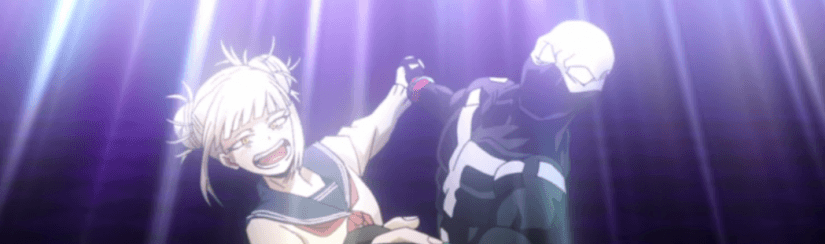
One of the reasons I like the League of Villains from My Hero Academia so much is because of how much they feel like an actual dysfunctional family.
Well, the tenth episode of the fourth season, “Temp Squad”, adapts the first time I actually began to see the villains this way perfectly, with the character growth of Twice, Toga and Shigaraki.
In a flashback, we are gifted with the sight of Twice struggling with his guilt over Big Sis Magne’s death in a great character moment for him.
“I may be a villain but I’m still human. We all are, man”, Twice states in a heartbreaking moment after Shigaraki announces he wants Twice and Toga to go work for Overhaul.
As for Toga, her reaction to Shigaraki’s order is much colder, as she threatens him with a knife.
Her family-like moment comes when she covers Twice’s mask up with a cloth to keep his personalities from splitting.
Back to the flashback scene, Shigaraki shocks both her and Twice by removing the hand from his face, for what I think is the first time in front of them, and tells them this is for all of them because he wants the two to infiltrate Overhaul’s group and gain their trust.
He goes on to say that he will trust them to know what to do.
This is the moment Shigaraki’s growth from the man child to the confident leader was cemented for me when I read the manga and it is wonderfully adapted here.
Just as wonderful is the visual of Toga and Twice spinning in the air before dancing over their trust in Shigaraki and being able to do what they want.
This leads to them insulting Mimic in an impromptu moment that leads to the cliffhanger of him trying to crush both them and the heroes.
However, not every moment with Twice and Toga is all family-like because they cause plenty of mayhem.
This mainly applies to Toga, who manages to successfully stab Rock Lock thanks to a diversion from one of Twice’s clones.
Taking on Rock Lock’s appearance, Toga attacks Deku and would have cut him for sure if Aizawa had not been there.
As for Twice, he was much less successful, with his clone of Rappa being easily defeated by Nighteye with the help of his support items.
Nighteye then attacks him, leading to the moment where Twice almost splits but Toga arrives to help him.
So, all in all, this in an almost entirely villain centric episode.
The plot may have not progressed that much overall but the character growth for the villains Twice, Toga and Shigaraki is fantastic.
Another solid episode.
I am incredibly excited for the next episode, though, because it will give Mirio his chance to shine.
The previous episode showed why I love Kirishima so much as a character and the next episode will do the same for Mirio.
His Dark Materials Episode Seven Review, The Fight to the Death… That We Don’t See The End Of.
![]()
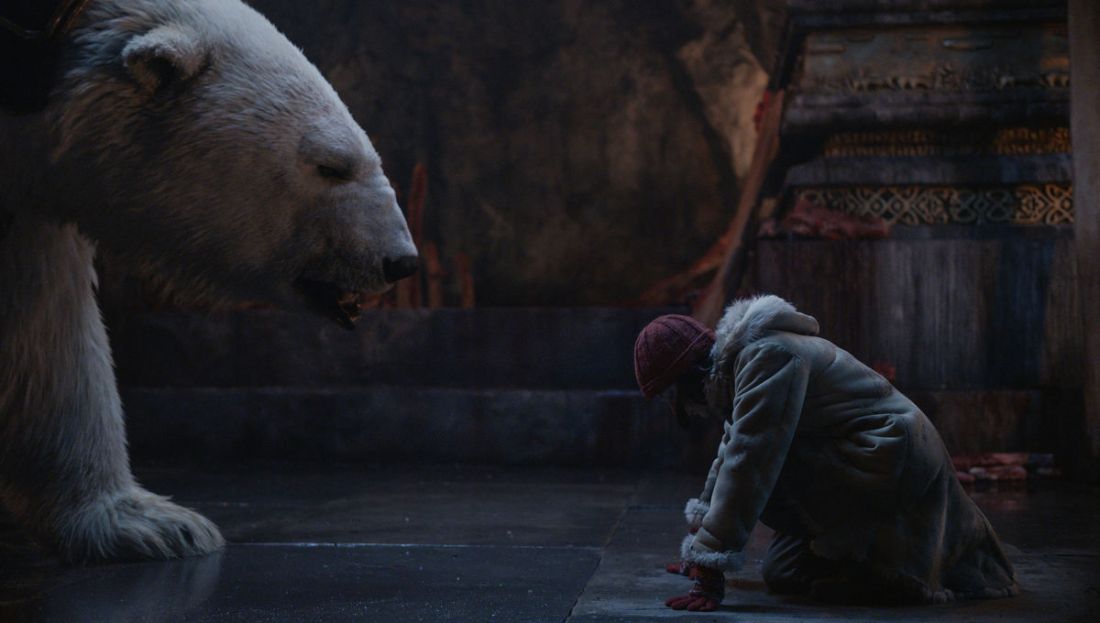
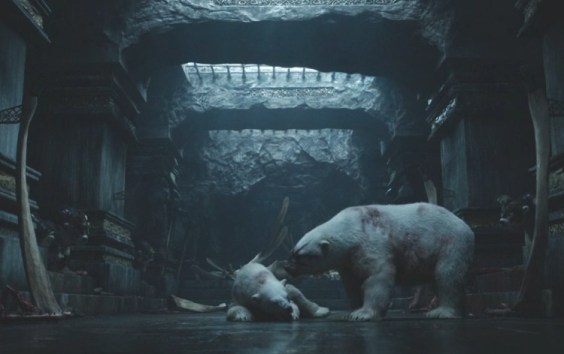
I was looking forward to the seventh episode of His Dark Materials, “The Fight to the Death” because it would adapt a scene I have fond memories of watching as a kid, the fight between Iorek Byrnison and Iofur Raknison.
This was a moment I really enjoyed when watching in The Golden Compass, the first adaptation of Philip Pullman’s His Dark Materials series.
However, I felt that this scene left quite a bit to be desired this time around.
Sure, the CGI is fantastic as always but, compared to the weight and magnitude of the fight in the first adaptation I just was not feeling it.
This may be because the final part of the fight is off screen as opposed to the raw end of it from the movie.

Unfortunately, this is not the only area where the episode falters.
Directed by Jamie Childs, “The Fight to the Death” has quite a few other issues, starting with the beginning when Lyra awakens after falling out of Lee’s airship at the end of the fantastic “The Daemon Cages” episode.
There is absolutely no explanation for how she, or any of the other characters who are revealed to have also fallen out of the airship, survived the fall.
They should at least have some broken bones but they are walking around like nothing happened.
It makes no sense.
Speaking of things that make no sense, did anyone else find it a bit forced how Mrs Coulter just manipulated Father MacPhail to let her tag along to kill Asriel?
He was the person most against bringing her but then he just suddenly decides to allow her to come after a quick talking to?
On the plus side, though, we did get another good look at the crazy side of Mrs Coulter at the beginning of the episode when she almost strangles the assistant from the previous episode who was revealed to have had her daemon removed.

And, even if I did not buy Coulter manipulating Father MacPhail, I did buy Lyra manipulating Iofur.
In fact, I would say this is an improvement on the Golden Compass movie.
In that film, Lyra uses the alethiometer right in front of Iofur to find out that he killed his father.
But, given that Iofur works with the Magisterium, he should know what an alethiometer is so he should have realised this was a trick.
In this episode, however, the scene is changed because Lyra uses the alethiometer out of Iofur’s view, making her manipulation of him much more believable.
This manipulation earns her the name Lyra Silver Tongue when Iorek wins.
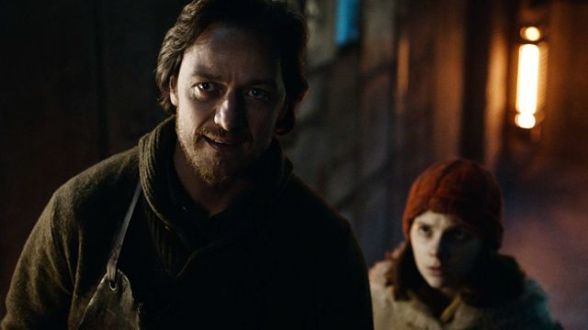
Along with Lyra’s growth, we also get plenty from Will this episode as he accidentally kills one of Boreal’s men in self defense when they breaks into his house.
I do feel that the way this scene was shot is a little off but I am still interested to see where this takes Will because he could potentially learn the truth about the alternate universe when he reads his father’s letters, which he retrieved.
Then there is Lee Scoresby, who is as likeable as ever, as he teams up with Serafina Pekkala to go and help Lyra.
And it looks like she and Roger will need all the help they can get because there is a new threat from an unexpected source… Lyra’s own father Asriel.

As soon as Lyra shows up to rescue him he panics, shouting he did not send for her.
But then, when he sees Roger, his demeanor completely changes, with him being happy to see him.
Whatever Asriel is planning, he clearly needs a child for it to work and this does not look good for Roger.
I guess it makes sense now why Coulter and Asriel got together because they both appear to be willing to sacrifice innocent children to achieve their goals.
This finished off the episode with an intense cliffhanger to lead into the finale.
I just hope it can pick up in quality from this one.
Although far from bad, I found “The Fight to the Death” to be disappointing in terms of how certain scenes were adapted and how some things did not make sense.
Still, it was an enjoyable episode, nonetheless.
Watchmen Episode Nine, See How They Fly Review. Satisfying, Yet Disappointing.
![]()
And that’s a wrap.
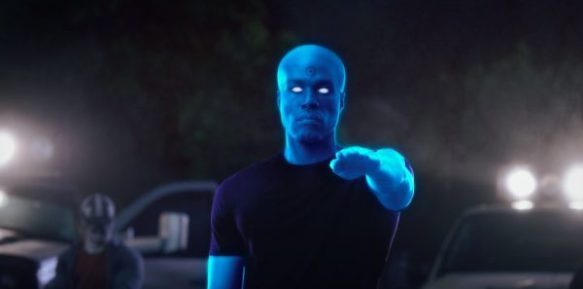
HBO’s Watchmen has concluded with its final episode, “See How They Fly” directed by Frederick E.O Toye, and, honestly, I’m a little disappointed.
That is not to say that I did not enjoy the finale because I did.
However, compared to the incredible episodes that came before “See How They Fly” is more on par with the first few episodes of the series.
Not only this, but there are multiple things that are set up throughout the season but many of them do not pay off here.
A prime example of this is Laurie Blake, who has such a minor role in this finale, despite being hyped up in the third episode.
In that episode, Laurie’s relationship with Dr Manhattan is shown to be very important to her character, and we are reminded of this in the seventh episode when Cal is revealed to be Manhattan.
So, how do these two characters interact in the finale?
Well, they don’t.
Laurie and Manhattan were shown to be intrinsically tied together in this story and yet there is no moment where they talk.
Laurie barely even reacts when she learns of his death.
And then there is Looking Glass, who is also pushed to the side.
The only role he and Laurie have is arresting Ozymandias at the end but they do nothing to progress the overall plot.

And what the hell was the point of Lube Man anyway?
I know the Peteypedia hints at Petey being Lube Man but you don’t just put a scene into an episode that looks to be important only for it to be relegated to internet content.
Speaking of setup things not having importance, remember when that guy showed up on Angela’s doorstep wanting to see her and Cal’s kids?
He is never seen again so who was he and what was his point?
I know I am hating on this finale a lot but I do want to say that, even though I was disappointed, there are still a lot of great things about it.
My favourite part of “See How They Fly” has to be the Ozymandias scenes.
I loved his opening escape from Europa with Trieu being revealed as his daughter, like many had predicted.
By far the best scene, though, is the callback to the Watchmen graphic novel where Ozymandias catches a bullet fired by the Game Warden.
As he kills the Game Warden, we learn that Ozymandias made him wear a mask to make him cruel as his entire conflict with him was created by Ozymandias to have a worthy adversary to keep him sane, even if he does not consider the Game Warden worthy.
This is certainly not the last mask metaphor in the episode either.

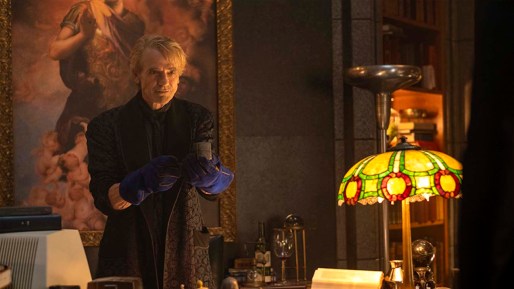
Upon returning to earth, Ozymandias is dragged along by Trieu, who plans to transfer Dr Manhattan’s powers to her like the Seventh Kalvary do, but she hopes to use his powers to create world peace.
However, being Ozymandias’ daughter, she is, of course, a narcissistic megalomaniac, so cannot be trusted with such power.
Hong Chau does an amazing job portraying Trieu’s crazy side as she reveals that Joe Keene Jr. has deservedly been reduced to a puddle of gore.
I also really enjoyed her nonchalant reply to Jane Crawford saying she’s going to kill them of, “Oh, yeah. Of course I am.”
But then, Dr Manhattan transports Ozymandias, Laurie and Looking Glass to Ozymandias’ Antarctic base to “save the day.”
There, they turn the squids Ozymandias had been using to simulate an alien invasion into deadly projectiles to stop Trieu from achieving her goal.
Before this, though, we get the death of Dr Manhattan as Trieu transfers his power.
This was a genuinely sad moment but it was a little tacky, considering how off Dr Manhattan still looks.
After his death, Trieu is stopped by Ozymandias’ plan as the squids rain down and, just before Trieu is killed, a Jesus on the Cross stand falls just as Trieu’s illusions of godhood fall.
She is crushed by her Millennium Clock or, more appropriately, her own hubris.
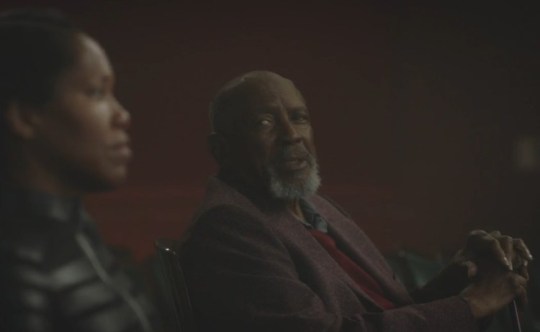
Taking refuge in the same theater where Will Reeves sat as a child as the Tulsa Massacre took place, Angela finds her grandfather caring over her children.
Will reveals how this was all part of Manhattan’s plan and, in my second favourite moment of the episode, he explains to Angela that what he felt when he became Hooded Justice was fear and hurt, not anger, and that “you can’t heal under a mask, Angela. Wounds need air.”

The music during this moment is also exceptional.
I have to say that I really liked how this show expanded on Hooded Justice and made him a much more interesting character than the original did.
Will and Ozymandias have the best moments of the series by far.
Speaking of Ozymandias, like I said, he is arrested by Laurie and Looking Glass near the end of the episode.
Looking Glass doing this does bring an end to his arc but it was a small part given what came before.
Hopefully, if we get another season then we can see more of him.
If we do get a continuation, though, I have no idea how they are going to follow up the big cliffhanger, which leaves it up to the audience to decide if Angela inherited Dr Manhattan’s powers when she ate the egg he left her.
The final shot of Angela about to attempt to walk on water but cutting away before it can be revealed if she can reminded me a lot of the open ending to Christopher Nolan’s Inception.
As soon as I saw her foot descending to the water, I knew it was not going to show us.
Still, it is a great shot to finish the finale on, whether this is the last we see of the show or not.
Overall, I found “See How They Fly” to be a satisfying conclusion, although somewhat disappointing with its usage of characters like Laurie and Looking Glass.
However, for characters like Angela, Will, and Ozymandias the end was more than worth the wait.
That is if this is the end because, in the words of Dr Manhattan himself, “nothing ever ends.”
My Hero Academia Season Four Episode Nine, Red Riot Review: A Spear and a Shield vs a Shield and a Shield.
![]()
I have been anticipating the ninth episode of My Hero Academia’s fourth season “Red Riot” for a while because it was this moment in the manga that propelled Kirishima to one of my favourite characters.
Thankfully, the episode did not disappoint, adapting both Kirishima’s backstory and his and Fat Gum’s fight with Kendo Rappa and Hekiji Tengai perfectly.
“Red Riot” picks up from Tamaki’s battle with three of the eight bullets of the Hissaikai and sees Mimic send Fat Gum and Kirishima into a dark room where they are meet by Rappa and Tengai for a battle of spear and shield vs shield and shield.
In this case, Rappa and Tengai make for the perfect combination, with Rappa dealing out devastating blows as the spear and Tengai providing an almost impenetrable shield for them.
As for Kirishima and Fat Gum, their status as shields puts them at an instant disadvantage from Rappa’s punches, especially Kirishima who is hit so hard that his hardening starts to come undone.
Que, emotional backstory to inspire him to save the day.
In all seriousness, Kirishima’s backstory is one of the best in the series so far.
Kirishima always tried to help people but he lacked something to dive in head first.
In comparison, fellow student Mina Ashido had all the qualities of a hero in the making, protecting her friends from a gigantic villain (who will be important later) by giving him the wrong directions to a hero agency.
Kirishima witnesses this but is unable to act and this causes a massive blow to his confidence.
It is then that, as if by fate, he happens to see an interview from his favourite hero, Crimson Riot, who tells the story of how someone died because he did not act and now his biggest fear is being unable to act, which drives him forward.
Inspired by this, Kirishima set out to completely remake himself into a chivalrous hero, apologizing to the girls he did not help, (even though they have no idea who he is but that is not important) and even dyes his hair red, prompting playful teasing from Mina.
The scene between the two is very sweet and is what made me start to ship them when I read the manga.
Back to the situation at hand, upon remembering why he set out to become a chivalrous hero in the first place, Kirishima leaps in front of Fat Gum to protect him with a burst of inspirational music.
This allows Fat Gum enough time to transfer his quirk from a shield to a spear as he stores the power of the blows Rappa is unloading on him into pure energy, which he releases, along with all of his fat.
It is here that we get our first look at him without this fat and I am sure a number of Squidward “oh no! He’s hot!” memes will be generated from this.
In any case, it is with this release of energy that Fat Gum defeats Rappa and Tengai with the help of Kirishima.
Kirishima’s growth during this episode is fantastic, with his self doubt transitioning perfectly into his backstory, which then leads to his heroic return to the fight at the end of the episode.
Likewise, Fat Gum also gets his moment with the reveal of his spear attack.
It is not just Kirishima and Fat Gum that shines in “Red Riot”, though, as Rappa instantly stands out as the only member of eight bullets who does not follow Overhaul blindly.
The reasons for this will most likely be unveiled in the next episode and make him the most interesting member of the Hissaikai, with the exception of Overhaul himself.
Overall, “Red Riot” is the best episode of My Hero Academia‘s fourth season so far with Kirishima’s character arc being particularly exceptional.
His Dark Materials Episode Six, The Daemon Cages Review. Dafne Keen is Superb.
![]()
After the intense cliffhanger of “The Lost Boy,” His Dark Materials delivers the best episode so far with its sixth one, “The Daemon Cages.”
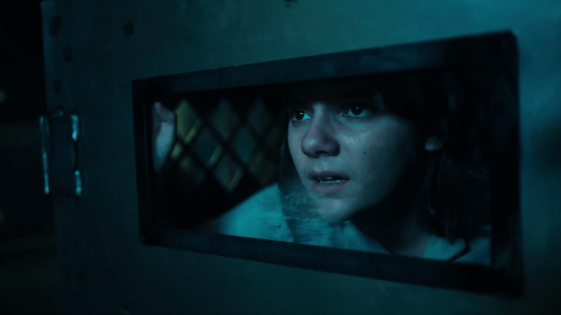
Directed by Euros Lyn, the story picks up with Lyra and Pan trapped in Bolvanger, where the Gobblers are experimenting on children by separating them from their daemons.
And, before I get into how well done this episode is, I would like to address an issue I have heard people voice about the daemons, or rather the lack of them, in the episode.
The budget of His Dark Materials has forced the animators to limit the amount of daemons on screen, which means the close bond between them and their human is not as well captured as in the novel.
I have heard many say that this makes for a much less impactful storyline because the threat of the children losing their daemons is diminished because we do not see much of them.
Now, while I can see why this would be a problem for many, personally, this did not really affect me because I still felt fearful for these kids losing their daemons.
This comes down to two things.
One, the death of Billy Costa in the last episode raises the stakes.
And two, even though there are not many daemons on screen, I still felt the connection because of how the bonds between the daemons and the children are portrayed whether they have been separated or not.
There is the nurse who is revealed to have been separated from her Daemon Nicholas and has been brainwashed into working with the Gobblers in a hard hitting scene.

Then there is Lyra and Pan whose bond is best shown when Pan is grabbed by one of the Gobblers as Lyra tries to escape, causing her to fall to the floor in pain.
Speaking of Lyra, Dafne Keen is fantastic in this episode.
I could feel the fear of her being captured by Mrs Coulter when she came to inspect the children’s room, her desperation to not to be separated from Pan, and her encounter with Mrs Coulter, which is the best part of “The Daemon Cages.”
She does an amazing job acting alongside Ruth Wilson, especially with her vicious comeback to Coulter of “Billy Costa is dead.”

As for Wilson, she is just as great with her performance again being representative of her monkey, both in her posture and manipulative nature.
But Lyra is more like her mother than Coulter realizes because she is successfully able to manipulate her into opening the case with the spy fly, giving her an opportunity to escape.
From here the episode divulges into absolute chaos as the Gyptians finally arrive to save the children with Lee, Iorek and Seraphina in tow.
Honestly, though, Seraphina did most of the work because she is basically a one woman army, killing multiple Gobblers before anyone else can react.
As for the Gobblers, I liked how the episode focused some of its time on their motivations, even though they all died by the end of the episode, with the exception of Mrs Coulter.
They may still be terrible people but I am glad they did not come across as evil for the sake of evil, like some members of the Magisterium have in previous episodes.
With the Gobblers now dead and the children rescued, Lyra, Roger, Iorek, and Lee set out in the airship with the hopes of rescuing Lord Asriel.
Seraphina then shows up briefly to tell Lee he has to protect Lyra… only for him to immediately lose her when they are attacked by monsters known as cliff-ghasts.

In any case, this moment felt like a horror movie with the suspense and tension in the scene leaving me shaking slightly, especially with the cliffhanger of Lyra falling out of the airship.
I have no idea how she will survive the fall but next episode we are getting the fight between Iorek and Iofur, which is the moment I remember most from the movie.
It will definitely be interesting to see how that is adapted.
Watchmen Episode Eight Review: A God Walks Into Abar… Oh, I Get It!
![]()
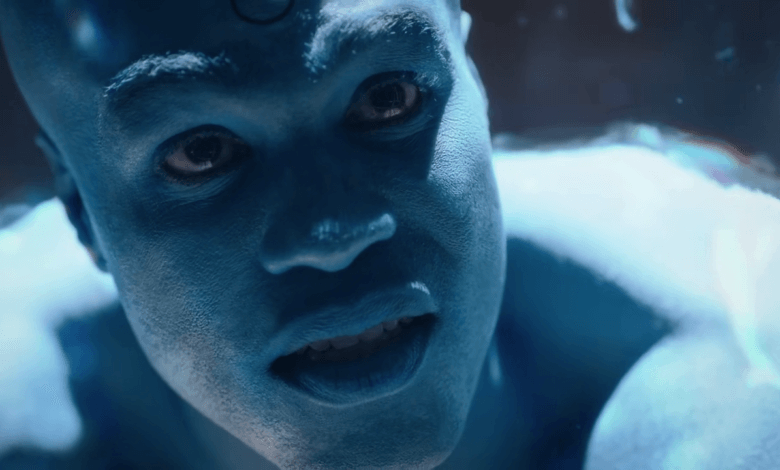
After Watchmen‘s biggest twist yet in Episode Seven, Episode Eight “A God Walks Into Abar” sets about explaining that twist, starting off with the great pun of a title.
This pun comes from the beginning of the episode when Dr Manhattan both walks into a bar and walks into Abar with the intention of starting a relationship with her, which he already knows will happen because of his ability to see the past, present and future simultaneously.
Nicole Kassel returns to direct “A God Walks Into Abar”, which is almost entirely from Dr Manhattan’s point of view across time.
Yahya Abdul-Mateen II does a fantastic job as the character, portraying a perfect mixture of uncaring and caring that creates that enigma that is Dr Manhattan.
Although, I will say the effects and makeup do make him look a little cheesy, which did draw me out of the scene on a few occasions.
These moments are relatively minor, though, and the scenes with Dr Manhattan’ first meeting with Angela are amazingly shot through how it avoids showing his face.
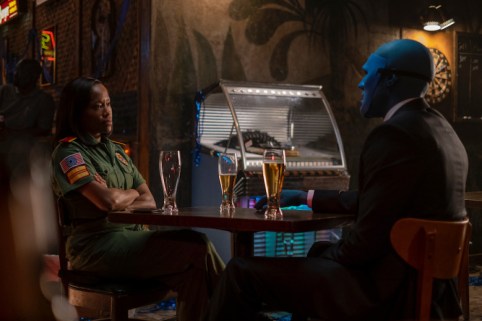
Mateen II and Regina King have great chemistry throughout the episode and it was very investing to watch Angela go from skeptical but interested in Dr Manhattan to in love with him as time passed.

Dr Manhattan’s love for Angela is also brilliantly portrayed through how he experiences time.
The moment he falls in love with her is when she tries to save him from the Seventh Kalvary many years after the get together.
However, because Dr Manhattan experiences time simultaneously, he was already in love with Angela when he met her because he knew of this moment.
Sadly, Dr Manhattan also seems to know of his imminent capture, which he allows to happen, either because he is a victim to time or because he has some other plan.
I guess we will just have to wait and see which one it is.
He did say that Angela had to remember he could walk on water so that has to be important.

“A God Walks Into Abar” also goes about explaining many of the mysteries surrounding both Dr Manhattan and Ozymandias and Will.
We see how Angela chose Cal’s body for Dr Manhattan to impersonate, hence why he appears as he does, and Will learns of Crawford’s involvement with Cyclops and the Klan robe in his closet because of Dr Manhattan conveying a question to him from Angela in the present.
This creates a time loop that raises the interesting question of if Crawford was as bad as he seemed?
Will’s information about Crawford was not gained first hand and Crawford did later tell him he was trying to help.
Although, again, this did come with some racist undertones when he said it so maybe I am looking too deep into it.
As for Ozymandias, we finally got an answer to why he is on Europa and who created the clones that served and arrested him.
They were made by Dr Manhattan, who he based off a couple he met as a child that asked him to build something beautiful when he grew up.
And, when Dr Manhattan obtained a Tachyon device from Ozymandias that allowed him to live as Cal by losing his memories, he rewarded Ozymandias by sending him to Europa to be served by the clones.

The reason the clones served Ozymandias to the point of death is because they were created to always put others before themselves, which is why Manhattan left and why Ozymandias now wants to.
Initially happy in this paradise, he grew bored of it all and now wants to return to his millions of children on earth like the delusional maniac he is.
However, because the clones’ one rule is that no one is allowed to leave, he is imprisoned.
This is when Ozymandias is confronted in a post credits scene by the Game Warden who reveals he was the first to be created by Dr Manhattan, essentially making him the Adam of Europa.
But this raises the question that if he is Adam then what happened to Eve?
Perhaps we will find out next episode?
In any case, the episode then ends with Ozymandias discovering a clone has mistakenly put a horse shoe in his cake, which allows him to initiate a plan to begin his escape back to earth.
Considering that next episode is the last one, I am not sure how this will happen.
In fact, I would say that I am slightly concerned about how all the different plot points like Ozymandias, Dr Manhattan’s capture, Trieu and Will’s plan, Laurie, Looking Glass, and of course Lube Man, are going to come together for the final episode.
Still, Watchmen has been fantastic so far so I have to put faith in that they can pull it off.
“A God Walks Into Abar” is another fantastic episode of the series and it will be interesting to see how it all ends in the finale.
My Hero Academia Season Four Episode Eight, Suneater of the Big Three Review: The Parallel of Hero and Villains.
![]()
After episode seven of My Hero Academia‘s fourth season “GO!” promised a followup, action filled episode with its cliffhanger, that episode “Suneater of the Big Three” delivers on this.
As the title suggests, the main character of this episode is Tamaki Amajiki, AKA Suneater, who goes on an emotional journey in his fight this episode, with plenty of parallels between him and the villains he fights.
These three villains are members of the eight expendable bullets, Toya Setsuno, Yu Hojo, and Soramitsu Tabe.
Thrown out and left for dead by society, these three were eventually taken in and brainwashed by Overhaul to fight for him to the bitter end.
“Even trash has its pride,” Yu states at one point, showing the extent that they have been influenced by their boss.
And, just as these villains are influenced by Overhaul, Tamaki is influenced by Mirio in a clear parallel.
As a child Tamaki had no self confidence until Mirio came along and inspired him to believe in himself, just like the villains were lifted out of their situation by Overhaul’s brainwashing.
This presents a two sides of the same coin parallel, where Tamaki has been correctly influenced and the villains negatively, leading to to conflict.
Tamaki’s battle with the villains is absolutely fantastic with both sides utilizing their quirks with ingenious tactics.
Toya and Yu make a great combination, until Tamaki uses his Chimera Kraken technique, forcing them to call in Tabe to even the odds again, only for Tamaki to outwit them and finally take them down.
The constant back and forth on who was winning this fight made for an intense battle where the viewer would have been unsure of who would win right to the very end.
As for other moments in the episode, they are also very well done, with another great display of Sir Nighteye’s quirk and plenty of heart warming flashbacks to Tamaki’s friendship with Mirio.
All in all, “Suneater of the Big Three” is the best episode of season four so far.
However, it will almost certainly be overtaken next episode, which will see an even more intense fight with Kirishima, along with revealing his backstory, which I am very excited to see animated.