Long before he entered the realm of superheroes with his Spider-Man trilogy and, much later, Dr Strange movie, Sam Raimi was a master of horror comedy, most commonly known for his Evil Dead trilogy. Well, with his latest film Send Help, Raimi has returned to his horror comedy roots, delivering both a funny and gory movie following two highly questionable people.
Prepare for your opinion on the characters to switch a bunch in this film.
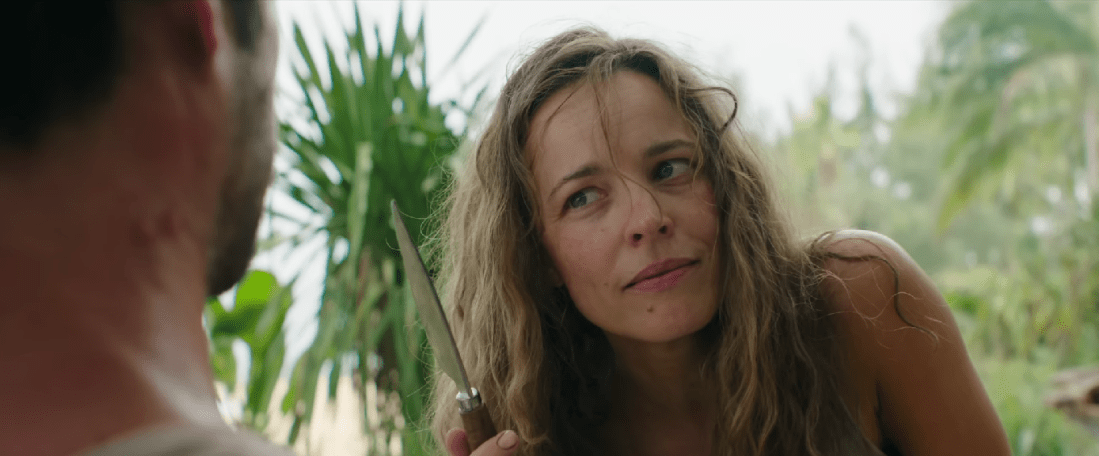
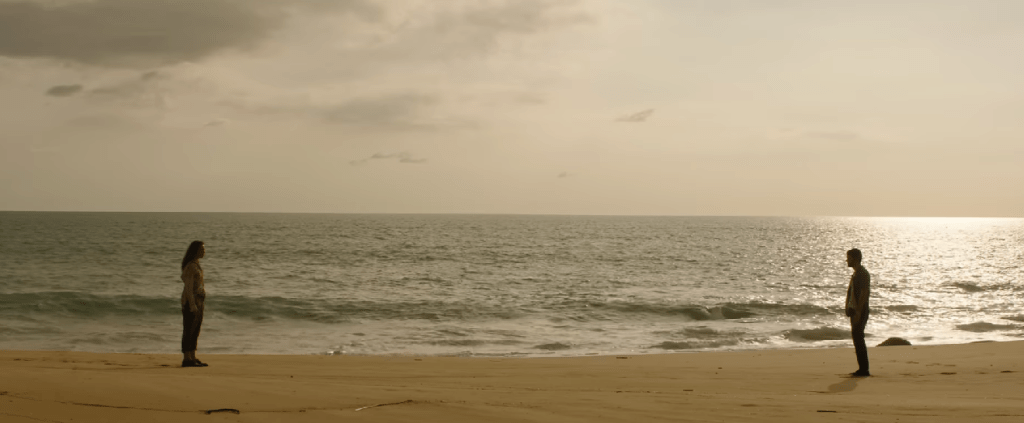
Send Help stars Rachel McAdams and Dylan O’Brien, and tells the story of Linda Liddle (McAdams), a socially awkward yet hard working woman who has more than earned a promotion at the company she works for. These hopes are cruelly dashed with the arrival of her new boss Bradley Preston (O’Brien), a petulant man child who only has the position of CEO because he inherited it. When the two are stranded on an island as the sole survivors of a plane crash, they find their positions reversed, with Bradley now at the mercy of his cruel boss, Linda. What follows is a battle of wills between the two, improved by great character writing and fantastic performances from both McAdams and O’Brien.
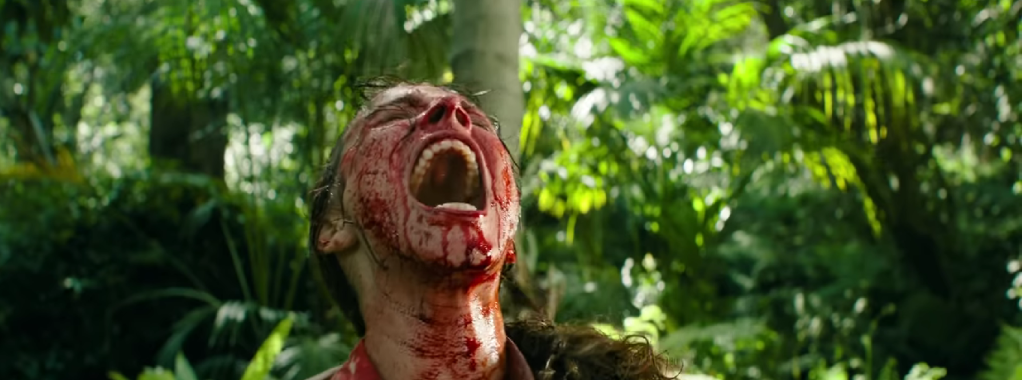
Not to mention a whole lot of fake blood.
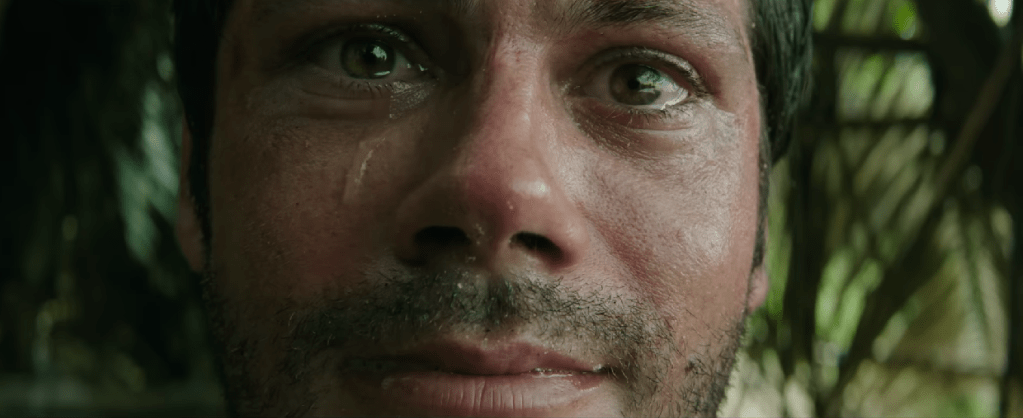
The script does a great job of flipping the initial situation on its head. After the crash it is extremely cathartic to see the immature Bradley be put in his place by Linda and have to count on her survival expertise to survive. However, as the movie goes on and we get more insight into Linda’s psych and the actions it drives her too, Bradley becomes more pitiable. This culminates in the most uncomfortable scene of the entire movie, which will have every man who watches cringing into the back of their seats.
This scene had me experiencing Misery flashbacks. If you know, you know.
Speaking of, this movie is very gory. The first moment of bloody violence on the island had me sitting back and thinking, ‘Oh, yeah, this is a Sam Raimi film!” His style is all over the movie, from its great dark humor, to the gory sequences, delivering a pretty enjoyable movie overall. Granted, I do think the ending felt kind of lackluster, but that does certainly not destroy the film. The film maintains a great conflict between its two lead characters, both of whom are backed up by excellent performances from their actors, delivering a funny, disturbing, and all around good time at the movies. I recommend checking this one out, especially if you are a fan of Sam Raimi’s horror comedies.
There was a rather strange disconnect between English speaking and Japanese viewers in regard to their opinions on the first season of Chainsaw Man. Many English speakers, myself included, loved the first season, especially with how it paid homage to various aspects of film, which the mangaka Tatsuki Fujimoto is a big fan of. However, the Japanese viewers’ reactions were mostly the complete opposite. There was a lot of hate directed towards the first season, due to the style being seen as different from the manga, and a few other reasons I do not quite understand. Therefore, for the movie continuing Chainsaw Man’s story, it was decided a different director would take on the job with a different animation style. To be honest, I was a bit concerned with what I would think about the new art style, since I really liked the old one. Today, I got the chance to sit down in a theatre and watch Chainsaw Man – The Movie: Reze Arc and see this change for myself.
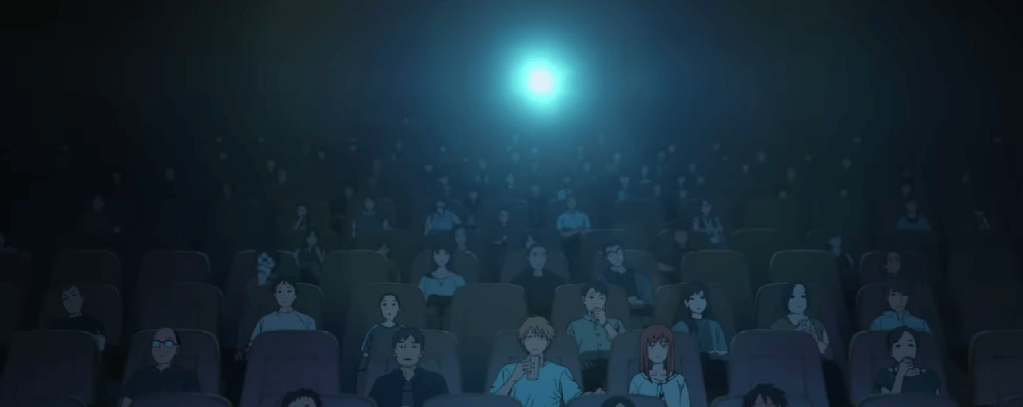
Kind of fitting that the arc chosen for a film has a scene where Denji and Makima go to see multiple movies.
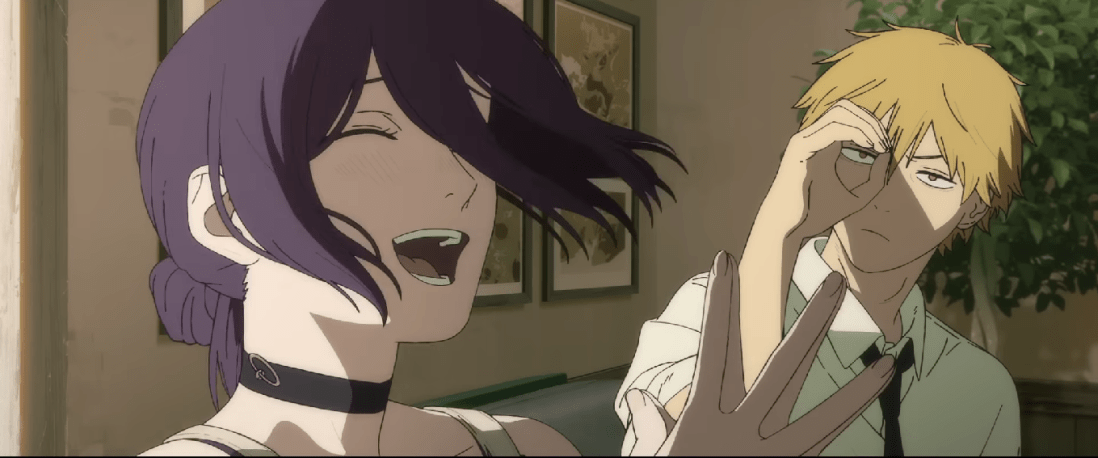
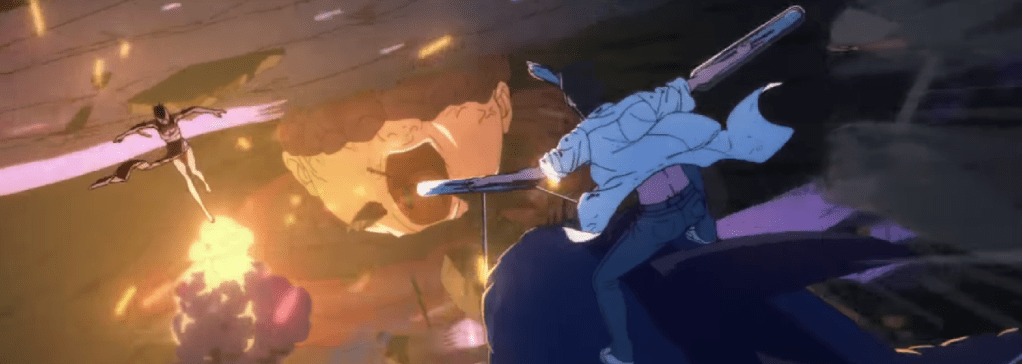
You can imagine my relief when I absolutely loved the new style and actually think it is better than Season One’s. That is not to sell the old art style short, but the new one has so many unique moments, with many shots looking like a manga panel brought to life. Along with this, the animation quality is incredible. Whether the scene was a slow, thoughtful one, a comedic one, or an action extravaganza, I am sure you could pause the movie at any point and end up with a great shot.
See?
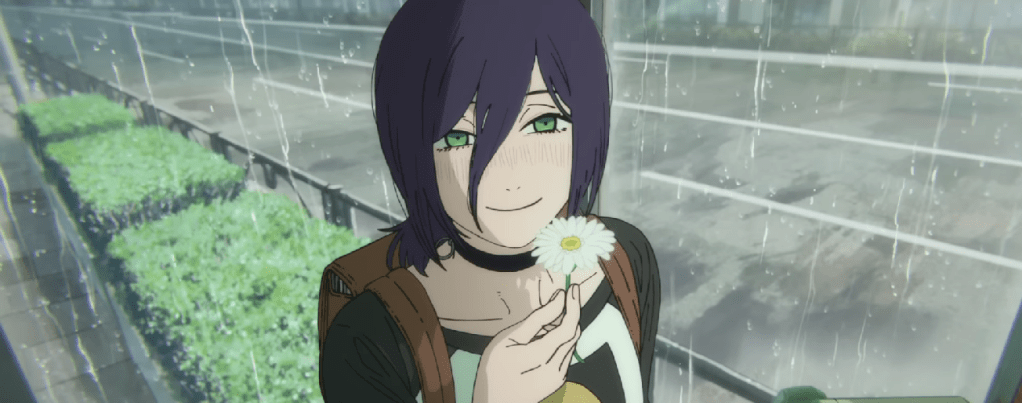
Likewise, the music and sound design are top notch, with the sound of explosions being particularly gripping to hear in the theatre. And then there is the voice acting. Everyone from the First Season does a great job, as expected. Kikunosuke Toya brings the perfect mixture of emotion and comedy to his portrayal of Denji. Tomori Kusunoki makes Makima sound creepy as ever. Then there is the new voice on the block for Chainsaw Man, Reina Ueda as Reze. Talk about perfect casting for the character. Because of her and Toya’s performance, Reze and Denji have great romantic chemistry, making the events that play out later in the film both tragic and epic to witness.
It was a joy to see Reze finally animated.
All in all, The Reze Arc is a fantastic adaptation of the storyline from the manga. The portrayal of its two leads is excellent, and the animation style, its quality, the music and sound design are all peak. I am honestly so glad that they chose to adapt the Reze Arc as a film instead of in an episodic format. Watching Chainsaw Man on the big screen really reminded me of my love for Part One of the story. I cannot wait to see the rest of this adaptation, whether that be with more movies, or another season. Unfortunately, we will probably have to wait years to find out which format it will be. Oh, well, at least Chainsaw Man is still going strong with Part Two, so us fans of Tatsuki Fujimoto’s work are not starved for content.
It is undeniable that Hayao Miyazaki is the most celebrated anime director of all time. Over the decades, he has delivered beloved film after beloved film, most notably Spirited Away. My personal favourites of his are Princess Mononoke and The Wind Rises. So, when I got the chance to see a Miyazaki film in theaters for the first time, I took it. The Boy and the Heron is set in World War Two Japan and follows Mahito Maki, a young boy who loses his mother in a fire. His father later remarries Natsuko, the sister of Mahito’s mother, and the two travel to her estate. It is there that Mahito encounters a sinister talking Heron, who eventually convinces him to travel into a supernatural world where his mother supposedly awaits him. And so begins another fantastical Miyazaki journey.
Much like Spirited Away, The Boy and the Heron sees our main character transported into a supernatural realm.
The film looks excellent, with the hand-drawn style of Studio Ghibli being very striking on the big screen. Along with this, the voice acting is solid, at least for the English dub version. Yes, I saw the dub over the sub, though this was mostly because all of the sub showings were late at night. That being said, the English voice actors all did a good job, with Luca Padovan, Karen Fukuhara, Mark Hamill, Gemma Chan, Willem Dafoe, Florence Pugh, and Dave Bautista all giving life to their characters. This is especially true for Robert Pattinson who voices the heron. I was genuinely shocked when I heard he played the character because I did not recognize his voice at all.
The Heron starts the movie quite creepy and untrustworthy.
Along with the animation and voice acting, the music also does a great job of bringing you into the world, with all of this being tied together by the story. Mahito’s personal journey throughout the film is quite relatable, doubly so because we can see how Miyazaki put much of himself into the character. One of the central themes of the movie is legacy, which shines a light on how Miyazaki is thinking of his own legacy, especially since this is supposedly his final film. If it is then he chose a good one to send himself off on.
The film takes on an entirely new meaning when you look at it in the context of Miyazaki’s career.
The Boy and the Heron is another Miyazaki great, with expectedly stellar animation, music, and voice acting, along with a story that has relatable themes. I would rank this film highly among Miyazaki’s catalogue, maybe even in my top five favorites of his. And, if this is truly the last Hayao Miyazaki film we ever get, then I am glad that I saw it in theaters.
I have been a Godzilla fan since I was a kid. So once I heard all the positive buzz surrounding the latest film, Godzilla Minus One, I knew I had to see it. I expected Minus One to be a good film, perhaps even a great one. What I was not expecting was it to be one of the greatest Godzilla movies ever made. It is so good that it may even surpass the 1954 original.
Godzilla Minus One is truly excellent.
Written and directed by Takashi Yamazaki, the film is set in post World War Two Japan, and follows former kamikaze pilot Koichi Shikishima (Ryunosuke Kamiki). Having lost everything during the war and stricken with survivors guilt, Shikishima eventually meets a young woman named Noriko (Minami Hamabe), who has adopted a young orphan named Akiko. The three form a makeshift family and, as the years pass, it seems like the horrors of their pasts may fade, until a monster from Shikishima’s past rises from the depths to plunge Japan into horror once more.
Godzilla is truly scary in this movie.
Having read the synopsis I gave of the film’s plot, you are probably assuming that Minus One centers more around the human characters than Godzilla, and you would be right. This is, in fact, usually the case for a Godzilla films However, what separates Minus One from the rest of these movies is that the human characters are all fantastic. In most Godzilla films, we really do not care about the people. At best, there is sometimes one character we can latch onto but, most of the time, we are just waiting for Godzilla to show up and wreck stuff. This is not the case for Minus One, as I found myself caring for each and every one of the characters, which made the action sequences more intense, since I was scared for each of their lives.
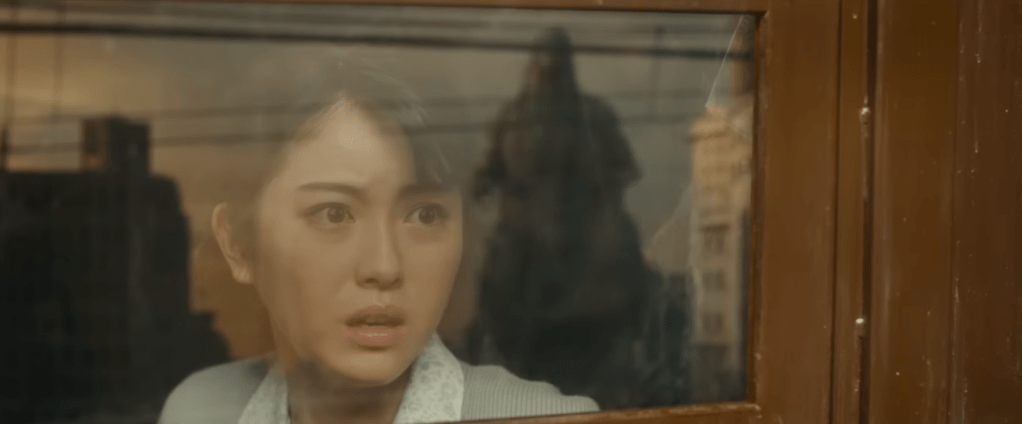
This scene was made all the better because of the fact that I cared about the characters.
The last time I had this much investment in a character from a Godzilla movie, it was probably Brian Kranston’s one from the 2014 Godzilla movie, but every other character in that film was pretty bland. Again, this is far from the case with Minus One. I cared about the characters so much that the ending to the film actually had me tearing up, something I have never done in a Godzilla movie before. What adds to the weight these characters have are the excellent themes of PTSD and survivors guilt, along with the scars war leaves on a nation. Shikishima is the perfect encapsulation of these themes, making him my favourite Godzilla protaganist, with the exception of the big G himself.
Shikishima embodies the movie’s themes more than any other character.
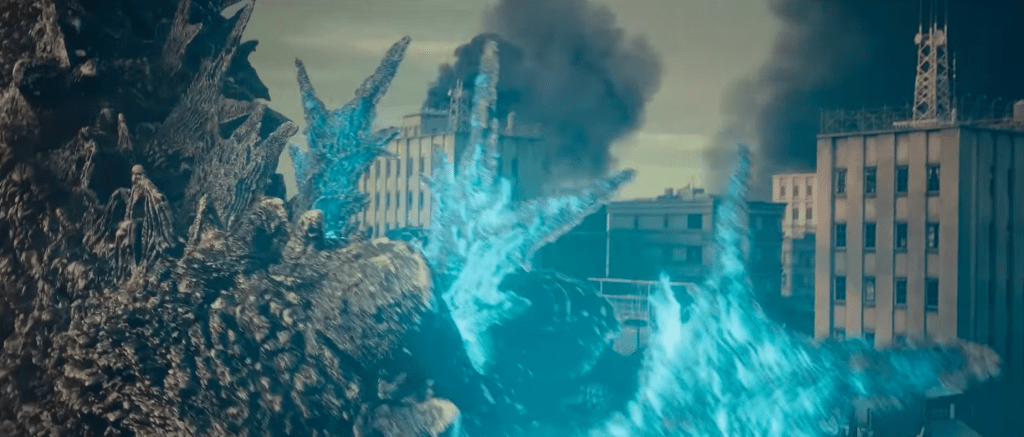
Speaking of him, Godzilla is a terrifying presence whenever he is on screen. He is no misunderstood hero like in the recent Legendary films. No, the Godzilla here is more in the vein of the original 1954 version and the Shin Godzilla version. He is a horrifying force of nature who crushes everything and everyone in his destructive wake. His atomic breath is also on par with Shin Godzilla’s in terms of the fear it creates, as it is akin to a nuclear blast.
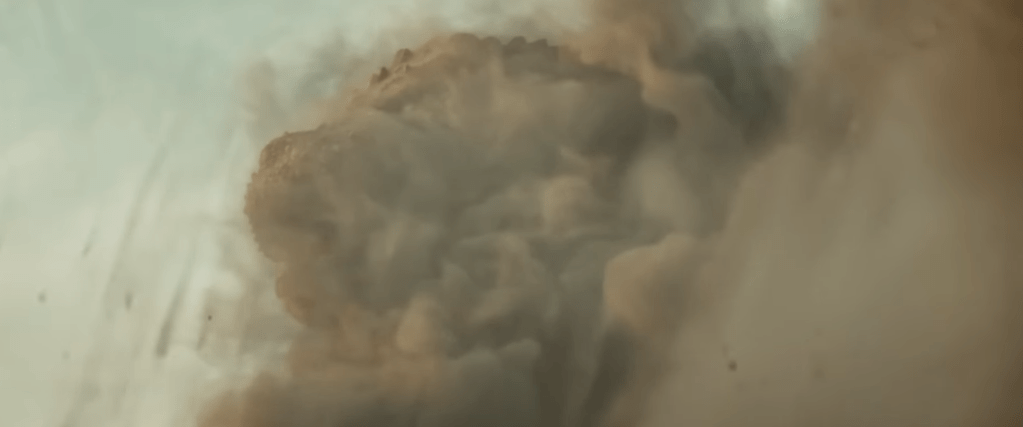
The atomic breath scene is one of the best in the series.
What helps increase the fear Godzilla generates in this movie is just how fantastic the CGI is for him. Minus One was apparently made with a budget of $15 million dollars and that is absolutely incredible, given that many blockbuster movies have ten times that budget and look considerably worse. The way Godzilla is shot is also great, along with the score throughout the film, which adds to the intensity.
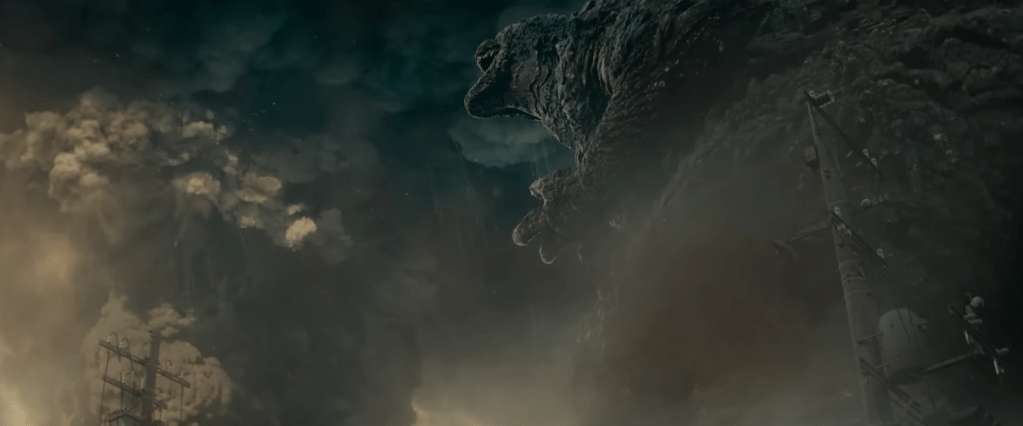
This shot of Godzilla creates both awe and terror.
Considering every aspect of the film, I cannot think of a single flaw with it. Godzilla is terrifying, the human characters are the best they have ever been, the CGI is excellent for the budget, and the themes, score and cinematography are all top notch. I cannot recommend this film enough, especially if you are a Godzilla fan like me. Godzilla Minus One is not only one of the best films of the year, but potentially the greatest Godzilla movie ever made.





 THE REVIEW MONSTER