

With the political climate in America being so tumultuous, Alex Garland’s Civil War was destined to be a controversial film.
Like many other people, I was curious to see what side, if any, the film would take in its depiction of a new American civil war.
Quite wisely, in my opinion, Garland chooses not to take a side, but instead focuses on the horrors of such a war if one were to occur.
The film follows four journalists played by Kirsten Dunst, Wagner Moura, Cailee Spaeney, and Stephen McKinley Henderson, who are travelling to Washington DC in the hope of interviewing the US President (Nick Offerman) before he is killed by the rebel Western Forces.
What follows is essentially a road trip movie, with each stopping point delivering a different kind of horrifying war crime committed by both sides and general lunatics.
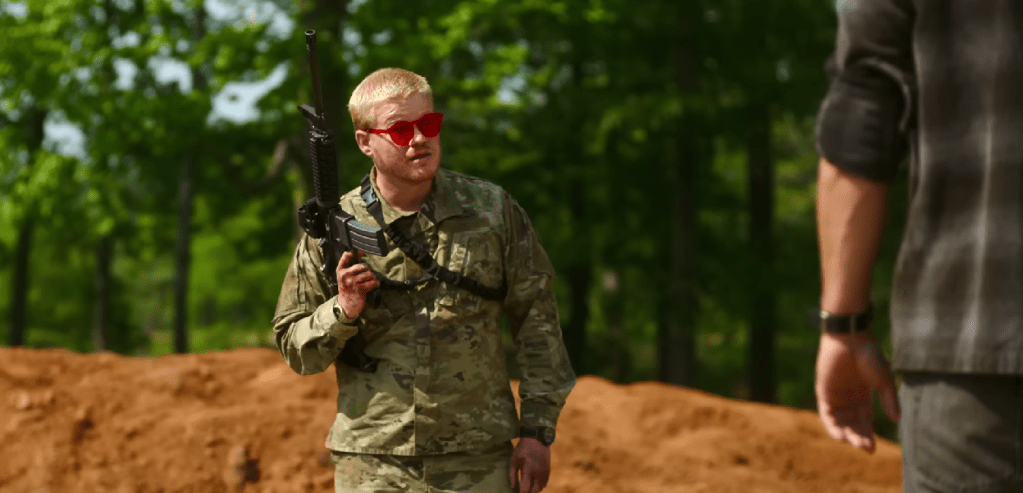
One such lunatic is Jesse Plemons’ character, a sadistic yet nonchalant militant who holds our main characters at gunpoint in one of the movie’s most tense scenes.
All of these actors do great jobs in their respective roles, really selling the trauma developed from the events they encounter.
This is the main focus of the film instead of the political climate.
While reasons for the conflict are alluded to, mostly coming down to the fascist POTUS, Garland spends most of the film pointing out to the audience just how horrible a civil war would be.
This is best encapsulated with a line from Dunst’s character, “Every time I survived a war zone, I thought I was sending a warning home: ‘Don’t do this.’ Yet here we are.’
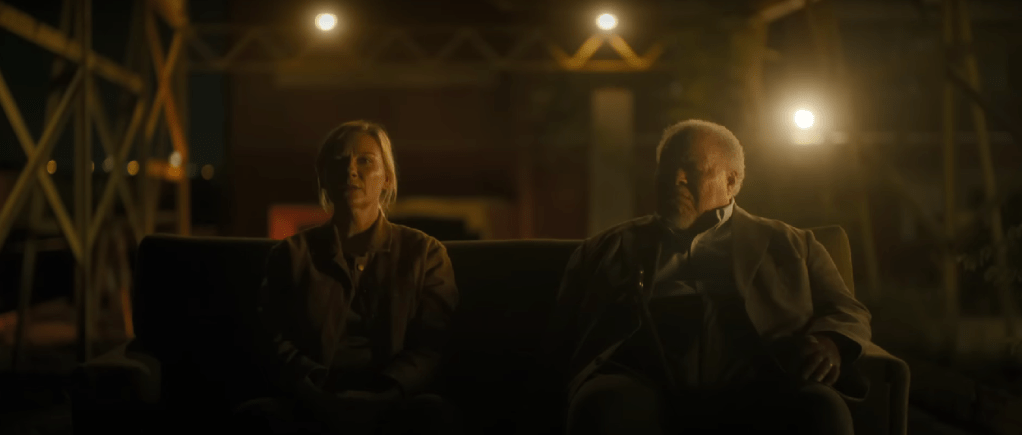
Such warnings are going unheeded right now by some, as I have seen some crazy people calling for a civil war long before this movie came out.
The choice to focus on the horrors of war, rather than the politics, helps sell this message extremely well, especially with how some of the journalist characters become desensitized to the deaths of their fellow countrymen and even friends.
Along with the characters and themes working well together, what also helps Civil War land is the great cinematography and sound design.
The sound of bullets and gunfire feel terrifyingly impactful, and there were many shots which would be beautiful if they were not so disturbing.

I do have a few criticisms with the film, though.
For one thing, sometimes the choice in music felt a little wrong for the scene.
And then there is the ending, which was a little too predictable and also a little overly dramatic at one point.
Other than that, one particular point, however, the ending to Civil War lands mostly perfect, with its final image being very striking.

Civil War is a terrifying look at the chaos which would unfold in America if things truly came to that.
Time will tell if this film will be looked back upon as a chilling what could have been, or an even more chilling representation of what was to come.
We had all better hope it’s the former.



 THE REVIEW MONSTER