I was excited for the Season Two finale of House of the Dragon.
The previous episode, “The Red Sowing”, was one of my favorites of the series, so I was anticipating the season would likewise end on a great note.
Unfortunately, House of the Dragon followed up one of its best episodes with easily its worst for me.
Directed by Geeta Vasant Patel, “The Queen Who Ever Was” not only ends Season Two on an anticlimactic note but also has plenty of poorly integrated scenes, scenes that go nowhere and, worst of all, two cases of extreme character assassination.
The episode begins with Tyland Lannister negotiating with the Triarchy.
Over the course of the episode, we see him struggle, having to engage in a mud fight with Admiral Lohar to win the Triarchy’s support.
These scenes all feel very rushed, considering they are just shoved into the season finale.
If this storyline had been stretched out over previous episodes, maybe it would have been better.
A counter point to this is that Tyland and the newly introduced Lohar are just not interesting enough to carry their own storyline.
Sadly, this is not the only story with scenes spread across the episode which lacks intrigue.
Throughout “The Queen Who Ever Was”, we get brief scenes of Rhaena running through the Vale, looking for a wild dragon.
Not only is Rhaena unlikeable here because she abandoned her half-siblings, but the storyline also makes little sense because somehow no one noticed she was gone.
The episode ends with her finding the dragon, which has a cool design, but that is the last we see of Rhaena this season, making all of the buildup she got seem like a waste of time.
The Tyland and Rhaena scenes feel like they could have been removed in favor of focusing on more interesting events, like Aemond burning down a city that is loyal to the Blacks.
We only see the aftermath of this attack, removing a lot of its impact.
If we had seen Aemond actually burn the city, driven by his anger of the Blacks recruiting new dragon riders last episode, it could have been a big moment for his character.
Instead, it feels kind of hollow.
Speaking of those new dragon riders, Ulf is already letting the power get to his head, being disrespectful towards Jace.
This only furthers Jace’s fear that these Dragonseeds could prove to be more of a threat than allies.
Rhaenyra is not likely to listen to his protests, however.
She is, thankfully, finally listening to Corlys.
He was named Hand of the Queen in Episode Five, but he has bizarrely never been seen advising Rhaenyra until now.
It honestly felt like Mysaria was Hand of the Queen rather than him.
Now, we finally get to see him advising Rhaenyra to take the war to the Greens, while also unveiling his new ship, dubbing it “The Queen Who Ever Was” after Rhaenys, which is a nice touch.
Corlys is also in the best scene of the episode, when he tries to offer Alyn help, only for his illegitimate son to confront him with all of the pain he put him and Addam through by neglecting them.
Abubakar Salim gives a powerful performance here, and it makes me more excited to see him in Season Three.
Hopefully, we will see Corlys advising Rhaenyra more next season, as well.
She is certainly going to need all of the advice she can get, given that one of her plans failed so badly this episode.
The Lord she sent to access Daemon ends up betraying her, wanting to support Daemon’s claim instead.
Rhaenyra is just lucky Daemon had a vision about how terrible Season Eight was and now wants to stop it from happening.
That joke brings me to Daemon’s part of the story, as he finally makes his choice regarding his place in the world, deciding to stay loyal to Rhaenyra after his vision of the coming Whiter Walker threat.
While this was a big moment from Daemon, I do feel like House of the Dragon leans way too heavily on the events of Game of Thrones at times.
I wish it could just be its own show, especially how a lot of us do not want to be reminded of Season Eight.
Along with this, Daemon and Rhaenyra reconciling makes me wonder just what the point was of that bizarre make out scene between Rhaenyra and Mysaria in Episode Six?
That scene has never been addressed since and it probably never will now that Rhaenyra and Daemon are back on the same page.
However, Daemon’s storyline has an even worse problem, which is the complete character assassination of Helaena.
Helaena appears in Daemon’s vision, revealing herself to have powers similar to Bran’s in Game of Thrones.
She then gives him some advice.
“This is all a story. And you’re but one part in it. You know your part. You know what you must do.”
I hated this.
Daemon is responsible for the brutal murder of Helaena’s son, and I am supposed to believe that she is willing to help him after that?
Why?
She should hate his guts.
In episode two, we saw how traumatizing the death of her son was for her and this scene lessens that impact.
This is the first character assassination of the episode but there is still one more and it is far worse.
I am getting ahead of myself, though.
While, yes, the scene with Daemon and Helaena is bad, at least there are a couple of good scenes to balance the episode out a little.
The first of these is the already mentioned Alyn scene, but there is also one of Criston, where Gwayne confronts him over his relationship with Alicent.
The scene is a bit weird since Gwayne confronts Criston out in the open, practically telling everyone who did not already know that the King’s widow is having an affair.
That being said, the scene does have the best dialogue of the episode, as Criston shows how nihilistic he has become.
“Perhaps all men are corrupt and true honor is a mist that melts in the morning.”
Criston may be a complete and utter jerk, but damn did that line feel like something George R.R Martin would write.
Criston is faithful to Alicent… it is just a shame that she is currently willing to sell him and every single person in her family besides Helaena up the river.
After learning Aemond wants to force Helaena to fight, Alicent goes to Rhaenyra in secret to negotiate, being willing to surrender King’s Landing to her once Aemond leaves.
At first, Alicent attempts to claim she can convince Aegon to bend the knee, but Rhaenyra refuses, saying Aegon has to die for her claim to the Iron Throne to succeed.
So, obviously, Alicent says no, right?
I mean, this is the woman who threw herself in front of a dragon to defend her son in Season One, Episode Nine.
She would never sacrifice her children after being so afraid for their safety previously, right?
Nope, she agrees to sacrifice Aegon and, by extension, Aemond, Otto and Daeron, the latter of whom she wanted to know about just a few episodes ago.
This completely destroys Alicent’s character.
She was the one who turned her children against Rhaenyra in the first place and now she is willing to have them executed?
Not that it will happen though, because Aegon flees the city with Larys this episode, which will probably cause yet another misunderstanding between Rhaenyra and Alicent in Season Three.
As for Aegon himself, Tom-Glynn Carney did a fantastic job this season.
I somehow both sympathize with his character and despise him.
This is what the show should have been going for with Alicent.
Instead of the ruthless, power-hungry woman who loved her children from the book, we get the complete opposite, someone who wants peace even if it means her own children have to die.
Seeing what it led to, I now really don’t like the switch in Alicent’s character in “Lord of the Tides.”
If she had crowned Aegon because she wanted to, rather than because she misheard Viserys, it would have made her a lot more interesting.
Honestly, Rhaenyra suffers a lot from these kinds of issues as well.
In the Season One finale, Rhaenyra’s face after she learned of Luke’s death promised vengeance.
In Season Two, however, apart from Episode One, this desire for revenge because of her son’s death has completely disappeared.
She has been so pro-peace this season, even when it is absolutely obvious that the other side is not going to surrender.
I wish the show had just kept at what it was initially building up between Rhaenyra and Alicent, a friendship turned bitter and hateful rivalry.
Their children have literally been killing each other and they are still somehow friends.
Alicent even wants Rhaenyra to come with her which is just bizarre.
Where exactly would you two go where you would not be noticed?
At least the cinematography and Ramin Djawadi’s score are excellent, as this final, awful scene brings the season to an end on an incredibly anticlimactic note.
Overall, “The Queen Who Ever Was” is a bad finale.
Sure, it has some great scenes, like Alyn and Criston’s, but the rest of the scenes either feel shoved in, pointless, or have blatant character assassination.
As for the season as a whole, I have mixed feelings.
There have been amazing episodes, specifically Episodes Two, Four and Seven, but a lot of the other ones have been slow.
This would have been forgivable if they had built up to a good finale but, instead, we got the worst episode of the show.
I sincerely hope the writing quality will improve for Season Three, otherwise this show could be in trouble.
That being said, the writing for “The Queen Who Ever Was” is not as bad as Season Eight of Game of Thrones. So, at least there is that.
Book Spoilers Section:
You know, it’s funny.
I spent the past few episodes planning a rant for when Rhaena claimed Sheepstealer but the writers cut the scene before it happened.
A part of me wonders if the writers are just waiting to see fan reception for Rhaena before they commit to abandoning Nettles entirely but that is probably not it.
I mean, why would they commit to having Sheepstealer in the Vale if they were not going to have Rhaena claim it?
And if Nettles does show up next season, then her storyline will probably be considerably weaker than the book, since the show spent so much time building up to another character getting her dragon.
At least Sheepstealer’s design looks cool.
Speaking of new dragons, we also got to see Tessarion briefly at the end of the episode.
I hope the show does Daeron justice.
Another interesting thing is Otto being in prison at the end.
This is completely book original, and I wonder where the show is going with it.
Perhaps it will be a way to tie him into Daeron’s storyline, like I speculated in prior reviews.
Along with Daeron, next season we also have the fall of King’s Landing and the Battle of the Gullett to look forward to.
The latter is what was being built up to with those Tyland and Lohar scenes.
However, that really does not justify those scenes’ existence, in my opinion.
All it really would have required is a simple message from Tyland saying he had got the Triarchy’s support, not a weird scene of mud fighting.
Oh, well, hopefully the battle will be good, along with the writing.
As you can see, the poor quality of this episode’s writing has me concerned for Season Three.
I really hope we don’t get Aemond hallucinating at Harrenhal with Alys Rivers when he eventually takes the castle.
Could you imagine?
I, unfortunately, can.
As for Season Two itself, I would still say it is good overall, but the writing is a definite step down from Season One.
My favorite part of Fire and Blood was the sowing of the seeds.
I just loved the concept of having Targaryen and Valyrian bastards from the smallfolk claim dragons.
So, obviously, this was the part of the story I was most excited to see in House of the Dragon.
Well, this storyline finally got adapted in Episode Seven of Season Two, “The Red Sowing”, and it did not disappoint.
In fact, I would say that in some ways the show actually did better than the book.
Directed by Loni Peristere, the episode begins with the first of many cinematic shots, as we get a brilliant extreme wide shot of Syrax and Seasmoke facing off, Rhanerya having chased Addam down.
She confronts him about claiming Seasmoke, understandably suspicious, but Addam asserts Seasmoke claimed him, voicing his wish to learn the way of dragon riders and serve her.
Noticeably, he does not admit to Corlys being his father.
Word of Addam claiming Seasmoke soon gets back to Larys through Iron Rod.
Larys, however, chooses not to bring this to Aemond, which is unusual, even if the information is currently unreliable.
That is unless you consider the fact that Aemond clearly despises Larys, who is now trying to get on Aegon’s good side.
He may have deliberately withheld the information to weaken Aemond’s position.
We see later on in the episode that he is continuing to aid Aegon, although through indelicate means, as he has Orwyle helping the king walk, despite the agonizing pain.
Meanwhile, back with the Blacks, Mysaria convinces Rhanerya to use the Smallfolk to fill her ranks of dragon riders, while Corlys meets with Addam.
The conversation between the two is understandably awkward, given that they both know their relation but refuse to acknowledge it.
Corlys ends the conversation by telling Addam “Well done,” probably the first bit or praise he has ever given his son, based on the emotional look upon Addam’s face.
Following this, we get one of the best scenes of the episode, as the Harrenhal plot finally goes somewhere.
Oscar Tully (Archie Barnes) arrives to meet with Daemon after his grandfather’s death.
He swears his allegiance to the Blacks but maintains it will be difficult to control the riverlords because of how much they hate Daemon, due to him encouraging Willem Blackwood’s war crimes.
All of the lords and ladies meet outside before the Weirwood Tree to discuss the matter, and it is here that it becomes perfectly clear just how good of a lord Oscar Tully will be.
Although young, he manages to expertly play Daemon, forcing him to execute Willem to make amends, ensuring the riverlords’ loyalty.
Archie Barnes is absolutely fantastic in this scene.
I honestly did not pay that much attention to him when we first met his character in Episode Four, but now I really want to see more of him.
Daemon’s storyline this episode ends with him having yet another vision about Viserys, who confronts Daemon over whether he really wants the crown.
Viserys is disfigured and, apparently, it was Paddy Considine who decided he should look that way for the scene.
It was a good thing he was listened to because his disfigured state perfectly shows Daemon the effect the crown can have on someone.
It took a while but Daemon’s storyline this season finally seems to be taking off.
Better late than never.
Daemon’s storyline is the second best of the episode, but my absolute favorite is, as I already stated, the sowing of the seeds.
This story continues with Jace confronting Rhaenyra over allowing Targaryen bastards to claim dragons.
I will admit, I was a bit disappointed to see that Jace did not have as big of a role in the sowing as he did in the book, where it was his entire idea.
That being said, the show did a great job of explaining why this makes Jace so scared.
He himself is a bastard, and the whole world knows it, so what is to stop another Targaryen bastard, this one with more Targaryen features, from asserting their claim to the throne over his?
In the end, though, Rhaenyra is not to be deterred and has her handmaiden spread word throughout King’s Landing that she is looking for bastards to claim dragons.
When Ulf hears of this, he acts as though he has an injured leg, not wanting to go until his friends peer pressure him into it in a humorous scene.
Hugh’s scene is much more emotional, as it is revealed that his daughter tragically died.
He reveals his past to his wife and states his intent to claim a dragon, despite her pleas.
That night, Hugh, Ulf and dozens of other Targaryen bastards are snuck out of King’s Landing for Dragonstone, where Rhaenyra is waiting.
However, it is not only Jace she is receiving resistance from.
The dragon keepers are also incensed with her decision, believing it desecrates the ways of old Valyria.
They force Rhaenyra to do her task alone, and she introduces the potential Dragonseeds to the dragon Vermithor.
Called the “Bronze Fury”, he is the largest dragon besides Vhagar, and the shot of him appearing behind Rhaenyra is especially threatening.
Just imagine how the Smallfolk felt when Rhaenyra left them all alone with him.
The potential dragon claiming quickly turns into a massacre, as Vermithor roasts Dragonseed after Dragonseed.
Although I do wonder why Rhaenyra did not just send the candidates in one at a time, it makes for quite the horrifying spectacle.
The CGI for the dragon is stunning, especially in an excellent one-take shot in which we see Hugh attempting to flee Vermithor, before standing up to him to save a woman.
I wonder if he was reminded of his daughter in this moment and this is what motivated him to make his move.
Hugh standing his ground against one of the mightiest dragons in the world and screaming “Come on!” is now one of my favorite moments in the series.
It bumped Hugh up to my top five characters of the show in a single moment.
His taming of Vermithor is also incredibly ironic because it is heavily implied that he is the son of Princess Saera Targaryen, who was disowned by her father Jaehaerys, Vermithor’s previous rider.
As for Ulf, his taming of a dragon is far easier than Hugh’s.
He just happens to stumble into Silverwing’s resting place, and she accepts him.
It is left vague why she claims him.
Ulf does step in one of her egg sacks before she sees him, so maybe she smelled him and thought he was one of her children?
Either that or she is just lonely.
Also, I have got to say that Silverwing is by far the most beautiful dragon of the series so far.
Her horns give her a really unique look, as does the color of her scales.
It is kind of funny that Rhaenyra sent the Dragonseeds to tame one of the most violent dragons first instead of the most chill one.
After the taming scenes, we get the final scene of the episode, as Aemond’s Small Council is interrupted by the arrival of Silverwing, Ulf on her back, cheering and laughing as he flies over the city.
I absolutely love the way the show has handled Hugh and Ulf.
To be honest, in the book they were fairly generic characters.
But in the show they have fleshed out personalities and motivations that make them all the more compelling and relatable.
There is something about seeing Ulf laughing with joy as he flies over the city that brings a smile to my face.
It definitely does not bring a smile to Aemond’s though, as he rides out to reach Vhagar.
They chase Ulf and Silverwing all the way back to Dragonstone, where Aemond realizes it is a trap and has just enough time to turn a reluctant Vhagar around before the two of them can be swarmed by the combined might of Syrax, Vermithor and Silverwing.
The episode then ends on yet another fantastic shot of Rhaenyra watching Aemond flee, a determined glare on her face, as the dragons roar behind her.
“The Red Sowing” is a fantastic episode.
There is not a bad scene in it.
The weakest is definitely the Alicent stuff, where she pretty much just goes on vacation, but that was not bad, and it could be building to something she will do in the finale for all I know.
Speaking of which, the next episode is the last of the season, and I hope they can end it on a banger.
As for “The Red Sowing” it is currently my favorite episode of the season.
Is that bias because of how much I loved this storyline in the book?
Maybe, but I personally do not care.
Book Spoilers Section: I loved the show’s portrayal of the Dragonseeds this episode.
The only thing that would have made it better for me is if we also got to see Nettles claiming Sheepstealer.
However, as I have constantly mentioned, they have almost definitely given that role to Rhaena.
It is a shame we probably will not see Nettles because, as I said earlier, I loved the portrayal of Ulf and Hugh this episode.
If the writers had Nettles in the show, I know they could do her justice.
Well, at least we will see Sheepstealer next episode, so I have that to look forward to.
As for what the season will end on, I would have to guess the Blacks taking King’s Landing.
The show has not built up enough to the Battle of the Gullett yet.
So, Rhaenyra will probably take King’s Landing in the finale, and then go on a darker path next season.
The writers seem to be alluding to this based on Rhaenyra having her guards prevent the Dragonseeds from leaving the sowing, resulting in many of their deaths and the deaths of some of her guards.
She is becoming increasingly willing to sacrifice others for her aims.
Even the Dragonseeds will not be safe from this darker path, as some will most likely go power hungry.
This could cause a lot of tragedy as, before he leaves, Hugh’s wife suggests going to Tumbleton where her brother is.
Tumbleton is the sight of a massacre in the books, caused when Hugh and Ulf switch sides to the Greens.
I can see a tragic end for Hugh’s wife where she dies because of his actions, driving him over the edge.
But that is at least another season away.
For now, we will have to see how Episode Eight chooses to end the season.
Will it be the fall of King’s Landing, or something else?
We shall see.
Elden Ring is one of my favorite video games of all time. Created by Hidetaka Miyazaki and George R.R Martin, the game is notoriously punishing yet is somehow also one of the most rewarding games I have ever had the pleasure of playing. FromSoftware is a studio that is notorious for making games with extremely difficult but also incredible bosses, and Elden Ring is no different. With nearly 300 hours spent playing this masterpiece, consisting of three playthroughs of the original game and two of the recently released Shadow of the Erdtree DLC, I decided to rank my favorite of the bosses. This was no easy task, since the bosses of Elden Ring are so amazing that I had to increase this list from a Top 10 to a Top 15 just to talk about every boss I wanted to. After much debate with myself, and an unhealthy amount of screaming as I died in-game over and over, I finally managed to settle on my Top 15 bosses in Elden Ring. I will be ranking these bosses based off lore, soundtrack, challenge, fairness and, of course, fun. So, without further ado, let’s start this list with number 15, which is…
15. Radahn, Consort of Miquella.
The most difficult boss in all of Elden Ring, Shadow of the Erdtree’s final boss is also its most controversial. Many were unhappy with Radahn coming back, saying it came out of nowhere, but I disagree with this. If you followed Ansbach and Freyja’s questlines, the story perfectly built-up Miquella reviving his brother using Mohg’s corpse so he could marry him… yep, this was definitely something George R.R Martin came up with. I do have an issue with the lore surrounding Radahn’s return but I will save that for when I talk about another boss further down the list. As for the fight itself, Radahn’s first phase is brutal, yet mostly fair. The arena of the Divine Gate is excellent and makes for the perfect place to fight him. Radahn will usually start the battle by launching himself at you with gravity magic, which is easy to dodge and punish. He follows this up with various sword slashes and gravity attacks, almost all of which have a way to dodge, and it is fun to establish a rhythm when doing so. Notice I said, “almost all.” There is one cross-slash Radahn does that is almost impossible to dodge. I have managed to dodge it a few times, but I cannot tell you how I did it, other than blind luck. Besides this attack, Radahn’s first phase is a lot of fun, even though it is brutal. Then Miquella gets involved in the second phase, and the fight devolves into complete insanity. Radahn maintains many of his attacks from the first phase, but now they come with Holy AOE attacks which often blind the player. This, and the fact that Miquella’s absurdly long hair covers up a lot of Radahn’s massive body, makes telling what is going on in this fight an extreme challenge. It felt like half of my many deaths in the second phase were because I could not see what was happening, rather than through any fault of my own. Still, there are some good new moves in the second phase, like Miquella charming the player, and Radahn using a new version of his iconic meteor strike. However, the unfairness of the second phase is still difficult to get past. The only way I could even beat Radahn in my two playthroughs of the DLC was to use a shield to block most of his attacks, and to also throw two Hefty Rot Pots at him as soon as the second phase started. That whittled down his health enough for me to kill him. Sure, I could have summoned Ansbach and Thiollier, but their presence only makes the fight harder through boosting Radahn’s health and making his movements more sporadic. At least the soundtrack for his fight is one of the best in the DLC. In the end, I would say that Radahn is a good boss fight. He ended up on the list, after all. But he could have been a lot higher were it not for the unfairness of his second phase.
14. Godrick the Grafted.
We go from the hardest boss in all of Elden Ring, to the easiest demigod of them all. Godrick the Grafted is a complete pushover compared to the rest of the game’s main bosses, but I would have it no other way. Even in the lore he is a joke because he needs Margit to protect him so Tarnished will not kill him for his Great Rune. We encounter Godrick at the end of Stormveil Castle, one of the greatest areas in both the original game and the DLC. He makes for a disturbing sight, having grafted multiple body parts onto himself in an effort to make himself stronger. Using his numerous limbs, Godrick strikes at the player with his axes, and ground slams. My first death to him was from a ground slam but a lot of his other attacks are especially easy to dodge. Easiest of all is the one where he launches himself up in the air. All you need to do to dodge that is simply walk behind him when he jumps up. I have never once been hit by that attack. The fight does get a bit harder when he reaches second phase, as he amputates his own arm and then stuffs a decapitated dragon head onto it. “Forefathers, one and all,” he cries, throwing his new dragon head-hand up in the air to spew fire, “Bare witness!” It is one of the most iconic cutscenes in the whole game, and the dragon does add a slight challenge increase, especially with his grab attack, which killed me twice. That brought my death count against Godrick to three before I killed him on my first playthrough, a miniscule amount compared to other bosses. You can also summon Nepheli Loux to join the fight, making him even easier. Godrick is Elden Ring’s easiest main boss by a large margin, but this adds to his charm, along with his excellent phase two cutscene, fun move set, and chaotic soundtrack.
13. Rellana, Twin Moon Knight.
Excluding Radahn, Rellana was without question the hardest boss for me in Shadow of the Erdtree. Even now, I still have not mastered her move set 100%. Found in Castle Ensis, Rellana was Carian Royalty until she abandoned her nobility to side with Messmer in his crusade against the Hornsent. Known as the Sword of Messmer, this title is definitely earned as her fight was brutally challenging for me. Honestly, Malenia’s movements were easier to predict than Rellana’s. That’s right, I said it. Her combos seem never ending and with inconsistent endings. I am not saying this as a complaint, however, because, unlike Radahn, I do not think this fight is unfair. No, I just suck at it. Her magic sword swipes and slashes are easy enough for me to dodge most of the time but, when it comes to her combos, I am getting hit at least once nine times out of ten. This skill issue forced me to use summons to beat her in my first playthrough but, even then, it was not easy, especially when she reaches her second phase. It is then that Rellana illuminates her swords with magic and fire, like Pontiff Sulyvahn from Dark Souls 3. Her strikes are crushing, with one combo being capable of killing the player in just two hits. And then there is her moon strike, where she slams the ground three times, forcing the player to jump over the blasts. If the player gets hit by the first blast, it is basically game over, since you will be hit by the other two. Despite all of this difficulty, though, I still find Rellana to be an incredibly fun fight. The only thing holding her back is her lack of a cutscene. Shadow of the Erdtree as a whole could have used more cutscenes and Rellana is the prime example of this. She felt like she had so little fanfare for such a fun fight. This holds her back from a higher spot on the list.
12. Rykard, Lord of Blasphemy.
Rykard is one of the bosses I feel pretty guilty about not putting in my top ten. You can encounter him in one of two ways: Either complete the Volcano Manor questline, or traverse the Manor itself, which is also one of the best dungeons in Elden Ring. Once you reach the boss, his fight is horrifying. The arena is covered in corpses, and the bit of fire surrounding the God Devouring Serpent means you cannot attack it with your regular weapons. Thus, the game forces you to use the Serpent Hunter sword to fight. Again, this is not a criticism, because the sword’s effects make for quite the spectacle. The first phase of the boss is simple enough, with the serpent’s attacks being easy to dodge once you understand its patterns. The exception to this is when it slams its head into the ground to launch a ground explosion at you. This move is even more unfair than Radahn’s cross slash, as I have never been able to dodge it. Aside from this, the first phase is enjoyable, but it is the second phase that steals the show. Once the serpent is defeated, Rykard reveals himself in one of the most memorable cutscenes in the game. Seeing his monstrous face emerge from the back of the serpent, only to pull a sword made from corpses out of its mouth, is absolutely gruesome. His goofy exclamation, “Together we will devour the very gods!” somehow only adds to the appeal. From here, the second phase begins, with Rykard using various sword swipes and stabs. His ultimate move is sending a bunch of flaming skulls after the player, forcing them to run away, which can be a bit frustrating. Almost as frustrating is when the serpent temporarily revives itself to attack. I swear I died more times to that than the constant flaming skulls. While frustrating, all of this adds to Rykard’s demonic villainy, with his operatic score being perfect for one of Elden Ring’s most evil characters. Rykard is a horrifying boss, who does not make the top ten through no fault of his own. I just like the other bosses more.
11. Radagon of the Golden Order/ Elden Beast.
The final boss of the original game, Radagon and Elden Beast are the other fight I felt guilty for not putting in the top ten. On my first playthrough, I loved this fight, especially Radagon’s phase. His introduction is fantastic, with the twist reveal that he and Marika share a body, along with the main theme of Elden Ring kicking in. Radagon excels in delayed attacks, and these are extremely difficult to get a handle of, at first. Whether it be his hammer strikes or holy attacks, Radagon is only beaten out by Mohg in how difficult his delayed moves are to dodge. Still, once you begin to understand the pattern, you begin to feel like a god dodging him… only for him to suddenly teleport to the middle of the arena and wreck you with three ground slams. The second part of his fight is much harder, as he often teleports right in front of you, forcing you to dodge holy attacks. Worse, if you are two slow to kill him, he will pull out the ground slam move again. Radagon is definitely a top ten fight. The only reason he is not that high is because of phase two with the Elden Beast. Like I said, I enjoyed fighting the Elden Beast on my first playthrough. However, I think this was because I got lucky. It only took me three attempts to kill the Elden Beast, as opposed to the somewhere around 50 attempts I had with Radagon, so I had a lot more favorable view of the fight. This view diminished somewhat in my second playthrough where I began to feel more frustrated with the Elden Beast, due to it constantly moving around, and the obnoxious move that is Elden Stars. The developers listened to player feedback, however, for they added Torrent for the player to ride into the fight. This was the entire reason I began my third playthrough: To see if this made the fight with Elden Beast any better. Having fought using Torrent to close distance with the Beast, I can say it certainly does improve the experience. Dodging Elden Stars has never been easier. That being said, if the Elden Beast starts flinging holy attacks at you, for the love of God, get off Torrent. You will die if you try to jump over those attacks. Rolling through them is the way to do it. So, adding Torrent to the fight did improve my experience with Elden Beast, but I would still say he drags Radagon down a bit to keep them just out of the top ten. But with a cool first phase, great music, and an amazing arena for Elden Beast, this was certainly a worthy way to end the base game of Elden Ring.
10. Starscourge Radahn.
Of the two Radahn boss fights in Elden Ring, the first is definitely the best. In my first playthrough, I ended up getting transported to Caelid by a chest and dying repeatedly. Wanting to return when I was stronger, I did not go back until I had completed Leyndell and Volcano Manor. So, when I finally got around to fighting Starscourge Radahn, I was over leveled and it only took me a few attempts. Even so, I found him to be one of the best bosses in the base game. His buildup is masterful, whether you stumble across Redmane Castle or find it through Ranni’s questline. Jerren hypes up the epic fight to follow with his speech, as do the other NPCs talking about Radahn. Upon entering the arena, Radahn will start shooting arrows at you using gravity magic. While dodging, you have the option to summon the NPCs to aid you in the battle. It is incredibly cinematic to charge up to Radahn with other warriors like Blaidd, Alexander and Patches (okay, maybe not Patches). Once you reach Radahn, he will take out his blades and strike at you while constantly moving around on his emaciated horse, Leonard. It makes for quite the visual, and the fight only gets more intense with his second phase. He shoots up into the air, the music fades, and the player is left wondering if Radahn ran away, only for him to crash down upon them like a meteor. This will kill you if you are not prepared, and it was this attack that resulted in one of my few deaths fighting him on my first playthrough. From here, Radahn has a slew of gravity magic attacks, the most difficult to dodge being these meteors he spawns beside him to throw at you. Killing him is both satisfying but also reflective, as you are giving this warrior cursed with Scarlet Rot an honorable death. This lore is one of the issues I had with Radahn’s fight in Shadow of the Erdtree. As I said, the whole point of this fight is giving Radahn an honorable death but the impact of that is taken away slightly when he returns as the final boss of the DLC. Another issue I have is that, when I fought Radahn at a weaker level on my second playthrough, I realized it can be kind of tedious to run around the arena summoning all of your allies every time you die. These problems took Radahn from a top five placement to the number ten spot. Still, easily the best of the two Radahn fights.
9. Dragonlord Placidusax.
Placidusax is a boss who, while already being a great fight, was improved by the context given in Shadow of the Erdtree. In the DLC, we learn that, as the Elden Lord of the dragons, Placidusax was betrayed by Bayle the Dread. The dragons wounded each other grievously, before they both retreated, with Placidusax freezing himself in time at Farum Azula. This explains why Placidusax is missing two heads when we find him… or, at least, when we find him thanks to online guides telling us where to go. Placidusax is probably the most difficult boss to find in the original game, being quite off the beaten path, but he is more than worth it when you find him. His arena is also one of the best in the entire game, with the player having to pass through the pillars at the center before he awakens. From there, Placidusax attacks with lightening, claw strikes, and fire breath but stays mostly stationary. This changes in the second phase, when he floats up into the air, before disappearing. Much like Radahn, the player is left to wonder where he went, until they see a storm cloud forming in the sky, which Placidusax flies down from in a ferocious lightning strike that is always fun to dodge. Placidusax then begins teleporting in between claw strikes, which would be disorientating if the player could not stay locked on but, thankfully, we can. The fight is significantly more difficult in the second phase, but it gets even harder when Placidusax starts firing off lasers that will kill you on quite a few attempts if you do not pay close attention or start panic rolling. My only criticisms of Placidusax are that I think the runback can be a bit annoying, and I think that his nuke blast should be a one-shot if it hits you. I know it is probably weird that I am complaining about a boss not being harder but, to be fair, this attack gives you plenty of warning to avoid it, so I think it could stand to be more punishing. Overall, Placidusax is an already excellent boss who is improved even further by the lore of the DLC.
8. Morgott, the Omen King.
One of Elden Ring’s biggest problem is its repeat of bosses. Amazing fights like Mohg and Godfrey suffer somewhat when you have already fought weaker versions of them. The one repeat boss where I would say fighting him again is not an issue is Morgott. First encountered as Margit at Stormveil Castle, he serves as an excellent roadblock to teach the player that exploring before they return stronger is the best strategy. The player can then encounter Margit again on the way to Leyndell, where he will ambush the Tarnished while disguised as a basic enemy. His third encounter in Leyndell is definitely the best, though, as he reveals himself to be the King Morgott. Born an Omen, Morgott was thrown away a baby to live in the sewers by his mother, Marika. He has every reason to hate the Golden Order for how it has treated him, and yet he still valiantly defends it in this final epic fight with him. Morgott’s first phase is similar to his time as Margit, only he is much more aggressive, with quite a few new attacks like dropping a rain of holy swords and shooting a javelin at you. Once you take him down to half health, he staggers, and this can trick the player into running in to get some hits. It is actually a trick, as Morgott enters second phase, unleashing the true power of his curse. As the arena fills with what can only be described as some form of vomit, Morgott admits his shame and self-hatred for unleashing his curse, all the while he launches old and new attacks at you. He even has a few new blood attacks, including a grab one with his sword which is awesome. In the end, though, I would not say that Morgott is a difficult fight, if you explored a lot before you fight him that is. On my first playthrough, it only took me a couple of attempts. You can also summon Melina to fight with you which, not only makes the fight even easier, but also enhances the experience to fight alongside someone who has been with you across your entire journey. I would say that Morgott’s potential ease is warranted, as it can serve as a rewarding experience, showing the player just how far they have come since fighting Margit. Morgott’s lore is also some of Elden Ring’s saddest. He dies defending an order which despised him, which gets even more tragic when you play Shadow of the Erdtree and learn his mother hated Omen because of what the Hornsent did to her people. Morgott is one of Elden Ring’s most tragic characters and his final fight is great.
7. Malenia, Blade of Miquella.
“I am Malenia, Blade of Miquella.” That is a saying I am sure we all got tired of hearing after dying for the thousandth time to the Waterfowl Dance. Before we got Radahn in Shadow of the Erdtree,Malenia was the hardest boss FromSoftware had ever created. Tucked away in the hidden area of Miquella’s Haligtree, Malenia awaits her brother’s return, only to be confronted by the Tarnished, drawing her sword and kindly informing us that she has never known defeat. Any feeling of confidence the player may have had about this fight are then instantly humbled as Malenia leaps forward and most likely kills them in two hits. Returning for another attempt, the player quickly discovers a little trick Malenia has up her sleeve: She heals every time she hits the player. This is not too big of an issue considering that a lot of her moves are easy to read. The issue comes, of course, with the Waterfowl Dance. The most infamous move in all of Elden Ring, the Dance feels nigh undodgeable. On my first playthrough, I certainly thought so. The fact that every time I got hit by Waterfowl caused her to heal more proved to be an especially frustrating lesson. Eventually, I got tired of constantly dying to that move so I left and came back with a fully leveled up Mimic Tear, which managed to power me through not just the first phase but the second, after a few attempts. On my second playthrough, however, I vowed that I would defeat her without the Mimic Tear. It was a grueling experience, but I did it. The only way I could find to dodge Waterfowl which worked for me was to equip the Bloodhound Step Ash of War. When Malenia leaps into the air, run or Bloodhound Step away from her to avoid the first strike, Bloodhound Step through the second strike, and then simply walk under the third strike. This strategy should get you through to second phase, which is a whole different beast. Malenia always begins this second phase with a Scarlet Rot slam attack, which is easy enough to dodge, but she is much more aggressive and a lot of her attacks inflict Rot, including Waterfowl. Her most difficult move in this phase, however, is her clone attack, which killed me nearly as much as Waterfowl did. The best advice I can give to avoiding this attack is to either be far enough back that you can run away from it or dodge it and hope to God your timing and placement is right. Beating Malenia without a summon provided me with one of the biggest rushes of the game. If you want Malenia to be easier, though, I suggest fighting her after playing through Shadow of the Erdtree. This is what I did in my third playthrough of the original game and, with the experience I gained from the DLC, she was significantly weaker. I did not even have to Bloodhound Step though Waterfowl, as I could simply dodge through the strikes, taking some hits, and then deal so much damage that I negated whatever health she had stolen back. The one thing that holds Malenia back from being higher on this list is the unfairness of the Waterfowl Dance. While I have learned how to dodge it, that only really came about because I looked up how to. Had I not, I probably never would have beaten her alone, much less got her to second phase. Still, Malenia is a great boss, and certainly the hardest boss of the original game.
6. Bayle the Dread.
CURSE YOU, BAYLE!!!
Enough said… Okay, in all seriousness, Bayle is definitely the best dragon fight in Elden Ring. I remember thinking how awesome he looked when I first saw him in the Shadow of the Erdtree launch trailer. Then I fought him in the DLC, and he did not leave me disappointed. Located on the Jagged Peak, Bayle’s buildup is so great that he did not even need a cutscene. You first hear of him from Igon, who vows vengeance against him, despite being cripped. The second time the player hears about him is from the dragon priestess, who informs us that Bayle was the one who betrayed and wounded Placidusax, not only hyping up Bayle’s eventual fight but also improving Placidusax’s. Scaling the Jagged Peak, you fight numerous dragons (who are among the weakest fights in the DLC, unfortunately), and pass many dragon corpses, all building up to the arena where Bayle crashes into the ground to face the Tarnished. Sporting ruined wings, a missing leg, and having two of Placidusax’s decapitated heads biting into his body, Bayle is still no pushover. He has a mixture of fire and lightening attacks, combined with swipes from the serrated bones sticking out of his mutilated wings, tail swipes, a ground slam, and a grab attack, all of which are extremely punishing. Your best bet is to keep hitting either his head or the stump where his leg once was. When he enters second phase, however, Bayle gets an awe-inspiring transition, as he forms a set of magical wings in a fiery explosion. Taking off into the air, multiple fireballs shoot at the Tarnished in his wake, leading to Bayle doing another ground slam, followed by an AOE. Many of his attacks now have follow-up AOEs but they do not make the fight difficult to follow, like with Radahn. His most cinematic attack, though, is easily the one where he forms his wings again and flies up into the air, before blasting the arena with two lines of fire. Bayle is just an awesome boss fight, made only more awesome by his summon. Bringing Igon into the fight is a must during one of your playthroughs, as Richard Lintern gives his all to the performance, providing the perfect hype man and the best summon in all of Elden Ring. For my first playthrough of Shadow of the Erdtree, I fought Bayle with Igon and for my second I fought him without. Sure, it was sad not to hear Igon hyping up my fighting skills, but it made the fight against Bayle much more challenging, in a good way. The only minor issues I have with Bayle, which keeps him from being higher, is that sometimes the camera can work against you in the fight. You can also get stuck inside Bayle, often leading to death. Otherwise, Bayle is a glorious boss, who serves as not only Elden Ring’s best dragon, but also provides the best summon through Igon. In the end, the only thing that can be said about this fight is, say it with me…
CURSE YOU, BAYLE!!!
5. Maliketh, the Black Blade.
On my first playthrough, Maliketh was my favorite boss. While he has been overtaken by other bosses now, he is still an excellent fight, especially his second phase. As for his first, players who followed D’s questline will automatically recognize him as Gurranq, the Beast Clergymen in Caelid who we fed Deathroot to. During this questline, Gurranq will lose his mind and attack the player. This assault is very similar to the first phase of the Maliketh fight. Found at the end of Farum Azula, the Beast Clergyman will rush the player, attacking with various swipes, which you always have to be careful of at close range. At long range, the Clergyman will often resort to throwing rocks at you, which are usually easy to dodge. Less easy is the attack where he slams the ground and then sends waves of slashes at you. Once he hits 50% health, he will enter second phase. “Oh, death,’ he says in one of the most metal cutscenes in the game. “Become my blade once more.” Stabbing the Rune of Death on his hand, Gurranq pulls forth his Black Blade while his cloak disintegrates, revealing himself to be Maliketh, Marika’s shadow who Ranni stole a fragment of the Rune of Death from. This cutscene is followed by one of the most difficult fights in Elden Ring’s base game. Maliketh is incredibly mobile, often jumping onto pillars around the arena and using them as vantage points to attack the player. However, these pillars can also be used to the player’s advantage, creating distance between them and Maliketh. What makes things more difficult, though, is that many of Maliketh’s attacks are powered by the Rune of Death so come with a status effect that not only continues to drain health after attacks, but also temporarily cuts a chunk off the Tarnished’s vigor. Still, all of these attacks can be dodged, and it is a rush to avoid his four hit combo where he flings slashes at you and then rushes in for a final strike. You can actually parry this final part of the move if you have the Blasphemous Claw, making it even more fun. The only move of his I am not sure how to dodge is his slam which creates status effect causing slashes. That move just seems to hit me every time. The rest of his moves are completely fair, if challenging, and what makes Maliketh even more interesting is that you can experience different dialogue from him, depending on if you fed him all of the Deathroot. If you did so, Maliketh will recognize the player upon entering the arena and call out to Marika with his final words. Maliketh is one of the base game’s best bosses, with his fun but incredibly challenging second phase.
4. Mohg, Lord of Blood.
Mohg is a boss who has slowly climbed higher on my ranking with each playthrough. Discovered either through completing Varre’s questline or by exploring the Consecrated Snowfield, his location at Mohgwyn Palace is fun to traverse and perfectly paints the picture of the madman running it. Mohg has probably the creepiest cutscene in Elden Ring, emerging from a pool of blood, seemingly dismayed that his kidnapped brother still does not want to be his consort… once again, I have to say George R.R Martin definitely wrote that part. Upon noticing you, Mohg welcomes you to the birthplace of his dynasty. This welcome includes bloodflame attacks which build bleed, and the most delayed attacks in all of Elden Ring. Mohg may call himself the Lord of Blood but I would say the Lord of Delayed Attacks is much more fitting. You will die many times in his first phase trying to figure out the timing of his strikes but, once you do, you can establish a satisfying rhythm with his combos. Throughout this first phase, Mohg will begin to count down for his Nihil attack in second phase, where he quickly drains the player’s health to reform his own. Not only does this drain at least three flasks from your inventory, it also gives Mohg wings and makes every attack come with bloodflame. Now, you not only have to watch out for Mohg, but the bloodflame as well, which will slowly build bleed and can kill you quickly if you are not careful. This makes Mohg’s second phase chaotic and honestly the hardest fight in Elden Ring’s base game, excluding Malenia. There are ways to get around Mohg’s lethality, though. For example, you can use Mohg’s Shackle to hold him in place for a bit to get a few hits in. You can also drink a Wonderous Physick to completely negate his Nihil attack. Most ironic of all, the Lord of Blood is especially weak to bleed damage, so applying it to whatever weapon you have can help end the fight quicker. There are just so many ways you can defeat Mohg and that makes him such a great fight. Much like Placidusax, the DLC also improves him through his lore. In the original game, Mohg seemed liked a creepy psychopath, kidnapping his young-looking brother in the hopes of making him his consort. In Shadow of the Erdtree, however, we learn that Miquella charmed Mohg into doing this, so he could eventually use his corpse to revive Radahn. This raises the question if Mohg really was always as evil as he seemed? A lot of especially gruesome stuff he does was to revive Miquella, who charmed him, and there had to be some good aspects of Mohg’s character to get a legend like Ansbach’s loyalty. On the other hand, Mohg did also attract the loyalty of freaks like Varre so there is that counterpoint. Mohg is just a really ambiguous character, which I like a lot. The only downside to his boss fight, is that you can fight a weaker version of him in the Subterranean Shunning Ground, which kind of takes away a bit from this fight if you battle that weaker version of him first. Otherwise, Mohg is an excellent boss with a lot of fun ways to combat him.
3. Midra, Lord of Frenzied Flame.
When I watched the first trailer for Shadow of the Erdtree, one of the bosses I was the most interested in was Midra. I had so many questions about the guy pulling a sword out of his head, and the answers did not disappoint. Midra was one of the last bosses I fought in the DLC because of how out of the way the path to finding him is. The build up for him on this path is excellent, however, as the player arrives at the Abyssal Woods, one of the creepiest areas in all of Elden Ring. Exploring the woods, leads you to Midra’s Manse, where you are welcomed outside by a line of decapitated corpses with swords sticking out of their necks, preparing you for the horror to come. Searching the manse eventually leads you to Midra who, at first, appears surprisingly pathetic. He is a weak enemy, with his only skill coming in applying madness. Then, upon defeating him, we get the most gruesome cutscene in the game. Midra declares he has had enough before he pulls the sword out of his head, decapitating himself. His headless body then turns around to face us, and the Frenzied Flame appears above his head. The operatic score that follows is both absolutely haunting and the best theme of the entire game, in my opinion. The fact that I was about to fight a Lord of Frenzied Flame made me tense up for what would certainly be one of the hardest fights in the game. Surprisingly, Midra is actually on the easier end of bosses in Shadow of the Erdtree. Don’t get me wrong, it still took me an hour or so to kill him, but I do wish he posed more of a challenge. That being said, that hour I spent fighting him was one of the best in the entire game. For being possessed by a god which embodies chaos, Midra is surprisingly refined and graceful in his fighting style, with his elegant sword swipes being easy to dodge once you get the timing down. It is the madness attacks you have to watch out the most for, though, as they can easily cause a death if you allow the status effect to build up, like with Mohg. Once Mirda hits second phase, he will cause an explosion which I am sure the only way to dodge is to run like hell. From there, the fight escalates, as even Midra’s once simple sword strikes carry frenzy. He can cause madness explosions, and has a grab sword strike, which lures the player into a false sense of security before spikes emerge from the ground to hit them. All of this is happening while the (as already stated) incredible operatic score is playing in the background. Beating Midra was an exhilarating experience that literally made me cheer once I had done it. Another thing I like about Midra is that he is definitely the most lenient boss when it comes to recollecting your runes. Instead of the fight beginning during his Lord of Frenzied Flame phase when you die, it begins in his weaker form, allowing the player plenty of time to pick their runes up. Midra’s lore is also quite tragic, as everyone in his manse was massacred by the Hornsent for being affected by the Frenzied Flame. As for Midra he was left to live on in agonizing pain, with the only reason he did not allow the Frenzied Flame to take hold being because Nanaya asked him to endure. There is a lot of mystery around Nanaya, causing many to believe she was a maiden of the Frenzied Flame, hoping to corrupt Midra. If true, this makes his story even more tragic because Nanaya was clearly very important to him. Midra is a fantastic boss with tragic and horrifying lore, whose fight is both elegant and chaotic, and, in my opinion, has the best score in the entire game. I just wish the fight was a little harder.
2. Godfrey, First Elden Lord.
In my opinion the best boss in Elden Ring’s base game, Godfrey, First Elden Lord is the penultimate fight before the final battle with Radagon and the Elden Beast. The father of Morgott, the Tarnished encounters him upon returning to the Erdtree after burning it, where they see Godfrey cradling his fallen son, a spectral lion named Serosh on his back. The lion roars as Morgott fades away, showing Godfrey’s inner rage over his son’s death. What makes Godfrey unique compared to other bosses is that he is a Tarnished, like us. This is apparent through his own grace of gold pointing us. Throughout the game, this grace led us to important bosses and now this grace points Godfrey to us, his own boss. It certainly does not feel that way though because Godfrey hits like a truck with his great axe, the most difficult attack to dodge being one where he uses it to cause an eruption of rock from the ground. Otherwise, this first part of the fight is easy to get a handle on, until you reach the second part of his first phase, where he will constantly rush you and slam the ground, creating an arena-wide AOE. While this makes Godfrey more challenging, once you get the hang of it, the fight quickly establishes one of the best rhythm fights in the game. Then you get to the second phase and, predictably, all semblance of confidence goes out the window. Serosh begins to materialize into exitance, making the player think they are going to have to fight them, only for Godfrey to murder the lion, which is revealed to have been holding back his barbarian side. Now shirtless and covered in blood, Godfrey roars in rage before revealing himself to be Horah Loux, the barbarian warrior from the intro. The fight then changes from an honorable duel with the first Elden Lord to a WWE match. Horah Loux is one of the most aggressive bosses in the game, constantly rushing the player and launching them up into the air to body slam them into the ground. This attack knocks off a great deal of health and you will likely die to it a lot. Horah Loux’s ground slams are more brutal, his firsts and kicks are somehow more brutal than his great axe. If I could use one word to describe this part of the fight it would be, you guessed it, brutal. The fight somehow gets even more challenging when Horah Loux brings back the area wide AOE attacks. Despite his brutality, Horah Loux clearly has a lot of respect for the Tarnished, as he declares that our strength befits a crown upon defeat. Thus, I always return the respect by using the bow emote when I finally fell him. Along with being one of the best bosses, the reason Godfrey is so high is because he also has the story of my funniest Elden Ring defeat. On my first playthrough, both Horah Loux and I were one hit away from death. I had no flasks left, so I decided to risk everything on one last Ash of War strike. I ran in, used the Ash of War, and watched his health deplete to what looked like zero. I set my controller down, satisfied to have finally defeated such a hard boss, only for horror to fill me as I realized that Horah Loux was somehow not dead. I desperately grabbed for my controller, but it was too late because Horah Loux had hit and killed me. All I could do was laugh at how my overconfidence got me killed and it took me another ten attempts to finally beat him. The only reason Godfrey is not number one is because there is a mandatory fight with a spectral version of his first phase earlier is the game, which dilutes the true fight somewhat. Otherwise, Godfrey is a fantastic boss, who changes from an honorable duel to a chaotic struggle. I have fond memories of him punishing my overconfidence.
1. Messmer the Impaler.
Right from my first attempt, I knew I was going to love Messmer the Impaler. Out of all the bosses in Shadow of the Erdtree, FromSoftware highlighted him the most in their trailers and, after fighting him, it was immediately apparent why. From the moment you enter the DLC, Messmer’s presence is apparent, from the ghosts speaking of his atrocities, to the cities he burned. This all builds to our fight with him at the Shadow Keep, Shadow of the Erdtree’s best legacy dungeon. Messmer is surprised to see the Tarnished, wondering if his mother Marika would truly sanction our lordship, yet he brushes this concern aside, stating his purpose. “Those stripped of the grace of gold shall all meet death, in the embrace of Messmer’s flame.” This is a line which, much like “I am Malenia, Blade of Miquella,” you will become very familiar with, as Messmer kills you over and over. However, unlike Malenia, Messmer sounds tired when he says this, as if he has had to repeat the mantra Marika gave him over and over. The reason for this becomes clear once you know his lore. Before that, though, I will get into his challenging but incredibly fun fight. Just like Radahn, Messmer will almost always launch himself at the player at the beginning of the fight. This first attack is extremely easy to dodge once you know how it works and provides a good opportunity to get a strike in once he finishes it. From there, you have the fun job of trying to figure out Messmer’s move set. I am not being sarcastic there, either, as I had more fun learning how to dodge Messmer’s attacks than any other boss. Messmer is fast but every move he makes is avoidable, from his spear launch, to his flame strikes, to his delayed grab which is a death sentence if he grabs you on lower vigor levels. By far my favorite attack was his combo ending with the flaming spears shooting up from the ground to hit the player. The first time I completely avoided that combo without getting hit was an exhilarating experience. With a lot of trial and error, you will figure out Messmer’s move set enough to get him to second phase. In the gruesome cutscene that follows, Messmer, like many Elden Ring bosses, is forced to reveal the inner strength he despises. Messmer removes his eye, which is revealed to be a seal Marika used to trap the abyssal serpent her son was cursed with at birth. With this power now revealed, Messmer attacks the player with a variety of snake attacks which, surprisingly, make the fight easier. You will almost certainly be killed by the snakes on your first few attempts of the second phase, but you will also quickly realize that the end of these attacks leave Messmer wide open for punishment. Get the timing right on dodging the snake strikes and you will pretty much have him beat. When you land the final blow, Messmer delivers his last words, “Mother… Marika… a curse upon thee.” Messmer did everything for his mother. At her direction he committed genocide against the Horsent for what they did to her people, he had a medical ward established to treat those who were jarred by the Hornsent, and he even made sure his mother’s own deserted village was protected. Despite Messmer’s devotion to her, Marika still abandoned him in the Land of Shadow, leaving him only with the mantra he has repeated ad nauseum to the point of being tired of it. “Those stripped of the grace of gold shall all meet death, in the embrace of Messmer’s flame.” In the end, Messmer is able to realize how he was treated by his mother and uses his final breath to curse her. It is honestly tragic because Messmer could have been so much better as a demigod. He had many loyal followers like Relanna and Gaius, and he clearly cared somewhat for the suffering of others, as shown by the medical ward he established. But Marika asked him to commit an evil deed and then repaid this by abandoning him when he did so. Messmer not only has some of Elden Ring’s most tragic lore, but he is also the most fun boss fight. No death is unfair and his move set is a joy to learn with its fast-paced action. FromSoftware was definitely right to put him at the forefront of the DLC’s marketing. In my opinion, Messmer the Impaler is not only the best boss of Shadow of the Erdtree, but also the best boss in all of Elden Ring.
The first season of House of the Dragon has come to a close with its tenth episode, “The Black Queen”, and I do not know how I am going to be able to wait until 2024 for Season Two.
Directed by Greg Yaitanes, “The Black Queen” was a fantastic way to end the season.
The episode begins, rather fittingly, with Lucerys.
He is still having doubts about his future inheritance of Driftmark, yet Rhanerya seeks to console him, only to be interrupted by the arrival of Rhaenys who has brought word of Visery’s death and the Green’s coup.
What follows is a tense scene between her, Rhanerya and Daemon, with Rhanerya being understandably distraught, while Daemon is enraged, believing the Greens have murdered Viserys.
Him coming to this conclusion is natural, given that we saw how suspicious he was of Viserys recieving milk of the poppy in Episode Eight.
There is even some suspicion around Rhaenys, due to both her unlikely escape and the fact that she did not burn the Greens with Meleys.
In the end, Rhaenys advises that Rhanerya leaves Dragonstone, before the Greens come for her and her children.
This is not possible, however, because Rhanerya’s grief and shock causes her to go into a horrific early labor.
Daemon proves himself to be quite the poor husband, as he immediately starts planning for a war, instead of being by Rhanerya’s side.
Although, he is rather smart about it, threatening the two Kingsguard on Dragonstone to swear fealty to Rhanerya or die by Caraxes’ flames.
As for Rhanerya, the stillbirth scene that follows is arguably even more graphic and disturbing that Aemma’s C-Section in Episode One.
First, there is the way that Rhanery’a screams are mixed with Syrax’s, once again showing the connection between Targaryens and their dragons.
Most of all, though, are the horrifying visuals of the stillbirth, with the amount of fake blood and prop of the baby itself being absolutley haunting.
This then leads into the funeral scene for the baby and the devestated feeling transforms into a hopeful one with the arrival of Erryk Cargyll, who stole Viserys’ crown.
And so, with Ramin Djawdi’s epic Rhanerya theme, Rhanerya is finally crowned as Queen of the Seven Kingdoms.
The planning for the Blacks’ war then begins, with the painted table on Dragonstone being lit up in a fantastic shot.
We can clearly see that Rhanerya and Daemon are on opposite sides, with Rhanerya being more cautious while Daemon wants war.
When it comes to dragons, the Blacks do have the advantage, and if they can sway the other lords of Westeroes to their cause then it will also boost their chances.
Before any decision can be made, Otto arrives with a delegation from King’s Landing to offer Rhanerya peace.
This is clearly Alicent’s gambit, since she won control over Aegon in Episode Nine.
Had Otto won this would have been an assassination attempt rather than a negotiation.
The meeting on Dragonstone perfectly mirrors the one from Episode Two, as Otto arrives to confront Daemon, only to be interrupted by Rhanerya and Syrax.
Only now, she stands with Daemon, and Syrax blocks the Greens’ escape as a serious threat.
Otto offers Rhanerya and Daemon control of Dragonstone, Lucerys of Driftmark, and high places at court for Aegon the Younger and Viserys.
That last one would make them, in effect, hostages and Daemon clearly picks up on this stating, “I would rather feed my sons to the dragons than have them carry shields and cups for your drunken, usurper c**t of a king.”
A classic Daemon line.
Rhanerya is not swayed by Otto’s offer, throwing away his Hand of the King badge.
However, she is convinced to think on it through Alicent’s gesture of good will, the page Rhanerya tore from their book when they were younger and closer, recalling a happier time between them.
The choice of the writers to make Rhanerya and Alicent childhood friends was an excellent one, as it creates much more compelling drama.
Alicent’s touching gesture is enough to get Rhanerya to consider the offer, angering Daemon further.
Rhanerya does make some good points in saying that relenting her claim to the throne would create peace as her father wished for.
She even brings up how this could eventually lead to the fulfilment of Aegon’s dream, thinking Daemon would understand.
Instead, Daemon grabs Rhanerya by the throat while berating Viserys’ obsession with prophecy, stating, “Dreams didn’t make us kings. Dragons did.”
This causes Rhanerya to realise that Viserys never told Daemon.
Essentially, the grief Daemon feels for Viserys’ death makes him lash out at Rhanerya when he learns that his own brother never trusted him with such vital information.
On another note, it is kind of funny that some people were annoyed by Daemon choking Rhanerya, saying he would never do something so cruel.
They seem to be forgetting that Daemon murdered his wife.
Daemon has never been a good person.
Interesting?
Definitley.
A good person?
Absolutley not.
Following Daemon and Rhanerya’s confrontation, a recovering Corlys arrives at Dragonstone and is attended to by Rhaenys.
What follows is a tense conversation between the couple as Rhaenys condemns Corlys for leaving her alone for six years, following the deaths of their children.
Their relationship is much healthier than Rhanerya and Daemon’s, however, as, upon learning of Vaemond’s death, Corlys admits his weakness for ambition, resolving to be a changed man and retire to Driftmark with Rhaenys.
Unfortunately, this has come much too late, as Rhaenys points out that their grandchildren will still be in danger with war looming, and Rhanerya being the only one showing restraint.
And so, Corlys enters the meeting room to decide which side he will choose, if any.
It honestly feels as though Corlys was still considering, right up until he looked upon his grandchildren and saw that they had chosen to stand by Rhanerya and her family.
This makes Corlys side the Blacks, revealing his control over the Stepstones means he can block all trade with King’s Landing.
Once this is done, all that will be needed is to confirm Rhanerya’s allies among the great houses and then they can force the Greens into abdicating power without the need for bloodshed.
At Jace’s suggestion, Rhanerya decides to send her sons to confirm her allies, rather than ravens, sending Jace to the Eyrie and Winterfell, and Lucerys to Storm’s End, making them swear not to fight on their missions.
As this is happening, Daemon is attending to the unclaimed dragons on Dragonstone, among them the Bronze Fury, Vermithor, King Jaehaerys’ dragon.
Singing a High Valyrian lullaby, Daemon soothes the old dragon, as it breaths fire across the room, showing the strength the Blacks could have on their side if they could just find riders to claim these dragons.
They will certainly need it because of what happens next.
Lucerys flies to Storm’s End to treat with Lord Borros Barethon, only to find he is not the first one there.
In an intimidating the shot, the head of Vhagar rises above the castle walls, like something out of a giant monster movie.
Despite the danger, Lucerys enters the castle to treat with Borros, finding that Aemond is already there, having brokered a marriage pact between himself and one of Borros’ daughters in exchange for Borros’ support.
Lucerys gives Borros Rhanerya’s letter (leading to a humorous moment where Borros needs a Maester because he cannot read, which is true to Medieval times) but he refuses to fulfill his father’s oath, since Lucerys has nothing to offer because he is already betrothed to Rhaena.
Lucerys then attempts to leave, only to be stopped by Aemond who wants him to cut his eye out as payment for his own.
Aemond removes his eye patch, revealing that he has stuck a saphire in his eye socket, in a great adaptation from the book.
Before Aemond can attack Lucerys, Borros orders Lucerys removed, not wanting blood shed beneath his roof.
Lucerys is taken back to his dragon, Arrax but, chillingly, sees that Vhagar is gone.
It is at this point that I would like to commend Elliot Grihault for his performance as Lucerys.
He plays the character’s fear well and his High Valyrian is excellently pronounced.
Lucerys takes to the sky but the stormy weather keeps Vhagar out of sight, allowing the massive dragon to fly overhead in a terrifying shot that shows just how outmatched Arrax.
Aemond then ambushes Lucerys with Vhagar, intent on taking Lucerys’ eye.
Thanks to Arrax’s small size, Lucerys manages to manuvere him through a cliff face, allowing them to temporarily escape Aemond.
However, as Viserys said in Episode One, “The idea that we control the dragons is an illusion” and this is proven in the most disastrous way possible.
First, Lucerys loses control of Arrax, as he breaths fire at Vhagar.
This agitates Vhagar to the point that Aemond cannot control her.
In an effort to escape, Lucerys flies Arrax high above the clouds.
Unfortunately, this leads to Vhagar jump-scaring them and the audience, as she flies up out of the clouds and rips Arrax apart with a massive bite, also killing Lucerys.
Aemond clearly did not wish for this happen, as evidenced by his commands for Vhagar to stop.
This is different from the book where Aemond supposedly murders Lucerys.
Although, this version of events was just from second hand accounts, and the only one who would know what really happened is Aemond.
In any case, the horrified look on Aemond’s face shows that he clearly realizes the magnitude of what he has done as he flies back to King’s Landing, fully aware that he has started a war.
This is all but confirmed in the final scene of the episode, which sees Daemon tell Rhanerya of Lucerys’ death.
The hopeful note of Rhanerya’s theme then turns dark as Rhanerya turns towards the camera, her grief and rage obvious.
Emma D’Arcy does an excellent job of portaying Rhanerya’s feelings in this ominous moment.
They do an incredible job across the entire episode as well, from the horrifying stillbirth scene all the way up to this grim ending that has me especially excited for Season Two.
“The Black Queen” is a fantastic ending for the first season of House of the Dragon.
As for where I would rank the episode, it is definitley among the top three, including Episodes Seven and Eight.
However, at this point, I am unsure if I would rank it above or below either and will probably need a few more rewatches to decide.
Nevertheless, House of the Dragon has been a fantastic spin off to Game of Thrones, redeeming the series after the horrible Season Eight, and I cannot wait to see more.
Book Spoiler Section:
In regards to what Aemond will do when he arrives back at King’s Landing, I can definitley see him acting like he meant to kill Lucerys.
Aemond is in a no win situation.
He either claims he murdered Lucerys, which will make him known as a kinslayer, or he admits that he lost contorl of Vhagar, which will make him seem weak.
Given how we saw that Aemond being bullied as a child lead to him compensating by claiming the largest dragon in the world, I cannot see him owning up to weakness.
He would rather be known as a kinslayer than weak so he will act like killing Lucerys was intentional.
Alicent will no doubt be horrifed by her son’s actions as this has ruined any chance for peace between the Greens and Blacks.
Westeroes will be plunged into civil war in Season Two, and I am excited to see many of the events from the book unfold.
I think Season Two will end either with the Battle of the Gullet or Rhanerya taking King’s Landing.
If I am right, this means that we will also see Blood and Cheese, the death of Rhaenys, and the introduction of the Dragon Seeds in Season Two.
Of all these events, I am excited for the Sowing of the Seeds the most.
Characters like Nettles and Addam Velaryon are some of my favourite characters in the entire Dance so I am very excited to see how they will be portrayed.
Although, I have heard theories that the show will replace Addam and Nettles with Laenor and Rhaena.
To be honest, I would absolutley hate it if the writers did this because it could ruin so much of the story going forward or, at the very least, lessen the impact of numerous scenes.
I do not mind if Laenor and Rhaena have more scenes but make their characters seperate from Addam and Nettles.
However, this is just a theory at the moment and hopefully a wrong one at that.
There is no reason to be concerned until there is actually evidence of this happening.
In the meantime, there is so much to be excited for in Season Two.
It’s just a shame that we have to wait until 2024 to get it but I am sure the wait will be more than worth it. House of the Dragon has pulled me back into the world of Westeroes and I will eagerily await its return.
The penultimate episode for House of the Dragon‘s first season, “The Green Council” is an episode full of political intrigue and infighting, as Alicent and Otto fight for control of Aegon during their coup to take the Iron Throne.
Directed by Clare Kilner, the episode begins in the aftermath of Viserys’ death, as a servant quickly relays the news of to Alicent, who is quite distraught.
I think this portrayal of Alicent is great and Olivia Cooke completley sells it.
In the book, I never got the sense that Alicent loved Viserys, since she seemed to fall into the stereotypical evil step-mother character archetype.
The show, however, clearly shows that Alicent did love Viserys, just not in a romantic way.
It makes her much more sympathetic than in the book, along with her reasoning for putting Aegon on the Throne, this being that she misunderstood what Viserys said before he died.
With the possible exception of Otto, clearly no one in the Small Council buys Alicent’s claim that Viserys’ dying wish was for Aegon to be king.
This does not the stop the majority of them from usurping Rhanerya’s throne, as it is revealed that Otto had been spearheading a plan to do this for years.
Alicent is outraged by this but she is not the only one, as the Master of Coin, Lyman Beesbury, is also greatly angered, calling this coup out for the treason that it is.
He is understandably suspicious about the circumstances of Viserys’ death.
Although, his comment that “the king was well last night, by all accounts” is pretty hilarious when you consider that Viserys looked like he was on death’s door constantly.
In any case, Criston does not take kindly to Beesbury suggesting that Alicent poisoned Viserys and murders him by slamming his head into the ball used by Small Council members.
I guess this is why we never saw these things in Game of Thrones.
The members of the Small Council were probably worried about having their heads bashed in with them.
All joking aside, the Lord Commander of the Kingsguard, Harrold Westerling, attempts to take Criston into custody but is talked down.
So this is the second time Criston has murdered an innocent man in front of numerous witnesses and got away with the crime.
It does make sense for him to get away with it this time, though, since Beesbury probably would have been executed for supporting Rhanerya later.
With Beesbury dead, the conversation among the Green Council turns darker, as Alicent realizes Otto means to have Rhanerya, Daemon and their children put to death.
She is angered by this idea and so is Ser Harrold, who quits as soon as Otto orders him to go and kill Rhanerya on Dragonstone.
Now realizing they will have to fight to influence Aegon, Alicent and Otto race to his rooms, only to find Helaena with the children.
“It is out fate, I think,” Helaena tells a servant, before Otto and Alicent walk in. “To crave always what is given to another. If one posesses a thing, the other will take it away.”
This is a perfect reflection on the Green coup.
People really should start listening to Helaena.
Unfortunately, Alicent and Otto just want to know where Aegon is, and Otto departs when he learns he is not there.
For the second time, Helaena warns that “there is a beast beneath the boards” but Alicent dimisses this, although in a caring way.
With Aegon missing, the game to find and control him begins, with Otto sending the Kingsguard twin brothers, Ser Erryk and Arryk Cargyll, and Alicent sending Aemond and Criston.
Erryk and Arryk have the advantage, however, as Arryk is more aware of the places Aegon goes.
This includes a child fighting ring, where some of Aegon’s own bastards fight to the death for the amusement of crowds.
So, Aegon is definitley the worst choice to be king.
Not only is he a rapist but he also allows his children to be sold into fighting rings.
While searching for Aegon at the child fighting ring, they are approached by an associate of Mysaria, who has kidnapped Aegon after Alicent’s handmaiden Talia informed her of the king’s death.
Mysaria now wants a meeting with Otto, who is currently dealing with those who swore fealty to Rhanerya, demanding they now renounce these oaths and swear fealty to Aegon instead.
Many do but some are proud enough to keep their honour and are executed.
One of these is Lord Caswell, who acts as though he has switched sides, only to attempt an escape to warn Rhanerya.
He is sadly caught thanks to Larys spies and executed.
Meanwhile, Criston and Aemond are performing their own searches at brothels Aegon frequented, with Aemond venting to Criston about Aegon and the crown going to him.
When Aemond mentions the way Aegon spoke of women, Criston replies that every woman in an image of the Mother and must be spoken of with reverance.
Well, that’s pretty hypocritical coming from the man who called Rhanerya the C word in Episode Six.
Along with Criston’s hypocrisy, we also get a good look at Aemond’s envy, as he wishes to be king and, honestly, would actually be better suited for it than Aegon.
Yet, as the second son, he is doomed for the support role.
Aemond really has a lot of parallels with Daemon.
Even their names are almost identical.
Despite their lack of success in finding Aegon, Criston and Aemond catch a lucky break when they spot Otto secretly meeting with Mysaria.
Maybe it was the Hand of the King badge he stupidly wore under his hood which gave him away?
As for Mysaria, yep, her accent is still terrible.
I like Mysaria as a character, as her motivation to stop the child fighting rings in King’s Landing is noble, yet it is hard to get into her story when the actress’ accent is so bad it distracts me.
I’m still really hoping they remove this accent in Season Two.
While all this is happening, Alicent meets with Rhaenys, who has been locked up in the Red Keep until now.
Informing her of Viserys’ death, Alicent attempts to convince Rhaenys to side with the Greens, admitting that Rhaenys should have been queen but stating that they can still have power through guiding the men above them.
Rhaenys grows newfound respect for Alicent’s conviction, yet correctly states that, “You desire not to be free but to make a window in the wall of your prison. Have you never imagined yourself on the Iron Throne?”
This was an excellent moment for Rhaenys and Eve Best continues to do great work as the character.
Meanwhile, thanks to Otto’s deal with Mysaria to stop the child fighting rings, Erryk and Arryk are able to locate Aegon, only to be ambushed by Aemond and Criston, who followed them.
A fight ensues, during which Criston and Aemond take Aegon captive, as Erryk leaves, disgusted by Aegon, as he now knows he is not fit to be king.
Aegon begs Aemond to let him go, stating that he will find a ship and never return.
Aemond seems to consider this but, before he can do anything, Criston leads Aegon to Alicent.
With Aegon now firmly in Alicent’s clutches, she meets with Otto where he tries to worm his way into Alicent’s good graces.
Alicent is having none of it, however, leaving when Otto says she looks so much like her mother.
Despite his manipulations, I could not help but think that Otto was oddly proud of Alicent in this moment.
Not everything is going well for Alicent, however, as it is revealed that she trades sexual favors to Larys in exchange for information, specifically by presenting her feet to him.
I had heard the leaks for this scene and I was quite concerned about it but, after having seen it, I think it was handled as well as it could have been.
It certainly makes the moment Alicent takes her shoes off when talking with Larys in Episode Six creepier.
The guy with a club foot having a foot fetish is a bit on the nose, though.
Larys informs Alicent of Mysaria’s spy ring, leading to her ordering an attack on Mysaria, pretty much destroying her deal with Otto, which is not exactly a good thing, since Mysaria pointed out to him just how much power the small folk actually have.
Another blow to the Greens is Erryk Cargyll, as he frees Rhaenys, defecting to the Blacks.
He intends to lead her out of the city, leaving Rhaenys’ dragon Meleys behind, only for Rhaenys to be swept up in a crowd that is luckily heading for the Dragon Pit.
It is here that Aegon is crowned as king by Criston and it is also here that I have to mention one of my criticisms, this being Criston’s role in crowning Aegon being reduced.
Sure, he does place the crown on his head but in the book he played a much more important role, since he was actually the one to convince Aegon to take the throne by claiming that Rhanerya would kill him and his entire family if he did not.
This earned him the title of King Maker.
In the show, however, it is Alicent who convinces Aegon and Criston merely crowns him.
I hope they do not downplay any of Criston’s other actions in future seasons.
As for Aegon, we see that he has overcome his reluctance to become king, due to the love he recieves from the crowd in the Dragon Pit.
As messed up as Aegon is, he did want love and affection from his parents and now he is getting that affection from the people of Kings’ Landing.
Or rather, what is left of the people of King’s Landing because Rhaenys chooses this moment to bash through the ground with Meleys killing an untold number of small folk, and fulfilling Helaena’s “beast beneath the boards” prophecy.
She looks ready to kill the Greens until Alicent jumps in the way.
Having gained a newfound respect for Alicent and also sympathising with her as a mother, Rhaenys spares the Greens’ lives and departs in epic fashion to warn Rhanerya of her crown being usurped, bringing an end to the episode.
This moment is entirely show original and has recieved mixed reactions, since some have said it makes no sense for Rhaneys to kill many civilians but then spare Alicent and the rest of the Greens immediately afterwards.
However, I think it works when you take into consideration that the nobles do not really care about the small folk in general.
I mean, there is a literal child fighting ring going on in Kings’ Landing and no noble did anything about that.
So, I think this change does work.
Overall, “The Green Council” is another solid episode of House of the Dragon.
It is not one of my favourites but it does build nicely into the finale, which I am very excited to see, as a book reader.
Book Spoilers: I am probably more excited for Episode Ten, “The Black Queen”, than I have been for any previous House of the Dragon episode.
This is because we will get the first dance between the dragons in “The Black Queen”, if you can even call what happens a “dance.”
It’s more of a slaughter, actually, with Lucerys’ Arrax standing no chance against Aemond’s Vhagar.
It will be brutal and, along with the stillbirth of Visenya, will be a tragic way to end the season, with Season Two almost definitley not arriving until 2024.
It will be a long wait but I think it will certainly be worth it to see many of the epic and horrifying events that take place during the Dance of the Dragons.
One of these horrifying moments is the Blood and Cheese incident, where Daemon and Mysaria send hitmen to murder Aegon’s son in retaliation for Lucerys’ death.
Mysaria’s involvement in this act makes a lot of sense after Episode Nine because of how her chance to end the child fighting rings was destroyed by the Greens in this episode.
We also have to take Helaena’s “beast beneath the boards” prophecy into account.
Yes, she was most likely talking about Rhaenys and Meleys but her prophecy could also have a double meaning by referring to Blood and Cheese.
We will have to wait for Season Two to know for sure.
Until then, we can enjoy the final episode of House of the Dragon‘s first season, which airs today.
Going into Episode Eight of House of the Dragon, “Lord of the Tides”, I was expecting the Geeta Vasant Patel directed episode to be a pretty standard one but nothing special.
This is why I was surprised when “Lord of the Tides” more than exceeded my expectations, becoming my favourite episode of of the show thus far.
The episode picks up six years after the events of “Driftmark.”
In that time, Corlys has returned to fighting in the Stepstones, only to suffer a potentially lethal wound, from which his life now hangs in the balance.
And so the succession to the Driftwood Throne is now in question.
Ordinarily, it would pass to Lucerys, like Corlys wanted because, even though he is a bastard, “history does not remember blood, it remembers names,” as Corlys said last episode.
However, Corlys’ brother Vaemond wants the throne to stay in the Velaryon bloodline, so he petitions the Iron Throne to hear his claim.
This would not have ended well for Vaemond had Viserys been sitting the throne but, as Vaemond points out to Rhaenys, it is Alicent who is in charge while Viserys is bedridden with his sickness.
Meanwhile, on Dragonstone, we see Daemon retrieving a clutch of eggs from Syrax for his children with Rhanerya.
These are Aegon, Viserys, and the baby soon to be born.
His subsequent meeting with the dragon keepers is quite funny, as Daemon seems like a giddy child, having retrieved the dragon eggs for his own kids.
This giddiness is dulled, however, when he recieves a letter from Baela (Bethany Antonia), whom has become a ward of Rhaenys, warning him of Vaemond’s incoming attempt to have Lucerys illegitimized so he can take the Driftwood Throne.
Upon Daemon going to inform Rhanerya of this, he finds her tutoring Jace (Harry Collett) in High Valyrian.
Rhanerya is understandably distressed by the news of Vaemond’s actions, even more so by the uncertainty of which side Rhaneys will take, due to her believing Rhanerya and Daemon had Laenor killed so they could marry.
In the end, Rhanerya and Daemon travel to King’s Landing, only to recieve a frosty reception, as only one loyal lord greets them, despite Rhanerya being the heir.
Not only this but the Targaryen iconography seen in previous episodes has been entirely replaced by ones representing the Faith of the Seven, which the Hightowers worship, showing just how far their influence has spread.
While Daemon and Rhanerya wish to continue Targaryen traditions, as seen with Rhanerya teaching Jace High Valyrian, the Hightowers seek to replace this.
Even worse is the state of Viserys, whom Rhanerya and Daemon find bedridden, with his leprocy having consumed half of his face.
Daemon’s reaction to seeing his brother like this is a particular gut punch.
The scene turns more heart warming when Rhanerya introduces her father to Aegon and Viserys.
As for why Rhanerya would also name one of her children Aegon, in the book it is most likely a slight against Alicent.
King Viserys is overjoyed to see a grandchild named after him, saying he has a name “fit for a king,” only for pain to overwhelm him, needing milk of the poppy to sooth him.
Meanwhile, Alicent has problems of her own, as Aegon (Tom Glynn-Carney) has raped a servant named Dyana.
Maddie Evans’ performance as the abused Dyana is gut wrenching and you cannot help but feel sorry for her and disgusted at Alicent’s actions, as she pays her off with gold to keep silent, gives her a tea to prevent pregnancy (which is kind of hypocritical since she judged Rhanerya for this in Episode Five) and then sends her away.
Alicent then goes to berate Aegon over what he did to Dyana, with Aegon grossly saying, “It was just harmless fun.”
When Alicent slaps Aegon and calls him “no son of mine”, Aegon throws a pity party, saying nothing he does is good enough for Alicent or Viserys.
Well, if you want your parents’ love and affection, Aegon, maybe you could start by not sexually assaulting women and be an actual decent human being for a change?
Just an idea.
The argument between Aegon and Alicent is then interrupted by Helaena (Phia Saban), who wonders where Dyana is because she was supposed to dress her children with Aegon.
Alicent then embraces Helaena, clearly regretting marrying her to Aegon.
Helaena seems like the only completley innocent character on the Green’s side, so you have to feel sorry for her being married to such a piece of work.
Afterwards, Alicent meets with Rhanerya and Daemon who both accuse her of keeping Viserys drugged up on milk of the poppy.
Alicent does make a good point, however, as she states that Viserys is in a great deal of pain without it, something we see to certainly be true.
Meanwhile, Jace and Lucerys (Elliot Grihault) are looking around the training yard when they see an older Aemond (Ewan Mitchell) training with Ser Criston Cole.
I have to say, of all the aged up actors, Mitchell is particularly great as Aemond.
He gives off the perfect feeling of menace as, after defeating Criston, he calls out to his nephews without even looking at them.
Despite only having one eye, Aemond’s senses are keen, making him quite dangerous.
Any potential confrontation between Aemond and Jace and Luke is interrupted with the arrival of Vaemond, who meets with Alicent and Otto in an attempt to convince them to support his claim, promising his loyalty in the coming Targaryen succession crisis.
Meanwhile, Rhanerya meets with Rhaneys in an attempt to persuade her to her side.
Interestingly, Rhanerya does not reveal that Laenor is alive to win Rhaenys’ support.
This shows just how deep her loyalty to Laenor goes.
As for Rhaenys, Rhanerya suggests marrying Jace to Baela and Luke to Rhaena (Phoebe Campbell), which would make Baela the future Queen of the Seven Kingdoms.
Rhanerya says this is a generous yet desperate offer, and Rhanerya hits back that desperation does not matter because it would still benefit Rhaenys and her grandchildren.
However, Rhaenys is correct in her next comeback that such an alliance would be worthless if the Hightowers succeed in declaring Rhanerya’s children illegitimate.
That night, Rhanerya visits her ailing father, begging him to help her, bringing up Aegon the Conqueror’s dream about the Prince that was Promised.
This is something that will have both positive and disastrous consequences.
The next morning, Vaemond makes his petition to Otto, who sits the Iron Throne in Viserys’ absence.
Things look dire for Rhanerya until, in what is the best moment of the show so far, Viserys enters the throne room and stumbles to the Iron Throne with his cane.
Much like Alicent’s entrance in the green dress during Episode Five, this epic entrance is accompanied by Ramin Djawadi’s excellent score, hyping up the bravery of this moment.
Viserys is in incredible pain, yet he still struggles to the throne to protect his daughter.
He stumbles twice, the first time refusing help and the second time accepting help from Daemon of all people.
The brothers went from at odds during the beginning of the show to reconciled near the end, and it is beautiful to watch Daemon help Viserys to the throne with gentle encouragement and then place his fallen crown upon his head.
Now upon the throne, Viserys asks to hear Rhaenys thoughts on who should inherit the Driftwood Throne, since she is the only one who would understand her husband’s wishes.
Rhaenys makes her decision, supporting Lucerys’ claim, backing Rhanerya.
However, she also plays the situation in her own favour, by announcing the betrothal between Jace and Baela, and Luke and Rhaena.
Viserys accepts this and reaffirms Lucerys claim, only for Vaemond to angrily denounce this.
Spurred on by Daemon, Vaemond goes on to call Jace and Lucerys bastards but goes a step even further, calling Rhanerya a whore.
And the Darwin Award goes to… Vaemond Velaryon for stupidly calling the heir to the Iron Throne a whore, somehow thinking this would not get him executed!
To Vaemond’s credit, he may have known this would get him killed but he decided to die getting the truth of Rhanerya’s children’s parentage out into the open once and for all.
In the end, his death is pretty quick and brutal, with Daemon cutting half his head off right after Viserys demands his tongue, stating, “he can keep his tongue.”
The reaction to this from the Hightowers are priceless, with all of them being horrified, except for Aemond who appears to be quite impressed with his uncle/brother-in law… man, Targaryen family trees are weird.
That night, after recovering somewhat, Viserys orders a dinner to take place with his family in the hopes of reconciling the two factions.
His speech is heart breaking and it seems to get through to Rhanerya and Alicent in particular who both raise their cups to one another.
Alicent even says that Rhanerya would make a good queen, seemingly accepting her rise to the throne following her own son’s terrible actions.
Aegon attempts to provoke Jace by making a sexual advance on Baela but Jace plays this off, being the better person.
This all prompts Helaena to make her own toast, encouraging Baela and Rhaena in their marriages.
“It’s not so bad,” she says. “Mostly he just ignores you, except when he’s drunk.”
Helaena is just too pure for the terrible world of Westeros.
Her toast leads to Jace dancing with her afterwards, in what is both a noble attempt to cheer her up and also to get back at Aegon for his pot stirring.
Much celebration follows, with the two sides seemingly getting along and Viserys heart is clearly warmed at the sight, as he clearly thinks his family has reconciled.
So, of course, as soon as Viserys departs, due to the pain he feels, fighting breaks out.
A pig is placed in front of Aemond and this clearly reminds both him and Lucerys of “the pink dread” prank he, Jace and Aegon played on Aemond when they were younger.
Lucerys tries not to laugh at the memory.
It was really not a good plan to provoke the guy whose eye you cut out and now definitley has a grudge against you, Lucerys.
This is proven when Aemond makes his own toast to his nephew’s health, calling them “Strong” in a clear reference to their true father.
Jace punches Aemond in retalitation but Daemon steps in before a brawl can break out and someone else loses an eye.
As Jace and Luke go to their rooms, Aemond and Daemon face off silently, before Aemond relents and leaves.
Alicent and Rhanerya then reconcile further, with Rhanerya saying she will return to visit “on dragon back.”
After Rhanerya and her family leave, Alicent puts Viserys to bed, giving him milk of the poppy again for the pain.
Unfortunately, this has the worst of consequences, as it causes Viserys to hallucinate, thinking that Alicent is Rhanerya from the night before, asking about the Prince that was Promised.
Viserys response causes Alicent to think that he is saying Aegon should be king over Rhanerya, when he is actually saying Rhanerya is the heir who will continue Aegon the Conqueror’s line.
I have made it clear that I have disliked the inclusion of the whole Prince that was Promised plotline, given that it never amounted to anything in Game of Thrones.
However, I think this was the perfect usage of it, with this natural misunderstanding between Alicent and Viserys leading to the Dance of the Dragons.
If this misunderstanding never happened then Alicent very may well have supported Rhanerya’s claim over Aegon’s, following Viserys’ death.
And because Viserys dies he can never clear up the misunderstanding that just happened.
Viserys passes alone, in his bed, seeing his dear Aemma in his final moments.
“My love,” he whispers, as he breaths his last breath.
So dies King Viserys Targaryen, the First of his Name, King of the Andals, and the Rhoynar and the First Men, Lord of the Seven Kingdoms and Protector of the Realm.
With Viserys’ time on the show now at an end, I am now going to say what many people have been saying since this episode aired… Give Paddy Considine his Emmy!
Seriously, the guy gives an incredible performance as Viserys, turning the bland character from the book into one of the most tragic characters in the show.
If he is not at least nominated for this role then I do not what the world is coming to.
Viserys’ storyline alone makes “Lord of the Tides” my favourite episode of House of the Dragon thus far.
It is a fantastic episode, which serves as a great goodbye to Viserys and is the final calm before the storm.
And now the dragons dance.
Book Spoiler Section:
Once again for the book spoiler section, I will begin by attempting to guess what Helaena’s prophecy means.
“Beware the beast beneath the boards,” is what Helaena murmers at the dinner party.
I think this is a reference to Blood and Cheese, the tragic event in the Dance of the Dragons, where assassins are sent to kill one of Helaena’s children in retaliation for Luke’s death.
It will certainly be a horrifying moment in the show when this happens in Season Two, considering how sweet Helaena is.
“Lord of the Tides” also has a lot of great foreshadowing for the future of the show.
There is Rhanerya saying she will return “on dragon back”, which she does when she takes King’s Landing during the Dance.
There is Aemond and Daemon’s brief stand off, hinting at their final fight above the God’s Eye.
We see Mysaria has a servant of Alicent as an informer, foreshadowing her future role as a Mistress of Whisperers.
Then, there is Viserys comment about his grandson having a name “fit for a king,” which Viserys the younger will eventually become.
Although, this is decades down the line, so we likely will not see it in the show.
The next book spoiler I wish to discuss is actually not related to the episode itself.
This spoiler concerns the character of Daeron.
In the book, he is Alicent and Visery’s fourth child who has a key role to play in the Dance. However, he has been completley absent in the show.
Many have speculated that he is squiring in Old Town and George R.R Martin has seemingly confirmed Daeron’s existence in the show.
However, him not even being mentioned previously will make it quite strange for show only viewers to meet him in the following seasons.
I just hope he is introduced right and in a way that feels natural, despite him not being mentioned.
I was quite excited going into Episode Seven of House of the Dragon, “Driftmark.”
This was because the Miguel Sapochnik directed episode would adapt an event I had been looking forward to seeing ever since the show was announced, this being Aemond claiming Vhagar and then losing his eye.
The end result did not disappoint, with “Driftmark” being my favourite episode, until it was unexpectedly overtaken by Episode Eight, “Lord of the Tides.”
As for Episode Seven, it entirely resolves around the titular “Driftmark”, beginning with Laena’s funeral, after she died by Vhagar last episode, choosing to die as a dragon rider, rather than being ripped open in a medieval c-section.
However, this being Westeros, even a funeral is not safe from political manuvering, as Corlys’ brother, Vaemond Velaryon is clearly unhappy about Lucerys being set to inherit Driftmark, due to him being a bastard.
This leads to him insulting Lucerys, Jacaerys and Rhanerya by subtly calling them out in his funeral speech.
The insults do not go unnoticed, causing Daemon to laugh, potentially because of his incredulity at this happening at his own wife’s funeral; also potentially to draw attention away from Rhanerya and her sons to protect them.
Again, I love the ambiguity the show is painting Daemon’s actions with.
There are multiple different ways you could interpret his decisions over the course of the show so far.
Following the funeral comes a pretty awkward wake for Laena, as the green and black factions all interact, with various disdainful looks being thrown about.
Jacaerys clearly does not understand the severity of the situation, as he complains to Rhanerya about wanting to be at Harrenhal, mourning Lyonel and Harwin, whom he now knows was his true father.
Rhanerya’s concerned look to make sure no one heard Jace talking is well played by Emma D’Arcy.
While the tension is clearly growing at the wake, Helaena remains oblivious to it all; content to play with her bugs and spin prophecies.
“Spools of green, spools of black,” she murmmers. “Dragons of flesh weaving dragons of thread. Hand turns loom, spools of green.”
It is pretty obvious after this episode and Episode Eight that Helaena is a dreamer and I will get into what this specific prophecy may mean in the book spoiler section below.
As Helaena is murmmering her prophecy, she is looked over by Aegon and Aemond.
Aegon has been bethrothed to his sister but is clearly not happy about this,
Aemond, on the other hand, says he would gladly marry his sister.
Targaryens gonna Targaryen I guess.
Aemond does have quite an intriguing moment later on, however; when he walks over to Jace and looks like he might be about to console him over his own loss, only to walk away without saying a word.
This is yet another moment where we can only speculate about whether things could have turned out for the better, if only a different decision had been made by these characters.
While Jace is interacting with Aemond, and also comforting Baela and Rhaena, Lucerys is lectured about inheriting Driftmark by Corlys, only for him to say, “I don’t want it.”
This, I am sure, triggered many PTSD flashbacks for Game of Thrones fans, as they remembered Jon Snow’s most overplayed sentence from Season Eight.
Thankfully, the line that follows this is much more impactful, with Lucerys stating, “If I’m the Lord of Driftmark, that means everyone’s dead.”
More tragic shots follow, including Laenor sitting in the tide, mourning the loss of his sister, prompting Corlys to demand Qarl retrieve him.
Probably the most interesting interactions of the wake, however, are those of Viserys.
First, he tries to convince Daemon to come back to Kings Landing and reconcile, only for Daemon to outright refuse.
In another subtle moment, Daemon appears to almost say he needs Rhanerya before catching himself.
Viserys then goes to bed for the night, informing Alicent but accidentally calling her Aemma, showing just how much he is slipping.
The final shots of the wake see Aemond looking up at the sky as Vhagar flies overhead, foreshadowing what is to come.
That night, Rhanerya meets with Daemon and the two walk on the beach, discussing the loss of their loves, Laena and Harwin.
Daemon is also shown to heavily suspect Otto (whom has since returned as Hand of the King), along with Alicent, of orchestrating the murder of Lyonel and Harwin.
Rhanerya, however, speaks up for Alicent because she does not beleive her to be capable of murder.
In a sense, both are kind of right.
Daemon is right to suspect Otto of benefitting from Lyonel’s death and Rhanerya is right in so far as that Alicent did not actually order Lyonel’s death, rather it was orchestrated by Larys, with Alicent unwittingly playing a part.
Regardless of their disagreements of the Hightower’s involvement in Lyonel and Harwin’s deaths, Rhanerya and Daemon reconcile and sleep togethor.
Targaryens gonna Targaryen, right?
Well, for those of you especially creeped out by the incest in the show, no need to worry because it is so dark you probably will not see anything.
Seriously, the colour grading for these night scenes is quite bad at times.
I had to to turn off every light in the house and squint at times just to see what was happening.
It is a shame too because the night scene where Aemond claims Vhagar as his dragon is excellent.
This episode really showed just how massive Vhagar is, making Aemond’s taming of her even more epic, as he calms her with the valyrian language, climbs into her saddle and then orders her to fly, nearly dying on multiple occasions.
The massive dragon nearly shakes him off and Aemond nearly falls to his death on the ascent, yet he still succeeds in claming Vhagar, or stealing if you ask Baela and Rhaena.
I have seen a lot of debate online about whether Aemond taming Vhagar counts as stealing or not.
Rhaena was supposed to claim her, yet because she was mourning her mother she did not.
This lead to Aemond taking his opportunity and claiming Vhagar before Rhaena could.
Is this in poor taste?
Definitley.
But I would draw the line at saying it’s stealing, since Vhagar did choose Aemond as her new rider.
Rhaena and Baela’s anger is certainly understandable, though, and it is a much better reason for the fight happening, rather than Aemond throwing Joffrey into dragon poop, which is what happened in the book.
What is less understandable is Aemond insulting them all after claiming Vhagar, stating maybe Jace and Luke can find Rhaena a pig to ride.
This insult definitley stems from the bullying Aemond suffered from in the previous episode, directing his anger at Jace and Lucerys.
Unfortunately, this leads to the conflict escalating into a full on brawl, resulting in the best fight in House of the Dragon so far, and it is a fight between literal children.
Again, we have to think of that moment when Aemond almost comforted Jace back a the wake.
If either of them had spoken up, would they have ended up in such a violent showdown?
We will never know.
Instead, the resenment grows into bloodshed as, after threatening Jace with a rock, Aemond gets his eye cut out by Lucerys, before the Kingsguard finally show up to intervene.
Upon hearing of the fight, Viserys is understandably outraged, berating Ser Harold Westerling and Ser Criston.
It is here that we see the difference in standards among the Kingsguard.
While Ser Harold accepts responsibiltiy and apologises, Ser Criston attempts to redirect blame onto Rhanerya’s sons.
Tensions rise when Rhanerya enters the room, with Daemon just observing.
Viserys is focused on learning what happened, until Rhanerya reveals Aemond called her sons bastards.
Viserys then focuses on this, rather than his own son losing an eye.
This is most likely because of his love for Rhanerya but also because he knows that if Jace, Luke and Joffrey are considered bastards by the realm then it could plunge Westeros into war.
So, Viserys focuses on this instead of Aemond, likely increasing his own son’s hatred for his nephews.
In the end, Aemond blames Aegon instead of his mother for spreading the bastard rumor.
Aegon’s following response to Viserys when he questions where he heard this, “everyone knows, just look at them,” is a great line adapted from the book.
Viserys’ following frustration about the infighting in his family is palpable, with Paddy Considine giving another fantastic performance.
Alicent is understandably unmoved by Viserys order that everyone should make ammends.
She is angered by Aemond losing an eye, leading her to demand an eye for an eye from Lucerys.
When Viserys refuses, she steals the catspaw dagger from him and lunges at Rhanerya and her children, a moment that had been especially hyped up in the trailers and does not disappoint, with both calling the other out, leading to Alicent slashing Rhanerya’s arm.
Afterwards, the tension is finally calmed when Aemond reassures Alicent with another excellent line from the book, “I may have lost an eye but I gained a dragon.”
It really would have been better if you said that before Alicent tried to stab the heir to the throne, Aemond.
On another note, I would like to praise Leo Ashton for his role as Aemond this episode.
He was the best of the child actors this episode and perfomed the claiming of Vhagar scene especially well.
As for Alicent, she is confronted by Otto in her chambers and, for the first time, he seems to be proud of her, saying he now sees that she has “the determination to win” the “ugly game” they play.
Alicent takes her father’s support to heart by also embracing Larys’ support on the ship back to Kings’ Landing, further cementing an alliance with a powerful and dangerous ally.
Rhanerya is also cementing more allies, with Laenor committing to helping as her husband in a touching scene between the two.
This is despite the fact that we can see how conflicted Laenor is about the direction in his life.
The second ally Rhanerya gains is Daemon, offering marriage to him, to which Daemon says Laenor would have to die.
I will admit, I was completley fooled when it looked like Daemon hired Qarl to kill Laenor.
I thought Rhanerya had turned down a dark path and helped orchestrate the death of Laenor, and I was quite unsure about it, considering how much Rhanerya had seemed to care greatly for Laenor beforehand.
This is why it was a relief to see that Laenor’s death had been staged, allowing him and Qarl to row off into the sunset togethor.
Laenor did the smart thing getting out of the Game of Thrones.
He will live much longer that way.
Shame about the random guard whose body was used as a stand in for him, though.
Laenor living is an interesting change from the book and I wonder how if it will play into the future of the story?
There is a theory about Laenor’s future role going around but it is one I do not particularly like.
I will have to mention book spoilers, though, so I will explain what the theory is in in the section below.
As for Daemon and Rhanerya, they are finally able to marry, in a scene that is actually kind of funny when you see the disgusted faces of their children, Rhaena and Baela in particular.
I also wish we could have seen Viserys reaction, since he was so against any union between Rhanerya and Daemon in Episodes Four and Five.
All in all, “Driftmark” is one of the best episode of House of the Dragon so far.
It more than delivered on the Vhagar and Aemond storyline I have been waiting to see play out ever since I read “Fire and Blood.”
Book Spoilers Section:
Regarding Helaena’s prophecy this episode, I think it is a clear reference to the beginning of the Dance of the Dragons.
“Spools of green, spools of black; dragons of flesh weaving dragons of threads,” references the division between the blacks and the greens, leading to the Dance.
“Hand turns loom, spools of green,” references Otto’s work in the coup to put Aegon on the throne, and the greens in power, following Viserys’ death.
With my speculation for Helaena’s prophecy out of the way, I can now talk about the theory concerning Laenor’s survival.
This theory states that in Season Two of House of the Dragon, he will take on the role of Addam of Hull, the dragon seed who joins Rhanerya’s cause.
The theory is that Laenor will pose as his own bastard to come back and help Rhanerya, taking on the name Addam.
Personally, I am very much against this theory.
If Laenor is Addam, it would ruin Addam’s entire arc about proving the worth of bastards.
Rhanerya suspects him after Hugh Hammer and Ulf the White’s betrayal, something Rhanerya would never consider of Laenor.
Addam then flees to avoid arrest, only to rally Rhanerya’s supporters in an attempt to take back Tumbleton, dying in the fighting.
Having proven his worth, his brother Alyn then has the words “loyal” carved into Addam’s tombstone.
Laenor just does not fit into this storyline because he is not a bastard and he does not even have a brother to pose as Alyn.
Just keep Laenor and Addam as seperate characters please.
I was quite excited for Episode Six of House of the Dragon “The Princess and the Queen” because it would give us our first look at the new actors for Rhanerya and Alicent, Emma D’Arcy and Olivia Cooke.
After watching the episode, I can definitley say that the two live up to Milly Alcock and Emily Carey’s performances, and I am looking forward to seeing more of them.
Directed by Miguel Sapochnik, “The Princess and the Queen” is the best directed episode of the series so far, in my opinion, beginning with some terrific long takes as a now older Rhanerya gives birth to her third son, Joffrey, named after Laenor’s lover.
D’Arcy does a great job showing Rhanerya’s pain during the birth and her instant love for her child, yet this joy is halted when a midwife tells Rhanerya that Alicent wishes to see the child immediately.
Rather than allow them to take her child, Rhanerya decides to stand up to Alicent by taking the baby to her, instead of resting.
An older Laenor (John Macmillan) arrives and is disgusted by Alicent’s actions, helping Rhanerya to see her, yet things have obviously grown cold between them, recently.
They meet with Alicent and it is then that the viewers receive what may be the biggest shock of the episode… which is Viserys still being alive.
Kidding aside, it is funny how so many viewers were surprised that Viserys still lived.
The King looks even worse than he did ten years ago and he is now missing an arm, although he is overjoyed to have a new grandson.
What is less joyous is Alicent immediately picking up on the fact that the child is clearly not Laenor’s because he has none of the Velaryon features, as she cruely tells Laenor, “Soon or late, you may get one that looks like you.”
The actual father of the child is Harwin Strong, who Rhanerya and Laenor leave to see, along with Rhanerya’s two other children with Harwin, Jacareys (Leo Hart) and Lucerys (Harvey Sadler), leaving a trail of blood as she does so, highlighting Alicent’s cruelty.
As for Rhanerya and Harwin, all we really get of the couple is a few brief looks between the two and loving exchanges.
I wish we could have got more but Harwin dies at the end of the episode.
In all honesty, I kind of like the subtle way their relationship is handled.
It is really not all that important to the overall story, except for Rhanerya’s children being bastards, so it makes sense for it not really being featured much in the show much.
Despite the short amount of time, I still think we got enough to make it work.
After the brief moment between them, the scene cuts to Jacaerys and Lucerys going to the Dragon Pit with Aegon (Ty Tennant) and Alicent’s other son Aemond (Leo Ashton) to train Jacaerys dragon, Vermax.
Jacaerys does well in training Vermax but then he, Lucerys and Aegon make fun of Aemond for not having a dragon, gifting him a pig to use they dub “the Pink Dread.”
This prompts Aemond to enter the Dragon Pit to try and claim a dragon of his own, only to be met with the dragon Dreamfyre, who is actually the mother of Daenerys’ dragons.
Her flames drive the boy away.
We then meet Alicent’s only daughter Helena (Evie Allen) who seems to be a bit of a bug collector.
On that note, I would like to praise the portrayal of Alicent’s children in this episode.
We did not get much of a sense of their personalities during their earlier years in Fire and Blood, especially with Helena, and I like what this episode did with them.
Upon learning what Jacaerys and Lucerys did to Aemond, Alicent goes to Viserys about it, using this as an excuse to bring up the boys’ obvious parentage.
Viserys is still in denial, however, bringing up a story about how a silver stallion he once had gave birth to a chesnut foul.
His denial is understandable since if the truth came out it would end badly for his daughter and grandchildren.
Alicent is frustrated by this, venting to Criston Cole about it, who goes on his own rant about Rhanerya, calling her “a spider who skins and sucks her prey dry” and a “spoiled c***.”
Criston’s feelings for Rhanerya have clearly grown into outright hatred, yet even Alicent thinks his statements go too far, saying that she hopes honour and decency will prevail.
Therefore, the shot perfectly cuts to Aegon masterbating in the window looking over King’s Landing, Homelander style, showing exactly how hypocritical Alicent’s claims of “honour and decency” are, considering how she seeks to make the perverted Aegon king.
Alicent arrives and admonishes him for making fun of Aemond, strangely ignoring the fact that she just caught her son masterbating in a dangerous position.
Her attempts to raise Aegon to rule have clearly failed, as he would rather not challenge Rhanerya, causing Alicent to grab him and shout that he is the challenge.
Meanwhile, we finally see what Daemon has been up to these past ten years.
He is revealed to have married Laena (Nanna Blondell) and had two daughters with her, Bela (Shani Smethurst) and Rhaena (Eva Ossei-Gerning), and the four of them are visiting Pentos.
Laena has also claimed the largest and oldest of the dragons, Vhagar.
I and many other book readers had been anticipating seeing her and she did not disappoint, being absolutley massive and covered in scars from various battles.
In Pentos, the prince offers them a home, so their prescence can ward off the recently reemerged triarchy.
Daemon seems to consider this idea, appearing much more laid back to Westerosi politics than he was ten years ago.
Laena is reluctant, however, wanting to eventually die a dragon rider’s death.
Back in King’s Landing, we see Criston orchestrate a confrontation between himself and Harwin to further spread the rumors of him being the father to Rhanerya’s sons.
He does this during a training session, deliberately putting the boys in a fighting situation in which Harwin has to step in, prompting him to say Harwin treats the boys like his sons.
Just as Criston expected, this leads to Harwin attacking him, spreading the rumors and ultimately resulting in his banishment from King’s Landing.
Unfortunately, this has the unintended side effect of having Criston getting away with murdering Joffrey last episode make even less sense.
Hearing of the assault, Rhanerya goes to see Harwin, only to overhear an argument between him and Lyonel, stoking her fears of what may happen to her and Harwin’s sons if the rumors are confirmed as fact.
Laenor certainly does not help matters, as he arrives in her room with his latest lover, Qarl Correy (Arty Froushan).
The two argue, with Laenor wanting to go out and fight the triarchy again, ending with Rhanerya ordering him to stay.
Rhanerya’s desperation is also seen when she offers a marriage between Jacaerys and Helaena to Alicent at the next Small Council meeting.
Although desperate, this is quite the smart call from Rhanerya, and Alicent too would have been wise to accept it.
Marrying the two would extend protection to Helaena and Alicent’s other children, which is a priority for Alicent.
It would also mean Helaena becomes queen if Alicent’s plan to make Aegon king fall through.
Unfortunately, Alicent is too prideful to accept this deal, refusing it, and Viserys is too complacent to argue.
Before the two can talk further, Lyonel arrives to resign as Hand of the King because of Harwin’s actions but Viserys will not allow it unless Lyonel says why.
Lyonel is reluctant, since this would mean admitting that Harwin fathered Rhanerya’s children, spelling disaster for his house.
Unable to resign, Lyonel instead asks to take Harwin back to Harrenhal, which Viserys concedes.
Alicent is angered by this, meeting with Larys to rant to him, even admitting her own bias, wanting Otto back because “he would be partial to me.”
Larys interprets this as permission to recruit death row prisoners, remove their tounges to keep them from talking, and then send them to kill his father and brother.
The fire at Harrenhal was another mystery in the book that I think the show answered well, with Larys ordering it and Alicent accidentally implicating herself.
One change from the book is Laena’s fate.
Rather than die of a fever after a stillborn birth, she instead suffers a similar fate to Aemma, as the baby will not emerge.
Faced with the choice of dying by C-Section or dying like a dragon rider, Laena chooses the latter, going to Vhagar and shouting, “Dracarys!”
Vhagar appears reluctant but, in the end, honours her rider’s wish, burning Laena to death, while Daemon looks on in horror.
Back at King’s Landing, Rhanerya decides to go to Dragonstone as the heir, bringing her children, Laenor and Qarl.
Upon their arrival, word of Harwin and Lyonel’s deaths reach King’s Landing, which Alicent is horrified about.
She clearly did not wish for this, as she says.
The question is if Larys really did interpret her words to mean that she did, or if he is just saying he saw it that way to blackmail her.
My bet is on the second possibility.
Larys wants his reward for killing his family eventually, after all, and Otto’s return must surely bring a big one.
It is on this disturbing note that the episode comes to an end.
“The Princess and the Queen” is another great episode of House of the Dragon.
My only criticisms are that Harwin being punished while Criston is not is weird, and that some scenes, like Laena’s death, feel a little rushed.
Although, this is understandable, given that the writers have to hurry to reach the events they want to by the end of the season.
I am quite excited for the next episode, “Driftmark”, which is sure to be a big one.
Book Spoiler Section:
In this part of the review, I would like to discuss the theory that Helena is a dreamer.
She does seem to prophesy Aemond losing an eye, which will happen next episode, stating that, “he will have to close an eye.”
I am unsure what the other vague statements she makes could be in reference to.
Speaking of Aemond getting his eye cut out, I am extremely excited to see that whole fight between him and Rhanerya’s kids.
I have heard rumors that Bela and Rhaena’s role in the fight will be bumped up, along with another rumor of a massive book change so I am intrigued to see what that will be.
Laenor’s death and Rhanerya marrying Daemon also looks to be happening.
Alot of interesting things will occur in Episode Seven and I am eager to watch then unfold tomorrow.
After directing the fantastic episode “King of the Narrow Sea”, Clare Kilner returns to direct Episode Five of House of the Dragon, “We Light the Way.”
The episode begins by answering one of the questions I have had ever since reading Fire and Blood, which is what caused the death of Daemon’s wife, Rhea Royce?
In the book, George R.R Martin writes that she died after falling from her horse, however, this always seemed quite a bit convenient for Daemon, so I wondered if he had a hand in it.
“We Light the Way” confirms Daemon’s involvement, depicting him arriving at the Vale in secret, scaring Rhea’s horse, causign her to fall and become paralyzed.
Daemon then bashes her head in with a rock, off screen.
What makes this murder disturbing is how, much like in the battle with the Crab Feeder in Episode Three, Daemon does not speak a single word.
This adds a level of unpreditability to his actions.
Whenever Daemon is silent is when you need to be truly afraid of him.
As for how he scared the horse to throw Rhea off, one interesting theory I have heard is that the horse was scared of Daemon because it could smell Caraxes on him.
We know riders do smell of their dragons after riding, as Rhanerya is told a few times in Episode One.
Another interesting detail is Rhea Royce’s last words, as she mocks Daemon for not being able to “finish.”
In the moment, it seems she is talking about him holding off on murdering her but the subtext appears to imply that she is actually referencing Daemon’s impotence.
In Episode Four, he could not have sex with Rhanerya because he was put off when she began to take control.
Could this be part of the reason he hated Rhea so much?
As for Daemon potentially holding off on killing Rhea, it does seem he is leaving her to die, before Rhea insults him, after which he decides to kill her with the rock.
We do not know if this was his train of thought, however, due to his silence.
I like how the show is portraying the ambiguity of Daemon’s thoughts so far.
It was also sad to see Rhea go as the actress, Rachel Redford, did a good job in her scene.
After the murder, the scene quite literally cuts, as it transitions from Daemon about to kill Rhea to a chef cutting off a fish’s head, implying Rhea’s death.
The scene is now on a ship, where Viserys, Rhanerya and their entourage, are travelling to Driftmark to offer Corlys a marriage between his son Laenor and Rhanerya.
With Otto’s dismissal as Hand of the King, the job has been passed on to Lyonel Strong, a good choice, considering he is the only one in the King’s Council who does not give advice for personal gain.
As for Otto, we get a scene of his departure, with Alicent attempting to apologise for him being removed as Hand, which she caused by telling Rhanerya of his spying.
She says she believes Rhanerya’s claim that nothing happened with Daemon, to which Otto berates her for, telling his daughter that she is no fool but she refuses to see the truth.
He warns her that to become queen Rhanerya will have to kill Alicent’s children, even though she has shown no sign of ever thinking this.
Yet, despite all the manipulation he has put her through, Otto does seem to genuinely love his daughter but does not know how to express it.
His final words to Alicent do leave an impact, however, as we will see later.
For now, Alicent is also influenced by Lyonel’s son Larys, who sneakily informs her of the tea Rhanerya was sent by Viserys to prevent a pregnancy, increasing her doubts.
Meanwhile, Viserys and his entourage finally reach Driftmark but are made to walk to see Corlys, a sign of disrespect from the Sea Snake.
Corlys knows where to pull his punches, though, as he bends the knee when Viserys stands before him.
Rhaneys then arrives and she and her husband announce the death of Rhea, talking about it as if it were an accident, yet it is clear that none of them believe it.
Viserys proposes the marriage between Rhanerya and Laenor, and Corly’s continues to push boundaries, seeking power for his family, wondering if the children they have will bear the name Velaryon.
Viserys concedes this but is adamant that the child who takes the throne after Rhanerya shall be named Targaryen, to which Corlys accepts, agreeing to the marriage pact.
As this arrangement is taking place, Rhanerya and Laenor walk on the beach and come to their own arrangement.
Rhanerya is aware of Laenor’s sexuality so subtly sugests that they marry but then take what lovers they wish, to which Laenor also agrees.
Corlys is in a state of denial about this, however, believing that Laenor will grow out of his preference for men, showing the time that Westeros is stuck in (although that is not saying much since this attitude can be seen today, unfortunately).
On a lighter note, it is funny to see Corlys be so assertive in his negotiation with Viserys and then become more uncertain around Rhaenys, showing his vulnerabilities to her, as he wonders if he pushed Viserys too far.
They truly are one of the happier couples in Westeros.
This happy mood turns darker, however, as Rhaenys points out that Rhanerya’s succession will be challenged, due to her gender, putting Laenor’s life and the lives of any children he has with Rhanerya at risk.
Corlys vows to protect them, leadsingto him saying that Rhaenys should have been queen but Rhaenys tells him she has got over the loss and so should he.
This was a great scene between the couple, with a few interesting details, like the Crab Feeder’s mask on display.
It is followed up by a scene with another couple, as we meet Laenor’s lover ser Joffrey Lonmouth (Solly McLeod), the Knight of Kisses
Their relationship is quite healthy, like Corlys and Rhaenys’, as Joffrey is accepting of Laenor’s position and wishes to protect him when he becomes Rhanerya’s king consort.
This is paralleled by the less than healthy relationship between Rhanerya and Criston.
The Kingsguard confronts Rhanerya on their return to Kings’ Landing about their affair, wanting to run away and start a new life with her.
Rhanerya obviously refuses, given the responsibility Viserys has placed on her shoulders with the knowledge about the White Walkers.
She even seems to be about to tell Criston about this, before he interrupts her.
What Criston says shows the unhealthy state of their relationship, since Criston’s main reason for asking Rhanerya to run away with him was so he could regain his own honour after breaking his vow of chastity with her, as the white cloak he wears is the only thing to his name.
Criston’s inner turmoil is put on further display when Alicent calls for him to talk after reaching King’s Landing.
So great is it that he misinterprets Alicent’s questions about Daemon and Rhanerya to be about himself and Rhanerya and admits to their affair.
He even begs her to have him merely put to death, rather than gelded and tortured.
Emily Carey’s face during this plea shows a wide range of emotions, chief among them a feeling of betrayal against Rhanerya, as her worst fears are confirmed.
She is probably thinking of Otto’s warning in this moment and deciding where her loyalties lie.
As this talk is happening, Viserys is having his own with Lyonel after being treated by the Maesters.
Viserys reflects over his life and wonders what the people will say of him after he is gone, since he was never a conqueror.
Lyonel views this as a positive thing, since he continued Jaehaerys’ peace,
As a book reader, it is interesting to see this scene and know how Viserys is remembered, not only by the people of Westeros but by book readers.
I will leave that for the spoiler section, though.
Speaking of Viserys, the guy looks pretty terrible in this scene and I have seen numerous reactors believe that he died here, until he is shown later.
The make-up department for this show is doing an excellent job at detailing the progression of Viserys’ mysterious illness, which Paddy Considine has said is actually a form of Leprosy.
The shot fades away from Viserys’ sickened face to Kings’ Landing on the day of the wedding celebrations.
Laenor and Rhaenys both arrive on their dragons, Sea Smoke and Meleys, the Red Queen.
After this, we see the procession of noble guests gretting Viserys and Rhanerya, including Jason Lannister being a prideful jerk again, and Rhea’s cousin Gerold (Owen Oakeshott), who accepts condolences for Rhea’s death.
The Velaryons then arrive, quickly followed by Daemon, who swaggers in unnannounced.
Viserys reluctantly welcomes him, wordlessly offering him a chair at the table.
Daemon, likewise, does not speak, again making us wonder what his intentions are.
Viserys then begins a grand speech about the future of Targaryen rule, only to be interrupted by the best moment in the episode, as Alicent arrives in a green dress, Ramin Djawadi’s excellent score serving as her entrance.
As a book reader, this was such an exciting moment to see.
The enormity of this moment is translated to show only viewers by Larys, who informs his brother Harwin that the green colour of Alicent’s dress is symbolising her house calling its banners to war.
After Alicent’s dramatic entrance, the celebration continues, with Joffrey noticing Criston eyeing Rhanerya, and Gerold Royce confronting Daemon about Rhea’s murder.
It does not go how he planned, however, as Daemon announces his intention to inherit Rhea’s lands, before going down to join the dancing.
He dances with Laena Velaryon (Savannah Steyn) for a bit, who shows quite an interest in him, before moving on to Rhanerya.
Daemon makes another play for Rhanerya’s hand but she is dismissive of him this time, goading him into stealing her away, which she appears to know he will not do.
While this is happening, Joffrey has a talk with Criston, suggesting they take a vow to protect Laenor and Rhanerya because, if they stay safe, so do they all.
Whether Criston sees this as blackmail, is disgusted because he sees himself in Joffrey, or a combination of the two, the end result is the same.
Criston attacks Joffrey and proceeds to beat him to death in front of dozens of noble witnesses, also assaulting Laenor, while Rhanerya has to be saved by Harwin.
This scene has resulted in a lot of questions about how exactly Criston got away with murdering a knight in front of everyone.
An argument could be made for Alicent speaking up for him but we do not see this happen.
Criston murdering Joffrey in front of everyone is actually a change from the book, where he killed him in a tourney, so he had the excuse that it was an accident.
The change raises the plot hole of how Criston got away with it, so I do wish the murder had been done differently to have Criston going unpunished make more sense.
As least the acting is great here, with Theo Nate’s grief stricken cries over Joffrey being especially tragic.
You cannot have a Westerosi wedding without at least one death, after all, or it is considered a dull affair.
I say we call this one the Green Wedding, after Alicent’s dress reveal.
After the night’s horrifying events, Viserys decides to marry Rhanerya and Laenor right away, celebrations be damned.
Viserys collapses during the wedding, showing just how sick he is getting. Before this happens, Criston goes outside to commit suicide, only to be stopped by Alicent who, presumably, wants to form an alliance with him. It looks like Rhanerya is going to regret naming him to the Kingsguard, after all. Out of all five episodes, I would say that “We Light the Way” is my second favourite, behind “King of the Narrow Sea.” My only issue is that Criston getting away with murdering Joffrey is a plot hole. Otherwise this was a great episode and an excellent farewell to Milly Alcock and Emily Carey, who both did a terrific job playing a young Rhanerya and Alicent.
Book Spoiler Section: About Viserys’ legacy, it was interesting to think about this when the king himself worried about how he would be remembered.
Unfortunately for him, I do not think he is remembered all that well.
Yes, his rule was peaceful but it was the precursor to the Dance of the Dragons, something which started in part because of Viserys’ complacancy.
It makes sense why he was this way, given how he likely wanted Weteroes to be peaceful so they could be united when the White Walkers eventually attacked.
But good intentions do not always result in good things happening and, especially the world of Westeroes.
Bad intentioned actions are the same as well, for Daemon’s efforts to claim Runestone will be for nothing, since Jeyne Arryn will refuse his request.
As for Alicent and Criston, it was interesting to finally see what turned them both against Rhanerya and I think it makes a lot of sense for the both of them.
They will now become huge problems for Rhanerya and it was interesting to see how that played out ten years later in the following episode, “The Princess and the Queen.”
While I consider Episode Three to be the weakest of House of the Dragon so far, Episode Four “King of the Narrow Sea” is definitley the best.
Directed by Clare Kilner, the episode certainly starts off strong, with Rhanerya hearing suitors at Storm’s End, the castle of the Baratheons.
Unfortunately, Rhanerya proves herself to be quite terrible at making allies again, as she insults multiple suitors, despite the attempts of Boremund Baratheon to get her to appease them.
Eventually a young Blackwood boy gives his pitch for her hand, only to be heckled by a Braken man.
This was a nice touch since, in the books, the Blackwood and Braken families have been feuding for generations.
The feud continues in the episode’s opening, with the two rivals coming to blows, leading to Blackwood boy killing the Braken man with his sword.
Rhanerya uses this as an excuse to return to King’s Landing with Criston Cole, however, their return is interrupted by the return of Daemon from the Stepstones atop Caraxes.
Marching into the Throne Room, Daemon wears a crown, announcing to Viserys that Lord Corlys named him “King of the Narrow Sea.”
However, he still bends the knee to Viserys, and is welcomed by him.
In all honesty, this scene was much grander in Fire and Blood, where Daemon flew down on Caraxes in the middle of a tourney to present Viserys with his crown but it still works here.
Celebrations are held for Daemon’s return, where we do get a funny moment between the two brothers where Viserys laughs at Alicent’s suggestion that Daemon of all people would enjoy tapestries.
To my surprise, we then get a moment between Rhanerya and Alicent, where they seem to have made up in the years since Episode Three, wanting to ammend their friendship.
I figured Rhanerya would just stay mad at Alicent for marrying Viserys but it is nice to see their relationship is not as simple as that.
Once the celebration is over, Rhanerya and Daemon have their own discussion, in High Valyrian again, where we have a lot of great lines from Daemon, such as, “You cannot live your life in fear, or you will forsake the best parts of it.”
That night, Daemon leaves a note in Rhanerya’s room, revealing a secret passage to her that leads to the two meeting.
Rhanerya going past the skull of Balerion the Black Dread made me think a lot of Arya.
Daemon shows Rhanerya the streets of King’s Landing, with the two eventually seeing a Shakespeare style play, depicting the current matter of succession.
Rhanerya is portrayed pretty poorly in this play, which was a surprise to me, considering she should be considered “the Realm’s Delight” at this stage.
They even call her this in the play, so it is kind of a weird discrepancy, although nothing major.
After accidentally stealing, Rhanerya makes a break for it, only to run into Ser Harwin Strong, who lets her go upon recognising her and Daemon.
Daemon then takes Rhanerya to a brothel, where he quite clearly organises events so the two of them are noticed.
It appears he planned to seduce Rhanerya and have word spread, sullying Rhanerya’s name in the process, forcing Viserys to marry them.
His plan goes well at first, as Rhanerya is receptive to his advances.
Their passion is intercut with the passionateless reaction of Alicent in King Viserys’ bed chamber, with her having to bed a man who seems to be quite literally rotting, due to numerous cuts from the throne.
This, once again shows the difference between Alicent and Rhanerya’s courting lives, as Rhanerya is pursuing who she wants while Alicent was ordered to seduce the king by her father and bear his children.
Back with Daemon and Rhanerya, Daemon’s plan goes awry, when Rhanerya becomes more assertive, causing Daemon to leave her alone in the brothel.
Why he did this is kept vague.
I have heard theories that he left because he felt guilt about what he was doing and also that he was turned off when Rhanerya became more assertive.
He also may be somewhat impotent, considering he had problems performing with Mysaria in the first episode.
It could really be any of these, or even a combination of them.
What’s so fascinating about Daemon’s character is how much of an enigma his motivations often are.
As for Rhanerya, she returns to her room in the Red Keep but from the outside, leading to a quite hilarious reaction from Criston.
A sexually frustrated Rhanerya then playfully teases him into the room and convinces him to have sex with her.
The two then share a passionate scene which, unfortunately for Criston, he seems to be putting more into emotionally than Rhanerya.
She does not seem to actually love him, at least not in a romantic way.
Meanwhile, Otto recieves word of Rhanerya and Daemon’s escapades in the brothel from a source known as the White Worm, revealed to be Mysaria.
She has a scene with Daemon, where she temporarily helps him recover after a night of drinking.
While it is nice to see how Mysaria’s character is progressing, I am sorry to say that the accent her actress is going for is still terrible.
I honestly have a hard time understanding what she is saying at times.
Back to Mysaria snitching on Daemon, though, Otto does seem a bit saddened by having to reveal Daemon and Rhanerya’s actions to Viserys, even though it is a ploy to get Aegon on the throne.
Otto reports to Viserys that Daemon bedded Rhanerya, something which did not happen but is probably what was reported to him.
Viserys is enraged by this but more so at Otto for spying on Rhanerya, rightly calling him out for trying to get his own blood on the Iron Throne.
Alicent overhears this argument and confronts Rhanerya over the rumors she slept with Daemon.
Their interaction here is one of the most interesting moments of the episode.
Rhanerya tells the truth that she did not sleep with Daemon but lies about her just being a spectator and does not not admit to sleeping with Criston.
Alicent’s demeanor is far more interesting, however.
She seems to be both scandalized by the rumors, concerned for Rhanerya’s image, and jealous of her friend’s sexual freedom.
In the end, Rhanerya manages to convince Alicent that Daemon was entirely at fault and that she did nothing.
Viserys is not convinced, however, and has Daemon brought to him in a drunken state.
Daemon does not deny the accusation, again, all as a ploy to get Viserys to marry Rhanerya to him but this only enrages Viserys further.
One ironic moment is when Viserys says Rhanerya is “just a girl” as if he did not marry a girl her age.
Pot calling kettle, Viserys.
After refusing Daemon’s proposal, Viserys banishes him once more and later summons Rhanerya, showing her the catspaw dagger from the original series.
Aegon the Conqueror had the prophecy of the Prince that was Promised hidden on the blade, something which never panned out in Game of Thrones.
Much like in Episode One, these references to the White Walkers only drag the show down by reminding us of the letdown that was Season Eight.
However, these are also small moments so they are not that big of an issue.
During their following discussion, Viserys informs Rhanerya that she will be marrying Laenor Velaryon, to which Rhanerya agrees, so long as Viserys gets rid of Otto for spying on her.
Viserys calls Otto to the small council room and both praises him for serving the realm well and admonishes him for acting in his own interests, betraying his king.
He has also finally realized that Otto instructed Alicent to seduce him for his family’s power, and removes Otto from his position.
The episode then ends with the Grand Maester giving Rhanerya a drink that will prevent any pregnancies from her night with Critson, which they believe was with Daemon.
The Grand Maester says it was from Viserys but there is the chance Otto told him to do it to create further division.
Either way, the episode ends ambigiously in regards to whether Rhanerya drinks it or not.
Overall, “King of the Narrow Sea” was a fantastic episode of House of the Dragon, with interesting development for Daemon, and especially Rhanerya and Alicent.
Next week is the last episode Milly Alcock and Emily Carey play these two, which is sad to see because they are doing such a good job.
Hopefully, the wedding with Leanor can provide some chances for great acting from the both of them.
Ah, a wedding in Westeros.
What could possibly go wrong?
Book Spoilers Section:
One thing I especially enjoyed about “King of the Narrow Sea” was all of the subtle building blocks to future events.
For one thing, there is the foreshadowing for Rhanerya’s death later in the story, when the fortune teller asks her if she wants to know how she will die, before the shot cuts to dragon flame.
Then there is the settup for how Criston and Alicent will truly become Rhanerya’s enemies.
Like I mentioned, Criston clearly thinks his night with Rhanerya meant more than it did.
He literally gave up his vows of chastity for her, risking his life, so to learn that it was all just a fling to her could cause hatred.
Learning that Rhanerya lied and slept with Criston, along with her being the reason Otto was banished, could cause Alicent to hate Rhanerya as well.
Coming back to Criston, I also wonder if Rhanerya is pregnant with his child at the end.
We know her children are believed to have been fathered by Harwin Strong but what if Jacaerys was actually fathered by Criston?
We do see Harwin in the episode, allowing Rhanerya and Daemon to pass in the streets of King’s Landing, so I like how the show is keeping him in the back of the audience’s mind, so they can later reveal he is the father to some if not all of her children.
I am intrigued to see if either Criston or Harwin is the father of Rhanerya’s first child and how the hatred for Rhanerya from Criston and Alicent will truly form.


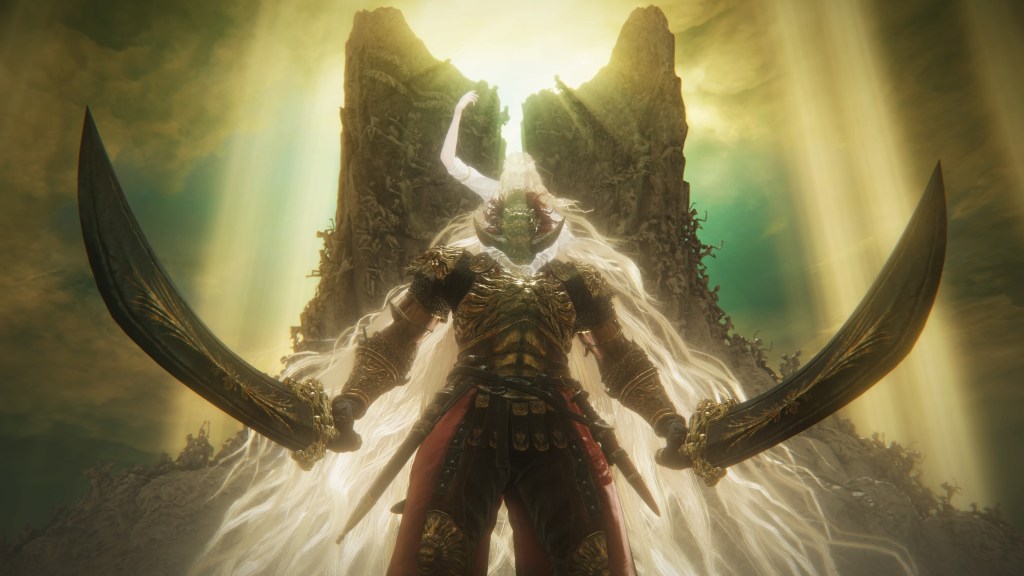
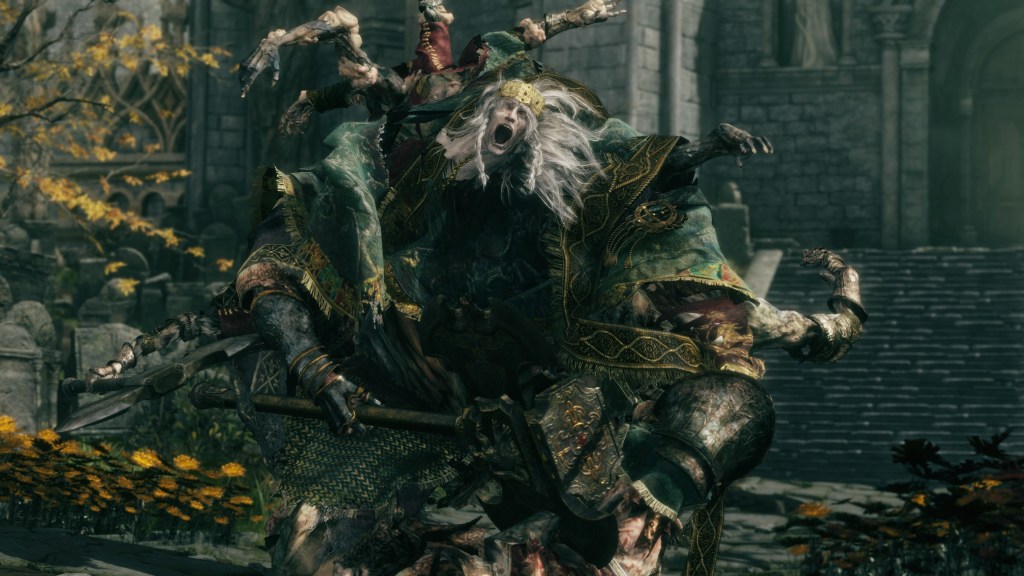

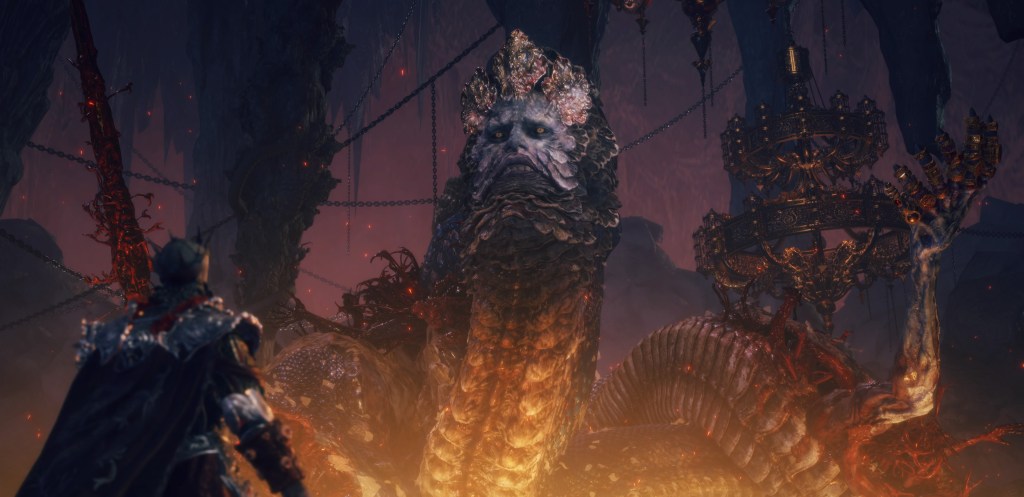
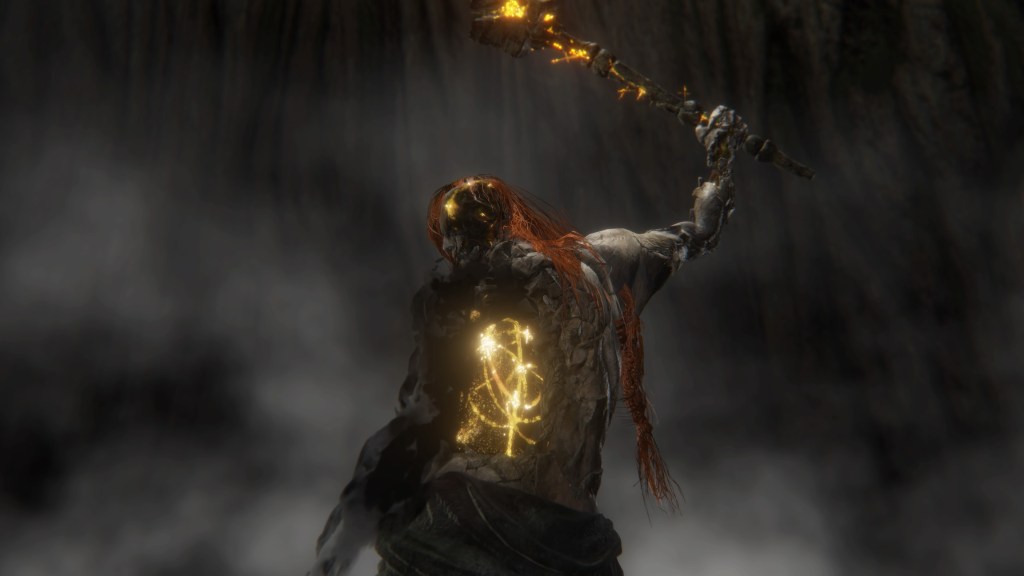
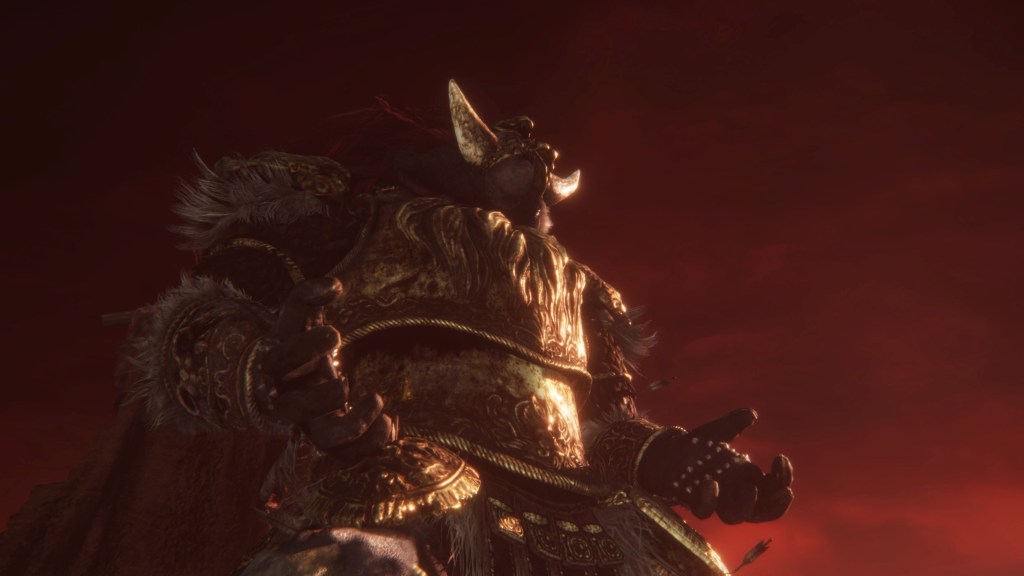

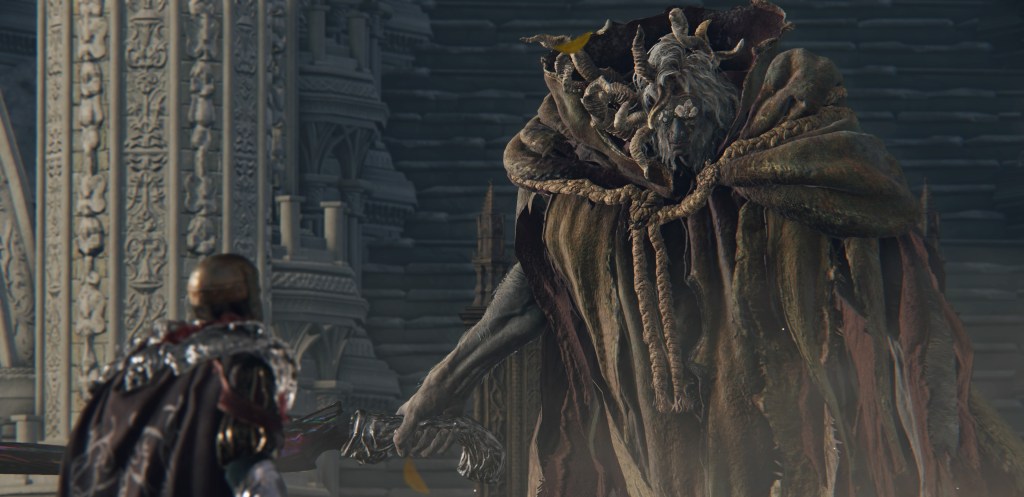
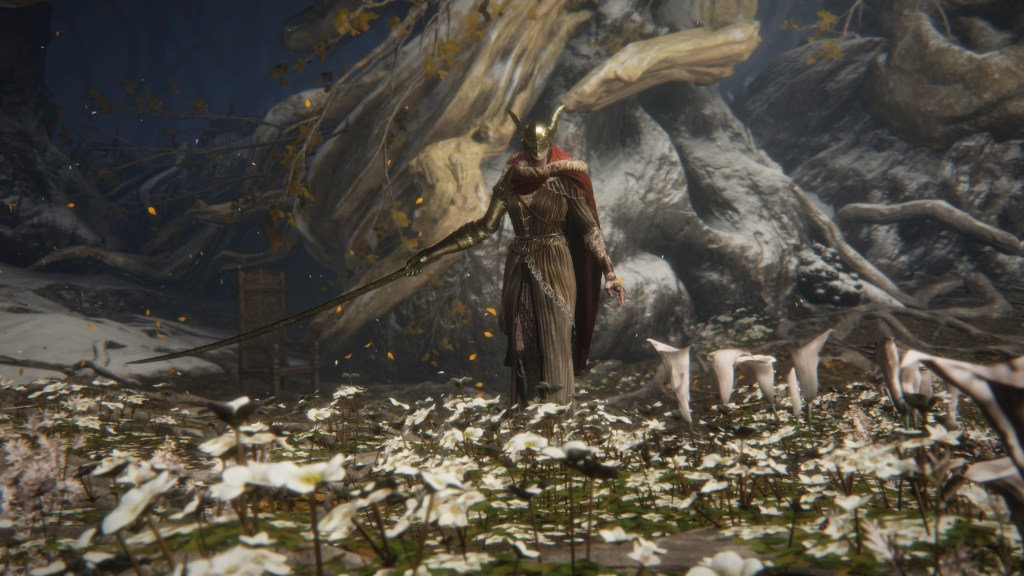
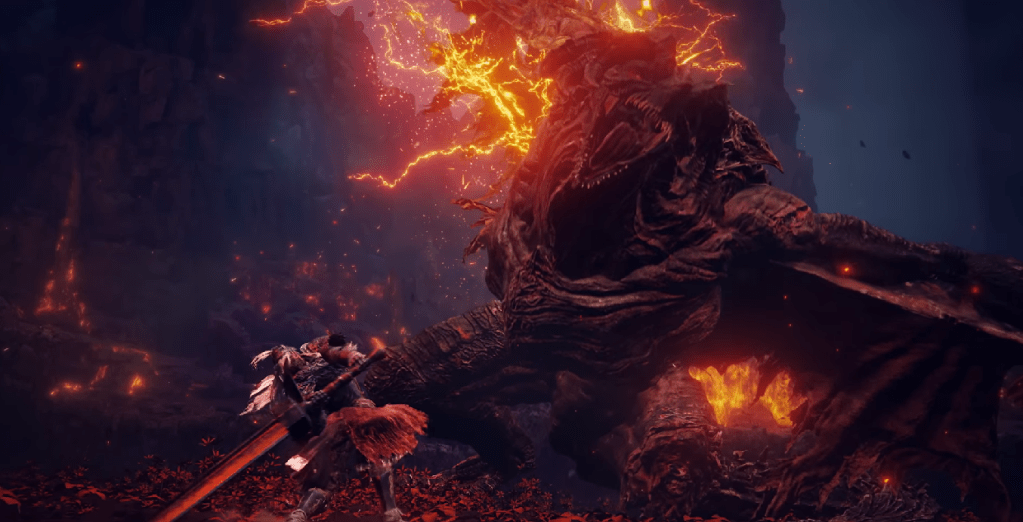
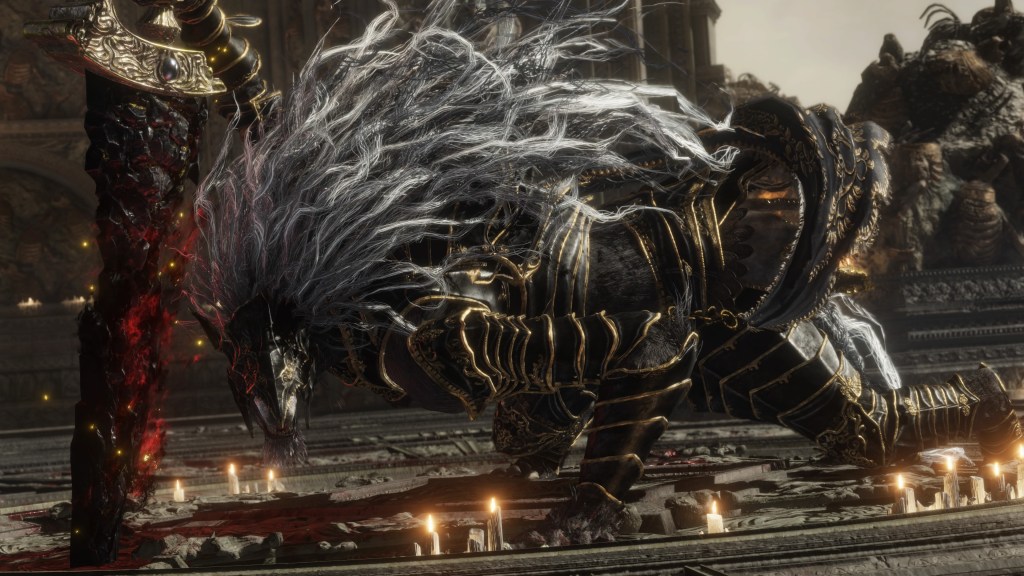


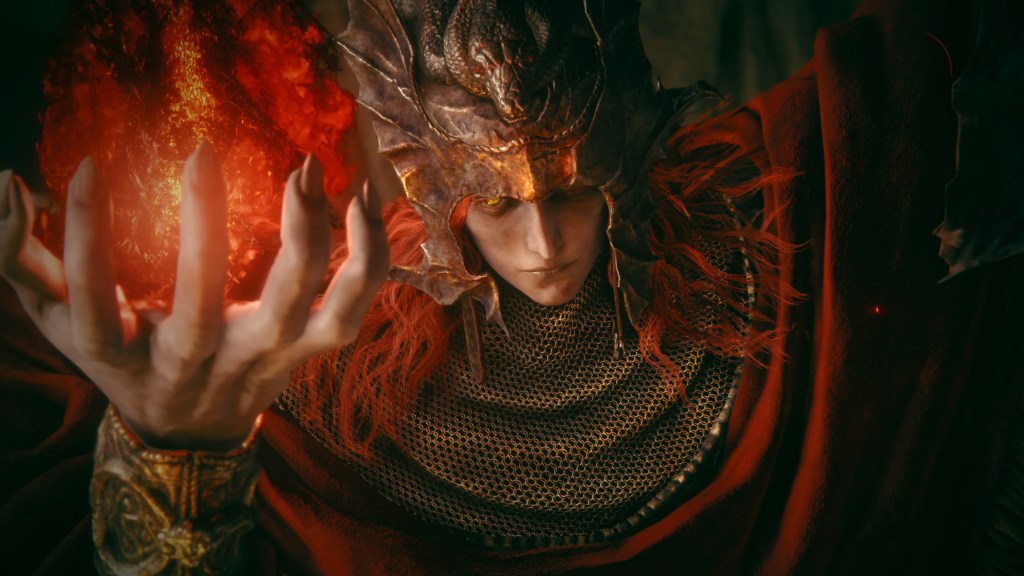
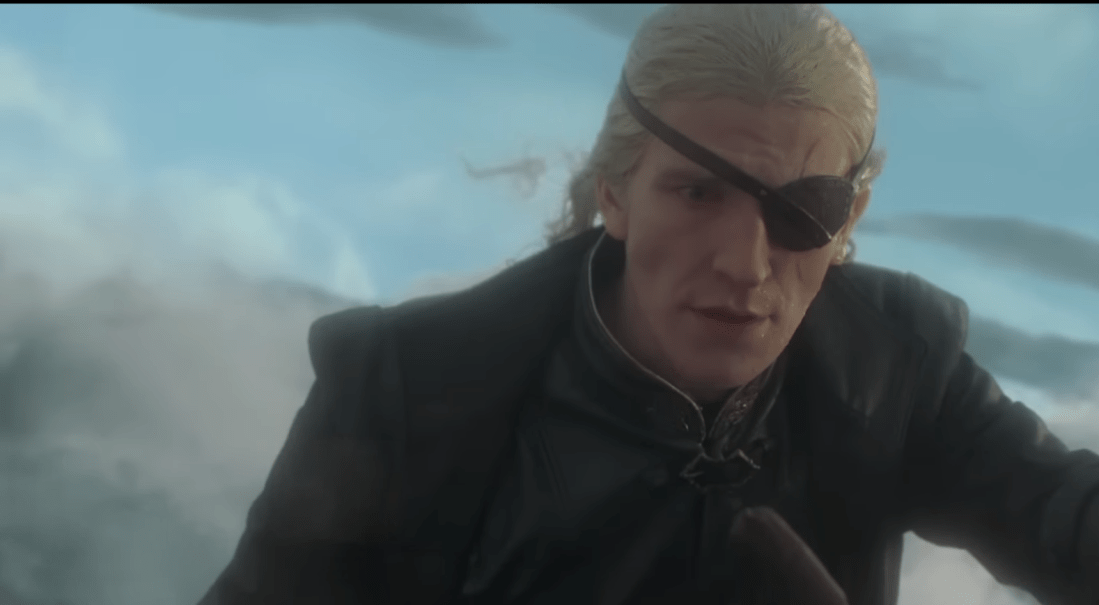


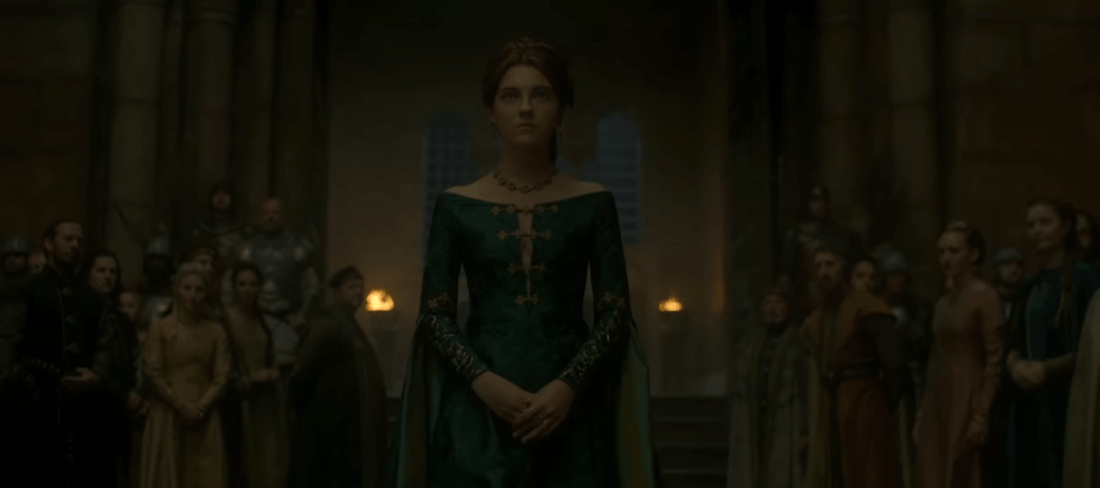
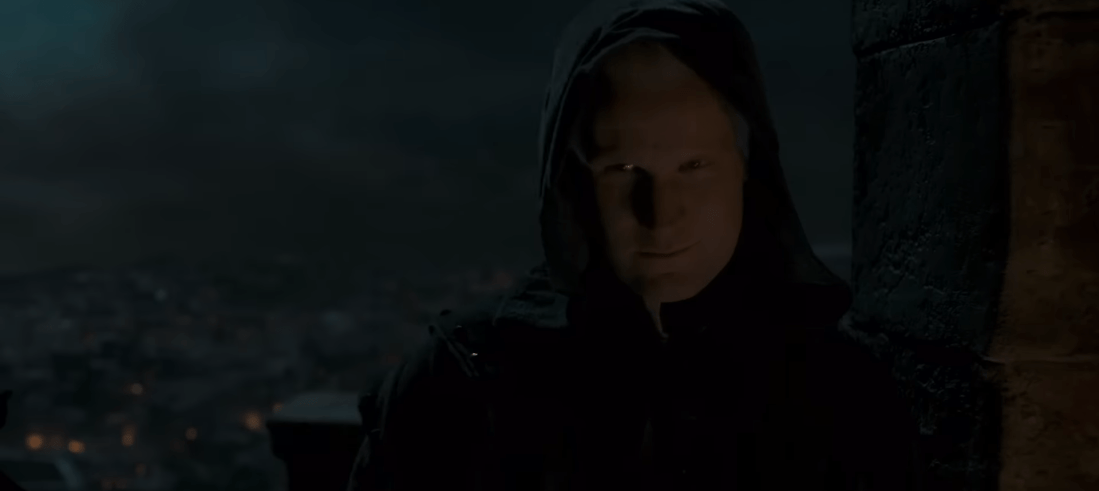
 THE REVIEW MONSTER