![]()
In the sixteenth episode of My Hero Academia’s fourth season, Todoroki, Bakugo, Inasa and Cammie began their provisional licence course and came up against the most dangerous, manipulative and evil foe they have had to face yet… children!
In all seriousness though, “Win Those Kid’s Hearts” is an average episode of My Hero Academia because it serves as a clear example of when the manga is better than the anime.
This is evident through a lot of the humor, which were much funnier in the manga, like when Gang Orca throws Todoroki, Bakugo and Inasa away while screaming, “disciplinary action!”
On top of this, the character development is not as good as the manga because a minor flashback that helps Bakugo grow is left out entirely.
And then, there are the kids whose hearts they are trying to win over.
While their oddly very good psychological manipulation is very funny, the episode acting like they are some kind of big threat with intimidating music is very cringey.
The saving grace of “Win Those Kid’s Hearts” is definitely the humor and Endeavor.
Now, while I did say that the humor is a downgrade from the manga, a lot of it is still pretty funny and will honestly be hilarious for anime only viewers.
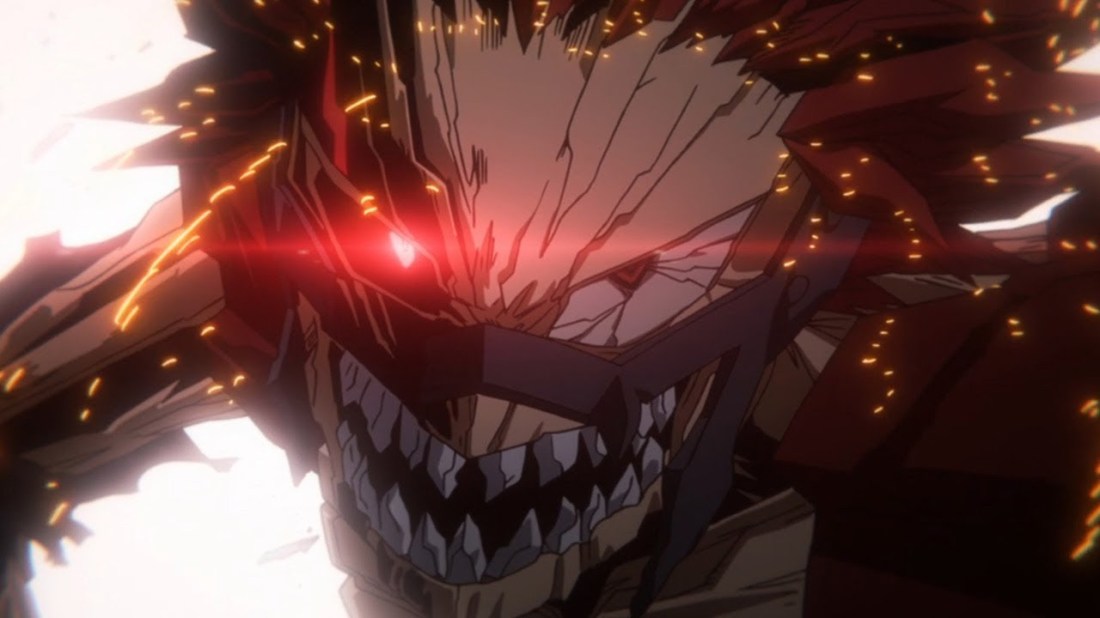
And then there is Endeavor, who has excitingly begun the character arc that has made him one of the manga’s best characters.
When I made my Top 10 My Hero Academia Characters list, Endeavor barely missed out but, with all that’s happened in the manga since then and looking back on prior chapters, he is clearly a better character than I gave him credit for and should have been on the list.
If you are an anime only, you may be confused about this since Endeavor is an abuser and are probably wondering how any character arc could make him likeable.
Well, to you, I say wait until the end of the season and then you will understand.
As for the current episode, Endeavor’s scenes are definitely the best because we get insight into his character, and already see how he has started to grow through seeking All Might’s help by asking him what it means to be the symbol of peace.
Endeavor asking All Might for advice is something he would never have done when he was first introduced, showing the pressure he is now under now with his new title as the number one hero.
This growth makes him the most interesting character of the episode.
Also, him constantly shouting “SSSSHHHOOOOOTTTOOOO!!!!!” is just really funny.
Overall, “With Those Kid’s Hearts” is an average episode of My Hero Academia.
It is definitely down there with “The Scoop on UA Class 1-A” as one of the weakest episodes of the season.
Still, it is a good episode what with the humor and Endeavor’s character development.
Tag: Anime
My Hero Academia Season Four Episode Twelve, Unforeseen Hope Review: A Dark Future.
![]()
For an episode titled “Unforeseen Hope”, My Hero Academia’s twelfth episode of the fourth season is almost anything but hopeful.
The heroes just seem to get kicked down every time they get up this episode, with Overhaul utilizing his quirk in the most unique and disturbing of ways.
He actually destroys his and Nemoto’s bodies and then fuses them together to create an even more powerful form.
This goes to show not only how powerful Overhaul is but also how cruel he is, especially in comparison to the League of Villains.
Despite not being good people, the League actually do care about one another.
Overhaul, on the other hand, appears to not be capable of empathy at all, throwing his allies away like pawns and using them for his own gain.
This is taken even further with his treatment of Eri, as a flashback shows he cruelly dissembled and reassembled her every time her body got too tired to handle the experimentation.
Honestly, Overhaul is giving All For One a run for his money in terms of evilness.
Still, you cannot deny his intelligence in using his quirk the way he did, which even allows him to defeat Nighteye’s foresight, mortally wounding him.
Nighteye, a character who can literally see into the future, being defeated by Overhaul shows how much of a threat he is.
Not only this, but Nighteye’s foresight also predicts a dark future, as the hero says he saw that Overhaul would kill him and Deku before escaping with Eri.
Along with this, we also got more of an insight into Nighteye’s reasoning for not using his quirk, as he believes that by using it on All Might he has condemned his friend to a horrible death.
However, despite all this misery, I do suppose the episode title is right in one way as Deku promises to change the future and save Eri.
It will be hard for him to do so, though, because he will have to contend both with Overhaul’s over powered strength and his emotional manipulation of Eri, as shown when he uses Nemoto’s quirk to guilt trip her into coming back to him.
Poor Eri.
I just want to wrap her up in Lemillion’s cape and never let her go (epic foreshadowing).
In any case, alongside the great fight with Overhaul, we also got more insight into Rock Lock and the League.
Rock Lock’s development shows us why he was so tough on Deku and Mirio because he has a kid of his own and was just looking out for them.
As for the League, it appears they have made a new plan to make Overhaul “cry like a baby”, as Toga put it; something I will be very interested to see.
The episode ends with the party literally being crashed as Ryuko, Ochako, Tsuyu, and Nejire smash through the ceiling using the Eight Bullets member Rikiya Katsukame.
Overall, “Unforeseen Hope ” is another great episode of My Hero Academia.
My only big criticism is that I feel some of the shots of Overhaul’s new form look a bit off animation wise because of how static he is, which really drew me out of the action and drama.
Other than this, though, “Unforeseen Hope” is a crazy episode that is sure to lead to an even crazier one.
My Hero Academia Season Four Episode Nine, Red Riot Review: A Spear and a Shield vs a Shield and a Shield.
![]()
I have been anticipating the ninth episode of My Hero Academia’s fourth season “Red Riot” for a while because it was this moment in the manga that propelled Kirishima to one of my favourite characters.
Thankfully, the episode did not disappoint, adapting both Kirishima’s backstory and his and Fat Gum’s fight with Kendo Rappa and Hekiji Tengai perfectly.
“Red Riot” picks up from Tamaki’s battle with three of the eight bullets of the Hissaikai and sees Mimic send Fat Gum and Kirishima into a dark room where they are meet by Rappa and Tengai for a battle of spear and shield vs shield and shield.
In this case, Rappa and Tengai make for the perfect combination, with Rappa dealing out devastating blows as the spear and Tengai providing an almost impenetrable shield for them.
As for Kirishima and Fat Gum, their status as shields puts them at an instant disadvantage from Rappa’s punches, especially Kirishima who is hit so hard that his hardening starts to come undone.
Que, emotional backstory to inspire him to save the day.
In all seriousness, Kirishima’s backstory is one of the best in the series so far.
Kirishima always tried to help people but he lacked something to dive in head first.
In comparison, fellow student Mina Ashido had all the qualities of a hero in the making, protecting her friends from a gigantic villain (who will be important later) by giving him the wrong directions to a hero agency.
Kirishima witnesses this but is unable to act and this causes a massive blow to his confidence.
It is then that, as if by fate, he happens to see an interview from his favourite hero, Crimson Riot, who tells the story of how someone died because he did not act and now his biggest fear is being unable to act, which drives him forward.
Inspired by this, Kirishima set out to completely remake himself into a chivalrous hero, apologizing to the girls he did not help, (even though they have no idea who he is but that is not important) and even dyes his hair red, prompting playful teasing from Mina.
The scene between the two is very sweet and is what made me start to ship them when I read the manga.
Back to the situation at hand, upon remembering why he set out to become a chivalrous hero in the first place, Kirishima leaps in front of Fat Gum to protect him with a burst of inspirational music.
This allows Fat Gum enough time to transfer his quirk from a shield to a spear as he stores the power of the blows Rappa is unloading on him into pure energy, which he releases, along with all of his fat.
It is here that we get our first look at him without this fat and I am sure a number of Squidward “oh no! He’s hot!” memes will be generated from this.
In any case, it is with this release of energy that Fat Gum defeats Rappa and Tengai with the help of Kirishima.
Kirishima’s growth during this episode is fantastic, with his self doubt transitioning perfectly into his backstory, which then leads to his heroic return to the fight at the end of the episode.
Likewise, Fat Gum also gets his moment with the reveal of his spear attack.
It is not just Kirishima and Fat Gum that shines in “Red Riot”, though, as Rappa instantly stands out as the only member of eight bullets who does not follow Overhaul blindly.
The reasons for this will most likely be unveiled in the next episode and make him the most interesting member of the Hissaikai, with the exception of Overhaul himself.
Overall, “Red Riot” is the best episode of My Hero Academia‘s fourth season so far with Kirishima’s character arc being particularly exceptional.
My Hero Academia Season Four Episode Eight, Suneater of the Big Three Review: The Parallel of Hero and Villains.
![]()
After episode seven of My Hero Academia‘s fourth season “GO!” promised a followup, action filled episode with its cliffhanger, that episode “Suneater of the Big Three” delivers on this.
As the title suggests, the main character of this episode is Tamaki Amajiki, AKA Suneater, who goes on an emotional journey in his fight this episode, with plenty of parallels between him and the villains he fights.
These three villains are members of the eight expendable bullets, Toya Setsuno, Yu Hojo, and Soramitsu Tabe.
Thrown out and left for dead by society, these three were eventually taken in and brainwashed by Overhaul to fight for him to the bitter end.
“Even trash has its pride,” Yu states at one point, showing the extent that they have been influenced by their boss.
And, just as these villains are influenced by Overhaul, Tamaki is influenced by Mirio in a clear parallel.
As a child Tamaki had no self confidence until Mirio came along and inspired him to believe in himself, just like the villains were lifted out of their situation by Overhaul’s brainwashing.
This presents a two sides of the same coin parallel, where Tamaki has been correctly influenced and the villains negatively, leading to to conflict.
Tamaki’s battle with the villains is absolutely fantastic with both sides utilizing their quirks with ingenious tactics.
Toya and Yu make a great combination, until Tamaki uses his Chimera Kraken technique, forcing them to call in Tabe to even the odds again, only for Tamaki to outwit them and finally take them down.
The constant back and forth on who was winning this fight made for an intense battle where the viewer would have been unsure of who would win right to the very end.
As for other moments in the episode, they are also very well done, with another great display of Sir Nighteye’s quirk and plenty of heart warming flashbacks to Tamaki’s friendship with Mirio.
All in all, “Suneater of the Big Three” is the best episode of season four so far.
However, it will almost certainly be overtaken next episode, which will see an even more intense fight with Kirishima, along with revealing his backstory, which I am very excited to see animated.
My Hero Academia Season Four Episode Six, An Unpleasant Talk Review: The Dark Truth.

The sixth episode of My Hero Academia‘s fourth season, “An Unpleasant Talk” sees the beginning of the formation of the plan to take down Overhaul, along with the reveal of the dark truth behind Eri.
It is a exposition heavy episode, which may not please some, but is necessary to pushing the story forward and also gives us insight into many of the characters, specifically Deku, Mirio, Nighteye and Overhaul.
Starting with the villain of this arc, the reveal of Overhaul’s cruel nature is adapted perfectly with the great image of him symbolically looming above a captured Eri, with the viles containing her blood floating around them.
This symbolic image is undoubtedly one of the series’ darkest visuals with its reveal that Overhaul is experimenting on Eri to create a drug that will remove people’s quirks.
Along with this, it really goes to show how cruel and uncaring of a person Overhaul is, as he is willing to hurt anyone, even children, if it furthers his goals.
The affect this has on Deku and Mirio is immediate as they are both instantly full of guilt upon realizing what is happening to Eri because they failed to rescue her.
The weight of the guilt they now have on their shoulders will now drive their story throughout this arc, as proven by Deku being so distracted that he cannot continue his school work properly.
Along with him and Mirio, Nighteye also has a heavy burden, refusing to use his foresight on any of the task force members he has assembled to take down Overhaul and rescue Eri.
The reasons for this are clear, based off episode four’s flashback to his fight with All Might.
Nighteye predicted his eventual gruesome death and he does not want to risk predicting any similar fate for his fellow heroes.
However, such a fate will need to be risked by these heroes if they want to save Eri.
Her situation is made abundantly clear in the post-credits scene with one of Overhaul’s minions trying to win her trust with gifts and fake affection.
However, Eri can only think of Deku, having never experienced the kind of warm embrace that he gave her.
Thankfully, the rest of the episode is not as depressing as this because there are some light hearted moments towards the beginning.
Moments such as Tsuyu and Ochako saying how cute Fat Gum is, only for him to offer them candy, brought a smile to my face.
One bit that also made me laugh was the Beatles reference where Deku, Ochako, Tsuyu, and Kirishima are shown walking across the street just like the band did on Abbey Road.
I wonder what brought on that reference?
In any case, “An Unpleasant Talk” is a solid episode of My Hero Academia that, while mostly exposition, sets up the goals and fears of its characters very well.
My Hero Academia Season Four Episode Five, Let’s Go, Gutsy Red Riot Review: Rise of Kirishima.
![]()
I said in my Top 10 My Hero Academia Characters post that Kirishima became one of my favourite characters because of the Overhaul arc and the fifth episode of season four “Let’s Go, Gutsy Red Riot” is the start of that.
This really was Kirishima’s episode, building up his development for this arc nicely with a great starting point as we see him begin his work study with the hero Fat Gum and Tamaki.
Speaking of these two, they are also two characters who I am excited to see more of as they grow as characters and use their quirks.
Fat Gum’s quirk is absorption, which allows him to entrap enemies, and Tamaki’s quirk is manifest, which allows him to take on the qualities of whatever he eats.
It is Kirishima’s quirk that takes center stage this episode though, with him developing a new technique Unbreakable to fight a minor villain (which may be a reference to the M. Night Shyamalan film, or maybe I’m reaching).
This villain takes quirk enhancing drugs, forcing Kirishima to use his new move to protect civilians in an epic moment that was perfectly adapted from the manga.
The music and animation here are stellar and the only problem is that it is a bit distracting at how stupid the civilians are by not getting out of the way.
Although, this does not take away from Kirishima’s achievements, thankfully, with him beginning his development for the season upon remembering some advice from Bakugo.
This also goes to show just how much Bakugo has changed because he most likely would have yelled at Kirishima when they first met rather than give his friend the advise he needed.
Back to Kirishima, after Fat Gum manages to successfully capture the villain we get brief flashes to Kirishima’s backstory, which will play out in a future episode.
I also like how vague these flashes are because they will probably leave many anime only viewers wondering what they are seeing until it is officially revealed.
Along with Kirishima’s development, we also get our first look at the quirk removing bullets developed by Overhaul, which the minor villain uses to temporarily remove Tamaki’s quirk.
This bullet is revealed by Shigaraki in his meeting with Overhaul, which leads to Shigaraki agreeing to a form of partnership, though under very tense circumstances.
Less tense is the opening fight sequence where we see Ochako and Tsuyu on their work study with Nejire and the pro hero Ryukyo.
Their scene was mainly used to show what the two Class 1A students are doing and to highlight Nejire’s quirk but it has fantastic animation in the opening fight.
It is also here that a meeting between many pro heroes led by Sir Nighteye is first brought up.
This meeting to discuss the threat Overhaul poses will appear next episode and fully unveil the disturbing truth about his quirk removing bullets.
Overall, “Let’s Go, Gutsy Red Riot” is another solid episode of My Hero Academia with a great starting point for Kirishima’s character arc.
My Hero Academia, Season Four, Episode Three, Boy Meets… Review: The Two Meetings.
![]()
“Boy Meets…” is the perfect title for My Hero Academia season four’s third episode because it is all about Deku meeting and interacting with multiple characters for the first time.
Sir Nighteye is the the most obvious meeting, with more than half the episode focusing on him and Deku’s interactions.
Their conversation and later game did a great job of emphasizing the parallels between them, with multiple similarities and differences.
Despite Nighteye not liking Deku because of how he views him as usurping Miro’s chance of inheriting One For All, they are still similar with the both of them being massive All Might fans with their own ways of showing that.
Nighteye looks past these similarities, though, still not believing Deku to be worthy of One For All and tests him by having Deku try to defeat his quirk foresight, which allows him to accurately predict his decisions for an hour.
Deku both fails and succeeds in the test, failing to grab the stamp Nighteye is holding but succeeding in making sure he does not damage all of Nighteye’s All Might merchandise.
This shows that Deku is able to multitask in his fighting, proving himself to Nighteye, even if he was planning to accept him no matter what.
However, Nighteye’s intentions in accepting Deku are not entirely pure because he hopes to convince him to give up One For All to Mirio.
This meeting sets up both Deku and Nighteye very well for their arcs in this storyline.
What is by far the most exciting scene, though, is Deku’s second meeting of the episode with Eri and Overhaul in the after credits scene.
I am overjoyed to see Eri make her appearance in the series because she is one of my favourite characters and the centerpiece of the season.
Deku’s meeting with her and Overhaul also gets the ball rolling for the big story of the arc so I cannot wait to see this first meeting truly play out next episode.
Aside from these two well done first meetings, the rest of “Boy Meets…” is more decent setup that is actually anime original.
The scene of Aizawa informing Uraraka and Tsuyu that Nejire wants to talk to them, and telling Kirishima that Amajiki wants to meet with him, is probably added to provide a starting point for where we will see these characters in subsequent episodes.
Most interesting, though, is the moment Aizawa tells Tokoyami that the Number Three Pro Hero, Hawks, has offered him an internship.
For those of you expecting to see the two working together, I would not get your hopes up.
This is because Hawks does not have a role in the arcs season four will be covering and will not get a big part in the story until the fifth season.
As a result, this mention of Hawks is most likely just fan service to hype up his future appearance.
Although, who knows?
Maybe we could get an anime only scene of Hawks and Tokoyami’s internship this season.
That would be interesting.
Overall, “Boy Meets…” is a good setup episode for My Hero Academia that both builds up Nighteye’s character arc and gets the ball rolling with Overhaul and Eri’s role in the story through them meeting Deku.
It will be great to see the first interaction Deku and Mirio have with Overhaul and Eri in the next episode.
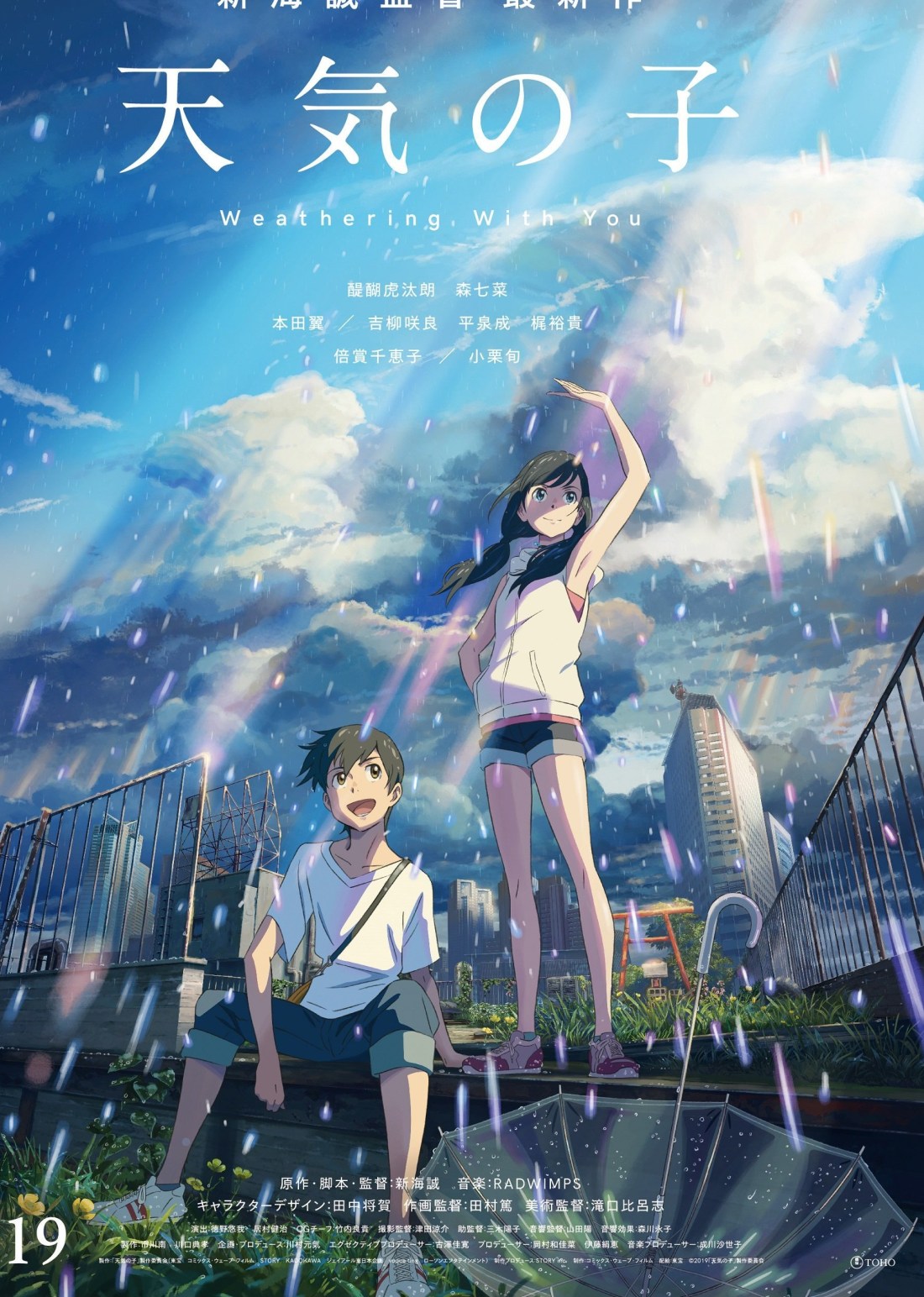
Weathering With You Review: A Beautiful Anime, Even if it is a Bit too Similar to Your Name.
![]()
After seeing Makoto Shinkai’s fantastic Your Name, I immediately bought a ticket to his next film Weathering With You, which I had the pleasure of watching last night.
And, yes, I said pleasure because Weathering With You is another great film from Shinkai.
While I did not feel as emotionally involved as I did when watching Your Name, I still cannot deny that Weathering With You is a mesmerizing film with amazing animation, relatable characters, and an intriguing story.

The story follows Hodaka Morishima (Kotara Daigo), a high school student who runs away to live in Tokyo, which is experiencing an unusually long sequence of rainfall and storms.
It is there that he meets Hina Amano (Nana Mori), a girl with the power to make the sun come out through prayer.
What follows is a moving romance between the pair as they work together to bring sunshine to the people of Tokyo.
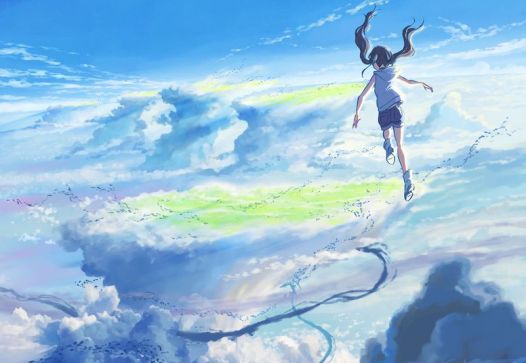
The first thing I have to praise about Weathering With You is, of course, its incredible animation.
Shinkai is an absolute artist when it comes to animating his films and Weathering With You is no exception, having numerous jaw dropping shots of animation.
The way the rain and sun look in this anime is just gorgeous, which serves to bring the audience into the story a lot more.

As for the story itself, the romance of Hodaka and Hina being wrapped up in this supernatural plot provides numerous interesting and moral questions about climate change that I found to be quite compelling.
The movie is also pretty funny as well, with probably my favourite gag being the cat Rain’s constant judgmental looks.
The side characters of the film are also likeable and you understand where a lot of them are coming from.
For example, a man that Hodaka meets upon arriving in Tokyo, named Keisuke Suga (Shun Oguri), had an interesting motivation by the film’s third act that, while never outright stated, was heavily implied, making his involvement more interesting.

The music is also great with the song “Grand Escape”, which played in the trailer, being particularly special.
There are even appear a few Your Name cameos for fans of that film as well.
Speaking of Your Name, though, this is where I have a problem with Weathering With You because it follows a lot of the same story beats as Shinkai’s previous film.
I remember sitting in the theater and thinking, this is just like Your Name!
This did not ruin the experience but it was pretty noticeable by the film’s third act and ending.
Still, I found Weathering With You to be another great Shinkai film, and is one I would highly suggest watching in theaters so you can see the gorgeous animation on the big screen.
It is my favourite animated film of the year so far.
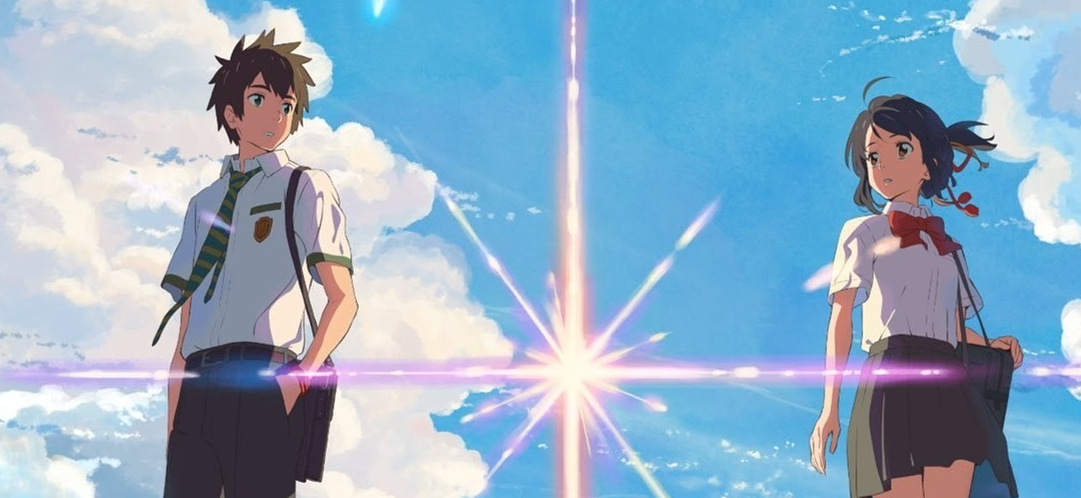
Your Name Review: The Most Gorgeous Animated Film I Have Ever Seen.
![]()
When I reviewed A Silent Voice a few weeks ago, I said that it was probably my favourite anime.
Well, after seeing Makoto Shinkai’s Your Name, I can now say it has some serious competition for that title.
Like A Silent Voice, I had heard a lot about Your Name before I finally watched it.
I knew it was a body swap anime with romance but that is all I knew about it.
And you know what?
I am so glad that I did not know anything else about it because Your Name absolutely blew me away with its brilliant story twists.

This was surprising to me because, from what I heard of the plot, I thought I would find the anime a little too sappy and cliche for my tastes.
Thankfully, this was far from the case.
The anime follows two high schoolers, Mitsuha Miyamizu (Mone Kamishiraishi) who lives in the small town of Itomori, and Taki Tachibana (Ryunosuke Kamiki) who loves in Tokyo.
Both lead normal lives until the two begin to mysteriously switch bodies every so often.
As they struggle to deal with this strange situation, they gradually learn more about one another and start to develop feelings for each other.
And that is all I will say about the film because, as I said, I love the direction the story takes and I do not want to spoil it for you.
The twists are engaging and add so much tension to the story, which is supported by the buildup of Mitsuha and Taki’s relationship.
I do not often enjoy romance films but this one was so moving I just could not help but get invested.
There were quite a few times towards the anime’s ending that I ended up crying.

I also laughed a lot too, and I do not think there is a single joke that does not land.
One of the things I find interesting about Your Name is the Japanese elements that I missed on the first viewing, like the Red String of Fate.
When I researched this it made the themes of the film even more engaging.
Along with this, and the engaging story and romance, one of the big things that stuck out about Your Name to me was its absolutely gorgeous animation.
My jaw dropped multiple times in the first few minutes because I was astonished at how beautiful it all looked.
From viewing this film, and looking up his prior works, it is clear that Shinkai is an artist when it comes to animating his films.
With its beautiful animation, great story telling, and investing romance, Your Name is another anime film that should have been nominated for an Oscar, however, (aggravatingly but predictably) it was denied this.

One interesting thing to note, though, is that Shinkai did not want Your Name to win an Oscar and actually advised people to stop watching it.
This is because the film is “incomplete” according to him since they ran out of money.
But, I think Shinkai is being too hard on himself.
From what I hear about what was supposed to be in the finished product, I actually think Your Name works better without these scenes, for the most part.
The one thing about the film that I think could have been done better is the relationship between Mitsuha and her father, which does not get a resolution.
However, the rest of the movie is so engaging and moving that it overshadows this one issue by a wide margin.
Want to know how much I loved Your Name?
I loved it so much that, after finishing it, I immediately bought a ticket to see Shinkai’s next film Weathering With You, which I will be seeing on August 22.
Your Name is a fantastic anime film.
It has jaw dropping animation, a thrilling story, and a romance that will make you tear up by the end.
Top 20 Attack on Titan Episodes as of Season Three – 10-1.
10. To You in 2000 Years: The Fall of Shiganshina, Part One – Season One, Episode One.

Attack on Titan has one of the greatest first episodes ever with “To You in 2000 Years.”
There is a lot of speculation about what this ambiguous title means, especially with recent events in the anime and manga, and I am sure that we will only get a full understanding of it once the series finally ends.
Aside from the interesting implications of the title, “To You in 2000 Years” also perfectly introduces the viewer to the series, giving them an idea of what to expect.
The episode has no big exposition dump and, yet, it brilliantly manages to inform the audience of its setting in its allocated runtime.
The chilling opening alone, tells us everything we need to know,, showing that humanity is hiding behind huge walls to escape from cannibalistic, naked giants, and use steampunk weaponry to fight them, only for a massive Titan to show up and destroy their temporary peace.
As the episode goes on, building up to this Colossal Titan’s arrival, anticipation and dread is grown in the viewer by the Titans only being referred to as “them.”
We are also introduced to our main trio of Eren, Mikasa and Armin, and get an idea of their personalities, and the first mention of the basement from Grisha.
Then everything goes to hell with the Colossal Titan’s arrival and destruction of the gate. In the final, horrifying moments, amplified by the music, we witness Eren’s desperate attempt and failure to save his mother as she eaten by the Smiling Titan right in front of him.
“To You in 2000 Years” perfectly sets the viewers up for what to expect when watching Attack on Titan; horrifying deaths, great action and music, and one amazing intro song in “Guren no Yumiya.”
9. Perfect Game – Season Three, Episode 16.

I am honestly surprised I have not mentioned any episode from Season Three Part Two yet.
It is my favourite arc of the series so far but I have not put any of its episodes on the list until now.
That said though, you can now expect to see a lot of them starting with “Perfect Game”, which is easily one of the most horrifying episodes of season three.
Largely featuring the attack from the Beast Titan, we are shown just how much of a threat he is with him throwing crushed rocks to rip the remaining members of the Survey Corps to shreds.
This moment is a clear case of the anime rising above the manga in terms of quality.
The shot where the rocks crash into the mini-town, blood shooting up from wherever they hit, followed by the agonized screams of Erwin’s soldiers is horrifying.
Speaking of Erwin, I would like to applaud his final piece of character development delivered in this episode.
Erwin has the perfect character arc.
At the beginning of the series we thought he was a soldier dedicated to saving humanity no matter what, only to learn in the Uprising Arc that he had selfish reasons for fighting, and this idea of a dedicated soldier he presented was a facade.
This brings us to “Perfect Game”, where Erwin throws away his selfish dream, giving up all hope of seeing the basement so he can die finally becoming what he always pretended to be: a soldier who puts humanity first.
I would not change Erwin’s character arc one bit.
As for the rest of the episode, it features Eren and the others’ attempted attack on Bertholdt’s Colossal Titan.
This is where my issue for the episode lies in its poor CGI for the Colossal Titan.
Otherwise, “Perfect Game” is an amazing episode, which shows off Erwin’s flawless character arc.
8. Scream – Season Two, Episode 12.
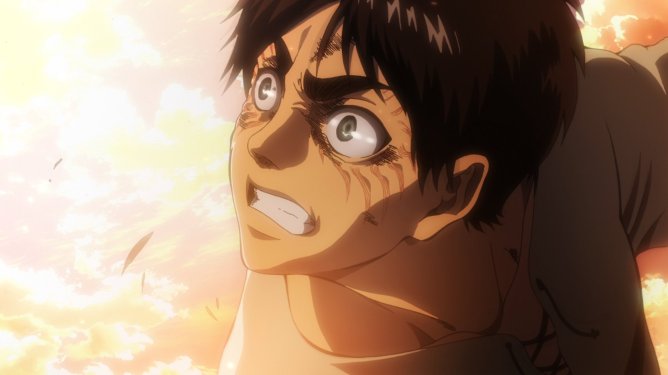
The season two finale “Scream” was the first time I was able to fully relate to Eren.
Prior to this, I found it impossible to do so due to how angsty he was.
“Scream” changed this by delivering an emotionally devastating scene for Eren that had me tearing up.
This scene was the death of Hannes and Eren’s gut wrenching reaction as he breaks down into a fit of hysteria, laughing, crying and shouting at the cruelness of the world.
Yuki Kaiji does a fantastic job in this moment, and I even heard he hurt his voice while performing it.
Then there is Mikasa, whose supportive words to Eren are moving, and work as the perfect resolution for the setup about her old scarf in the season one premiere “Beast Titan.”
Granted, I think this scene was made romantic when it actually was not supposed to be but it still works.
As for Hannes, his tragic character arc is perfectly done.
After living with the guilt of letting Eren’s mother die by the Smiling Titan in the series’ first episode, he finds the resolve to fight and redeem himself by attempting to kill that same Titan.
Sadly, it is not to be because Hannes is eaten right in front of Eren’s eyes in a mirroring of Carla’s death, prompting Eren’s traumatized reaction.
However, this does lead to Eren accessing the Founding Titan’s powers for the first time, a moment that becomes even more impactful after the events of season three.
Many other characters get to shine as well with Historia getting an awesome moment to the song “Barricades”, and Ymir deciding to go with Reiner and Bertholdt in what is unfortunately her last scene.
The final minutes of “Scream” gives us conformation that Titans have been humans the entire time, and also our first look at the Beast Titan’s user, Zeke.
This, combined with Erwin’s inspirational words of “this wall hiding the truth will fall”, gets the viewers hyped for season three.
“Scream” is an excellent season finale but not the best of Attack on Titan.
No, that award goes to…
7. The Other Side of the Wall – Season Three, Episode 22.
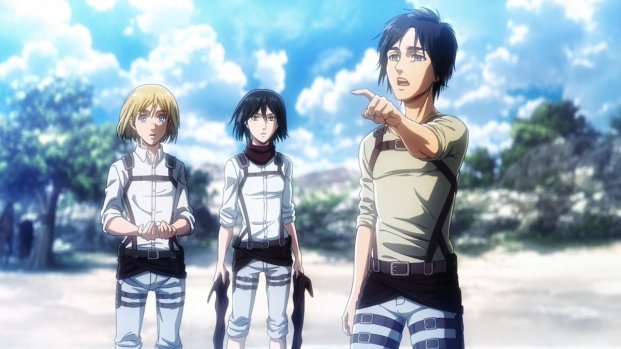
“The Other Side of the Wall” is the best season finale of Attack on Titan so far.
Rather than the action packed finales of “Wall”, and the previously mentioned “Scream”, “The Other Side of the Wall” is more of a representation of many of the characters’ personal journeys, and it works brilliantly.
The highlight is definitely the final scene where the Scouts finally reach the ocean after three seasons of build up.
While the reactions of characters like Mikasa, Levi, Hange, Jean and others make for some heart warming and funny moments, the standouts are the very different interpretations of the ocean between Armin and Eren.
Armin’s goal for a long time has been to see the ocean and, upon seeing it, he is overjoyed at reaching his dream and gains new hope.
Eren, however, shares no such optimism, fully realizing the danger he and his friends are in.
He points out that the enemy lies across the ocean and they will never be free until they kill them all, starting the first major point of contention between him and Armin, which will be expanded on in spectacular fashion in the final season.
Eren’s bleak outlook is hinted at throughout the episode, with him flashing back to the memory of his father’s decision to kill the Reiss family, and experiencing a memory of his father seeing his sister’s corpse.
This last one is particularly symbolic in a number of ways, with the censorship of water covering the body being used to foreshadow how the ocean does not represent freedom but death, like Eren comes to realise.
Along with this, we get the reactions of those inside the walls to the truth of their world and Floch’s speech, all of which works very well.
The highlight though is still the ocean scene with its beautiful animation and complex character development.
“The Other Side of the Wall” is the greatest finale of Attack on Titan yet because of this and its amazing use of symbolism and foreshadowing throughout.
6. Wish – Season Three, Episode Seven.

After the exposition dump episode “Sin”, with its explosive reveals and build up to an epic battle, the following episode “Wish” pays off this build up in spades.
It provides a perfect blend of more information, intense battles and fantastic character development.
This development is provided through the brilliant character arcs of Historia, Eren and Kenny, helped by the great jobs done by their voice actors Shiori Mikami, Yuki Kaji, and Kazuhiro Yamaji.
Historia’s decision not to follow in her family’s cycle of self destruction and going against her father for the first time is very inspirational.
Eren crying and telling Historia he never should have happened is a heart breaking moment.
And Kenny deciding to free Eren and just let things happen after his dream is crushed shows us exactly what kind of man he is.
All three of these arcs are fantastic and helped by the brilliant use of music, specifically the OSTs “Zero Eclipse” and “K21”.
“Zero Eclipse” is played when Historia decides to live for herself and, if you listen to the lyrics, it sounds like a love song from Ymir to Historia, almost as if Ymir is cheering her on from beyond the grave.
Then there is “K21”, played when Kenny fights Levi, where the rap lyrics actually state Kenny’s entire motivation; to see if he can become a better man by becoming the Founding Titan.
These OSTs make the scenes they are in a lot more powerful.
Along with this, the exposition is well handled and the action is exhilarating.
A one on one fight between Levi and Kenny, that is not in the manga, is wisely added here, adding more excitement.
Overall, “Wish” is a fantastic episode with great action and OSTs, but the feature that makes it so great is the characters’ amazing development.
5. Hero – Season Three, Episode 17.

Me putting “Hero” at number five probably comes as a surprise.
The reason I think this is because of how much the episode is applauded by fans.
It is both the highest rated Attack on Titan episode on IMDB and the highest rated episode on IMDB ever.
This fact may have caused some people to expect its placement at number one and not number five.
To be clear, I think that “Hero” is an almost flawless episode.
I just like the ones I ranked above it more because of what they did for the overall story.
“Hero” is an action driven episode but one that delivers what is, without a doubt in my mind, the best action in all of Attack on Titan.
Levi’s fight against Zeke is absolutely stunning.
It is well built up and the payoff is amazing with its animation, music and voice acting.
I really have to give props to Zeke’s voice actor Takehito Koyasu, who pulls off the agonized screams of the Beast Titan’s user in such a satisfying way.
The moment Zeke is saved by the Cart Titan is one brimming with despair, again due to the amazing music and voice acting.
Then there is the final battle of the episode, with Armin and Eren facing off against Bertholdt, and Mikasa, Jean, Connie, Sasha and Hange facing Reiner.
What follows is a devastating battle of sacrifice as Armin gives up his life to buy time for Eren, showing his conviction in saving humanity despite how it may cost him his dream of seeing the ocean.
Marina Inoue does an amazing job here as usual.
Back to the fight with Reiner, Hange’s return (minus one eye) is a cheer worthy moment that allows Mikasa to turn the tables on Reiner.
Accompanying both these epic moments is another great OST, “SymphonicSuite Part 2-2nd”, which lets the audience feel the full magnitude of what happens.
The following scene, which sees Eren take out the Colossal Titan thanks to Armin’s plan is a truly amazing moment, highlighted by the lack of music.
With Bertholdt defeated, Eren lands next to the burned body of Armin and declares he was always a hero.
Never truer a word has been spoken in this anime.
My one gripe with the episode is (you guessed it) the CGI Colossal Titan, which looks particularly jarring when it cuts from it to a regular image of it, which actually looks good.
Other than this, “Hero” is a flawless episode and I can see why many people consider it their favourite.
While you might be surprised that “Hero” comes in as my fifth favourite episode, I guarantee you that you will be surprised at what tops it.
4. Children – Season Two, Episode 10.

Surprise!
I know, a lot of you probably did not expect “Children” to end up coming in at number four above “Hero.”
Not many people actually talk about “Children” and I think this is a shame because it is one of the underrated episodes of the entire series.
It is also one of the most important.
The roots of so many twists are planted with the Coordinate, Marley, Eren eating his father, Ymir’s death, the curse of Ymir, the paths, and countless other twists all being foreshadowed in this episode.
On top of this, most of this foreshadowing comes with an incredibly emotional, yet powerful, flashback to Ymir’s past.
This backstory instantly made Ymir one of my favourite characters.
Watching her go from abandoned homeless girl, to worshiped goddess, to cursed as a devil, only for her to rise again and achieve a second chance at life was amazing to see.
The moment she wakes up after eating Marcel and realizes she is free is the most powerful scene in the entirety of Attack on Titan for me.
It was the first time I teared up when watching the series, and this was helped by the amazing OST “Call of Silence.”
As for the rest of “Children”, it is just as good, providing a further look into Ymir’s mind through how she is literally willing to throw Historia’s future away if it means she can see her again, leading to Ymir capturing her.
Then there is Hannes who, at the end of the episode, declares his resolve to die if it means getting Eren back, setting up his tragic death in the season finale.
This ending also shows how far Hannes has come because he never would have been so willing as to give his life at the beginning of the anime, as proven by him abandoning Carla in “To You in 2000 Years.”
Overall though, “Children” is Ymir’s episode and it makes me sad that we never got to see more of her every time I watch it.
If I did have one criticism it would be that the episode does make a few of the twists it foreshadows quite obvious.
Although, this does still not diminish how fantastic and underrated I think “Children” is.
3. Warrior – Season Two, Episode Six.
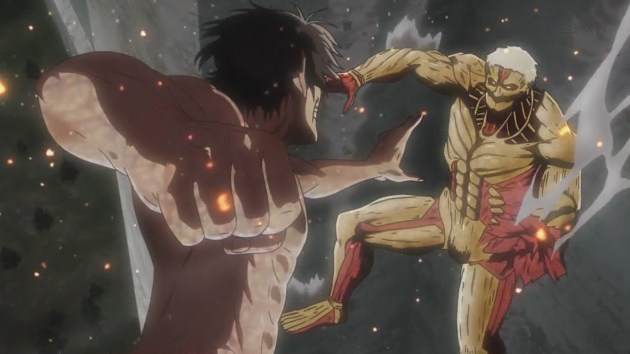
“I’m the Armoured Titan and he’s the Colossal Titan.”
I remember the first time I heard these words come out of Reiner’s mouth and I had to rewatch the scene a few times just to make sure I had not read the subtitles wrong.
But no, I had heard right.
“Warrior” literally delivers one of Attack on Titan‘s biggest twists in the most offhand way possible and it is amazing.
Many writers and directors try to create subversive moments in their works to surprise the audience but it rarely achieves in creating anything emotionally meaningful.
To all those struggling to write a subversive twist I would advise them to watch the Armoured and Colossal Titan twist in “Warrior.”
Most of the episode builds towards this twist and, after Reiner finally says it, the rest of the episode deals with the shocking aftermath.
Right from the opening minutes of “Warrior”, it is clear that something bad is about to happen.
The wind slowly blowing the flags and the pitter patter of rain makes for an ominous tone that is not fully explained until Reiner makes his shocking admission.
What I especially love about this twist is not only does it answer the question of who are the Colossal and Armoured Titans in an amazingly casual way but it is also used as one of the first hints we get to Reiner’s damaged mental state
We can see just how delusional Reiner has become through how he just expects Eren to come with him.
Then there is the symbolism with Reiner’s reflection being visible in a puddle, representing his split personality.
Another piece of symbolism sees the wind snapping a flag, which represents Reiner finally cracking under the pressure, causing him to decide to transform, sparking the incredibly intense final moments of the episode.
As Reiner tries to attack Eren, Mikasa intervenes, only for her attacks to give Reiner and Bertholdt the means to transform, which they do in explosive fashion to the incredible OST “YouSeeBIGGIRL/T:T.”
In the chaos and confusion, Reiner grabs Eren who begins to cry, reminiscing on the friendship he thought he had with the two traitors, providing me with the first moment I ever sympathized with him.
However, he pushes this pain aside, resorting to rage and transforming into his Titan, throwing a punch at the Armoured Titan and bringing an end to this explosive episode with an explosive cliffhanger.
“Warrior” is an incredible episode and I will always remember it for its amazingly subversive way of delivering a twist.
It was my favourite Attack on Titan episode in my first list, until the top 2 episodes came to dethrone it in season three part 2.
2. Midnight Sun – Season Three, Episode 18.

Choosing between my top two favourite episodes of Attack on Titan was incredibly difficult.
I had to nitpick to decide which episode would come in at number one and number two.
And, at the end of the day, I chose “Midnight Sun” as my second favourite episode.
Midnight Sun is, without a doubt, the most emotional episode of Attack on Titan so far.
I cried twice the first time I watched it, and this was even after I had already read the manga.
I knew what was coming but this episode still got to me.
It is that good.
Picking up after the loss of Armin and Erwin in previous episodes, “Midnight Sun” reveals that both of them are still barely alive.
However, more importantly, it also presents the other characters with the opportunity to only save one of them.
The decision of who should have eaten Bertholdt and inherited his Colossal Titan is one that divides fans to this day.
Both are incredible characters that are deserving of getting the injection and surviving.
This is pointed out by both sides of the argument, with Levi, Hange and Floch trying to save Erwin, and Eren and Mikasa trying to save Armin.
It eventually comes to blows, paying off the incredible teaser that was at the end of “Night of the Battle to Retake the Wall”, and Levi eventually wins in the debate, going to inject Erwin.
What follows is an emotional scene of Levi flashing back to events with Erwin, Armin, and Kenny.
Deciding that Erwin has suffered enough and deserves peace, Levi instead injects Armin who eats a screaming Bertholdt.
Erwin later passes on peacefully.
The deaths of Erwin and Bertholdt are hard hitting to say the least.
I said earlier that I believe Erwin has the perfect character arc so I find it fitting that he dies here in such an emotional way.
But, Erwin and Bertholdt are not the only deaths in this episode because it is also confirmed that Moblit sacrificed himself to save Hange.
Moblit may have been a minor character compared to Erwin and Bertholdt but he was still quite likeable, and his death serves as another gut punch.
A big feature that helps get all of this emotion across in “Midnight Sun” is the almost complete lack of music, which shows off the brilliant and heartbreaking voice acting when the character are desperately trying to save their friends.
Along with the emotion, there are a few great scenes that set up important future reveals as well, like the first interaction between Eren and Zeke.
The thing that made me put ’“Midnight Sun” at number two and not number one is its animation issues.
For example, there is one shot where the animators forgot to put Erwin in the shot.
These issues may be incredibly minor but they are enough to make “Midnight Sun” barely miss out on the top spot, which goes to…
1. That Day – Season Three, Episode 20.
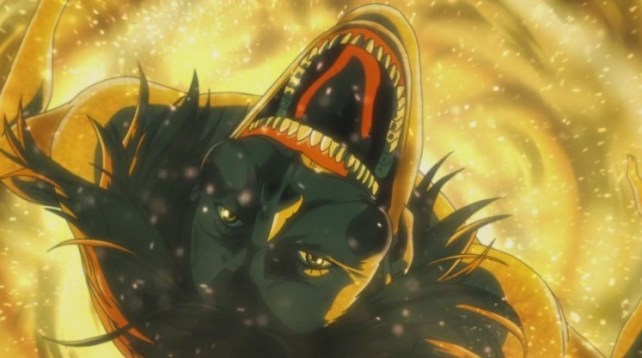
“That Day” is what I believe to be the best episode of the Attack on Titan anime so far.
It was a close call between this episode and “Midnight Sun” but, in the end, That Day won because of what it did for the story as a whole.
The 20th episode of Attack on Titan‘s third season literally changes the entire direction of that story, changing the central enemy of our main characters from the Titans to humans.
Picking up after the big post-credits cliffhanger scene of “The Basement”, which revealed that human civilization is thriving outside the walls, “That Day” begins the tragic backstory of Grisha Yeager and reveals the supposed origins of the Titans.
I say “supposed” because these origins are littered with propaganda so the Marleyans can make one side look better than the other to justify generations of hatred.
The story of Ymir Fritz, and the thousands of years of ethnic cleansing under her descendants, raise a lot of questions that will be incredibly interesting to see how Isayama answers.
How ever he does it though, Marley certainly have no questions because they accept the story blindly, using it to justify oppressing all Eldians and forcing them into ghettos.
This is where we met a young Grisha when he tries to make his sister, Faye, happy by showing her an airship.
Unfortunately, Grisha’s kind act leads to her murder where she is tragically fed to dogs by the disgusting Major Gross in a shocking moment.
As a result of his loss, Grisha begins to hate Marley, causing him to join the Eldia Restorationists who are led by the mysterious Owl.
It is here that Grisha meets the last descendant of the royal family, Dina Fritz, who he marries.
Que one of the massive twists of the episode when it is revealed that the son they have is actually Zeke, making the Beast Titan Eren’s half brother.
The tragedy of this only continues as Zeke eventually turns his parents and the Restorationists into Marley for how they treated him.
Tortured for information and then take to Paradis, Grisha is confronted by Gross and his subordinate Kruger once again, and forced to watch as his friends and wife are all turned into Titans, many of whom we have seen before.
Most of these Titans are the ones who attacked Eren in First Battle and, most shocking of all, Dina is the Smiling Titan.
Her promise to find Grisha no matter what she becomes is truly chilling when you think about what it leads to.
Just as Grisha is about to be fed to a Titan by Gross Kruger steps in and feds Gross to said Titan, revealing himself to be both the Owl and the Titan that Grisha will soon inherit.
And so, the climactic episode of “That Day” comes to an end.
Its multiple twists left my jaw on the floor when I first read them in the manga and are perfectly adapted, with many anime only viewers having the same reaction I did.
Not only this, but the episode has a lot of great themes and messages as well, with plenty of comments on oppression, propaganda, and human nature.
Gross talking about how most people like watching brutality while staring right at the camera might as well be Isayama screaming at the viewer, “hey, you’re messed up!”
Then there are hints at future storylines with Eren beginning to reenact Grisha’s memories as Kruger, setting up the scene from Attack Titan where Kruger will see his future memories.
The main thing I love about “That Day” though, is the way it completely changes Attack on Titan‘s story.
The anime will be a completely different beast in season four and it is all because of the twists and turns in this episode.
And that is why I consider That Day to be the best episode of Attack on Titan as of season three.
So, there you have it. My top 20 favourite Attack on Titan episodes. I have been considering ranking all of the episodes but will probably do that after the final season ends, and in a much more condensed way. Along with this, I also plan to do a top 15 or 20 best characters list but, since the series is near its end, I will also be waiting for that to happen before I make it.