
Hello, yesterday, a mass shooting was committed in my home city of Christchurch.
A gunman walked into two mosques and opened fire, and 49 people have been confirmed dead.
This has been a massive shock, not just to everyone in Christchurch, but to everyone in New Zealand because we never thought we would experience such a terrible tragedy of mass murder.
My family and I are fine but there are many good people out there who have lost their loved ones.
I ask that you please donate to help these people at https://givealittle.co.nz/cause/christchurch-shooting-victims-fund or www.everydayhero.co.nz/event/christchurch-shooting.
Even the smallest amount could help greatly.
My thoughts and prayers go out to the victims of this tragedy.
Thank you.
Psycho-Pass 2 Review: I Think my Hue Just got Clouded.
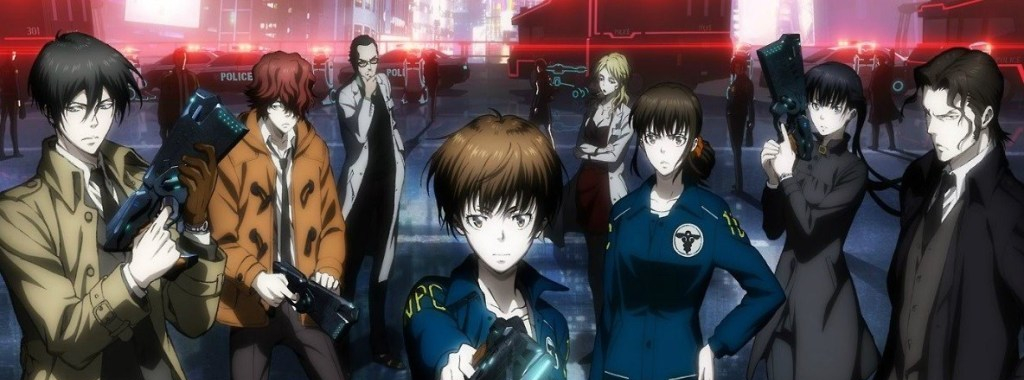

Oh boy, where do I begin with Psycho-Pass 2?
Coming into the second season of this series I was quite concerned, given what I had heard about it previously.
I hoped that what people had told me about this season would not be the case and I would find it just as fantastic as the first Psycho-Pass.
Unfortunately, this did not happen for me because, in this case, the general consensus about Psycho-Pass 2 is absolutely right.
The second season features Akane Tsunemori (Kana Hanazawa) and the MWPSB as they attempt to track down a criminal mastermind, and his large amount of followers, who is, for some reason, able to bypass the Sybil System.
What’s that?
That synopsis sounds almost exactly like the plot of the first season?
Well, you are certainly right because Psycho-Pass 2 has almost the same beat for beat story structure as season one, only in a much more condensed format, and almost anything new added ultimately fails.
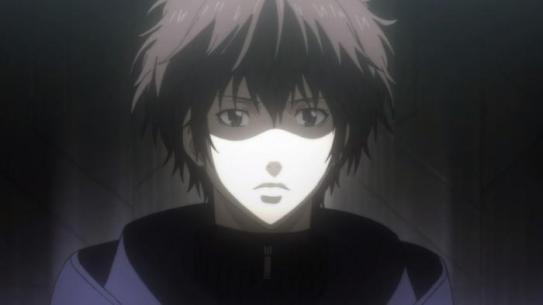
It is incredibly obvious that there was a different team working on this season than the first one, with Kiyotaka Suzuki stepping in as director.
Right from the get go everything feels different, from the way shots are composed, to the lighting, which just makes something seem off.
There are a few great shots here and there, but these are few and far between.
Getting down to the story of Psycho-Pass 2, along with replicating much of the story from the first season, it is also full of massive plot holes and inconsistencies.
The backstory of the villain, Kirito Kamui (Ryohei Kimura), is so ridiculous that it requires a massive suspension of disbelief that I just could not muster, no matter how hard I tried.
Speaking of Kamui, he is also a terrible villain with unclear motivations, and an incredibly bland design you would expect to see in a background character.
He is not the worst character of the season though.
No, that award goes to Mika Shimotsuki (Ayane Sakura), a detective working with Akane who is one of the most aggravating characters I have seen in an anime in a while.
She is arrogant, hypocritical, and her actions by the end of the season make her completely unlikable in every way.

Psycho-Pass 2 feels like it has no idea what it wants to do with its characters from the first season as well.
Akane’s arc is a replica of hers in season one, Nobuchika Ginoza (Kenji Nojima) has no arc to speak of, and, apart from some brief instances, Shinya Kogami (Tomakuza Seki) is not even mentioned.
Thankfully, not every character is badly handled because there are a few new ones I actually found myself enjoying, like Sho Hinawaka (Takahiro Sakurai), and I did appreciate the way the series brought back Joji Saiga (Kazuhiro Yamaji).
So, there are some good things about Psycho-Pass 2, with how it handles some of its characters and a few scenes and specific shots.
However, the negative far outweighs the positives for the season with its plot hole fueled story that just seems like a retread of the first season, mostly boring and sometimes terrible characters, and a less striking cinematic feel.
Psycho-Pass 2 is a very underwhelming experience compared to the first season and I would recommend skipping it.
Captain Marvel Review: Some Good, Some Bad.


The reactions to the newest edition to the Marvel Cinematic Universe have been… interesting to say the least.
Captain Marvel is a film that has been plagued by controversy, with people deciding to hate the movie no matter what and people deciding to love the movie no matter what, despite having not seen it yet.
But I want to judge this film based on its own merits, rather than the quite annoying controversy surrounding it on both sides.
Still, coming into Captain Marvel, I did have my concerns.
The trailers had never really wowed me, and I hoped that they were not representative of the final product.
Sadly, for the most part, they were.
This is not to say Captain Marvel is a bad film, on the contrary there are some great things about it, but there are also numerous features that bring the movie down, creating a mixed bag of a film.
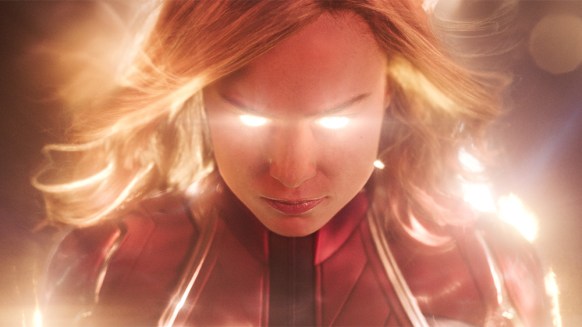
Directed by Anna Boden and Ryan Fleck, Captain Marvel stars Brie Larson as Carol Danvers, the titular Captain Marvel, a Kree Warrior who winds up on earth to hunt down the shape shifting Skrulls, and learns she may have had a life there.
What follows is an engaging mystery to uncover her past and what the Skrull’s true plans are.
The mystery elements surrounding Captain Marvel’s character is the highlight of the film for me, providing numerous twists and turns.
The action is entertaining, especially with the CGI, which de-ages Nick Fury (Samuel L. Jackson) and Phil Coulson (Clarke Gregg) fantastically.
The film also makes great use of the Skrulls’ ability to shape shift.
Speaking of the Skrull’s, Ben Mendlesohn is by far the best actor in the film as the Skrull Talos, who is an engaging character with relatable motivations.

However, this is sadly not the case for Captain Marvel herself because it honestly felt like Larson was pulling her punches, acting wise.
She still turns out a good performance with some great moments, like in the scenes where her buddy-cop relationship with Nick Fury is put on full display, but it still often feels like she is holding back.
Whether this is because of her acting or direction, we will not know until we see her in Avengers Endgame.
But Captain Marvel herself is not the only character in the film who is problematic.
There are quite a few characters who feel out of place like Ronan (Lee Pace), who is completely pointless apart from nostalgia value.
Then there are the numerous plot holes that are created for prior films in the MCU through Captain Marvel’s appearance and interaction with Fury.
As for Fury, the way he loses his eye in this film has to be the worst part of Captain Marvel because of how astonishingly stupid it is.
So, Captain Marvel is a mixed bag overall.
The story, action and performances of some of the actors, especially Mendleshon, push it over into the category of a good film for me, but there are still numerous problems like with Brie Larson’s performance.
That said though, a touching tribute to the recently departed Stan Lee in the opening Marvel logo makes Captain Marvel more than worth the price of admission.
Attack on Titan Chapter 115 Support Review: YMIR FRITZ!?


Well, what a surprising chapter this was.
Coming into Chapter 115 of Attack on Titan, “Support”, I had a feeling that Hange and Floch would most likely come across Zeke and Levi, and save them both.
While I was right about this, I absolutely did not expect everything else that happened in the chapter.
It is a mind blowing read that potentially gives us our first true look at the one and only Ymir Fritz, the most important character in all of Attack on Titan‘s lore.
This is another sign that the manga will soon be drawing to a close but, if this chapter is any indication, that ending should be fantastic.
The reveal of Ymir Fritz is by far the highlight of the chapter, and what she does says a lot about her involvement in the story.
We first see her when Zeke remembers pieces of his past before he dies.
I initially did not notice her because I was too angry about Zeke dying, since I feel he has so much left to do.
But then, after his death, a random Titan appears and, in a gruesome moment, cuts open its own stomach and stuffs Zeke inside.
I was very confused about this so imagine my shock when Zeke emerges from the Titan alive.
This shock was magnified when it is revealed that Zeke was most likely resurrected by Ymir Fritz, using paths.
I am pretty sure this is her, since she looks like the Ymir Fritz from the various artworks, and it will be interesting to see her role in the story.
She clearly wants Eren and Zeke’s plan to succeed, though, because she saved Zeke.
Probably the biggest shock from this scene for me, though, came when Zeke is being resurrected and the panel is an almost exact replica of when our Ymir ate Marcel and turned back into a human.
That means the shot of her in the desert looking up at the stars was actually her seeing the paths.
The fact that Hajime Isayama had this in mind when writing that scene is nothing short of mind blowing.
I have said it before and I will say it again; Isayama has proven himself to be a genius with how he has constructed this story.
The rest of “Support” is just as amazing, with the chapter giving us more of an insight into Zeke’s past, Levi’s fate, an update on Yelena and the Yeagerists, and a surprising ending that has me eager to see what will happen next.
Starting off with Zeke, the flashback before his death and resurrection continues to add towards my level of sympathy for him.
We saw how he considered Xaver his true father, and his feelings when he learned Eren is his brother.
This leads to a scene I have been waiting a very long time to see where the two brothers met in Marley.
Despite their family connection, Zeke and Eren have had barely any screen time together so I am glad the manga is finally delivering on that.
On top of this, Eren tells Zeke that he actually agrees with his plan to sterilize all Eldians.
However, I think this is definitely a lie and Eren is just using Zeke.
To what end, though, I cannot be sure.
As for Levi’s fate, I am fairly certain that he is still alive, just horribly injured.
Upon finding him, Hange tells Floch that he is dead but, given that she glares at him after he asks to check Levi’s pulse and then flees down river with Levi’s body, it is highly suggested that he is still alive.
Even so, Levi is still badly injured.
He has a massive scar on his face, missing fingers, and god knows what else.
Then there is the scene with Yelena and Pyxis, where she has manages to convince him to do what she says because of the contaminated wine they drank.
There are two interesting things to take away from this scene.
The first is that Yelena is using armbands to identify those who have drunk the wine, just like Marley uses to identify Eldians.
Pyxis points this out himself but Yelena says they can learn from their enemies, showing she is no better than Marley.
The second important take away is the presence of Onyankopon.
I wonder why Yelena is so quick to trust him, considering he seems to be on Hange and the Scouts’ side?
I have a theory that he will be the one to break Mikasa, Armin and the others out of their cell.
Finally, there is the surprising cliffhanger of the chapter.
Eren comes to see Gabi to get her to draw out the Warriors by blackmailing her with Falco’s life.
Before he can work anything out though, Pieck walks in, stabs Eren’s guard, and then holds him at gunpoint.
This makes not only for a great cliffhanger but also one that offers some interesting questions.
Where are Reiner and Porco?
What exactly is Pieck’s plan?
Since her Titan is the weakest I cannot see her defeating Eren so she must have something up her sleeve.
Maybe this will lead to her finding out that Annie is alive, who knows?
Whatever the case, this was a fantastic way to end the chapter.
“Support” is a mind blowing chapter with numerous unique twists and turns.
The only problem I have with it is that it raises a minor plot hole about why the warriors did not raid Eren’s basement all the way back in the Shiganshina arc, but this is a nitpick.
The rest of the chapter far overshadowed this minor detail and has me even more interested about where the series will go.
I especially cannot wait to see how Ymir Fritz factors into the story going forward
Psycho-Pass Season One Review: Criminal Commentary at its Best.


Crime Dramas are some of the most loved and successful shows on television so it was natural for anime to take a stab at it.
But with Psycho-Pass, the genre is taken a step further with Science Fiction, Cyberpunk elements incorporated to make for a great piece of commentary on criminality and justice.
Directed by Naoyoshi Shiotani and Katsuyuki Motohiro, The series is set in a future where Japan is ruled by the Sibyl System, which scans people’s mental states to see if they could potentially become a criminal.
If a person registers as a latent criminal through the System’s scanners, they will either be arrested or killed, depending on the situation.
Those who are not killed are either confined or given the chance to join the MWPSB as Enforcers to work under the detectives and hunt down their fellow latent criminals with high Psycho-Pass readings.
One detective, Akane Tsunemori (Kana Hanazawa), is new on the job and thrust into a world of extreme violence where the system pulls the trigger.
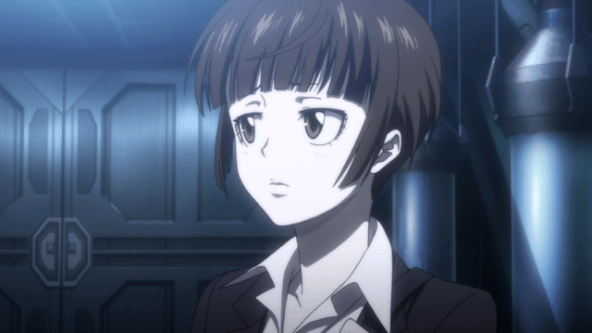
For this review, I will be solely focusing on season one rather than the entire series.
This is because I have heard season two is disappointing in comparison with the first, and since I love season one so much, I do not want it to reflect too negatively on my review of it.
Season one of Psycho-Pass is nothing short of a powerhouse season, with an amazing story, characters and commentary.
The story is absolutely enthralling with its various violent and disturbing cases that push the main characters to their very limits.
However, this also makes Psycho-Pass not for the faint of heart because of the messed up things in this series.
For example, episodes six to eight focus on a teenage serial killer at a girl’s school and this provides some of the most disturbing things I have seen on screen in a long time.

With these constant moments of human depravity, it is no wonder the characters struggle so much, especially Akane, who changes from a naive girl to one of the strongest characters in the series, over the 22 episode season.
We can also see how the cases have affected her fellow detectives and enforcers, with Shinya Kogami (Tomokazu Seki) being a particular focus on how these cases changes a person.
The series even shows how the criminals are affected by the laws, with destroying the system being the main villain of season one Shogo Mikishima’s (Takahiro Sakurai) goal.
Mikishima is a great villain, with a scene between him and Akane in episode 11, “Saint’s Supper,” making him one of the most interesting characters in the series.

Both those on the side of the law and those against it come together in Psycho-Pass to create some truly great commentary on criminality and the justice system.
We see the extreme flaws of the Sibyl System and what it pushes people to commit, and yet, it is the only thing keeping order in Japan.
This commentary makes Psycho-Pass a very thoughtful series.
The season is so good that I only have one problem with it, and that is episode 12, “Crossroad of the Devil.”
This episode focuses on the backstory of a side character Yayoi Kunizuka (Shizuka Ito), who I never found to be all that interesting.
On top of this, her backstory does not serve much of a point in the series.
I felt it would have been better giving a backstory episode to Mikishima, or, better yet, Shuesi Kagari (Akira Ishida), who could have used one, considering where the writers take his character.
Still, even though I did have problems with “Crossroad of the Devil”, it is just a single episode so it does not completely damage my opinion of the anime.
Psycho-Pass is a great anime with some excellent commentary on criminality and the justice system.
It just might be too extreme for some people.
Enjoy it… if you have the stomach to.
Waco: More Biased Than Balanced.


The events of the 1993 Waco Siege at Mount Carmel Center is one of the most controversial sieges in history.
After a shootout, which left ten people dead, a 51 day standoff ensued between the FBI and a cult known as the Branch Davidians, lead by David Koresh.
The standoff ended in tragedy when a fire burned the compound to the ground, killing 76 people, many of them children.
Much controversy followed over whether the FBI had the right to siege the compound, who fired first, and who started the fire that took so may lives.
The answers to these questions may never be fully known, but last year’s six part miniseries, Waco, developed by John and Drew Dowdle, attempts to provide answers, basing them off the books by FBI negotiator Gary Noesner and survivor David Thibodeau.
My first impression of Waco was that it is a great show that expertly tackles the tragic events.
However, after thinking about things a little, I realised the show is quite problematic when it comes to where it shows sympathy.
I will start with my positive thoughts on the miniseries first, and there are many.
Probably the best thing about Waco is its fantastic performances, which allows the audience to sympathize both with those on the side of the FBI and the Branch Davidians.
Michael Shannon is great as Noesner, who is just trying to get everyone out alive, as is Rory Culkin as Thibodeau, who stays with the Branch Davidians out of a desire to protect those he cares for.
Best of all though is Taylor Kitsch as David Koresh himself.
Kitsch steals the show, making Koresh an extremely flawed yet sympathetic figure (although this is where my problem lies but we will get to that later).

On top of this, the story is gripping, with the final episode being difficult to watch.
A quiet moment between Noesner and Thibodeau near the end of the series speaks volumes of the extent of the tragedy that just unfolded on screen.
One of my favourite things about Waco, when I first started watching it, was how it portrays the events, specifically when it came to the FBI.
Many documentaries and new reports I have seen about the Waco Siege paint many of the Branch Davidians as monsters, while the FBI is viewed as doing nothing wrong.
Looking into the event, however, it is clear to see this is not entirely the case.
While the ATF and FBI did have good reason to take down Koresh, because of him marrying and impregnating girls as young as 14, the way they went about it was completely incompetent.
Koresh could have been arrested when he was out on a run, avoiding the opening shootout, and the rash decision making of the FBI lead to rising tensions during the standoff.
I was initially glad to see this miniseries rightfully directing some of the blame at the ATF and FBI for their actions and hoped for a more balanced take on the tragedy.
However, this was not to be because, rather than laying the blame on both sides, Waco appears to lay the majority of that blame at the feet of the FBI, presenting bias towards the Branch Davidians.
As I said, I feel the FBI is partially to blame for what happened, but so are the Davidians.
Koresh’s actions towards minors was certainly enough reason for his arrest but, somewhat disturbingly, the miniseries seems to brush this off rather quickly.
His marriage to underage girls is addressed but only briefly, as if the writers do not want you to lose sympathy for their take on Koresh.
There is nothing wrong with portraying Koresh as a human being, but providing someone with illegal weapons and statutory rape accusations against him with too much sympathy makes for a slightly off putting experience.
The amount of sympathy directed towards the rest of the Branch Davidians is warranted though, because many were not the evil figures they were painted to be by the media, but Koresh’s sympathy sticks out like a sore thumb.
Then there are the questions of who shot first, and who started the fire.
Again, Waco shifts the blame for this at the ATF and FBI.
I think it would have been better for the series to leave these questions a mystery to the viewer.
There is, after all, still much contention about who did what and it would have made for a far more interesting experience, with the audience deciding who they believe to be ultimately responsible.

But, while I did have a problem with the way blame seemed to solely be placed on the government in Waco, it was still highly effective in delivering its message about the government’s power in American lives.
Waco is still a fascinating experience to watch, but one that is more biased than balanced.
The Walking Dead Season Nine Episode 9-11 Discussion: True Terror.
The Walking Dead season nine has been killing it with the Whisperer Arc storyline so far.
The midseason finale served as a great introduction to these new villains and they have only got scarier since the series returned.
These three new episodes, “Adaptation”, “Omega”, and “Bounty”, continue to show that season nine is returning The Walking Dead to its former glory.
I know I have said this many times since season nine began, but Angela Kang was the perfect choice for showrunner because, under her direction, the series has bounced back from a low point in quality that many of us were concerned it could never recover from.
There are so many differences that improve on the series’ comic counterpart.
This is surprising to me because, off the top of my head, I cannot recall a time when the show has had a change that was better than the comic since season five.

Character development is truly where these new episodes shine, with many characters, like Daryl, having great scenes.
It is the new characters that steal the spotlight though, because Magna’s group, Lydia (Cassady McCliny), and Alpha are already miles better than their comic versions.
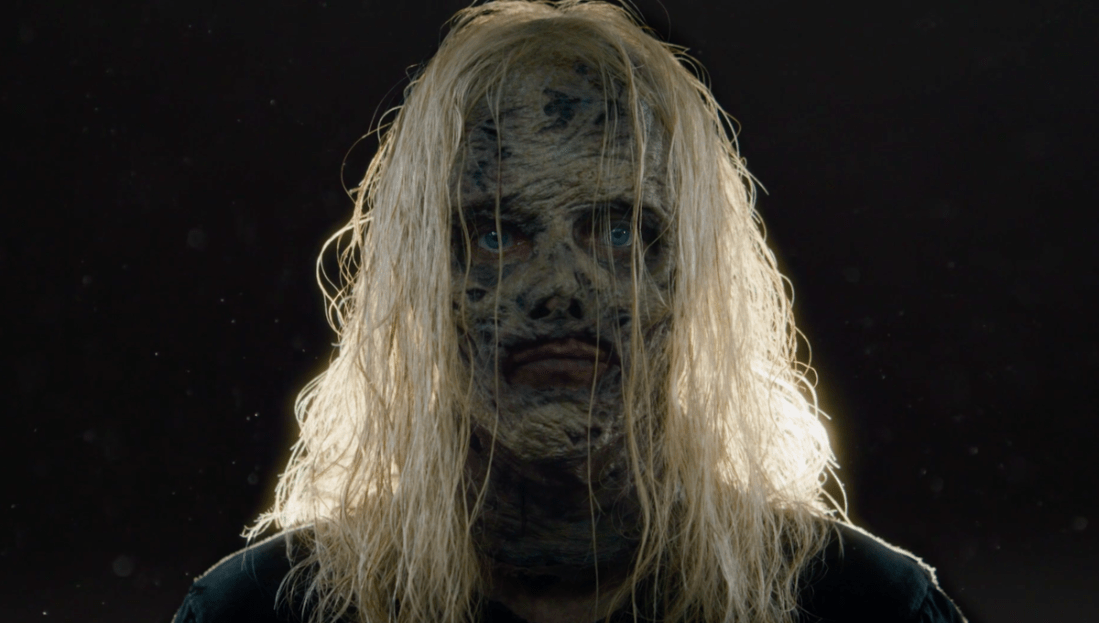
Samantha Morton’s Alpha is the true standout of these characters, with her being one of the most terrifying villains in the show’s history.
I love how they gave her this dirty look to fit with her savage nature as a Whisperer.
It was odd how, in the comics, Alpha’s skin was clean, despite wearing literal human skin all day, so this is an improvement.
Morton is also fantastically scary as the antagonist.
Watching the promos, I was originally unsure about her accent but, after watching the episodes, I can say it works perfectly.
Her arrival at the end of “Omega” is nothing short of chilling.

Speaking of these episodes, they range from good to fantastic.
The first two, “Adaptation” and “Omega” are the good episodes.
They have plenty of amazing scenes but some moments do feel out of place and drag a little, especially in “Omega”.
This is not the case for “Bounty” though because it is already one of my favourite episodes of season nine.
“Bounty” truly shows what monstrous acts the Whisperers are capable of, with a mother Whisperer leaving her own baby to be eaten by the Walkers because it is too loud.
This new scene is very shocking and is a great addition to the show.
It also leads to one of the show’s scariest moments in recent memory, with Connie rescuing the baby and fleeing into a cornfield.
It is here where she constantly has to fend off the Walkers, and it is made all the more scarier because she is deaf.
It felt like something that would be seen in A Quiet Place.
“Bounty” is just a great episode, with the only negative I have being the blatant stupidity of Henry (Matt Lintz).
Other than this, and a few missteps though, the first few episodes of The Walking Dead season nine’s second half continues the show’s climb of better quality.
It has me very excited for The Walking Dead‘s equivalent of the Red Wedding, which we will surely see by the end of the season.
And, with what we have got so far, I am sure Angela Kang can pull it off.
The Dragon Prince Season Two Review: Improved Animation and Story Telling.
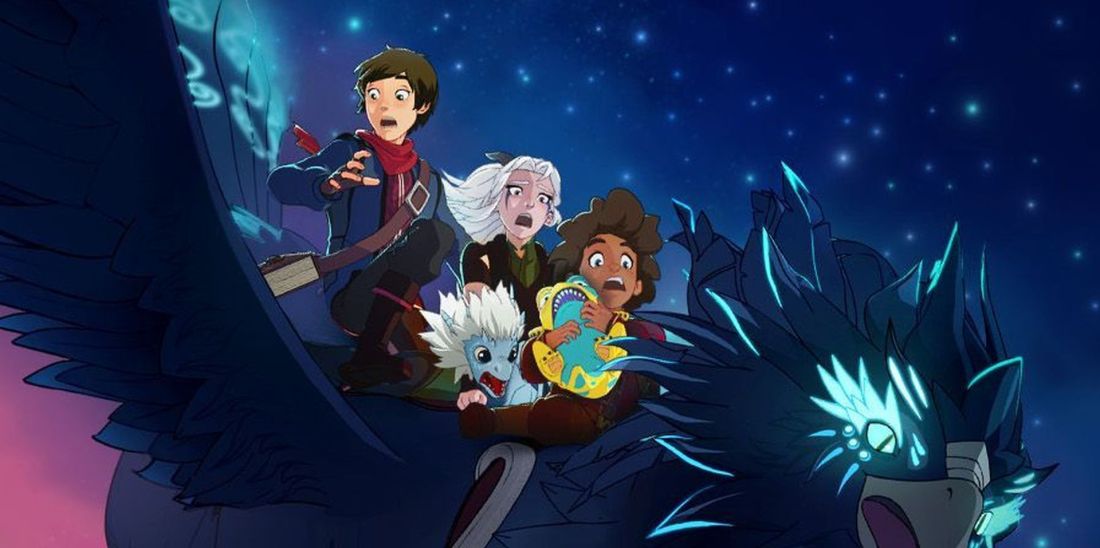

Although I did enjoy the first season of Netflix’s The Dragon Prince, I did find it to be a frustrating experience.
Created by Aaron Ehasz and Justin Richmond, there was a lot to love about season one but its animation and story telling left much to be desired.
Thankfully, I think season two improves and even fixes many of the series’ prior failings.
The biggest issue of season one, for me and a lot of other people, was the animation, with the frame rate being so abysmal that it took me out of many scenes.
This season, however, the animation has been improved greatly.
There are still a few instances of odd animation but it very rarely took me out of the moment and looks great most of the time.

Another element of the show that it improved on is the story.
While there was a lot to love about the story telling in the first season, I found some elements were introduced too abruptly and some story points felt a little odd.
Not for this season though because it all flows naturally.
Admittedly, the first few episodes are a bit of a slow burn but once the season hits episode five the story becomes highly engaging, with fantastic scenes and character moments.
Episode five, “Breaking the Seal,” and episode six, “Heart of a Titan”, are probably the best of the season, allowing me to care for characters I had not previously like Harrow (Luc Roderique) and his wife Sarai (Kazumi Evans).
Speaking of the characters, almost all of them have fantastic arcs.
Callum (Jack DeSena) has one of the best, with him struggling to regain his magic, the one thing that made him feel like he had purpose, which made me sympathize a lot with him.
Then there is Claudia (Racquel Belmont), who goes down a very dark path in the final episode, which has me excited about what will happen with her next season.
We even get some new characters who are just as great as the old ones.
There is the young leader Queen Aanya (Zelda Ehasz), who reminds me a lot of Lyanna Mormont from Game of Thrones, and a funny blind pirate named Villads (Peter Kelamis).
My favourite new character of the season is, without a doubt, the intimidating new villain Aaravos.
He is voiced by Erik Dellums, the voice of Koh in Avatar: The Last Airbender, which makes him even more threatening.
Aaravos is already one of the most interesting characters in The Dragon Prince and I found his storyline with Veren (Jason Simpson) to be the best of the season.

What is not the best storyline of the season, however, is definitely Soren’s (Jesse Inocalla).
It is clear the writers were trying to make us sympathize with his character this season but, given his actions, I found it extremely hard to.
Although, they did redeem him somewhat by the end of the season.
Another small negative I have is the way the season ends.
The final episode, “Breathe”, ends pretty suddenly, making it a jarring experience.
It is not a huge issue but I think they should have ended the season on a different scene.
Overall, the season season of The Dragon Prince is a big improvement on the first, animation and story wise.
I can now confidently say that I am invested in this story.
The Umbrella Academy Review: Family Drama First, Superhero Series Second.

Superheroes are everywhere these days.
There have been so many TV shows and movies about them that every piece of media that has them now has to incorporate something new to be successful.
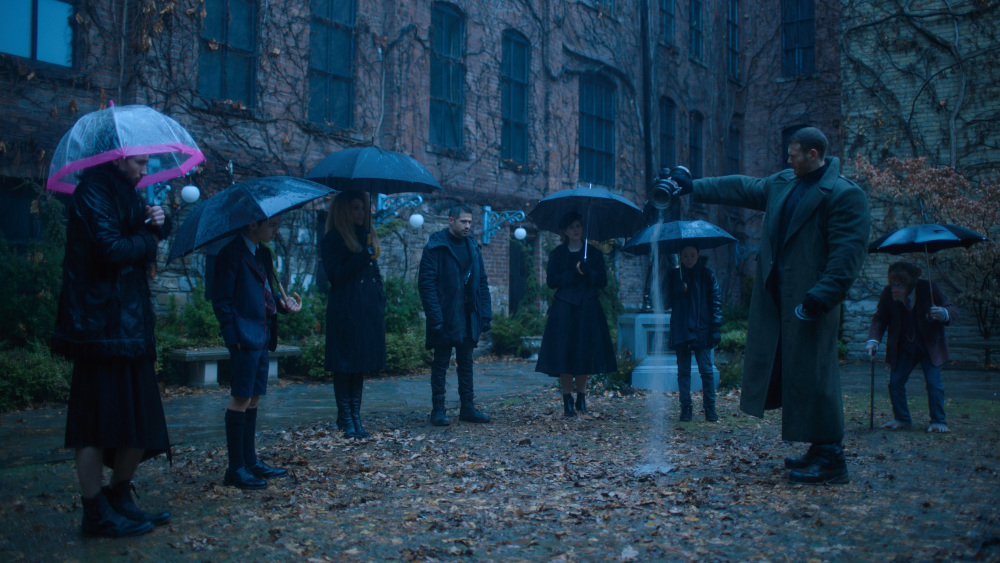
Well, Netflix’s The Umbrella Academy does this in spades by being a family drama first and a superhero series second.
Based off the graphic novel series by Gerad Way, and adapted by Steve Blackman, The Umbrella Academy follows a dysfunctional family of superheroes who reunite after the death of their terrible adopted father (Colm Feore).
After the reappearance of their time traveling brother Five (Aidan Gallagher), they learn that the world will end in eight days and set out to stop it.
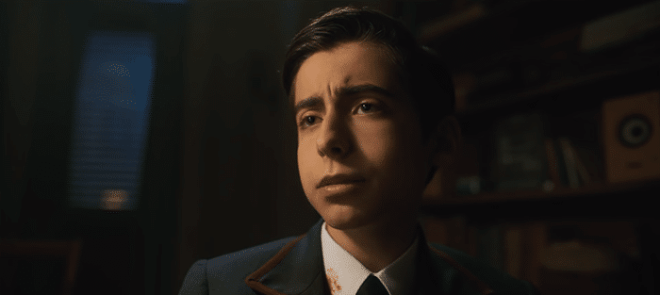
However, despite the coming apocalypse, the series focuses more on the relationships between its characters and it is all the better for it.
The Umbrella Academy is at its best when it pairs different characters together to play off one another.
This is helped by how great these characters are and how good of a job the actors portraying them do.
I cared for every member of the academy, from the sympathetic Vanya (Ellen Page), to the tragic Luther (Tom Hopper), to the regretful Allison (Emmy Raver-Lampman), to the stubborn Diego (David Castaneda), to the drug addict Klaus (Robert Sheenan).
Even the villains are likeable, with me actually cheering for the time traveling assassin Hazel (Cameron Britton) by the end.
The way the story revolves around these characters is fantastic, especially with the ending to episode eight, “I Heard A Rumor”, which had me screaming in shock at what happened.
The CGI is also amazing, with monkey butler Pogo (Adam Godley) looking like he came directly from the recent Planet of the Apes trilogy.

Then there is the music, which is well chosen, even incorporating some from Gerad Way himself into the mix.
But, while I did love all of this, The Umbrella Academy is not without its faults.
While the setup for the story is very interesting, with 43 women giving birth simultaneously, despite not being pregnant, there are numerous questions surrounding this that are never addressed.
For example, what happened to the other children who were not adopted?
Did they get powers too?
Even though these questions are not essential to the overall story of the season, it felt like some potentially interesting lore was being thrown away by it was not being addressed.
Another problem I have is with the final episode of the season, “The White Violin”, which just feels too short.
There are so many moments in this episode that are supposed to be powerful ones but they happen so quickly that there is no time to take it in.
That said, the ending cliffhanger is great.
In the end though, The Umbrella Academy season one is a great start to this series.
The character drama elements to the show are fantastic and bolstered by strong performances from all of the cast.
I hope it gets a second season because I will certainly be watching.
Alita: Battle Angel Review: A Fast Pace isn’t Always a Good Thing.

Live action anime adaptations do not have the best reputation.
They often end in failure by making so many changes to the story and characters that the film is almost unrecognizable from its source material.
Case and point, Dragonball: Evolution and Death Note.
However, this does not appear to be the case with the latest anime adaptation Alita: Battle Angel.
I cannot say that this film mostly adheres to the source material, because I have not read the manga or watched the anime, and some things obviously had to be changed for the film, but it still felt like I was watching an anime series in movie form.
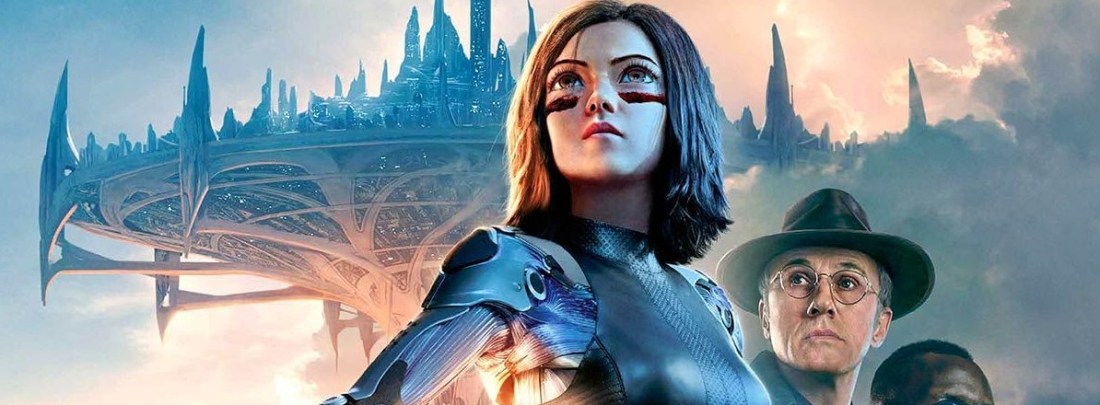
Directed by Robert Rodriguez and produced by James Cameron, Alita: Battle Angel follows the titular Alita (Rosa Salazar), a cyborg who sets out to uncover her past, while sinister forces attempt to kill her.
The film is a visual spectacle with many stunning shots.
Alita herself is completely CG and, while there is the occasional uncanny valley effect, it often looks incredible.
Her struggles and relationships with the other characters also does enough to get you to invest in the story and where it goes.

This is helped by a great cast, among them Christoph Waltz, Mahershala Ali, Jennifer Connely and Ed Skrein, as supporting characters.
As a result of these characters and the way scenes are shot, the action is especially thrilling, with my favourite scene of the movie being a battle between Alita and another cyborg Grewishka (Jackie Earl Haley).
However, even though I am throwing a heap of praise at Alita: Battle Angel, there are sadly a lot of problems.
I said that the film felt like it was adapting a lot from the manga and anime and this causes it to have a very fast pace.
As a result, storylines begin and end very quickly, without much time to take in the impact of it all.
All the story that gets thrown in also makes the film feel a bit too long, with the third act having so many action sequences that I am not sure which one of them is supposed to be the climax.
Another feature that suffers from this fast pace is the character arcs.
Specifically those of Connely and Keean Johnson’s characters.
These two have very similar arcs but, although they have a beginning and end, there is no middle.
Because of this, their characters just seem to quickly change with no build up.
It felt like there should have been a few more additional scenes to make these arcs flow better.
Along with this there, is a storyline line concerning Johnson’s character Hugo, which I found to be rather pointless, considering how it ends.

There are also negative effects to the positive I mentioned earlier that Alita: Battle Angel felt like an anime series in move format.
Because, while some things may work in an anime, this does not mean they will work in a film.
This caused many of the scenes and lines to produce quite a bit of cringe.
I found the line, “I do not stand by in the presence of evil”, to be particularly eye rolling.
Despite these problems though, I would still recommend Alita: Battle Angel.
Like I said, it is a visual spectacle, Alita is an interesting character, and the action scenes are thrilling.
Just do not expect this film to get a sequel because, even though it sets one up, I highly doubt it is going to make back the immense amount of money this movie cost so the studio will not want to risk it.
Alita: Battle Angel has its issues, but it is still one of the better live action anime adaptations.
 THE REVIEW MONSTER