Vinland Saga Season Two Review: From Epic Viking Tale to Epic Farming Simulator.

Vinland Saga is an all-time great manga and the first season of its adaptation, made by Wit Studio, was amazing.
After finally watching it, I was too interested to wait for Season Two and read the manga.
I was quite surprised by the direction Makoto Yukimura took the story, with the setting changing from the brutal viking battlefields to a farm.
This was far from a bad thing though as Yukimura crafted a beautiful arc centering around the horrors of slavery and pointlessness of war.
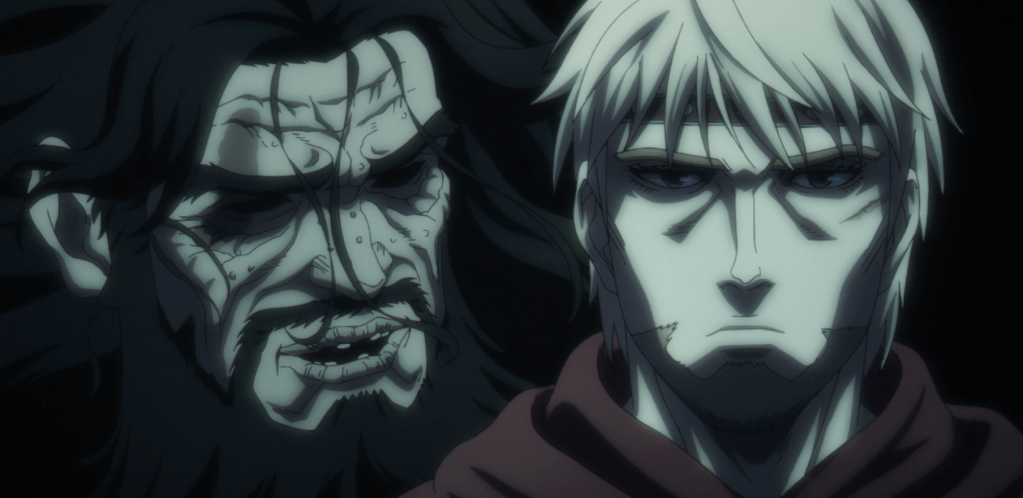
It also serves as the beginning of Thorfinn’s (Yūto Uemura) redemption, and now Studio Mappa has adapted this storyline flawlessly.

Thorfinn’s story of redemption is brilliantly adapted by Mappa.

Season One ended with a tease of various characters important to the future of the story.
One of these characters was Einar (Shunsuke Takeuchi), a man who was enslaved after his family was murdered.
Season Two’s first episode sees Einar being bought to work on a farm by land owner Ketil (Hideaki Tezuka).
It is here that he meets Thorfinn, who was also sold into slavery after Season One and is now aimless in his life and suffering from the guilt of what he did while working for Askeladd.
From there, the season follows the two as they work to gain their freedom and grow closer as brothers, while Thorfinn slowly changes for the better in realizing what he needs to do to become a true warrior. 

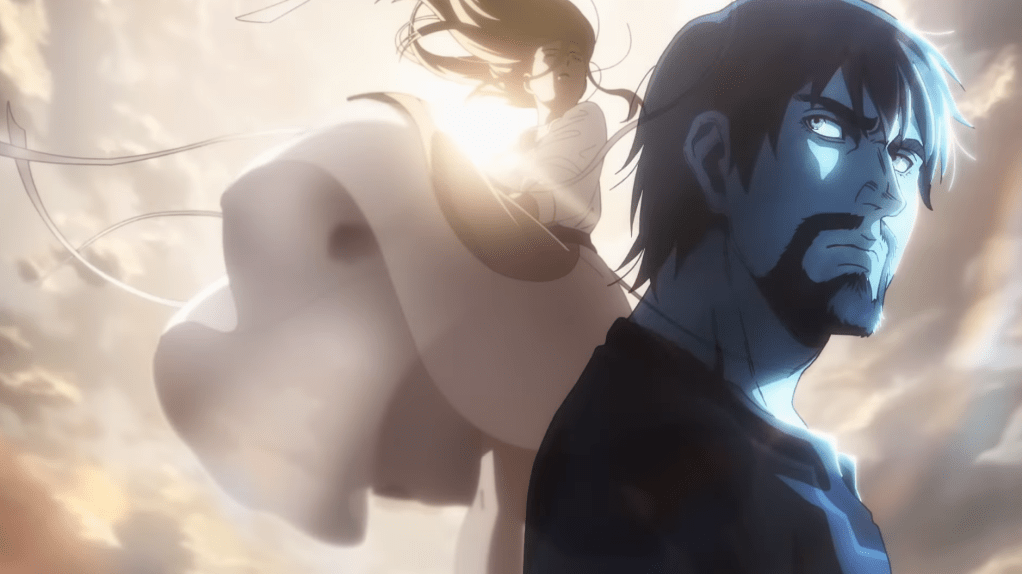
Thorfinn’s journey in Season Two puts on the path to becoming a true warrior.

At the farm,Thorfinn, Einar, and the audience are introduced to various interesting new characters like Snake (Fuminori Komatsu), Arnheid (Mayumi Sako), Sverkel (Mugihito), and Olmar (Yū Hayashi), all of whom have their own parts to play in commentating on the themes of the story.
All the while, Canute (Kensho Ono) is slowly consolidating his power, becoming more and more like his cruel father as each year follows, eventually building to a tense confrontation with Thorfinn.

While Thorfinn rises, Canute falls into darkness, until their fateful meeting.

Season Two’s story may be of lesser scope and have lesser stakes than the first season but this does not make it any less impactful, with Thorfinn’s growth being especially moving.
Accompanying the excellent arcs of many of the characters is the animation, which Mappa excels at as expected.
The score is also beautiful, with the piano notes composed by Yutaka Yamade being tear inducing during certain tragic scenes.
Speaking of the music, the openings for Season Two are also fantastic.
The first one is “River” by Anonymouz, which seems to highlight Thorfinn’s growth in the first half of the season, and the second OP is “Paradox” by Survive Said the Prophet, which appears to represent the challenges to Thorfinn’s new mindsets, including the consequences of the escaped slave Gardar, and the now ruthless Canute.  

Both OPs perfectly reflect the tone and events of each half of the season.

By the end of the season, it was clear that Mappa had done a masterful job of adapting the Farm Arc, both in their faithful recreation of scenes from the manga, and in new, interesting anime original moments like Einar’s past in the first episode.
I hope that Vinland Saga continues to get the brilliant adaptation it has been getting so far, with hopefully a Season Three and fingers crossed an eventual Season Four.

Chainsaw Man Chapter 134, Ordinary Happiness Review: The Imposter Makes His Move.

In Chapter 133 of Chainsaw Man, Yoshida told Denji that Public Saftey would kill Nayuta if he transformed again.
Despite this threat, Denji decided to continue being Chainsaw Man because he wanted both the fame from that, and to take care of Nayuta.
However, the beginning of Chapter 134, “Ordinary Happiness”, shows that Denji is beginning to doubt his resolve.
Whereas we once saw him proud to hear people talk about Chainsaw Man, in both good and bad ways, now we see him wander the halls of his school and the city streets, looking more and more depressed at every mention of his alter ego.
He does not even look happy that night when he is drying Nayuta’s hair and she tells him that members of the Chainsaw Man Church are fighting the police.
He even tells Nayuta that the Church’s days are numbered because he won’t be transforming anymore, as the fear of what will happen to Nayuta if he does has got to him.
This shows exactly how important Nayuta is to Denji because, prior to this moment, it seemed that Denji being recognized as Chainsaw Man was one of the most important things in the world to him.
Denji now tells Nayuta that he is content because, “nothing beats a normal life.”
Nayuta questions this, asking Denji if he really feels that way, which is quite similar to Kobeni asking Denji if he wants to be normal in Chapter 92.
In fact, I would say that Fujimoto is making a direct parallel to that scene because, just as Denji was inspired by people cheering for Chainsaw Man on the TV after Kobeni questioned him about a normal life, he now sees something entirely different on the TV after Nayuta questions him about the same thing.
On the TV, we once more see that Haruka is being questioned about the Chainsaw Man Church but he responds well to the drilling questions.
Then he gets one that should throw him off, “It’s not as though he (Chainsaw Man) gave you them (instructions) directly, right?!”
Rather than be thrown off, Haruka instead says that Chainsaw Man has guided him and offers to call him for everyone.
Excited, Denji runs for the phone, ready to pick it up, only for the Imposter to walk on stage and declare that he is Chainsaw Man, much to Denji’s shock.
We still do not get a good look at the Imposter’s face, since it is hidden behind his cap, but we can see that he has dark hair and stands tall, making me think that he might be Seigi Akoku from the Devil Hunter Club.
Whoever he is, the Imposter claims that he recieved his power from the Justice Devil and fights to create a world without Devils where there will be an Adam and Eve.
Before he can explain to the reader why Adam and Eve are required, Denji cuts him off by shouting in outrage over someone stealing his identity.
He then breaks down into tears and Nayuta comforts him, ending the chapter.
As for the Imposter, I will admit that him showing up did throw a wrench in my previous theory that he was working against Fami.
I figured since he helped Denji and Asa escape when Fami was trying to kill them that they were on opposite sides and that the mysterious figured who talked to Haruka last chapter was the Justice Devil.
Now it seems that it was the Imposter and he and Fami are actually working togethor.
I also can’t help but think that Yoshida may have a role in all this, since he threatened Nayuta’s life if Denji transformed again and now, as soon as Denji is considering hanging up the Chainsaw Man mantle, an Imposter appears to take his place.
I do wonder if Asa will buy the Imposter’s ruse, however, because there is a theory that she will know he is a fake because Denji told her he was only interested in sex while the Imposter speaks so benevolently.
It is a humorous theory but I think it could turn out to be true.
As for what comes next, I am uncertain about that.
Denji could either transform again to prove the Imposter a fraud, or he could decide to live a normal life, though Asa and Yoru will most likely pursue the Imposter, even if they do know he is not the real Chainsaw Man.
“Ordinary Happirness” is a solid  Chainsaw Man chapter, which is clearly building up future events for the story, whatever they may be.

Barry the Final Season Review: A Fitting, Tragic, Hilarious End.

Going into the final season of Barry, I was quite excited because I had absolutely no idea where the story would go or how it would conclude.
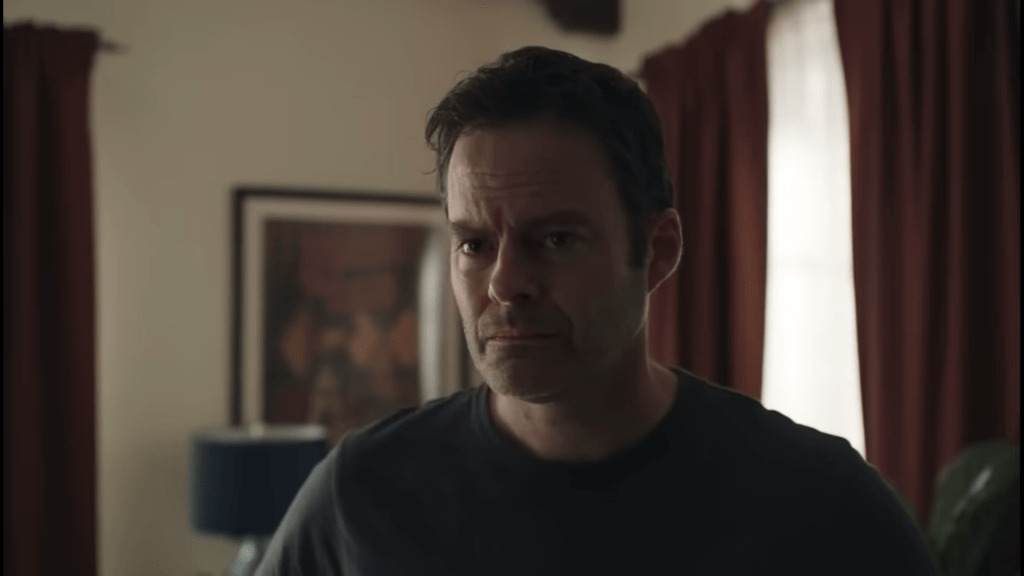
Season Three ended with the fantastic episode “Starting Now”, which saw Barry (Bill Hader) finally being arrested, after falling into a trap laid by Cousineau (Henry Winkler) and Jim Moss (Robert Wisdom).
With Barry imprisoned alongside Fuches (Stephen Root), Sally (Sarah Goldberg) having left LA, and Hank (Anthony Carrigan) and Cristobal (Michael Irby) looking to start new lives after the horrors they survived in Season Three, it felt like the final season could go anywhere.
Indeed, the story does go in some wild directions, with Bill Hader directing all eight episodes.
He made some bold choices with this final season, as a certain turning point halfway through the season did prove pretty divisive. 

Bill Hader certainly took a risk taking the story where he did.

Personally, I found this twist of the season to be warranted, as it fit in perfectly with the arcs of Barry and Sally, and lead up to the morbidly humorous yet tragic ending.
There was a lot of leg work to get this ending, however, and the show makes numerous funny and dark strides to get there; mostly dark because this final season is without question the darkest yet.
This is especially the case with the best episode of the season, “It Takes a Psycho”, which has two scenes that were just painful to watch but in the best of ways. 

It was hard to sit through some parts of Episode Four because of how uncomfortable they were.

Although Season Four is quite dark, this does not mean the show is without its fantastic humor, with multiple great gags of the morbid variety.
The action is also, as always, very well shot when it happens. 
But it is once again the character work where Barry truly shines.
Barry, Cousineau, Hank and Sally all have great conclusions, whether they be tragic or not.
The character I was not expecting to like the most this season, however, was Fuches.
Not only did he provide the biggest laughs of the season for me, with him embracing the role of the Raven, but his arc of accepting who he was resulted in a surprisingly moving conclusion to his character.
This was certainly something I was not expecting, what with how sociopathically manipulative Fuches was in the first three seasons.

I was surprised by how much I loved the conclusion to Fuches character.

Fuches’ conclusion, and the ones of the other characters, is what makes the final episode “Wow” such a fitting finish.
Barry’s ending is also especially well done but I will not say any more than that.
As for the final scene of the series, it is extremely fitting, although I do think there is a bit of a plot hole to it.
This plot hole was not enough to detract any enjoyment out of the ending for me, though, because of how fitting a conclusion it was.

There is one part of Barry‘s ending that does not make much sense to me but, other than that, this was a perfect ending.

In my review for the first three seasons of Barry, I said that if the final season stuck the landing then it would be among the greatest TV series of all time.
Now that I can say the show has stuck the landing, I stand by this sentiment entirely.
Barry is definitley in my top ten favourite shows of all time.
It is darkly comedic, has phenomenal characters, and now an ending that is somehow fitting, tragic and hilarious all at the same time.    

Chainsaw Man Chapter 132 and 133 Review: Offers and Demands.

Chapters 132 and 133 of Chainsaw Man are ones in which characters make tempting offers and frightening demands, yet are turned down both times.
Chapter 132, “Protection”, begins with Nayuta at school, which made me initially think that we were going to get a Nayuta school arc.
We see what Nayuta’s relationship with her classmates is like and it seems that she is pulling a Makima, controlling them so that they give her food.
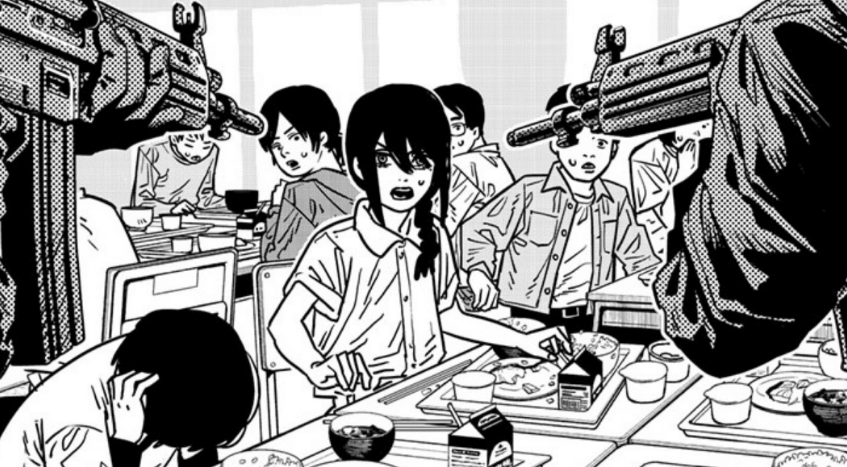
Nayuta’s school arc is cut signficantly short, however, because just as it begins, soldiers storm the cafateria and point their guns directly at Nayuta.
The chapter then cuts to an unconcious Asa in the hostpital, who is surrounded by chaos, as injured, dead and dying people are still being brought in after the Falling Devil’s attack.
We get a few brief panels showing that Asa is still suffering from her dreams about running through an alleyway filled with dead chickens, and then she awakens, only to be told by the person sitting next to her that their grandkid (about Asa’s age) was crushed by debris.
Asa’s dream represents the guilt she suffers from, due to her parents’, cat’s and Bucky’s deaths, and the news of so many dead is sure to add to that crushing guilt, considering that she was the Falling Devil’s primary target.
We can see this guilt hit Asa, as she thinks about how Chainsaw Man saved her again, only for the focus of the scene to transition to a TV in the hostpital where Haruka is appearing on a variety show to advertise a Chainsaw Man Church, which hopes to prevent the Prophecy of Nostradamus.
Haruka is laughed at, however, and he complains about this to Fami backstage.
Fami seems to have put him up to this but she is not alone, as a mysterious figure places a hand on Haruka’s shoulder, telling him that he should continue to act as the Chainsaw Man Church’s face so he can “walk to a world without evil.”
This statement makes me believe the mysterious figure is the Justice Devil.
Whoever they are, I think they are a different person from the Imposter Chainsaw Man because this mysterious person is aligned with Fami, who wanted Asa to be eaten so she could control Yoru, which the Imposter stopped from happening.
It will be interesting to see just who this figure in shadow is and if the Imposter Chainsaw Man and the Justice Devil really are seperate.
Once this ominous scene ends, the chapter then cuts to its final scene, where we see that Yoshida has captured Denji for his “protection.”
He explains that Nayuta and their dogs are also captured and this causes Denji to make a truly desperate offer… to tongue Yoshida’s butthole for a week.
Oh, Denji, how far you’ve come.
In Chapter 107 you said you would never let a dude sit on you and now you do this.
In all seriousness, Yoshida does dismiss Denji’s humorous offer, and tells him that Nayuta and the dogs will not be harmed.
Denji tells him to go to hell, bringing an end to the chapter.
“Protection” is a solid chapter, which has some humorous Denji moments, while also setting up something interesting with the new Chainsaw Man Church.
As for Chapter 133, “Protest”, it is a brief continuation from Denji and Yoshida’s confrontation at the end of “Protection.”
The chapter begins by showing that Yoshida has taken Denji to an anti-Chainsaw Man rally, where a fight is taking place with pro-Chainsaw Man counter-protestors.
Yoshida explains that the Chainsaw Man Church has been growing, as it now has over 20,000 members, most of them teenagers.
However, politicians know these teens will soon become voters so are giving them support, causing the Church to grow even stronger.
Yoshida even predicts that this “Chainsaw Mania” could grow into a larger conflict.
A conflcit, huh?
That sounds like something the War Devil would like.
Aside from it feeling nice that people are fighting for him, Denji does not really care about any of this, only wanting to know what he has to do to get Nayuta and the dogs back.
Yoshida demands that Denji never transform into Chainsaw Man again or he will have Nayuta killed.
I find it hard to believe this threat is serious, though, because I can’t imagine Kishibe being okay with Nayuta dying at this point.
After all, Kishibe gave Nayuta to Denji so he could raise her, why would he want Nayuta dead, unless something maybe changed?
As for Denji, he refuses to stop being Chainsaw Man, despite the threat to Nayuta’s life because he wants both a normal life and to be Chainsaw Man.
Frustrated, Yoshida says he has to choose between the two but Denji outright refuses again, saying he can have both.
This kind of felt like another Spider-Man reference to me.
A common theme in Spider-Man is Peter Parker (and Miles Miles in the most recent Spider-Verse film) having to choose between saving two important things but, in the end, finding a way to choose both.
Now Denji is facing the same dilemma, yet still choosing both.
This results in Yoshida threatening Nayuta again as his composure breaks for the first time, to which Denji orders the protestors to kill him, which of course does not work because the crowd is too busy fighting to hear him and also has no idea that he’s Chainsaw Man.
Speaking of, I do wonder how this “Church” would react if they learned their saviour Chainsaw Man was just a selfish horny teenager.
The reaction could be quite hilarious.
Yoshida and Denji’s argument is then interrupted by Nayuta and the dogs’ arrival, which was supposed to happen later, ruining Yoshida’s plan.
Still frustrated, Yoshida again explains to Denji that Public Saftey will kill Nayuta if he does not stop being Chainsaw Man, probably hoping that Nayuta overhearing this will make her demand that Denji comply with his demands.
If Yoshida was hoping for this to happen, his hopes are immediately dashed because the opposite happens, with Nayuta saying Denji should tell Yoshida to “eff of!”
Denji and Nayuta then leave, to which Yoshida asks himself, “Did he not understand me?”
Oh, no, Yoshida, he did.
Denji just wants both.
Overall, Chapter 133 “Protest” is another good chapter that may be building up to a dangerous move by Public Saftey, if Yoshida’s threat on Nayuta’s life was serious.
Again, I think it may be a bluff at this point but that could change.
What I am more interested in is why Yoshida suddenly wants Denji to stop being Chainsaw Man.
Originally, he just wanted Denji to keep his identity a secret but, after the Falling Devil’s attack, this has extended to him wanting Chainsaw Man to disappear altogethor.
It makes me wonder why Yoshida is so intent on this, especially to lose his usually strong composure?
My guess is that it probably has something to do with a part of the Prophecy of Nostradamus we don’t know about yet.
Or maybe Yoshida knows about the Imposter Chainsaw Man and wants Denji to be replaced by him.
All in all, these were two good building block chapters which set up Asa’s growing guilt, the Chainsaw Man Church, and a conflict between Yoshida and Denji.
Where these storylines go will be interesting to see play out.

Spider-Man: Across the Spider-Verse Review: Part One of an Animation Spectacle.

I loved Spider-Man: Into the Spider-Verse to the point that it was my favourite movie of 2018.
It has brilliant animation and so many standout moments, like The Leap of Faith scene, which I consider to be one of the most inspirational movie scenes of all time.
So, like many others, I was excited to watch the sequel, Across the Spider-Verse.
I went into the theatre with high expectations and those expectations were certainly met, and then some.
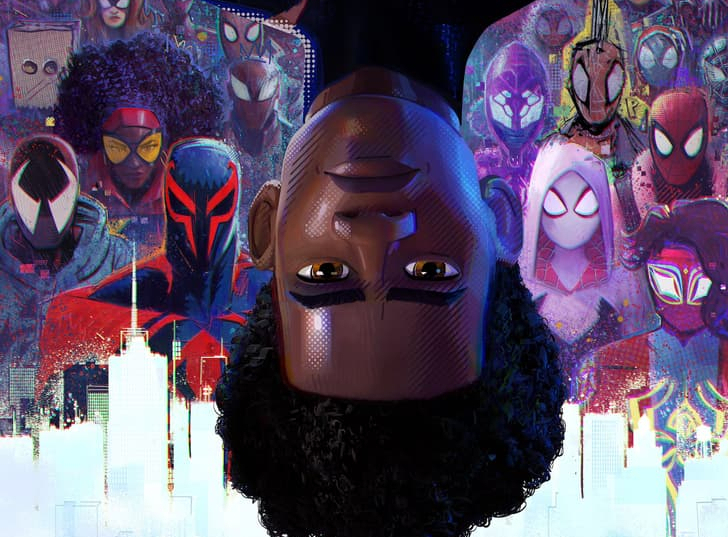
Directed by Joaquim Dos Santos, Kemp Powers and Justin K. Thomas, the film once again follows Miles Morales (Shameik Moore) who, after the events of the first movie, has become New York’s new Spider-Man.
After encountering a villain known as the Spot (Jason Schwartzman), Miles is reunited with Gwen Stacy (Hailee Steinfeld) and eventually brought into a society of spider-people from across the Sider-Verse, lead by Miguel O’Hara (Oscar Isaac). 

Conflict quickly arises between Miles and Miguel over the multiverse and the fate of the people in it.

When I say “across the Sider-Verse” I really do mean that because this is a movie that lives up to its title.
Take Dr. Strange and the Multiverse of Madness, for example.
It was a good movie but in only dived deep in a couple of alternate universes, not really living up to its title’s promise of a “multiverse of madness.”
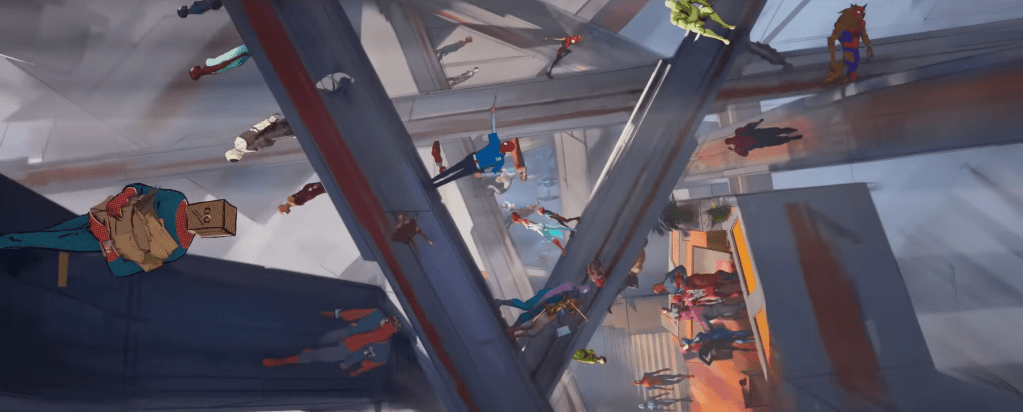
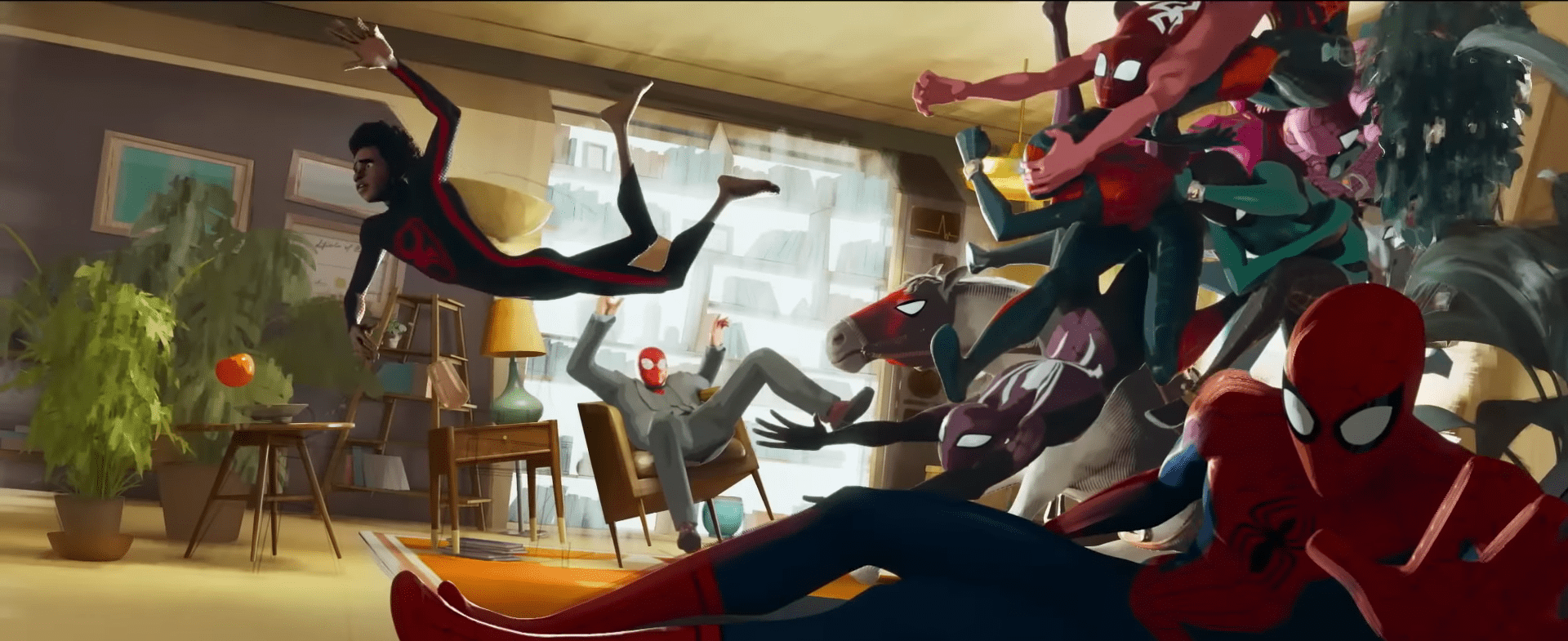
Across the Spider-Verse, however, delivers on its title’s promise perfectly, showcasing multiple different universes with multiple different spider-people in absolutely stunning animation.
After watching this movie it is absolutely clear why it took five years to make this film because it is an animation marvel, with jaw dropping details in practically every scene.

The multiple easter eggs in every shot will make rewatches fun.

The time and effort it must have taken to animate all of these different universes and spider-people is honestly staggering to think about it and the animators deserve all the praise in the world for it.
Speaking of the spider-people, this film introduces many interesting new ones.
Miguel is both sympathetic and intimidating, and Pavitr Prabhakar (Karen Soni) is both charasmatic and gets a lot of laughs.
Hobie (Daniel Kaluuya) or “Spider-Punk” was probably my favourite of the new Spider-Men, though, for not only being likeable and funny, but also someone who stands by what they preach.

Hobie is a lot of fun from the moment he shows up.

As for the returning characters, they are also excellent.
Miles’ emotional journey throughout the movie is plenty compelling.
His relationship with his parents, Rio (Luna Lauren Vélez) and Jefferson (Brian Tyree Henry), takes up a lot of screen time in the movie, yet it was so interesting that I was completely fine with that, especially with how this builds into Miles’ conflict with Miguel later on in the movie.
As for Gwen, she gets a big bump-up in screen time in this movie and it is absolutely deserved.
Across the Spider-Verse feels like her movie, just as much as it does Miles, with her relationship with her father (Shea Whigman) also being central. 

I was not expecting Gwen to be a co-protaganist in this movie but this is actually what she is, and to Across the Spider-Verse’s benefit.

And then there is Peter B. Parker (Jake Johnson), with his daughter Mayday.
Unfortunately, his screentime is nowhere near as significant as the first movie but this is okay because he will have plenty of time to shine in the sequel.
Yes, I said sequel because Across the Spider-Verse is actually a part one, with the rest of the story being told in Beyond the Spider-Verse, which will release in March of 2024.
I had no idea about this going into the movie and, from the sound of my theatre, no one else did either.
As soon as the movie cut to a “To Be Continued” there was a collective cry of “Are you kidding me?”
If anything, though, this disappointment at having to wait does show how excellent this movie is.
I honestly would not have minded if the movie had just continued for another few hours to tell the rest of the story, and Across the Spider-Verse is 140 minutes long. 

It is a testament to how great Across the Spider-Verse is that we were all disappointed that we would have to wait to see how this story ends.

As for criticisms, I really only have one significant critique and that is the sound mixing.
Sometimes, it is hard to hear what the characters are saying when the music is so loud compared to the voices, and the characters are speaking so fast.
It was not a constant issue but it was noticeable in a couple of scenes.
Overall, though, Into the Spider-Verse is a fantastic sequel, with stellar animation and storytelling.
I would still say that I prefer the first movie, but that might be because the story of Across the Spider-Verse is incomplete.
When Beyond the Spider-Verse releases next year this may change.
One thing is for sure, though.
If they nail Beyond the Spider-Verse as well, then the Spider-Verse movies will be considered among the greatest trilogies of all time. 

Chainsaw Man Chapter 130 and 131 Review: A Feast for the Eyes.

A week ago when Chapter 130 of Chainsaw Man “Kill Building” released, I intended to do a review of it.
However, the chapter was so short that I decided it would be best to review it with Chapter 131, “Taste of Crap.”
Just because “Kill Building” is the shortest chapter of Part Two so far does not make it a bad chapter, though, far from it.
In fact, the reason it goes by so quickly is because most of the pages are glorious full page spreads of Asa and Denji escaping from the Falling Devil and the diner Devil.
Tatsuki Fujimoto’s artwork for these pages is a feast for the eyes, worthy of the Falling Devil’s palate.
In between these full page spreads, we see Denji and Asa continuing to argue about their situation, with Denji humorously assuming that he’s the one who weaponized their stolen motorbike, instead of Asa.
He and Asa also disagree about whether they can trust the imposter Chainsaw Man but they are attacked again by the diner Devil before they can decide what to do.
The diner Devil seems terrified at the thought of being killed by the Falling Devil if it does not eat Asa, for it covers its face with its hands in apparent horror before transporting itself directly to Asa and Denji to eat them.
The two are able to evade it, until the Falling Devil throws a building at them, which they easily crash through, only to be met with the open mouth of the diner Devil, bringing an end to the chapter.
Overall, “Kill Building” is a short chapter but still a great one.
It might not have much in terms of content but the action is fun with a lot of incredible full page spreads by Fujimoto.
The ending of “Kill Building” leads right into Chapter 131 “Taste of Crap” where Asa and Denji are about to be swallowed whole by the Devil.
Given that their stolen bike now has a chainsaw on it, I suspected that Denji would easily be able to carve his way out.
Instead, they are caught in between the Devil’s teeth, and the Falling Devil then flicks Asa and Denji into the Devil’s stomach, seemingly to their deaths.
The Falling Devil then asks for her diner’s opinion on the dish she served it but the diner proves a harsh critic because it vomits Denji and Asa out.
The Falling Devil’s reaction to this is pretty hysterical, as she angrily stammers that she made it with love, before obliterating the diner.
Dejected, the Falling Devil then apologises for failing to feed Asa to her diner.
In a surprise twist, it is revealed that it was Fami who was ordering around the Falling Devil, as she tells her to “return.”
The Falling Devil’s body then falls apart in a burst of flames, leaving only a steaming minature version, which Fami picks up, before asking someone how they managed to get the diner to throw Denji and Asa up.
In the second surprise twist of the chapter, it is revealed that Fami is talking to Nayuta, who used her control powers to make Asa and Denji taste like crap, making the diner vomit them out.
Nayuta is also revealed to know who Fami is, as she refers to her as “sister” when she asks Fami why she tried to kill Denji and Asa.
Fami explains that she was merely trying to starve Yoru in the Devil’s stomach, which would make Yoru her pawn since Fami is able to control those who are starving.
The reason Fami wants to control Yoru is because she may be the only one who can stop the age of Devils prophesied by Nostradamus, which makes sense because in one of his prophecies he said that Mars would reign supreme, and Mars was the Roman God of War, meaning Yoru.
Fami’s motive for wanting to stop this Age of Devils is funnily enough because she does not want pizza or chinese food to vanish.
It’s pretty ironic that the Famine Devil’s motive revolves around food, and it reminds me a lot of Fujimoto’s other antagonists with simple motives, like in Fire Punch where the Ice Witch’s motive was to watch the next Star Wars movie.
Back to the chapter, Nayuta does not seem too bothered by the end of the world until Fami says that would also mean the end of pizza.
Fami then offers the horrified Nayuta a chance to work togethor, only for Nayuta to still refuse.
Why?
Because she has school.
Cue a perfectly timed cut to Nayuta in school, desperately trying to beat the other students in answering the teacher’s question.
This was a funny ending, which made me wonder if we will be getting a Nayuta school arc next.
As for Fami, one question I have about her is how she was able to order around the Falling Devil?
The Falling Devil is a Primal Fear, after all, so she should be stronger than Fami.
Although, considering that the Falling Devil considers herself a chef, maybe she is aligned with Fami in not wanting the world to end so human food can continue to exist.
There is also the matter of the imposter Chainsaw Man.
He tried to save Asa and Denji from being eaten but we now know that was part of Fami’s plan to get Yoru under her control to stop the apocalypse.
So does this mean that the imposter Chainsaw Man wants the apocalypse to happen?
Time will tell.
Chapter 131 “Taste of Crap” is the best of the two chapters.
It ends the Falling Devil Arc well, providing insight into Fami’s motivations while also potentially building into a Nayuta school arc as well.

The Green Bone Saga Review: Fantasy’s Answer to the God Father.

I don’t usually review novels on this blog.
Although I do read a lot, I tend to stick to reviewing movies and shows, mostly anime and manga these days.
Yet, the instant I finished The Green Bone Saga by Fonda Lee, I just knew I had to talk about it.
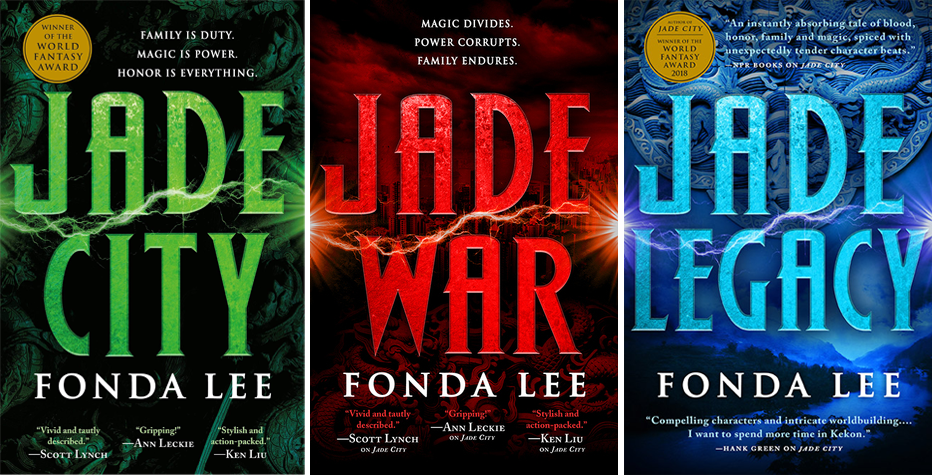
Consisting of a trilogy of books, Jade City, Jade War, and Jade Legacy, the most basic way I could describe The Green Bone Saga is fantasy’s answer to The God Father.
The story is set in an alternate version of Earth, on the island of Kekon, the only place in this world where the mineral resource of Jade is mined.
Jade can only be wielded safely by the Kekonese population and it gives them superhuman abilities, which are divided into six disciplines, Strength, Steel, Lightness, Channeling, Deflection and Perception.
Control of Jade is overseen by the various clans of Kekon, with the clans of No Peak and the Mountain being the most powerful.
However, with tensions between these two main clans rising, and foreign powers creating drugs which allow non-Kekonese people to wear Jade, Kekon seems set to fall into open clan war.
The novels follow four siblings in the Kaul family, the leaders of the No Peak Clan.
There is Lan, the Pillar of No Peak, who is a much more lenient man than one would expect of a clan leader.
His brother is Hilo, the hot-headed Horn of No Peak, who is an expert at gaining the loyalty of others, while also being fiercely loyal to those he cares for and trusts.
Their sister is Shae, who has only just returned to Kekon and is reluctant to get involved in clan affairs again.
Finally, there is Anden, the Kaul’s adopted sibling and an up and coming Jade prodigy, who is understandably terrified of his power, given his traumatic family history.
Each of these four main characters are fantastic, and many of them change so much over the course of the story, which spans decades.
Of course, just because they are so likeable does not mean they are good people.
This is pretty much a mafia story, after all, and many of the characters make very morally grey decisions.
This is most apparent in Jade War, where one character commits such a horrifying act that it lead to me audibly declaring them to be a monster.
But what made the choice that character made so good is that, despite me being disgusted with them, their justifications for what they had done made complete sense with their character.
There are moments like this with the Kauls across all three books, yet it is not just them because there are plenty of other fantastic morally grey characters.
There are the Maik siblings of Wen, Kehn and Tar, the ambitious and always pathetic Bero, the Mountain assassin Nau Suenzen, and, of course, the leader of the Mountain, Ayt Mada.
Ayt Mada in particular is one of my favourite characters as, despite not having any POV chapters, I still completley understood how she became so ruthless and why she believes she needs to be so.
She made for an excellent antagonist among a cast of fantastic characters.
Of course, fantastic characters in a mafia story makes reading The Green Bone Saga all the more nerve wracking because that is not exactly a safe environment and characters do die, many shockingly, as the stakes rise with every book.
Along with the stakes rising every book so does the quality, with my ranking of the books from weakest to best going Jade City, Jade War and Jade Legacy at number one.
Jade City is a great start to this story, introducing the fantastic cast of characters well and delivering great fight sequences when the times comes for those.
Jade War expands on the first book’s focus, exploring the world outside Kekon, while making it clearer than ever that many of the characters we are following are not good people.
Finally, Jade Legacy lives up to its name, focusing on the legacy of the characters as decades pass, resulting in a fitting ending that had me tearing up as well as chuckling.
Overall, The Green Bone Saga is a brilliant trilogy with brilliant characters, and is already among my favourite novel series of all time.
Upon finishing, I immediately thought that this story was deserving of an adaptation, however was disappointed to discover that one had been greenlit, only for it to be cancelled.
I hope the adaptation gets picked up again because, if done right, I could easily see The Green Bone Saga being a highly celebrated show for years to come.
I will just have to keep my fingers crossed that it gets adapted eventually, I suppose.
Fonda Lee has crafted an excellent story, which I am going to remember for a long time. 
I cannot recommend The Green Bone Saga enough.

Chainsaw Man Chapter 129, Save Me, Chainsaw Man Review. A Long Awaited Team Up.

Ever since the Falling Devil showed up, I have been waiting for Denji and Asa to team up to survive.
Well, Chapter 129, “Save Me, Chainsaw Man” finally delivered this.
Picking up from the previous chapter’s cliffhanger, Denji and Asa are still staring at the imposter Chainsaw Man, when they are struck from behind by the slug-like Devil, knocking them out of hell, while the imposter disappears.
Asa gets up, only to see that Denji has been mortally wounded again.
Yoru then appears and tells Asa to take the oppurtunity to kill Chainsaw Man so Yoru can give her body back.
Asa, however, has no intention of doing so and Yoru knows this just by reading her thoughts.
Frustrated, Yoru tries to convince Asa to kill Chainsaw Man, saying that she always does the opposite of what Yoru tells her and that she is crossing the line by saving Chainsaw Man.
It is a line Asa is willing to cross, as she explains that Chainsaw Man has saved her twice now.
Most importantly, though, Asa states that, “If a piece of trash like him is allowed to keep living then maybe it’s okay for me to live too!”
This shows that, despite Denji’s comedic mishandling of his talk with her, he has gotten through to Asa in some way.
Now wanting to live, Asa cuts her palm with a rock and uses the blood to revive Denji, begging him to save her.
Denji revives and leaps away from the attacking Devil with Asa in his arms but they are relentlessly pursued.
Realizing they can’t get away on foot, Asa points to a motorcycle and tells Denji to steal it.
Living up to his reputation, however, Denji refuses to because a woman is riding it so Asa tells him to steal a man’s instead.
Denji does so, kicking the man off the bike, as he and Asa take off.
It is then that we get the first big team up between Asa and Denji, which I have been wanting to see for a while.
As the two take off on the motorcycle, one of the slug-like Devil’s clawed appendages lunges at them.
Asa then yells out “Super Chainsaw Man Motorcycle!” using the War Devil’s power to transform the motorcycle into a weapon, working with Denji to cut right through the Devil, as the man behind them screams that they stole his bike.
With that, Chapter 129 of  Chainsaw Man comes to an end.
“Save Me, Chainsaw Man” is a solid chapter, delivering on the team up between Denji and Asa that I and many others had wanted to see for so long.
There are still lingering questions about the imposter Chainsaw Man but it seems that Fujimoto is going to hold the answers to those questions close to his chest for a while.
As for me, I’m just excited to see Denji and Asa continuing to work togethor in the following chapters.

Guardians of the Galaxy Vol. 3 Review: A Triumphant End.

The Guardians of the Galaxy are among my favourite heroes in all of the Marvel Cinematic Universe. 
Vol. 1 was a fantastic introduction to these characters, and I believe that Vol. 2 is one of the most underrated MCU films.
So, obviously, I was very excited to watch Vol. 3, especially because I had genuine hope that it would be better than a lot of the more recent MCU installments, which I have felt pretty lukewarm about.
I am happy to say that this hope was well founded because Guardians of the Galaxy Vol. 3 is a triumphant ending for the characters we have come to know and love ever since Vol. 1, all the way back in 2014.

The ending for each Guardian feels fitting.

Directed once again by James Gunn, the movie follows Peter Quill’s Starlord (Chris Pratt), Rocket Racoon (Bradley Cooper), Groot (Vin Deisel), Nebula (Karen Gillan), Drax (Dave Bautista) and Mantis (Pom Klementieff), who are living at their home base of Knowhere.
After an attack from Adam Warlock (Will Poulter) leaves Rocket clinging to life, the Guardians must band together once more.
Seeking the help of Gamora (Zoe Saldana), the group seek to track down Rocket’s creator the High Evolutionary (Chukwudi Iwuji), to find a way to save him.
Each of the Guardians gets their time to shine in this movie, with standout moments for each of them.
In particular it was great to see how much Nebula has changed from the first film, how the friendship between Drax and Mantis has progressed, and how different Gamora is from her future counterpart, along with how this affects her relationship with Quill.   

It would have been easy to go a cliche route with Quill and Gamora’s relationship after Endgame but I am glad they did not.

The biggest standout of all the Guardians, however, is Rocket, with a large part of the film focusing on his backstory, with constant flashbacks.
Given the number of these flashbacks, it would have been easy for the film to feel disjointed so it is a testament to the writing and the directing that it all flows seamlessly.
It felt like Vol. 2 was slowly transitioning the main character among the Guardians from Starlord to Rocket, and Vol. 3 continues this in excellent fashion.
Rocket’s story is so good in this movie that I actually almost teared up at one point, and this was a scene with multiple CGI characters so that is saying something about the quality. 

Prepare for Rocket’s backstory to destroy you emotionally.

Alongside Rocket, the main villain of the High Evolutionary also stands out.
The guy is a fantastic example of how to do a purely evil villain with no redeeming qualities right. 
And, hey, the High Evolutionary being so evil makes it even more satisfying when the Guardians fight his goons in numerous excellent action sequences, including a gripping one-shot corridor fight that is one of the movie’s highlight scenes.

The corridor fight is the MCU’s best fight scene in years.

Another thing to highlight is just how dark this movie can get at times, with a lot of cruelty to animals so there is that to be aware of.
That does not mean the film is devoid of levity; this is a Guardians of the Galaxy movie, after all.
There are plenty of feel goods moments and humor throughout.
Speaking of the humor though, I do have to say that it thankfully does not ruin any potentially emotional scenes, like it did in Quantimania and Love and Thunder.  
Not everything about Vol. 3 is so great though because, if the film has one issue then it is definitely Adam Warlock. 

Adam Warlock’s presence in the movie felt more like an obligation than anything else.

His addition to this film honestly felt entirely unnecessary to me.
Not only could he have been any other character and the plot of the movie would not have changed, but his actions also seemed pretty contradictory at times.
It feels like James Gunn intended for him to have a big role in Vol. 3 but then he got fired and rehired and, in the time in between that, he came up with a different plot for the film but was obligated to keep Warlock in because of the Vol. 2 post credits scene.
Apart from Warlock, though, I would say that Guardians of the Galaxy Vol. 3 is a great film with a triumphant ending for its characters.
It is easily the best MCU film since Spider-Man: No Way Home. 

Chainsaw Man Chapter 127 and 128 Review: Humor and Intrigue.

The struggle against the Falling Devil continues in Chainsaw Man Chapters 127, “Save the Asa”, and 128, “Main Dish”, with Tatsuki Fujimoto delivering plenty of great humor and intrigue, as usual.
Starting with Chapter 127, I quite liked its title, “Save the Asa.”
It serves as the perfect parallel to Chapter 102, “Save the Cat,” especially when we consider what happens.
The chapter begins strong, with what appears to be a POV panel from the Falling Devil’s perspective, as she uses her power to shoot Asa out of the apartment building she was sheltering in.
Barely holding onto a dislodged section of the apartment building, Asa is then confronted by the Falling Devil, who promises her a peaceful fall if she closes her eyes, a clear lie considering all those others who fell were eaten alive by Devils.
Still, Asa is so effected by the trauma brought on by the Falling Devil that not even Yoru shouting at her can bring Asa back.
The trauma of remembering Yuko, Cambron and the evil orphanage lady is too much for Asa, and she closes her eyes, accepting her fall.
As she falls up to her fate, Asa does have one regret, that she never did something with someone but before we learn what that something is the probable someone shows up, as Denji jumps up to Asa in his Chainsaw Man form and grabs a hold of her.
Denji is shocked to learn that Asa wants to fall and, upon realizing that Asa’s trauma is causing her to ascend quicker, tries to make her feel happy by telling her to think about dogs, ice cream, and cats.
The cats suggestion was clearly not a good one, however, sincce Asa’s trauma is directly related to cats.
Denji then tries to convince Asa life is worth living, even if it has bad moments.
His words show just how similar he and Asa are.
Both have had happiness in their lives but it always seems to be cruelly taken away from them.
Denji, however, says he is willing to continue to eat the crap burger of life because he has something he is looking forward to.
Asa is clearly being won over by Denji’s compelling speech so she asks him what he is fighting for.
I was expecting Denji to give some kind of emotional answer, like Nayuta.
I was not expecting (but honestly should have been expecting) Denji to say that he wants to have sex.
And so the chapter ends with this moving moment transforming into one of hilarity as Asa screams out a disgusted “Ew!”
This then leads into Chapter 128, “Main Dish” where all of Denji’s work to calm Asa down have failed because she is now disgusted with him.
Denji tries to explain to Asa how sex is great, only for this to confuse Asa because, as she screams at Denji, “No woman in existence would want to have sex with a guy with a chainsaw sticking out of his head!”
Denji being Denji, this accusation that he will never have sex causes him to hilariously fall into despair, causing him and Asa to fall up into hell.
Denji wakes up on a Devil food dish with an unconcious Asa and attempts to make a break for it, quickly escaping from the slug-like devil, only to be confronted by the Falling Devil at one of the escape doors.
The Falling Devil again shows some leniency by offering to let Denji go but he refuses to leave Asa… or leave her ass, at least.
The Falling Devil calls Denji a pervert but any incoming attack from her is prevented when she is suddenly attacked from behind by none other than the imposter Chainsaw Man who has finally made his reapperance.
For me, the imposter showing up does confirm his identity to be the one who revived Denji in Chapter 126.
As for who the imposter is, in my opinion, the main suspects are again Haruka Iseumi, Seigi Akoku and the Kobeni clone.
Haruka was shown to be following Denji and Asa earlier, Seigi seems to have a similar posture and size to the imposter, and the Kobeni clone looked to have similar shoes to the one who saved Denji.
Whoever the imposter is, they advise that the Falling Devil will kill any invited Devil who does not partake in her meal by dawn, supposedly meaning that Denji only has to survive until then to succeed in saving himself and Asa.
So it looks like Asa and Denji will now have to work togethor if they want to live to see the next day, which should be exciting to see play out.
Chapters 127 and 128 are great additions to the Chainsaw Man story.
They offer great humor, with the Denji wanting sex joke in Chapter 127, and great intrigue, with the imposter Chainsaw Man finally making his return in Chapter 128.