Civil War Review: A Warning Which Should be Heeded.

With the political climate in America being so tumultuous, Alex Garland’s Civil War was destined to be a controversial film.
Like many other people, I was curious to see what side, if any, the film would take in its depiction of a new American civil war.
Quite wisely, in my opinion, Garland chooses not to take a side, but instead focuses on the horrors of such a war if one were to occur. 

Certain states allying may not quite make sense politically, but this film is not focused on the politics.

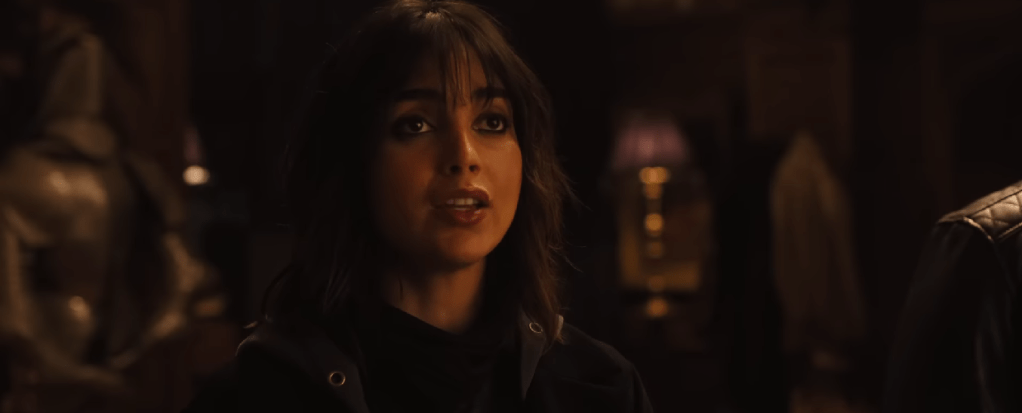
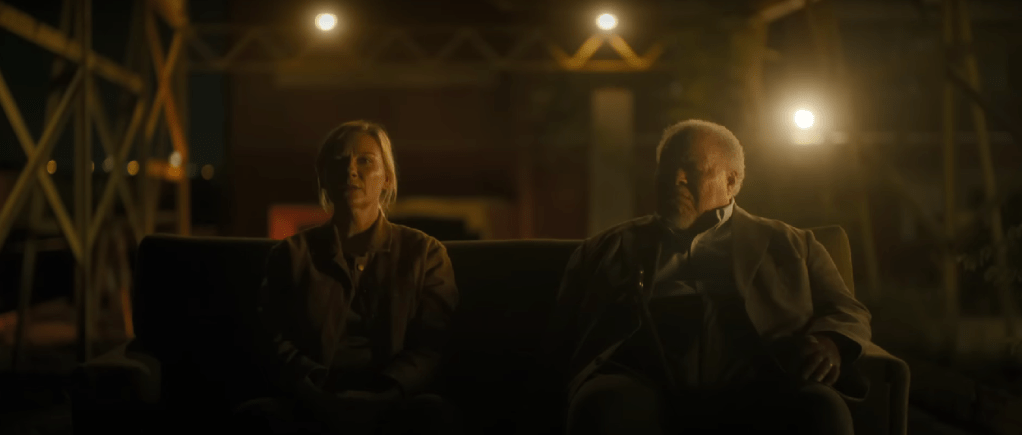
The film follows four journalists played by Kirsten Dunst, Wagner Moura, Cailee Spaeney, and Stephen McKinley Henderson, who are travelling to Washington DC in the hope of interviewing the US President (Nick Offerman) before he is killed by the rebel Western Forces.
What follows is essentially a road trip movie, with each stopping point delivering a different kind of horrifying war crime committed by both sides and general lunatics.
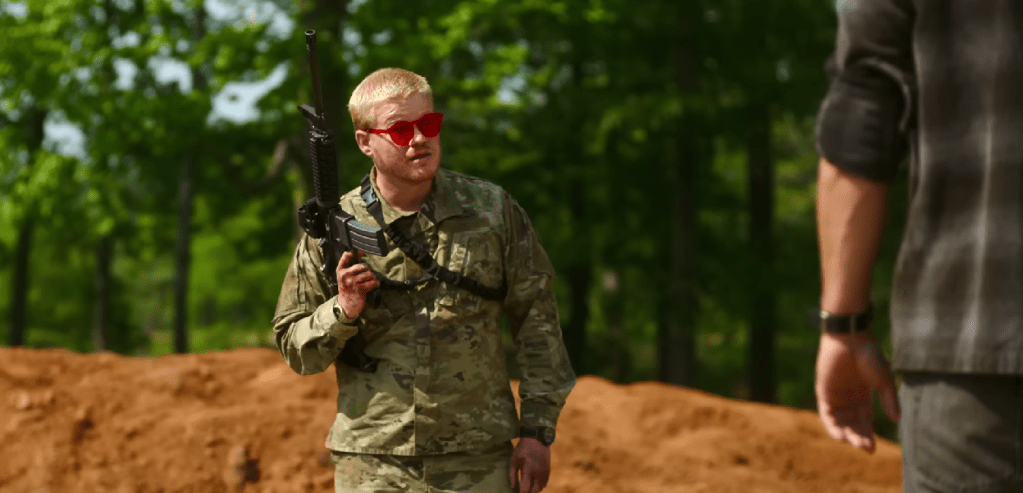
One such lunatic is Jesse Plemons’ character, a sadistic yet nonchalant militant who holds our main characters at gunpoint in one of the movie’s most tense scenes. 

Plemons has a knack for playing creepy psychos. First there was Todd in Breaking Bad, now this guy.

All of these actors do great jobs in their respective roles, really selling the trauma developed from the events they encounter.
This is the main focus of the film instead of the political climate.
While reasons for the conflict are alluded to, mostly coming down to the fascist POTUS, Garland spends most of the film pointing out to the audience just how horrible a civil war would be.
This is best encapsulated with a line from Dunst’s character, “Every time I survived a war zone, I thought I was sending a warning home: ‘Don’t do this.’ Yet here we are.’

It felt like Garland was speaking directly to the audience during this scene.

Such warnings are going unheeded right now by some, as I have seen some crazy people calling for a civil war long before this movie came out.
The choice to focus on the horrors of war, rather than the politics, helps sell this message extremely well, especially with how some of the journalist characters become desensitized to the deaths of their fellow countrymen and even friends.  
Along with the characters and themes working well together, what also helps Civil War land is the great cinematography and sound design.
The sound of bullets and gunfire feel terrifyingly impactful, and there were many shots which would be beautiful if they were not so disturbing. 

The shots, in terms of both the camera and the guns, are visually and audibly haunting.

I do have a few criticisms with the film, though.
For one thing, sometimes the choice in music felt a little wrong for the scene.
And then there is the ending, which was a little too predictable and also a little overly dramatic at one point.
Other than that, one particular point, however, the ending to Civil War lands mostly perfect, with its final image being very striking. 

The ending to the film really sells the message Garland is going for.

Civil War is a terrifying look at the chaos which would unfold in America if things truly came to that.
Time will tell if this film will be looked back upon as a chilling what could have been, or an even more chilling representation of what was to come.
We had all better hope it’s the former. 

Monkey Man Review: Dev Patal Kills it with his Directorial Debut.

The first I heard of Monkey Man was when I saw its first trailer, which immediately intrigued me.
It appeared to be going for a John Wick movie set in India storyline but, when I finally saw the movie a few days ago, it defined itself as something more than that.
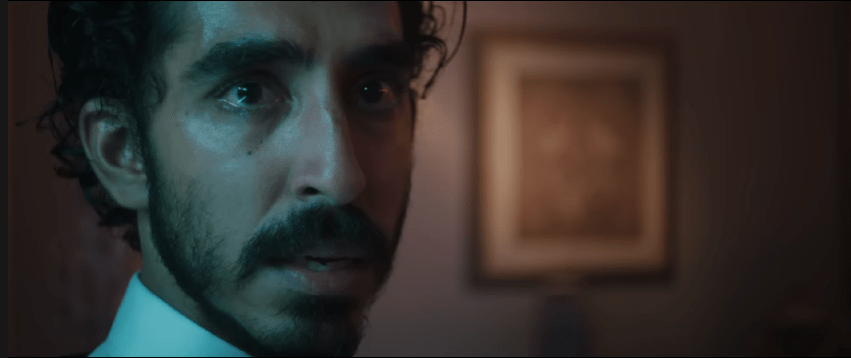
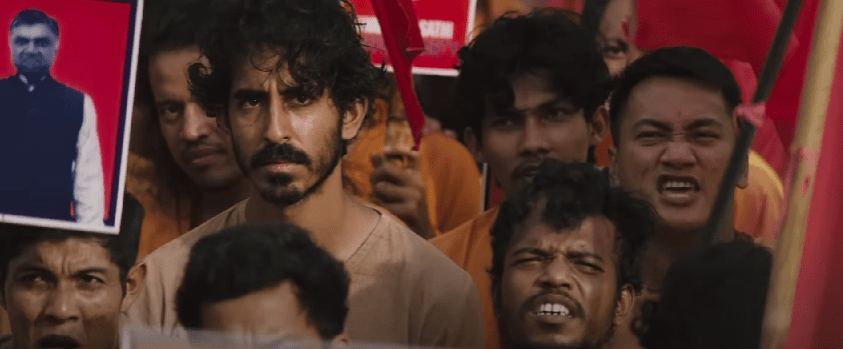
Directed by Dev Patel in his directorial debut, and produced by Jordan Peele, this movie was clearly a passion project for Patel, who stars in the unnamed role of a man out for revenge against the corrupt Indian officials and religious leaders who killed his mother. 

“Blessings from my mother,” Patel’s character says as he prepares to take his vengeance.

Patel is excellent in the lead role, portraying the trauma and rage of his character flawlessly.
This extends to the action scenes, all of which are great.
There are a few bits of too much shaky-cam here and there but, otherwise, they are all thrilling, brutal, and occasionally with a bit of humor thrown in.
These action scenes are less abundant than the trailers would have you believe, although this is not a bad thing. 

All of the fights are excellently choreographed.

When the film is not focusing on the action, it is instead building the themes through the trauma of its lead character, and also going into different parts of Indian culture.
For example, the hijra community gets an unexpected focus in this movie, which was the first time I had heard about the culture in India.
Along with this, Patel provides biting criticism of the Indian government and religious leaders with his depiction of the antagonists, Rana Singh (Sikandar Kher) and Baba Shakti (Makarand Deshpande).

Monkey Man provides a lot of commentary on the state of India.

With the main characterization, action and themes all coming together, probably my only significant issue with Monkey Man is some of the characters.
A couple of them do kind of feel forgotten about towards the end of the film.
Along with this, a minor issue I have is the main character’s transformation into the Monkey Man in the final act.
There is this big symbolic change with the mask he wears, only for him to immediately abandon wearing it afterwards, making the change feel kind of pointless.

It felt like this moment was supposed to be impactful, but the removal of the mask not a moment later killed the momentum.

Those issues aside, Monkey Man is a strong directorial debut for Dev Patel.
It delivers great action, a relatable main character, and sheds a light on many issues and groups in India which I was unaware of.
I am interested to see if Patel will continue his directorial career alongside his acting in the future.    

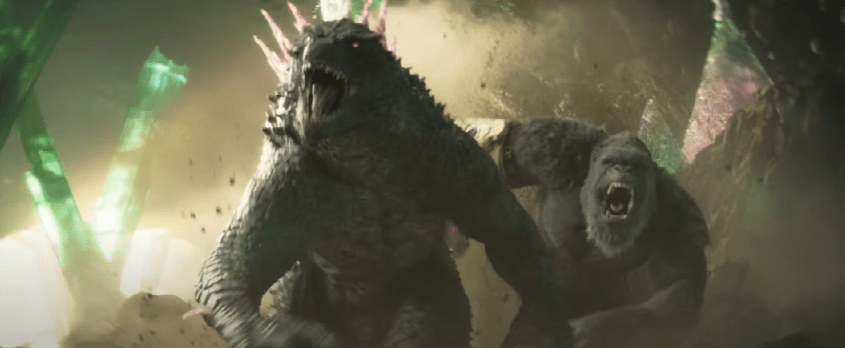
Godzilla x Kong: The New Empire Review: More Monsters, and Bearable Humans.

I quite enjoyed Godzilla vs Kong.
Although it did have its problems, the film made me feel like a kid again watching the original King Kong vs Godzilla for the first time.
Going into the sequel, Godzilla X Kong: The New Empire, I was hoping the film could recapture that feeling for me.
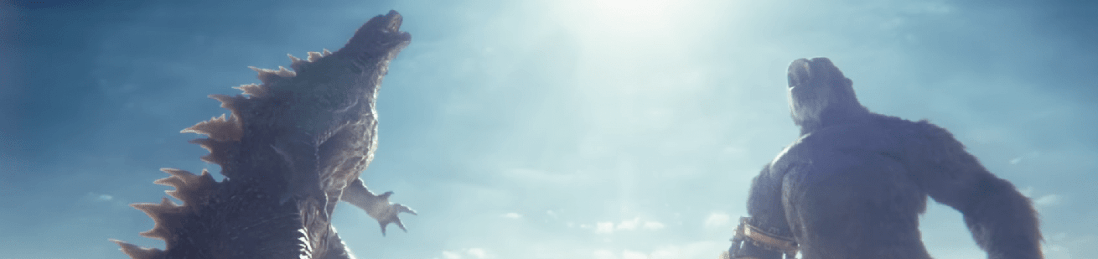
Directed once more by Adam Wingard, the film follows Kong in Hollow Earth, where he discovers he is not the last of his species, exposing the world to another threat which he cannot face alone. 

Kong and Godzilla must team up to defeat the latest monster.

The New Empire is primarily a King Kong film, with Godzilla’s role feeling a little tacked on at times.
He is absent for most of the movie until the final fight where he is needed to team up with Kong.
Thankfully, Kong more than makes up for Godzilla’s lack of screentime, with The New Empire feeling like it focuses more on the monsters than any previous film in the Monsterverse, which is what I wanted. 

I’m glad to see the monsters taking a much more central role than the humans this time around.

Another thing I wanted was more screentime for Jia (Kaylee Hottle).
In my review for Godzilla vs Kong, I stated that I wished she had more screentime because she was pretty much the only interesting human character in the entire thing.
Well, I got my wish in The New Empire, with the human storyline focusing on her.
This resulted in the humans being much more bearable than in previous Monsterverse films, with the cast of Rebecca Hall, Brian Tyree Henry, and Dan Stevens standing out more.

Jia’s storyline is the most interesting human one in the Monsterverse, although that is not saying much.

The monster and human storylines both converge by the third act in a massive CGI battle between monsters which, while visually fun, had me a little uneasy.
This final fight was supposed to be a big, crowd-pleasing moment, yet I found myself kind of wincing because of the sheer amount of human casualties which are never acknowledged.
It felt kind of weird that the movie was trying to entertain me with the spectacle of a big monster battle, when said battle was clearly resulting in hundreds of thousands of fatalities at the very least.
The fact that the movie does not acknowledge such losses felt a little off to me.

The final battle had a bit of a strange tone because of this.

Another issue was that, well, this film came after Godzilla: Minus One.
Granted this issue is through no fault of the movie, but it did feel like a step down going from one of the greatest Godzilla movies ever made to a big dumb action movie.
Still, this only dulled my experience with the film slightly.
Godzilla x Kong: The New Empire is a solid entry in the Monsterverse.
The Kong storyline is great, the humans are much more bearable, and, though the final fight does feel a bit off-putting by the unacknowledged casualties, it is still fun.
I look forward to seeing what the Monsterverse does next. 

Centuria Chapter One, 100 Slaves Review: An Intriguing Beginning.

With Tatsuki Fujimoto being such a fantastic mangaka, it is no surprise that many people he has worked with have also done great things.
Tatsuya Endo’s Spy X Family and Yuji Kaku’s Hell’s Paradise are both excellent, for example.
So, when I heard that another assistant of Fujimoto’s, Tohru Kuramori was releasing the first chapter of his new manga, I knew I had to check it out.
The work is called Centuria and is off to a promising start with Chapter One, “100 Slaves.”
The chapter begins by introducing our main character, Julian, who is a slave.
We first see him rebelling against his abusive master, while narrating about the plight of slaves like himself, who have never owned anything.
The chapter then flashes forward to a ship in the middle of the ocean, which is transporting 100 slaves.
Some of the crew are worried about passing through a supposedly cursed area, yet their complaints to the captain are interrupted by the discovery of Julian, who stowed away.
The captain wants to kill him, but the 100 hundred slaves aboard are having none of it, with many offering to split their food.
It is through this that it becomes apparent many of the slaves are sick or elderly.
The first to speak up for Julian is a pregnant woman named Mira, who explains to him that since slaves cannot own anything, many of them value compassion.
Julian returns this compassion by polishing a knife Mira’s deceased husband gave her.
While he does this, Julian explains his backstory, stating that his own mother sold him as a child to a blacksmith who abused him.
Julian learned the craft from him but then escaped when it looked like his master was about to kill him, which we saw at the beginning of the chapter.
As the journey progresses, Julian and Mira grow closer.
Julian has never known the love of a mother, since she sold him, and Mira lost her son when she was enslaved.
And so, a mother and son type bond begins to emerge between the two in a short amount of time, which is a credit to Kuramori because of how natural it feels.
It even gets to the point that Mira suggests that they live together if they are ever liberated.
At this point, I said out loud, “Yep, Mira’s totally dead.”
All of the bonding scenes between her and Julian were practically screaming that she was a goner.
It was just a matter of how.
Sure enough, after the ship gets sucked into the area they were trying to avoid, the captain decides it is time to kill all of the slaves.
The reason most of them are sick and elderly is because the captain wanted to buy them at a low price and then stage an accident.
He would then get a big insurance payout on their lives.

This brutal sacrifice takes an unexpected turn, however, when Julian and Mira are offered a sacrifice of their own.
With all of the slaves dying to save them, this summons a supernatural entity, which says a sacrifice of love must now be given to earn her blessing of great power.
Julian offers to sacrifice himself for Mira to save her unborn child but, seeing her dead son in him, Mira refuses to lose another son.
Using the knife Julian polished for her, Mira performs a C-Section on herself, gruesomely saving the life of her daughter, whom she names Diana.
Trusting Julian with Diana’s life, Mira throws them one last, tragic look before jumping into the ocean.
Satisfied with the sacrifice, the entity now asks a heartbroken Julian what he wishes for.
Remembering what the ship captain said about their lives being worthless, Julian states he wishes for proof that Mira’s life wasn’t a waste.
The entity grants this wish, as dark cracks begin to emerge from Julian’s eyes, and he gains the strength of all one hundred sacrificed slaves.
Kuramori shows this strength in a frightening double page spread of the aftermath, where we see Julian has absolutely slaughtered all of the slave masters on the ship, with some of them even having their jaws ripped off.
However, just as Julian turns back to Diana, he is stabbed from behind by the ship captain.
But rather than dying, Julian heals, with the entity revealing that he has also gained the one hundred lives the slaves lost.
So, he now has 99 lives left.
Julian then kills the captain, before escaping the ship with Diana, while the entity destroys it, before telling Julian that because of his sacrifice, “The sea will no longer bear its fangs at you.”
The entity departs, leaving Julian alone to look down at his new sister, crying and laughing as he does so.
The first chapter of Centuria then finishes with Julian narrating that he has never had anything valuable in his life, until now.
This was a perfect book end to the first chapter, which opened with Julian reflecting on their being nothing valuable in his life.
Overall, this was a promising opening for Centuria.
It gave off a Vinland Saga vibe, but one with fantasy elements.
I assume that the story will follow Julian using his powers to take a stand against slavery, all the while looking out for Diana.
Apart from that, I have no idea where the story will go.
We know virtually nothing about the world, except for that it is set in a world with slavery and that supernatural beings exist.
Kuramori really could take the narrative anywhere at this point and, after this first chapter, I am intrigued to see where it goes. 

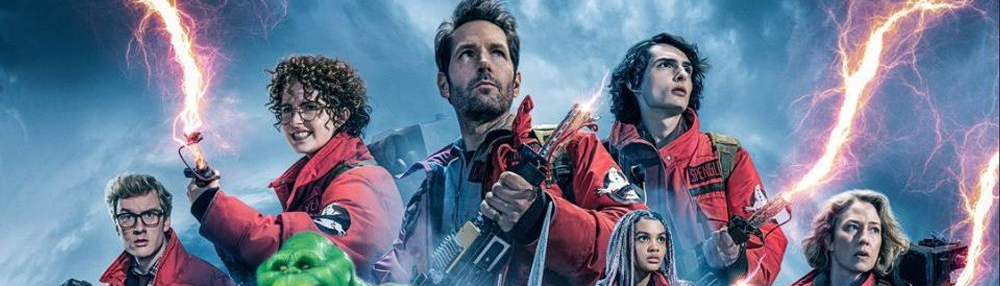
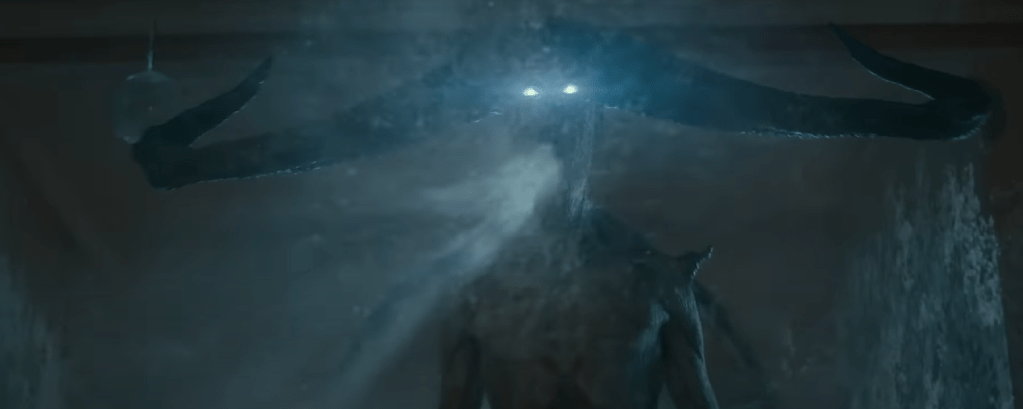
Ghostbusters: Frozen Empire Review: Too Many Characters Creates a Scattered Film.

I quite enjoyed the 2021 Ghostbusters reboot, Ghostbusters: Afterlife.
It brought a smile to my face, as it lovingly paid tribute to what came before, while paving a road for a new set of characters.
After watching the sequel, however, Ghostbusters: Frozen Empire, I can say that it was lacking a lot of that charm.
Directed by Gil Kenan, and written by him and Jason Reitman, Frozen Empire picks up three years after Afterlife.
The Spengler family has now taken on the role of the Ghostbusters in New York, with the original team helping them out.
After being sold a mysterious orb, the team slowly begins to realize it holds a powerful spirit, capable of freezing the world. 

The ice age comes to New York in Frozen Empire.

And so, the Ghostbusters, new and old, have to unite to take on this latest threat.
This, naturally, means there are a lot of characters to follow in this movie, which is Frozen Empire’s biggest problem.
Some of these characters do have good storylines, don’t get me wrong.
Just like in Afterlife, Phoebe (Mckenna Grace) has the best story, with her befriending a ghost girl, and Paul Rudd is still a lot of fun as Gary.
Kumail Nanjiani also has a fun presence, and his character received most of the few laughs from the audience I saw the film with.
But there are just simply too many characters to follow in this movie, resulting in many of them having next to no story and thus feeling entirely unnecessary.
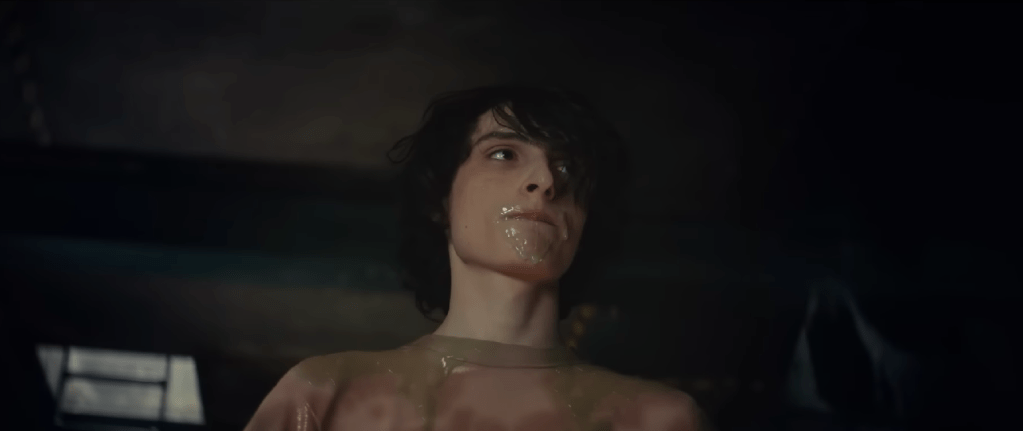
Trevor (Finn Wolfhard), Lucky (Celeste O’Connor), and Podcast (Logan Kim) all just feel like they are there because they were in Afterlife. 

If half the cast from the previous movie had not returned, then I feel like Frozen Empire’s plot could have been more succinct.

As for the original Ghostbusters, while their return at the end of Afterlife was a well-done moment of fan service, some of them just feel like they are here to whip up nostalgia, most notably Bill Murray’s Peter Venkman. 
Having all of these characters to follow, many of them with pointless storylines or no storylines at all, makes the film quite jumbled.
This is not to say my opinion of Frozen Empire is entirely negative, though.
The villain feels unique, even if it does suffer a bit from the trope of standing around too much, giving the heroes time to fight back.

The antagonist at least feels somewhat intimidating.

There were some good storylines, like with the already mentioned Phoebe, Gary and Nadeem.
There were also a couple good laughs here and there, even if a lot of the jokes did miss the mark.
Overall, I would say Ghostbusters: Frozen Empire is a fine movie.
It is one you can watch to pass the time for a bit.
Certainly not as good as Afterlife but thankfully nowhere near as bad as Ghostbusters 2016.

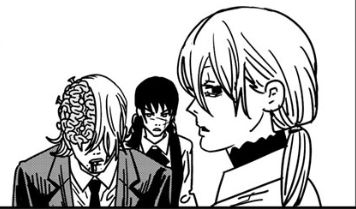
Chainsaw Man Chapter 160 and 161 Review: A Long-Awaited Reveal.

For the past few weeks, I have been wondering if Tatsuki Fujimoto has been enjoying writing Asa’s chapters more than Denji’s in Part Two.
After all, there was a two week break between pretty much every chapter in Denji’s arc, whereas now that the story is focusing on Asa again, we are back to a week between chapters.
This was the case for Chapters 160 and 161, “That for Which the Heart Beats” and “Chainsaw Man Puzzle.”
These two chapters are great, progressing the plot with both hilarious and unexpected developments.
Chapter 161 begins with Asa and her gang about to face off against Katana Man and Nail.
Going into the chapter, I was curious to see how such a fight would pan out, only for that fight to not happen at all.
This was far from disappointing though because of how funny what we got instead was.
Katana Man starts the confrontation off by basically fangirling over Asa, before denying that he was to Nail.
After an argument, the two go to attack Asa when the Public Safety Officer orders them to, only for Asa to stop them by shouting that she’s here to fight Chainsaw Man.
I like how smart Asa was here, picking up on the fact that Katana Man had beef with Chainsaw Man during his argument with Nail and now using that to her advantage.
The Public Safety officer attempts to blackmail Katana and Nail back to his side but the effort fails, with Katana Man shouting that killing Chainsaw Man is the reason his heart still beats.
Fujimoto then gives us an unexpectedly mournful moment, when the Public Safety Officer tells his transformed wife that she was right when she said he should never have joined Public Safety.
Before Katana Man can kill the man, however, he flees, going to get someone who can actually kill him and Asa.
Following this exchange, Haruka is understandably freaking out that Asa and Katana Man want to kill Chainsaw Man, his hero, calling it stupid.
The chapter then ends on another humorous note, with Asa stealing Katana Man’s line that, “the reason my heart’s beating is to fight Chainsaw Man”, which Katana Man calls her out on.
“That for Which the Heart Beats” was a fun read.
The expected direction of the story took an unexpected direction instead, with Asa convincing Katana Man to join their side in finding Chainsaw Man to fight him.
The following chapter, “Chainsaw Man Puzzle” is even better.
The chapter begins with the doctors who were dismembering Denji finishing up their job, only to be interrupted by Asa, Katana Man and the others bursting into the room.
They demand to know where Chainsaw Man is, only to learn the doctors have completely dismembered him and put his parts in boxes.
The head surgeon is comedically unbothered by the threat to his life, demanding that everyone apologize for interrupting his work.
Of course, Nobana is the only one to apologize, which got another laugh out of me.
The group begin to reassemble Denji, resulting in a lot of humorous moments, like when Akoku finds his wiener and Katana Man wants to shove it up his behind.
The guy is definitely not over Denji and Aki’s competition from Part One.
Another funny moment is when Haruka also fangirls over holding Chainsaw Man’s guts.
However, his fangirling quickly ends when Nobana finds Chainsaw Man’s head and Haruka gets a look at it.
And so, the moment that we have been waiting for ever since Asa first met Denji in Chapter 104 arrives.
Haruka opens the box and shows Asa Denji’s head, revealing to her that he is Chainsaw Man.
The shock is so great it launches Yoru right out of control of their body, and Asa’s stunned face left me grinning at the reveal.
Asa has very little time to dwell on it, though, because the Public Safety officer returns with Quanxi, who he orders to kill everyone.
In my review of Chapter 159, I speculated that Asa would have a lot of trouble fighting Quanxi, but this theory was based on the idea that Katana Man would be fighting on the side of Public Safety.
With Katana Man now on Asa’s side, it levels the playing field quite a bit.
Or, at least, it could.
We have never seen Katana Man fight Quanxi, so maybe she will wipe the floor with them.
Or maybe Fujimoto will pull another Katana Man and have Quanxi also betray Public Safety.
We don’t know why she’s siding with them, after all.
Maybe her motives are similar to Katana Man.
It’s revealed in Chapter 160 that Public Safety offered to help him get his syndicate back.
Maybe they offered to help Quanxi find her Fiend girlfriends again, much like how Denji hopes to find Power.
As for Denji himself, the fallout of his identity being revealed to Asa and Yoru is sure to be interesting, and probably hilarious.
I imagine that once the chaos has calmed down, Yoru will be rubbing it in Asa’s face that Denji was telling the truth about being Chainsaw Man in Chapter 104.
Not only that, but I am intrigued to see how Denji will react to the fact that Asa has been possessed by the War Devil the entire time, meaning that yet another woman he dated tried to kill him.
I doubt he will take it well, although he will probably be focused on trying to find out what happened to Nayuta.
Overall, Chapters 160 and 161 were a lot of fun.
They had great humor and progressed the plot in interesting ways, most importantly with Asa finally learning Denji’s identity.
I am very excited to see where Fujimoto goes with all this.

The Apothecary Diaries Review: Holmes and Watson in Imperial China.

The anime community has been blessed with some fantastic anime as of late, two of which being particular standouts.
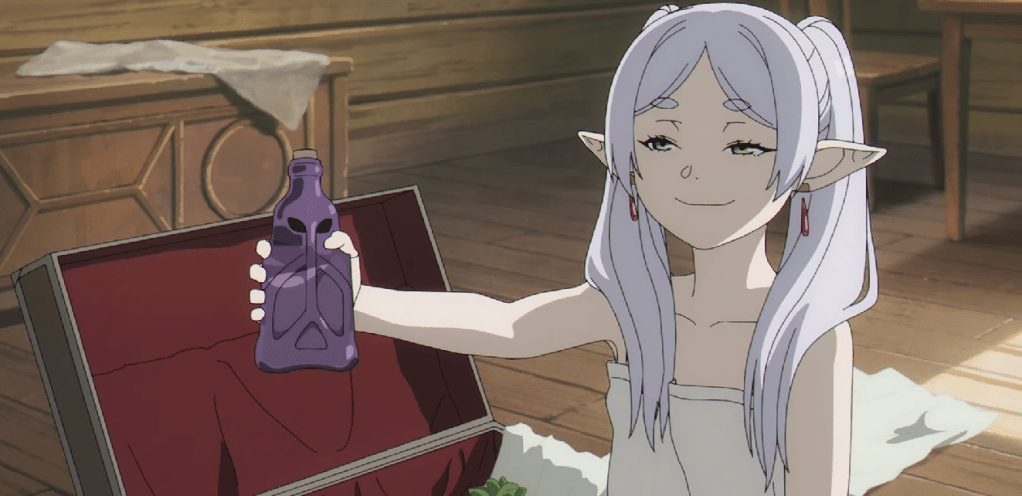
The first of which is Frieren: Beyond Journey’s End, the greatest anime adaption of all time, in my opinion.
The second of these is The Apothecary Diaries, an amazing anime in its own right.
Based off the light novel by Natsu Hyūga, the story is set in a country resembling Imperial China.
Our main character is Maomao (Aoi Yuki), an apothecary who is kidnapped to sell as a servant for the Imperial Palace.
Recognizing an illness that is affecting the concubines and children of the Emperor, Maomao anonymously writes a letter to stop the unintentional poisonings.

Maomao is relatable for the beginning. She does not want to get involved in court politics but steps in when her morals and interests compel her.

This catches the attention of the important eunuch Jinshi (Takahiro Sakurai), who sets about using Maomao to solve other mysterious poisonings and illnesses within the palace.
And so, the story follows the friendships and rivalries Maomao forms as she investigates case after case, while she and Jinshi grow closer.
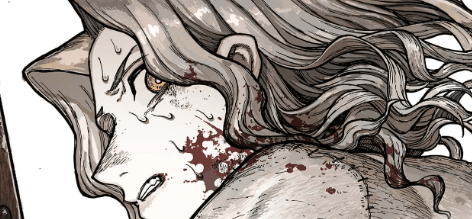
Maomao, herself, is an excellent character, as her obsession with poisons often drives her to humorous, cat-like behavior. 
However, this behavior can often flip to being more like a tiger, as Maomao’s anger is pretty fearsome to behold.
Just ask Jinshi.

I would not have blamed Jinshi for having a heart attack when Maomao glared at him like this.

Speaking of the supposed eunuch, he is also a great character with a lot of mystery to him.
He has great chemistry with Maomao as well, often finding himself exasperated by her antics.
The cases these two end up investigating creates what feels like a Sherlock Holmes and Dr Watson dynamic, only with a more humorous spin on the relationship.
Like Sherlock Holmes though, the story often gets dark, with many working behind the shadows in the Imperial Palace.
This leads to explorations of many shady characters, like Lakan (Takuya Kirimoto), the spy master with an interest in Maomao.

Lakan is suspicious and intimidating right from the start.

The ending revelations about these mysterious characters and the events around them are always satisfying, with some of these mysteries even being currently unsolved, leading into Season Two, which has thankfully been confirmed.
I look forward to seeing the resolution to these mysteries, just as much as I look forward to seeing Maomao and Jinshi’s relationship progress, alongside the inevitable comedy that will result from this.
The Apothecary Diaries is an excellent anime, which will often have you laughing at its characters’ antics, while also being intrigued by the many questions the show raises.


Frieren: Beyond Journey’s End Review: The Greatest Anime Adaptation of All Time?

I have been keeping up with Frieren: Beyond Journey’s End ever since I first read the manga back in 2021.
Written by Kanehito Yamada, the manga has a unique spin on the fantasy genre.
Rather than follow the heroes Himmel (Nobuhiko Okamoto), Frieren (Atsumi Tanezaki), Heiter (Hiroki Tochi) and Eisen (Yoji Ueda) on their adventure to defeat the Demon King, the story instead takes place decades later, with Frieren reminiscing on that epic, ten-year journey.
This was a journey that passed in the blink of an eye for Frieren, due to her long life as an Elf.
By the time she realizes what that time meant, the hero Himmel and the rest of the party are either gone or fading.
The current story thus follows Frieren, as she embarks on a new journey with Heiter’s adopted daughter Fern (Kana Ichinose), and Eizen’s apprentice Stark (Chiaki Kobayashi), while reflecting on her old adventure.
It is a moving story that I was quite excited to see animated by Madhouse. 

Past events take new meaning for Frieren on her current adventure.

Directed by Keiichiro Saito, the studio clearly had a lot of faith in Frieren: Beyond Journey’s End because, not only did they greenlight 28 episodes, but they also aired four of the first episodes together.
Seeing this faith in the project made me excited for the adaptation but nothing could have prepared me for how masterful it was.
I would go as far to say that Frieren: Beyond Journey’s End is the greatest anime adaptation for a manga of all time.
This is a bold claim but I feel that it is more than warranted with just how much the anime elivates the source material.
So many battles in the manga take place in single panels, yet the anime adapts these into fully fledged and meaningful fights, with stunning animation that never falters.
The incredible animation even applies to character building scenes, with a moment as simple as Frieren jumping out of a bed being unbelievably detailed. 

The humor of this scene was enhanced by the animation.

The emotion of the anime also just hits deeper, with the soundtrack by Evan Call working with the animation to bring the viewer into the scene, whether that be a fight scene or a character growth one.
Staying on tune with the sound of the anime, the voice acting is also superb, with the actors ironically bringing a lot of life to the often-monotone voices of the characters.
This monotone style of speaking creates a lot of humorous situations, as do the few moments when characters break out into explosions of expression, as mostly seen with Stark.

Stark reacting to Fern being angry at him will never not be funny.

I have been heaping praise upon praise for this anime adaptation but now comes the time in the review where I have to state my criticisms… or I would, if I had any.
Seriously, this adaptation is so good it even removed some of my criticisms of the manga.
In my review for the manga, I said that it felt like some storylines overstayed their welcome, yet the flawless nature of this adaptation made the scenes flow so well together.
Seeing the quality of this adaptation made me extremely excited to see future arcs in the story adapted.

Epic scenes like this one make me even more excited for Season Two.

If the anime can keep up this level of quality for future seasons, then Frieren: Beyond Journey’s End could stand among the best anime of all time.
I would even argue this first season is one of the best in all of anime.
Frieren: Beyond Journey’s End is now the gold standard of anime adaptations, for me.
I would say goodbye to it, until hopefully Season Two, but it would be embarrassing when we meet again. 

Chainsaw Man Chapter 159, Attack on Samurai Review: Katana Man or Kool Aid Man?

Chapter 159 of Chainsaw Man, “Attack on Samurai,” continues the ongoing rescue arc with more hilarity.
The chapter begins with Haruka telling Nobana and Akoku that they don’t have to come with him, but they both have their own reasons for doing so.
Nobana’s is simply that he does not know how to get out of the building, while Akoku claims he has nowhere else to go.
Although, if Akoku does turn out to be the Fire Devil, then following Haruka to Chainsaw Man would most likely suit whatever his motive is.
Nobana, on the other hand, eventually comes across what he thinks is an exit, only to find it is a cell for people transformed into Chainsaw Men.
The group is confronted by a Public Safety Officer, whose wife is transformed inside the cell.
The man contemplates why his wife transformed, while his annoying neighbor and the Chainsaw Man Fan Club remain human.
When the man claims to have done nothing bad in his life, Asa asks if that’s really true, and the man reveals he cheated on his wife.
Yoru calls him a piece of crap, not for cheating, but for trying to buy time.
She then kicks Fami out of the way, as Katana Man bursts through the wall like he’s the Kool Aid Guy.
Fami tries to get Guilly to protect her, but the Guillotine Devil has already changed back into its totem.
It’s kind of funny how last chapter I wondered how long Guilly would stick around, only for them to immediately leave in the next chapter.
Fami also almost takes her leave, as the Hammer Fiend arrives next to bash her head in with a hammer.
Thankfully, Yoru is there to once again kick her sister in the head.
What else are siblings for?
The chapter then ends with the Hammer Fiend mocking Yoru for kicking Fami out of the way, and Yoru replying that they should try having one arm.
And so, we are left with a cliffhanger teasing the fight with Katana Man and the Hammer Fiend.
We could also hopefully learn the Hammer Fiend’s name and what their deal is next chapter.
As for the fight itself, I think Yoru and Fami will be able to handle it, so long as there are no other complications.
One such complication could be Quanxi.
If she shows up then, yeah, they are probably screwed. 
“Attack on Samurai” is a solid Chainsaw Man, which has great physical humor, with Yoru constantly kicking Fami to keep her safe.
 

Blue Eye Samurai Review: Bloody, Animated Revenge.

It took me a while to hear about Netflix’s Blue Eye Samurai.
Created by Amber Noizumi and Michael Green, I only became aware of it when a YouTuber I follow gave it a glowing review.
Hearing about its animation similarities to Arcane, which I loved, I decided to check it out and was rewarded with a compelling and thrilling revenge story.
The story is set in Edo period Japan, where the Shogun has expelled all white men from the country.
However, some do remain in the country illegally.

Hunting these men is Mizu (Maya Erskine), a samurai whose father is one of these white men.
Shamed for the blue eyes of their father, Mizu seeks their revenge and, oh, is that revenge bloody. 

Blue Eye Samurai is one of the bloodiest animated series I have ever seen.

I had heard Blue Eye Samurai was violent, but nothing could prepare me for the sheer amount of animated bloodshed I was about to see.
I would say the animation looks stunning, and it does, but the constant grizzly kills had me wincing quite a few times.
Not that I am complaining about that. 
Another positive, alongside the animation, is the characters.
Mizu is a relatable main character, and their past perfectly shows how they ended up on the violent path they are now set upon.
This past of theirs results in some truly fantastic episodes, like Episode Five, “The Tale of the Ronin and the Bride”, which is the best episode of the season. 

Episode Five is tragic, full of mystery and, of course, extremely bloody.

Mizu also goes through a lot of growth, as they often have to choose between their revenge and the lives of their allies.
These allies consist of Ringo (Masi Oka), a sweet handless man who insists on being Mizu’s apprentice, Tagen (Darren Barnet), a cocky swordsman who was once a childhood bully of Mizu’s, and Akemi (Brenda Song), a princess trying to escape the bounds of marriage to powerful men.
All of these characters are great and have their own arcs, especially Tagen and Akemi who switch perspectives by the end of the season.
Just as good is the villain of the season, Abijah Fowler (Kenneth Branagh), the white man Mizu hunts.
Terrifying, eloquent, and also gross, Fowler has many great scenes displaying his villainy, my favorite of which being when he attempts to make a bargain with God. 

Fowler’s monologue is one of my favorite scenes in the series.

Arrogant and depraved, Fowler makes for an excellent antagonist, although he unfortunately does suffer some writing issues in the final episode, when he has multiple chances to kill Mizu but just runs away instead.
The writing for this final episode was quite inconsistent overall.
There were great scenes in it but there were also quite a few rushed and poorly written moments.
Sadly, the last episode was not the only inconsistent thing about the show.
Another such thing is Mizu’s fighting ability.
In one episode, they go from being easily defeated by common thugs, to defeating a master swordsman in their very next fight.
It felt a bit jarring to see.

Mizu’s changing fighting ability is my one criticism with Episode Five.

Still, the slightly inconsistent nature of Blue Eye Samurai did little to dull my enthusiasm for it.
The story is compelling, the characters and their arcs are interesting, and the animation is both beautiful and bloody.
I am already anticipating Season Two, especially since a new location was teased. 
If you have not checked out Blue Eye Samurai yet, it is more than worth your time.