Attack on Titan Chapter 123, Devils of the Island Review: Eren Equals Nightmare Fuel.

4 and a half stars
Honestly, it felt like it was taking forever for Chapter 123 of Attack on Titan, “The Devils of the Island” to be released.
After the best cliffhanger of the entire series in Chapter 122, I was desperate to see what would happen now that the Rumbling had been initiated.
However, in true Isayama fashion, he started the chapter not with the Rumbling but with a flashback to when Eren and his friends first went to survey Marley.
This surprisingly lead to some of the greatest jokes of the entire series.
There is the amazingly comedic moment where Hange, Sasha and Connie are amazed by a car, with Sasha and Connie mistaking it for a cow.
What makes this joke truly shine, though, is the following exchange between Levi and Onyankopon where Levi expresses his concern that they may try to feed the car a carrot.
Onyankopon thinks he is joking until he looks and cries out “they’re buying a carrot!”
But, by far the funniest gag of the entire chapter that left me in stitches came when a clown approaches Levi and offers him candy, thinking he is a little boy because of his height.
Levi’s expression during this moment is priceless and the fact that this random clown had just inadvertently insulted the strongest character in the manga who could tear him to pieces had me howling with laughter.
I know the chapter just came out but I already think this joke is my favourite out of the entire manga so far.
The flashback is not all sunshine and rainbows, however, as is quickly proven by a surprising character reveal when Levi notices a young boy trying to steal Sasha’s money and calls him out on it.
What is so surprising about the boy is that he is the one with the fez hat from the memory fragment in Chapter 120.
I had previously predicted that this boy would turn out to be a young Tom Xaver or a kid from the future that Eren was seeing with the Attack on Titan power but I was completely wrong about this.
No, instead the boy turned out to be an immigrant from the Mid-East Allied Forces, fleeing his country because of its war with Marley.
This leads to him being singled out by the crowd of Marleyans and it becomes clear that the country’s racism does not just extend to Eldians.
Thankfully, Levi using his quick thinking to save the boy, claiming he is Sasha’s brother before fleeing with him just as the crowd starts to turn violent.
Upon escaping, Levi notices that the boy has taken the money again.
However, I do not think he stole it because of the memory fragment in Chapter 120.
Because we now know that this fragment came from Eren’s perspective we can see there was a moment he made this boy smile.
I think the reason that the boy was seen smiling is because Eren secretly gave him the money.
If he did so it would most likely be because he sees a part of himself in the boy, as pointed out by the scene with him and Mikasa looking at the boy’s camp with his family.
Eren highlights their similarities and then makes a very ominous statement about the boy when Mikasa asks if something happened to him, stating “nothing yet.”
Given this, and the fact that Eren was crying before Mikasa found him, it points to the notion that Eren already knows he will cause this boy and his family’s deaths when he initiates the Rumbling.
Eren is clearly struggling with this knowledge as he asks Mikasa what he is to her.
Many people have interpreted this as a shipping moment but I do not think this is the case.
Rather, I think Eren’s questioning of Mikasa is both a blind hope that she can unknowingly convince him he does not have to destroy the world, a way to test if she only cares about him because of her Ackerman blood, and to see if the future memories of the Attack Titan are really destined to happen, all in one.
This last point seems to be proven by the arrival of Jean, Connie and Sasha to which Eren notes that it is “perfect timing”, as if he knew they would come at that moment.
Then we get the last happy moment of the chapter with the Scouts all getting drunk and partying with the young boy’s family.
This moment is also particularly sad in hindsight because it is the last time that Eren, Mikasa and Armin were happy together.
After this, Eren gets his proof that the subjects of Ymir on Paradis would always be persecuted by the outside world and leaves to plan his attack on Liberio.
From here, “The Devils of the Island” transitions into the present with the much anticipated Rumbling and this is where my one criticism of the chapter comes in.
During this moment we see that Mikasa, Armin, Gabi and Pieck are all safe, when they were in imminent danger at the end of the last chapter.
It was quite jarring to see they were safe without showing how they escaped the collapsing wall.
This problem aside, though, the panels of the Rumbling are both magnificent and terrifying.
The horrifying aspects of these panels are highlighted further by the absolute nightmare fuel that is Eren’s new Titan form.
I was pretty sure he would get a new form after finally utilizing the Founding Titan power last chapter but I was not at all expecting the dinosaur skeleton hybrid that we got.
What’s more is that this Titan puts Rod Reiss’ to shame, with it being at least three times times the size of his Titan, and that’s only when it’s on all all fours!
Eren is practically unstoppable at this point and the full force of the Rumbling is shown through how Armin and Mikasa have to shout to hear one another because of the noise.
Armin quickly realizes that Eren is using way more Titans than would be necessary to crush the Allied Forces in Marley and this leads to Eren’s announcement of what his true intentions are.
He uses the Founding Titan power to communicate with all Subjects of Ymir, seemingly temporarily transporting them to the Path Dimension.
Curiously, Mikasa is also transported there, which is strange because I though she had no Eldian blood, having an Asian mother and an Ackerman father.
However, I think the reason she is there is not because she can be turned into a Titan but because as an Ackerman the past battle experience of her predecessors was given to her through a Path.
So, even if Mikasa is not an Eldian, she is still connected to the Paths so she can hear Eren.
More important, though, is Eren announcing his intentions.
He declares that he plans to use the Rumbling, “until all life existing there has been exterminated from this world.”
And there we have it.
As many of us thought, Eren intends to enact a worldwide genocide to protect his friends.
Anyone who still thinks Eren is a hero after this really should take a good look at their morality because, although Eren is doing this for the right reasons, what he intends to do is still monstrous.
And this monstrous intent is perfectly portrayed by the final panel of the chapter where Eren announces he will kill everyone outside Paradis.
He looks absolutely demonic in this panel, only further implying that he may turn out to be the devil in Ymir’s story.
Devil or not, though, the question is if he will succeed in destroying the world or not?
He could just be trying to make himself the enemy to unite the world against him but this seems a little too similar to Code Geass’ ending.
Isayama has said that he wants to hurt the readers so I see Eren’s plan of worldwide genocide succeeding with him achieving freedom for his people, but at the worst possible cost with many beloved characters dying.
“The Devils of the Island” makes it even clearer that the story of the manga is drawing to a close.
And from the events of the chapter, that ending looks to be on such an epic scale to the extent that we have not seen in this series before.

Watchmen Episode Two, Martial Feats of Comanche Horsemanship, Review: “Friends in High Places” Indeed.

4 stars
The mystery deepens in the second episode of Watchmen “Martial Feats of Comanche Horsemanship”, with Angela beginning her investigation into the death of Chief Crawford.
Her prime suspect is the 105-year-old Will who claims to have “strung up your police chief”, despite looking physically incapable of doing so.
Directed again by Nicole Kassel, episode two dives head first into the interactions between Angela and Will as the costumed detective tries to learn the truth from him.
An interesting point to note is that, as far as I can remember, Will never outright says he murdered Crawford.
Again, he merely states that he “strung up your police chief.”
So, while he may have had a hand in hand in hanging Crawford, he may not be behind his murder.
Although, Looking Glass later says Crawford did die of asphyxiation, likely from being hung, so I may be wrong about that.
Or maybe he was killed elsewhere before being hung.
Either way, Crawford’s murder is not the only mystery surrounding Will because it is revealed that he is Angela’s grandfather at the end of the episode.
One thing I did find interesting was that it was mentioned that Will has two descendants.
This means, along with Angela, there is one other character who is descended from him.
Following the realization that Will is her grandfather and realizing he will not cooperate, she decides to take him in, ignoring his claim of having “friends in high places.”
This comes back to bite her when, after putting Will in her car, a magnet descends from the sky and picks up the car with Will in it, flying off.
“Friends in high places” indeed.

Will leaves.jpg
Will disappears with a smile as he is rescued from Angela’s custody. 

The scenes between Angela and Will are great as they continue to build in suspense and anticipation for the reveal of the conspiracy Will claims is currently happening in Tulsa.
The only weak moment came in the aftermath of Crawford’s murder, where Angela lets out a cry of anguish that seemed kind of artificial to me.
Aside from this small moment, though, their interactions are very good.
There are already multiple theories surrounding Will, including one that he was Hooded Justice who appears on a TV show called “American Hero Story”in a brief yet interesting scene that speaks to Angela’s character.
Supporting this theory, is the opening scene where Will’s father is fighting in World War One and sees a German pamphlet that urges black soldiers to come over to their side where they will be treated fairly, and Hooded Justice was thought to be German.
Speaking of theories, I also like the one that Crawford was the Seventh Calvary member who shot Angela.
In a flashback of the White Night, Angela is shot and about to be killed by one of their members but then it cuts to her waking up in the hospital with Crawford beside her.
However, none of these scenes are my favourite of the episode.
That award goes to the scene where we get to see Ozymandias’ play.
This moment proves to be the most confusing yet interesting scene in the show so far, with his production of Dr Manhattan’s transformation being particularly disturbing and also somewhat comical.
We watch as he literally burns his assistant Mr Phillips to death to simulate Dr Manhattan’s transformation, upon which it is revealed that all of his assistants are clones.

Ozymandias.jpg
Watching Ozymandias burn one of his clone servants to death, only for the next clone to eagerly take their place, is both disturbing and oddly comedic.

Why Ozymandias has all these clones and what exactly he intends to achieve by making this play for himself is uncertain.
One thing is clear, though, and that is that he has been deeply affected by his last meeting with Dr Manhattan, remembering his last words to him before he departed, “nothing ever ends.”
I am probably looking forwards to Ozymandias’ scenes the most in future episodes as Jeremy Irons is doing a great job.
Other notable scenes in this episode include the discovery that Crawford may have been in the Ku Klux Klan, and the touching moment where Looking Glass reveals that, despite seeming completely cold, he is actually crying under his mask.
Overall, I would say that “Martial Feats of Comanche Horsemanship” is another great episode of Watchmen that, while not as enjoyable as the first episode, deepens the mystery and creates more interesting questions for the show to answer.
Let’s just hope those answers will be satisfying.

Zombieland: Double Tap Review. Admittedly Fun But Unecessary.

3 stars
When I first heard there was a sequel to 2009’s Zombieland coming out, I had quite a few reservations.
The first film came out ten years ago and, although it is a very enjoyable film, I thought it was very unnecessary to make a sequel now.
A few years after the first film came out, sure, but ten years later?
So, I admit I went in with a lot of skepticism.
Still, I enjoyed myself.
Zombieland: Double Tap is a fun film with a lot of great gags and zombie action.
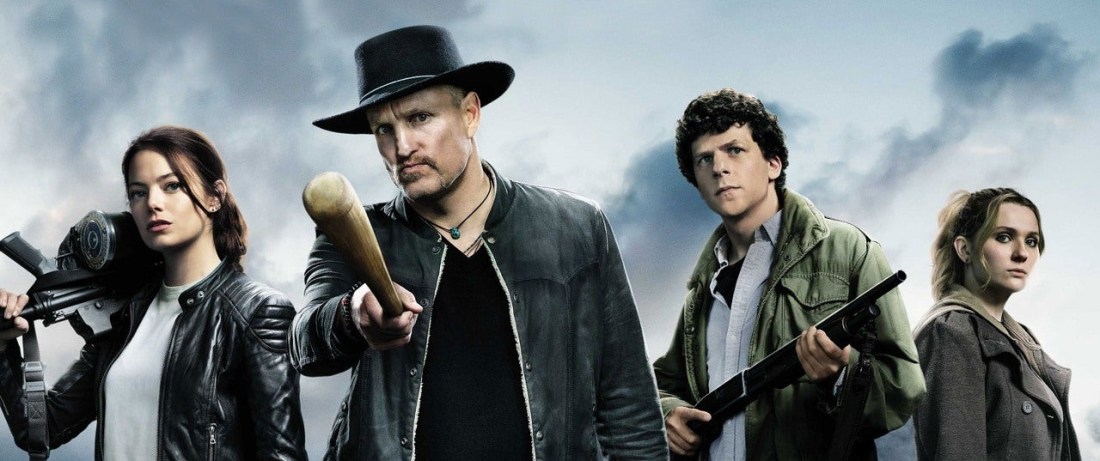
Returning director Ruben Fleischer did a good job helming this film, which again follows the characters of Columbus (Jesse Eisenberg), Tallahassee (Woody Harrelson), Wichita (Emma Stone), and Little Rock (Abigail Breslin) on their bloody adventures in Zombieland.
All four of the actors do a great job portraying the characters they played ten years ago, although Breslin sadly does not have enough screen time to stand out.
That aside, the team’s banter is great and it leads to a lot of exciting action sequences, my favourite of which is a long take fight sequence following the arrival of two characters that are hilariously similar to Columbus and Tallahassee.

elvis and cowboy.jpg
The introduction of Albuquerque (Luke Wilson) and Flagstaff (Thomas Middleditch)  leads to the best action scene of the film.

There are plenty of creative moments in the film as well, including one at the start that actually made me jump in surprise.
Then there is the surprise cameo when the credits start to roll, which is also highly enjoyable.
So, if you are looking for a good time at the movies then Zombieland: Double Tap will definitely provide that.
However, the film does still have quite a lot of issues.
One of those is the lack of agency in much of the plot.
The film basically follows Columbus, Tallahassee and Wichita on a mission to save Little Rock but, honestly, I felt very little suspence in this mission for whatever reason.
On top of this, while many of the jokes do land a lot of them don’t as well.
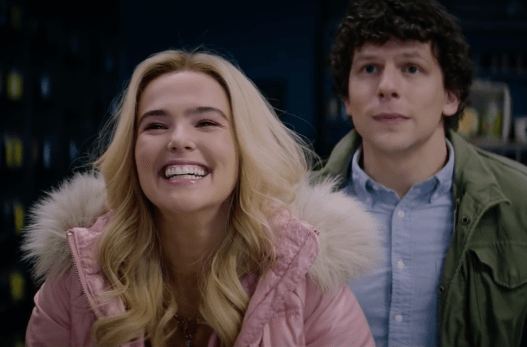
This is mainly due to the new faces in the film, primarily Madison (Zoe Deutch) and Berkeley (Avan Jogia), who are both incredibly annoying and not at all funny.

Madison
Madison’s dumb blond, stereotype of a character provided no laughs whatsoever for me.

There is also a supreme lack of stakes.
I remember being concerned for the characters in the third act of the first film but here I felt much of the tension in that final act to be artificial and, thus, not investing.
So, in conclusion, while Zombieland: Double Tap does provide a fun experience, it has quite a few problems that make the sequel feel unnecessary.

My Hero Academia, Season Four, Episode Three, Boy Meets… Review: The Two Meetings.

3 and a half stars
“Boy Meets…” is the perfect title for My Hero Academia season four’s third episode because it is all about Deku meeting and interacting with multiple characters for the first time.
Sir Nighteye is the the most obvious meeting, with more than half the episode focusing on him and Deku’s interactions.
Their conversation and later game did a great job of emphasizing the parallels between them, with multiple similarities and differences.
Despite Nighteye not liking Deku because of how he views him as usurping Miro’s chance of inheriting One For All, they are still similar with the both of them being massive All Might fans with their own ways of showing that.
Nighteye looks past these similarities, though, still not believing Deku to be worthy of One For All and tests him by having Deku try to defeat his quirk foresight, which allows him to accurately predict his decisions for an hour.
Deku both fails and succeeds in the test, failing to grab the stamp Nighteye is holding but succeeding in making sure he does not damage all of Nighteye’s All Might merchandise.
This shows that Deku is able to multitask in his fighting, proving himself to Nighteye, even if he was planning to accept him no matter what.
However, Nighteye’s intentions in accepting Deku are not entirely pure because he hopes to convince him to give up One For All to Mirio.
This meeting sets up both Deku and Nighteye very well for their arcs in this storyline.
What is by far the most exciting scene, though, is Deku’s second meeting of the episode with Eri and Overhaul in the after credits scene.
I am overjoyed to see Eri make her appearance in the series because she is one of my favourite characters and the centerpiece of the season.
Deku’s meeting with her and Overhaul also gets the ball rolling for the big story of the arc so I cannot wait to see this first meeting truly play out next episode.
Aside from these two well done first meetings, the rest of “Boy Meets…” is more decent setup that is actually anime original.
The scene of Aizawa informing Uraraka and Tsuyu that Nejire wants to talk to them, and telling Kirishima that Amajiki wants to meet with him, is probably added to provide a starting point for where we will see these characters in subsequent episodes.
Most interesting, though, is the moment Aizawa tells Tokoyami that the Number Three Pro Hero, Hawks, has offered him an internship.
For those of you expecting to see the two working together, I would not get your hopes up.
This is because Hawks does not have a role in the arcs season four will be covering and will not get a big part in the story until the fifth season.
As a result, this mention of Hawks is most likely just fan service to hype up his future appearance.
Although, who knows?
Maybe we could get an anime only scene of Hawks and Tokoyami’s internship this season.
That would be interesting.
Overall, “Boy Meets…” is a good setup episode for My Hero Academia that both builds up Nighteye’s character arc and gets the ball rolling with Overhaul and Eri’s role in the story through them meeting Deku.
It will be great to see the first interaction Deku and Mirio have with Overhaul and Eri in the next episode.

Watchmen, Episode One, It’s Summer and We’re Running Out of Ice Review: A Solid Start.

4 stars
Alan Moore’s Watchmen is one of the greatest graphic novels of all time, and while a lot of people did not like its 2009 adaptation, directed by Zack Snyder, I enjoyed it for what it was.
So, when it was announced that HBO would be creating a follow up series to graphic novel, under Damon Lindelof, I was pretty excited.
And, after watching the first episode, “It’s Summer and We’re Running Out of Ice”, directed by Nicole Kassel, I can say that this new show looks to be just as layered and complex as Moore’s original graphic novel, even if Moore has disowned the series just like the 2009 film.
The series takes place 34 years after the story of Watchmen in Tulsa, Oklahoma, where police now wear masks to protect themselves from a white supremacist terrorist organization, inspired by Rorschach, known as the Seventh Calvary.
Before this is revealed, though, the first episode picks up in 1921 with the Tulsa massacre, one of the worst incidents of racial violence in American history where potentially hundreds of black people were brutally murdered.
I found the inclusion of this disturbing scene to be very interesting because not only does it highlight the issues the series will be dealing with but also because it is made clear that this tragedy is somehow influencing the plot of the story.
In fact, one of the child survivors of the massacres appears in the present story as an old man (Louis Gosset Jr.) who goes on to hang the chief of police, Judd Crawford (Don Johnson), at the end of the episode, or at least he claims he did.
What exactly a massacre that happened nearly 100 years ago has to do with the current conspiracy in Watchmen is an interesting question and one I am anticipating to be explored in the future.

Tulsa Massacre.png
I wonder what the Tulsa massacre could have to do with a conspiracy happening close to a hundred years later?

As for the present events of the episode, it all does a solid job of building up the story and characters.
Our lead character is Angela Abar, or Sister Night, (Regina King), a police detective who joins in on the manhunt of the Seventh Calvary after they gun down one of her fellow officers.
She already seems to be a very good protagonist, with her looking to eventually be caught up in whatever conspiracy is going on.
Another interesting character is Looking Glass (Tim Blake Nelson), a costumed detective who has learned how to tell when someone is lying.
Along with these interesting characters and the so far compelling story, the episode also raises a lot of questions.
There are the tiny alien squids that fall from the sky, which are smaller versions of the one Ozymandias sent to destroy New York in the graphic novel.
Then there is Ozymandias’ play about “the watchmaker’s son”, and his incredibly creepy servants.
Finally, there is the question of who really killed Chief Crawford.
This last one looks to be the big question of the season, with Crawford’s death being built up as a mystery just like the Comedian’s was in Watchmen. 
The final shot of the episode sees a drop of blood drip onto Crawford’s badge in a clear homage to the blood that dripped onto the Comedian’s badge in the graphic novel.
“It’s Summer and We’re Running Out of Ice” certainly does raise a lot of interesting questions and, with its good story and characters, this provides a solid start.

It's raining squids! Hallelujah!.jpg
It’s raining squids! Hallelujah!

My one big issue with the episode is how the Seventh Calvary are inspired by Rorschach.
As far as I can recall, Rorschach was not a white supremacist in the graphic novel.
Sure, he was far from a moral character and was bigoted in other ways but he interacted with black characters, like his prison psychologist, who he did not seem to hold prejudices against.
If anything, I think the Seventh Calvary is a group that Rorschach would be fighting if he was still alive.
So, the series acting like he was a white supremacist is actually problematic because anyone watching this show, without reading the graphic novel, would just assume he was one.
Because of this, I do hope the show makes it clear that the Seventh Calvary has warped Rorschach’s ideals to suit their own ends.

Seventh Calvary.jpg
The Seventh Calvary warp Rorschach’s quote from “all the whores and politicians will look up and shout save us, and I will look down and whisper, no”, to “all the whores and race traitors will shoout out, save us, and we will whisper, no.” I hope this appropriation and warping is addressed.

Other than this problem, though, I found “It’s Summer and We’re Running Out of Ice” to be a solid first entry in the Watchmen TV series and I am interested to see where it goes from here.


My Hero Academia Season Four, Episode Two, Overhaul Review: Bloody Beginning, Hilarious Ending.

4 and a half stars
Well, it’s fair to say that season four of My Hero Academia has officially begun with its second episode, “Overhaul.”
The first episode of the season, “The Scoop on U.A Class 1-A”, was little more than filler designed to catch viewers up on the story so far.
“Overhaul” continues that story, delivering a great episode that has an intense beginning and a gut-bustingly funny ending.
After reading the events of the beginning in the manga, I could not wait to see it animated and it did not disappoint.
The new villain Overhaul’s meeting with the League of Villains sets him up magnificently as the big bad of this arc, with his charismatic personality, intelligence, and threat level.
Both the sub and dub voice actors, Kenjirô Tsuda and Kellen Goff, do an amazing job at voicing the character.
Instead of joining the League like Shigaraki expects, Overhaul instead criticizes him, pointing out all the mistakes he has made, and suggests he becomes their new leader because he has an actual plan.
However, this does not go over well for the rest of the League with Magne (or Big Sis Mag) attacking him.
This ends poorly for her, with Overhaul revealing his quirk by blowing her upper torso to bloody pieces.
Overhaul then obliterates Mr Compress’ arm as well, after he attempts to compress him only to be stopped by some kind of quirk removing bullet.
Following this, Shigaraki makes a move to kill Overhaul who is shielded by one of his men.
With a death on both sides, Overhaul leaves with his men to let the League cool off, stating he owes them an arm, something that will pay off spectacularly later.
This scene is over in a few minutes but really sets up how big of a threat Overhaul is with his destructive quirk and troops at his disposal.
Probably the worst thing about him, though, is his cruelty which will be expanded on in the next few episodes.
I also liked what this scene did for Shigarakai as well.
You can see the slow progression he has from the beginning of his meeting with Overhaul to the end.
Overhaul’s criticisms get to him and it will be interesting to see how he continues to grow in his villainy.
After this dark beginning, the episode then compensates for some stellar humor as Deku attempts to get an internship with All Might’s former sidekick Sir Nighteye.
There are numerous great gags in these scenes, from Bakugo’s gloating, to All Might’s reluctance to talk to Sir Nighteye, to Miro’s bad jokes.
By far the best joke, though, comes at the ending with Deku’s first meeting with Nighteye.
Deku walking in on him tickling Bubble Girl for not making him laugh is pretty hilarious but what follows is even better.
Realizing he has to make Sir Nighteye laugh to be accepted, Deku imitates All Might in a comical moment that is definitely a bad idea, proven by Mirio’s hilarious reaction and Nighteye believing him to be ridiculing All Might.
This ending to the episode, left me in stitches.
It honestly made me laugh harder than it did in the manga.
“Overhaul” is a great episode of My Hero Academia. 
The one criticism I have is that Magne’s story with her friend before her death felt a little oddly paced.
I think it would have been better for her to reveal this before she tried to attack Overhaul as opposed to during because there it disrupts the pacing a little.
Otherwise, “Overhaul” is the episode where the story of the fourth season really picks up, delivering both a bloody and hilarious episode.

My Hero Academia, Season Four, Episode One Review: The first episode is here!… And it’s filler.

3 stars.png
My Hero Academia season four is finally here but off to a less than stellar start.
That is not to say that the first episode “The Scoop on U.A Class 1-A” is bad but it is a filler episode that is mainly used as a recap.
Now, for viewers who do not keep up with the story of My Hero Academia and need to be reminded of what has happened, episodes like this are necessary.
However, for those of us who keep up with the story and remember what happened at the end of season three, like me, recap episodes like “The Scoop on U.A Class 1-A” can be a bit annoying.
While there is a some enjoyment in the story of reporter Tokuda Taneo looking for All Might’s successor, it is clear that he will probably never reappear in the story again and, even if he does, it will likely not be in any meaningful way.
Although, I will say the filler of  “The Scoop on U.A Class 1-A” is at least entertaining because of the humor.
I burst out into laughter twice when watching this episode, with the anime original jokes really hitting a home run.
These comedic moments, along with more set up for Deku eventually taking All Might’s place as the new Symbol of Peace, were enough to keep me engaged in this mostly filler episode.
As for the new intro and outro, I thought they were both very good.
The intro, “Polaris,” is a great song with a lot of very good visuals, my favourite of which being when we see Deku and Eri falling from the sky trying to reach one another.
There is also a lot of symbolism for what is going to happen later in the Overhaul Arc, which I enjoyed.
One aspect that I did not like about the new intro, though, is its lack of emphasis on Mirio, Kirishima, and even the main villain of this arc, Overhaul.
These characters only appeared in group or fighting shots, and very briefly, so you would not guess from looking at the opening that they have a big role in this storyline.
Aside from that, though, “Polaris” is an enjoyable opening.
The same can also be said for the outro, “Koukai no Uta,” which is a really good song with great visuals and symbolism.
More than anything, the outro highlights the importance of Eri in this arc, with her being a character I am looking forward to seeing very much because she will be the center of many emotional scenes.
Overall, though, the first episode of My Hero Academia‘s fourth season, “The Scoop on U.A Class 1-A” is a decent filler episode.
There is enjoyment to be had but if you don’t watch it and just skip to the next episode you will not miss anything.

El Camino: A Breaking Bad Movie Review. The Fitting Conclusion we didn’t Know we Needed.

4 stars
Breaking Bad 
is one of the greatest television series of all time.
The story of chemistry teacher Walter White (Bryan Cranston) deciding to break bad by selling Meth, after he receives a terminal cancer diagnosis, is a thrilling one of crime, betrayal, and amazing moments.
It also has an incredibly well done ending.
Unfortunately, when it comes to many other great TV shows, they fizzle out during the final seasons, resulting in many less than stellar finales.
This is, thankfully, not the case with the Breaking Bad finale, which tied up all of its loose ends perfectly.
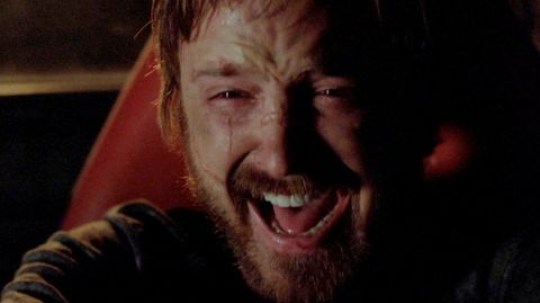
Such can be seen with Jesse Pinkman (Aaron Paul), who rode off into the night, towards an ambiguous but optimistic future.

Felina.jpeg
Jesse driving off laughing and crying hysterically is the last we saw of him until El Camino.

No follow up was required.
And then the Netflix movie was announced.
Honestly, when I first heard of El Camino and how it would finish Jesse’s story, I was concerned.
Even though it is directed by Vince Gilligan, Breaking Bad‘s creator, to me, Jesse’s story had already been told and I was worried that adding anything could ruin the stellar ending he had.
But, a few days ago, I watched El Camino and found it to be a great follow up to that ending.
It also preserved the ambiguous but fitting conclusion for Jesse, which I really appreciated.
El Camino follows Jesse after being freed from Jack’s white supremacist gang in a final, sacrificial act from Walter, leading to him trying to find the money he needs to start a new life.

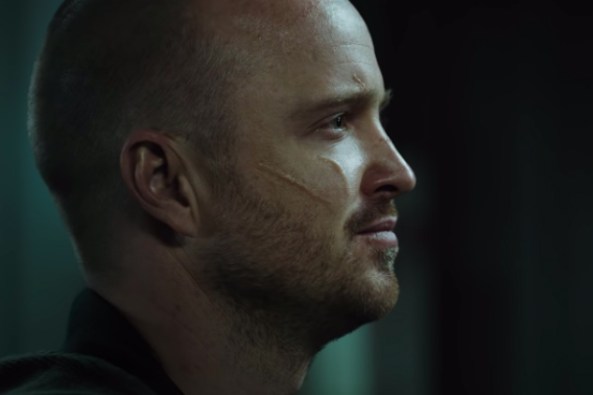
Aaron Paul Jesse Pinkman.jpg
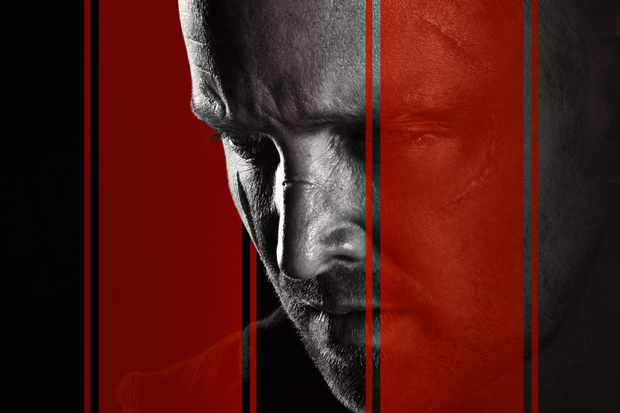
Aaron Paul is great as Jessie, struggling through trial after trial to hopefully get somewhere better.

From there, Jesse experiences interference after hectic interference with him being helped and stalled by familiar characters from the series.
It was good to see these characters again, like Skinny Pete (Charles Baker), Badger (Matt Jones), and Ed the disappearer, whose actor Robert Forster tragically died from cancer recently.
However, while it was great to see old characters return, some of them look very different to how they did in the show, which can be quite distracting.
This is especially the case for the shilling sociopathic Todd Alquist, whose actor Jesse Plemons does not match how he looked in the series.

Todd.jpg
As you can see Todd looks quite different from how he appeared in “Felina” the final episode of Breaking Bad.

Despite this distracting detail, though, Plemons scenes with Aaron Paul are some of the best in the film.
There is also a mini action scene toward the end that I found quite surprising because of the direction it took, making it highly entertaining.
This said, not everyone will find El Camino to be so enjoyable, like I did, because of its slow pace.
Still, for fans of Breaking Bad it is a must watch.
El Camino wraps up the story of Jessie Pinkman in a fitting way that does not ruin the original series’ ending, giving us the conclusion for Jessie we did not know we needed.


Joker Review: Amazing Film, Annoying Controversy.

5 stars
When I first heard that there would be a Joker origin film, I was pretty concerned.
The Joker is usually depicted as a character with an unclear and self described “multiple choice” backstory, so I felt it would be weird to give him a clear one.
And then I saw the trailers, which absolutely floored me.
Everything about the movie looked great in those trailers, from Joaquin Phoenix’s performance, to the story, to the cinematography.
However, I still went into the film with a touch of hesitation because I have seen plenty of movies with amazing trailers that turned out to not be very good (I am looking at you Godzilla: King of the Monsters).
But, you know what?
The trailers were accurate.
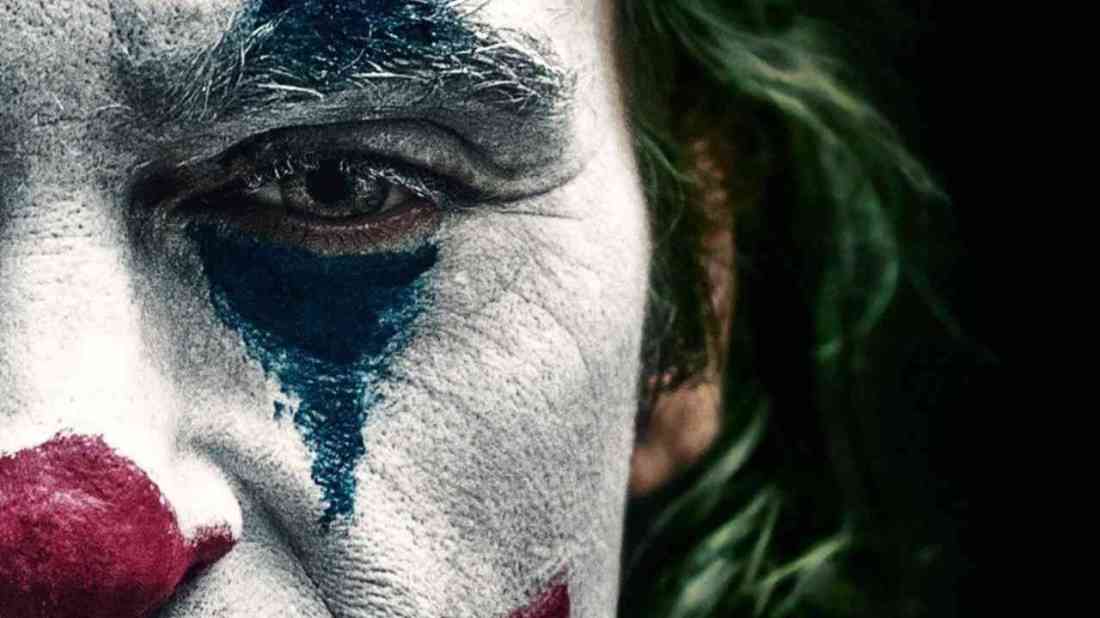
Joker is an absolutely incredible movie and Phoenix and director Todd Phillips deserve all the praise for it.
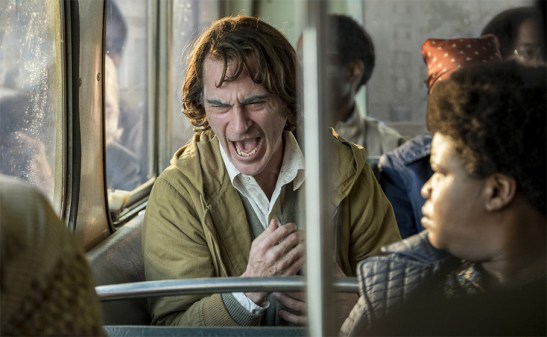
The film tells the story of Arthur Fleck, an impoverished man who lives with his mentally unwell mother (Frances Conroy), and has a disorder that causes him to laugh uncontrollably when he is nervous.

poor arthur
Arthur’s laughing disorder was a stroke of genius, with it being painfully evident how much is hurts him both socially and physically.

As Arthur get beaten down by others again and again, he begins to hit back in increasingly violent ways, eventually leading to him becoming the infamous Joker.
First of all, I have to praise Phoenix for his amazing performance here.
He definitely deserves to get nominated for an Oscar, at the very least.
I was equal parts terrified of him and sympathetic towards him throughout the course of the film.

Arthur Fleck.jpg
Phoenix’s portrayal of the Joker is right up there with Heath Ledger and Mark Hamill in levels of greatness.

And, (I shouldn’t have to say this but apparently I do) no, Arthur being sympathetic does not glorify the violence he commits.
There is so much controversy surrounding Joker that I feel it has hit the height of absurdity.
At no time does it feel like the film is condoning Arthur’s horrific and evil actions, rather it portrays them in a tragic light with his slow descent into madness.
Arthur may think his life is a comedy by the film’s end but it is definitely a tragedy in my eyes, with the film commenting on the role everyone plays in what he becomes.
The film does not encourage violent people to strike out, rather it shows us the consequences of not getting help for these people, serving as a cautionary tale.
And, with that, my rant about the ridiculous controversy is over and I can get on with the rest of the review.
Along with Phoenix’s performance, there are many other brilliant things about the film.
The story takes many interesting twists and turns, with other actors Robert De Niro and Zazie Beetz doing great jobs.
Along with this, the film is supported by the amazing cinematography and soundtrack, which are both also Oscar worthy.

cinematography 1.jpg
The way the cinematography frames Arthur as he slowly begins to transform into the Joker across the film is brilliantly handled.

Hildur Guðnadóttir, who also composed the Chernobyl miniseries soundtrack, wrote the soundtrack for Joker and it is absolutely flawless.
It was not something I was expecting to be so entranced by going in, so it was a very pleasant surprise.
If I had to give any criticisms to the film it would be the ending, specifically the final scene.
I distinctly remember sitting in the theater, being absolutely enthralled by the second to last scene and thinking, “if it ends here then this movie will be a masterpiece.”
However, the movie does not end there because there is an additional scene which, at first, I did not really appreciate.
After looking up some info about the ending, though, I do see what Phillips was trying to convey with it.
I still think the movie should have ended with that second to last scene because it really helped to emphasize the tragedy of Arthur Fleck.
That said, though, I cannot say that the final scene was bad or that it did not work within the context of the film, so I won’t be deducting any points from it.
Overall, Joker is my favourite film of the year so far.
It is dark, twisted, and deeply uncomfortable, but in all the right ways.

Attack on Titan Chapter 122, From You, 2000 Years Ago Review: The Tragedy of Ymir Fritz.

5 stars
I was excited coming into Attack on Titan chapter 122, but nothing could have prepared me for how amazing it is.
Hajime Isayama has done it again, delivering another mind blowing chapter that is already among my favourite chapters in the entire manga.
Right from the beginning, I knew we were in for something big as it started off with a flashback to when Historia was first told about Ymir Fritz by her sister, Frieda.
Then there is the title, “From You, 2000 Years Ago”, which is very similar to the title of the first chapter in the manga “To You, in 2000 Years” showing just how well Isayama planned this story out.
This was a great way to start a mostly flashback chapter that went on to detail the short and tragic life of Ymir, and semi-explained the origin of the Titans.
I feel like I have said this before but it needs repeating, I love the way Isayama subverts our expectations.
Back when we first learned of Ymir in Grisha’s flashback chapters, we all assumed she was a powerful leader who created Eldia, whether her intentions were bad like Marley claimed or not.
However, now we know that Ymir was nothing more than a slave, brainwashed into serving a cruel king who would go on to rape her and have their children eat her body after she died protecting him.
Ymir’s life is incredibly sad, with it getting so much worse after she became the first Titan, even though she had so much power.
Speaking of which, let’s talk about how Ymir became the Founding Titan in the first place.
After she set some pigs free, King Fritz lets her go free as well only to send a hunting party after her for sport.
An injured Ymir then comes across a massive tree, which looks like the energy tree in the Titan realm.
She attempts to hide in a crack in the tree but falls into a hole of water and nearly drowns.
But then, it happens.
A weird spinal column looking object rises towards her sinking body and touches her, transforming her into a gigantic, and the very first, Titan Shifter.
Now, what exactly this thing that gives Ymir her power is we cannot be completely sure.
Best guess is that it is “the source of all organic material” as Eren Kruger put it but, beyond that, we don’t know.
I don’t really expect Isayama to expand any more on this but, personally, I think this may be for the best.
I don’t think any full explanation of what started the Titans could be satisfying so it is probably better he keep it vague.
One thing I am sure of, though, is that the origin of the Titans is heavily based off Norse mythology, which has been a constant source of inspiration for Attack on Titan.
This influence is clear with the nine realms that represent the nine Titans and the nine survivors at Shiganshina, along with Ymir being representative of the Ymir from the mythology.
Now, there is the massive tree Ymir gets her powers in and is also seen in the Path Dimension, which is based off the world tree Yggdrasil.
It is because of this tree that Ymir becomes the first Titan, a gigantic monster with a skull-like face and ribs sticking out.
King Fritz then uses her to conquer other nations like Marley and kick start the Eldian Empire’s rise to power.
For a long time, I have considered the only truly evil character in Attack on Titan to be Gross, the man who fed Grisha’s little sister to the dogs.
Well, he just got joined by King Fritz, a truly despicable human being who sadly does not get his comeuppance.
Instead, he apparently dies peacefully, urging his three daughters Maria, Rose and Shina, who have inherited Ymir’s power, to continue this inheritance with their own children, eventually resulting in the nine Titan Shifters.
Before this, though, came the horrifying inheritance of Ymir’s abilities by her daughters.
Just like how the season two outro spoiled it, Maria, Rose and Shina were forced to eat their own mother’s dead body to gain the Titan powers in a sickening image.
I think it is safe to say that, in just one chapter, Isayama has made Ymir the most tragic character in all of Attack on Titan. 
Enslaved from a young age, accidentally gaining a massive power, forced to marry a cruel ruler and have his children, only to die and for him to feed her body to their children, and still work as a slave from the Path Dimension, building Titans over what must feel like millions of years for her.
This immense and tragic fate she is given is illustrated by the panel of her building the millions of Colossal Titan for the walls with just a bucket of sand.
From here, the scene changes to the present, with Eren having caught Ymir in an embrace, telling her she is a human being not a slave and is free to choose what she wants.
This is contrasted by Zeke screaming at her to follow his orders because he has royal blood.
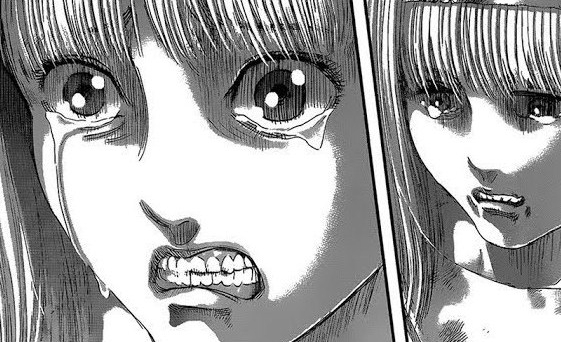
And then, for the first time, we get a look at Ymir’s eyes… and she cries.
The panel of this moment was beautifully drawn, showing just how far Isayama has come since his early days when his artwork was honestly less than stellar.
Ymir crying was a truly heartbreaking moment, which then turns to shock and horror as she makes her choice, and chooses Eren.
Out of the Path Dimension, a spinal cord reattaches Eren’s head to his body and, as he transforms, he triggers the event that has been built up for so many chapters.
The Rumbling.
I completely lost it in this moment, shouting out in both excitement and terror at what was happening.
As the millions of Colossal Titans awaken and break through the walls to do what Eren commands, the chapter ends with the ominous statement, “It can’t be stopped anymore!”
The endgame for Attack on Titan is truly here; the Rumbling is happening and the final chapters of the manga will most likely deal with the consequences.
I loved Chapter 122.
It is an amazing chapter with not just a tragic backstory for Ymir and probably the best cliffhanger in Attack on Titan‘s history, but also a lot of great visual symbolism from Isayama.
First there are the characters’ eyes in the flashback.
They are unseen, represented only by darkness.
This is mainly apparent with King Fritz and this makes for a striking comparison when we see Zeke at the end of the chapter because his eyes are drawn exactly the same in some panels.
From this, we can see that Isayama is linking the two with Zeke planning on using Ymir like Fritz used her, which is ultimately why she chooses Eren.
Then there are the visual similarities between Ymir and the Ymir of the present and Historia.
When Ymir Fritz is turned in at the beginning of the chapter for freeing the pigs everyone points the finger at her, throwing her under the bus just like the other Ymir was thrown under the bus by those she trusted.
More interesting, though, is the parallels between Ymir and Historia.
When Ymir is pregnant, we get an image of her sitting in a chair holding her stomach.
This is eerily reminiscent of the final panel in Chapter 107 when Historia’s pregnancy was revealed.
Then when you consider that,as far as we know, Historia’s pregnancy is being forced on her, like Ymir, the similarities become more prominent.
I think this only adds fuel to the fire that is the theory that Historia will give birth to the reincarnation of Ymir Fritz at the end of the story and name her after the Ymir she knew.
No matter what happens, though, I cannot wait to see how the story will end.
I already consider “From You, 2000 Years Ago” to be one of Attack on Titan‘s best chapters.
If the final arc goes on like this, then it might just have a chance of beating the Return to Shiganshina Arc as my favourite one of the entire series.