Wonder Egg Priority Review: Brilliant Beginning, Baffling End that Highlights Everything Wrong with the Anime Industry.

3 and a half stars
Oh, Cloverworks, you’re not having the best of years, are you?

First, we get The Promised Neverland Season Two, which is one of the worst manga adaptations I have ever seen, and now we have this whole Wonder Egg Priority fiasco.
It was truly a shame to see this anime go from something truly brilliant, to a downright bizarre show that is unnecessarily confusing.
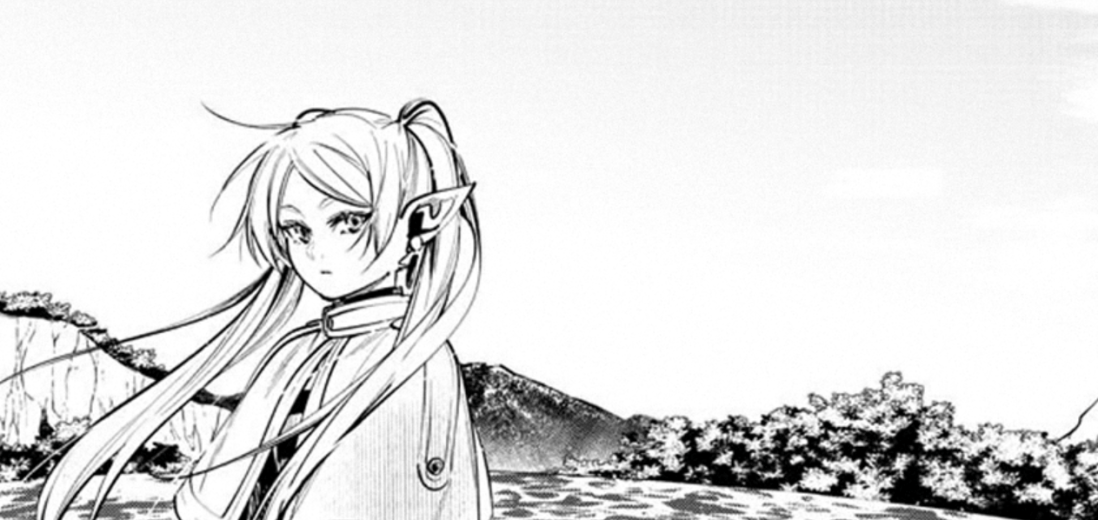
Created by Shinji Nojima and directed by Shin Wakabayashi, Wonder Egg Priority follows Ai Ohto (Kanata Aikawa), a teenage girl reeling from the mysterious suicide of her best friend Koito.
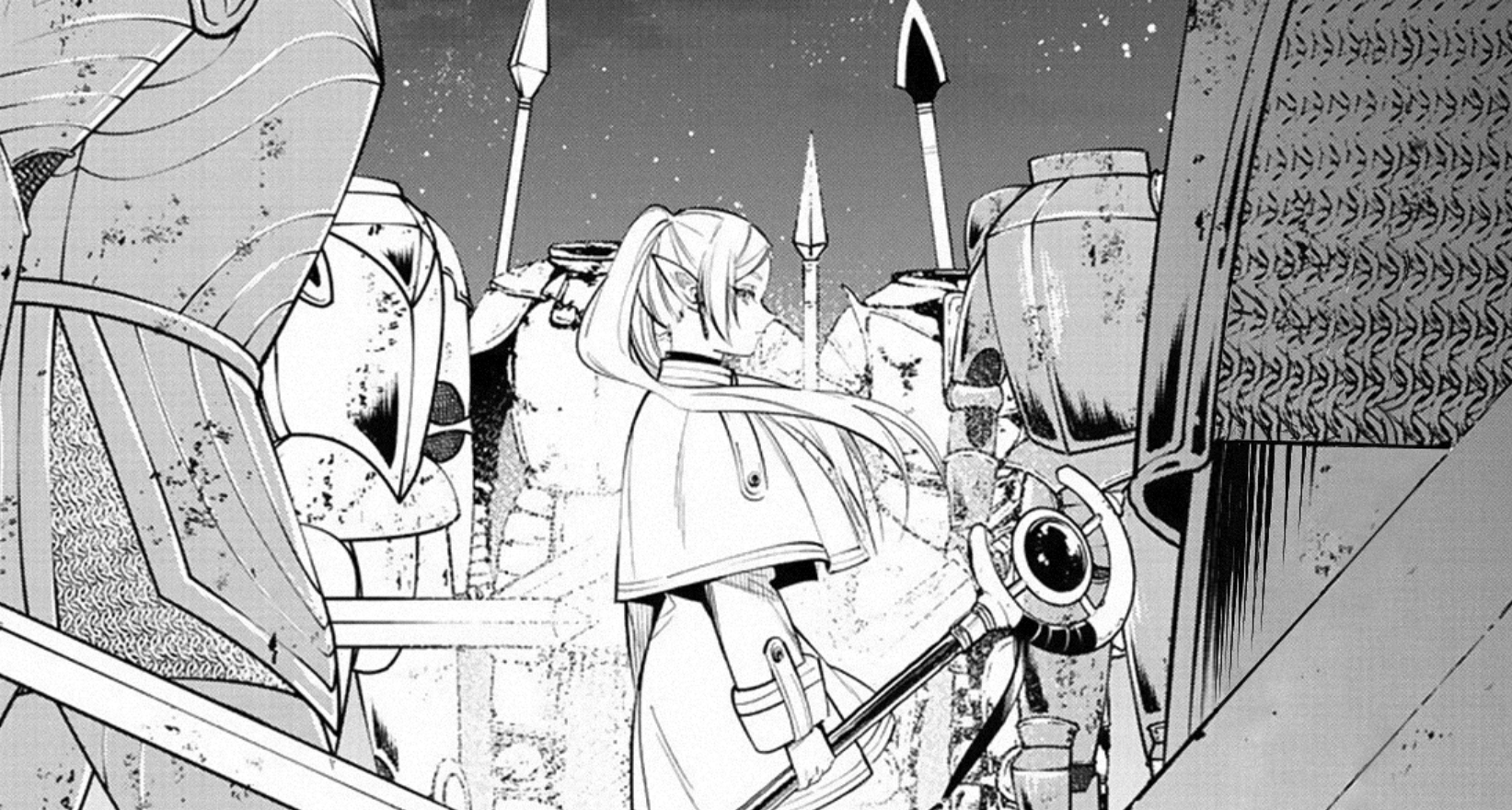
As she sinks deeper into isolation, she is abruptly pulled into a series of trials in a dream world, where she must save the spirits of girls who have also ended their lives from evil manifestations of the ones who hurt them.
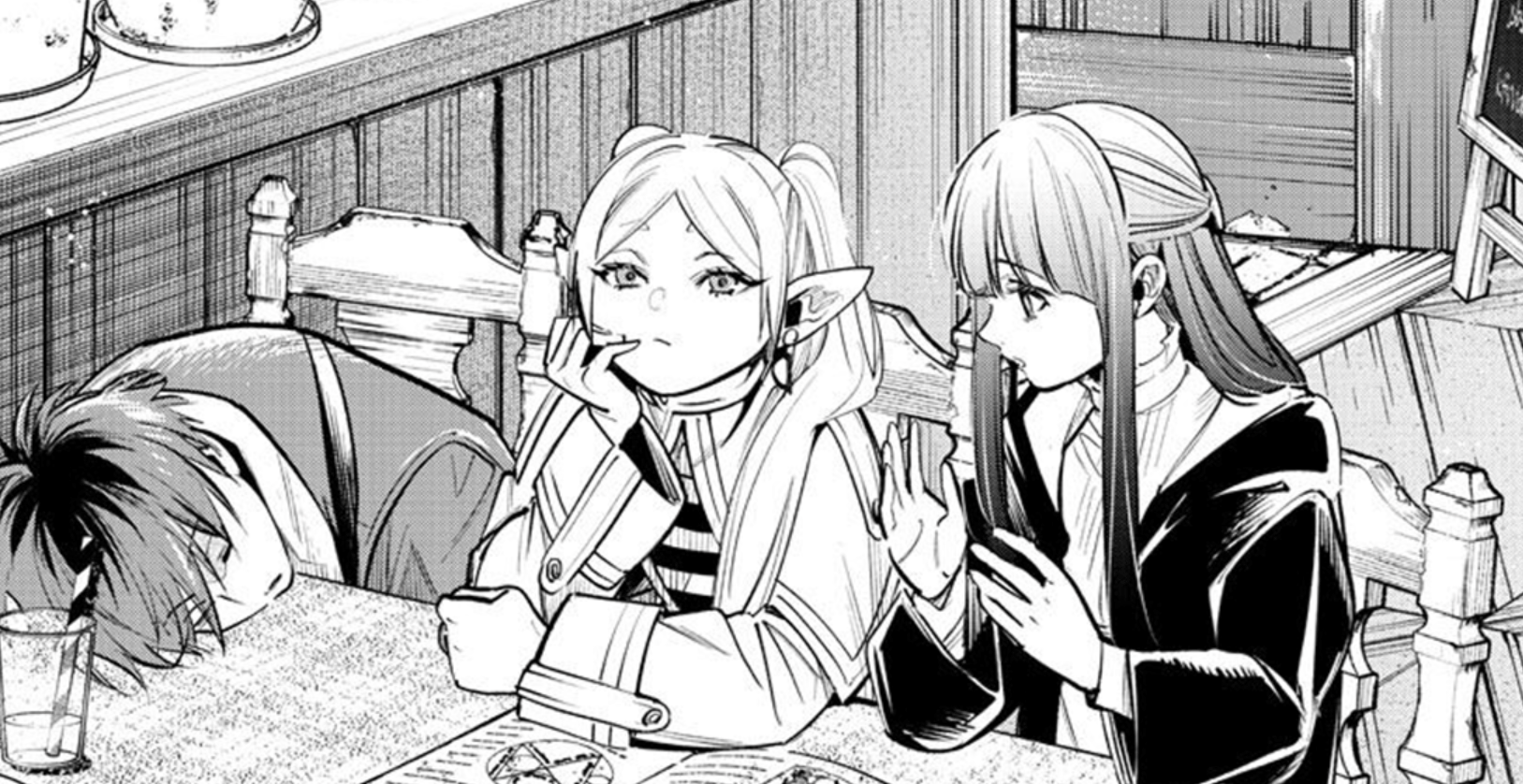
Learning this may provide a way to bring back Koito, Ai resolves to save as many of these girls as she can, alongside three other girls, Neiru Aonuma (Tomori Kusunoki), Rika Kawai (Shuka Saito), and Momoe Sawaki (Hinaki Yano), who are all also trying to bring back their deceased friends. 

Each of the girls are great, my personal favourite being Rika because of how emotional her standout episode was.

From here, the story takes on an episodic format, with each episode focusing on one or two of these girls trying to save the spirits that hatch from the Wonder Eggs, leading to some incredibly emotional moments.
Episode Seven, “After School at 14”, focused on Rika and her suffering from self harm, which was very well handled and left me a wreck by the end.
Then there’s Episode Ten, “Confession”, where the first half of the episode has the best interaction between one of the girls and a Wonder Egg spirit, with Momoe and the boy she is trying to save.

Momoe’s bond with Kaoru was very sweet, short as it was.

These fantastic moments and episodes are supported by amazingly good animation, a subtle yet quirky soundtrack, and solid voice acting.
With all of these contributing factors, it looked like Wonder Egg Priority was going to be a perfect anime for me by the half-way point.
However, there were signs in the initial episodes of the fall that was to come.
For example, in the very first episode, “The Domain of Children”, the magic system of the Wonder Egg world is settup, only for one aspect of it to be completely contradicted and never brought up again later.
Problems like this became more and more persistent as the show went on, as the story went from a simple one about a group of girls entering a dream world to save spirits, to full on ridiculous with plotlines revolving around things like artificial intelligence and parallel universes.
Episode Twelve in particular, “An Unvanquished Warrior”, was so confusing that even now I struggle to understand just what the heck was going on.
The show just became more needlessly complicated as it went along, culminating in the final, special episode which was just released, “My Priority”, and it was quite bad.
So many of the episode’s twists come out of nowhere, the characters are incredibly inconsistent, the anime’s handling around topics such as suicide takes a turn for the worse, the ending isn’t satisfying at all, and the animation is awful at times.

Oh, dear lord, no, this running animation!

Not to mention that the first half of this promised hour long special is a freaking recap, when we already got a recap earlier with Episode Eight. 
It is incredibly obvious that there were production issues for this anime.
However, Wonder Egg Priority’s production problems apparently go even beyond the show’s quality.
The anime is already pretty notorious for the suffering of its animators, with the producer reportedly needing to go the hospital because of overwork… twice!   
Unfortunately, unhealthy working conditions and bad pay seem to be the standard in the anime industry but the amount of stress and health problems the production of Wonder Egg Priority apparently caused really points to how badly animators are being treated right now.
They really do deserve better.
As for Wonder Egg Priority, it was sad to see this go from a fantastic show that handled difficult subjects to a bizarre, confusing train wreck, that caused those making it to go through the ringer.
I would still recommend watching at least the first ten episodes because, even when the questionable moments begin to seep in, the brilliant moments more than overshadow them.
The rest of the anime I would skip because it’s just not worth it by the end.
A second season could improve the story a bit more but, at this point, I’m not sure I even care any more and I think we can all agree the animators should not be put under the kind of pressure that they were here.
The anime industry needs to do better for its workers.

Ghost in the Shell Review: One of the Most Influencial Anime of All Time.

5 stars
When someone asks for an example of an anime that had an impact on genres in the film industry, it’s hard not to think of
Ghost in the Shell’s influence on sci-fi.
It is constantly referenced whenever this topic comes up and, after finally watching it, I understand why.
Based off the manga by Masamune Shirow, and directed by Mamoru Oshii, the film takes places in a cyberpunk future where the lines between what constitutes as human have begun to blur, due to so many people being augmented with technology.
It seems that the only feature that it takes for one to be recognized as a person in this world is the human consciousness known as a ghost, with the outer body merely being a shell, hence the title.
Our main character is Major Motoko Kusanagi (Atsuko Tanaka), who has become so augmented that it appears only her ghost remains.
As she and her team track down a cyber terrorist known as the Puppet Master, we see how Kusanagi is struggling with her own questions about her humanity, leading to an ending that feels like a new beginning. 

There are many great scenes that build into this ending, like the diving scene.

This is achieved not so much through words but rather through the visuals, as we see Kusanagi traveling the city, her almost robotic gaze raising questions about the perception she has of herself, with the terrific score playing in the background accompanying the likewise terrific animation.
It is through means like this that Ghost in the Shell raises interesting questions about what it means to be alive and evolve… which it never really answers.
Although, this is not not a bad thing because rather than it feeling like a copout, it feels like the writer is trying to raise genuine discussion on this subject.
This clearly worked too with how many films and shows took inspiration from the film, from shortly after it was released all the way up to now.
For example, I saw features that would influence both The Matrix and Westworld in the opening credits alone.

The opening scene itself where Kasanagi’s cyborg body is created is practically projecting its influence on sci-fi as a whole.

It achieves all of this in a pretty short runtime too, which is surprising and really shows how good its messaging is.
Along with this, the film has a surpisingly positive outlook on the future of technology, and I say “surprising” because so many other sci-fi films seem to focus solely on the negative consequences of these advancements.
I get the feeling that Ghost in the Shell is a film that will take me multiple rewatches to fully appreciate all of its questions and implications, yet I still feel like I experienced something after watching it for the first time.
Ghost in the Shell is definitely a masterpiece anime, one where its influences can be seen in movies to this day.  

Nichijou Review: Selamat Pagi!

5 stars
If you ask a large group of anime fans what their favourite comedy anime is, I’m sure that someone would bring up
Nichijou, and rightfully so.
Based off the manga by Keiichi Arawi, directed by Tatsuya Isihara, and adapted by the great Kyoto Animation, I remember watching Nichijou’s first episode a few years ago but, for whatever reason, not continuing with it after that.
Well, now that I have finished watching the series with everyone at the anime club I go to, I can say that I regret this decision because Nichijou is an absolutely perfect comedy in every sense of the word.
Every single episode got a massive laugh out of everyone attending.
The story (if you can call it that) follows two sets of people.
First up, we have the three high schoolers, the ditz, Yuko Aioi (Mariko Honda), the yaoi artist, Mio Naganohara (Mai Aizawa), and the emotionless-looking, yet still intelligent, Mai Minakami (Misuzu Togashi).
Next, we have the robot, Nano Shinome (Shizuka Furuya), her creator the child, Professor (Hiromi Konno), and their talking cat, Sakamoto (Minoru Shiraishi).
I know, it seems like these are two completely different storylines that don’t belong in the same show.
Well, Nichijou somehow makes it work completely, as we see both sets of characters go about their normal, over the top, everyday lives.   

Nichijou somehow manages to blend normal and over the top seemlessly.

I say over the top because almost every single action in Nichijou is.
The first episode literally has a scene where Yuuko trying to catch some food she dropped is animated like it’s a stylized fight sequence.
There is a common joke in the fandom that they spent almost all of their animation budget on scenes like this and I honestly would not be surprised if it was true.
These scenes are so ludicrous that they’re hilarious and there is one of them in pretty much every single episode.
Just wait until you get to the Mio fight scene and the high jump scene.
You will know what I’m talking about when you get to those moments and I highly suspect you’ll be dying of laughter when you do.

If you value your saftey, whatever you do, do not sneak a peak at Mio’s yaoi art.

This is what Nichijou is essentially, a series of skits, most of them focusing on the characters I mentioned, with very little overarching story.
There is development and plot progression for Nano but, other than her, there is next to none of this for the rest of the cast. 

Nano’s character arc is quite good, made better by the humor surrounding it.

Ordinarily, I would say that the characters not being developed was a bad thing but this is not the case for Nichijou.
It’s not trying to be a show where every character grows to the point that they are different by the end.       
It’s trying to be a show that makes us laugh at all the insane things going on in these characters’ everyday lives, and it more than succeeds at that.
If you haven’t seen Nichijou yet then I recommend you go see what you’re missing out on.
You will laugh so hard your sides hurt at least once every episode.
It is, in my opinion, the perfect comedy anime.

Attack on Titan Updated Final Chapter Review: It was All for Nothing.

two out of five
Wow… just wow.
Okay, so I made it clear in my review for the final chapter of Attack on Titan, “Towards the Tree on that Hill”, that I thought the ending of the story was a mixed bag.
There was a lot to dislike about the chapter, from Ymir loving King Fritz, to Armin thanking Eren for committing mass genocide, to Eren killing his own mother and whining about Mikasa even though he just murdered billions of people, to Historia’s drawn out pregnancy subplot amounting to absolutley nothing.
However, there was also a lot to like about the ending, from Levi’s fantastic sendoff, the final panels mostly bringing a satisfying conclusion to the Alliance and Mikasa, and, of course, Titan powers coming to an end which meant that the characters had actually achieved something by the end.
So, overall, the final chapter had plenty of good things and plenty of bad things about it.
This made me excited for the volume release where Hajime Isayama would add additional pages to expand on the ending.
I hoped that these additions would work towards making the things I didn’t like about the ending easier to digest.
Well, Hajime Isayama just released this updated ending and, having read the new pages, I can confidently say that the characters achieved pretty much nothing.
Seriously, these eight pages take the things I actually liked about Attack on Titan’s ending and completley contradicts them.
Without this updated ending I would at least be able to say that the ending to my favourite story was decent, if a bit problematic.
Now that these pages have been added to the canon, though, I don’t like the ending.
I think it makes all the past sacrifices of the story meaningless in the long run.
This said, I won’t act like everything Isayama added here is bad.
There is one addition that I do like and it is Ymir actually getting a sendoff.
In the original chapter, she just disappeared completley, which was bizarre given how much she had been a focus in the final arc.
However, in the updated chapter, she is actually given an ending.
Right after Armin yells that he is the man who killed Eren Yeager, we see Mikasa walking away with Eren’s head and seeing the specter of Ymir, in adult form this time for some reason.
It is revealed that Ymir was the source of Mikasa’s headaches, and Mikasa thanks her for bringing her children into the world before Ymir fades away forever.
I was glad to see Ymir actually get a sendoff here as opposed to just vanishing, but there is still a lot about this scene that just does not make sense.
If Ymir was the one causing Mikasa’s headaches, then how the heck did she know that Mikasa would be key to freeing her?
Mikasa’s headaches have been happening for a long time so why was Ymir reaching out to her then?
Also, how does Mikasa even know what Ymir looks like to recognise her or know about her love for King Fritz?
Not to mention that Mikasa being the one to ultimately free Ymir still comes out of absolutley nowhere.
The most troubling thing about this though is that during this scene we get a flashback, which shows Ymir not saving King Fritz from the spear and then comforting her children.
There are two possibilities as to what this could mean.
Option number one is that Ymir really didn’t save King Fritz and everything we saw after she died in Chapter 122 was just some weird hallucination she was experiencing.
Option number two is that this is just Ymir wishing she had not saved Fritz and had instead lived on with her children.
If it’s option number one then Isayama retconned a massive part of the story’s history and lore, completley ruining Chapter 122.
This is why I am choosing to believe it’s option number two that he is depicting here because otherwise it completley ruins a chapter that I once loved.
No matter what the intended ending is, though, Isayama still made this really unclear, so he should have either been more clear about its intent or just removed it all togethor.
Now, we get to the part of the updated conclusion that made me go from thinking the ending was alright to that it was just downright bad.
Right after the original final scene, where Mikasa thanks Eren for wrapping the scarf around her, we get a series of panels showing different timeskips on Paradis.
The first of these shows Mikasa with an unknown man who she presumeably married and had a child with, visiting Eren’s grave.
I can’t believe Mikasa got the Historia treatment, marrying an unknown person.
As if that happening to one character wasn’t bad enough.
Still, this unknown man could be Jean since it does look like him from behind.
Even if the husband is Jean, though, it still feels forced because of how onesided their past interactions have been.
Much like Mikasa’s love for Eren being properly built up but not Eren’s for her, Jean’s feelings for Mikasa were built up but hers wasn’t for him.
From here, we see a progression of Mikasa’s life, with her continuously visiting Eren’s grave with her family, until she dies an old woman.
Then we get the kicker.
Paradis is destroyed in a war.
I’m sorry, what?
You’re telling me after all that build up in the original final chapter towards the future for Paradis being hopeful, despite the danger, it just gets destroyed?
Then what’s the point of the fantastic Levi scene where he tells his comrades that this is the outcome they sacrificed their lives for?
They didn’t sacrifice their lives just for the island to be destroyed.
This contradicts so much that was in the original final chapter.
In that first ending, it felt like Isayama keeping Paradis’ fate ambigious was him trying to stay consistent with one of Attack on Titan’s biggest themes, this being that the world is cruel but also beautiful.
There was danger on the horizon but Paradis had the Alliance as peace envoys, working to build a bridge between them and the outside world.
This updated ending changes the entire feeling of the conclusion from hopeful to just plain cynical.
Not that a depressing ending couldn’t have worked but, as I said, this just contradicts so much of what was in the original chapter, and this was stuff about that chapter which I actually liked so it makes it way worse for me.
Then we get the big slap in the face.
After Paradis has been destroyed, we see a young boy, who looks like Mikasa’s descendent and has shaded in eyes, meaning that he is a slave to something as the symbolism of this story dictates.
The boy and his dog head towards the tree where Eren’s head is buried, which has now grown to look exactly like the tree Ymir fell into where she was infected with the Hallucigenia and became the first Titan 2000 years ago.
Therefore, it is heavily implied that the power of the Titans will be coming back.
Are you freaking kidding me?
What the heck was the point then?
It was all for nothing!
In the original ending, Titan powers disappearing was an incredibly big deal.
It was one of the biggest achievements the characters made.
Even if the cycle of violence did continue, at least they could say they achieved ending the cycle of Titans, something which Eren sought to end right at the beginning of the story.
Now, that meaning is completley taken away.
Eren ensuring a long life for his friends is the only thing any character achieved with this ending.
Other than this, there was nothing else achieved in the long run.
Paradis is destroyed and the Alliance and Historia’s descendents are all dead, making their attempts to try for peace meaningless, and the Titan powers are hinted to be coming back, making one of the biggest goals of the story go absolutley nowhere.
This ruins the ending for me.
Before, it was okay.
It had big problems but I felt that it was at least somewhat satisfying.
Now, with this updated ending, I can say that Attack on Titan‘s ending is just straight up bad.
The updated ending keeps the things I didn’t like, rather than expanding on them in ways that could make them good.
It also adds worse things that make the good parts of the final chapter completley meaningless.
Ymir getting a sendoff is the only good addition in this updated ending.
Otherwise, it’s a complete disaster.
I still love Attack on Titan because it’s a story where I really connected with its world, themes, characters, and plot twists.
The ending, though?
Not so much now.

My Hero Academia, Season Five, Episode Ten, That Which is Inherited Review: The Controversial Twist.

4 and a half stars
The events of Episode Ten from Season Five of My Hero Academia are ones I have been interested to see adapted in the anime for a while.
My reason for this is that not only was I excited to see the big twist play out, but I was also curious to see what the fan reaction would be.
The reveal that One For All would give Deku multiple Quirks was a controversial one when it happened in the manga because many thought it would make him too overpowered and lessen the stakes.
Personally, I think it has been handled great so far in the manga, although I won’t be saying anything more about the source material beyond that.
It also seems that the anime only reaction has been mostly positive as well, which is good to see, with fans seemingly open to see where this goes, even if they have concerns about it, which, to be fair, are natural.
As for the episode itself, “That Which is Inherited”, directed by Ikurō Satō, it is the best episode of Season Five so far and gives new life to this arc, along with the previous two episodes, which were also pretty great.
Before those episodes, the arc had been a bit drawn out, with the anime making things longer than it should have been by adding various recaps to things we did not need them for.
“That Which is Inherited” does prove the importance of this arc, though, because the big reveal is clearly one of the most important moments in My Hero Academia, being one that shapes the direction the story is going.
The episode begins in a rather creepy fashion, opening up at Tartarus Prison where All For One is being held.
The king of all supervillains is under constant surveillance in his prison cell and the guards express concern at his movement in his cell along with the movements of his subordinates in the League of Villains who are still at large.
It is at this moment where the creepy factor comes in, as All For One is revealed to have heard them talking and aplogises for making them nervous, before saying he can hear his brother’s voice, which makes sense considering how One For All’s true potential is about to be activated.
This scene is followed up with even more hints at One For All’s unlocking, as All Might recieves a call from Gran Torino about something his predecessor and mentor, Nana, told the elderly hero.
She said to him once that she dreamed of a man in shadow telling her, “the time has not yet come.”
From here, the episode goes into the hyped up final fight between Deku and Monoma’s team.
We see the moments before this fight, as Monoma has a talk with Shinso about how they are similar, since both were told they couldn’t be heroes because of their Quirks.
This heart to heart actually does a good job of building up Monoma as a character, which is good for him because I usually find him to be incredibly annoying, what with his constant, annoying shouting about how better his class is than 1-A’s.
We also get a good bit of foreshadowing here for the event that will unintentionally unlock One For All, as Monoma asks Shinso how he got Deku to talk so he could brainwash him during the sports festival.
Shinso says he insulted his classmate and the look on Monoma’s face just screams that he now has a plan to use his Copy Quirk to brainwash Deku.
With this plan now set, so begins the attack on Deku’s team by Monoma and Shinso’s group.
We also get an introduction to the other members of their team but they’re not important so I won’t go into their Quirks.
What really matters is the fight between Deku and Monoma, as Monoma sets his plan to brainwash Deku into motion by insulting Bakugo, saying his actions brought down the symbol of peace.
This turns out to not be the best plan, though, because it pushes Deku’s buttons enough that it unlocks One For All’s potential, and the Black Whip Quirk explodes from Deku’s hand.
The way this scene is animated and edited is stellar, with the sound cutting out completley for a bit, followed by All Might’s horrified face as Nana’s words ring in his head.
With Black Whip going crazy and Deku desperately trying to control it, the music and the reactions of the characters and are particuarly great.
I really liked the moment when Deku bursts through a wall and we get to see Shinso’s shocked reaction.
Even though we can’t see his mouth, it’s clear he is terrified by what’s happening.
Now, with Deku unable to control this new Quirk, who should come in to save him?
None other than Uraraka, as she jumps up and grabs a hold of Deku in an effort to calm him.
We then get more of an exploration of her backstory, as we see that along with her wanting to become a hero to help her parents financially, she also became one because she loved helping people and making them happy, building into the present where we see her help Deku.
There is also a great line in this scene, when Uraraka wonders, “who protects the heroes when they’re hurting.”
Much like Monoma, I am glad we got some Uraraka spotlight this episode.
It’s pretty clear that My Hero Academia is a show where the male characters get a lot more spotlight than the female ones.
Not to say that the content the female characters get is bad, far from it, but it is far less frequent to get character development  and important scenes for the girls in My Hero Academia, so it was nice to see Uraraka finally get some of the spotlight in this episode.
That said, don’t expect her to have much more importance after this moment, unfortunately.
Well, at least the content we get from her here is pretty good, as she calls for Shinso to save Deku by brainwashing him, which succeeds, propelling Deku into One For All to talk with a Vestige.
This past user of One For All informs Deku that the Black Whip power he used is actually his Quirk and soon Deku will inherit six others, as One For All has finally reached the singularity point mentioned in the season premiere.
Not only this but these Quirks are much stronger than they were originally because they have been cultivated by One For All over the years.
Given how strong this will make Deku when he activates all six, you can see why it would make plenty of readers concerned when it was revealed in the manga.
If used wrong by Horikoshi, this power up could completley break the power scaling of the series.
Again, though, I do think that the way it is used in the future of the story is well done, so I advise those of you who have doubts to continue watching, before making your own judgements on this.
Maybe you will come to like this twist and its impact on the story, like I do.
Anyway, following this reveal, Deku awakens from Shinso’s brainwashing and the fight continues, with Deku and Uraraka having each other’s back and Aizawa deciding to allow the match to continue, bringing the episode to a close.
All in all, “That Which is Inherited” is the best episode of Season Five so far.
It adapts the twist of One For All’s upgrade really well and portrays the initial horror of Black Whip activating greatly.
There are even some good comedic moments, like one good gag with Jiro.
The twist may be controversial for some but I hope they come to like this twist and its impact on the story as the anime goes on.

Choujin X, Chapter One Review: A Promising Start.

4 stars
Writer of
Tokyo Ghoul, Sui Ishida, had been slowly hyping up his new manga Choujin X for quite a while.
Teasing us with some panels and revealing character designs, he did a pretty good job of getting us excited for his next project.
As someone who loved Tokyo Ghoul the first time I read it and has only come to love it more as time has gone, I was quite excited for it.
I figured there would be some announcement about when it would be released, but nope, it just dropped out of the blue.
It was a pleasant surprise to go online and come across the news that the first chapter of Choujin X was out.
After reading the chapter, and then re-reading it a few times, I can say that Ishida’s new manga is off to a promising start.
It does a great job of introducing us to the characters, setting, and themes of the story.
The manga is set in a world where super powered individuals known as Choujin exist.
However, given how they are pretty much only referred to negatively throughout the chapter, it is pretty safe to say that most of these Choujin are bad people and there are no heroes among them… yet.
This could change very soon based on who becomes a Choujin and who is hinted to be one in this first chapter.
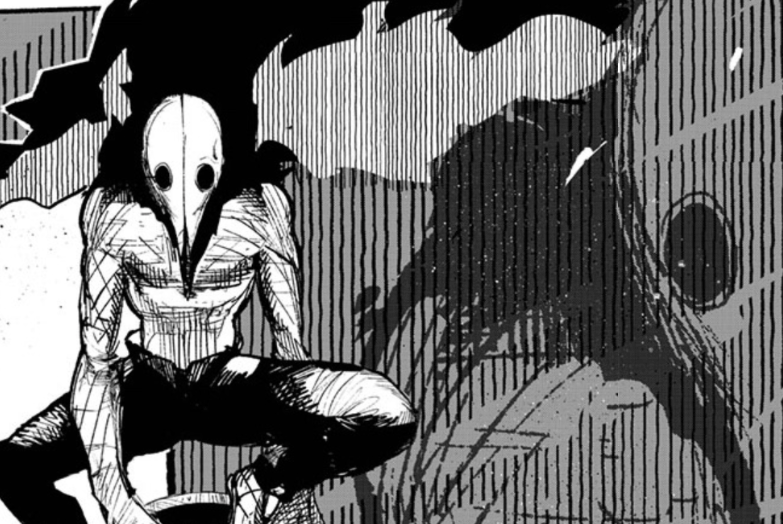
Speaking of, the story begins with an eerie panel, which was teased by Ishida (seen above), which shows our main character, 16-year-old Tokio Kurohara, standing naked and rising to meet the gaze of a vulture-like creature with the narration, “It’s something of an affliction.”
How this opening imagery will tie into the future of the story, or if its just symbolic foreshadowing, will be interesting to see once we get more chapters.
From here, the chapter cuts to a plane, where a little girl is talking excitedly with an old woman about how she’s going to a fair for her grandfather to enter a produce competition.
It is here that the lighter tone Ishida mentioned he was going for can clearly be seen, as the little girl starts off stating how she would want use the prize money to help on the farm, before comedically going straight into dream land, wanting a mansion, a dog, a handsome husband and nine kids.
However, this is the writer of Tokyo Ghoul we’re talking about, so even if this story is going to be more comedic, there will definitely be dark moments.
This is proven when another passenger awakens and threatens the old woman, who the little girl defends, only for him to set the entire plane alight with flame, incinerating many people, including the old woman, and supposedly the little girl.
That said, I highly doubt this is the end for her.
We have seen the girl in some character concept art released by Ishida, where she is shown wearing the same military looking uniform as Tokio.
It is also later revealed that 200 passengers miraculously survived the plane crash, making me think that the girl either became or always was a Choujin and used her power to save the surviving passengers.
This could lead to her meeting Tokio later if both are captured and put to work by the military or government, although this is just speculation based on the concept art I mentioned.
Anway, following this attack on the plane, we get our first good look at Tokio, as he sees the plane crash from his seat at school.
This causes his teacher, who has comically large breasts and is referred to as Mrs Bazonkas by Tokio, to call him out for not paying attention, leading to some more comedic paneling from Ishida.
He’s going to do quite a good job with the comedy if this opening chapter is any indication.
Now, it is time to talk about how well he manages to set up Tokio as a character in this chapter, which sets him up as someone who doesn’t like to put much effort in and is vulture-like, seen as leeching off his friend Azuma Higashi by others.
Speaking of Azuma, he strikes me as a mixture between Arima and Hide from Tokyo Ghoul, a fantastic fighter who is also a great friend to the main character.
This is seen when Tokio witnesses a woman about to be raped by a group of thugs and calls in Azuma for help rather than getting involved himself.
Following a superhero landing, Azuma easily beats the head thug, breaking both his arms with a devastating kick.
After this save, we get our first look at the setting, a heavily damaged Yamato Prefecture, and given how Azuma says Choujin should do something good with their power instead here, it can be assumed that the damage is related to them.
This is why I think that there aren’t really any good Choujin in this world yet.
It is then that we get the classic Ishida symbolism, as Azuma compares Choujin to roly-poly’s, wondering if they gather under damp places because they like it, when they’re supposed to be used to dry places.
There could be multiple meanings to this, like maybe that Choujin are gathering in and destroying cities because they enjoy it.
I’m just spitballing, though, there could be another meaning to it.
In any case, this symbolic moment not only reminds me of a lot of similar scenes from Tokyo Ghoul but also the country and town mouse allegory from Chainsaw Man..
With the symbolic scene over, the chapter progresses back to the overall plot with the thug whose arms were broken by Azuma being given an injection, which turns him into a Choujin.
We are also introduced to Tokio’s father and sister, who acts like a mother to him, even paying his tuition.
Tokio also says that Azuma being popular makes him feel popular too, furthering the interpretation of a vulture who leeches off others.
This allegory continues with a flashback, where Tokio is literally compared to a vulture by the other children at school, while Azuma is compared to a lion.
Azuma, however, is there to cheer up his friend, telling Tokio how vultures can soar higher than any other bird.
Before this, though, Tokio says that he could have been a lion too and he gets his moment to do so in the following scene, where the Choujin thug ambushes him and Azuma on their way home.
We get some more great paneling from Ishida as he does a great job depicting the fight between the martial artist Azuma and the seemingly Mr Fantastic inspired Choujin.
During this scene, we also seem to get an explanation for why there are supposedly no good Choujin, as the thug goes crazy to the point that he brutally murders his own friends, popping their heads like balloons.
It could be that that becoming a Choujin drives the person insane and it will be interesting to see if Tokio, Azuma, and the girl from the plane (if she is indeed a Choujin) have to deal with this danger in the future.
As the fight continues, Azuma realizes he can’t beat the Choujin, who will almost certainly kill them, so suggests injecting himself to become a Choujin and have a good shot at beating the thug.
However, Tokio will not let him do it alone, becoming a lion in the moment as he offers to inject himself alongside his friend and stick by his side.
The following panels really highlight Ishida’s fantastic art style, as the two friends, lion and vulutre, point the syringes at one another and vow not to have any regrets, while a dandeline is shown blowing in the night wind.
The symbolism for that last point is anyone’s guess but the results of Tokio and Auma injecting themselves are interesting, to say the least, as only Tokio’s body seems to be reacting to becoming a Choujin well.
He transforms into a beastial Choujin, with a head like the skull of a vulture, and sends the Choujin thug off with a punch that sends him flying, before going to help Azuma, who has collapsed to the floor, ending the first chapter.

This conclusion raises questions about why Azuma was not able to successfully transform, like Tokio, and I expect we’ll get the answer, along with the answer of what happened to the little girl, in the following chapters, whenever those release.
Ishida has not set a specific time for when the next chapter will come out and this is due to him wanting to go at his own pace, which is entirely understandable given how overworked he was when he was writing and illustrating Tokyo Ghoul and Re.
Let’s hope he continues to put his health first and pace himself well.
Overall, I found the first chapter of Choujin X to be quite a promising beginning.
It does a great job at introducing us to its characters and the world they live in, along with the symbolism of the roly-polies and the vulture allegories.
I look forward to seeing how Ishida will continue this story at his own pace.  

A Quiet Place Part 2, Review: An Intense Theater Experience.

4 stars
I loved
A Quiet Place when I first saw it in theaters and my appreciation for it has only increased as the years have gone by.
So, obviously, I was very excited for the sequel, once again directed by John Krasinski.
But then, of course, COVID hit and the film was delayed, until recently.
Well, I just saw A Quiet Place Part 2 and can say that it is a worthy sequel, which I quite enjoyed.
I do prefer the original, but Part 2 is still a great follow up that provided an intense experience that needs to be seen in theaters.
As the trailers revealed, the film begins by cutting to day one of the alien attack, where it is interesting to see how the Abbott family survived the invasion.
From here, Part 2 moves to the present, right after the events of the first film as Evelyn (Emily Blunt), Regan (Millicent Simmonds), Marcus (Noah Jupe), and the newly born baby, are forced to leave their home, now armed with the knowledge of how to kill the aliens. 
Coming across another survivor named Emmett (Cillian Murphy), the family come to realize that the aliens are not the only threat, but people are as well.

Murphy does an excellent job as the isolated and traumatised Emmett.

A Quiet Place Part 2 has stellar acting across the board, with each of the cast providing a standout moment.
Blunt portrays her character’s grief of recently losing her husband excellently, and Jupe delivers a harrowing moment during the first act of the film expertly.
The standouts, though, are definitely Simmonds and Murphy.
I would actually argue that Regan is the main character of this film, as she tries to live up to her father Lee’s legacy, following his tragic sacrifice at the end of the first film.
As for Murphy, he also does a fantastic job as Emmett, portraying his trauma well, and I really liked the slow bond that grew between his character and Regan.

Regan is the hero of Part 2.

I would have preferred to see a bit more of Emmett, though.
We get to see how the Abbott’s experienced day one and I kind of wanted to see Emmett’s story, leading up to him meeting the Abbott’s in Part 2.     
Along with the great acting, the feeling of intensity from the original film is, thankfully, still present here.
I found myself often gripping the chair I was sitting on in scenes where the characters desperately tried to stay quiet to keep away the aliens.
This involved various scenes with intercutting, as each of the separated characters found themselves in mortal danger where the slightest noise could mean their inevitable deaths.
It was amazingly edited togethor. 

Just when you think one character is done for, the scene cuts to another character in a situation somehow even more dangerous that the other one’s.

As for the ending, it ends abruptly, like the first, only I would say more so.
Even though the ending to the first film felt abrupt, it was satisfying enough to the point that it didn’t feel like a sequel was necessary.
This ending, on the other hand, definitely needs to be followed up on with a Part 3.
Maybe they could give us more of Emmett’s backstory in this potential sequel.
Either way, I do find A Quiet Place Part 2 to be a worthy sequel.
It has great acting and delivers many intense scenes that are best viewed in theaters to deliver their full effect.    

Josee, the Tiger and the Fish Review: A Well-Written Romance.

4 stars
Coming into
Josee, the Tiger and the Fish, I wasn’t quite sure what to expect.
I had seen the trailer a while back, so I knew it would be a romance anime but I didn’t know if it would be of the comedic, wholesome, or tragic department.
Well, after seeing it in theaters, I can say that it is kind of all three of those.
Directed by Kotaro Tamura, Josee, the Tiger and the Fish tells the story of the blossoming romance between diving enthusiast Tsueno Suzukawa (Taishi Nakagawa) and the wheelchair-bound Kumiko Yamamura (Kaya Kiyohara) or Josee, as she likes to be called.
Tsueno is a young man who’s passion for the ocean and diving has him hoping to get a scholarship in Mexico to study a certain kind of fish, however, he needs the money.
This is where Josee comes in, as a chance encounter between the two occurs when Tsueno saves her after someone cruelly pushes her wheelchair down a steep road.
Josee’s grandmother (Chiemi Matsutera) kindly offers Tsueno a job to look after Josee, helping him with his fees needed for the scholarship.
The problem?
Tsueno and Josee can’t stand each other.
From there, the film progresses with their relationship as they slowly go from hating one another, to being friends, to falling in love. 

The progression of Tsueno and Josee’s relation is very well handled.

However, given how I said earlier that Josee, the Tiger and the Fish had comedic, wholesome, and even tragic moments, you can probably guess that it is a bumpy road to get to the end goal.
It’s a good thing then that the romance is well written.
This is helped by both voice actors doing an great job with their performance and also the script, written by Sayaka Kuwamura, which does an excellent job at showing how Tsueno and Josee’s growing bond changes them as people.
For example, we watch as Josee goes from being shut in by her grandmother, to becoming more independent and confident, with help from Tsueno’s influence.
Speaking of Josee’s grandmother, she is quite a funny character, with her reactions in one scene creating quite a few chuckles among the audience in the theater.
Along with the well-written romance and humor, there is also the animation, which is quite beautiful at times, like during the beach scene, which brought a smile to my face. 

The beach scene is one of the most smile inducing moments in the entire film.

It is all of these things that combine to make an enjoyable film that will make a good watch for any fan of romance anime.
It’s nothing revolutionary or ground breaking but it didn’t need to be.
Josee, the Tiger and the Fish is a touching romance with a lot of good moments. 

Resident Evil Vlllage Review: A Lot of Fun and Occasionally Terrifying.

4 and a half stars
I remember playing
Resident Evil: Biohazard when it first came out and quite enjoying it.
It was my first Resident Evil game and did a great job at scaring me and keeping me engaged during its action heavy moments.
Not to mention that the DLC was excellent, with every new mini story added being worth the price.
So, as you can imagine, I was excited to finally get to play Resident Evil: Village, when it dropped on the ninth of May.
Developed by Capcom and directed by Morimasa Sato, the game takes place three years after the events of Biohazard, where its protagonist, Ethan Winters (Todd Soley), has settled down in Europe with his wife, Mia (Katie O’Hagan), and their baby, Rose.
However, in the dead of night, Chris Redfield (Jeff Schine) ambushes the family and murders Mia.
With Ethan being transported to a mysterious village overrun with Lychans, it’s up to him to rescue his daughter, as he battles against the evil village ruler, Mother Miranda (Michelle Lukes) and her four lords, Heisenberg (Neil Newbon), Lady Dimitrescu (Maggie Robertson), Beneviento (Andi Norrs) and Moreau (Jesse Pimentel).

Each of the villains Ethan faces off against is interesting in their own way.

Village feels like a love letter to Resident Evil 4 with its main setting, while each of the areas you explore as Ethan provides their own forms of horror and action.
For example, It was quite a bit of fun to be chased around by Lady Dimitrescu and her daughters, and this ended in what I found to be the best boss fight of the game.
While I personally found the Moreau section to be a little weak, I cannot deny it also ended in a fun boss fight.
Heisenberg was kind of the opposite because I found his final fight be a bit of a letdown, yet he had the most entertaining personality out of all the villains, including Mother Miranda who herself is an understandable antagonist, by the end.
My favourite of the five villain’s sections, though, has to be Beneviento’s.
Her section is pure, psychological horror with it reminding me of an Outlast game at one specific point, only somehow a million times scarier.
I was screaming like a little girl at one particular point here.
If you’ve played the game, you know what part I’m talking about, and if you haven’t then, trust me, it will terrify you.

The Benviento household may be my scariest experience while playing a video game.

Most of Village is action oriented, so this solely horror based segment with Beneviento was a welcome and horrifying reprieve.
This is not to say that the action is bad, far from it actually, as many of the action set pieces are quite intense.
Encountering a horde of Lychans is always heart pounding, as you have to run and gun constantly, while making sure to conserve healing items if one gets a hold of you.
Along with the Lychans, there are many other enemy types, a clear improvement from Biohazard.
Speaking of improvements from that game, Ethan is one of these.
In Seven, he was not a very interesting character.
He could be quippy at times but, other than this, there really wasn’t all that much to him.
Thankfully, this is definitely not the case in Village because I found myself getting heavily invested in Ethan as a character and his story.
There were a few particular moments from him that hit me me hard and made me feel bad for the guy.
However, this did result in a bit of a problem at the end because I do think there was a perfect moment to reveal his face but they didn’t capitalize on it.
Along with Ethan, another character I enjoyed was the Duke (Aaron LaPlante), the merchant character who is a constant relieving presence, as he sells you equipment and provides you with upgrades for your journey.
I found myself smiling whenever I came across the jolly giant and I hope he makes an appearance in future games. 

Charasmatic and mysterious, the Duke is a character who I would like to see more of.

Chris Redfield also has importance in the game’s final act and I quite enjoyed his role, even if I think it was a little too convenient to the plot for him to not do something he clearly should of earlier, although the other characters do acknowledge this.
Another character I would like to see more of is Heisenberg, who, as I said, is the most entertaining of the villains.
Maybe he could appear in a DLC?
It would be pretty great if Village got the same DLC treatment as Biohazard, allowing them to expand on many of the stories of these characters.  

One of my hopes for DLC this time around is a Heisenbeg expansion, maybe even an alternate ending to the encounter between him and Ethan.

Village really does have a great cast and this goes well with its intense gameplay and intriguing story.
I definitely think this is a step up from Biohazard.
The game got me invested with its expansive cast of characters, scared the hell out of me at times, and its ending left me very intrigued for how they will close the Winters’ story off with Resident Evil Nine, whenever it is released.
When it does eventually come out, though, the game will definitely be one that I buy on the first day of its release, just like I did with Village.  

ID: Invaded Review: Diving into the Criminal Mind… Literally.

4 stars
When I heard of the premise for the original anime
ID: Invaded, I was immediately intrigued.
A world where detectives can find fragments of a serial killer’s drive to kill at their crime scenes and use this to create an ID Well, a simulated world where “brilliant detectives” dive in to literally explore the criminal mind, all in order to catch them?
It sounded right up my alley and, boy, was it.
Directed by Ei Aoki and written by Ōtarō Maijō, the story follows Akihito Narihisago (Kenjiro Tsuda), an investigator traumatised by a disturbing family tragedy, which gave him his own drive to kill.
This drive allows him to become the brilliant detective Sakaido, when he dives into the ID Wells of serial killers, as he always finds himself investigating the death of the mysterious Kaeru, with the mystery behind her death always leading to the identity of the real life murderer the force are hunting.

The ID Wells are always interesting to see, with each killer’s inner psyche manifesting in different ways.

Once this killer’s identity is discovered, it is up to the team in the real world to catch them, with one new detective, Koharu Hondomachi (M.A.O), having a particular interest in using the ID Well.
ID: Invaded does a great job with its exploration of the ID Wells and the investigation that is taking place in the real world at the same time.
It creates interesting episodes, with each one initially focusing on a single killer as the story progresses, before it branches out to focus solely on the one behind the scenes pulling the strings: John Walker.
These episodes do a good job of getting you into the heads of the killers, although, it should be noted that quite a few of these serial killers are comically over the top.
The anime also makes you feel for the victims as well.
One particular episode has such a masterful bait and switch that it hit me like a train when the rug was pulled out from under us.

Just like Narihisago, we are hit hard with the relization of the big twist of that particular episode.

The show even managed to surprise me by making one of my favourite characters one of the killers, the Perforator (Yoshimasa Hosoya, and I won’t give his character’s actual name, so not to spoil the first few episodes), as I quite liked the progression of his bond with Honomachi.
It’s not all great, though, because I did find the story’s big twist to be entirely predictable, since I pretty much called it right from episode one.
That said, the events surrounding this predictable twist are pretty mind boggling, in a good way.
ID: Invaded honestly reminded me of Inception here with its weird ID Well inside ID Well settings.
The explanation to how all of this was even possible and how it ties in with who Kaeru is was also quite creative and an explanation I really enjoyed.

Along with being creative, the last four or so episodes also bring the feels, with one scene being so emotional that it is difficult not to tear up at it.

Pairing this with the great character growth of Narihisago, Hondomachi and the Perforator, and we have an enagaging show that I would definitley recommend.
Sure, it’s big twist is predictable and it does get a bit formulaic at times, before the last stretch of episodes, but ID: Invaded is still a good time with some very creative story choices in the final half.