Wednesday Season Two, Part One Review: Let’s Play Dolls.

I quite enjoyed the first season of Wednesday.
The season told its story well, for the most part, holding everything together with great humor and a fantastic performance from Jenna Ortega as the titular Wednesday Addams.
And then we had to wait three years for Season Two.
Yeah, the long wait between shows is really starting to get annoying.
It makes sense for shows like Arcane, where there is a lot of animation to be done, but it feels like it should have been easier for Wednesday’s second season to release quicker.
Now that we do have it, the season has been split in two, which is equally annoying.
At least Season Two improves upon many of the criticisms I had of the first season.
The story picks up with Wednesday returning to Nevermore Academy for the year.
She is not alone this year, however, being joined by her mother Morticia (Catherine Zeta-Jones), father Gomez (Luis Guzman), and younger brother Pugsley (Isaac Ordonez).

Wednesday’s return to Nevermore is a family event.

Things predictably take a turn for the darker, when a new series of murders are committed, and Wednesday experiences a vision of her best friend Enid (Emma Myers) dying because of her.
Desperate to stop this vision from happening, Wednesday works to uncover the mystery behind the murders.
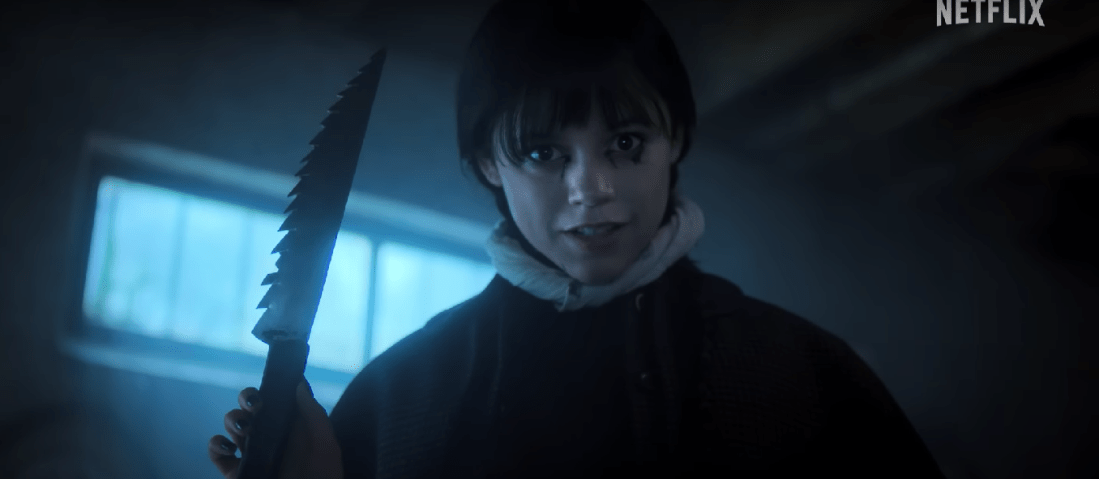
Starting with the positives for this season, Jenna Ortega once again does a great job as Wednesday, bringing a lot of dark humor to the table.
This dark humor persists throughout the season, with a lot of sequences leaving me chuckling.
One of these is Pugsley’s storyline, which sees him teaming up with Eugene (Moosa Mostafa) in a plotline that I am interested to see where it goes in Part Two of the season. 

Pugsley and Eugene make a surprisingly fun duo.

Along with the old characters, there are also a lot of good new ones.
With Principal Weems dying last season, Nevermore gets a new principal, Barry Dort, played by Steve Buscemi.
He is pretty much a ruthless version of the “How do you do, fellow kids?” meme, which makes for quite an entertaining character.
My favorite new character though is definitely Agnes DeMille (Evie Templeton), who is basically Wednesday’s number one fan, although more in the Annie Wilkes Misery fashion.
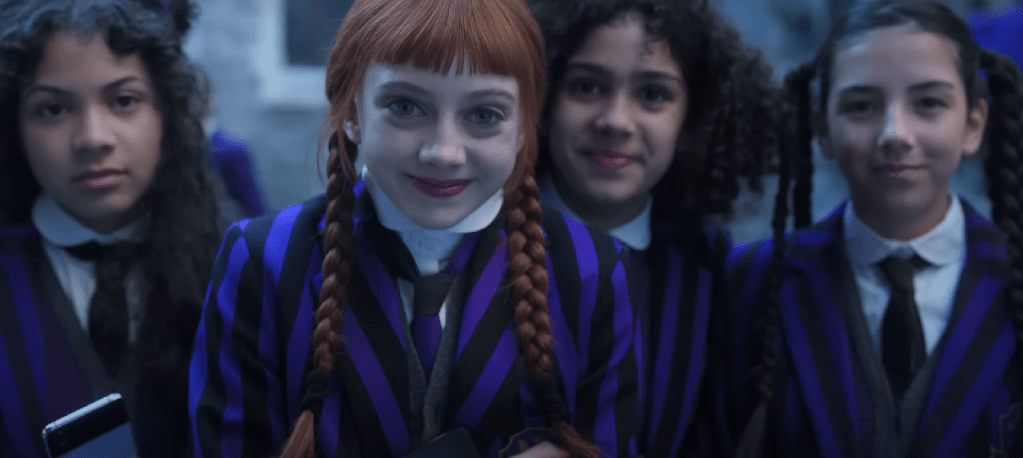
People online have described Agnes as “an evil version of Luna Lovegood.” Honestly, that is the perfect description for her.

Another positive for Season Two is that it fixes some of my negatives from Season One.
My primary criticism of the first season was that the mystery’s answer was so obvious it made the red herrings infuriating.
Thankfully, Season Two’s mystery is hidden a lot better, and I actually enjoyed its surprises. 
That being said, we still have another half of a season to go, so who knows how the remaining mysteries will be answered.
My second big criticism of Season One was the focus on a love triangle between Wednesday and two other characters.

My hope was that Season Two would focus more on her friendships and investigations.
Fortunately, the season did exactly that.
Unfortunately, the love triangle plotline was transferred from Wednesday to Enid.
Aside from one pretty good joke, this subplot was a complete bore, not helped by one of Enid’s love interests being as blank as a piece of white paper.
What makes this more bizarre is that Wednesday’s motivation this season is to solve the mystery to stop Enid from dying.
Yet Enid’s storyline mostly focuses around which boy she is dating. 
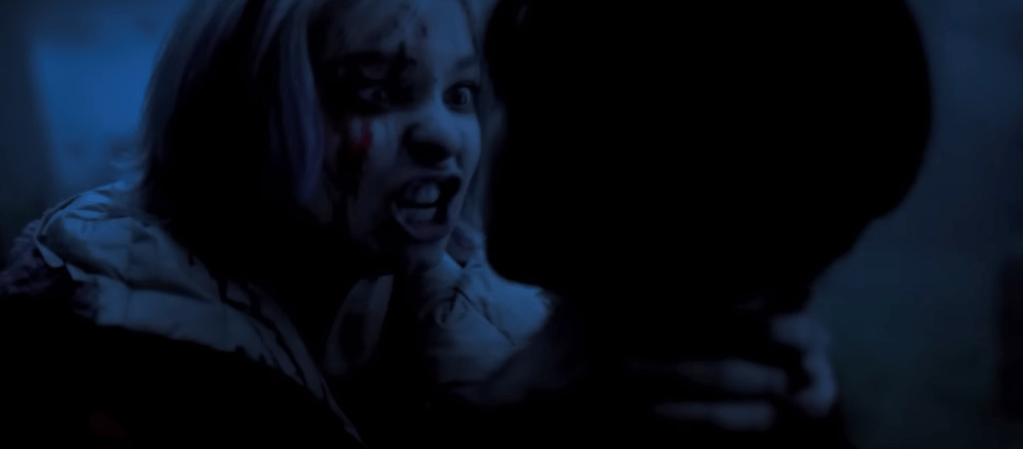
Enid is weirdly out of focus, when saving her life is the main character’s goal.

Hopefully, she will have more importance to the story in Part Two.
Overall, though, I would say that so far Season Two has been an improvement over the first one.
Jenna Ortega’s performance is still great, as is the humor, and the mysteries are handled a lot better.
I hope Part Two can keep the quality up we get it in September.

Shōgun Review: My Secret Heart Loves This Show.

I have heard praise of Shōgun for a while now. 
That praise, along with the show’s outstanding performance at the Emmys, and its intriguing setting of 1600 Japan left me eager to check it out.
The only thing stopping me was the lack of Disney Plus in my household.
Having finally got it, Shōgun was one of the first shows I checked out and was by far the most engaging. 

Shōgun easily deserved all of the Emmys it won.

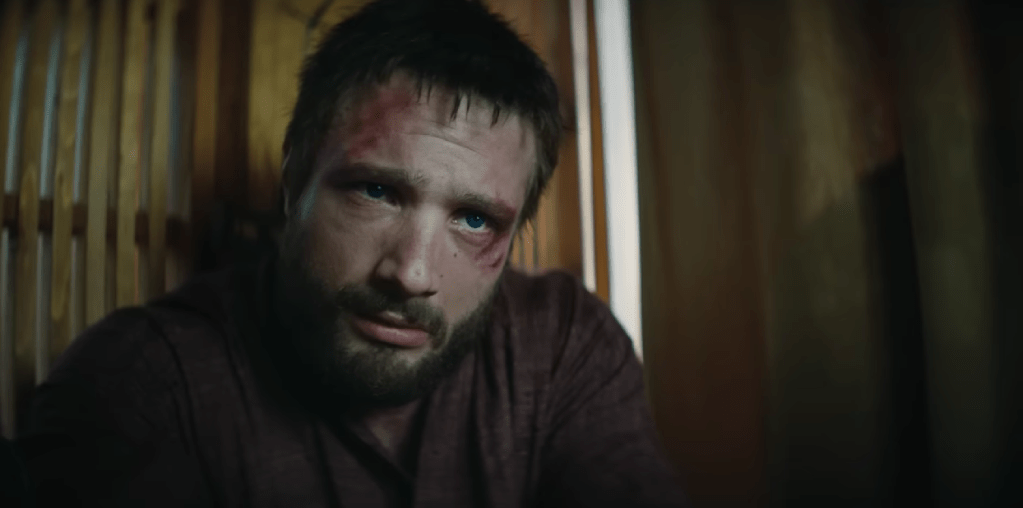
Based off the 1975 book of the same name by James Clavell, the show kicks off with the arrival of John Blackthorne (Cosmo Jarvis), a foul-mouthed protestant sailor from England.
The first Englishman to set foot on Japanese soil, Blackthorne becomes of immediate interest to the Lord of Kantō, Yoshiii Toronaga (Hiroyuki Sanada), much to the dismay of Blackthrone’s catholic Portugese enemies.
He has arrived at a time of great turmoil in Japan, where Toronaga is embroiled in a bitter struggle for power against his fellow lords for the fate of the country.
With the help of his Japanese interpreter and Toronaga loyalist, Toda Mariko (Anna Sawai), Blackthorne begins to assimilate to the culture, while experiencing events that will shape Japan’s history. 

Blackthorne’s arc of assuming the Japanese to be savages at first, only to slowly learn and embrace their culture was enthralling to watch.

I know from the way I have described the plot so far, it seems like Blackthorne is the main character of this story, but that is actually not the case.
Yes, his arc is great to watch play out, and Jarvis’ performance is fantastic, but Blackthorne’s role mostly serves as an introductory lens for viewers who are not familiar with this period of Japanese history and its customs.
The real main players are the Japanese cast, all of whom do incredible jobs with their performances.
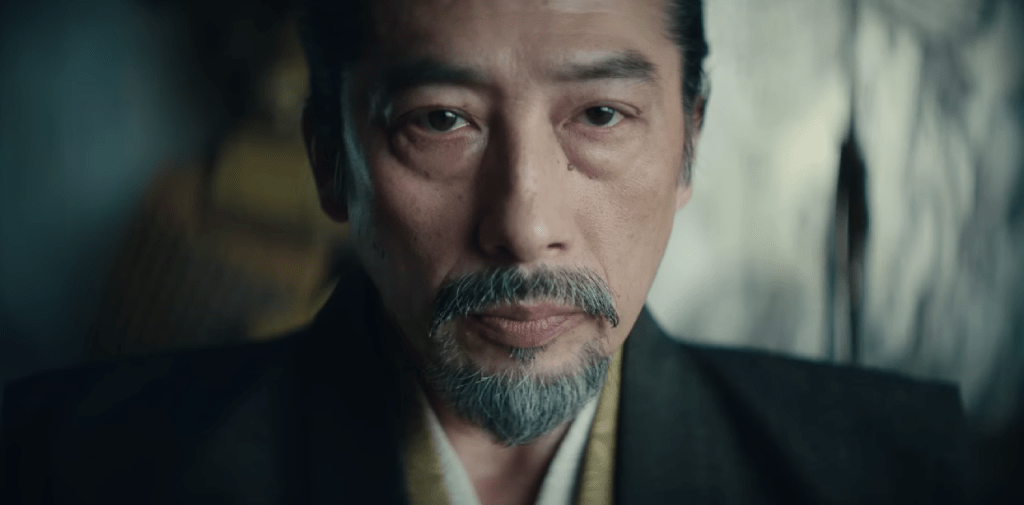
Hiroyuki Sanada is of course an incredible actor, and he transforms into Yoshii Toronaga, being more than deserving of his Emmy win. 

Based off Tokugawa Ieyasu, Toronaga is a crafty character, whose motives and secret plans are a constant mystery.

Tadanobu Asano is also great as Kashigi Yabushige, a character so self-serving that you want to hate his guts, but his personality is so entertaining you find it difficult to do so.
The real standout, though, is Anna Sawai as Mariko, who goes on an intense journey, as she finds herself struggling with her difficult past, abusive marriage, faith, and her growing closeness to Blackthorne.
All of this culminates in “Crimson Sky,” the ninth and best episode of the show, where she delivers a powerhouse of a performance.
Just like Sanada, she was more than deserving of her Emmy win.

Mariko’s journey in “Crimson Sky’ was full of many emotional and unexpected twists and turns.

What makes these characters even more interesting is that many of them are based off real people, important to Japanese history.
After finishing Episode Ten, I immediately found myself looking up information about these people and how the events of the show differed from real life.
Just imagine how many other viewers did the same after finishing the series and thus became more knowledgeable about the history of Japan.
But it is not just the characters that make Shōgun great, obviously.
The production quality of the show is excellent, with the costuming and sets perfectly reflecting the time period.
The CGI is also top quality, with not a single shot drawing me out of the moment.
Speaking of shots, the cinematography and editing are also stellar throughout, as is the score which makes every enthralling scene only more gripping.
This includes the opening theme, which has great visuals that remind me a lot of Game of Thrones’ intro.

Shōgun‘s intro is one I will remember for a while.

Sadly, this is not the only thing about Shōgun which reminds me of Game of Thrones, but that has nothing to do with the present quality of the show, rather the future quality.
You see, Shōgun completely adapts James Clavell’s book, and the show was originally intended to be a single season.
Well, money talks, and Shōgun’s success has resulted in the green light for a second season.
With nothing left to adapt, that means the writers are going to have to write their own original stuff for season two.
We all know how Game of Thrones degraded after the writers ran out of book material, so there is always the concern for this happening with the second season of Shōgun.
However, as stated, the original novel was based off very real people and events, so the writers at least have something to work with, unlike the Game of Thrones writers. 

I hope Shōgun‘s success can be replicated with Season Two.

And no matter the quality of this eventual second season, this first season of Shōgun will remain a masterful work with excellent characters, acting, production and score.
It has also undoubtedly helped spread knowledge about 1600s Japan and that is probably the highest praise a show based in that setting could receive.