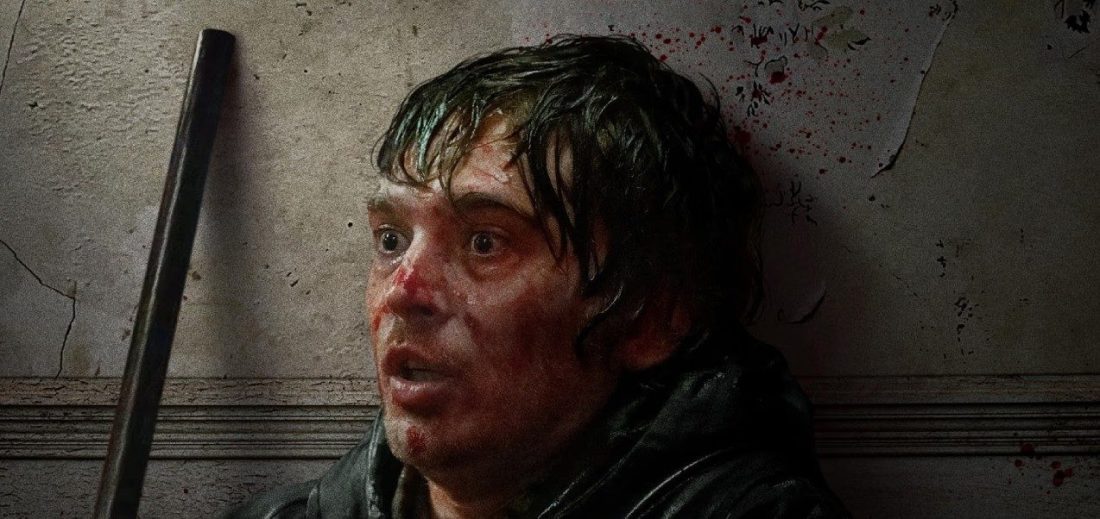
My first exposure to Resident Evil was through the movies. I actually did not begin playing the video games until Biohazard in 2017. Realizing a much better experience lay in the games, I ditched rewatching the movies until this year, when Zach Cregger released the latest Resident Evil adaptation. Before going to the theater, I watched all seven movies. Now that I have seen the most recent film, I will rank all eight from worst to best, spoilers included. Unfortunately, we are going to have to get through a lot of bad first before I can talk about the good.
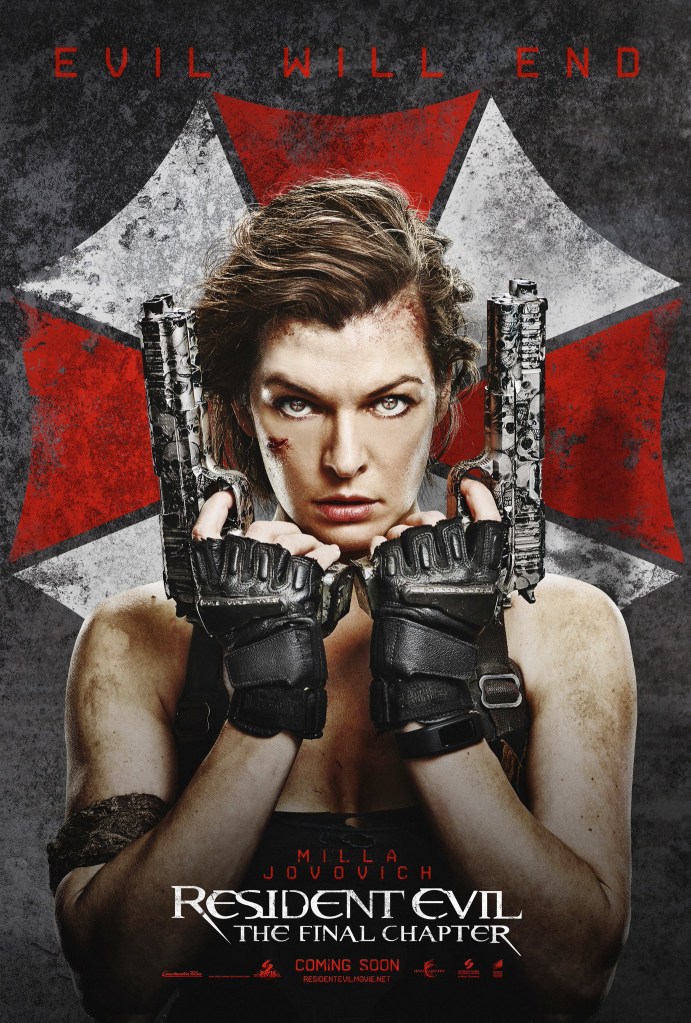
8. Resident Evil: The Final Chapter.
The Final Chapter was actually a first watch for me. Back when the movie came out, I heard the terrible reviews it was getting, even in comparison to the other Milla Jovovich movies, so I decided to steer clear of it. When I sat down to watch the film, I wondered if it was bad as everyone had warned me it was. Was it? It is at the bottom of this list, so what do you think? Resident Evil: The Final Chapter is an absolutley atrocious movie with the worst action editing I have ever seen put to film. Every single action scene is depicted through disorienting quick-cuts, with multiple cuts per-second from different angles. This makes it impossible to tell just what the hell is going on, and makes every action sequence deeply unpleasant to look at. Say what you will about the other Milla Jovovich movies, but at least we could tell what was happening. The story is just as poor, with countless retcons and bland characters, many of whoms names I do not think we were even told. As for the game characters who were adapted, they were done just as much of a disservice. Wesker is killed by a freaking door for god’s sake. The only good thing I can say about this movie is that Iain Glen gives a good performance as the villain, even if his character is retconned into being alive. Otherwise, this movie is a travesty with the worst editing I have had the displeasure of witnessing. There is no doubt in my mind this is the worst Resident Evil movie.
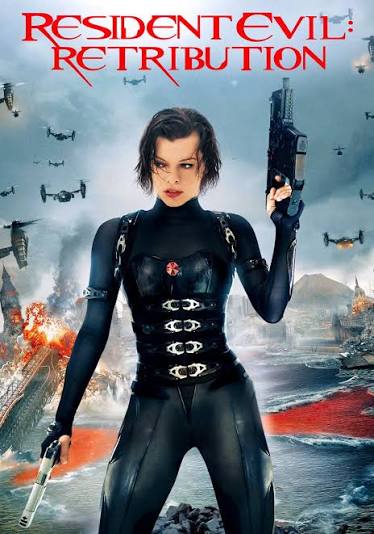
7. Resident Evil: Retribution.
The penultimate movie in the Paul W.S Anderson series, Retribution is better than The Final Chapter, although that is not saying much about its quality. To get my few positives out of the way, I like those cast as the video game characters, especially Kevin Durand as Barry Burton. There were also a few scenes I would call so bad that they are enjoyable, at least on an ironic level. And that is all I have for positives. Retribution begins with an awful slow-motion rewind scene which completely undercuts the ending of the previous movie. From there, we follow Alice as she explores various apocalypse biomes developed by Umbrella. She is aided in her escape by characters from the games and gains an adopted daughter along the way, all of whom disappear in the next movie. Along with characters from the games, those from previous movies return as clones but they all pretty much have no personality so there is nothing of value there. Retribution honestly feels of little value, especially since it all builds up to a cliffhanger that is abandoned in the final movie. But at least the action is understandable, so that puts it above The Final Chapter.
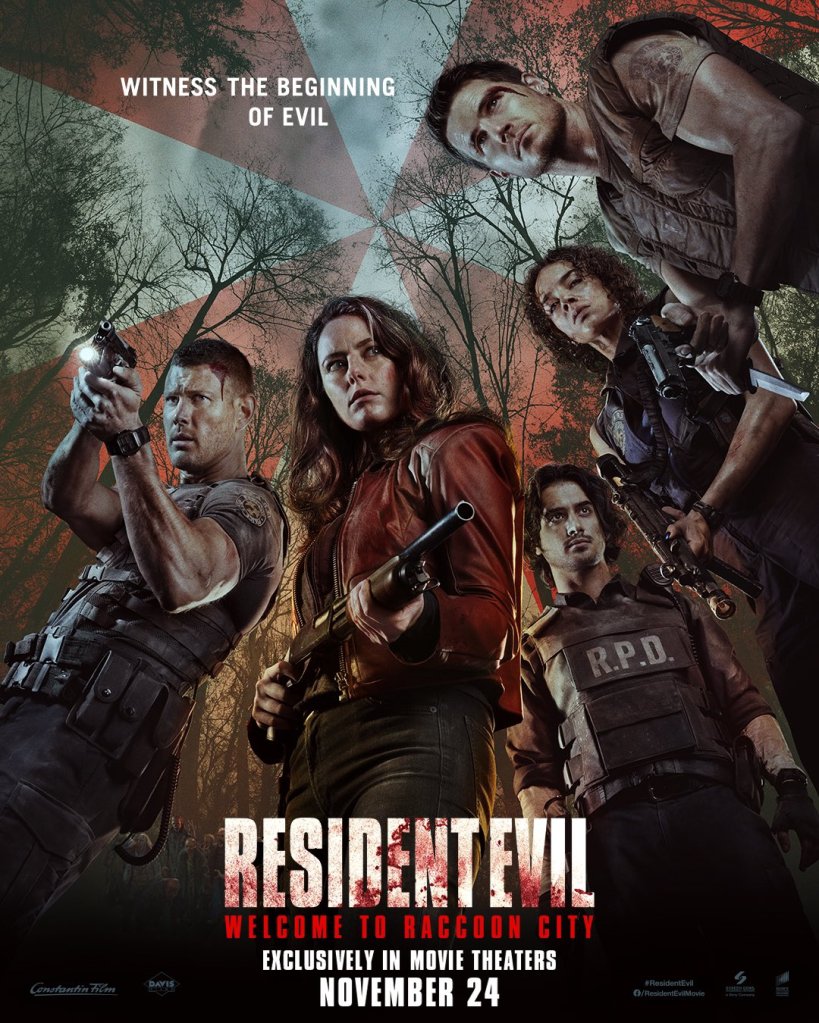
6. Resident Evil: Welcome to Raccoon City.
Alongside the latest adaptation and The Final Chapter, Welcome to Racoon City was the other first-time watch for me. Starting the movie, I expected it would be high on this list because I had heard it tried to be faithful to the games. Unfortunately, that did the movie no favors. Welcome to Raccoon City jams the stories from the first two Resident Evil games into a single movie, creating an extremely bloated movie, with too many characters to focus on in such a short amount of time. Despite the bloated nature of the movie, it also somehow felt too small scale. Welcome to Raccoon Small Town would have been a more accurate title than Raccoon City. And even though this adaptation tried to be faithful in some aspects, it absolutely failed in others, especially with the characters. The characters from the Milla Jovovich movies were more faithful to the games, which I cannot believe I am saying. The director, Johannes Roberts, clearly knew a lot of details about the original story so, for the life of me, I cannot understand why he decided to depict Leon Kennedy as a bumbling buffoon who primarily serves as comedic relief. Claire was the only character who felt even remotely like her video game counterpart. That and a very-well shot scene where Chris fights zombies in the dark were the only saving graces of this movie. Otherwise it was a big disappointment, which bumped it this low on the list.
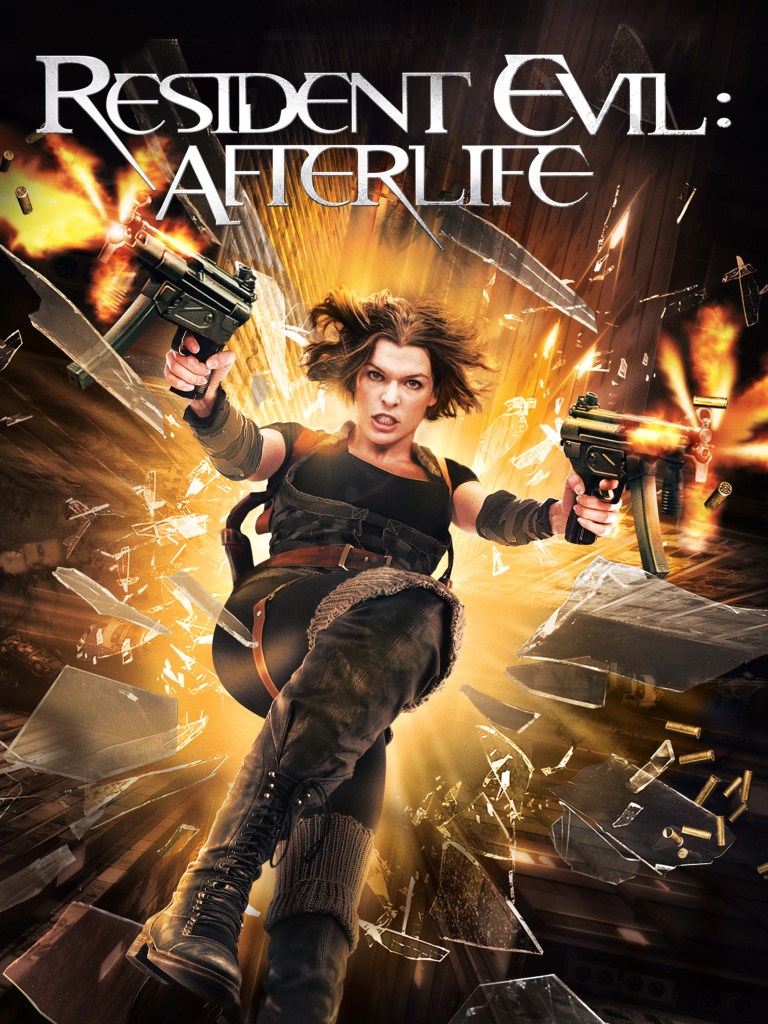
5. Resident Evil: Afterlife.
From here on out, I find the movies on this list to be enjoyable. Not necessarily great, but the kind of film you can just turn your brain off while watching and have a good time. Still, that does not mean Afterlife is devoid of issues. For one, the trend of undercutting the previous movie’s ending continues here, with all of the clones from Extinction being killed off in the opening scene. Sure, that scene itself was good, but it was disappointing to see. I also personally found a few logical inconsistencies with the movie, which drew my brain out of its off mode to question things. Also, there is entirely too much slow motion. This is epitomized by a fight scene between Claire and a bioweapon, which takes place entirely in slow-mo. However, although there was a lot of bad, there is also some good. I liked the Luther West character, and the adaptation of Chris Redfield was good (even if his character was never mentioned again afterwards). The final fight with Wesker was also a lot of fun, and its final moment with the exploding plane was a good bit of payoff that made me laugh. Speaking of, the payoffs in this movie were also really good, like Alice loading coins into the shotgun. So, although there is a lot of bad, there is enough good in Afterlife to make it at least enjoyable.
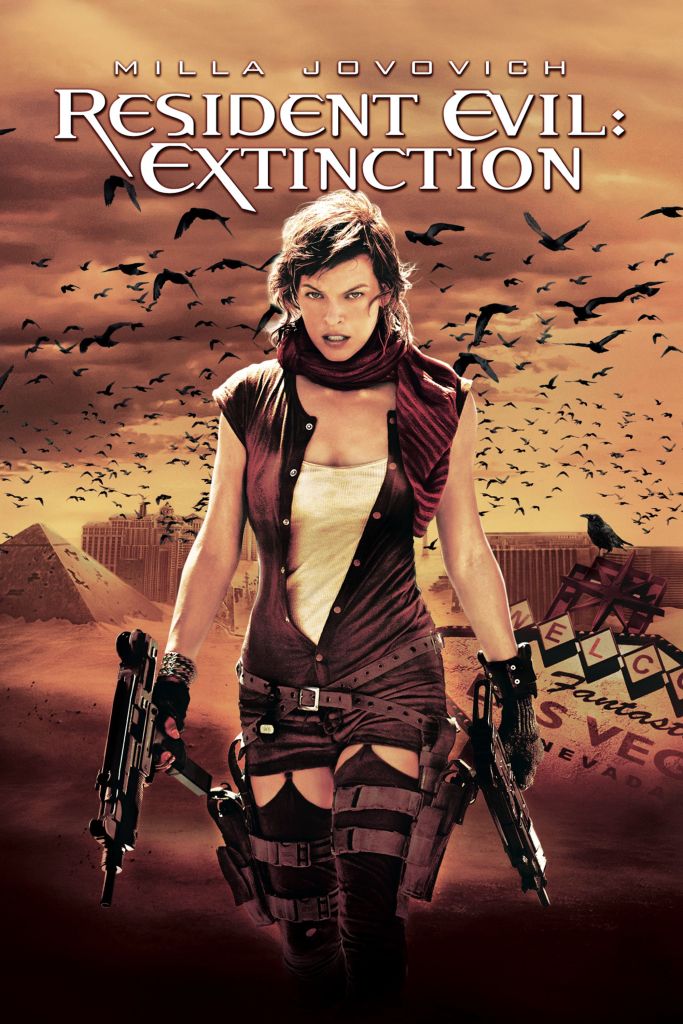
4. Resident Evil: Extinction.
I remembered not liking Extinction when I was younger, so I was quite surprised to find myself enjoying it on rewatch. Sure, it is not stunning, but it has a lot of good qualities, like the action scenes. The crow scene felt inventive, and the scene of Alice and the gang fighting advanced zombies in Vegas had a lot of fun. Carlos’ sacrifice after this scene is the best written death in the Jovovich movies (not like it had much competition though). Iain Glen is also once again great as the antagonist, and I really liked the practical elements of his final transformation. The way they brought back the lasers for Alice to defeat him was a nice touch, as well. Although I liked the practical effects, the CGI is very dated, but that is the case for almost all of these films. Also, Extinction just often does not feel like a Resident Evil movie. The wasteland gives off more of a Mad-Max vibe, and Alice’s telekenetic abilities felt especially ridiculous here. Even if it does not feel like Resident Evil, though, Extinction still provides enough good for me to rank it higher than I originally thought I would.
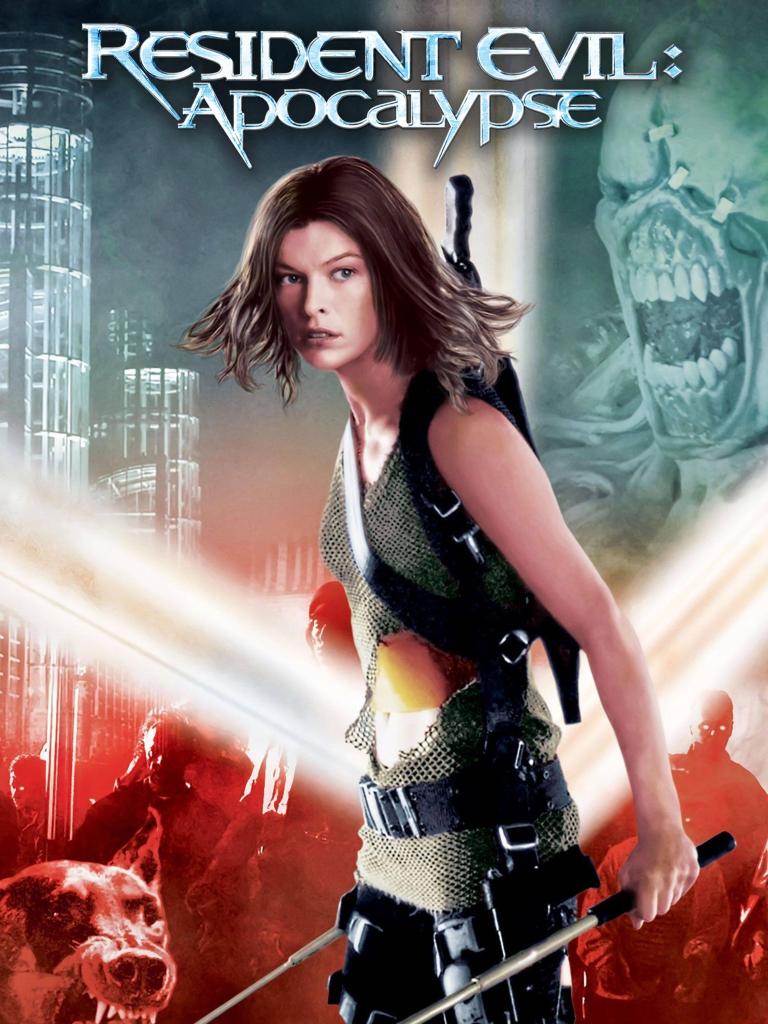
3. Resident Evil: Apocalypse.
Before rewatching Apocalypse, I was confident it would be my favorite of the Milla Jovovich movies. This was the first Resident Evil movie I watched after all, so it had a lot of nostalgia for me. Unfortunately, the action was less stellar than I remembered, with a lot of shaky-cam and bad editing, which made me rank it a spot lower than I expected. Still, Apocalypse is one of the better Jovovich movies. The characters from the games it adapts, like Jill, Carlos and Nemesis are all great. Even some of the movie-original characters, like L.J, are a lot of fun. His “Because I usually drive a cadillac” lines still gets a laugh out of me to this day. I would also say that I like this depiction of Raccoon City the best out of any movie. It actually felt like I was seeing the collapse of a city, rather than a small town like in Welcome to Raccoon City. While not outstanding, Apocalypse will always be a movie I feel nostalgia towards for introducing me to the Resident Evil franchise.
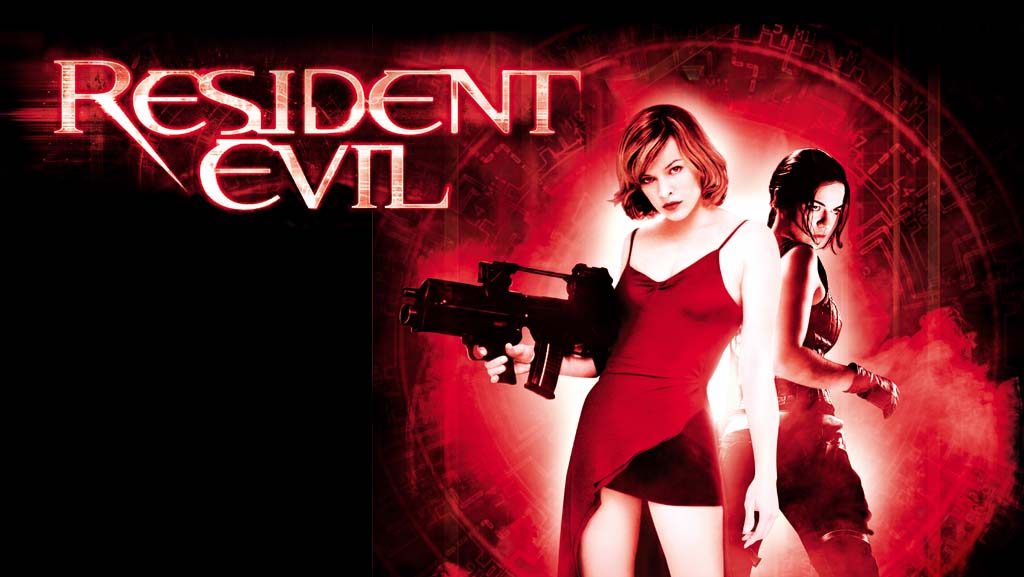
2. Resident Evil (2002).
Yes, I think the Resident Evil movies starring Milla Jovovich get worse as they go along, with the first being the best of them. Sure, it might not make for the most interesting of lists, but I am being true to myself here. Much like with Extinction, I was surprised by how much fun I had with this movie on rewatch. Watching the fall of the Hive in the opening scene is tense, and what follows is a very solid zombie flick. The laser scene is a highlight, being probably the most memorable moment from the Jovovich films. As for the undead, they are well done in this movie, with the depiction of Spencer’s zombie being particularly unnerving. What I especially like about this adaptation was that, if you removed the Hive being located beneath Raccoon City and set the story elsewhere, it would still feel like the movie fit into the universe of the games. If there were never any sequels, then this could have been a decent, standalone story set in the world of Resident Evil. For better or worse though, there were sequels, and if those films lead to Zach Cregger’s adaptation then I am at least grateful for that.
1. Resident Evil (2026).
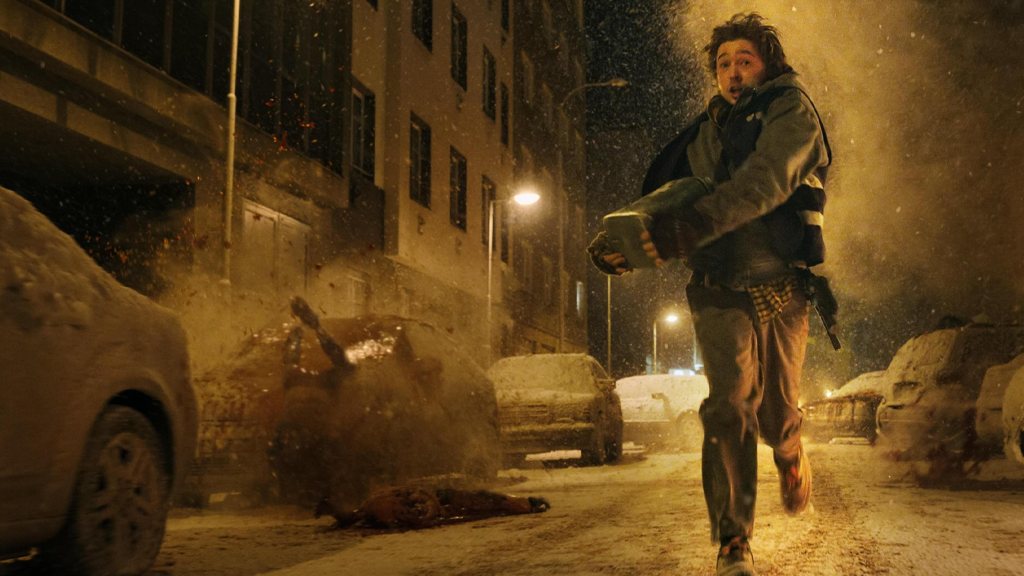
Speaking of which, is anybody surprised that the latest adaptation of Resident Evil is my favorite? Even having only seen it once, I can confidently say this movie is leagues above the rest. Set during the fall of Raccoon City, the film follows medical courier Bryan, who gets caught up in the madness. We follow him as he goes through scenes which could all work in a video game format. I would say the first act is definitely the best with its tension building and terrifying jump scares. The reveal of the infected dog, and the farm owner attacking Bryan both nearly made me jump out of my seat. The rest of the film is almost as good with one grim set-piece after another, many of which I am going to remember for a while. There is the infected girl, the rats bursting through the fat guy in the sewers, the raining zombies, the acid elevator and, most disturbing of all, the maternity ward. All of this builds to the tragic ending where Bryan fails to get the cure and transforms into the kind of monstrous abomination we would expect to fight as Leon or Claire. The entire movie is basically the backstory for a Resident Evil boss. Despite the tragedy of this ending, I do think it could have hit harder emotionally if there was less humor in the third act, which is my only criticism of the film. As it stands, Zach Cregger’s Resident Evil is the first live-action film in this franchise I can truly call a great movie. It tells a simple story, full of intense and terrifying set-pieces, which all build to a tragic ending, which places it firmly at the top of this list as the best Resident Evil movie.
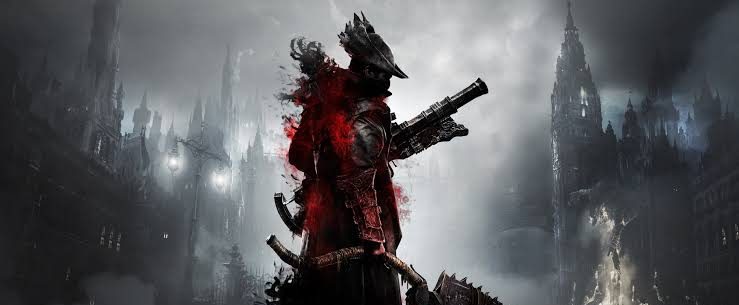
The game that first introduced me to FromSoftware was Elden Ring. Being extremely challenging, yet also extremely rewarding, it quickly became one of my favorite video games of all time. So, when I finally got my hands on a PlayStation 5, one of the first games I tried was the Demon’s Souls remake. Unfortunately, despite multiple attempts, I never connected with the game enough to get very far in it, and this put me off the rest of the FromSoftware lineup. As the years passed, though, I kept hearing about the game many considered to be the best in the Soulsborne catalogue: Bloodborne. It got to the point that one day, when I found a copy in a retro-gaming store, I decided to bite the bullet and try it. And I am so glad I did. For me, Bloodborne lived up to all of the hype, especially in regards to its incredible boss roster. After I finished the game for the first time, I immediately decided to replay it and then rank the bosses from worst to best, excluding those from the Chalice Dungeons. This ranking is based off those two playthroughs and takes gameplay, lore, challenge and fun all into account. Despite the mostly high quality of the bosses overall, one of them had to end up at the bottom of the list, and that boss is…
22. Micolash, Host of the Nightmare.
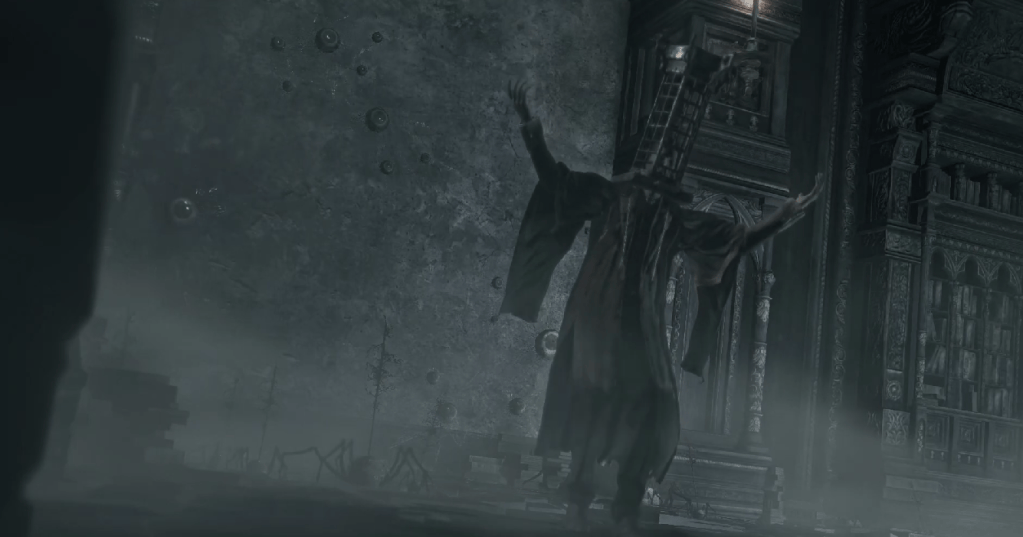
I will give Micolash some credit, his voice acting and personality are entertaining. There, credit given. Now, for the bad. Found in the Nightmare of Mensis, Micolash’s “fight” can hardly be called that, at first. The moment the boss begins, Micolash runs away from the player, starting a chase which can either end quickly or drag on for minutes. Once finally cornered, you have the choice of first taking out his two puppets or fighting all three at once. I would suggest taking out the puppets before Micolash because that makes his Augur of Ebrietas attack much easier to dodge. This single attack takes off a great deal of health, but it is the only attack Micolash has in this first phase. Around half health, he vanishes and you have to chase him down again, although this time the chase if far more scripted. Upon cornering him for a second time, he gains two more moves. The first is a measly punch that does barely any damage. The second attack, named A Call Beyond, does way too much damage. If you die in this fight, it will most likely be because Micolash one-shot you with the attack. Oh, and he can spam it multiple times, so dodging it the first time does not mean you will the second, third, or even fourth. And, once you die, you have to go through the long process of chasing him just to get to this point all over again, so have fun with that. I certainly did not. Going through that arduous process just to get one-shot by A Call Beyond (or more embarrassingly, falling to my death at one point) over and over again was endlessly frustrating and boring. The chase can go on for too long, Micolash’s move-set is way too limited, and his second phase is accompanied by an annoying one-shot attack that he can spam endlessly. The only thing Micolash has going for is, again, his voice-acting and personality, which did admittedly get a few chuckles out of me. Otherwise, there is absolutely nothing that works about this boss, making him easily Bloodborne’s worst, in my opinion.
21. Rom, the Vacuous Spider.
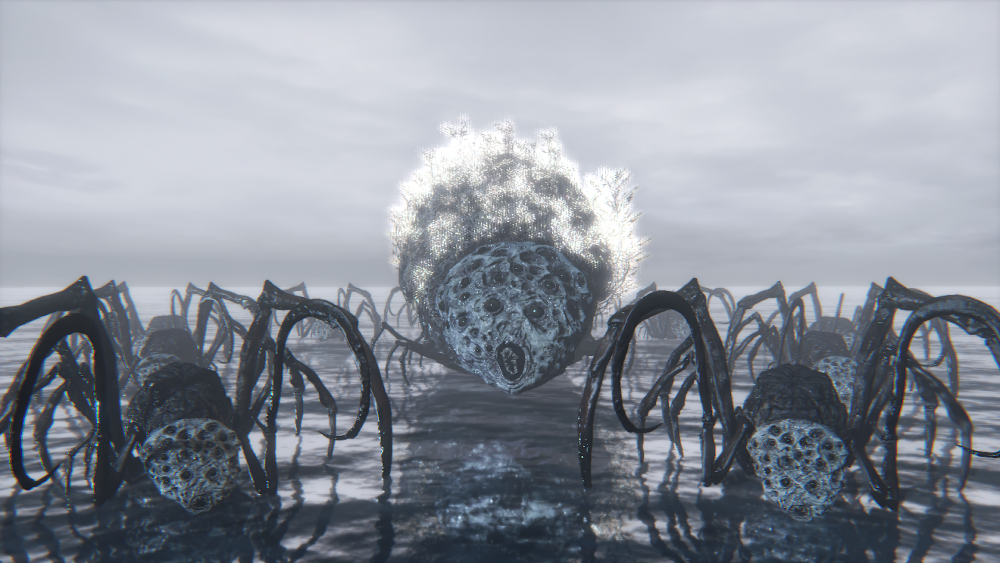
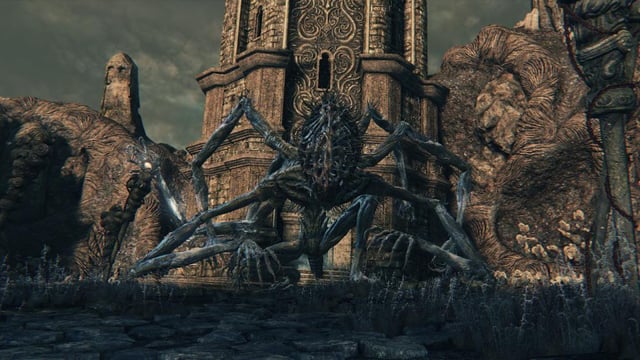
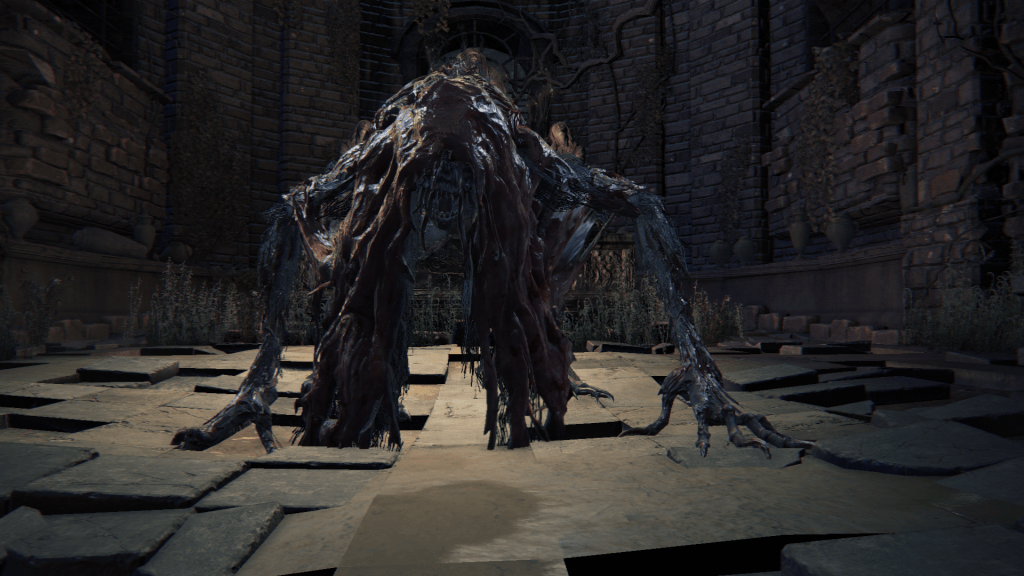
The runner-up for worst boss in Bloodborne goes to Rom, the Vacuous Spider. Located at the end of the surprisingly short Byrgenwerth area, Rom is unfortunately nowhere near as short. Like Micolash, you will probably die a few times fighting her, and these fights are quite frustrating. On a positive note, I will say that Rom’s arena is excellent, and defeating her is significant because it unveils the cosmic horror at Bloodborne’s center. Sadly, this is the only praise I can give Rom, Again, like Micolash, her moveset is extremely limited. She does not even attack in phase one, and her attacks are pretty basic in phases two and three. That is not why she is ranked down at twenty-one, though. No, it is her many, many, many spider children that bring her down this low. The moment Rom is attacked, these spiders will fall from the sky and swarm the player. This leads to endless frustration because these spiders hit way harder than they should, leading to many deaths when they strike you from behind while you’re trying to fight Rom. Even taking the spiders out before dealing with Rom is a nuisance because of their armoured heads, which makes trying to kill them all extend the fight even longer. Oh, and if you do decide to take the risk of leaving the spiders alive while fighting Rom, the arena will soon become so full of spiders that it tanks the frame rate a bit, making the boss more difficult. Whenever I died to Rom, it never felt fair due to the other spiders’ involvement. The story impact and beauty of the arena is the only thing saving Rom from the bottom of the list.
20. Witch of Hemwick.
Found at the end of Hemwick Charnel Lane, the Witch of Hemwick is one of Bloodborne’s blandest bosses. Upon entering the arena, the witch will summon a Mad One, probably tricking the player into thinking that is the boss. The real boss is invisible, so you need to track her down to attack, with the Witch teleporting around the arena after a few hits. So begins a boring game of hide and seek, where you find and attack the Witch while avoiding the Mad Ones it spawns. This would have been bad enough but then it turns out the name of the boss is inaccurate. It is actually the Witches of Hemwick because another one spawns after you kill the first, which can also annoyingly be revived by the second. The freezing spells they unleash can also extend the length of the fight if you get hit, so that is frustrating. Luckily, theWitch of Hemwick is actually one of the easiest fights in the game, being one of only three bosses I have never died against in my two playthroughs. Had she actually offered difficulty like Micolash and Rom then you can bet the Witch of Hemwick would have been in last place for my ranking.
19. Celestial Emissary.
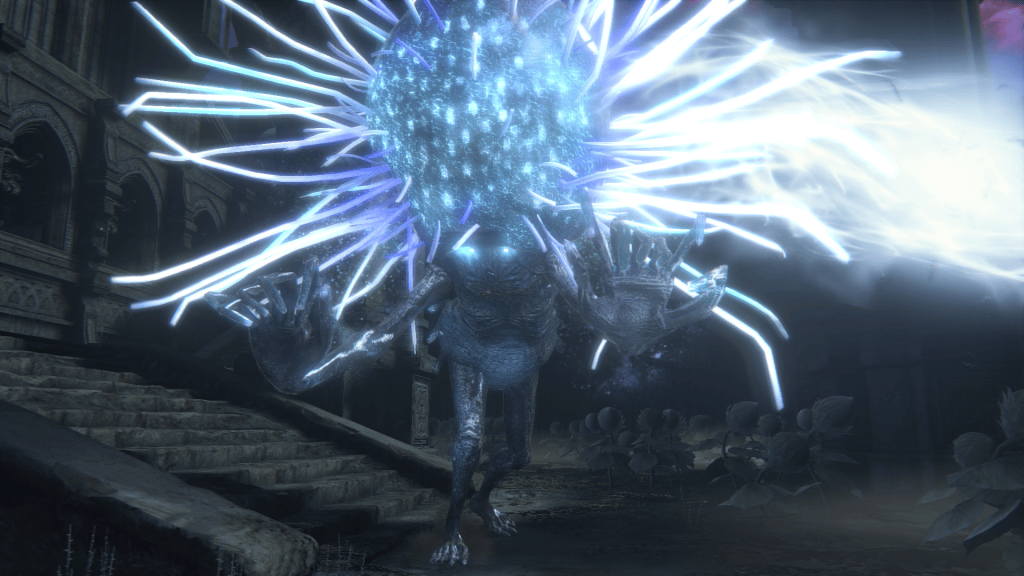
As you progress through Bloodborne, you will encounter various enemies that suggest there is something more otherworldly going on than just the Beast plague. The Celestial Minions are one such enemy and you can encounter them a few times before their boss at the orphanage. This fight offers very little of interest, but it is the second Bloodborne boss I never died to, so it is at least not frustrating. At first, the boss seems to be just a horde of standard minions, until you notice one standing back. Unlike the others, this one does not attack you but hit him enough and he will transform into a larger version of himself, which unfortunately does not help his case. The only reason there would be any challenge to the Celestial Emissary is if the player found some difficulty in navigating the spawning minions, much like Rom’s spiders. Although, it is relieving to say that the minions are nowhere near as annoying as those spiders, considering that, again, this boss did not kill me in either of my playthroughs. So, much like the Witch of Hemwick, it is a boring boss, but one that is saved from being lower by not being too much of an annoyance. There is also the horrifying implication of finding this boss at the orphanage, suggesting than the Choir transformed children into the Celestial Minions, which is just another level of evil.
18. Living Failures.
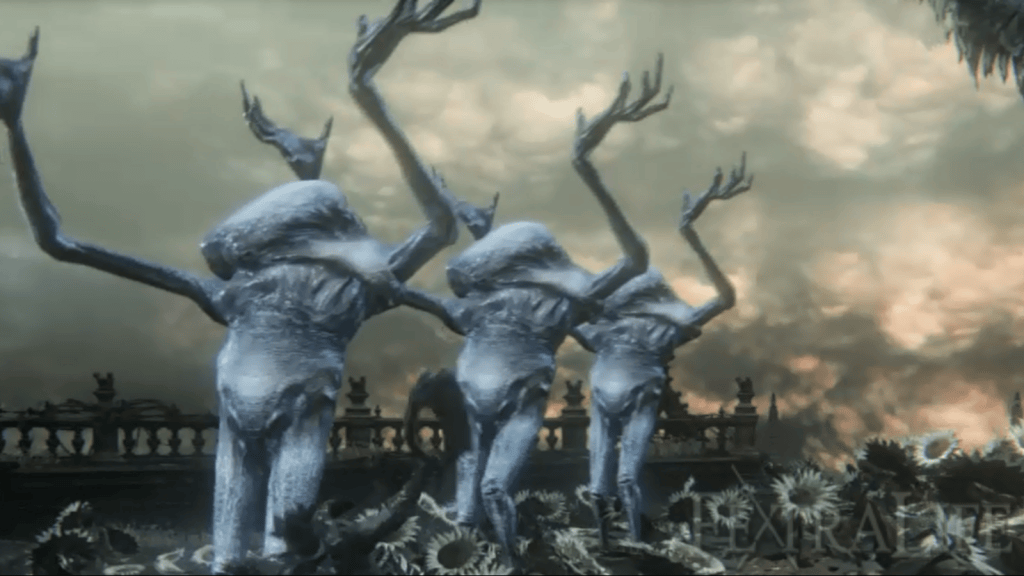
Barely edging out their more successful counterparts, the Living Failures are the lowest ranked DLC boss on this list. You will not see another boss from the Old Hunters until much further down, showing how high quality the rest of them are. As for the Living Failures, not everything about them fails. Their arena is well designed, and the attack where they call down meteors is fun to avoid. Not to mention their soundtrack is excellent, arguably too great for such an average boss. The Living Falures share a health bar, and their attacks range from launching magic at the player, to swinging their surprisingly hard-hitting fists. You basically just have to target one away from the others, deal enough blows to kill it, move onto the next one, rinse and repeat. I would like to say they were one of the bosses I never died to but, unfortunately, the strength of their blows caught me off guard on my first attempt and I died once. It is a bit of a humbling experience to be killed by something known as a failure, especially with how basic their moveset is. Still, their epic soundtrack and arena is enough to place them above the Celestial Emissary.
17. Amygdala.
Seen in Cathedral War and throughout Yahar’gul after killing Rom, the Amydala are a constant and threatening presence. These eldritch abominations constantly watching your progress and occasionally attacking you does a good job of building up to the eventual boss fight. Unfortunately, said fight arrives at the end of the Nightmare Frontier, my least favorite area in all of Bloodborne. Thank the Great Ones there was a shortcut to the boss because if I had to avoid the poison swamp every attempt, Amygdala would have been a lot lower on this list. As for the actual fight itself, it is sadly something of a disappointment. The boss has its moments, like when the Great One fires lasers at you or when it rips off its own arms to attack you with. Otherwise, the fight is a bit of a letdown for a boss hyped up since the defeat of Rom. The Amygdala’s head takes the most damage but, much like the Ancient Dragons in Elden Ring, this weak point is constantly out of range, meaning the player has to target other parts like the arms and legs. However, the arms are risky because they are being continuously swung at you, and it takes forever to kill the boss if you target the legs and tail. So, you either risk getting killed a bunch by standard hand swings, or have a slow and drawn out fight that takes way too long. Like I said, Amydala has its moments, but not enough to put it any higher on the list.
16. The One Reborn.
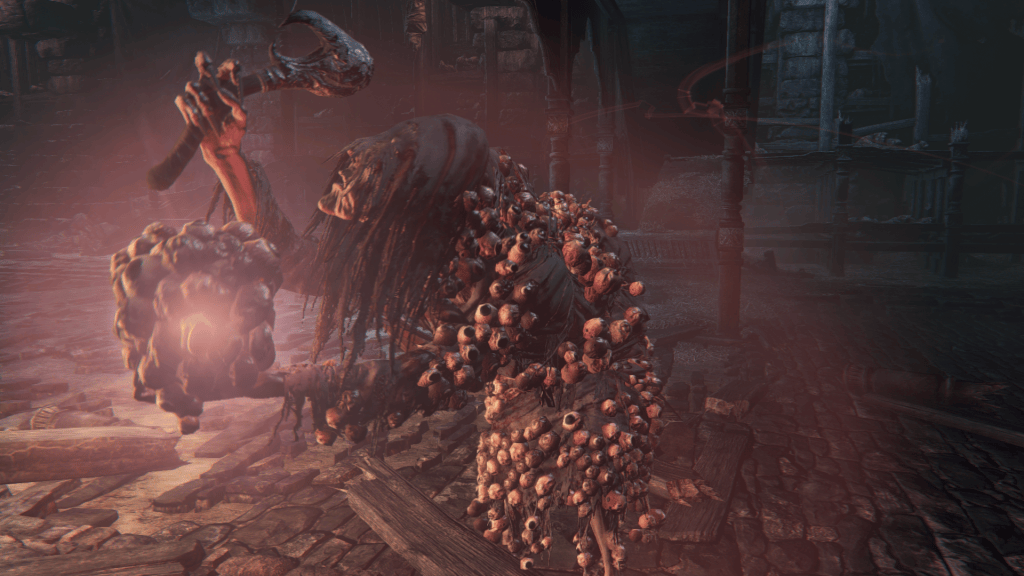
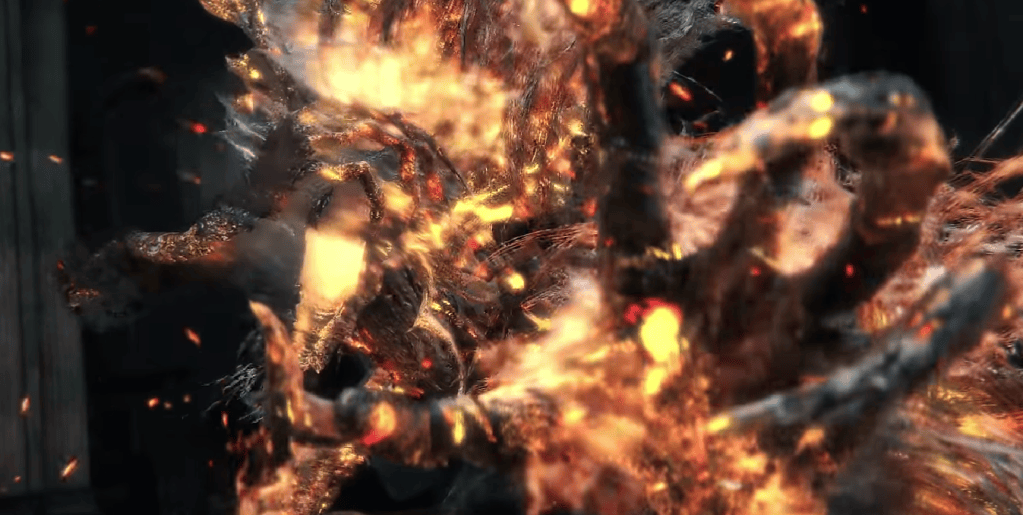
I was surprised to see a lot of people rank The One Reborn at the bottom of their lists. This is not to say I think the fight is incredible; it comes in at number sixteen, after all. But I still found enough value of here to call The One Reborn a solid boss. For staters, the Great One is bar none the most disgusting enemy in the game, and that is saying something. Formed from the rotting corpses of countless people sacrificed in the Mensis Ritual, the One Reborn is aided by six chime maidens who shoot fireballs and can heal the boss. So, if you want an easier time, kill the maidens first. That being said, on my first playthrough, I killed the boss without realizing I could take the maidens out, so your experience may vary. The One Reborn’s moves consist of standard body slams and leg kicks. It can also drop bodies from the freaking sky but if you have a high enough vitality level you can pretty easily tank these hits if they connect. I only died once each playthrough to the One Reborn, but both these times I was killed by the boss’ most annoying move, which is covering the ground in a toxic sludge. This is quite hard to notice if you are focused on hitting the boss, so the first time I died to the move I had no idea what had happened. Other than this cheap move, which forces you to keep distance, I found The One Reborn to be a solid fight. Not Bloodborne’s best but certainly not its worst which some players ranked it as.
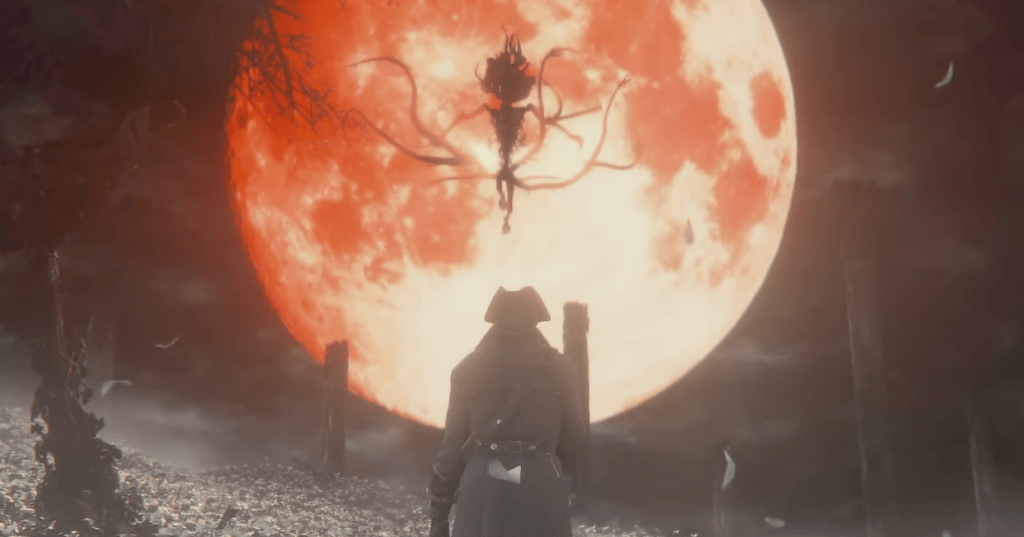
15. Moon Presence.
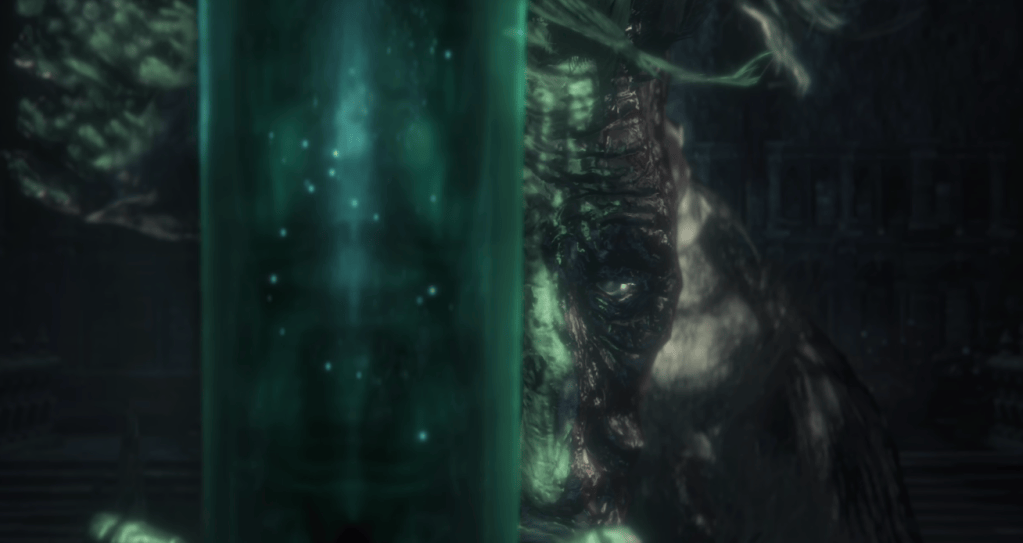
Potentially the final boss of Bloodborne, in order to fight the Moon Prescence you have to consume three one thirds of an umbilical cord (yes, I said what I said). Following a cinematic and threatening cutscene, the fight begins… and it is unfortunately a letdown. Don’t get me wrong, the Moon Prescence is fine enough as a boss, but as the secret final fight of the game it left much to be desired. Like Amygdala, it mostly uses physical attacks, which seems basic for an otherworldly being beyond our understanding. The Moon Prescence’s most unique attack is when it brings your health down to one, but the boss’ recovery period following this move is so long you can completely regain your health by either downing blood vials, or by using the rally mechanic. The boss arena is also excellent, but this is more Gehrman’s arena, since you fight him here beforehand. Overall, the Moon Prescence is a fine enough boss. If it had been a fight earlier in the game, it would have been higher. As the final fight, it left me wanting more from it.
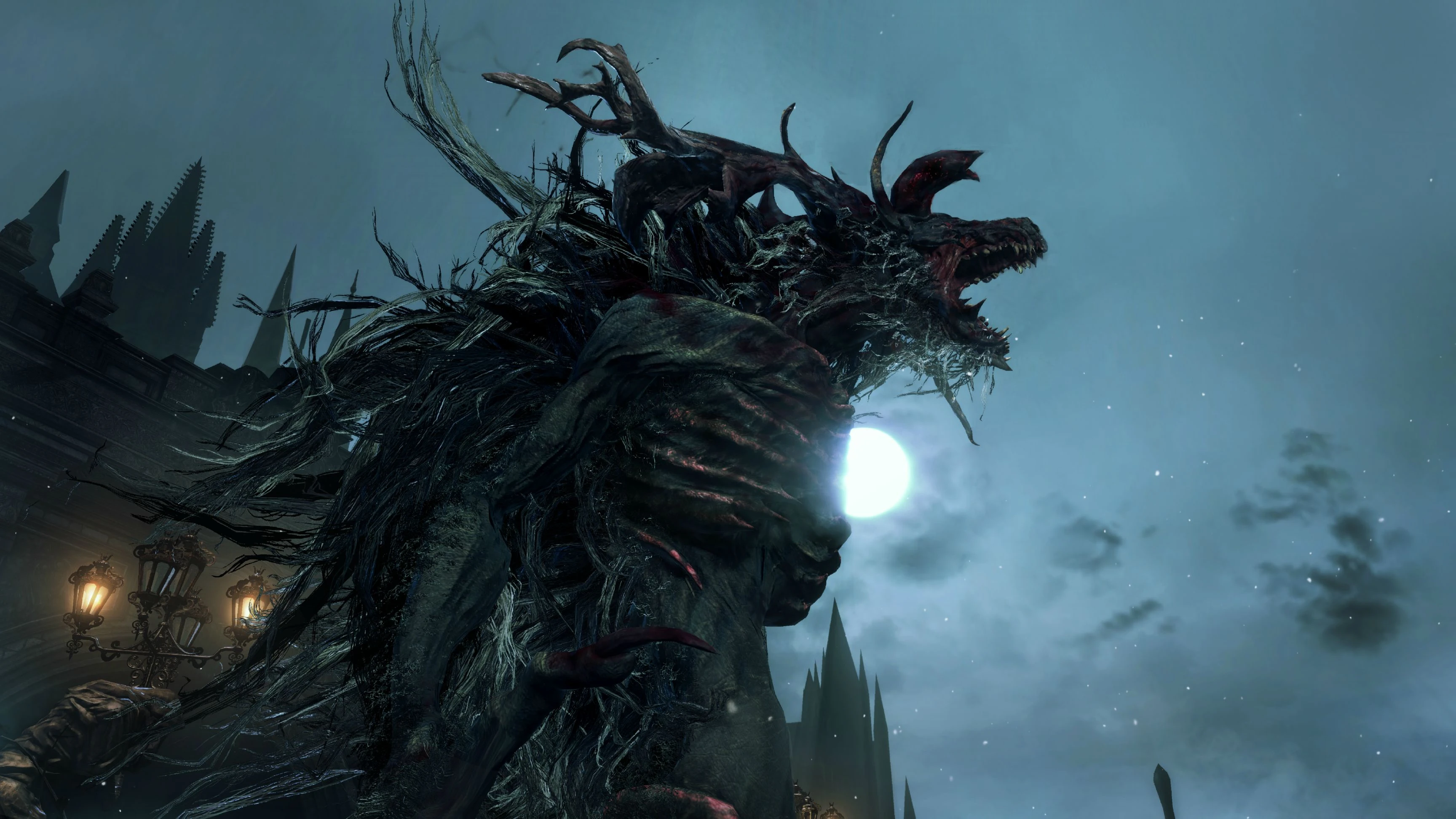
14. Cleric Beast.
We go from potentially the final boss of the game to potentially the first. The Cleric Beast is located on a bridge in Old Yharnam and is well built up to, since the beast is heard screeching when you climb up the first ladder. Get used to this screeching because the boss will make this noise constantly when it jumps down at you, taking wild swings. Much like the Moon Presence, the Cleric’s Beasts attacks are physically orientated and basic, but this works for a first boss as opposed to a final one. It also serves as a lesson for new players about what works best against Beast enemies. Chucking the molotovs collected on the journey to reach the boss ends the fight much quicker. The only issue I can think of is the boss’ constant screaming but a lot of bosses in Bloodborne do that so you will get used to it pretty quick. The Cleric Beast is a solid tutorial boss for the game that teaches the player how to deal with Beasts.
13. Dark Beast Paarl
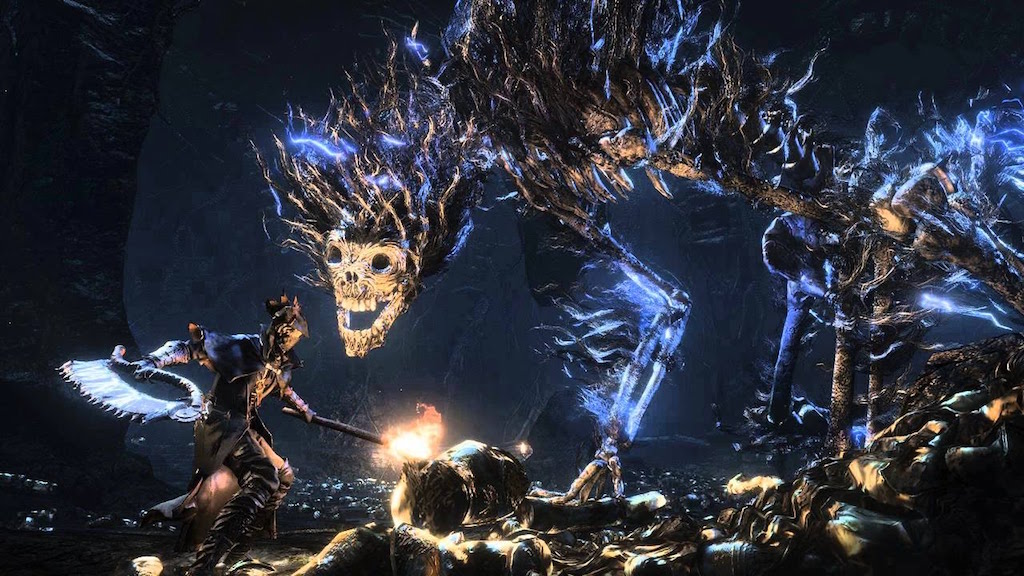
Located in Yahar’gul, Dark Beast Paarl is unique in that he is a late game boss who can be fought earlier in the playthrough. All you need to do is be killed and captured by a Snatcher and you will be taken to be presumably used in the Mensis Ritual. If you choose to progress through the area, you can find the Dark Beast guarding the back entrance to Old Yharnam. The boss ambushes you, seemingly rising from the dead and imbuing itself with bolt damage, which you must stun it out of if you are to have a chance of winning. The Dark Beast is a struggle this early in the game, but you can always leave and return after Rom’s defeat, when the fight will be easier. This was what I did on my first playthrough, but on my second I attempted and succeeded in killing him in the early game. The added factor of having the chance to fight Dark Beast Paarl in the early game makes him standout, especially from the bosses which are much lower on the list.
12. Shadows of Yharnam.
FromSoftware’s gank fights are very hit or miss. I have not played Dark Souls yet, but I have heard endless praise for its Ornstein and Smough fight. That being said, gank fights like the Godskin Duo and Valiant Gargoyles from Elden Ring are among the worst in the game. Upon completing Bloodborne twice, I can safely say I feel much more positively about the Shadows of Yharnam. Acting as the guards for Byrgenwerth, the three Shadows have a great mix of combat styles. One uses aggressive sword swipes, one stays back launching fire projectiles, and the final Shadow uses a mix of both. This allows the player to mostly focus on the three one at a time, but the Shadows have a final trick up their sleeve. Do enough damage and they will reveal the serpents inside them and launch snake attacks at you, which felt like an early stage of the Messmer fight from the Shadows of the Erdtree DLC. If you read my Elden Ring boss ranking, you would know that Messmer is my favorite fight in the game, so being reminded of him when fighting the Shadows of Yharnam was a big point in their favor. Sure, their impact is slightly lessened when they appear as standard enemies in the Nightmare of Mensis, but these enemies do not have the snake attacks, so they feel separate from the boss. The Shadows of Yharnam is a gank fight done right.
11. Blood-starved Beast
Found at the end of Old Yharnam (a fantastic area in its own right) the Blood-starved Beast is something of a controversial boss. Some enjoy it while others really don’t. Personally, I had a lot of fun fighting it. Its first phase is pretty easy, considering you just have to dodge left into the attack to avoid most of his strikes. It can be made even easier by throwing pungent blood cocktails to lure the Beast away, giving you the chance to get a few strikes in. The second phase gets a bit harder by making the attacks poison, so be sure to bring some antidote to the boss. For the third phase, however, do not even bother with the antidote unless you are near death. You will be poisoned simply by being around the Blood-starved Beast, meaning every antidote usage will just give the Beast more chances to hit you. Focus on getting damage and avoiding his attacks and you will come through victorious. The Blood-starved Beast starts off easy but gets progressively harder due to the poison, but in a way that feels fair, which puts it higher up on the list, just outside the top ten.
10. Laurence, the First Vicar.
After eight placements, we finally get another DLC boss. Laurence, the First Vicar takes tenth place and that may be a bit of a surprise, considering how controversial he is. I have seen a lot of people hate on Laurence and I get why. He is the most out of way boss to find in the DLC, he does extreme damage, and his first phase is just a Cleric Beast only with fire effects added. Personally, though, I actually like that Laurence is a Cleric Beast because it works for the lore. It makes sense that the person arguably most responsible for the horrifying events of the game is twisted into a stronger version of the first boss you fight. Even then, there is more to the fight than that because, once he reaches half health, Laurence’s legs disintergrate and he somehow becomes more difficult. His swipes seem to hit harder, he shoots lava from his mouth and even emits it from his body, and his ground slams seem to go on endlessly. For this phase, I would suggest getting in close to Laurence’s sides. Attempting to maintain distance only ends badly. On my first playthrough, I found Laurence to be the second hardest boss of the game but, funnily enough, on my second playthrough it only took me two attempts to beat him. Maybe I just got lucky on that second playthrough, but going from endlessly losing against him to beating him pretty easily was a worthwhile experience that just pushed Laurence into the top ten.
9. Mergo’s Wet Nurse.
In ninth place, we have the final boss I never died to in either of my playthroughs. I was surprised by this, given how late her fight is in the game. Despite its ease, I still had a lot of fun fighting Mergo’s Wet Nurse. For starters, her design is excellent, and the cutscene introducing her does an excellent job of making her appear as the threatening defender of a baby Great One. Then there is her soundtrack, which is the most unique in Bloodborne, being a lullaby first heard in Central Yharnam. Most of her attacks are sword slices that are shockingly easy to avoid. Just stick to her backside and you will be out of range for most of her slashes. The difficulty only arrives when the Wet Nurse clones herself. It can be hard to stay focused on attacking her, when you have to worry about her twin striking you from off-screen. While this did come close to killing me once, I was still able to pull through and get the win. Lore-wise the fight is also memorable for the second encounter it provides with Queen Yharnam. Upon defeating the Wet Nurse and putting Mergo to rest, the Queen fades away, seemingly at peace. For the lore and fun nature of the fight, Mergo’s Wet Nurse takes ninth place, but it could have gone further if the boss had been a little more challenging.
8. Vicar Amelia.
Vicar Amelia served as my first roadblock in Bloodborne. Yes, I had died fighting the Cleric Beast and Father Gascoigne, but that was only a few times. In comparison, it took me close to ten attempts to beat Vicar Amelia on my first playthrough. The cutscene introducing her is one of the most brutal in the game, with her transforming into a giant Wendigo-like Beast, despite her prayers. From the beginning of the fight, Amelia hits hard for the early game, striking at the player while constantly shrieking. Aiming for her legs is your best bet but, should you get her to phase two, be sure to keep close because, otherwise, Amelia may heal herself, making the fight last longer. Once beaten, the player can then access a Cleric Beast skull to witness Laurence and Willem’s falling out, learning the iconic adage, “Fear the Old Blood.” If only Laurence and Amelia had taken this quote to heart, then they may not have become so beastly by the end. A challenging fight, which serves as the key to an important piece of Bloodborne lore, Vicar Amelia is certainly a memorable fight. My only issue is that her boss theme is just a repeat of the Cleric Beast.
7. Gehrman, the First Hunter.
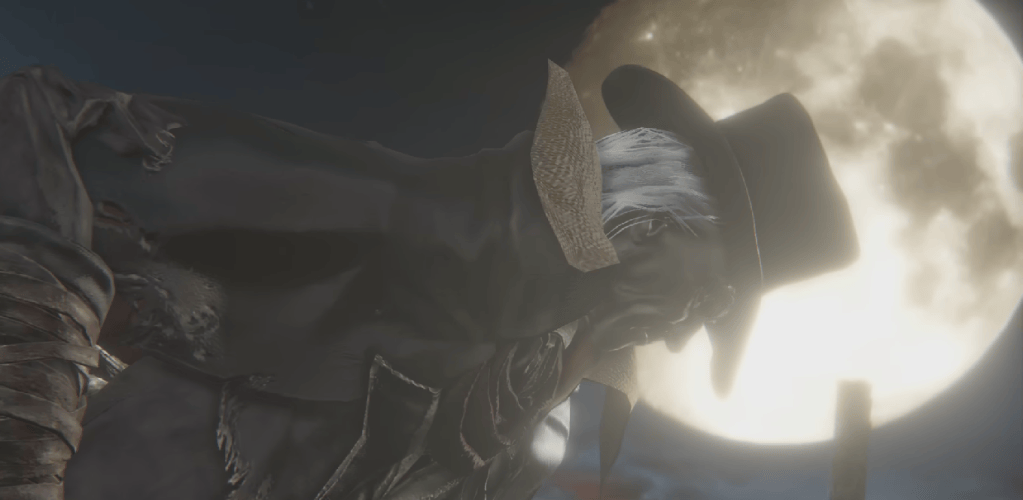
I have seen Gehrman ranked pretty highly among Bloodborne’s bosses, so it may be a surprise that he is only number seven on this list. The guardian of the Hunter’s Dream, Gehrman has pretty tragic lore. Forced to guide Hunters like yourself, the First Hunter attempts to free you from the dream at the end of the game. Accept, and you will be free while Gehrman remains trapped. Refuse, and Gehrman will fight you, with both Hunters aiming to free the other from this nightmare. The tragedy of the fight is sold by the stunning arena of white flowers, and emotional score, which is one of the best in the game. As for Gehrman’s moveset, he switches weapons across the fight, occasionally being powered up by the Moon Presence. His sythe is the most difficult of his attacks to dodge but, even then, I did not find him to be that much of a challenge, only dying a few times. This was most likely due to me beating the DLC before his fight both times, but that was pretty much a requirement, considering beating the final boss automatically sends you to a new game. As a result, I found that I did not have his moveset down 100%, despite defeating him in only a couple attempts. Also, even though the lore of Gehrman is tragic, I found the reveal of him being one of the final bosses a little bit lacking. Outside of the opening, you rarely interact with Gehrman in the Hunter’s Dream, since the Doll is the main NPC there. Still, Gehrman’s fight is fun from what I saw of it, and the soundtrack, arena and lore are all great, which is why he finds himself in seventh place.
6. Father Gascoigne.
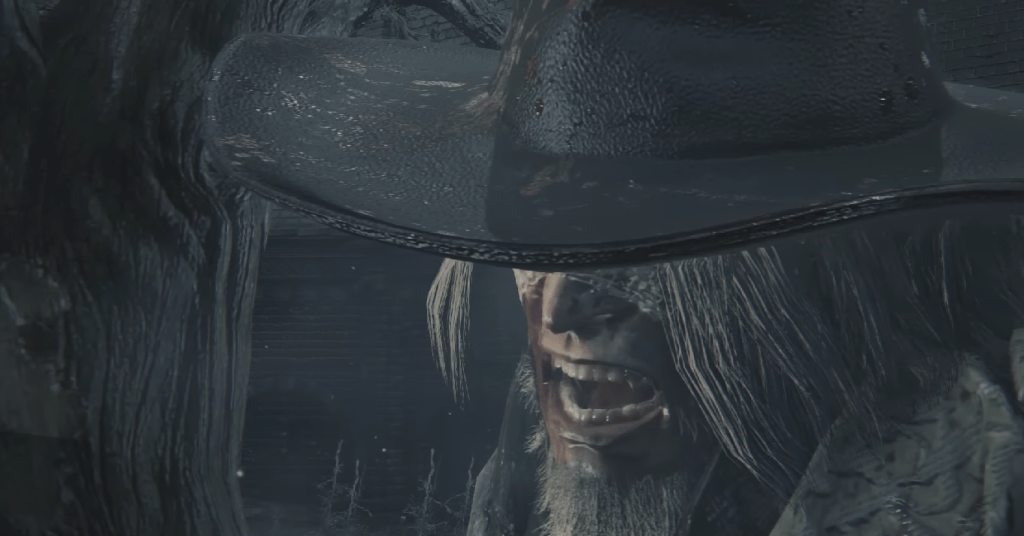
While the Cleric Beast serves as a great tutorial for Beast bosses, preparing players for fights like the Blood-starved Beast and Vicar Amelia, Fahter Gascoigne acts as a tutorial for Hunter bosses such as Gehrman and Lady Maria. Gascoigne is also the center of one of the first quests you can find in the game. Encountering his daughter at a window, she will ask you to find her parents. This is a FromSoftgame, however, so of course it has to end with everybody dying. By the time you find Gascoigne, he has become so blood crazed that he has killed his wife. Declaring that we will also be a Beast soon, Gascoigne attacks uswith his axe trick weapon. The graves surrounding the arena make for great barriers to create distance with Gascoigne, before closing in to attack. He is also the first boss that allows you to parry, which can often be key to help defeating Hunter bosses. Gascoigne does not stay a Hunter forever, though, because in his final phase he transforms into a Beast, increasing his aggression and damage output. It is quite easy to die to this final phase, and on my second playthrough I did die when I was one hit away from defeating him, which was frustrating, but the fun kind. To make the fight easier, you can also use the music box given to you by the little girl to make her father remember, temporarily stunning him. Speaking of the little girl, her story also sends in tragedy, being killed by a massive pig in the sewers. There are no happy endings in Bloodborne, and the best we can do for Gascoigne is to send him to be with the rest of his family.
5. Ebrietas, Daughter of the Cosmos.
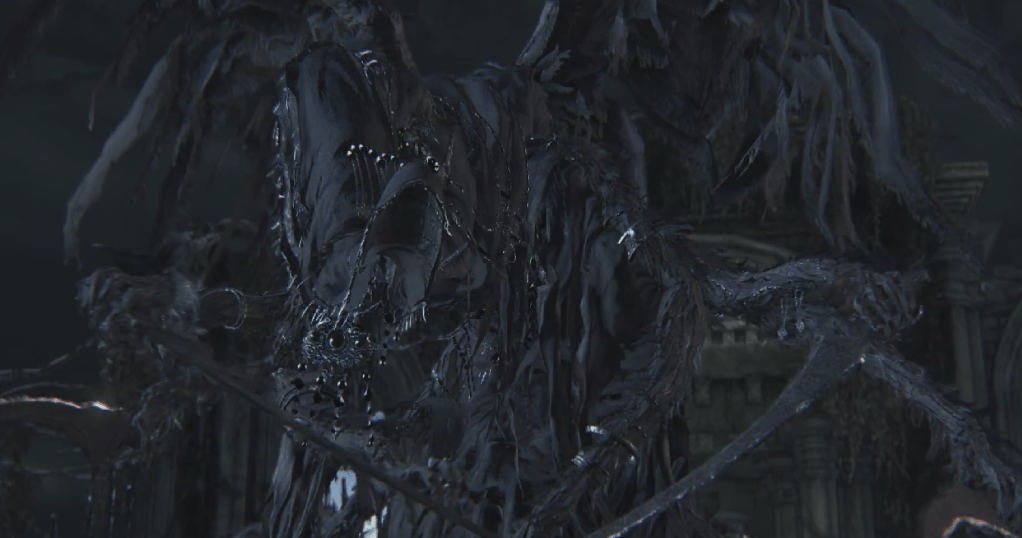
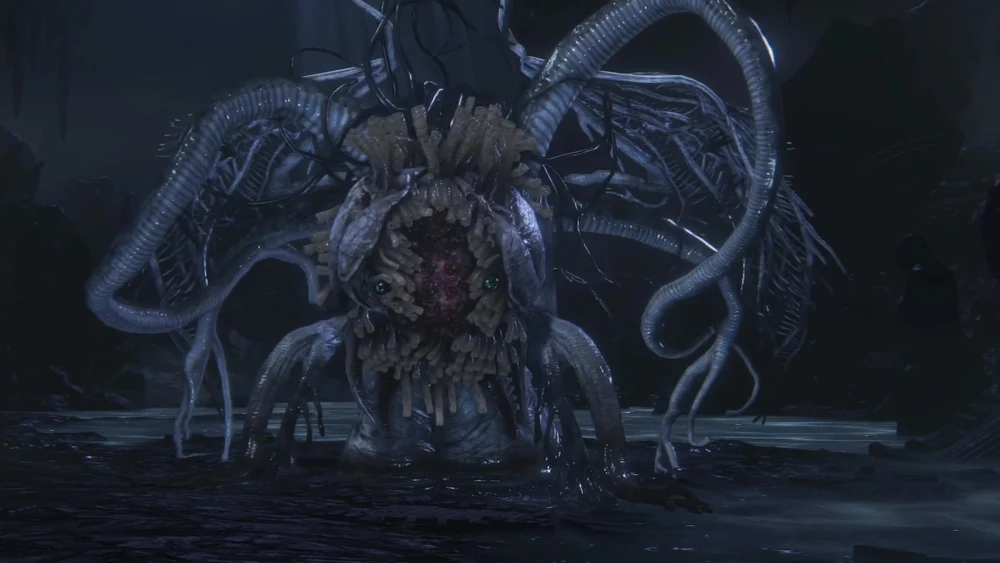
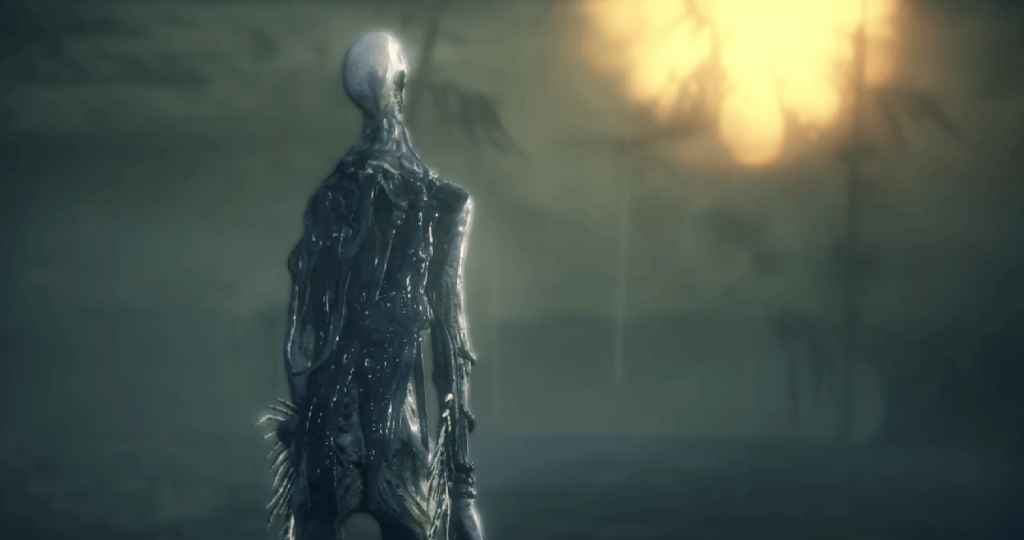
Ebrietas is perhaps one of the most important bosses to Bloodborne’s lore. It is her blood which may ultimately have been used to create the Healing Church, thus leading to the eventual Beast plague. For such an important boss, you sure have to go out of your way to find her. Seriously, I am not sure how anyone could realise you needed to break through a window in the Celestial Emissary’s arena without reading some kind of guide. Once you reach the Alter of Despair where Ebrietas resides, the sight is a sad one. Resting in front of a fallen Great One (which looks a lot like Rom) Ebrietas will not attack the Hunter until you strike first. From here, the fight begins like many Great One battles, since most of Ebrietas’ attacks are physical. That being said, they feel a lot fairer than say Amygdala’s since it is relatively easy to bait Ebrietas into attempting to strike you with her massive head, which you can then attack to get the most damage. Ebrietas’ attacks do not stay physical forever, though. She will eventually begin spitting frenzy inducing blood at you, so it is best to keep sedatives on hand. In her second phase, Ebrietas summons otherworldly powers, like a life drain which gradually takes away your health when you get close to her. The boss’ most dangerous attack, however, is A Call Beyond. Unlike with Micolash, this attack feels fair, giving the Hunter plenty of time to dodge it, and Ebrietas does not spam it. The only attack that does not feel fair is her charge attack, which has only a brief signal and an annoying hitbox. Aside from this, Ebrieras is a challenging, yet fun fight, and the best Great One boss in the base game. And, after you beat her, you can use the Alter of Despair to revive Queen Annalise, if you have reached that point in the Vileblood questline. Speaking of…
4. Martyr Logarius.
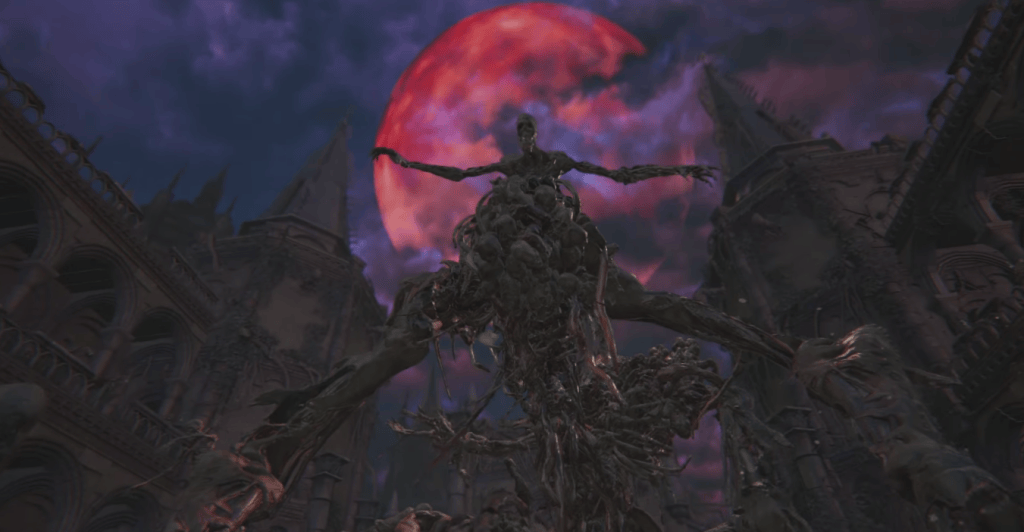
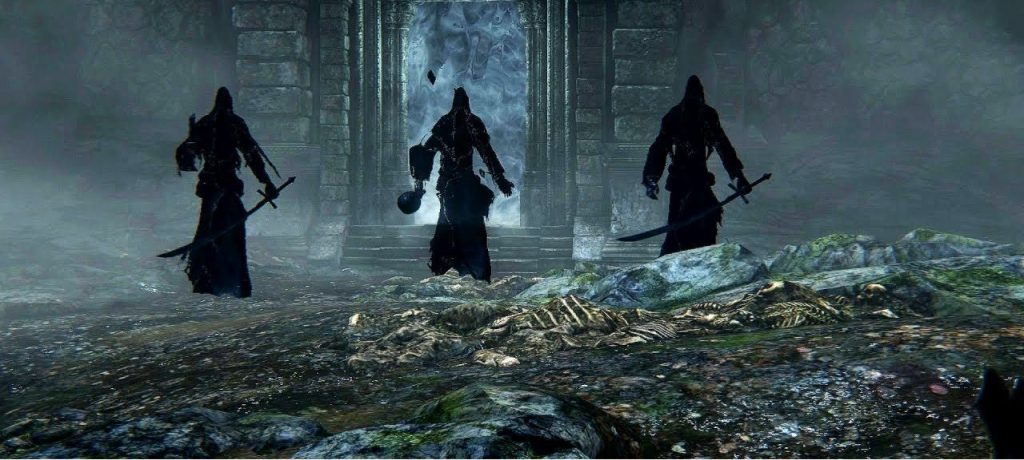
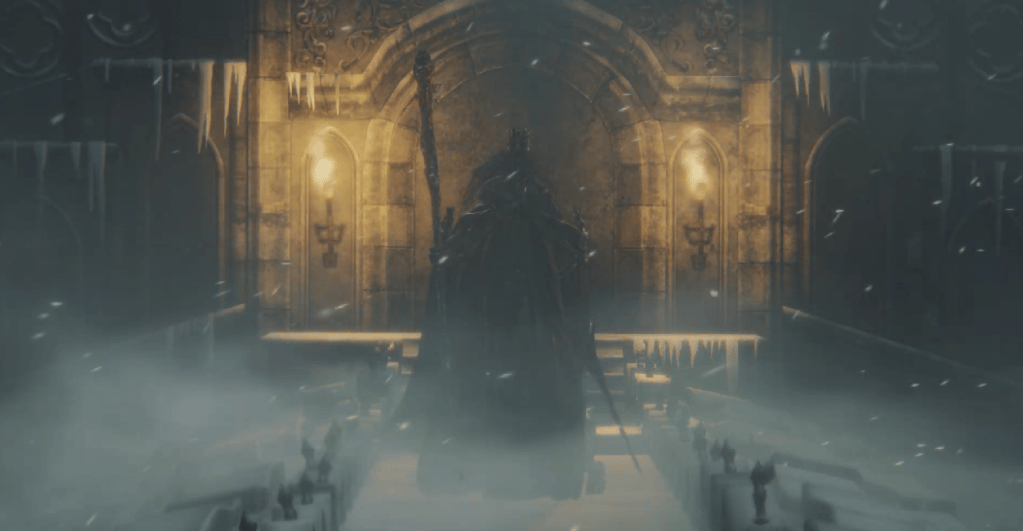
In my opinion, the title of best boss in the base game goes to Martyr Logarius. Found at Castle Cainhurst, Logarius has one of my favorite boss cutscenes in the entire game. Watching his skeletal form unfreeze itself and rise from his makeshift throne felt intimidating, and the way the sound design plays, with the music cutting out right before Logarius rises, plays into that excellently. His fight is also unique compared to Bloodborne’s humanbosses because he is a spellcaster. He will spend the majority of his first phase casting magical skulls at the player, while occasionally taking a few swipes with his sword. I suggest getting in close for this phase because standing back while Logarius flings spells at you is a surefire way to get a YOU DIED screen. His physical attacks can be paried, though, so that makes the fight a little easier. What will make it harder is backing him into a corner or fighting him near the edge of the building, where you can easily get knocked off, which happened to me a couple times. The power-up for his second phase does give you enough time to get a visceral attack in. Once he recovers, or fully powers up to his second phase, Logarius becomes much more aggressive, now relying mostly on sword strikes, and often charging the player from the sky. His most important spell in this phase is his sword strike, which generates multiple blades to fly at the player. Dealing both with this and Logarius’ attacks makes the fight more difficult, but you can thankfully destroy the sword with a gunshot to stop the spell from continuing. Once defeated, Logarius will also drop the Clown of Illusions, allowing you to meet the Vileblood Queen and finish Alfred’s questline. Do you allow the fanatical order Logarius led to win by causing the Queen’s death, or do you foil them by reviving her using the Alter of Despair? The choice is yours. Martyr Logarius is a great fight, with an intimidating cutscene, and fun spells to avoid. The only reason he is not in the top three is because his runback is the worst in the game, even with the shortcut.
3. Orphan of Kos.
FromSoftwareusually saves their best bosses for the DLC. They did this for Shadow of the Erdtree, with bosses like Messmer, Midra and Bayle and they did this years earlier with Bloodborne’s The Old Hunters DLC. The fact that the top three bosses on this list are from the DLC should confirm to you how much I loved playing this expansion. Of the three, I would say Orphan of Kos is the weakest but still an incredible fight. Before Malenia and Radahn, the Orphan stood at the pinnacle of gaming difficulty. Some say Laurence is harder but, after playing through the DLC twice, I definitely disagree. The buildup to the boss is excellent, as you struggle through the scourged remains of the Fishing Hamlet, until you reach Kos’ corpse. The cutscene that follows is quite disgusting, as the Orphan crawls from its mother’s body, before weeping. This inspires sympathy that quickly turns to terror upon the Orphan attacking you with its own placenta, dealing heavy damage. You can stun the Orphan and even visceral it, but this is little comfort when the boss enters its second phase, spawning a pair of wings and somehow becoming even more aggressive. I found that dodging to the right of the Orphan’s attacks was the best strategy during this phase, but I still died plenty of times to his ground strikes and AOE attacks. His most iconic attack arrives when he gives a signature cry and lightning strikes his mother’s corpse, spreading out to do shocking damage to the player if it connects. Whether this is the Orphan using its mother’s body, or Kos responding to her son from beyond the grave no one knows. What is known by almost every Bloodborne player is that finally beating the Orphan of Kos is an immensely euphoric experience. My first time defeating him, I collapsed backwards onto my bed in utter exhaustion. Despite the trial that was his fight, I still found it worth my time. Even victorious, I felt like I had only won by the skin of my teeth on both playthroughs. If I had to name a criticism, it would be that the Orphan has the weakest soundtrack of the DLC’s five bosses (I cannot believe I am saying Living Failures have a better OST but there it is). Even then, the score is still great. Orphan of Kos is without a doubt Bloodborne’s hardest boss, but it is also one of its best.
2. Ludwig the Accursed/Holy Blade.
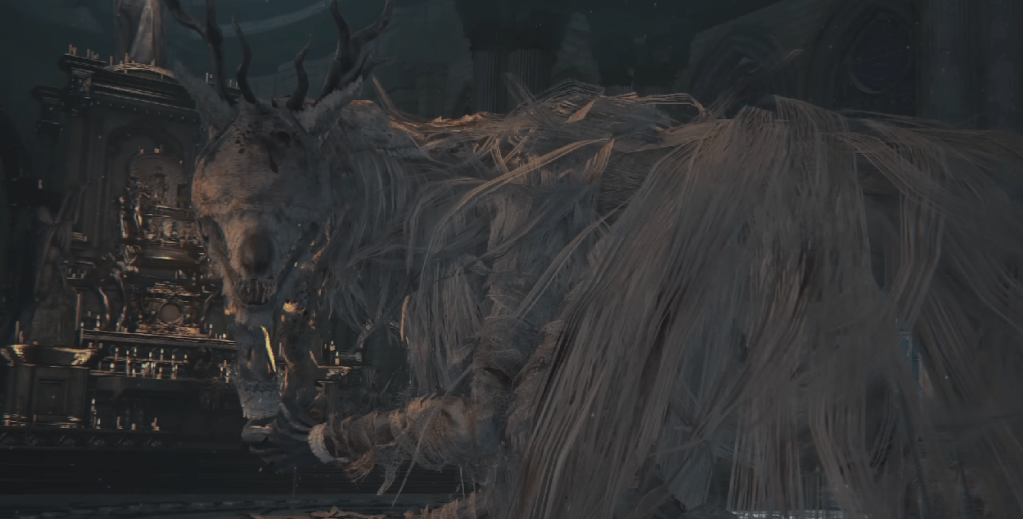
Going into Ludwig’s fight, I knew he was a boss many considered to be the best of Bloodborne. While there is one boss who I would rank higher, Ludwig certainly lives up to expectations. Located in a literal corpse pit, the once proud Hunter is now a hideous monstrousity. As opposed to other Beasts, Ludwig takes the form of a horse rather than a wolf. Some even theorize that he merged with his horse upon transformation. Radahn would approve. The first phase of his fight is extremely chaotic, in the best of ways. Ludwig will strike at you, spew at you, jump down from the cieling, and unleash one of the hardest hitting charge attacks in the game. Do not get behind Ludwig to strike him, though, because he will just horse kick you. It is best to strike him from the sides but you always have to be on alert for his next attack. Get him to half health and he will transition to phase two with a cutscene. Nowadays, a mid-fight cutscene is nothing new in a FromSoftwaregame but, back when Bloodborne released, this was truly unique. The incredible quality of the cutscene only adds to the historical value. Ludwig sees the Moonlight Greatsword, one of FromSoft’s most iconic weapons, and this is enough to temporarily restore his humanity. Ludwig the Accursed then becomes Ludwig the Holy Blade, fighting the Hunter upright with the legendary sword to the best soundtrack of the game. Hell, I would argue this is not only Bloodborne’s best OST, but the best one in FromSoft history. The way it blends from the cutscene to the second phase is excellent and, if I were not fighting for my life, I would be content just sitting back and listening to the operatic chants. After finally defeating Ludwig, you can even talk with him, answering a question if you are wearing the correct clothing. Ludwig dies either believing he was honourable, or realizing the horrifying truth of his fall from grace. He is a fantastic boss that tells the story of a man who lost his humanity regaining it for one last battle. But there is one boss in Bloodborne that I consider to be even better.
1. Lady Maria of the Astral Clocktower.
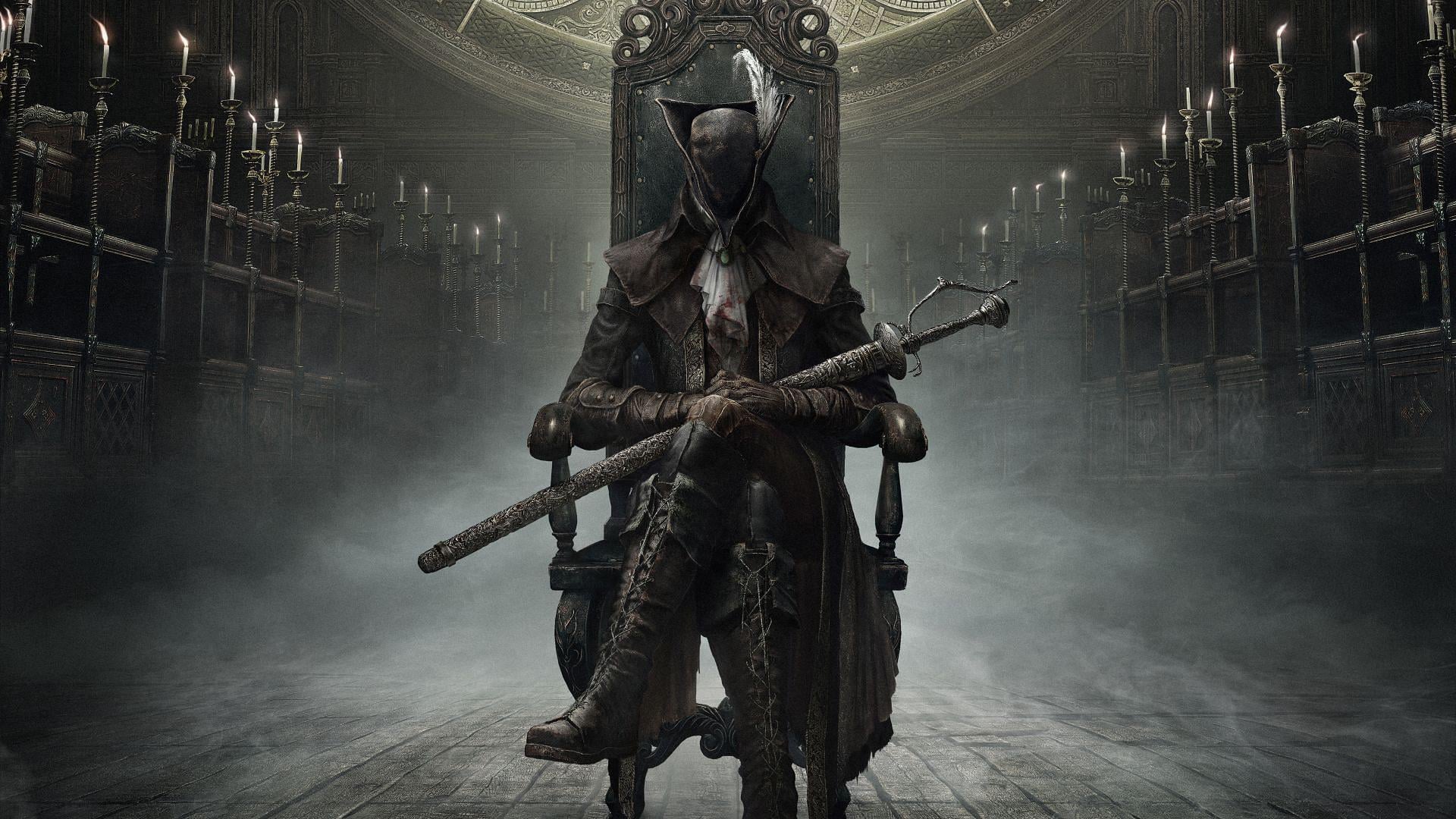
If I had to name who the most tragic character in Bloodborne is, I would say Lady Maria. Her lore is not the only reason she is my favorite boss in the game, but it is important to understanding how great I find her fight to be. Being born from, yet hating the Vileblood family, Maria was one of the first Hunters, becoming Gehrman’s disciple. Everything changed for her when she was sent to the Fishing Hamlet and took part in the massacre, which included desecrating the corpse of Kos, cursing Maria and all those involved. Traumatised by what she had done, Maria perhaps tried to find some redemption by helping the ailing patients of the Research Hall. When this did not sooth her conscience, Maria took her own life, but was doomed to the Hunter’s Nightmare. Just as Gehrman is forced to guide Hunters, Maria is forced to protect the sight of the massacre she helped unleash. The buildup to her fight is excellent, as we wander the Research Hall, hearing its suffering patients call out to Lady Maria for help. Upon reaching her body at the top of the Astral Clocktower, Maria awakens and tells us, “a corpse should be left well alone.” There can be multiple interpretations to what she means by this. Is she referring to her own dead body, the body of Kos who she helped desecrate, or perhaps the Orphan that was ripped from Kos’ womb? To hide the secret of the Fishing Hamlet, Maria then fights us to the death, and it is a glorious battle. Her first phase acts as a tutorial, familiarising the player with her moveset before she upgrades it in phases two and three. Upon entering Phase Two, Maria stabs herself, unleashing her Vileblood abilities. It is stated in Maria’s lore that she hated her heritage, and yet she is so desperate to stop us from uncovering her shame that she resorts to using the powers of the lineage she hates. It is a tragic decision, which adds blood to her attacks, the hardest of which to deal with is the one where she delays her strike before shooting blood at the Hunter. It took me a while to get the hang of dodging that attack. Eventually, Maria will enter he third phase, adding flame damage to her skillset. I got her all the way to this phase on my first attempt, only to die a few hits before I would have killed her. Predictably, it took me many, many more attempts to even get close to that point again, let alone kill her. Sure, I could have parried her to death, but I wanted an honourable duel, for all the suffering it brought me. Upon defeating Maria, however, I felt sad to move on from such a fantastic boss. Not only is her moveset and lore amazing, but her soundtrack is as well, being my second favorite in Bloodborne. Her impact on the story does not fade with her death either because we can later find her Rakuyo, which she tossed in a well after the Fishing Hamlet. That being said, I have never retrieved it because of the two goddamn shark men guarding it. I did not have the patience to deal with that. On a greater story level, Maria is actually the inspiration for the Doll. Gehrman was so obsessed with his former pupil that he designed the Doll to look like Maria after her death (pretty creepy Gehrman, not gonna lie). This creates a connection between the two, so the Doll feels Maria’s passing from the Hunter’s Nightmare. The Doll describes Maria passing on as “a liberation from heavy shackles.” So, hopefully defeating Maria brought the Old Hunter some peace in the end. All of this is why Lady Maria is my favorite boss in Bloodborne. Her lore is the most tragic in the game and it ties into her already fantastic boss fight, as a woman trying to hide her crime, either out of shame or obligation, resorting to the technique she so hates to achieve her goal. In my opinion, of all twenty-two bosses in Bloodborne, Lady Maria of the Astral Clocktower stands tall as the best of them.
Phew, this was a lot to sit down and write. Pretty sure this is my longest post since I started my blog almost a decade ago. If you read through the whole ranking to get to this point, thank you. You just made the many deaths I suffered in Bloodborne worth it. Hopefully someday Sony will remaster the game, or FromSoft will make a sequel. Until then, at least we have the animated adaptation by Jacksepticeye to look forward to. Before ending this post, however, I want to leave you with one, last important adage… Fear the Old Blood…
The first episode of Saga of Tanya the Evil‘s Second Season set a solid foundation for the rest, with its action, sound design, and funny misunderstandings. The second episode “A Strange Friendship” follows this up well with more setup for the future, and some especially humorous moments by the end. Before discussing the events of the episode, I want to talk about the new opening and outro. The OP is titled Why? RED Induction and is performed by Myth & Royd, the group who did the OP for Season One. This may just be recency bias, but I think their new OP easily tops the old, starting loud, before going quiet and sinister, and then going full bombastic with the chorus. The visuals of the OP also give us plenty to look forward to, especially with the teased two vs one of Tanya facing off against Mary Sue again, along with the mage Mikel. As for the ED Weiter! Weiter! it is performed once again by Aoi Yuki, who continues to show off her vocal talents. I also prefer this ED because it actually has visuals, rather than a showcase of light novel covers and illustrations. Back to the episode, it starts off by once again showing us issues the Empire is having with the war effort. We see this through talks between Tanya and Visha, and Zettour and Rudersdorf. The combat units are only receiving weapons rather than basic necessities, and the Empire has to halt its progress due to winter. Worse still are the partisans in occupied territory, along with the fact that, unknown to the Empire, the Russy Federation is now allowing mages back into its ranks. We see this with the arrival of Political Commissar Liliya and mage Colonel Mikel at Mary Sue’s unit. Liliya immediately sets about making friends with Mary, which is absolutely a ploy to manipulate her. We know Liliya was chosen for being, “loyal to the party and idealistic.” I expect we will see her push Mary to more extreme ends this season. As for Mikel, he has been described as “charismatic,” and he will certainly lead by example, as seen by his fight with Tanya in the OP and trailer. However, I do have to wonder how loyal he really is to the Federation, considering the mages were all put in internment camps. Perhaps he has a similar mindset to the common soldiers, who believe fighting for the Federation will make them listen and improve the country. Tanya is horrified to hear this viewpoint from a captive, realizing that she is not fighting communists but nationalists. This makes the enemy a bigger threat, considering they view themselves as fighting for their country rather than an ideology, which she later explains to Zettour. Zettour, being described as a “conman” by Tanya, is able to find a work around for this problem with Tanya’s advice. In a speech to various nationalists from occupied territories, he drives a wedge between them and the communists by turning the territories over to civilian rule. Given the haunting images of Zettour on a skeletal horse, I doubt this is entirely truthful, but his speech gets the job done, halting most partisan attacks and allowing Tanya’s combat unit to get the supplies they need. In a humorous final scene before the credits, Visha delights in her new socks, and Tanya lights up in cartoonish exaggeration at the offer of coffee. Tany’s joy ends when she notices a Being X nutcracker in the house, demanding Visha get rid of it. The final, funny moment after the ED shows Visha offering Tanya a highchair so she can interrogate prisoners without being looked down on, much to her disdain. After such a logistical episode, it was good to get a few chuckles at the end. We will have to see how long the laughter lasts though, as the war continues to evolve over the season. “A Strange Friendship” is a good follow-up episode to Season Two’s pilot, and I am excited to see what is next in store for Tanya the Evil.
I have been a Godzilla fan since I was a kid. So once I heard all the positive buzz surrounding the latest film, Godzilla Minus One, I knew I had to see it. I expected Minus One to be a good film, perhaps even a great one. What I was not expecting was it to be one of the greatest Godzilla movies ever made. It is so good that it may even surpass the 1954 original.
Godzilla Minus One is truly excellent.
Written and directed by Takashi Yamazaki, the film is set in post World War Two Japan, and follows former kamikaze pilot Koichi Shikishima (Ryunosuke Kamiki). Having lost everything during the war and stricken with survivors guilt, Shikishima eventually meets a young woman named Noriko (Minami Hamabe), who has adopted a young orphan named Akiko. The three form a makeshift family and, as the years pass, it seems like the horrors of their pasts may fade, until a monster from Shikishima’s past rises from the depths to plunge Japan into horror once more.
Godzilla is truly scary in this movie.
Having read the synopsis I gave of the film’s plot, you are probably assuming that Minus One centers more around the human characters than Godzilla, and you would be right. This is, in fact, usually the case for a Godzilla films However, what separates Minus One from the rest of these movies is that the human characters are all fantastic. In most Godzilla films, we really do not care about the people. At best, there is sometimes one character we can latch onto but, most of the time, we are just waiting for Godzilla to show up and wreck stuff. This is not the case for Minus One, as I found myself caring for each and every one of the characters, which made the action sequences more intense, since I was scared for each of their lives.
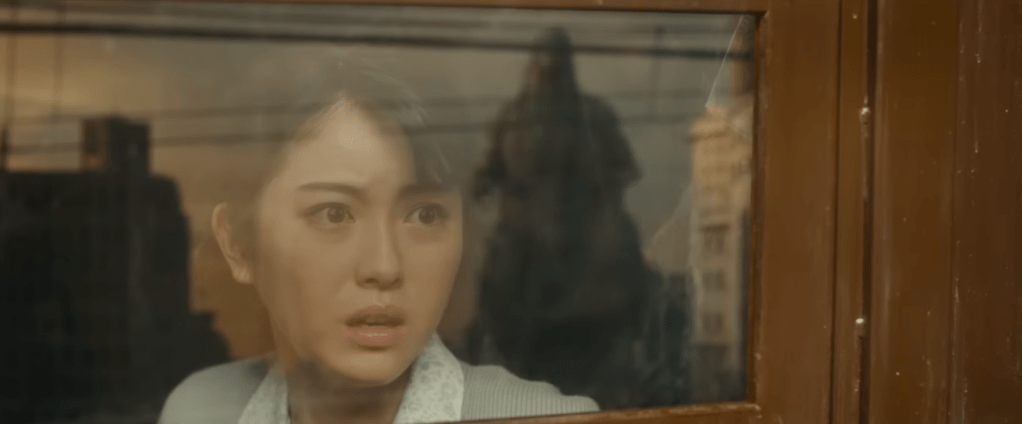
This scene was made all the better because of the fact that I cared about the characters.
The last time I had this much investment in a character from a Godzilla movie, it was probably Brian Kranston’s one from the 2014 Godzilla movie, but every other character in that film was pretty bland. Again, this is far from the case with Minus One. I cared about the characters so much that the ending to the film actually had me tearing up, something I have never done in a Godzilla movie before. What adds to the weight these characters have are the excellent themes of PTSD and survivors guilt, along with the scars war leaves on a nation. Shikishima is the perfect encapsulation of these themes, making him my favourite Godzilla protaganist, with the exception of the big G himself.
Shikishima embodies the movie’s themes more than any other character.
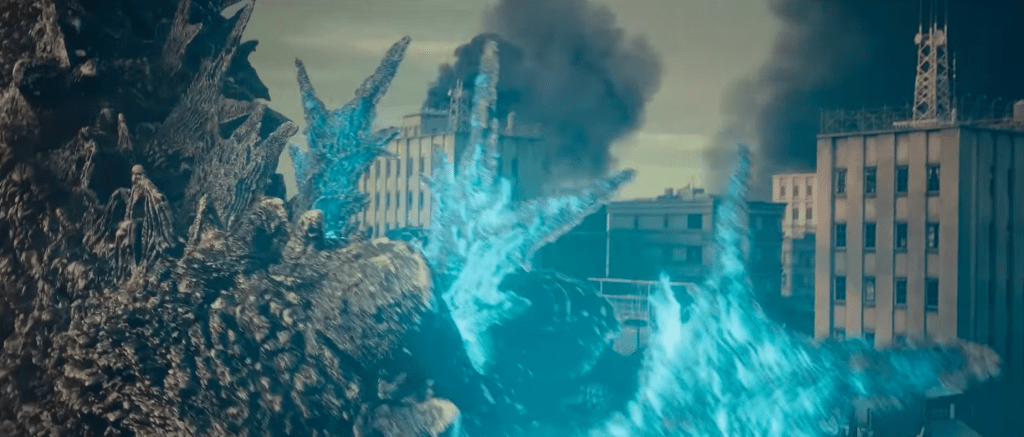
Speaking of him, Godzilla is a terrifying presence whenever he is on screen. He is no misunderstood hero like in the recent Legendary films. No, the Godzilla here is more in the vein of the original 1954 version and the Shin Godzilla version. He is a horrifying force of nature who crushes everything and everyone in his destructive wake. His atomic breath is also on par with Shin Godzilla’s in terms of the fear it creates, as it is akin to a nuclear blast.
The atomic breath scene is one of the best in the series.
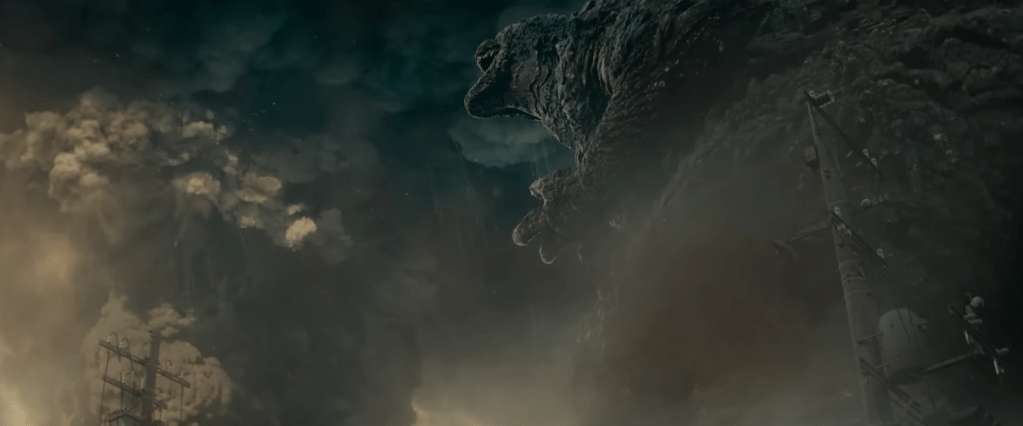
What helps increase the fear Godzilla generates in this movie is just how fantastic the CGI is for him. Minus One was apparently made with a budget of $15 million dollars and that is absolutely incredible, given that many blockbuster movies have ten times that budget and look considerably worse. The way Godzilla is shot is also great, along with the score throughout the film, which adds to the intensity.
This shot of Godzilla creates both awe and terror.
Considering every aspect of the film, I cannot think of a single flaw with it. Godzilla is terrifying, the human characters are the best they have ever been, the CGI is excellent for the budget, and the themes, score and cinematography are all top notch. I cannot recommend this film enough, especially if you are a Godzilla fan like me. Godzilla Minus One is not only one of the best films of the year, but potentially the greatest Godzilla movie ever made.