Shōgun Review: My Secret Heart Loves This Show.

I have heard praise of Shōgun for a while now. 
That praise, along with the show’s outstanding performance at the Emmys, and its intriguing setting of 1600 Japan left me eager to check it out.
The only thing stopping me was the lack of Disney Plus in my household.
Having finally got it, Shōgun was one of the first shows I checked out and was by far the most engaging. 

Shōgun easily deserved all of the Emmys it won.

Based off the 1975 book of the same name by James Clavell, the show kicks off with the arrival of John Blackthorne (Cosmo Jarvis), a foul-mouthed protestant sailor from England.
The first Englishman to set foot on Japanese soil, Blackthorne becomes of immediate interest to the Lord of Kantō, Yoshiii Toronaga (Hiroyuki Sanada), much to the dismay of Blackthrone’s catholic Portugese enemies.
He has arrived at a time of great turmoil in Japan, where Toronaga is embroiled in a bitter struggle for power against his fellow lords for the fate of the country.
With the help of his Japanese interpreter and Toronaga loyalist, Toda Mariko (Anna Sawai), Blackthorne begins to assimilate to the culture, while experiencing events that will shape Japan’s history. 
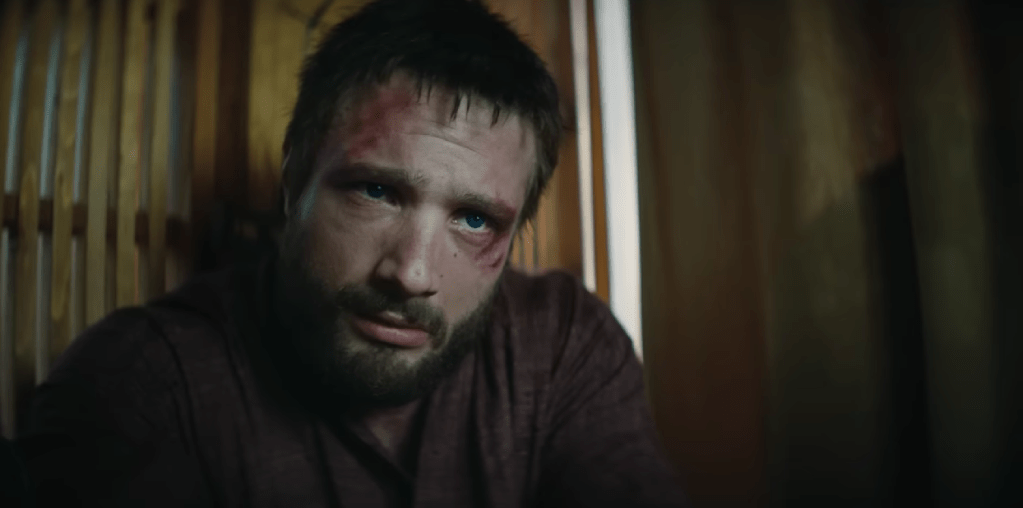
Blackthorne’s arc of assuming the Japanese to be savages at first, only to slowly learn and embrace their culture was enthralling to watch.

I know from the way I have described the plot so far, it seems like Blackthorne is the main character of this story, but that is actually not the case.
Yes, his arc is great to watch play out, and Jarvis’ performance is fantastic, but Blackthorne’s role mostly serves as an introductory lens for viewers who are not familiar with this period of Japanese history and its customs.
The real main players are the Japanese cast, all of whom do incredible jobs with their performances.
Hiroyuki Sanada is of course an incredible actor, and he transforms into Yoshii Toronaga, being more than deserving of his Emmy win. 
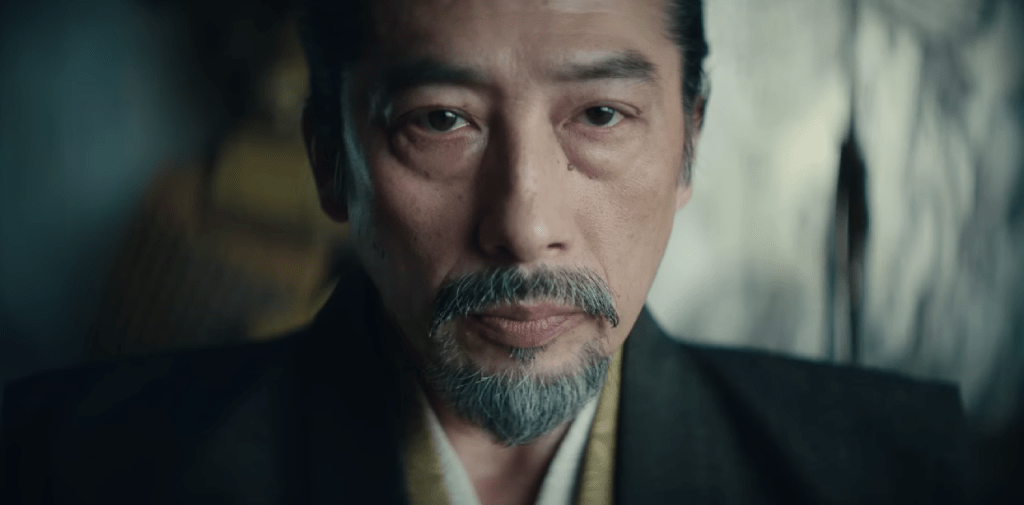
Based off Tokugawa Ieyasu, Toronaga is a crafty character, whose motives and secret plans are a constant mystery.

Tadanobu Asano is also great as Kashigi Yabushige, a character so self-serving that you want to hate his guts, but his personality is so entertaining you find it difficult to do so.
The real standout, though, is Anna Sawai as Mariko, who goes on an intense journey, as she finds herself struggling with her difficult past, abusive marriage, faith, and her growing closeness to Blackthorne.
All of this culminates in “Crimson Sky,” the ninth and best episode of the show, where she delivers a powerhouse of a performance.
Just like Sanada, she was more than deserving of her Emmy win.

Mariko’s journey in “Crimson Sky’ was full of many emotional and unexpected twists and turns.

What makes these characters even more interesting is that many of them are based off real people, important to Japanese history.
After finishing Episode Ten, I immediately found myself looking up information about these people and how the events of the show differed from real life.
Just imagine how many other viewers did the same after finishing the series and thus became more knowledgeable about the history of Japan.
But it is not just the characters that make Shōgun great, obviously.
The production quality of the show is excellent, with the costuming and sets perfectly reflecting the time period.
The CGI is also top quality, with not a single shot drawing me out of the moment.
Speaking of shots, the cinematography and editing are also stellar throughout, as is the score which makes every enthralling scene only more gripping.
This includes the opening theme, which has great visuals that remind me a lot of Game of Thrones’ intro.

Shōgun‘s intro is one I will remember for a while.

Sadly, this is not the only thing about Shōgun which reminds me of Game of Thrones, but that has nothing to do with the present quality of the show, rather the future quality.
You see, Shōgun completely adapts James Clavell’s book, and the show was originally intended to be a single season.
Well, money talks, and Shōgun’s success has resulted in the green light for a second season.
With nothing left to adapt, that means the writers are going to have to write their own original stuff for season two.
We all know how Game of Thrones degraded after the writers ran out of book material, so there is always the concern for this happening with the second season of Shōgun.
However, as stated, the original novel was based off very real people and events, so the writers at least have something to work with, unlike the Game of Thrones writers. 

I hope Shōgun‘s success can be replicated with Season Two.

And no matter the quality of this eventual second season, this first season of Shōgun will remain a masterful work with excellent characters, acting, production and score.
It has also undoubtedly helped spread knowledge about 1600s Japan and that is probably the highest praise a show based in that setting could receive.   

John Wick: Chapter 4 Review: Action Fatigue.

John Wick has been the highlight action franchise of the past ten years.
The first film, released in 2014, was surprisingly good and revitalized Keanu Reeves’ career.
The franchise has been going strong since then, with each sequel being a solid addition.
Well, four years since Chapter Three, Parabellum, released, we finally have John Wick: Chapter 4.
The movie has received plenty of praise from critics and fans alike, with many calling in the best in the franchise, although I do not think I would go quite that far.

Despite the film having some truly fantastic moments and characters, there are specific issues that hold it back, for me.

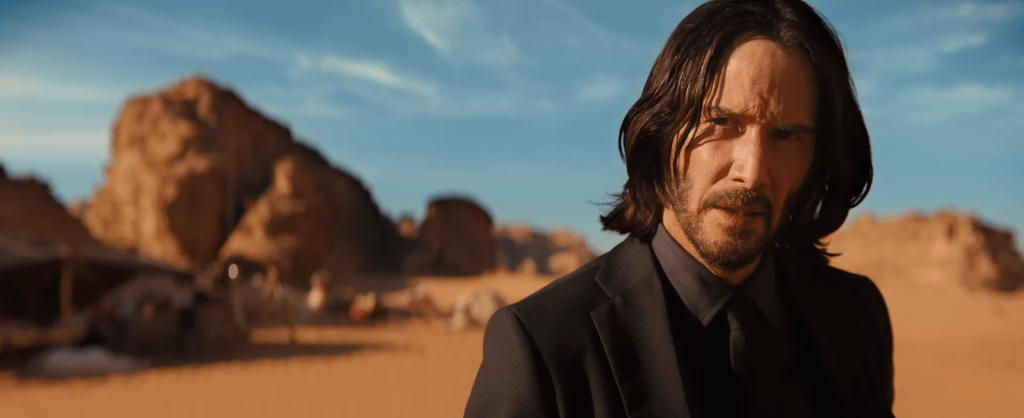
Chapter 4 once again follows Reeves as the titular John Wick who, after somehow surviving falling from the top of the Continental in the previous movie, goes to war with the High Table with the help of the Bowery King (Laurence Fishburn).
As for Winston (Ian McShane) and Charon (Lance Reddik, may he rest in peace), they are also suffering from the fallout of Parabellum, as they are left at the mercy of the Marquis, Vicent de Garmont (Bill Skarsgård).
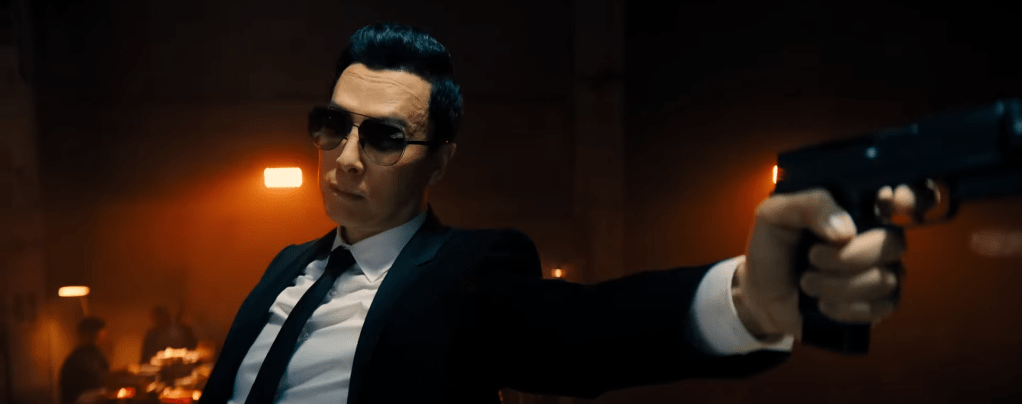
Desperate to hunt down and kill John, the Marquis enlists the help of the blind assassin Caine (Donny Yen) and a hunter who goes by Mr Nobody (Shamier Anderson), while Winston advises John to challenge the Marquis to single combat to earn his freedom.
The characters and world building of John Wick continue to be strong in this fourth installment, with John having the best narrative arc since probably the first movie, and Caine and Mr Nobody being fantastic characters who I would be excited to see more of. 

Caine in particular is stellar, with Donny Yen presenting excellent dramatic weight, comedic timing and, of course, stunt work.

As for the action, it is, as expected of a John Wick movie, absolutely incredible, just like it was in the past three films.
Once again directed by Chad Stahlenski, the action of John Wick: Chapter 4 is undoubtedly some of the best in the entire franchise.
The stuntwork, the cinematography, the editing; all of these are glorious and combine to create truly terrific action.
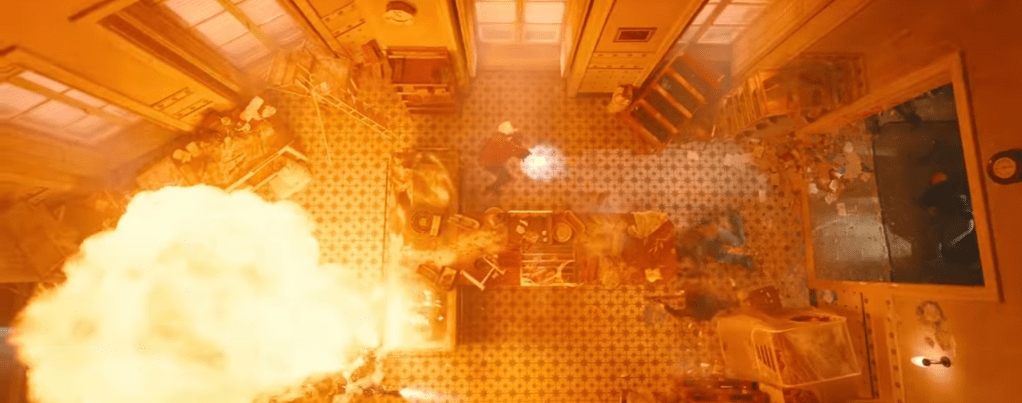
This culminates in one action set piece in the third act that takes place entirely in an overhead shot, which I would argue is the best action scene of the decade. 

This action scene alone makes John Wick: Chapter 4 worth seeing in the theatre.

It reminded me a lot of a video game, which also makes me really want a John Wick video game, now that I think about it.
All of these fantastic features should have made Chapter 4 the best installment in the John Wick franchise, however, there are unfortunately a few things which hold it back.
One of these things is Keanu Reeves himself.
As I said, I loved the arc his character went through but Reeves performance in this film is probably the weakest in the entire franchise, with even simple sentences sounding wrong, which is a bad thing since simple sentences is all John Wick speaks in this movie. 

Even the line, “I’m going to need a gun” sounds wrong coming out of Reeves mouth.

Along with this, Chapter 4 doubles down on many of the things that broke my immersion in previous installments.
John is still surviving downright impossible falls and civilians still do not react to people being murdered right in front of them.
Also, the more I think about what happens in this movie, the less relevant the events of Parabellum seem, since conflicts that were set up in that movie don’t really amount to much here.
But by far the biggest issue I had with John Wick: Chapter 4 is the action itself.
This may sound like a contradiction because I was heaping praise on the action earlier.
As I said previously, the action is spectacular, with great cinematography, stuntwork, etc.
My problem is that we got too much of a good thing.
The action scenes in this movie go on and on and on and on, to the point that I began to grow bored with it all, despite how well made it was.
I can only see so many people get shot or stabbed in the face before it becomes tiring, as psychopathic as that probably sounds.
I actually remember checking my watch a few times to see just how long the action had been going.

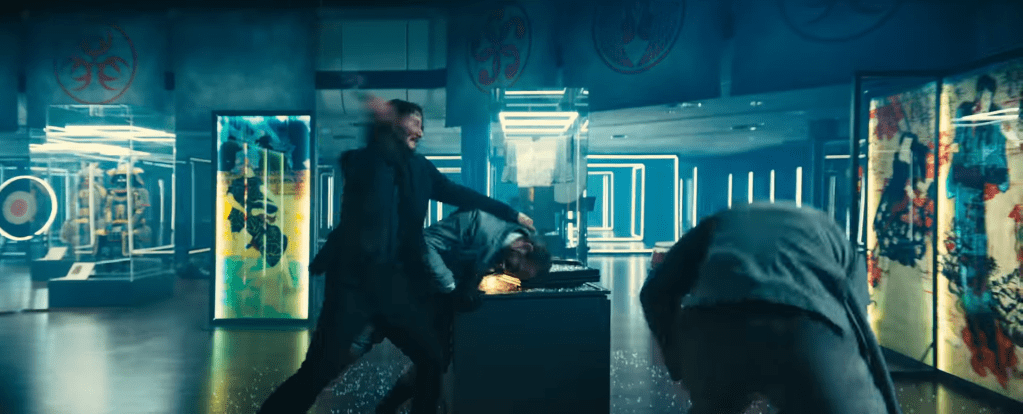
This Japan fight seemed to go on forever. It was fun to watch when the first few goons attacked John but got extremely tiring by the third or fourth wave of them.

So the issue was not the action itself but that it often went on for so long at certain points that I began to feel fatigued by it all.  
I never thought that a movie could make me bored with constant action, yet John Wick: Chapter 4 somehow achieved this.
Despite these issues, though, I would still recommend the film.
The action, although sometimes overly long, is stellar, the characters are all compelling, the film is definitely the funniest in the franchise, and the ending is incredibly satisfying.
John Wick: Chapter 4 is definitely better than Parabellum, however, I am not sure where I would place it afterwards.
My opinion of this movie’s ranking may depend on what happens in the future of this franchise.
If future installements honor Chapter 4’s ending then it should be high up but if they do not then it will probably be on the lower end.