

Elden Ring is one of my favorite video games of all time.
Created by Hidetaka Miyazaki and George R.R Martin, the game is notoriously punishing yet is somehow also one of the most rewarding games I have ever had the pleasure of playing.
FromSoftware is a studio that is notorious for making games with extremely difficult but also incredible bosses, and Elden Ring is no different.
With nearly 300 hours spent playing this masterpiece, consisting of three playthroughs of the original game and two of the recently released Shadow of the Erdtree DLC, I decided to rank my favorite of the bosses.
This was no easy task, since the bosses of Elden Ring are so amazing that I had to increase this list from a Top 10 to a Top 15 just to talk about every boss I wanted to.
After much debate with myself, and an unhealthy amount of screaming as I died in-game over and over, I finally managed to settle on my Top 15 bosses in Elden Ring.
I will be ranking these bosses based off lore, soundtrack, challenge, fairness and, of course, fun.
So, without further ado, let’s start this list with number 15, which is…
15. Radahn, Consort of Miquella.
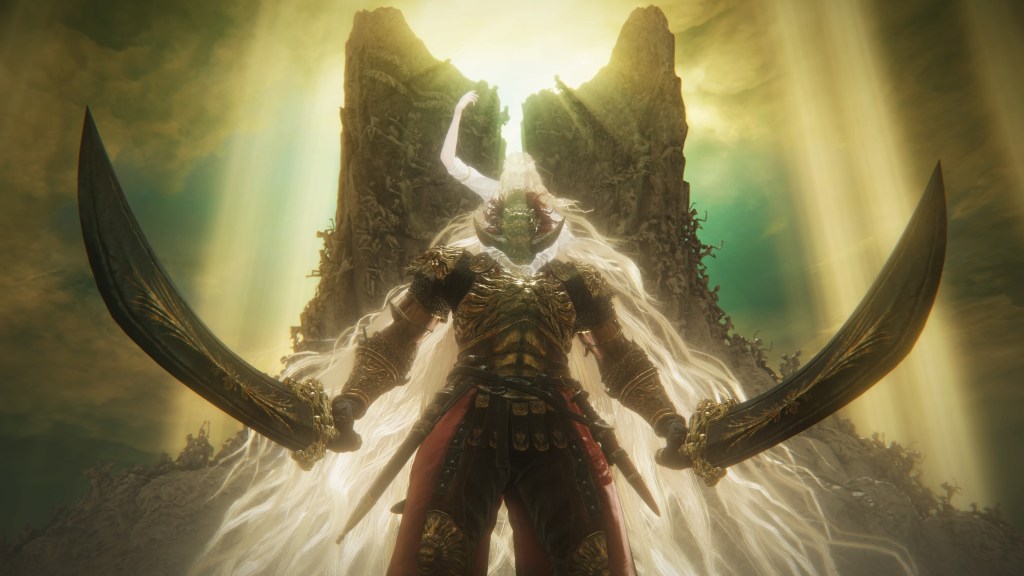
The most difficult boss in all of Elden Ring, Shadow of the Erdtree’s final boss is also its most controversial.
Many were unhappy with Radahn coming back, saying it came out of nowhere, but I disagree with this.
If you followed Ansbach and Freyja’s questlines, the story perfectly built-up Miquella reviving his brother using Mohg’s corpse so he could marry him… yep, this was definitely something George R.R Martin came up with.
I do have an issue with the lore surrounding Radahn’s return but I will save that for when I talk about another boss further down the list.
As for the fight itself, Radahn’s first phase is brutal, yet mostly fair.
The arena of the Divine Gate is excellent and makes for the perfect place to fight him.
Radahn will usually start the battle by launching himself at you with gravity magic, which is easy to dodge and punish.
He follows this up with various sword slashes and gravity attacks, almost all of which have a way to dodge, and it is fun to establish a rhythm when doing so.
Notice I said, “almost all.”
There is one cross-slash Radahn does that is almost impossible to dodge.
I have managed to dodge it a few times, but I cannot tell you how I did it, other than blind luck.
Besides this attack, Radahn’s first phase is a lot of fun, even though it is brutal.
Then Miquella gets involved in the second phase, and the fight devolves into complete insanity.
Radahn maintains many of his attacks from the first phase, but now they come with Holy AOE attacks which often blind the player.
This, and the fact that Miquella’s absurdly long hair covers up a lot of Radahn’s massive body, makes telling what is going on in this fight an extreme challenge.
It felt like half of my many deaths in the second phase were because I could not see what was happening, rather than through any fault of my own.
Still, there are some good new moves in the second phase, like Miquella charming the player, and Radahn using a new version of his iconic meteor strike.
However, the unfairness of the second phase is still difficult to get past.
The only way I could even beat Radahn in my two playthroughs of the DLC was to use a shield to block most of his attacks, and to also throw two Hefty Rot Pots at him as soon as the second phase started.
That whittled down his health enough for me to kill him.
Sure, I could have summoned Ansbach and Thiollier, but their presence only makes the fight harder through boosting Radahn’s health and making his movements more sporadic.
At least the soundtrack for his fight is one of the best in the DLC.
In the end, I would say that Radahn is a good boss fight.
He ended up on the list, after all.
But he could have been a lot higher were it not for the unfairness of his second phase.
14. Godrick the Grafted.
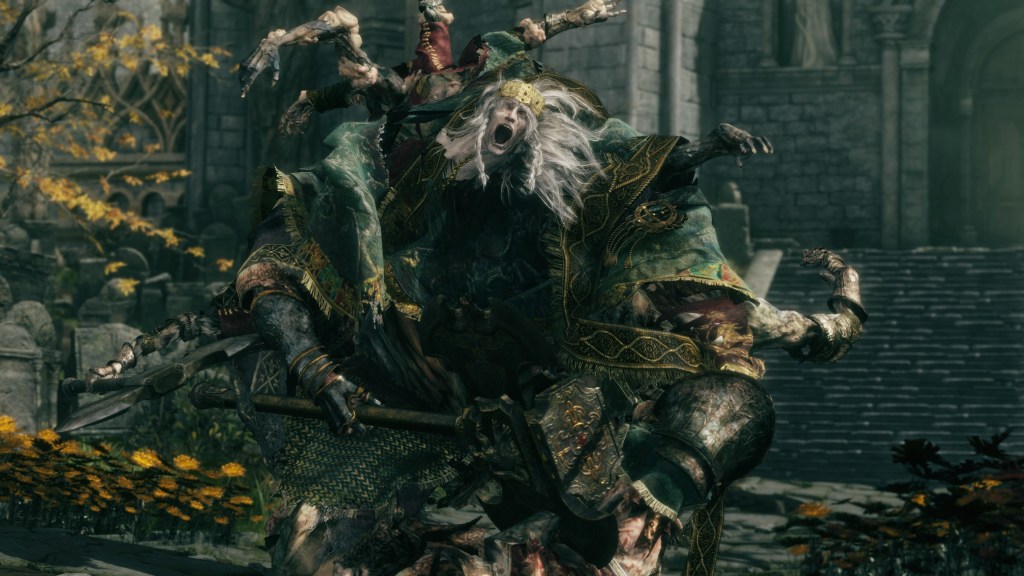
We go from the hardest boss in all of Elden Ring, to the easiest demigod of them all.
Godrick the Grafted is a complete pushover compared to the rest of the game’s main bosses, but I would have it no other way.
Even in the lore he is a joke because he needs Margit to protect him so Tarnished will not kill him for his Great Rune.
We encounter Godrick at the end of Stormveil Castle, one of the greatest areas in both the original game and the DLC.
He makes for a disturbing sight, having grafted multiple body parts onto himself in an effort to make himself stronger.
Using his numerous limbs, Godrick strikes at the player with his axes, and ground slams.
My first death to him was from a ground slam but a lot of his other attacks are especially easy to dodge.
Easiest of all is the one where he launches himself up in the air.
All you need to do to dodge that is simply walk behind him when he jumps up.
I have never once been hit by that attack.
The fight does get a bit harder when he reaches second phase, as he amputates his own arm and then stuffs a decapitated dragon head onto it.
“Forefathers, one and all,” he cries, throwing his new dragon head-hand up in the air to spew fire, “Bare witness!”
It is one of the most iconic cutscenes in the whole game, and the dragon does add a slight challenge increase, especially with his grab attack, which killed me twice.
That brought my death count against Godrick to three before I killed him on my first playthrough, a miniscule amount compared to other bosses.
You can also summon Nepheli Loux to join the fight, making him even easier.
Godrick is Elden Ring’s easiest main boss by a large margin, but this adds to his charm, along with his excellent phase two cutscene, fun move set, and chaotic soundtrack.
13. Rellana, Twin Moon Knight.

Excluding Radahn, Rellana was without question the hardest boss for me in Shadow of the Erdtree.
Even now, I still have not mastered her move set 100%.
Found in Castle Ensis, Rellana was Carian Royalty until she abandoned her nobility to side with Messmer in his crusade against the Hornsent.
Known as the Sword of Messmer, this title is definitely earned as her fight was brutally challenging for me.
Honestly, Malenia’s movements were easier to predict than Rellana’s.
That’s right, I said it.
Her combos seem never ending and with inconsistent endings.
I am not saying this as a complaint, however, because, unlike Radahn, I do not think this fight is unfair.
No, I just suck at it.
Her magic sword swipes and slashes are easy enough for me to dodge most of the time but, when it comes to her combos, I am getting hit at least once nine times out of ten.
This skill issue forced me to use summons to beat her in my first playthrough but, even then, it was not easy, especially when she reaches her second phase.
It is then that Rellana illuminates her swords with magic and fire, like Pontiff Sulyvahn from Dark Souls 3.
Her strikes are crushing, with one combo being capable of killing the player in just two hits.
And then there is her moon strike, where she slams the ground three times, forcing the player to jump over the blasts.
If the player gets hit by the first blast, it is basically game over, since you will be hit by the other two.
Despite all of this difficulty, though, I still find Rellana to be an incredibly fun fight.
The only thing holding her back is her lack of a cutscene.
Shadow of the Erdtree as a whole could have used more cutscenes and Rellana is the prime example of this.
She felt like she had so little fanfare for such a fun fight.
This holds her back from a higher spot on the list.
12. Rykard, Lord of Blasphemy.
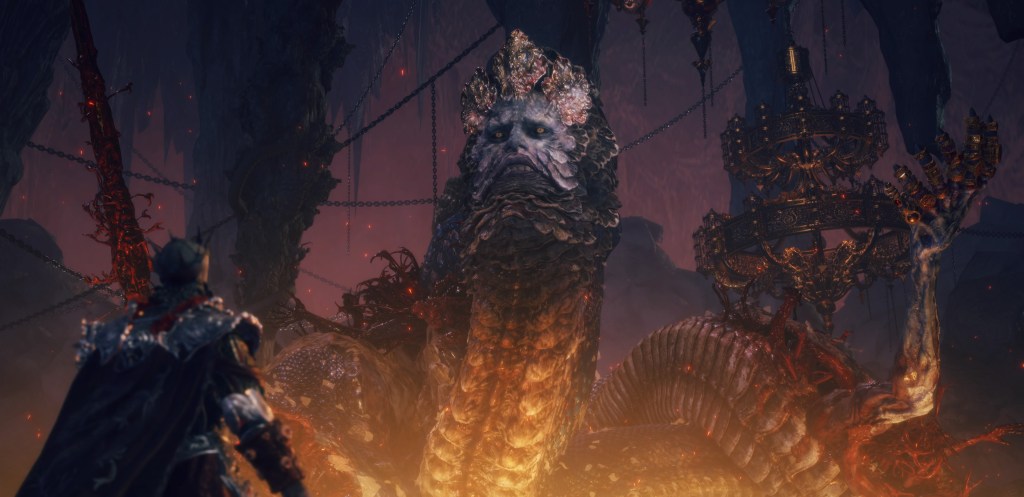
Rykard is one of the bosses I feel pretty guilty about not putting in my top ten.
You can encounter him in one of two ways: Either complete the Volcano Manor questline, or traverse the Manor itself, which is also one of the best dungeons in Elden Ring.
Once you reach the boss, his fight is horrifying.
The arena is covered in corpses, and the bit of fire surrounding the God Devouring Serpent means you cannot attack it with your regular weapons.
Thus, the game forces you to use the Serpent Hunter sword to fight.
Again, this is not a criticism, because the sword’s effects make for quite the spectacle.
The first phase of the boss is simple enough, with the serpent’s attacks being easy to dodge once you understand its patterns.
The exception to this is when it slams its head into the ground to launch a ground explosion at you.
This move is even more unfair than Radahn’s cross slash, as I have never been able to dodge it.
Aside from this, the first phase is enjoyable, but it is the second phase that steals the show.
Once the serpent is defeated, Rykard reveals himself in one of the most memorable cutscenes in the game.
Seeing his monstrous face emerge from the back of the serpent, only to pull a sword made from corpses out of its mouth, is absolutely gruesome.
His goofy exclamation, “Together we will devour the very gods!” somehow only adds to the appeal.
From here, the second phase begins, with Rykard using various sword swipes and stabs.
His ultimate move is sending a bunch of flaming skulls after the player, forcing them to run away, which can be a bit frustrating.
Almost as frustrating is when the serpent temporarily revives itself to attack.
I swear I died more times to that than the constant flaming skulls.
While frustrating, all of this adds to Rykard’s demonic villainy, with his operatic score being perfect for one of Elden Ring’s most evil characters.
Rykard is a horrifying boss, who does not make the top ten through no fault of his own.
I just like the other bosses more.
11. Radagon of the Golden Order/ Elden Beast.
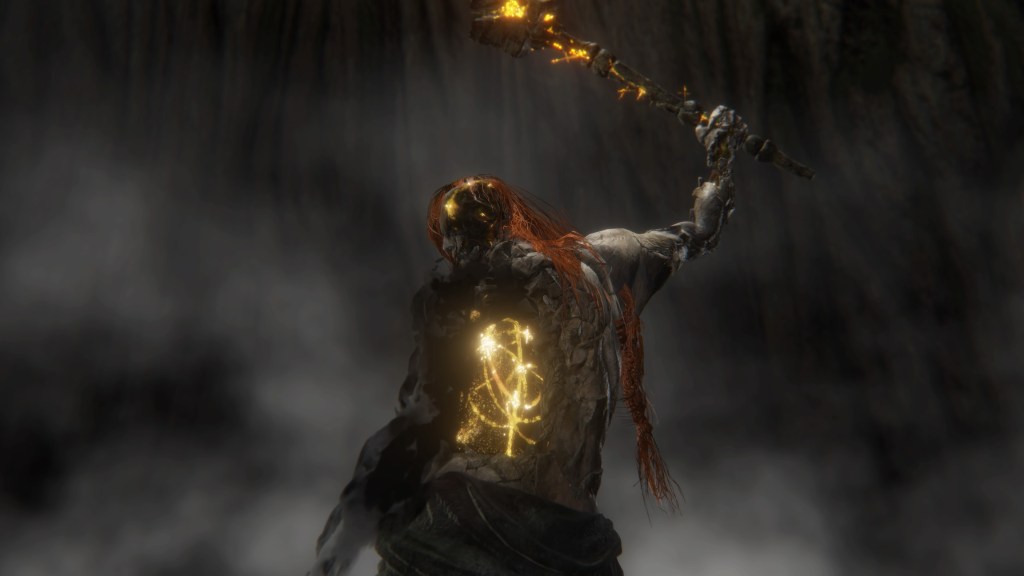
The final boss of the original game, Radagon and Elden Beast are the other fight I felt guilty for not putting in the top ten.
On my first playthrough, I loved this fight, especially Radagon’s phase.
His introduction is fantastic, with the twist reveal that he and Marika share a body, along with the main theme of Elden Ring kicking in.
Radagon excels in delayed attacks, and these are extremely difficult to get a handle of, at first.
Whether it be his hammer strikes or holy attacks, Radagon is only beaten out by Mohg in how difficult his delayed moves are to dodge.
Still, once you begin to understand the pattern, you begin to feel like a god dodging him… only for him to suddenly teleport to the middle of the arena and wreck you with three ground slams.
The second part of his fight is much harder, as he often teleports right in front of you, forcing you to dodge holy attacks.
Worse, if you are two slow to kill him, he will pull out the ground slam move again.
Radagon is definitely a top ten fight.
The only reason he is not that high is because of phase two with the Elden Beast.
Like I said, I enjoyed fighting the Elden Beast on my first playthrough.
However, I think this was because I got lucky.
It only took me three attempts to kill the Elden Beast, as opposed to the somewhere around 50 attempts I had with Radagon, so I had a lot more favorable view of the fight.
This view diminished somewhat in my second playthrough where I began to feel more frustrated with the Elden Beast, due to it constantly moving around, and the obnoxious move that is Elden Stars.
The developers listened to player feedback, however, for they added Torrent for the player to ride into the fight.
This was the entire reason I began my third playthrough: To see if this made the fight with Elden Beast any better.
Having fought using Torrent to close distance with the Beast, I can say it certainly does improve the experience.
Dodging Elden Stars has never been easier.
That being said, if the Elden Beast starts flinging holy attacks at you, for the love of God, get off Torrent.
You will die if you try to jump over those attacks.
Rolling through them is the way to do it.
So, adding Torrent to the fight did improve my experience with Elden Beast, but I would still say he drags Radagon down a bit to keep them just out of the top ten.
But with a cool first phase, great music, and an amazing arena for Elden Beast, this was certainly a worthy way to end the base game of Elden Ring.
10. Starscourge Radahn.
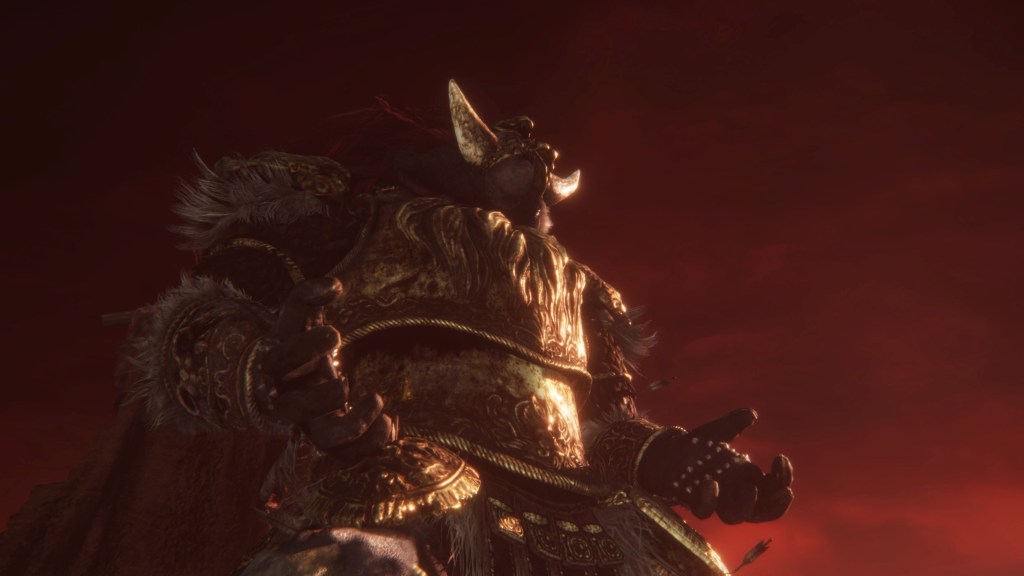
Of the two Radahn boss fights in Elden Ring, the first is definitely the best.
In my first playthrough, I ended up getting transported to Caelid by a chest and dying repeatedly.
Wanting to return when I was stronger, I did not go back until I had completed Leyndell and Volcano Manor.
So, when I finally got around to fighting Starscourge Radahn, I was over leveled and it only took me a few attempts.
Even so, I found him to be one of the best bosses in the base game.
His buildup is masterful, whether you stumble across Redmane Castle or find it through Ranni’s questline.
Jerren hypes up the epic fight to follow with his speech, as do the other NPCs talking about Radahn.
Upon entering the arena, Radahn will start shooting arrows at you using gravity magic.
While dodging, you have the option to summon the NPCs to aid you in the battle.
It is incredibly cinematic to charge up to Radahn with other warriors like Blaidd, Alexander and Patches (okay, maybe not Patches).
Once you reach Radahn, he will take out his blades and strike at you while constantly moving around on his emaciated horse, Leonard.
It makes for quite the visual, and the fight only gets more intense with his second phase.
He shoots up into the air, the music fades, and the player is left wondering if Radahn ran away, only for him to crash down upon them like a meteor.
This will kill you if you are not prepared, and it was this attack that resulted in one of my few deaths fighting him on my first playthrough.
From here, Radahn has a slew of gravity magic attacks, the most difficult to dodge being these meteors he spawns beside him to throw at you.
Killing him is both satisfying but also reflective, as you are giving this warrior cursed with Scarlet Rot an honorable death.
This lore is one of the issues I had with Radahn’s fight in Shadow of the Erdtree.
As I said, the whole point of this fight is giving Radahn an honorable death but the impact of that is taken away slightly when he returns as the final boss of the DLC.
Another issue I have is that, when I fought Radahn at a weaker level on my second playthrough, I realized it can be kind of tedious to run around the arena summoning all of your allies every time you die.
These problems took Radahn from a top five placement to the number ten spot.
Still, easily the best of the two Radahn fights.
9. Dragonlord Placidusax.

Placidusax is a boss who, while already being a great fight, was improved by the context given in Shadow of the Erdtree.
In the DLC, we learn that, as the Elden Lord of the dragons, Placidusax was betrayed by Bayle the Dread.
The dragons wounded each other grievously, before they both retreated, with Placidusax freezing himself in time at Farum Azula.
This explains why Placidusax is missing two heads when we find him… or, at least, when we find him thanks to online guides telling us where to go.
Placidusax is probably the most difficult boss to find in the original game, being quite off the beaten path, but he is more than worth it when you find him.
His arena is also one of the best in the entire game, with the player having to pass through the pillars at the center before he awakens.
From there, Placidusax attacks with lightening, claw strikes, and fire breath but stays mostly stationary.
This changes in the second phase, when he floats up into the air, before disappearing.
Much like Radahn, the player is left to wonder where he went, until they see a storm cloud forming in the sky, which Placidusax flies down from in a ferocious lightning strike that is always fun to dodge.
Placidusax then begins teleporting in between claw strikes, which would be disorientating if the player could not stay locked on but, thankfully, we can.
The fight is significantly more difficult in the second phase, but it gets even harder when Placidusax starts firing off lasers that will kill you on quite a few attempts if you do not pay close attention or start panic rolling.
My only criticisms of Placidusax are that I think the runback can be a bit annoying, and I think that his nuke blast should be a one-shot if it hits you.
I know it is probably weird that I am complaining about a boss not being harder but, to be fair, this attack gives you plenty of warning to avoid it, so I think it could stand to be more punishing.
Overall, Placidusax is an already excellent boss who is improved even further by the lore of the DLC.
8. Morgott, the Omen King.
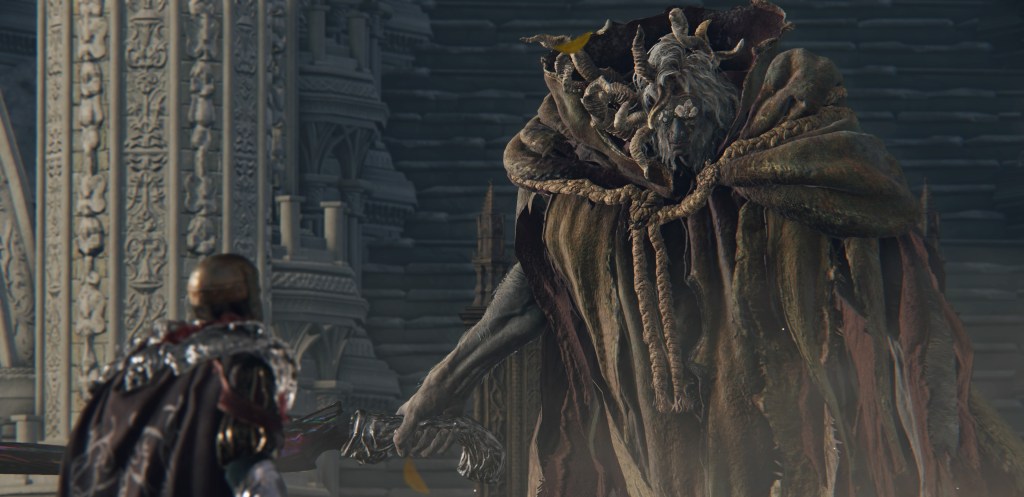
One of Elden Ring’s biggest problem is its repeat of bosses.
Amazing fights like Mohg and Godfrey suffer somewhat when you have already fought weaker versions of them.
The one repeat boss where I would say fighting him again is not an issue is Morgott.
First encountered as Margit at Stormveil Castle, he serves as an excellent roadblock to teach the player that exploring before they return stronger is the best strategy.
The player can then encounter Margit again on the way to Leyndell, where he will ambush the Tarnished while disguised as a basic enemy.
His third encounter in Leyndell is definitely the best, though, as he reveals himself to be the King Morgott.
Born an Omen, Morgott was thrown away a baby to live in the sewers by his mother, Marika.
He has every reason to hate the Golden Order for how it has treated him, and yet he still valiantly defends it in this final epic fight with him.
Morgott’s first phase is similar to his time as Margit, only he is much more aggressive, with quite a few new attacks like dropping a rain of holy swords and shooting a javelin at you.
Once you take him down to half health, he staggers, and this can trick the player into running in to get some hits.
It is actually a trick, as Morgott enters second phase, unleashing the true power of his curse.
As the arena fills with what can only be described as some form of vomit, Morgott admits his shame and self-hatred for unleashing his curse, all the while he launches old and new attacks at you.
He even has a few new blood attacks, including a grab one with his sword which is awesome.
In the end, though, I would not say that Morgott is a difficult fight, if you explored a lot before you fight him that is.
On my first playthrough, it only took me a couple of attempts.
You can also summon Melina to fight with you which, not only makes the fight even easier, but also enhances the experience to fight alongside someone who has been with you across your entire journey.
I would say that Morgott’s potential ease is warranted, as it can serve as a rewarding experience, showing the player just how far they have come since fighting Margit.
Morgott’s lore is also some of Elden Ring’s saddest.
He dies defending an order which despised him, which gets even more tragic when you play Shadow of the Erdtree and learn his mother hated Omen because of what the Hornsent did to her people.
Morgott is one of Elden Ring’s most tragic characters and his final fight is great.
7. Malenia, Blade of Miquella.
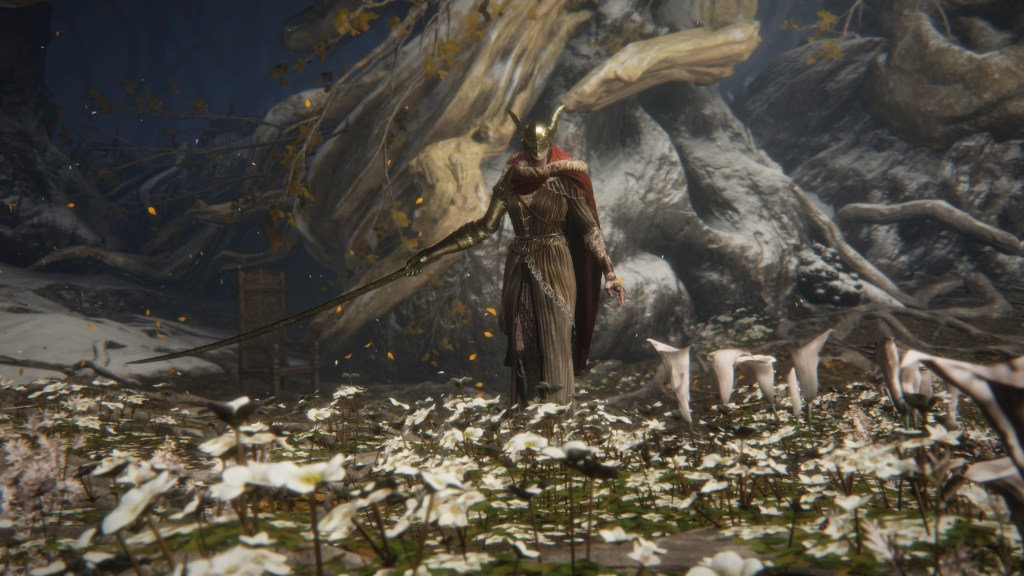
“I am Malenia, Blade of Miquella.”
That is a saying I am sure we all got tired of hearing after dying for the thousandth time to the Waterfowl Dance.
Before we got Radahn in Shadow of the Erdtree, Malenia was the hardest boss FromSoftware had ever created.
Tucked away in the hidden area of Miquella’s Haligtree, Malenia awaits her brother’s return, only to be confronted by the Tarnished, drawing her sword and kindly informing us that she has never known defeat.
Any feeling of confidence the player may have had about this fight are then instantly humbled as Malenia leaps forward and most likely kills them in two hits.
Returning for another attempt, the player quickly discovers a little trick Malenia has up her sleeve: She heals every time she hits the player.
This is not too big of an issue considering that a lot of her moves are easy to read.
The issue comes, of course, with the Waterfowl Dance.
The most infamous move in all of Elden Ring, the Dance feels nigh undodgeable.
On my first playthrough, I certainly thought so.
The fact that every time I got hit by Waterfowl caused her to heal more proved to be an especially frustrating lesson.
Eventually, I got tired of constantly dying to that move so I left and came back with a fully leveled up Mimic Tear, which managed to power me through not just the first phase but the second, after a few attempts.
On my second playthrough, however, I vowed that I would defeat her without the Mimic Tear.
It was a grueling experience, but I did it.
The only way I could find to dodge Waterfowl which worked for me was to equip the Bloodhound Step Ash of War.
When Malenia leaps into the air, run or Bloodhound Step away from her to avoid the first strike, Bloodhound Step through the second strike, and then simply walk under the third strike.
This strategy should get you through to second phase, which is a whole different beast.
Malenia always begins this second phase with a Scarlet Rot slam attack, which is easy enough to dodge, but she is much more aggressive and a lot of her attacks inflict Rot, including Waterfowl.
Her most difficult move in this phase, however, is her clone attack, which killed me nearly as much as Waterfowl did.
The best advice I can give to avoiding this attack is to either be far enough back that you can run away from it or dodge it and hope to God your timing and placement is right.
Beating Malenia without a summon provided me with one of the biggest rushes of the game.
If you want Malenia to be easier, though, I suggest fighting her after playing through Shadow of the Erdtree.
This is what I did in my third playthrough of the original game and, with the experience I gained from the DLC, she was significantly weaker.
I did not even have to Bloodhound Step though Waterfowl, as I could simply dodge through the strikes, taking some hits, and then deal so much damage that I negated whatever health she had stolen back.
The one thing that holds Malenia back from being higher on this list is the unfairness of the Waterfowl Dance.
While I have learned how to dodge it, that only really came about because I looked up how to.
Had I not, I probably never would have beaten her alone, much less got her to second phase.
Still, Malenia is a great boss, and certainly the hardest boss of the original game.
6. Bayle the Dread.
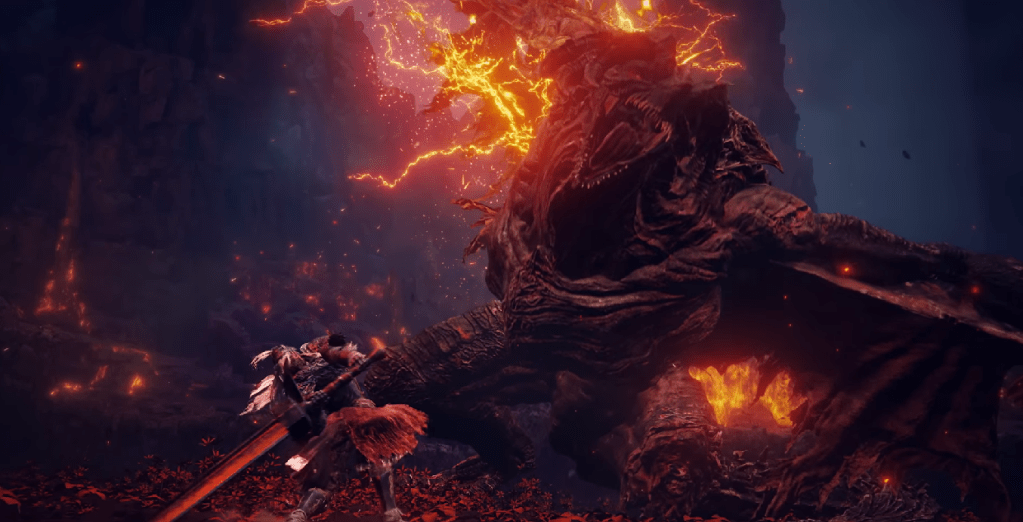
CURSE YOU, BAYLE!!!
Enough said… Okay, in all seriousness, Bayle is definitely the best dragon fight in Elden Ring.
I remember thinking how awesome he looked when I first saw him in the Shadow of the Erdtree launch trailer.
Then I fought him in the DLC, and he did not leave me disappointed.
Located on the Jagged Peak, Bayle’s buildup is so great that he did not even need a cutscene.
You first hear of him from Igon, who vows vengeance against him, despite being cripped.
The second time the player hears about him is from the dragon priestess, who informs us that Bayle was the one who betrayed and wounded Placidusax, not only hyping up Bayle’s eventual fight but also improving Placidusax’s.
Scaling the Jagged Peak, you fight numerous dragons (who are among the weakest fights in the DLC, unfortunately), and pass many dragon corpses, all building up to the arena where Bayle crashes into the ground to face the Tarnished.
Sporting ruined wings, a missing leg, and having two of Placidusax’s decapitated heads biting into his body, Bayle is still no pushover.
He has a mixture of fire and lightening attacks, combined with swipes from the serrated bones sticking out of his mutilated wings, tail swipes, a ground slam, and a grab attack, all of which are extremely punishing.
Your best bet is to keep hitting either his head or the stump where his leg once was.
When he enters second phase, however, Bayle gets an awe-inspiring transition, as he forms a set of magical wings in a fiery explosion.
Taking off into the air, multiple fireballs shoot at the Tarnished in his wake, leading to Bayle doing another ground slam, followed by an AOE.
Many of his attacks now have follow-up AOEs but they do not make the fight difficult to follow, like with Radahn.
His most cinematic attack, though, is easily the one where he forms his wings again and flies up into the air, before blasting the arena with two lines of fire.
Bayle is just an awesome boss fight, made only more awesome by his summon.
Bringing Igon into the fight is a must during one of your playthroughs, as Richard Lintern gives his all to the performance, providing the perfect hype man and the best summon in all of Elden Ring.
For my first playthrough of Shadow of the Erdtree, I fought Bayle with Igon and for my second I fought him without.
Sure, it was sad not to hear Igon hyping up my fighting skills, but it made the fight against Bayle much more challenging, in a good way.
The only minor issues I have with Bayle, which keeps him from being higher, is that sometimes the camera can work against you in the fight.
You can also get stuck inside Bayle, often leading to death.
Otherwise, Bayle is a glorious boss, who serves as not only Elden Ring’s best dragon, but also provides the best summon through Igon.
In the end, the only thing that can be said about this fight is, say it with me…
CURSE YOU, BAYLE!!!
5. Maliketh, the Black Blade.
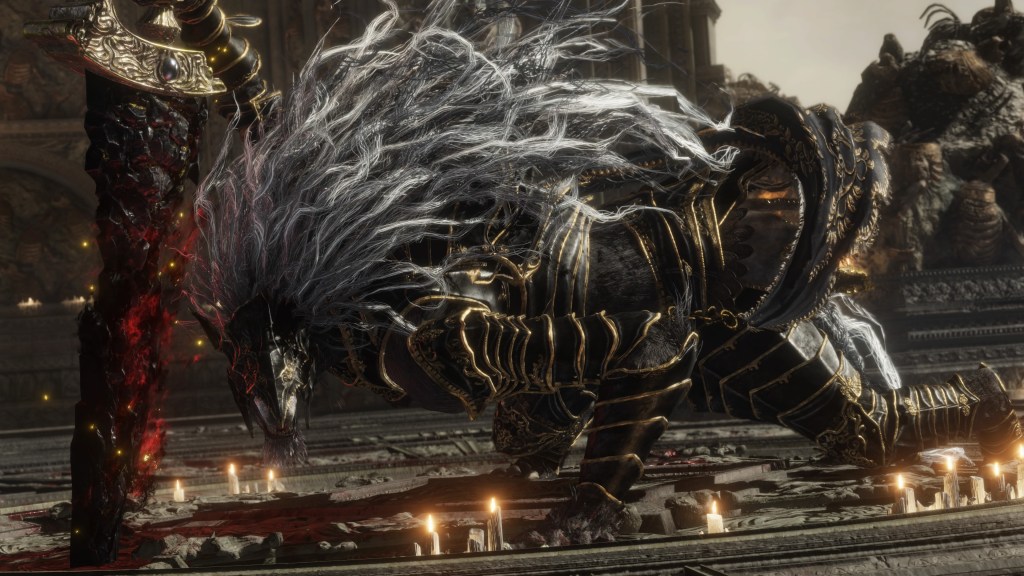
On my first playthrough, Maliketh was my favorite boss.
While he has been overtaken by other bosses now, he is still an excellent fight, especially his second phase.
As for his first, players who followed D’s questline will automatically recognize him as Gurranq, the Beast Clergymen in Caelid who we fed Deathroot to.
During this questline, Gurranq will lose his mind and attack the player.
This assault is very similar to the first phase of the Maliketh fight.
Found at the end of Farum Azula, the Beast Clergyman will rush the player, attacking with various swipes, which you always have to be careful of at close range.
At long range, the Clergyman will often resort to throwing rocks at you, which are usually easy to dodge.
Less easy is the attack where he slams the ground and then sends waves of slashes at you.
Once he hits 50% health, he will enter second phase.
“Oh, death,’ he says in one of the most metal cutscenes in the game. “Become my blade once more.”
Stabbing the Rune of Death on his hand, Gurranq pulls forth his Black Blade while his cloak disintegrates, revealing himself to be Maliketh, Marika’s shadow who Ranni stole a fragment of the Rune of Death from.
This cutscene is followed by one of the most difficult fights in Elden Ring’s base game.
Maliketh is incredibly mobile, often jumping onto pillars around the arena and using them as vantage points to attack the player.
However, these pillars can also be used to the player’s advantage, creating distance between them and Maliketh.
What makes things more difficult, though, is that many of Maliketh’s attacks are powered by the Rune of Death so come with a status effect that not only continues to drain health after attacks, but also temporarily cuts a chunk off the Tarnished’s vigor.
Still, all of these attacks can be dodged, and it is a rush to avoid his four hit combo where he flings slashes at you and then rushes in for a final strike.
You can actually parry this final part of the move if you have the Blasphemous Claw, making it even more fun.
The only move of his I am not sure how to dodge is his slam which creates status effect causing slashes.
That move just seems to hit me every time.
The rest of his moves are completely fair, if challenging, and what makes Maliketh even more interesting is that you can experience different dialogue from him, depending on if you fed him all of the Deathroot.
If you did so, Maliketh will recognize the player upon entering the arena and call out to Marika with his final words.
Maliketh is one of the base game’s best bosses, with his fun but incredibly challenging second phase.
4. Mohg, Lord of Blood.

Mohg is a boss who has slowly climbed higher on my ranking with each playthrough.
Discovered either through completing Varre’s questline or by exploring the Consecrated Snowfield, his location at Mohgwyn Palace is fun to traverse and perfectly paints the picture of the madman running it.
Mohg has probably the creepiest cutscene in Elden Ring, emerging from a pool of blood, seemingly dismayed that his kidnapped brother still does not want to be his consort… once again, I have to say George R.R Martin definitely wrote that part.
Upon noticing you, Mohg welcomes you to the birthplace of his dynasty.
This welcome includes bloodflame attacks which build bleed, and the most delayed attacks in all of Elden Ring.
Mohg may call himself the Lord of Blood but I would say the Lord of Delayed Attacks is much more fitting.
You will die many times in his first phase trying to figure out the timing of his strikes but, once you do, you can establish a satisfying rhythm with his combos.
Throughout this first phase, Mohg will begin to count down for his Nihil attack in second phase, where he quickly drains the player’s health to reform his own.
Not only does this drain at least three flasks from your inventory, it also gives Mohg wings and makes every attack come with bloodflame.
Now, you not only have to watch out for Mohg, but the bloodflame as well, which will slowly build bleed and can kill you quickly if you are not careful.
This makes Mohg’s second phase chaotic and honestly the hardest fight in Elden Ring’s base game, excluding Malenia.
There are ways to get around Mohg’s lethality, though.
For example, you can use Mohg’s Shackle to hold him in place for a bit to get a few hits in.
You can also drink a Wonderous Physick to completely negate his Nihil attack.
Most ironic of all, the Lord of Blood is especially weak to bleed damage, so applying it to whatever weapon you have can help end the fight quicker.
There are just so many ways you can defeat Mohg and that makes him such a great fight.
Much like Placidusax, the DLC also improves him through his lore.
In the original game, Mohg seemed liked a creepy psychopath, kidnapping his young-looking brother in the hopes of making him his consort.
In Shadow of the Erdtree, however, we learn that Miquella charmed Mohg into doing this, so he could eventually use his corpse to revive Radahn.
This raises the question if Mohg really was always as evil as he seemed?
A lot of especially gruesome stuff he does was to revive Miquella, who charmed him, and there had to be some good aspects of Mohg’s character to get a legend like Ansbach’s loyalty.
On the other hand, Mohg did also attract the loyalty of freaks like Varre so there is that counterpoint.
Mohg is just a really ambiguous character, which I like a lot.
The only downside to his boss fight, is that you can fight a weaker version of him in the Subterranean Shunning Ground, which kind of takes away a bit from this fight if you battle that weaker version of him first.
Otherwise, Mohg is an excellent boss with a lot of fun ways to combat him.
3. Midra, Lord of Frenzied Flame.

When I watched the first trailer for Shadow of the Erdtree, one of the bosses I was the most interested in was Midra.
I had so many questions about the guy pulling a sword out of his head, and the answers did not disappoint.
Midra was one of the last bosses I fought in the DLC because of how out of the way the path to finding him is.
The build up for him on this path is excellent, however, as the player arrives at the Abyssal Woods, one of the creepiest areas in all of Elden Ring.
Exploring the woods, leads you to Midra’s Manse, where you are welcomed outside by a line of decapitated corpses with swords sticking out of their necks, preparing you for the horror to come.
Searching the manse eventually leads you to Midra who, at first, appears surprisingly pathetic.
He is a weak enemy, with his only skill coming in applying madness.
Then, upon defeating him, we get the most gruesome cutscene in the game.
Midra declares he has had enough before he pulls the sword out of his head, decapitating himself.
His headless body then turns around to face us, and the Frenzied Flame appears above his head.
The operatic score that follows is both absolutely haunting and the best theme of the entire game, in my opinion.
The fact that I was about to fight a Lord of Frenzied Flame made me tense up for what would certainly be one of the hardest fights in the game.
Surprisingly, Midra is actually on the easier end of bosses in Shadow of the Erdtree.
Don’t get me wrong, it still took me an hour or so to kill him, but I do wish he posed more of a challenge.
That being said, that hour I spent fighting him was one of the best in the entire game.
For being possessed by a god which embodies chaos, Midra is surprisingly refined and graceful in his fighting style, with his elegant sword swipes being easy to dodge once you get the timing down.
It is the madness attacks you have to watch out the most for, though, as they can easily cause a death if you allow the status effect to build up, like with Mohg.
Once Mirda hits second phase, he will cause an explosion which I am sure the only way to dodge is to run like hell.
From there, the fight escalates, as even Midra’s once simple sword strikes carry frenzy.
He can cause madness explosions, and has a grab sword strike, which lures the player into a false sense of security before spikes emerge from the ground to hit them.
All of this is happening while the (as already stated) incredible operatic score is playing in the background.
Beating Midra was an exhilarating experience that literally made me cheer once I had done it.
Another thing I like about Midra is that he is definitely the most lenient boss when it comes to recollecting your runes.
Instead of the fight beginning during his Lord of Frenzied Flame phase when you die, it begins in his weaker form, allowing the player plenty of time to pick their runes up.
Midra’s lore is also quite tragic, as everyone in his manse was massacred by the Hornsent for being affected by the Frenzied Flame.
As for Midra he was left to live on in agonizing pain, with the only reason he did not allow the Frenzied Flame to take hold being because Nanaya asked him to endure.
There is a lot of mystery around Nanaya, causing many to believe she was a maiden of the Frenzied Flame, hoping to corrupt Midra.
If true, this makes his story even more tragic because Nanaya was clearly very important to him.
Midra is a fantastic boss with tragic and horrifying lore, whose fight is both elegant and chaotic, and, in my opinion, has the best score in the entire game.
I just wish the fight was a little harder.
2. Godfrey, First Elden Lord.

In my opinion the best boss in Elden Ring’s base game, Godfrey, First Elden Lord is the penultimate fight before the final battle with Radagon and the Elden Beast.
The father of Morgott, the Tarnished encounters him upon returning to the Erdtree after burning it, where they see Godfrey cradling his fallen son, a spectral lion named Serosh on his back.
The lion roars as Morgott fades away, showing Godfrey’s inner rage over his son’s death.
What makes Godfrey unique compared to other bosses is that he is a Tarnished, like us.
This is apparent through his own grace of gold pointing us.
Throughout the game, this grace led us to important bosses and now this grace points Godfrey to us, his own boss.
It certainly does not feel that way though because Godfrey hits like a truck with his great axe, the most difficult attack to dodge being one where he uses it to cause an eruption of rock from the ground.
Otherwise, this first part of the fight is easy to get a handle on, until you reach the second part of his first phase, where he will constantly rush you and slam the ground, creating an arena-wide AOE.
While this makes Godfrey more challenging, once you get the hang of it, the fight quickly establishes one of the best rhythm fights in the game.
Then you get to the second phase and, predictably, all semblance of confidence goes out the window.
Serosh begins to materialize into exitance, making the player think they are going to have to fight them, only for Godfrey to murder the lion, which is revealed to have been holding back his barbarian side.
Now shirtless and covered in blood, Godfrey roars in rage before revealing himself to be Horah Loux, the barbarian warrior from the intro.
The fight then changes from an honorable duel with the first Elden Lord to a WWE match.
Horah Loux is one of the most aggressive bosses in the game, constantly rushing the player and launching them up into the air to body slam them into the ground.
This attack knocks off a great deal of health and you will likely die to it a lot.
Horah Loux’s ground slams are more brutal, his firsts and kicks are somehow more brutal than his great axe.
If I could use one word to describe this part of the fight it would be, you guessed it, brutal.
The fight somehow gets even more challenging when Horah Loux brings back the area wide AOE attacks.
Despite his brutality, Horah Loux clearly has a lot of respect for the Tarnished, as he declares that our strength befits a crown upon defeat.
Thus, I always return the respect by using the bow emote when I finally fell him.
Along with being one of the best bosses, the reason Godfrey is so high is because he also has the story of my funniest Elden Ring defeat.
On my first playthrough, both Horah Loux and I were one hit away from death.
I had no flasks left, so I decided to risk everything on one last Ash of War strike.
I ran in, used the Ash of War, and watched his health deplete to what looked like zero.
I set my controller down, satisfied to have finally defeated such a hard boss, only for horror to fill me as I realized that Horah Loux was somehow not dead.
I desperately grabbed for my controller, but it was too late because Horah Loux had hit and killed me.
All I could do was laugh at how my overconfidence got me killed and it took me another ten attempts to finally beat him.
The only reason Godfrey is not number one is because there is a mandatory fight with a spectral version of his first phase earlier is the game, which dilutes the true fight somewhat.
Otherwise, Godfrey is a fantastic boss, who changes from an honorable duel to a chaotic struggle.
I have fond memories of him punishing my overconfidence.
1. Messmer the Impaler.
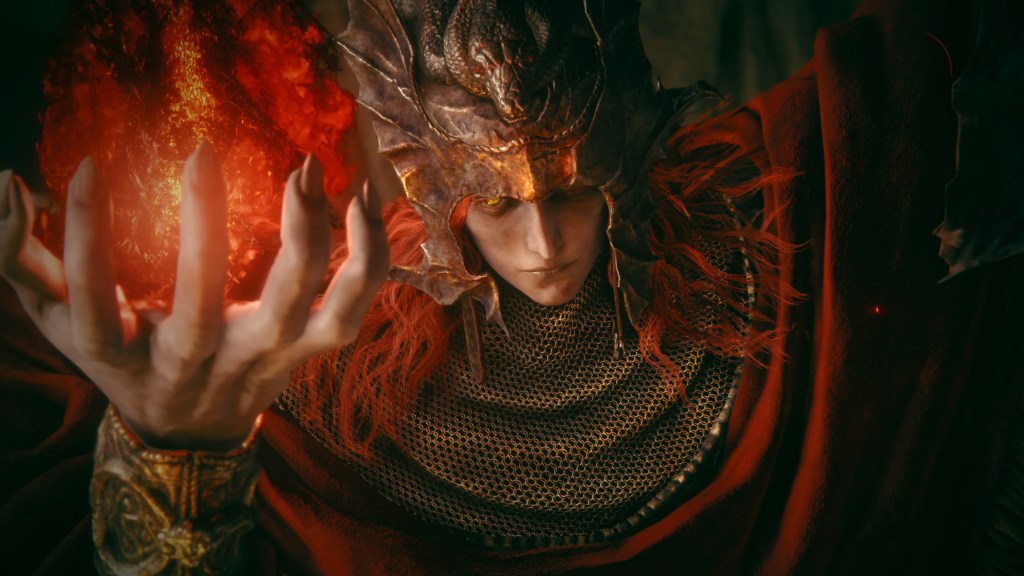
Right from my first attempt, I knew I was going to love Messmer the Impaler.
Out of all the bosses in Shadow of the Erdtree, FromSoftware highlighted him the most in their trailers and, after fighting him, it was immediately apparent why.
From the moment you enter the DLC, Messmer’s presence is apparent, from the ghosts speaking of his atrocities, to the cities he burned.
This all builds to our fight with him at the Shadow Keep, Shadow of the Erdtree’s best legacy dungeon.
Messmer is surprised to see the Tarnished, wondering if his mother Marika would truly sanction our lordship, yet he brushes this concern aside, stating his purpose.
“Those stripped of the grace of gold shall all meet death, in the embrace of Messmer’s flame.”
This is a line which, much like “I am Malenia, Blade of Miquella,” you will become very familiar with, as Messmer kills you over and over.
However, unlike Malenia, Messmer sounds tired when he says this, as if he has had to repeat the mantra Marika gave him over and over.
The reason for this becomes clear once you know his lore.
Before that, though, I will get into his challenging but incredibly fun fight.
Just like Radahn, Messmer will almost always launch himself at the player at the beginning of the fight.
This first attack is extremely easy to dodge once you know how it works and provides a good opportunity to get a strike in once he finishes it.
From there, you have the fun job of trying to figure out Messmer’s move set.
I am not being sarcastic there, either, as I had more fun learning how to dodge Messmer’s attacks than any other boss.
Messmer is fast but every move he makes is avoidable, from his spear launch, to his flame strikes, to his delayed grab which is a death sentence if he grabs you on lower vigor levels.
By far my favorite attack was his combo ending with the flaming spears shooting up from the ground to hit the player.
The first time I completely avoided that combo without getting hit was an exhilarating experience.
With a lot of trial and error, you will figure out Messmer’s move set enough to get him to second phase.
In the gruesome cutscene that follows, Messmer, like many Elden Ring bosses, is forced to reveal the inner strength he despises.
Messmer removes his eye, which is revealed to be a seal Marika used to trap the abyssal serpent her son was cursed with at birth.
With this power now revealed, Messmer attacks the player with a variety of snake attacks which, surprisingly, make the fight easier.
You will almost certainly be killed by the snakes on your first few attempts of the second phase, but you will also quickly realize that the end of these attacks leave Messmer wide open for punishment.
Get the timing right on dodging the snake strikes and you will pretty much have him beat.
When you land the final blow, Messmer delivers his last words, “Mother… Marika… a curse upon thee.”
Messmer did everything for his mother.
At her direction he committed genocide against the Horsent for what they did to her people, he had a medical ward established to treat those who were jarred by the Hornsent, and he even made sure his mother’s own deserted village was protected.
Despite Messmer’s devotion to her, Marika still abandoned him in the Land of Shadow, leaving him only with the mantra he has repeated ad nauseum to the point of being tired of it.
“Those stripped of the grace of gold shall all meet death, in the embrace of Messmer’s flame.”
In the end, Messmer is able to realize how he was treated by his mother and uses his final breath to curse her.
It is honestly tragic because Messmer could have been so much better as a demigod.
He had many loyal followers like Relanna and Gaius, and he clearly cared somewhat for the suffering of others, as shown by the medical ward he established.
But Marika asked him to commit an evil deed and then repaid this by abandoning him when he did so.
Messmer not only has some of Elden Ring’s most tragic lore, but he is also the most fun boss fight.
No death is unfair and his move set is a joy to learn with its fast-paced action.
FromSoftware was definitely right to put him at the forefront of the DLC’s marketing.
In my opinion, Messmer the Impaler is not only the best boss of Shadow of the Erdtree, but also the best boss in all of Elden Ring.
 THE REVIEW MONSTER