Squid Game Season 2 Review: The Games Return.

Like most of the world, I was enthralled by the first season of Squid Game.
It was both an intense and emotional experience that had a lot to say about the way capitalism exploits people in South Korea.
And because the show became so popular, of course companies had to milk it, with ads and even some Squid Game inspired reality shows.
It is sadly ironic that the show criticizing exploiting people lead to the creation of more shows which exploit people.
As for the original Squid Game itself I, like many others, were curious how Season Two would turn out.
Would it be a worthy follow up, or would it pale in comparison?
Well, after finally sitting down to watch it, I can happily say that Season Two is a great continuation of that first season.
I do still prefer the original but Season Two carries the same energy. 

Squid Game stays strong with its second season.

The season continues years after the first, with the previous game’s winner Gi-Hun (Lee Jung-jae) working to track down the Recruiter and Front Man (Lee Byung-hun) to try and put an end to the death games once and for all.
Eventually joined by police officer Jun-ho (Wi Ha-joon), Gi-hun eventually finds himself placed inside the games again and must desperately work to save as many people as he can.
Going into Season Two, I was worried it would just be a repeat of the first season, however, this is not the case.
The first few episodes follow Gi-hun’s attempts to track down the Front Man and this is just as enthralling as the games themselves.
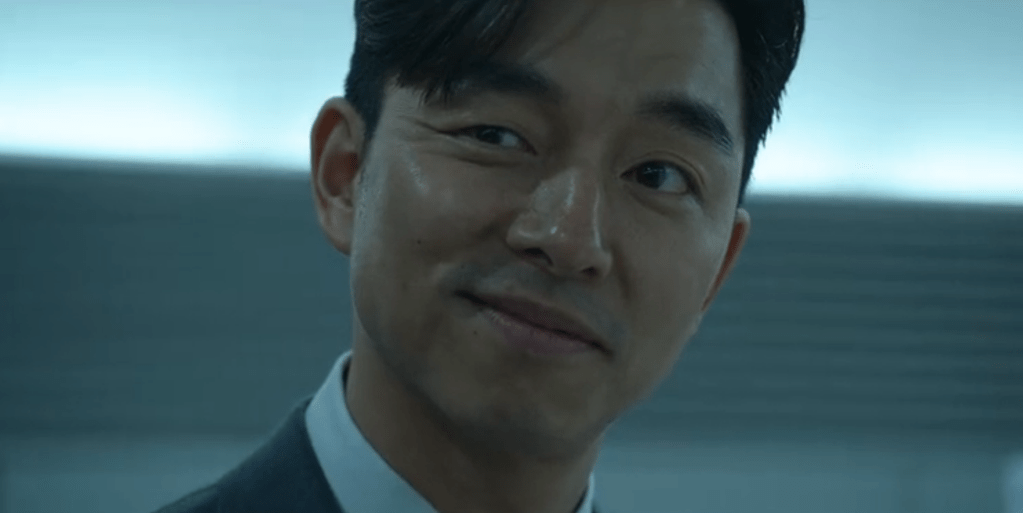
This is in large part due to Gong Yoo’s performance as the Recruiter.
Given a small role in the first season, the Recruiter gets a big showcase here for the first episode and they did a fantastic job expanding on his character, creating a truly twisted individual who is both entertaining and terrifying to watch.

The Recruiter was the star of the first episode.

The season also expands on the Front Man, who takes a personal interest in Gi-hun, allowing for a much more complex look at his character.
As for Gi-hun, he is just as compelling as in the first season, and so are many of the new characters we meet in the games.
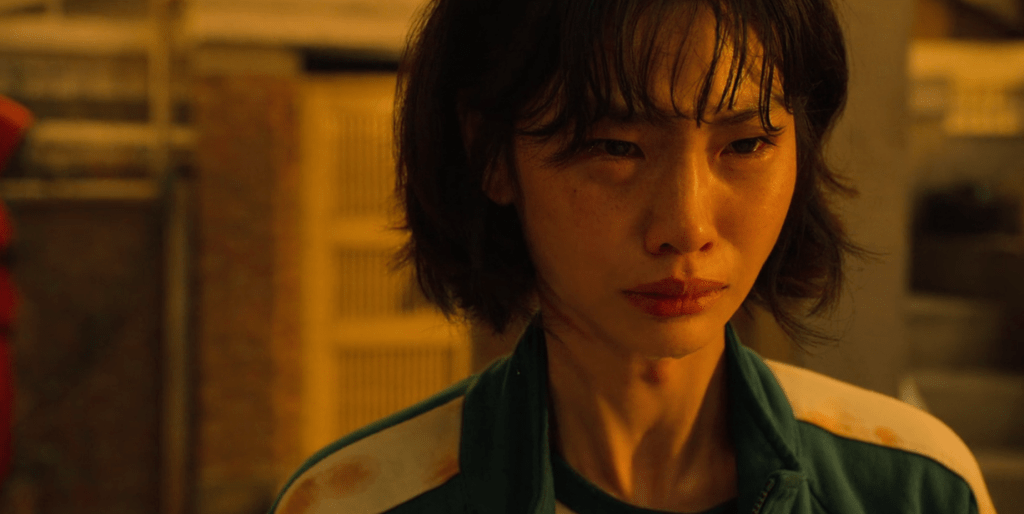
My favorites of the bunch are definitely Hyun-ji (Park Sung-hoon), a transgender woman and former soldier, Dae-ho (Kang Han-neul), another former soldier who enthusiastically joins Gi-hun, Jung-bae (Lee Seo-hwan), a friend of Gi-hun’s who finds himself in the games, and Thanos (T.O.P), a rapper with a drug addiction and a lot of funny moments. 

Of all the new characters, Hyun-ji is probably my favorite because she has a lot of heroic moments.

Along with the new characters there is also a new twist to the games.
The players must now vote to stay or leave after every game but, if they choose to leave, they will only receive the accumulated prize based on how many players have died.
This creates a situation where a gambling mindset kicks in for many of the players and, through watching the season, it is easy to understand why.
I found myself cheering for characters when they succeeded in games like the six-legged pentathlon, resulting in me seeing just how simple it would be to become addicted to winning these games, despite their lethality.
This gives the season plenty of thematic weight to go alongside the intensity of the games.

You can clearly see how some of the games were set up to motivate the players to continue.

However, much like in the first few episodes, the season does not entirely focus on these games.
For starters, there is Jun-ho’s subplot, which sees him try to track down Gi-hun on a boat with a band of mercenaries.
This storyline is unfortunately the weak point of Season Two.
Pretty much every scene of it drags and the big twist surrounding it was obvious for the get-go. 
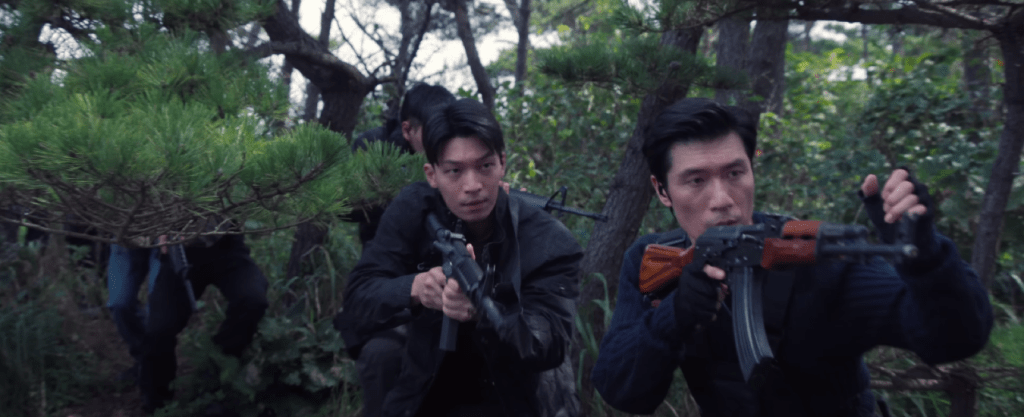
I hope Jun-ho’s storyline is interesting in Season Three because it certainly was not here.

Another storyline focuses on one of the workers in the games and the confliction she feels when someone she knows joins.
This is interesting, but it does not really go anywhere this season.
I will not hold this against the season though because it feels like it’s something that is going to be followed up on in Season Three, which will air in a few months.
This makes me okay with the fact that Season Two ends abruptly on a massive cliffhanger.
If we had to wait years for it, it would have been less tolerable.
Overall, while I prefer Season One, Season Two is still a fantastic follow-up to the original Squid Game.
It delivers intense scenes, loveable characters who you want to survive, and perfectly illustrates a gambler’s mentality, even in lethal situations.
I hope Hwang Dong-hyuk can end his story well with Season Three. 
Squid Game Review: Most Intense Show I’ve Seen in a While.

I doubt there’s anyone who has not at least heard of Squid Game yet.
The South Korean series, distributed by Netflix, has become a worldwide phenomenon, in the short time since its release.
This review is probably not going to be any different from the numerous other ones you may have heard, heaping praise upon the show.
However, like many other viewers, I was so enthralled by Squid Game that I couldn’t just not talk about it.
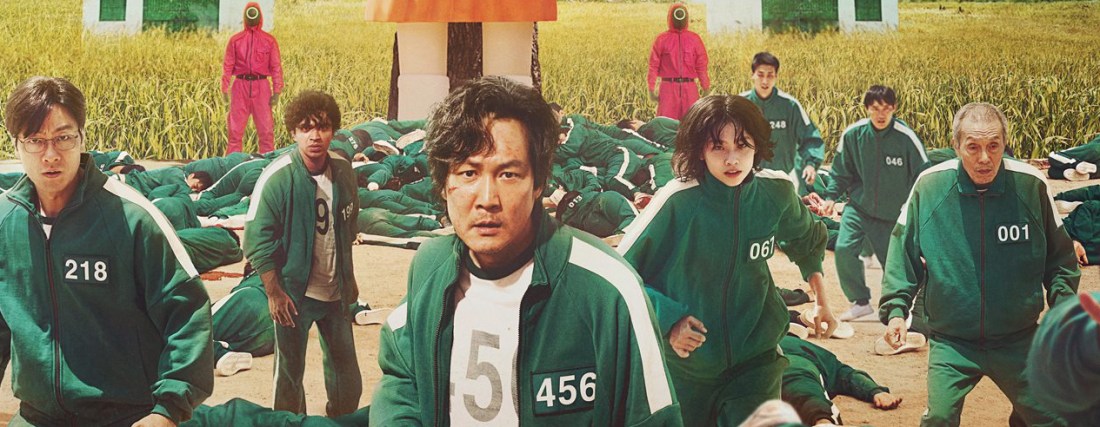
Created and directed by Hwang Dong-hyuk, the series begins with Seong Gi-hun (Lee Jung-jae), a gambling addict, who is in debt to loan sharks, desperately trying to salvage his relationship with his daughter who lives with his ex-wife.
After a strange encounter with a salesman (Gong Yoo) at a train station, Gi-hun is invited to take part in a series of children’s games where the winner will win a substantial amount of prize money.
Joining him in the games is Gi-hun’s childhood friend Sang-woo (Park Hae-soo), an elderly man with a terminal illness (O Yeong-su), the good nautred Pakistani Ali (Anupam Tripathi), North Korean refugee Sae-byeok (first time actress Jung Ho-yeon) , murderous gangster Deok-su (Heo Sung-tae), and 450 others, who also all have crippling debt.
However, the supposed kids games take a turn for the horrifying when the players learn the hard way that this is a death game, where most of them will probably be “eliminated” by the guards for losing before all six challenges are completed. 

Gi-hun and the 450 players will have to survive first if they want a chance to win the prize money.

And so begins the desperate struggle of the players to survive and win, with numerous instances of heartbreak and betrayal.
Squid Game is, without a doubt, one of the most intense experiences I have had with a show.
Almost every single episode had moments that left me shaking with anxiety out of fear for what could happen to these characters.
Speaking of, the characters are another thing this show excels at.
I came to care about so many of them, including some of the ones who are only around for a few episodes.
Even the characters you are supposed to hate are well written, with me literally screaming at the TV in disgust at their actions a few times.
They are all just so well crafted.
Squid Game may be centered around the death game, but it is the character drama that is the heart of the show.
This brings us to episode six, “Gganbu,” which I am sure we can all agree is the best episode of the entire series.
It is an absolute masterpiece that left me an emotional wreck after it was all over.

Be prepared to cry when you get to episode six of Squid Game.

It’s not just episode six, though, because all nine episodes are incredibly well crafted, with numerous excellent examples of foreshadowing and symbolism that make it great for a rewatch.
Apparently, Hwang had been trying for well over a decade to get approval to make Squid Game and, in my opinion, this was a good thing because it allowed him to plan out his story expertly.
The end result is various reveals that recontextualize a lot of moments as the story goes on, which left me feeling shocked and sometimes even betrayed (in a good way).
Accompanying this is the excellent commentary on capitalism, which South Korea just seems to be the best at, considering how well this commentary has been handled in other shows and films from the country, like the Best Picture winning Parasite.
Then there’s the score by Jung Jae-il, which is also great and helps improve on the already emotional and intense scenes.
It’s not all perfect though because there are a few hiccups here and there.
The most obvious issue, which is something everyone else has criticized, is the acting of the VIP characters.
I’m not sure if it’s the actors or the direction they got but their parts were mostly atrocious, with awful acting and dialogue.

The VIPs are easily the worst part of Squid Game.

Although, I’m sure our reactions to the VIPs are how most foreign viewers react whenever an English speaking film has someone acting in their language terribly.
Another thing I have seen people criticizing is the final episode, Episode Nine, “One Lucky Day.”
Honestly, I wasn’t sure how I felt about this ending at first either, however, after thinking about it and hearing other interpretations of the ending, I actually came to enjoy it quite a bit.
There’s plenty of foreshadowing for what happens and it stays consistent with the characters and their progression, while leaving the story open for a season two.

The ending of Squid Game is certainly not a happy one, although concerning the subject matter it is rather fitting.

Some are already eagerly anticipating this potential second season, while others are afraid they might ruin it if they continue.
Personally, I will be okay if they decide to leave it at one season but I do also want another one just to see where they will take it all from here.
A second season is almost guaranteed at this point, though, because of how high the viewership for this has been.
Squid Game is a fantastic show, despite a few issues, and it made me experience so many emotions throughout.    

Train to Busan: Best Zombie Movie Ever?

5 stars
I am a big fan of the zombie genre.
I watch The Walking Dead, read the comics, and play The Last of Us fairly often.
So, whenever a zombie movie gets some buzz, I am sure to check it out.
I have seen a lot of zombie movies, yet I was still completely blown away when I first watched 2016’s Train to Busan, under a year ago.
Since then, I have watched it numerous times and have recently come to the conclusion that it is my favourite zombie film of all time.
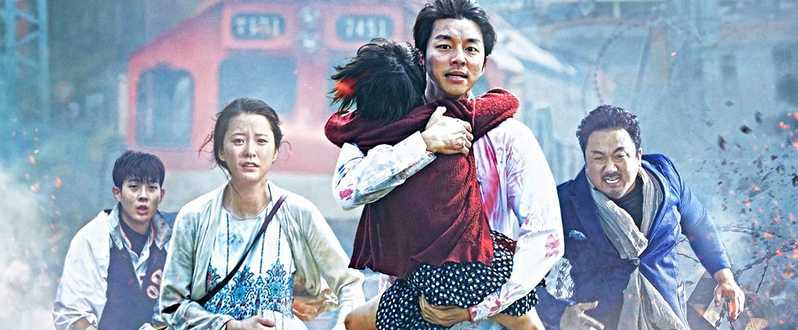
Directed by Yeon Sang-Ho, Train to Busan is a South Korean film that follows a group of survivors attempting to survive a train full of zombies heading for Busan.
It is, admittedly, a simple premise, but the film milks that premise for everything it is worth and it works brilliantly.

train to hell
Train to Busan has everything a zombie film fan would love.

Train to Busan may start out slow but when it gets going, boy, does it get going.
The film is not just your typical run of the mill zombie film either because it incorporates great political themes for the country and builds on its characters fantastically.
These characters initially seem to fit the stereotypical zombie film tropes.
There are some unlikable businessmen, a pregnant woman, a young couple, it all fits.
But Train to Busan builds on these tropes in such a fantastic way by having the characters move beyond them, to the point that you even care for some of the characters whose names you never learn.
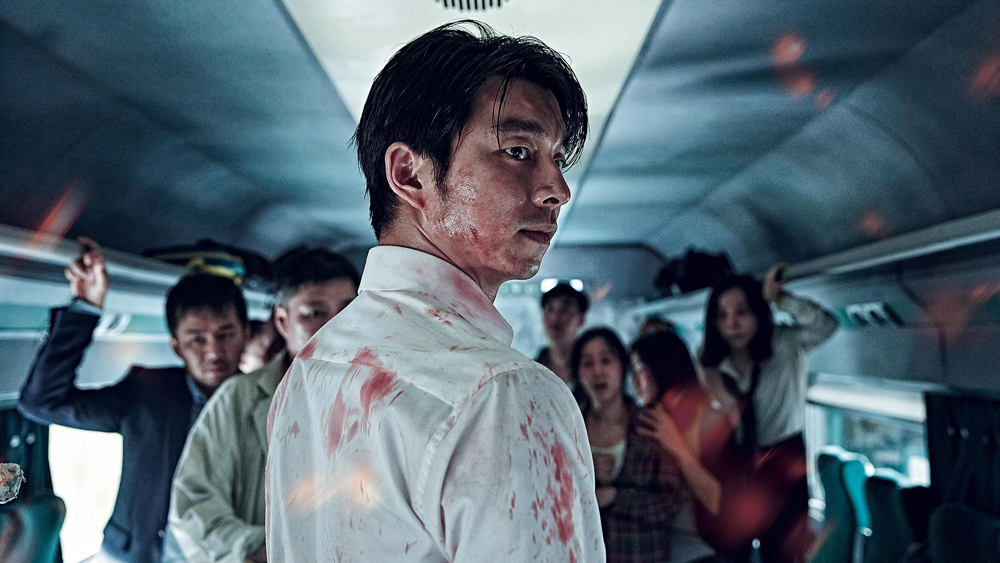
The best example of moving beyond the tropes here is definitely with the main character Seok-woo (Gong Yoo) who is one of the unlikable businessmen I mentioned, initially.
However, as the film progresses, we see him grow from someone who only looks out for himself and his daughter, to someone willing to risk his life for others, and this transition works great.

train to busan
The character arc of Seok-woo is amazing, with him going from an unkind businessman, to a caring fighter by the end of the film.

The other characters are just as great, with one of the stand outs being Seok-woo’s daughter, Su-an, whose child actor Kim Su-an is probably the best actor of the film.
Then there is the capable survivor Sang-hwa (Ma Dong-seok) who is looking out for his pregnant wife Seong-Kyeong (Jung Yu-mi), both of which have a great dynamic.
You even have a great purposefully unlikable character with the second businessman, Yon-suk (Kim Eui-sung), who I hated more than I had any other movie character in a long time.
The set up for the characters’ arcs are also brilliant, with previously thought to be insignificant things having a massive impact later on.
These characters’ likability adds to the terrific tension of the action scenes because you fear for each and every one of them and, when someone dies, it hits you hard.
Seriously, this is one of those films that will get people crying on multiple occasions.
I will not say who it was but I watched this with my family once and one of them was a crying mess by the end.
The film is so good that I have even heard it may be getting an American remake, which I am very unsure of.
Hopefully, it will not end up like the American remake to the Spanish film Rec, Quarantine, but, even if it is good, I doubt it will be as great of a film as the original.
Although, James Wan is supposedly attached so that is a good sign.
Train to Busan is an amazing zombie movie on every level.
It has fantastic action, brilliant characters with amazing arcs, and complex themes to boot.
Not to mention that it will probably make you cry at least once, before the credits roll.
I cannot recommend this film enough.