Alien: Earth Review: In Space No One Can Hear You Scream About Bad Endings.

The Alien series has had a resurgence with the recent success of Romulus, and the newly released Alien: Earth developed by FX.
Created by Noah Hawley, Alien: Earth is set a few years before Ellen Ripley had her first encounter with the iconic and terrifying Xenomorph in the original movie.
The corporation known as Prodigy, run by the declared “boy genius” Boy Kavalier (Samuel Blenkin), is experimenting with immortality, attempting to transfer human consciousness to android bodies.
Their first test subjects are a group of terminally ill children, whose minds are transported into the adult bodies, before they are given new names based off characters from Peter Pan.
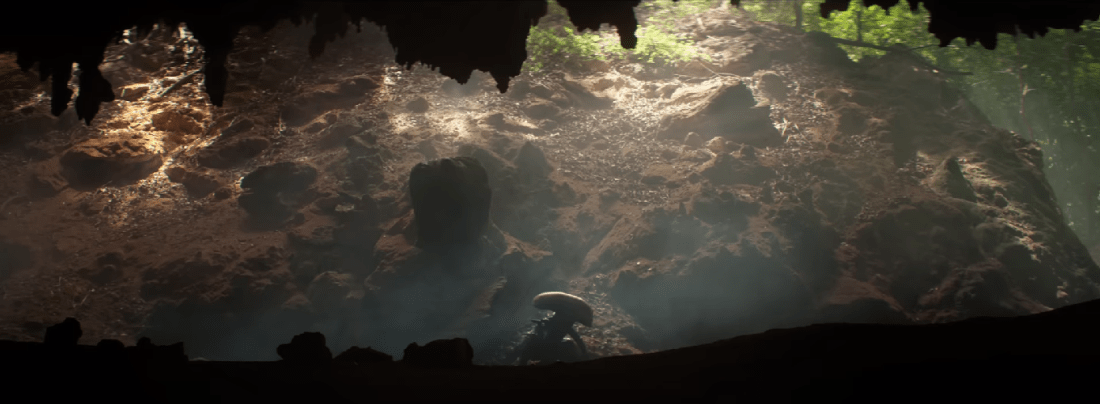
At the same time, a Weyland-Yutani ship carrying five invasive species from different planets, including the Xenomorph, crashes on Earth in a city owned by Prodigy.
Wanting to recover the subjects, and test out his new toys, Boy sends the children to retrieve Yutani’s property, led by Wendy (Sydney Chandler).
However, Wendy has her own goals, wanting to rescue her brother Joe (Alex Lawther), who has been sent on a rescue mission to the crash site, unaware of the monsters that lurk inside. 

Wendy’s goal is to protect her brother, but she encounters many terrifying monsters along the way.

Alien: Earth has a fantastic premise, and I was very intrigued to see how it would all end when I started watching.
The show definitely leaves a great first impression, with gripping commentary on what makes someone human and the dangers of corporations, while also having awesome Alien content.
The Xenomorph is an absolute menace in the first few episodes, as it wreaks bloody death upon all it encounters.
That is not to sell short the other newly introduced alien species in this show because they all have horrifying ways of killing their victims.
By far my favorite (and I am sure a lot of other people’s favorite) new alien is the T. Ocellus, a parasitic species, which rips out its host’s eye and then takes its place, controlling the body from there. 
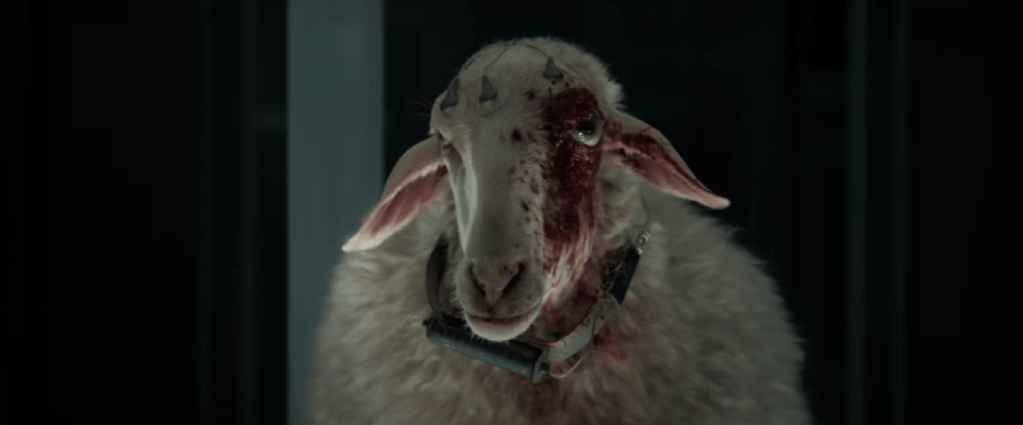
I hope we see more of T. Ocellus in the Alien series.

The practical effects and the CGI for these aliens, both old and new, are all great.
Just as amazing are the performances, across the board.
The actors for the hybrids, Wendy, Slightly (Asah Gourav), Smee (Jonathan Ajayi), Nibs (Lily Newmark), Curly (Erana James), and Tootles (Kit Young) all do fantastic jobs of portraying children transferred into adult android bodies.
Samuel Blenkin is also perfectly detestable as the narcissistic Boy Kavalier.
I spent most of the show just wanting to punch his smug smile.
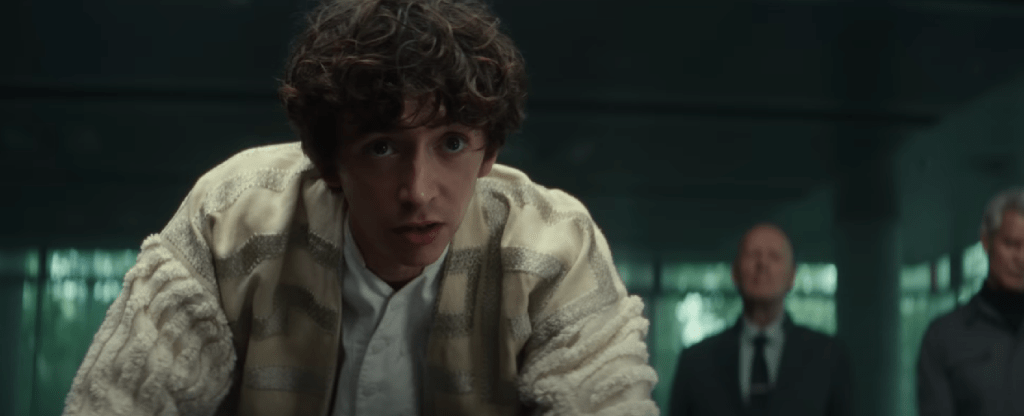
And will someone get this man some goddamn shoes? What is this show, directed by Quentin Tarantino or something?

However, my favorites of the cast are definitely Timothy Olyphant as the android Kirsh, and Babou Ceesay as the cyborg Morrow, with the two of them having an excellent rivalry throughout the show.
Morrow is especially excellent, given his time to shine as the star of Episode Five, which is the best of the series so far. 
Although, one criticism that you could level towards this episode is that many of the characters (excluding Morrow) are monumentally stupid.
But, hey, I guess if they were smart the aliens would have never got loose and there would be no story.

Morrow is the only smart guy in a ship full of idiots.

Unfortunately, I have what I feel are far more valid criticisms as the show progresses.
First of all, there is Wendy.
I like her and think she is a well written character.
The issue I have is that she is ridiculously overpowered, especially for an Alien story.
She has multiple incredibly powerful abilities, and it is never explained how she got them.
Thus, when the final episode rolled around, I held no fear for her safety because I knew she could power through whatever threat she faced. 
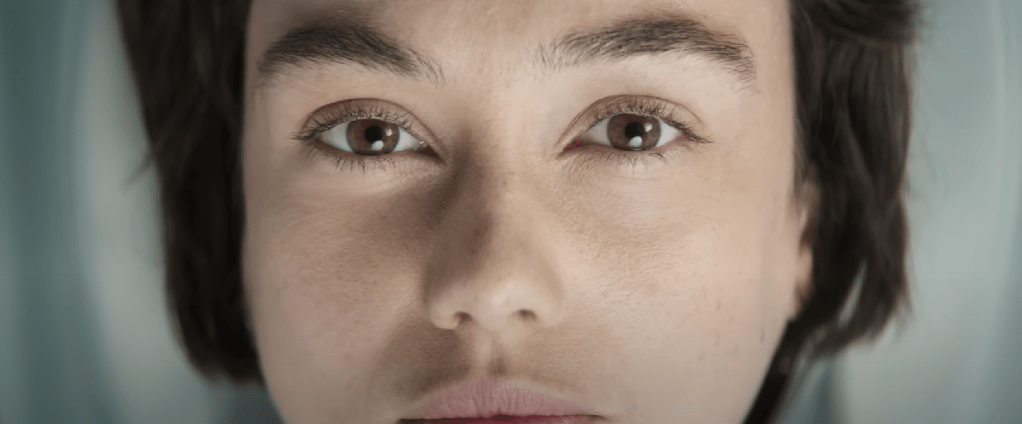
Wendy absolutely needs to be powered down if Season Two is going to have any stakes.

She and the android hybrids are definitely the main focus of the series, which is my second criticism.
This show is called Alien: Earth after all, but the aliens definitely play second fiddle to the hybrids, with the Xenomorph being less threatening by the end as a result.
Finally, there is the last episode of the season, where nothing is resolved and it ends on a massive cliffhanger, which we will probably have to wait years to follow up on.
Going into Alien: Earth, I thought it was going to be a limited series.
I honestly think I would have preferred it to be so.
Then we would have a complete story where the conflict is resolved.
Instead, we got a finale with multiple issues and a cliffhanger ending which delivers no satisfaction for lingering questions. 
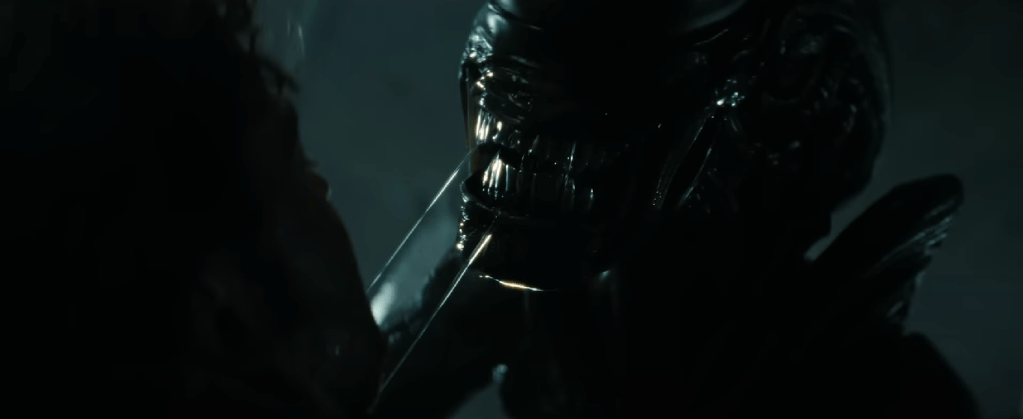
The first half of Alien: Earth is way better than the second.

Ultimately, I will still watch a second season if it happens.
I am invested in the characters and creatures, so I want to know what happens.
That being said, I hope they learn from the mistakes of the first season and make Wendy less overpowered, put the Aliens forefront and, for the love of god, offer some resolution with their ending this time.
I recommend Alien: Earth but definitely be prepared for disappointment with the way it concludes.  

Shōgun Review: My Secret Heart Loves This Show.

I have heard praise of Shōgun for a while now. 
That praise, along with the show’s outstanding performance at the Emmys, and its intriguing setting of 1600 Japan left me eager to check it out.
The only thing stopping me was the lack of Disney Plus in my household.
Having finally got it, Shōgun was one of the first shows I checked out and was by far the most engaging. 

Shōgun easily deserved all of the Emmys it won.

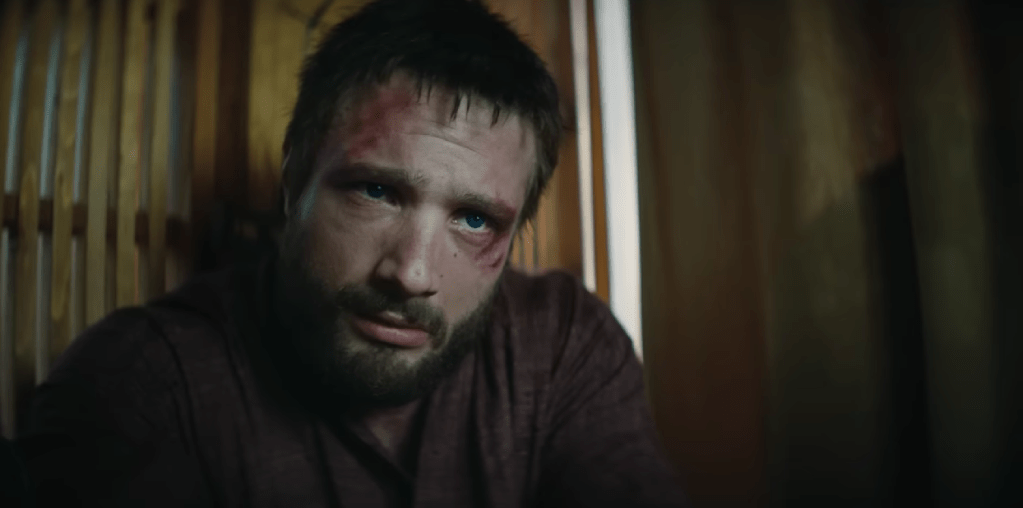
Based off the 1975 book of the same name by James Clavell, the show kicks off with the arrival of John Blackthorne (Cosmo Jarvis), a foul-mouthed protestant sailor from England.
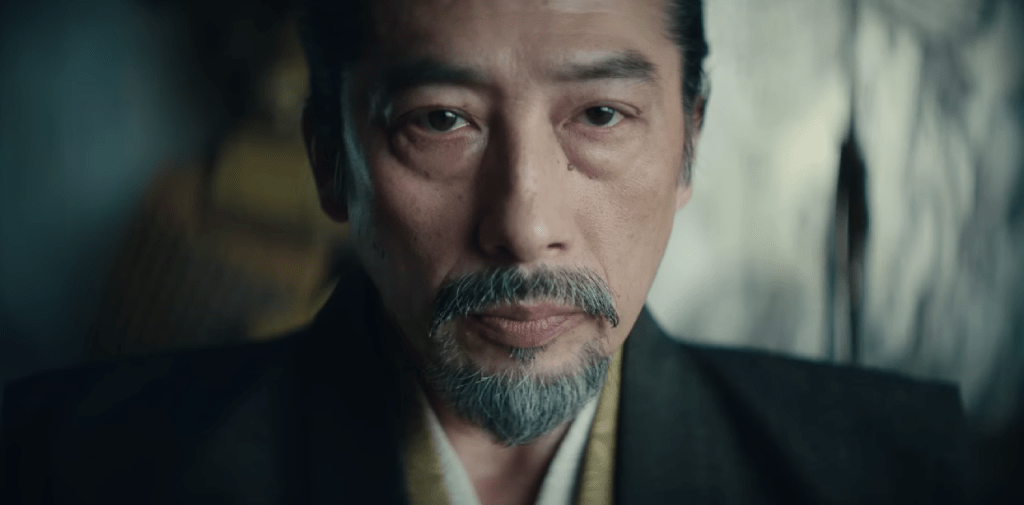
The first Englishman to set foot on Japanese soil, Blackthorne becomes of immediate interest to the Lord of Kantō, Yoshiii Toronaga (Hiroyuki Sanada), much to the dismay of Blackthrone’s catholic Portugese enemies.
He has arrived at a time of great turmoil in Japan, where Toronaga is embroiled in a bitter struggle for power against his fellow lords for the fate of the country.
With the help of his Japanese interpreter and Toronaga loyalist, Toda Mariko (Anna Sawai), Blackthorne begins to assimilate to the culture, while experiencing events that will shape Japan’s history. 

Blackthorne’s arc of assuming the Japanese to be savages at first, only to slowly learn and embrace their culture was enthralling to watch.

I know from the way I have described the plot so far, it seems like Blackthorne is the main character of this story, but that is actually not the case.
Yes, his arc is great to watch play out, and Jarvis’ performance is fantastic, but Blackthorne’s role mostly serves as an introductory lens for viewers who are not familiar with this period of Japanese history and its customs.
The real main players are the Japanese cast, all of whom do incredible jobs with their performances.
Hiroyuki Sanada is of course an incredible actor, and he transforms into Yoshii Toronaga, being more than deserving of his Emmy win. 

Based off Tokugawa Ieyasu, Toronaga is a crafty character, whose motives and secret plans are a constant mystery.

Tadanobu Asano is also great as Kashigi Yabushige, a character so self-serving that you want to hate his guts, but his personality is so entertaining you find it difficult to do so.
The real standout, though, is Anna Sawai as Mariko, who goes on an intense journey, as she finds herself struggling with her difficult past, abusive marriage, faith, and her growing closeness to Blackthorne.
All of this culminates in “Crimson Sky,” the ninth and best episode of the show, where she delivers a powerhouse of a performance.
Just like Sanada, she was more than deserving of her Emmy win.

Mariko’s journey in “Crimson Sky’ was full of many emotional and unexpected twists and turns.

What makes these characters even more interesting is that many of them are based off real people, important to Japanese history.
After finishing Episode Ten, I immediately found myself looking up information about these people and how the events of the show differed from real life.
Just imagine how many other viewers did the same after finishing the series and thus became more knowledgeable about the history of Japan.
But it is not just the characters that make Shōgun great, obviously.
The production quality of the show is excellent, with the costuming and sets perfectly reflecting the time period.
The CGI is also top quality, with not a single shot drawing me out of the moment.
Speaking of shots, the cinematography and editing are also stellar throughout, as is the score which makes every enthralling scene only more gripping.
This includes the opening theme, which has great visuals that remind me a lot of Game of Thrones’ intro.

Shōgun‘s intro is one I will remember for a while.

Sadly, this is not the only thing about Shōgun which reminds me of Game of Thrones, but that has nothing to do with the present quality of the show, rather the future quality.
You see, Shōgun completely adapts James Clavell’s book, and the show was originally intended to be a single season.
Well, money talks, and Shōgun’s success has resulted in the green light for a second season.
With nothing left to adapt, that means the writers are going to have to write their own original stuff for season two.
We all know how Game of Thrones degraded after the writers ran out of book material, so there is always the concern for this happening with the second season of Shōgun.
However, as stated, the original novel was based off very real people and events, so the writers at least have something to work with, unlike the Game of Thrones writers. 

I hope Shōgun‘s success can be replicated with Season Two.

And no matter the quality of this eventual second season, this first season of Shōgun will remain a masterful work with excellent characters, acting, production and score.
It has also undoubtedly helped spread knowledge about 1600s Japan and that is probably the highest praise a show based in that setting could receive.