The anime community has been blessed with some fantastic anime as of late, two of which being particular standouts. The first of which is Frieren: Beyond Journey’s End, the greatest anime adaption of all time, in my opinion. The second of these is The Apothecary Diaries, an amazing anime in its own right. Based off the light novel by Natsu Hyūga, the story is set in a country resembling Imperial China. Our main character is Maomao (Aoi Yuki), an apothecary who is kidnapped to sell as a servant for the Imperial Palace. Recognizing an illness that is affecting the concubines and children of the Emperor, Maomao anonymously writes a letter to stop the unintentional poisonings.
Maomao is relatable for the beginning. She does not want to get involved in court politics but steps in when her morals and interests compel her.
This catches the attention of the important eunuch Jinshi (Takahiro Sakurai), who sets about using Maomao to solve other mysterious poisonings and illnesses within the palace. And so, the story follows the friendships and rivalries Maomao forms as she investigates case after case, while she and Jinshi grow closer. Maomao, herself, is an excellent character, as her obsession with poisons often drives her to humorous, cat-like behavior. However, this behavior can often flip to being more like a tiger, as Maomao’s anger is pretty fearsome to behold. Just ask Jinshi.
I would not have blamed Jinshi for having a heart attack when Maomao glared at him like this.
Speaking of the supposed eunuch, he is also a great character with a lot of mystery to him. He has great chemistry with Maomao as well, often finding himself exasperated by her antics. The cases these two end up investigating creates what feels like a Sherlock Holmes and Dr Watson dynamic, only with a more humorous spin on the relationship. Like Sherlock Holmes though, the story often gets dark, with many working behind the shadows in the Imperial Palace. This leads to explorations of many shady characters, like Lakan (Takuya Kirimoto), the spy master with an interest in Maomao.
Lakan is suspicious and intimidating right from the start.
The ending revelations about these mysterious characters and the events around them are always satisfying, with some of these mysteries even being currently unsolved, leading into Season Two, which has thankfully been confirmed. I look forward to seeing the resolution to these mysteries, just as much as I look forward to seeing Maomao and Jinshi’s relationship progress, alongside the inevitable comedy that will result from this. The Apothecary Diaries is an excellent anime, which will often have you laughing at its characters’ antics, while also being intrigued by the many questions the show raises.
The first season of Mobile Suit Gundam: The Witch from Mercury did a great job of getting plenty of people hooked for a second season. Ending on the cliffhanger of Suletta (Kana Ichinose) killing someone in front of Miorine (Lynn) and being completley unbothered by it, there were a lot of questions about what would happen next.
This dark ending hinted at grim things to come.
This is why it was surprising to see the second season have a slow start, with the first episode mostly being setup. Unsurprisingly, this caused a few complaints, but people should have been more paitient because, low and behold, the second episode gets right back to the grim story telling the first season left on from. The story follows Suletta, who is struggling to deal with the blow that has been dealt to her relationship with Miorine, who, in turn, now has to run her father’s corporation while also trying to get Suletta away from her conniving mother, Lady Prospera (Mamiko Noto). This leads to many a tragic moment, some of which are not even related to a character death, with the characters words alone doing the emotional damage.
This scene especially was hard to watch.
It is not just Suletta and Miorine who get the spotlight though because plenty of the other characters get time to shine, with Shaddiq (Makoto Furukawa) making his move, and an unexpected bond growing between Elan (Natsuki Hanae) and Norea (Aoi Yuki). It is Guel (Yohei Azakami) who really shines this season, however, as he deals with the trauma of accidentally killing his own father, while being held captive on earth. I have loved Guel’s arc, as he started off as a privileged bully at the beginning of Season One, only to grow into a humbled leader and friend of Suletta.
Guel’s arc in seasons one and two is fantastic.
Not all about his story is great though because this does lead into one of my issues with Season Two, that being Guel’s brother Lauda (Takeo Otsuka). Towards the end of the season, Lauda’s brain does a whole lot of mental gymnastics to blame Miorine for everything, leading to a conflict between him and Guel. It honestly felt like the writers just wanted Guel to have a fight at the end so they came up with a reason to have Lauda be his opponent, no matter how contrived it was.
Lauda’s reasoning ultimately left me scratching my head.
Unfortunately, that is not my only problem with Season Two because I feel that the ending is a bit lacking. Don’t get me wrong, the characters do get a satisfying ending but, as for the world The Witch from Mercury has built, it felt like everything was wrapped up too neatly. I think we could have got another season showing a conflict between earth and space, rather than it all being quickly wrapped up here. Sadly, it seems like this really is the end of The Witch from Mercury.
It is a shame if the show is truly over because I felt it had the potential to go further.
That being said, if this is the end then the show was highly enjoyable. Along with the story and characters, the animation and score were also great, with the OPs and ED being very well done. This is especially the case for Season Two’s ED “Red:birthmark” by Aina The End, which has banger singing, visuals and symbolism. All in all, The Witch from Mercury Season Two is a great follow-up to the first season, which provides a satisfying conclusion, despite it being a bit lacking. I hope we get some continuation, even if that seems unlikely at this point.
Like many people, I was highly anticipating Cyberpunk 2077 before it was released. I think it is fair to say that it was one of the most anticipated video games of all time, what with how hyped up the marketing was. This made it all the more crushing when the game released practically broken at launch, especially on consoles. I reviewed Cyberpunk 2077 shortly after release and I gave it a positive review, despite admitting that it caused my PlayStation to crash five times on my first play through. Looking back, I think I was too lenient. However, at the same time, I can also see why I gave the game a positive review because of how much the story, characters and world building gripped me. Such features made me excited when it was announced that Studio Trigger would be releasing their own anime set in the Cyberpunk 2077 universe, Cyberpunk: Edgerunners.
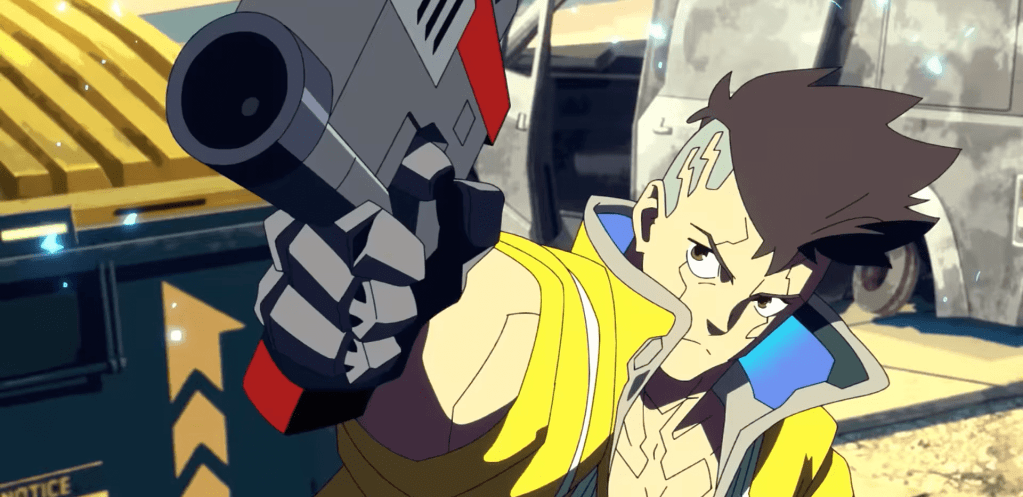
Despite the game’s many many faults, the anime had the chance to be something special.
You may have heard the buzz surrounding this anime as one of the best of the year and, after watching all ten episodes, I can add my voice to this buzz. Directed by Hiroyuki Imaishi, Cyberpunk: Edgerunners is set in Night City, a corporation-run hell hole, where the only way to make a name for yourself is to cybernetically enhance your body, often to the point of cyberpsychosis. It is this bleak city where we meet our main character David Martinez (Kenn) who, after a tragic turn of events, decides to have a military grade piece of technology, known as the Sandevistan, implanted into his body. This leads to David meeting a netrunner named Lucy (Aoi Yuki), introducing him to the world of Edgerunners, which he excels in, due to his new implant. The growing bond between David and Lucy is great to see play out as they have such excellent chemistry.
David and Lucy work well togethor right from the start.
It is not only them, though, because the other wacky characters among the Edgerunners are also very compelling. There is the tough as nails leader Maine (Hiroki Toshi), his also tough as nails girlfriend Dorio (Michiki Kaiden), experienced netrunner Kiwi (Takako Honda), getaway driver Falco (Yasuyuki Kase), and, of course, Rebecca (Tomoyo Kurosawa). I saved Rebecca for last because she was definitely my favourite character in the show. She is crazy and wild but also extremely loyal to those she cares for, creating a complex character who was entertaining to watch.
Every scene with Rebecca is a blast.
With so many great characters, it is made all the more tragic when some of them bite the dust. This is Night City, after all, where happy endings are rare and bloody endings are all too common. Speaking of blood, wow, was this show gory. Studio Trigger really committed to the violence of the game.
People explode into bloody messes a lot in this anime.
Along with this, the animation for the action scenes and the soundtrack in these moments are stellar. Such features all come together to create a spectacular anime that has convinced many people to replay Cyberpunk 2077, or play it for the first time. For these new players, they will see a few familiar faces from Edgerunners, as some characters from the game are incorporated here, mostly as cameos. However, there is one character from the game who has a big role. I will not spoil who it is but, in my opinion, this character was portrayed much better in Edgerunners than in Cyberpunk 2077. I would be open to see more characters from the game pop up in the Cyberpunk Universe, if Studio Trigger wants to continue this series, maybe as an anthology where we focus on different Night City characters each season.
We can see how new characters from Night City are “remembered” if this show continues.
This is how much I enjoyed this anime. I liked it so much that I am now wishing for a second season that we probably will not get. If Cyberpunk: Edgerunners is a one time thing, however, then it is certainly worth it. Studio Trigger delivered a fantastic anime here. Along with other amazing video game adaptations, like Arcane, Cyberpunk: Edgerunners makes it seem like animated series are the way to go for such adaptations.
I loved the first season of The Saga of Tanya the Evil so immediately after finishing it, I naturally moved on to watching the movie, which was released two years after the show. Directed once again by Yutaku Uemura, and based off the light novels by Carol Zen, The movie sees Tanya (Aoi Yuki) and her battalion of mages sent to infiltrate and spy on the Russy Federation, this world’s version of the Soviet Union. However, once inside, the plan instantly goes awry, causing a chain of events that creates a film which is a worthy sequel to the anime.
“They’re Commies. Blow the s#$t out of them.” With these words, Tanya and her batallion begin their mission.
I was not let down by this movie, even though I felt like some things could have been improved upon. The first of these things is Tanya’s relationship with Being X. Her rivalry with the self proclaimed deity was a highlight for me when watching the show, so I was disappointed to see Being X not drop in personally to gloat to Tanya in the movie. Another disappointing thing was that there is a flash forward, which clearly spoils the outcome of the entire war. This should have been cut entirely. I have heard it is like this in the light novels but, come on, knowing what’s going to happen to the Empire does remove the tension, somewhat. The last criticism I have is of Tanya’s actual rival in this film. You see, certain circumstances inside the Russy Federation lead to Tanya being confronted by the daughter of a solider who she killed in combat. This girl’s name is Mary Sue (Haruka Tomatsu). No, I am not kidding, there is literally a character called Mary Sue and, as her name suggests, she is ridiculously overpowered, most likely because of Being X’s involvement. Now, I know Mary Sue being overpowered is clearly the point. She is a character that is supposed to play off the stereotypical tropes of the Mary Sue archetype, possibly serving as a parody. However, Mary does not feel like a parody but rather just a general usage of the Mary Sue trope, without anything new or interesting done, which makes her pretty annoying.
Mary is more like an actual Mary Sue rather than a commentary on the trope.
I know I have been criticising this movie a bunch when I said I enjoyed it and I did. I just wanted to get a few of my grievances out of the way first before I got into the praise. First of all, Tanya is once again a fun character to follow. Not only is it still exciting and somewhat funny to see a salaryman in the body of a child plan and then carry out military operations, but the animators also clearly go all out animating her expressions, especially when she indulges in her sometimes crazy outbursts. Just like in the show, the action is also great, with the sound design once again being stellar. Then there’s the comedy, which had me burst out laughing a few times.
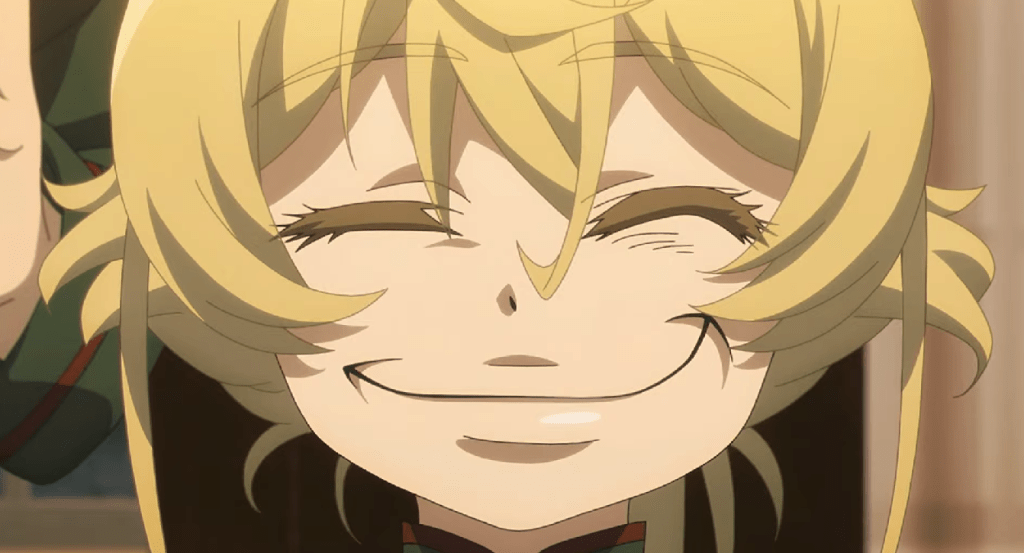
This reaction is pretty funny. Watch the movie and you’ll know why.
I will also say that this film contains a scene which is probably my favourite of the entire anime so far. Watching this movie after the anime left me wanting more, so I was overjoyed to hear that a season two is currently being made. Hopefully it will live up to the standard set by its predecessors. Until then, there’s also a comedic OVA “Operation Desert Pasta,” which is pretty good as well. The Saga of Tanya the Evil: The Movie is a worthy follow up to the anime and I cannot wait to see more from the monster in the form of a little girl.
Before I begin the review, I will say that this contains spoilers for a reveal that happens early on, which will work a lot better if you do not know what it is going in. So, if you have not yet watched The Saga of Tanya the Evil, then it’s probably best to avoid this review until you have.
When it comes to picking an anime to watch, there are two features which, if present, will usually make me avoid the show I hear they are in. These two things are the genre of isekais and character trope of lolis. I don’t have anything against isekais, it’s just that I have found that they usually do not appeal to me. Then there are lolis, which I don’t think I even need to explain why I find them to be an automatic avoid requirement for an anime. However, despite The Saga of Tanya the Evil both being an isekai and having a loli as the main character, I heard great things about it, so I decided to give it a chance and was surprised to find that I loved it. The isekai aspects of the show only make its premise way more interesting and the loli Tanya (Aoi Yuki) is not sexualised in any way (thank god).
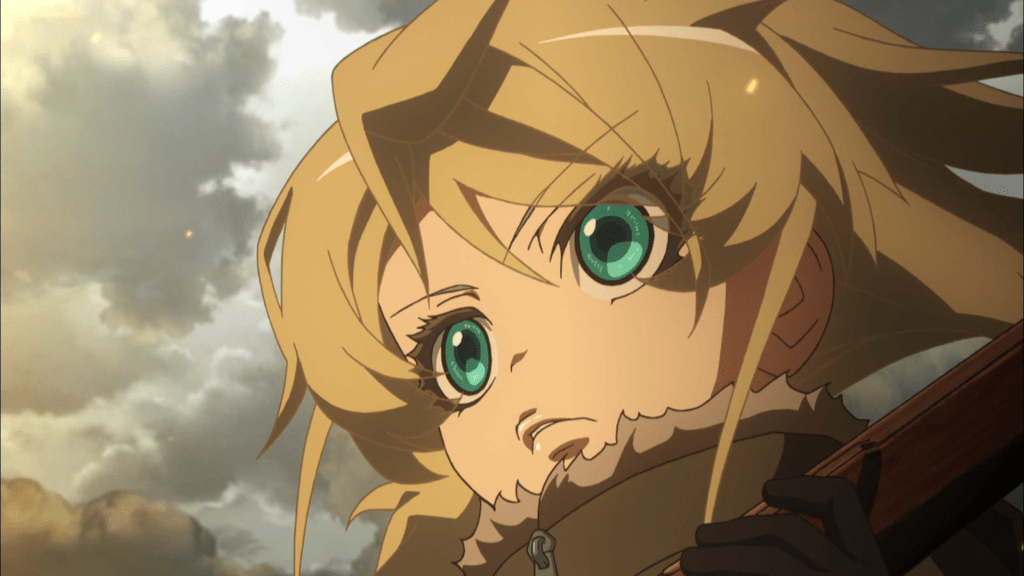
Tanya being a child is wisely used as an often comedic or unnerving juxtaposition with her status as a military leader.
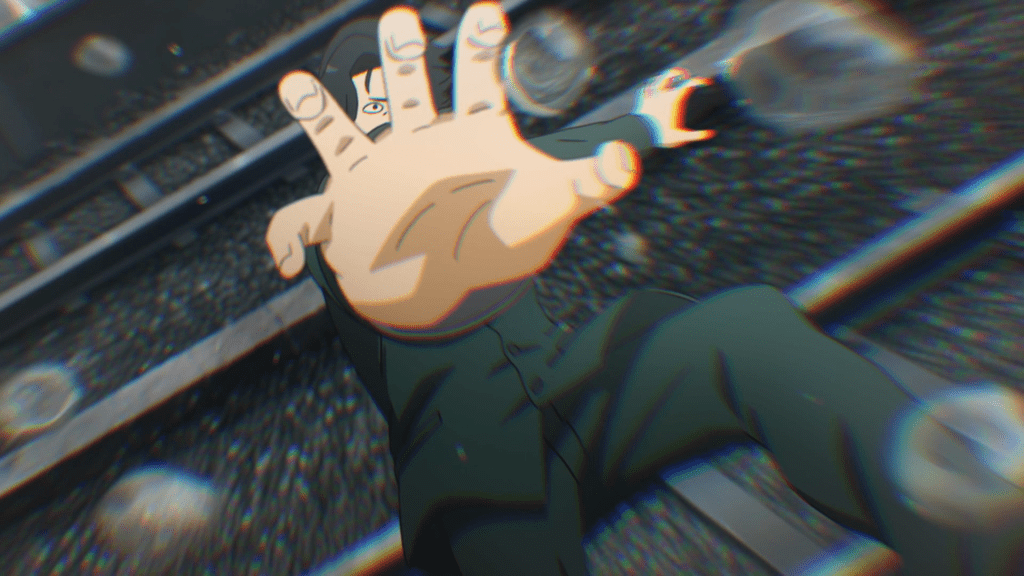
Directed by Yutaku Uemura, and based off the light novels by Carlo Zen, The Saga of Tanya the Evil tells the story of a salaryman in Japan, whose job it is to fire unproductive people at the company he works. However, he is particularly ruthless and uncaring in his treatment of others, and this leads to a man he fired murderering him by pushing him in front of a train. Just as he is about to die, the salaryman is confronted by a being who claims to be God, who is dissatisfied with the lack of faith in him. It is at this time that the salaryman makes the unfortunate decision to declare that he is an atheist and does not believe he is talking to God, dubbing him Being X (Hideaki Tezuka) instead. This leads to the first of many funny cases of miscommunication where the salaryman’s mocking comments cause Being X to believe that if the salaryman is reincarnated in a harsh situation then he will find faith in God.
And so the salaryman’s isekai journey begins.
Thus, the salaryman is reincarnated as the girl Tanya Degurechaff in an alternate version of Germany, known as the Empire, during a World War One where magic exists. Wanting to secure a good life for herself, Tanya enters the military at nine-years-old with the hope of using her experiences from her past life to earn a comfy position safe away from the battlefield. Only problem is that her constant miscommunication with people, and Being X’s interference keeps pushing her to the front lines. And it is here the good usage of the isekai genre and loli elements come in, with the isekai storyline creating Tanya’s rivalry with Being X during the conflict, and the loli stature of Tanya creating the amusing display of a little girl as a military leader. Or, as Erich Rerugen (Shinichiro Miki) would call her, “a monster in the form of a little girl!”
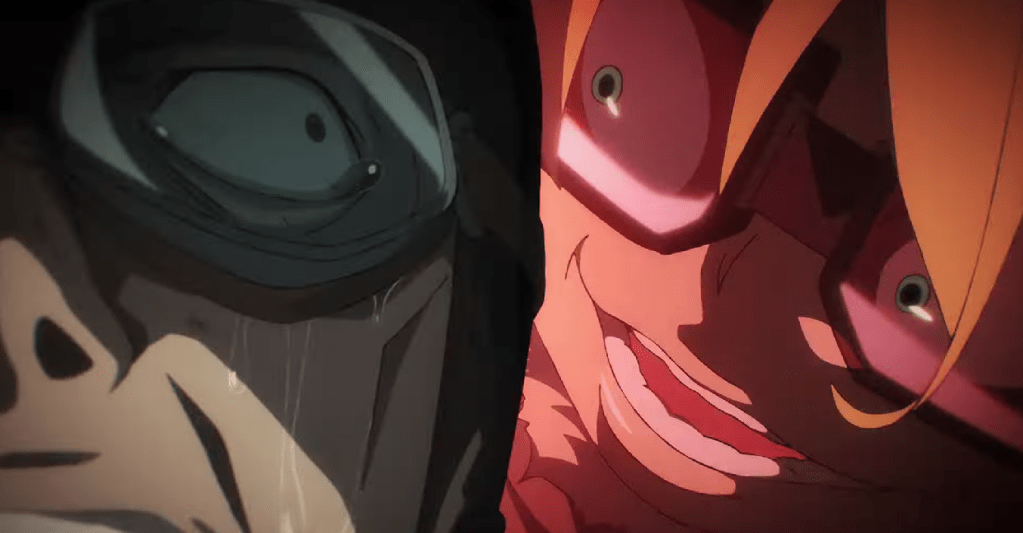
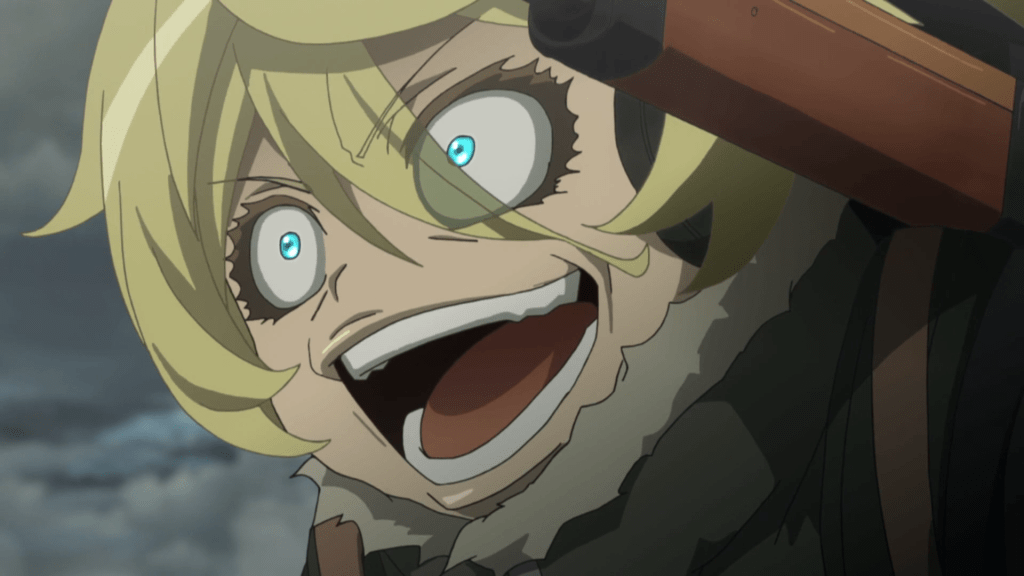
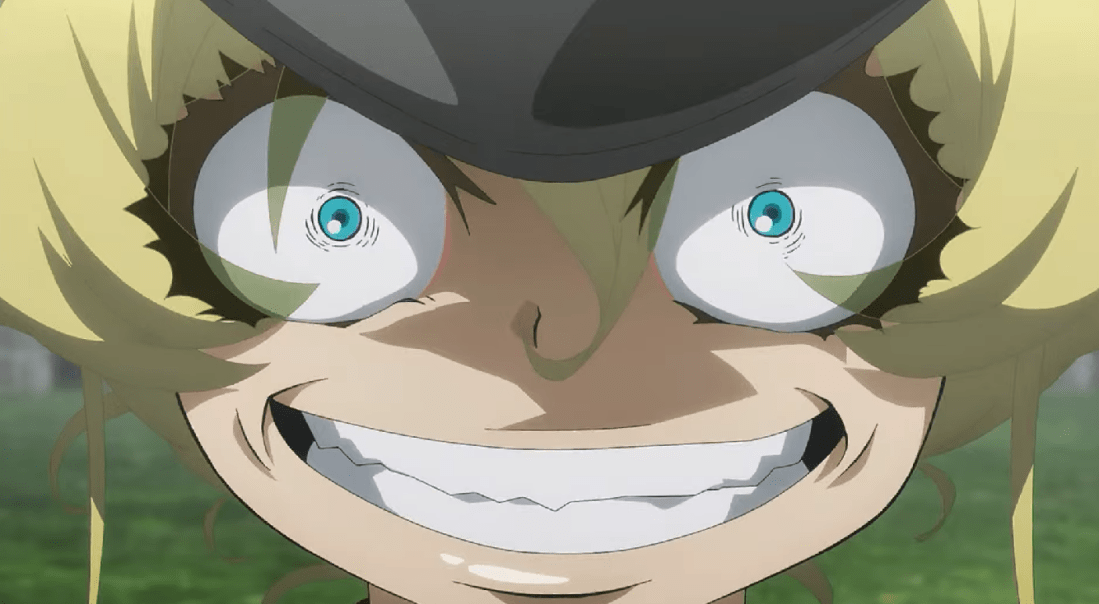
Tanya’s creepy faces get a lot of animation. Looking at this it’s not hard to understand why Rerugen is so unnerved by her.
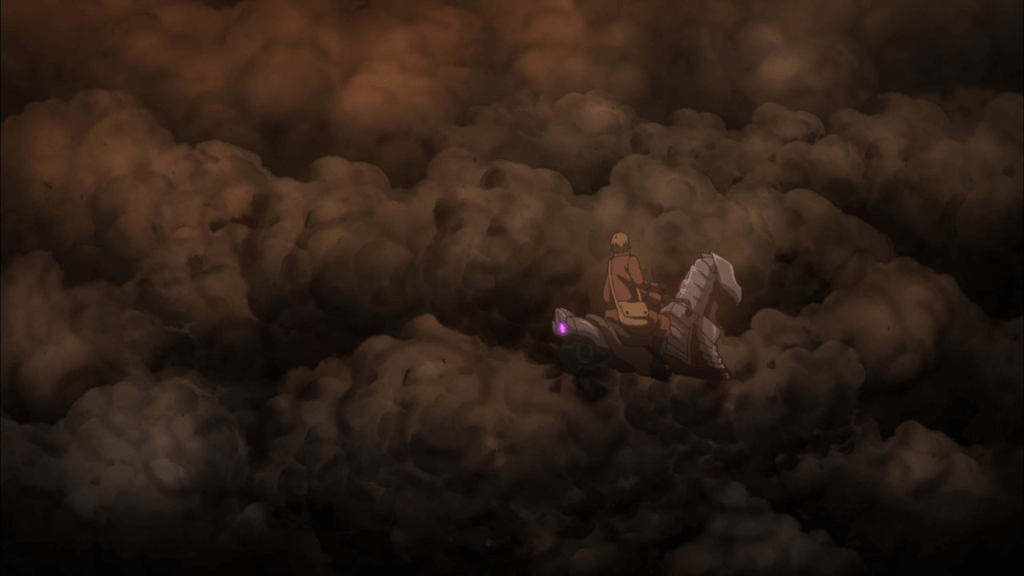
It is this “monster” who is by far the most interesting character in the show. The other characters are good but it’s Tanya who carries the whole thing, with her military genius, often crazy personality, and struggle for her own human autonomy against what is essentially God. Speaking of that crazy personality though, it does lead to a few technically-not-a-war-crime-because-of-loophole scenarios and, oh, boy, are those dark. A lot of the military strategy surrounding these events are also quite interesting to sit through, and when it comes to the actual combat of the series, it does not disappoint. However, the thing I want to praise most about the action is not the animation but the sound design. Seriously, the sound of the explosions and gunfire is top notch and makes the world of this horrible war feel tangible.
I found myself often replaying the action scenes just to listen to the glorious sound design.
It is not all action though because the comedy is also well done. I have already mentioned that Tanya gets into a lot of difficult situations due to miscommunication with her superiors, and it gets funnier every time. So, with an intriguing story which is lead by an interesting, morally grey character, featuring great action with terrific sound design, some comedic moments and engaging instances of military strategy, it is easy to recommend The Saga of Tanya the Evil. It has certainly made me more likely to check out other Isekais in the future… not other animes with lolis though because I’m pretty sure most of those are going to be just as creepy as they appear on the surface.
The first season of Studio Pierrot’s Tokyo Ghoul adaptation was a solid season, but one that had a few issues.
Despite this, the final episode of the season was incredible and a great ending for the next season, √A, once again directed by Shuhei Morita, to pick up from.
Yet, coming into √A, I had a lot of concerns because this is the point that many fans say that the Tokyo Ghoul anime began to decline in quality.
And right from the first episode, “New Surge”, I knew this was going to be the case.
To put it bluntly, “New Surge” is easily the worst Tokyo Ghoul episode of the first two seasons because of how badly it both adapts the manga and tries to add new scenes.
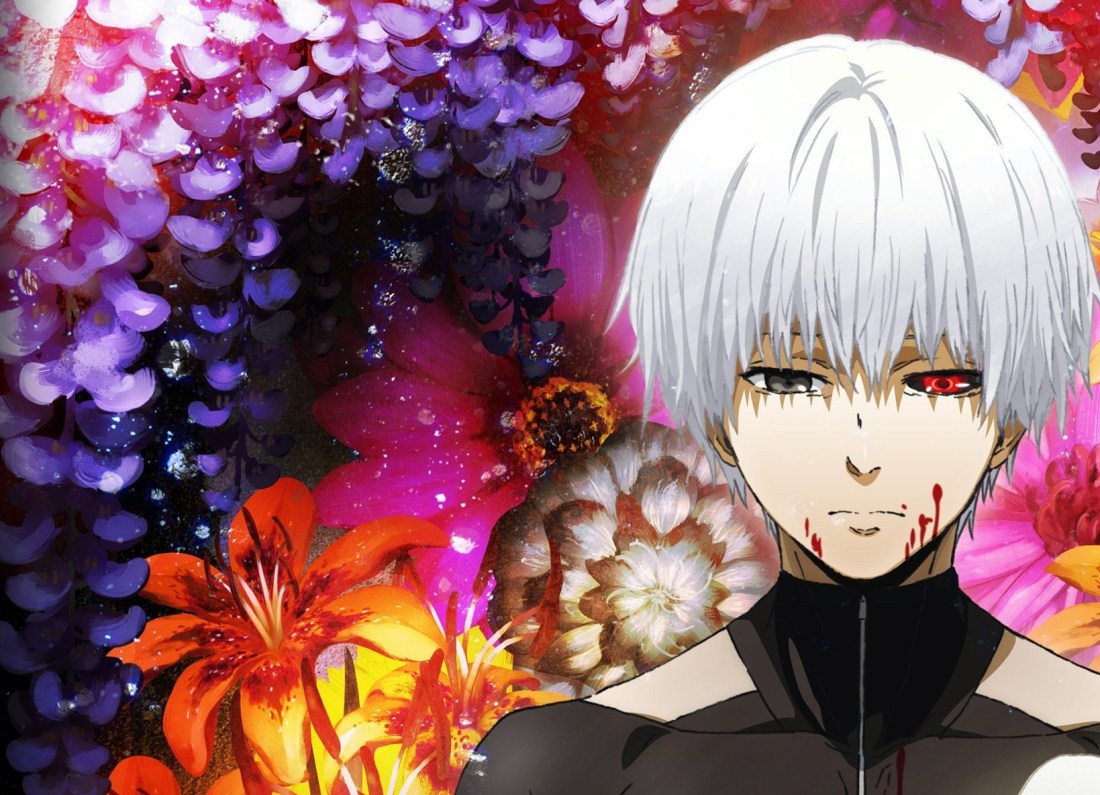
For example, the emotional goodbye Kaneki (Natsuki Hanae) has with Touka (Sora Amamiya) in the manga is replaced in this first episode with Kaneki just being a silent edge lord, which he unfortunately remains for most of the season.
Kaneki barely says anything to Touka when he leaves Anteiku, compared to the manga where he talks a lot, showing Pierrot couldn’t be bothered to write a different conversation.
Then there is Kaneki joining Aogiri Tree this episode, which is also atrociously done.
The anime decided to change the story in √A from Kaneki forming a resistance group to stop Aogiri to him joining them.
Sui Ishida, the creator of the series, envisioned that Kaneki would do this to secretly find and kill the One Eyed King but Studio Pierrot threw this, and his other ideas, out in favor of Kaneki joining Aogiri Tree to get stronger, which makes no sense at all.
This confusing plot line is on full display in the first episode with the scene that I think is supposed to show Eto (Maaya Sakamoto) convincing Kaneki to join Aogiri, which instead just has her giggling at him and then disappearing, without either of them saying anything.
Why would Aogiri Tree decide to let Kaneki join them anyway, when he is responsible for the death of one of their executives?
Not only this, but many important scenes like Kaneki breaking half the bones in Ayato’s (Yuki Kaiji) body are completely removed in this episode.
Unfortunately, the dip in quality of √A continues, with Pierrot trying to work in characters from the manga that just do not translate well to this new story.
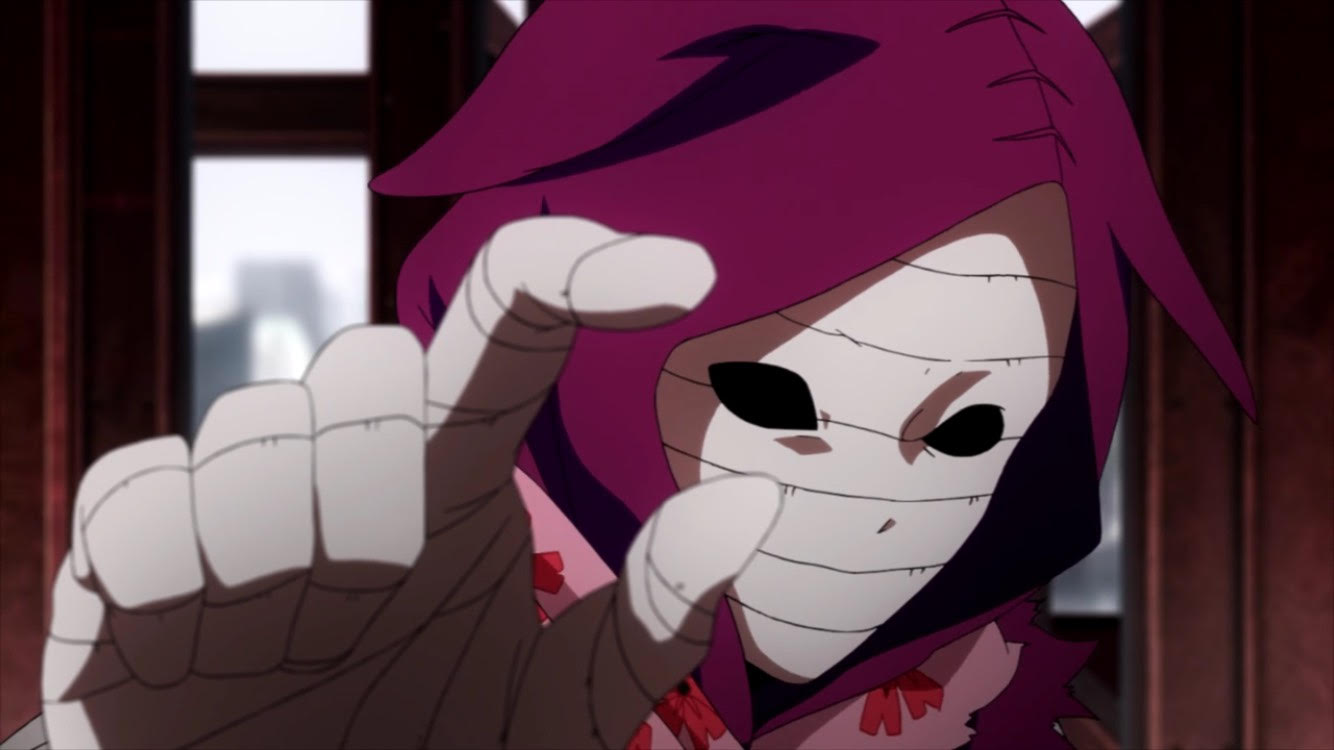
The biggest example of this is Kurona (Aoi Yuuki) and Nashiro (Haruka Tomatsu).
In the manga, these two show up because both Kaneki and the CCG are actively chasing them down, forcing them to fight.
In the anime, however, they deliberately pursue Kaneki for absolutely no reason, making it feel like they were written in just because they were in the manga and not because they had a story based reason for being there.
Kurona and Nashiro should not have been in √A. Without Kaneki pursuing them it made no sense for them to be in the season.
These problems with the anime original content continue throughout √A, with even censorship being a problem. Tokyo Ghoul is a dark manga so it should have been a dark anime.
Characters that lost their limbs just break bones here.
Studio Pierrot should have listened to Ishida’s ideas for the season or just followed his original story.
Sadly, the anime only events are not the only issues with √A because the animation and soundtrack are issues too.
While the animation isn’t awful, various fights in the first half of √A feel slow and more static than the first season.
As for the soundtracks, songs are repeated constantly to the point that I actually tired of hearing even the great ones.
I lost count of how many times “Glassy Skies” played.
Not only this, but the opening, “Munou”, is flat out terrible, with barely any effort put into the animation, with it just focusing on Kaneki’s face the entire time.
However, despite the many problems I have mentioned, I still do not consider √A to be a bad season.
It almost is but there are a few redeeming qualities the season has that cause it to miss the title of bad by the skin of its teeth.
For starters, even though I didn’t like many of the changes that were made to the original story, there are actually some good ones.
For example, there is an interaction between Kaneki and Naki (Hiro Shimono) in the first few episodes that I really enjoyed, and I liked some of the little quirks Eto was given, along with her interaction with Juuzou (Rie Kugiyama) and Shinohara (Yutaka Nakano), which explained some of her later actions.
Despite all interactions between Kaneki and Eto being a complete waste of time, instead of interesting changes as they should have been, I still liked the little changes and quirks her character was given in the anime.
Along with this, when the anime actually adapted parts of the original story correctly, it did them quite well.
The raid on Anteiku was excellent, for the most part, with the fights being very enjoyable, especially Yoshimura’s (Takayuki Sugo).
Speaking of which, I really enjoyed the change of having Yoshimura hallucinate Ukina during this scene.
The animation of these fights was also a lot better than they were earlier in the season.
Not fantastic, but good.
The voice acting also remains solid and, even though I had problems with how repeated the soundtrack was, I liked the final, slower version of Unravel that was played at the end.
I may have not liked the four minute walk that accompanied it but it’s still a fantastic version of a fantastic song.
So, despite its plenty of faults, Tokyo Ghoul √A is saved by its redeeming qualities, barely making it a good season.
Unfortunately, this is not the case for Tokyo Ghoul: Re, which I am currently struggling to get through.
You can expect a review for that train wreck soon.
Have you ever had an experience where, after hearing common place references on multiple occasions, you coincidentally watch the show with those references and you go, “Oh, so that’s where that came from?”
Well, this pretty much encapsulates my experience with the My Hero Academia anime.
I had seen so many memes and quotes from this anime but I never knew where they came from so it was a joy to see them when I started watching it.
Based off the manga of the same name by Kohei Hirikoshi, My Hero Academia is set in a world where 80% of the population are born with super powers, called quirks.
This leads to being a super hero becoming an actual job, with many hoping to become one.
One of these people is Izuku Midoriya (Daiki Yamashita), nicknamed Deku, who is unfortunately born quirkless, making him unable to accomplish his dream.
However, he then meets his idol and the greatest hero of all time, All Might (Kenta Miyake), who, after seeing Deku’s heroic qualities, decides to train him and have him inherit his quirk, One For All.
Deku and All Might are both great characters, with Deku being the underdog hero and All Might being the over the top hero.
From here, Deku begins his quest to become a hero. My Hero Academia is a very inspirational story with Deku being a very likeable underdog.
Likewise, All Might is a great teacher for him, being both heroic, sympathetic, and hilarious.
Both the voice actors for these characters do a great job with their characters.
The same can be said for many of the other characters, who are just as memorable.
There is the strict rule follower Tenya Iida (Kaito Ishikawa), and the two characters desperately fighting for the title of Best Girl, Ochaco Uraraka (Ayane Sakura) and Tsuyu Asui (Aoi Yuki).
Sadly, not every character is as great because there are few who did get on my nerves, most notably the bully, Katsuki Bakugo (Nobuhiko Okamoto), who I found myself constantly wanting to punch.
Even though I would like the punch Bakugo in the face that would definitely not be a good idea because he would most likely kill me.
Strangely enough, he seems to be a lot of people’s favourite character, which makes me hope he will be developed in later seasons.
On top of this, there are so many characters introduced in this 13 episode first season that quite a few slip under the rug.
Honestly, if you asked me, I would be hard pressed to remember even half of the characters’ names.
Another issue is the flashbacks which, rather than showing something new, often show scenes we have already seen.
Still these did not diminish my enjoyment of My Hero Academia because it is still funny, inspirational, and has great action sequences.
This is helped by the good animation and music that helped put me on the edge of my seat.
Overall, My Hero Academia is a great start to a series and I am interested to see where it will go.