So, the fifth season of My Hero Academia has been interesting to say the least.
The problems fans are having with the anime have been made clear by them since season four, a season I was quite forgiving of and praised highly (although I have not rewatched it since so that could change if I chose to do so).
However, I am not as forgiving with Season Five because these problems have been bothering me.
The adaptation of the first arc, Class 1-A vs 1-B, was adapted quite well apart from a few too many flashbacks.
However, the rest of the season has not been adapted nearly as well.
The Endeavor Agency Arc was put ahead of the highly anticipated My Villain Academia Arc, which will undoubtedly make some scenes in future episodes not very tense because we know which characters will live.
Not only this but some of the episodes in the Endeavor Agency Arc were slowed down to a snail’s pace and there was even a filler episode put in.
Why was all this done?
Well, supposedly it was all for the new My Hero Academia movie, since it has characters from the agency arc and they had to move it forward to have the movie make sense to the viewer.
If this is true, it is a real shame that one of the best storylines from the manga has been pushed to the side for that.
Well, we recently got the begining of this highly praised arc with Episode Twenty of Season Five, “My Villain Academia”, and the problems with the pacing of prior episodes really affects the beginning of said arc which… is not even a beginning at all really.
Directed by Ikurō Satō and Takanori Yano, the episode skips over the first chapter of the My Villain Academia Arc entirely, which is a vital chapter because it sets up key events towards the end of the arc.
Even worse, by removing this chapter, Spinner’s entire character arc is effectively gone now.
This really makes me concerned for how this storyline will continue to be handled.
At least the scenes that were actually adapted from the manga are pretty good.
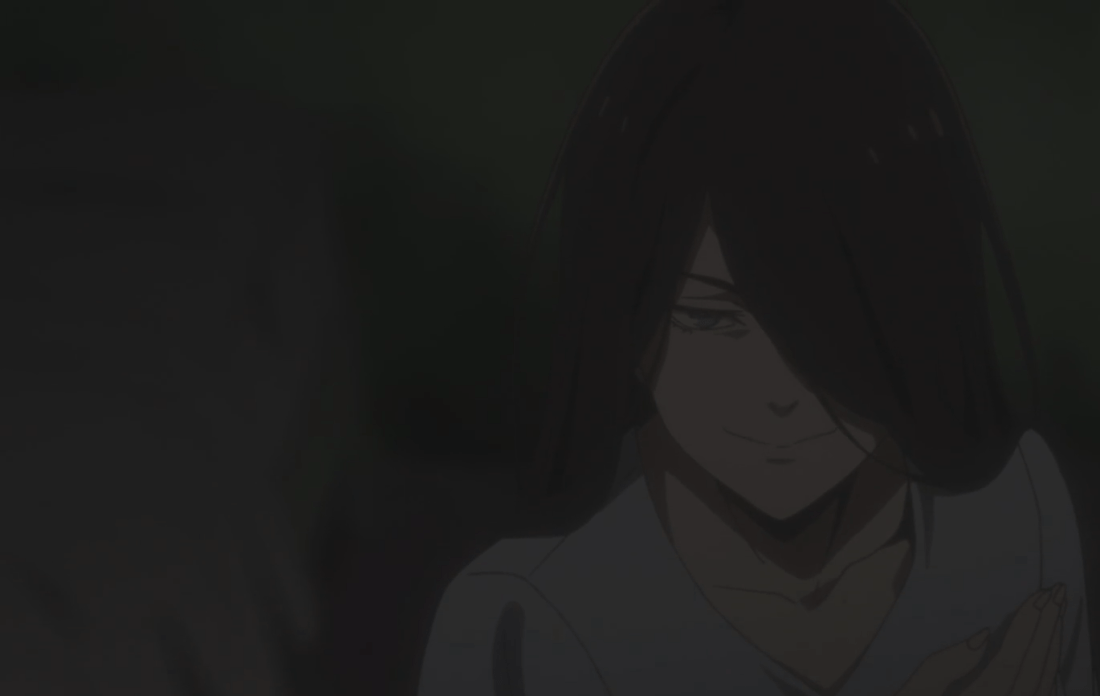
“My Villain Academia” begins with the League of Villains being attacked by Gigantomachia, All For One’s bodyguard, who wants to test Shigaraki to see if he is fit to be his new master.
Alas, Shigaraki is unworthy in Gigantomachia’s eyes, leading to the League being brought in to meet the creator of the Nomu, Daruma Ujiko, who is the Dr who told Izuku that he didn’t have a Quirk at the beginning of the story.
It is here we get our first peak into Shigaraki’s dark past, as we see how he was rescued by All For One in a flashback who then tells the young boy how he accidentally killed his entire family with his Quirk, presenting him with their hands, which are the hands he wears to this day.
Ujiko then tasks Shigaraki with gaining Gigantomachia’s loyalty in order to achieve his full support, leading to the League returning to Gigantomachia, lead by Shigaraki, who tells the giant bodyguard that his future king is back in a scene that gave me goosebumps.
We then cut to a month and a half later where Shigaraki is still struggling to beat Gigantomachia.
Spinner finally gets some spotlight, narrating about their struggles and how Toga got a new coat, however this detail now feels irrelvant because we didn’t see how much the League was struggling financially at the beginning of the arc, since this was also cut.
Speaking of things being removed, the introduction of Redestro is gone as well, so him calling on the League of Villains to fight his Meta Liberation Army feels kind of abrupt.
He lures the League in by using Giran as bait and threatening to call the heroes down on them if they don’t come to him.
Unfortunately for Redestro, he doesn’t know about Gigantomachia, and Shigaraki plans to use this to his advantage by eventually leading the giant to crush the Meta Liberation Army, planning to get him to submit after he is done.
This brings an end to a good episode, but one that is quite disappointing from a manga reader’s perspective.
There are so many cuts of relevant parts to the story that it feels like the My Villain Academia Arc will probably be nowhere near as impactful as it was in the manga.
I am still excited to see the rest of it and hope it is adapted well.
But, if it is not, I think many of us will be quite bitter that one of the best arcs in My Hero Academia was not done justice because the studio wanted to focus on a movie that isn’t even canon.
Tag: Anime
Chainsaw Man PV Reaction: All Aboard the Hype Devil Train!
Warning: This reaction will contain spoilers for the manga so if you haven’t read it then don’t read this.
Chainsaw Man is one of my favourite mangas.
Written and illustrated by Tatsuki Fujimoto, the story is a constant mix of being endearing, hilarious, horrifying, and emotional.
I’ve reread it twice and I’ve only loved it more each time.
So, obviously, I was very excited for the PV for the upcoming anime from Mappa Studio.
Well, we got the PV recently and its safe to say that the fanbase lost its collective mind over how good it was.
Seriously, I really hope that we don’t get an Attack on Titan Final Season situation where the actual show’s animation doesn’t live up to Mappa’s PV animation.
Not saying that Attack on Titan’s animation was bad but the PV did look better, and this caused a lot of outrage when the actual CGI appeared, which went as far as some stupid people harrassing Mappa’s staff.
Now, was the Chainsaw Man trailer preanimated?
Almost certainly.
However, this doesn’t mean we won’t be getting the same outcome as Attack on Titan because apparently the same people working on this trailer will be working on the anime and also the schedule will probably not be as bad for these animators, hopefully.
As for what happens in the trailer, it has a lot of recognizable and unrecognizable moments interestingly enough.
The PV starts and we see a young Denji standing in a bloody alleyway and a mouse nearby, as the shot pans out to reveal the city outside.
This works as great symbolism, both for what will be revealed about Denji as the story goes on and also the whole country and city mouse discussion that comes about.
From here, the trailer cuts to the Hayakawa household, with Denji, Aki and Power having a nice family meal.
The three of them look excellent and this is seen further with the following shots of Denji, Power and Kobeni at the beach and Aki and Himeno in bed.
Along with these moments leaving a smile on my face because of how well animated they are, they also had me intrigued because these scenes were not in the manga.
It makes me wonder if Mappa will be adding some anime only scenes or if these are just for the trailer.
Will be interesting to see.
However, the fact that the next shots reveals these idyllic settings are happening inside a TV screen means it is likely that these moments are not real and the disturbing stuff that follows is.
These disturbing things include shots of the Eternity Devil, a graveyard for devil hunters, a bloody Gun Devil bullet, Aki’s house exploding, Katana Man and Sawatari walking, Denji’s door, Denji resting with Pochita in an old shack, and Makima herself about to throw down.
Once the horror side of Chainsaw Man has been shown with this, the trailer makes sure to show the action side, with bombastic music set to even more quick shots, this time of Kon, Aki drawing his sword, Kishibe rising up, Power attacking with a sledge hammer, and Denji facing off against the Bat Devil and Leech Devil.
The final shots of the trailer see Denji in his full Chainsaw Man getup, as he cuts down zombies left and right in a gory display.
Now, these last few shots do give more credence to the trailer being preanimated, since Denji is wearing his devil hunting outfit here, when in the manga he was shirtless.
Still, even if it is preanimated, I have hope that the anime can actually make this fight look as good as it does in the PV.
Overall, the PV is excellent.
It does a fantastic job of hyping up fans of the manga and also getting those who will be anime only viewers intrigued.
Also the director has been announced as Ryu Nakayama, who is a first time director but has been a key animator for anime like Kill la Kill and One Punch Man.
As for the composer, they have been announced as Kensuke Ushio, who has composed for A Silent Voice, Devilman Crybaby, and Japan Sinks: 2020.
So, both of these people are promising people to leave Chainsaw Man in the hands of.
I hope that they and Mappa Studio can pull off adapting one of my favourite manga.
Nichijou Review: Selamat Pagi!
![]()
If you ask a large group of anime fans what their favourite comedy anime is, I’m sure that someone would bring up Nichijou, and rightfully so.
Based off the manga by Keiichi Arawi, directed by Tatsuya Isihara, and adapted by the great Kyoto Animation, I remember watching Nichijou’s first episode a few years ago but, for whatever reason, not continuing with it after that.
Well, now that I have finished watching the series with everyone at the anime club I go to, I can say that I regret this decision because Nichijou is an absolutely perfect comedy in every sense of the word.
Every single episode got a massive laugh out of everyone attending.
The story (if you can call it that) follows two sets of people.
First up, we have the three high schoolers, the ditz, Yuko Aioi (Mariko Honda), the yaoi artist, Mio Naganohara (Mai Aizawa), and the emotionless-looking, yet still intelligent, Mai Minakami (Misuzu Togashi).
Next, we have the robot, Nano Shinome (Shizuka Furuya), her creator the child, Professor (Hiromi Konno), and their talking cat, Sakamoto (Minoru Shiraishi).
I know, it seems like these are two completely different storylines that don’t belong in the same show.
Well, Nichijou somehow makes it work completely, as we see both sets of characters go about their normal, over the top, everyday lives.

I say over the top because almost every single action in Nichijou is.
The first episode literally has a scene where Yuuko trying to catch some food she dropped is animated like it’s a stylized fight sequence.
There is a common joke in the fandom that they spent almost all of their animation budget on scenes like this and I honestly would not be surprised if it was true.
These scenes are so ludicrous that they’re hilarious and there is one of them in pretty much every single episode.
Just wait until you get to the Mio fight scene and the high jump scene.
You will know what I’m talking about when you get to those moments and I highly suspect you’ll be dying of laughter when you do.

This is what Nichijou is essentially, a series of skits, most of them focusing on the characters I mentioned, with very little overarching story.
There is development and plot progression for Nano but, other than her, there is next to none of this for the rest of the cast.

Ordinarily, I would say that the characters not being developed was a bad thing but this is not the case for Nichijou.
It’s not trying to be a show where every character grows to the point that they are different by the end.
It’s trying to be a show that makes us laugh at all the insane things going on in these characters’ everyday lives, and it more than succeeds at that.
If you haven’t seen Nichijou yet then I recommend you go see what you’re missing out on.
You will laugh so hard your sides hurt at least once every episode.
It is, in my opinion, the perfect comedy anime.
My Hero Academia, Season Five, Episode Ten, That Which is Inherited Review: The Controversial Twist.
![]()
The events of Episode Ten from Season Five of My Hero Academia are ones I have been interested to see adapted in the anime for a while.
My reason for this is that not only was I excited to see the big twist play out, but I was also curious to see what the fan reaction would be.
The reveal that One For All would give Deku multiple Quirks was a controversial one when it happened in the manga because many thought it would make him too overpowered and lessen the stakes.
Personally, I think it has been handled great so far in the manga, although I won’t be saying anything more about the source material beyond that.
It also seems that the anime only reaction has been mostly positive as well, which is good to see, with fans seemingly open to see where this goes, even if they have concerns about it, which, to be fair, are natural.
As for the episode itself, “That Which is Inherited”, directed by Ikurō Satō, it is the best episode of Season Five so far and gives new life to this arc, along with the previous two episodes, which were also pretty great.
Before those episodes, the arc had been a bit drawn out, with the anime making things longer than it should have been by adding various recaps to things we did not need them for.
“That Which is Inherited” does prove the importance of this arc, though, because the big reveal is clearly one of the most important moments in My Hero Academia, being one that shapes the direction the story is going.
The episode begins in a rather creepy fashion, opening up at Tartarus Prison where All For One is being held.
The king of all supervillains is under constant surveillance in his prison cell and the guards express concern at his movement in his cell along with the movements of his subordinates in the League of Villains who are still at large.
It is at this moment where the creepy factor comes in, as All For One is revealed to have heard them talking and aplogises for making them nervous, before saying he can hear his brother’s voice, which makes sense considering how One For All’s true potential is about to be activated.
This scene is followed up with even more hints at One For All’s unlocking, as All Might recieves a call from Gran Torino about something his predecessor and mentor, Nana, told the elderly hero.
She said to him once that she dreamed of a man in shadow telling her, “the time has not yet come.”
From here, the episode goes into the hyped up final fight between Deku and Monoma’s team.
We see the moments before this fight, as Monoma has a talk with Shinso about how they are similar, since both were told they couldn’t be heroes because of their Quirks.
This heart to heart actually does a good job of building up Monoma as a character, which is good for him because I usually find him to be incredibly annoying, what with his constant, annoying shouting about how better his class is than 1-A’s.
We also get a good bit of foreshadowing here for the event that will unintentionally unlock One For All, as Monoma asks Shinso how he got Deku to talk so he could brainwash him during the sports festival.
Shinso says he insulted his classmate and the look on Monoma’s face just screams that he now has a plan to use his Copy Quirk to brainwash Deku.
With this plan now set, so begins the attack on Deku’s team by Monoma and Shinso’s group.
We also get an introduction to the other members of their team but they’re not important so I won’t go into their Quirks.
What really matters is the fight between Deku and Monoma, as Monoma sets his plan to brainwash Deku into motion by insulting Bakugo, saying his actions brought down the symbol of peace.
This turns out to not be the best plan, though, because it pushes Deku’s buttons enough that it unlocks One For All’s potential, and the Black Whip Quirk explodes from Deku’s hand.
The way this scene is animated and edited is stellar, with the sound cutting out completley for a bit, followed by All Might’s horrified face as Nana’s words ring in his head.
With Black Whip going crazy and Deku desperately trying to control it, the music and the reactions of the characters and are particuarly great.
I really liked the moment when Deku bursts through a wall and we get to see Shinso’s shocked reaction.
Even though we can’t see his mouth, it’s clear he is terrified by what’s happening.
Now, with Deku unable to control this new Quirk, who should come in to save him?
None other than Uraraka, as she jumps up and grabs a hold of Deku in an effort to calm him.
We then get more of an exploration of her backstory, as we see that along with her wanting to become a hero to help her parents financially, she also became one because she loved helping people and making them happy, building into the present where we see her help Deku.
There is also a great line in this scene, when Uraraka wonders, “who protects the heroes when they’re hurting.”
Much like Monoma, I am glad we got some Uraraka spotlight this episode.
It’s pretty clear that My Hero Academia is a show where the male characters get a lot more spotlight than the female ones.
Not to say that the content the female characters get is bad, far from it, but it is far less frequent to get character development and important scenes for the girls in My Hero Academia, so it was nice to see Uraraka finally get some of the spotlight in this episode.
That said, don’t expect her to have much more importance after this moment, unfortunately.
Well, at least the content we get from her here is pretty good, as she calls for Shinso to save Deku by brainwashing him, which succeeds, propelling Deku into One For All to talk with a Vestige.
This past user of One For All informs Deku that the Black Whip power he used is actually his Quirk and soon Deku will inherit six others, as One For All has finally reached the singularity point mentioned in the season premiere.
Not only this but these Quirks are much stronger than they were originally because they have been cultivated by One For All over the years.
Given how strong this will make Deku when he activates all six, you can see why it would make plenty of readers concerned when it was revealed in the manga.
If used wrong by Horikoshi, this power up could completley break the power scaling of the series.
Again, though, I do think that the way it is used in the future of the story is well done, so I advise those of you who have doubts to continue watching, before making your own judgements on this.
Maybe you will come to like this twist and its impact on the story, like I do.
Anyway, following this reveal, Deku awakens from Shinso’s brainwashing and the fight continues, with Deku and Uraraka having each other’s back and Aizawa deciding to allow the match to continue, bringing the episode to a close.
All in all, “That Which is Inherited” is the best episode of Season Five so far.
It adapts the twist of One For All’s upgrade really well and portrays the initial horror of Black Whip activating greatly.
There are even some good comedic moments, like one good gag with Jiro.
The twist may be controversial for some but I hope they come to like this twist and its impact on the story as the anime goes on.
My Hero Academia, Season Five, Episode Two, Vestiges Review: A Look Into the Past.
![]()
After the filler first episode of My Hero Academia Season Five, I’m sure many people were excited to see what the outcome would be of Dabi’s first meeting with Endeavor.
Well, we we got the answer to that in the second episode, “Vestiges”, directed by Shōji Ikeno, and I have to say that I’m quite impressed with how they managed to temper expectations but still make it satisfying.
Before seeing the end of Season Four, I was sure that Dabi’s arrival was going to be the big cliffhanger to get viewers excited for Season Five.
However, instead the episode cut right before his arrival, instead leaving it for the end of last week’s episode.
Not only this but they also showed that the fight would not end too badly for Endeavor, given that they showed him alive in the hostpital, before cutting to the cliffhanger of Hawks meeting with Dabi.
This all allowed viewers to temper their expectations, going in not expecting a big fight, which would leave them satisfied with the outcome, instead of disappointed when they didn’t get what could have been hyped up for ratings.
In any case, we get to see Dabi and Endeavor’s first meeting in the opening of “Vestiges” with the villain confronting the wounded hero, only to be interrupted by the bunny hero Mirko.
This forces Dabi to retreat using the vomit sludge that was seen all the way back in Season Three.
He does get one last jab in at Endeavor, though, telling him not to die on him and calling him by his full name.
Yeah, dramatically calling people by their full names is kind of Dabi’s thing.
He did it with Shoto and now he’s doing it with Endeavor.
After this brief confrontation, we get the moment teased in last week’s cliffhanger, Hawks meeting with Dabi.
Turns out that Hawks is actually a double agent working under the orders of the Hero Commission, acting like he is on the side of the League of Villains to get more intel on them.
Dabi is still naturally suspicious of Hawks so refuses to allow him to meet Shigaraki.
As the he departs, Dabi recalls the Pro-Hero Snatch, who he murdered during the Overhaul Arc, before saying that he thought so much about those left behind that it drove him insane.
He also appears to be crying blood when he says this.
Quite curious.
Cutting back to Endeavor, we get a family meeting fueled by tension as he begins what will undoubtedly be a slow process in making amends with his children for what he did to them.
Fuyumi seems entirely willingly to forgive her father but Shoto and especially Natsuo are less certain.
Shoto gets a good dig in when he brings up Endeavor’s scar, forcing his father to look at his own son’s scar, which he inadvertantly gave him through pushing Rei into a mental breakdown.
Natsuo is far more uprfront in his anger, calling Endeavor out for neglecting them and keeping them all seperated from Shoto.
Of all the Todoroki siblings, Natsuo will definitley be the least likely to ever forgive their father.
Endeavor has certainly changed for the better, though, refusing to ask for forgiveness because he only wants to atone for all he has done.
The episode then switches perspectives from our slowly reforming hero to the up-and-coming hero Deku, who experiences the titular vestiges of One For All in a dream.
In this dream, he experiences what lead to the creation of the One For All Quirk.
As All For One rose to power, removing Quriks from those who saw it as a curse and gifting them to those who had none, his younger brother stood against him.
Wanting to bend his brother to his will as well, All For One forced a Quirk on him, unintentionally creating his arch nemesis, One For All.
How ironic.
The scene where One For All is created is especially good, as the first holder uses an argument about a comic book they both read where a demon king rises to undermine All For One’s point of view.
The first holder notes how All For One only read to volume three and, at the end of the story, a hero saves the day because the bad guy never wins.
Before the dream ends, the first user of One For All finally talks with Deku, informing him that they are past the singularity point, causing Deku to wake up and shatter his window, which was the cliffhanger for the post credits scene of Season Four.
So, now we’ve finally caught up on all the events teased in the Season Four finale and are left with more questions, like Dabi’s motives and the supposed singularity point the first holder mentions.
It’ll be interesting to see how anime only viewers react to what these answers are, both in this season and further down the line.
Overall, “Vestiges” is a solid episode of My Hero Academia that will build nicely into the events of the next story arc.
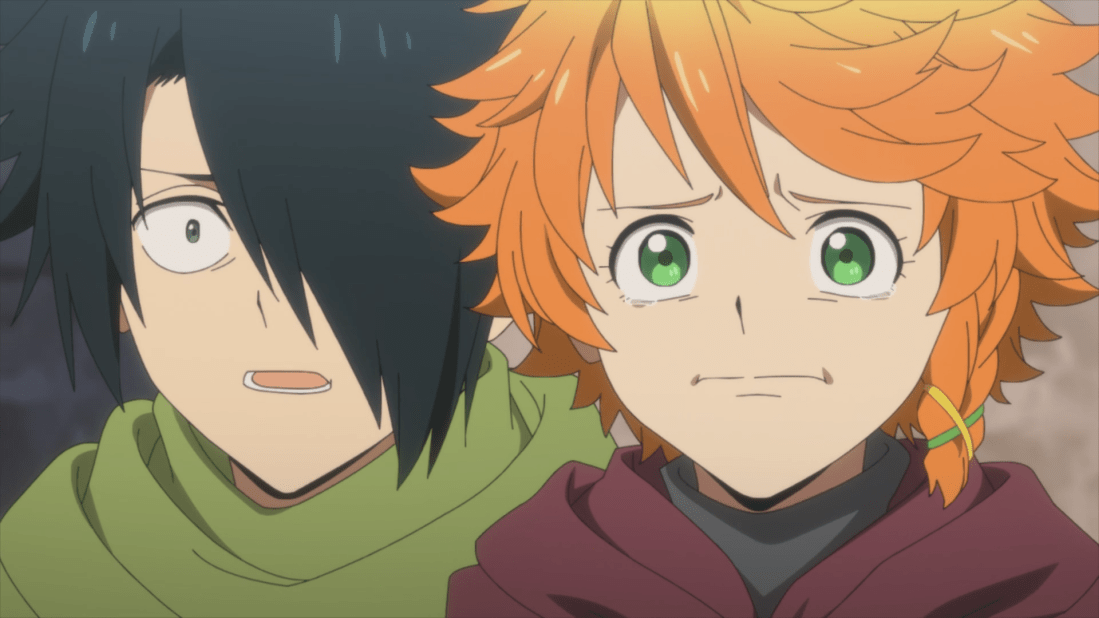
The Promised Neverland, Season Two, Episode Six Review: A Terrible Case of Tell Don’t Show.
![]()
It’s funny how a couple of episodes has been enough for me to pretty much lose all hope for The Promised Neverland Season Two.
Episodes Three and Four did concern me with all of their cut content, including the best character in the entire story being removed, but I was hopeful because of new scenes given to characters who needed it, like Isabella.
However, then Episode Five happened, cofirming that they had skipped the Goldy Pond Arc, causing everything to make absolutley no sense, including Norman’s return, which was incredibly rushed.
Then there was last week’s “episode”, where they just pointlessly recapped the entire story, including everything in season two for some weird reason, and that would have been completley pointless to do a review on.
Now, we have what looks like the final nail in the coffin for me: Episode Six.
Wow, was this a bad episode.
Directed by Yoshiki Katai, this episode commits the cardinal sin that almost every story should avoid completley, instead of when absolutley necessary, by telling instead of showing.
After Emma and Ray’s reunion with Norman, which lacks any emotion because of how short he has been gone in the anime, Norman goes on a long exposition spiel about what he’s been doing for the past year.
He explains how he was taken to be experimented on at a place called Lambda, how he escaped with the help of someone called Smee, who was then killed, and has since created a drug that he plans to use to cause all demons to degenerate, with all of this happening off screen.
This scene has to be one of the worst cases of telling and not showing that I have ever witnessed.
I will give the anime some credit, though, because this was not entirely its fault.
From what I recall, the manga did not show many of these events either and Norman just explained it through an exposition scene as well.
So, this poor moment is partially the manga’s fault and the anime is just adapting it.
However, the anime still does it way worse because even in the manga we do see at least some of Norman’s time in Lambda, what lead him there, and his plan actually makes sense because he has the means to do it.
Here, he has none of the resources he had in the manga so his plan to eventually use this drug to degenerate all demons is just stupid.
Just as annoying is Emma’s response to this because most of her character development has been cut along with the previous arcs.
Emma’s trauma and now wanting to find a way to make peace with the demons makes very little sense in this episode because it lacks any context because of these cuts.
This makes the attempted emotional moment where Ray convinces Emma to go and talk to Norman ring extremely hollow.
Speaking of Emma and Ray going to talk to Norman, it is here that we are officially introduced to his crew of Cislo, Barbara, Vincent and Zazie.
Honestly, I never really cared for these characters in the manga.
If anything, I actually found them all rather annoying, so it’s a very bitter pill to swallow for me that these are the characters the anime decided to adapt, instead of the likes of Yuugo, Lucas and Leuvis.
Barbara especially got on my nerves, what with her crazed rant at Emma, which, again, makes no sense because Emma has not gone through any events that would make her feel this way, like she did in the original story.
At least this leads into the one redeeming quality of the episode, where Emma and Ray tell Norman about Mujika and Sonju being able to survive without eating humans, causing Norman to look horrified, calling Mujika the “evil blooded girl.”
It makes for a good cliffhanger, which will surely have anime only viewers speculating.
Other than this, though, Episode Six is a flat out terrible episode, full of rushed scenes, annoying new characters, character incosistency, and one of the worst cases of telling instead of showing.
I now have very little hope for the rest of this adaptation and am honestly not looking forward to Episode Seven, or any other subsequent episode for that matter.
I hate to say it but The Promised Neverland Season Two is getting the Tokyo Ghoul treatment.
The Promised Neverland, Season Two, Episode Five Review: I Regret My Optimism.
![]()
Well, I really jinxed myself by saying I was optimistic after The Promised Neverland Season Two, Episode Four, didn’t I?
The third episode of this second season made me really concerned with the direction the story was going, with all the important cuts, including my favourite character being completley gone.
Then Episode Four happened and I began to regain some hope.
Sure, there were things that were handled rather poorly, like the laughably incompetant soldiers, but brand new scenes, like Isabella being recrutied to hunt the children, made me optomistic about where this anime original storyline could go.
However, Episode Five has now come out and, wow, did it drop the ball.
Directed by Takahiro Harada, the episode picks up a full year after the last one.
That’s right, we have skipped a year immediately after the children escaped the bunker and now they are living in the demon world.
How did they survive so long with all of the intelligent demons, wild demons, and armed humans hunting them down?
Good question because the anime offers absolutley no explanation.
See, this is why skipping over 60 chapters is an incredibly bad idea because it means where you pick up the story from will make absolutley no sense and, in this episode, it makes little.
How did the children get the material to disguise themselves as demons?
How have they not been noticed before when they got so easily noticed this time?
Most importantly, how is Norman back so soon with absolutley no build up?
This last moment, which is the cliffhanger of the episode, has almost made me lose hope about the quality of the rest of the season entirely.
The build up to Norman’s reveal in the manga, with Norman acting as the new William Minerva, was absolutley fantastic.
Here, he just shows up with no setup whatsoever and it comes off as extremely anticlimactic because of this.
Also, while it’s nice to see Maaya Uchida back as Norman, it’s only been seven episodes so he hasn’t been gone long enough that his return is a surprise.
Norman’s incredibly bland return and the other plot holes created by the episode are not the only problems, unfortunately.
First of all, the time skip made the scene hyping up Isabella last episode almost pointless.
She was tasked with hunting the children and she just failed for that entire year.
I don’t think the demons would have been too happy with those results.
Also, the chase scene in this episode, which leads into Norman’s return, is pretty bad because it lacks any tension.
To be fair, there are some moments that saved the episode from being terrible, like Emma’s interaction with the blind demon and the exploration of deterioration with the two sympathetic demon children.
However, the rest of it made me very disappointed, with the numerous amount of plot holes in numerous scenes.
It honestly feels like the anime is just going to end with this second season, given how much has been completley skipped over and the direction the story is going.
It feels like it’s going the Tokyo Ghoul adaptation route and I really hope it can find some way to prove me wrong about that.
Unfortunately, next episode is supposed to be a recap episode so it looks like those hopes are probably going to be crushed.
The Promised Neverland, Season Two, Episode Four Review: Slightly More Optimistic Now.
![]()
Episode Three of The Promised Neverland Season Two made me very concerned about the direction the anime was going, what with all of the cut content and changes.
However, after Episode Four, I’m feeling slightly more optimistic.
I still have concerns but I feel a little better about where the story may be heading.
Directed by Kakushi Ifuku, the episode follows the Grace Field children’s time spent at the bunker, which skips over quite a lof of chapters from the manga.
I’ll get my criticisms out of the way first because it’s easier which, again, is mostly down to the changes.
Right after the opening, with Emma being told the truth by a recording from William Minerva, or rather James Ratri, the episode quickly desolves into a bunch of segments that feel like filler.
Given what we could have been getting if the episode had just adapted the manga, this feels like an extreme downgrade.
Although, people who haven’t read the manga that watch this episode may actually these scenes, so I will admit I am biased in my sentiment.
My bias extends to the downgrade for the attack on the bunker, which is not only incredibly rushed but also laughable compared to the manga with how terribly incompetant the soldiers are.
These clear downgrades from the source material would have brought my opinions of the episode into the negative and would also have increased my fears for the whole season, if it wasn’t for the saving grace of the episode: Isabella.
One of my criticisms of the manga is that characters like Isabella did not get the screen time they deserved.
Well, now it seems that the anime is fixing this issue because Isabella is getting a brand new, anime original storyline, where she is tasked by the demons to hunt the remaining children.
This actually got me excited for what role she would play and I already have my theories about what could unfold in the future because of this, like that the demons potentially offered Ray’s saftey in return for her help.
This and the opening scene where James Ratri informs the children about his backstory, with a recorded phone message, not only saved the episode for me but also gave me some hope about the future of the story.
As I said, I still have my worries, increased by the preview, which seems to suggest a time skip, which would be way too early but, again, we’ll just have to see how this all turns out.
Overall, Episode Four is a decent episode that both has me concerned and makes me more optimistic for the rest of The Promised Neverland Season Two.
Attack on Titan, Season Four, Episode Seven, Assault Review: Attack on Nutcracker.
![]()
And here I thought “Declaration of War” was an incredible adaptation of the manga.
Well, in comparison, episode seven of Attack on Titan‘s final season, “Assault”, blew my expectations out of the water, in an episode that clearly surpassed the source material.
Way more dark and brutal than the two chapters it adapts, “Assault” is a visceral, heart pounding episode from start to finish that has me even more excited for how Mappa will adapt future chapters, some of which are the best in the entire manga.
Directed by Jun Shishido, the episode depicts the end of Eren and the Survey Corps’ horrific assault on the Liberio Internment Zone, where they completely demolish the Marleyan army and its prized Warriors.
Zeke, Pieck and Porco, all fall to the might of Eren and the Scouts, with only a severely injured Reiner left to stand against them by the end.
Before all of this craziness happens, though, “Assault” starts with an engaging beginning scene before the opening, hyping up the oncoming fight (if you can even call it that) between Levi and Zeke.
With Pieck and her panzer unit arriving to help Porco, numerous Scouts are cut down in a hail of gunfire, much to Mikasa and Levi’s horror.
However, Levi’s horror quickly turns to determination as his old enemy Zeke enters the battlefield and the epic fight between the two factions continues.
It is this fight that Falco emerges from the rubble to see, as Reiner managed to save them both by partially transforming when Eren began his attack.
However, Reiner is now in a bad state as a result of this attack and isn’t healing properly, which Falco realizes is because he has lost the will to live.
Reiner being absent puts the Warriors at even more of a disadvantage than they thought because, even though the Scouts are cornered in Marley, like Pieck points out, they have two aces up their sleeve.
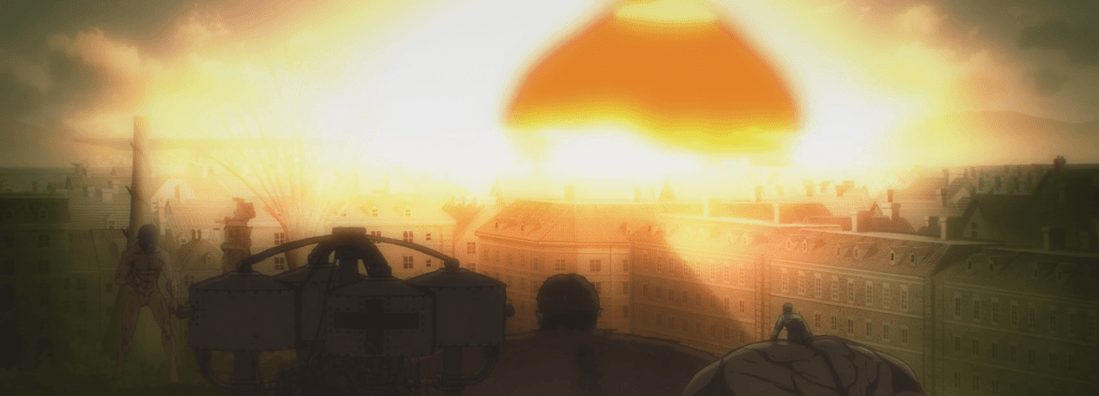
The first of these aces comes in the form of the Colossal Titan himself, Armin, who launches an attack on the naval port, essentially tactical nuking it and killing hundreds if not thousands of people, unfortunately not all of them soldiers.
Armin sees this horror for himself because, after emerging from his Titan, he sees a small child in the rubble, looking up at him in horror, probably the same way he looked up in at the Colossal Titan when Bertholdt breached the wall, all those years ago.
How many innocent people did Armin kill in this attack?
All the haunted Armin knows for sure is that this horrifying experience is most likely what Bertholdt saw and felt on the day he broke the wall.
As for Armin’s Colossal Titan, I really have to applaud Mappa for making it look amazing as it did.
For one thing, it was entirely 2D, with not a hint of CGI.
Back when Wit Studio did their Colossal Titan in seasons two and three, it was entirely CGI to the point that it was slightly distracting but here it looked perfect.
As for the rest of the CGI in this episode, I thought it was fantastic as well.
Thankfully, the morons who threatened Mappa’s staff over the CGI last episode seem to have finally shut up about it now so this is a testament to how great everything looked.
Back to “Assault”, the second second ace the Scouts have up their sleeve is an airship that is flown to pick up the Scouts from Liberio, with Hange and a new character named Onyankopon in charge of flying it.
It is great to see Hange and Armin again, and their conversation about Armin’s planning being similar to Erwin’s shows how their character arcs will involve them trying to live up the legacy he left them with.
As for Onyankopon, I know from the manga that he is a pretty great side character, so I’m interested to see how he will be portrayed and voice acted in the anime.
In any case, their airship is a giant target, which is why it was so important for the Scouts to take the Warriors down before it got there, especially the Cart Titan with its Panzer Unit.
By the time the airship arrives, only Porco is left, Pieck and Zeke having been defeated.
Unfortunately for Porco, he screws up yet again and is defeated by Mikasa and Eren, leading to Eren using him to kill the Warhammer Titan.
I say “again” because the Warriors failing was 90% Porco’s fault here because of his complete arrogance in this battle.
Screw up number one for Porco: He doesn’t listen to Pieck telling him to stay back and protect Zeke, allowing both her and the war chief to be taken down by the Scouts.
Screw up number two: After seeing Pieck and Zeke have been defeated, he gives into his anger and attacks Eren in a blind rage, leading him to accidentally expose the Warhammer Titan’s weakness.
Finally, screw up number three: Porco doesn’t check his blind spot when going to attack Hange and Onyankopon’s airship, allowing Mikasa and Eren to dismember him, and then Eren uses him as a literal nutcracker to kill the Warhammer Titan and inherit her power.
Speaking of the nutcracker scene, wow, was that way more brutal and emotional compared to the manga.
The shots of Eren’s Titan looked absolutely demonic and the voice actor for Porco, Toshiki Masuda, did a fantastic job with showing Porco’s horror as he realized Eren is using him to kill Lara Tyber.
Another scene that is way more brutal than the manga is the deaths of the Panzer Unit, as it is shown that they have pictures of themselves and their family’s in their gun holes before they are killed by Sasha, Jean, and the other Scouts, making them much more sympathetic before they die.
Of course, there’s Armin’s attack on the port, which is also more horrifying, with the red glow giving it a real Evangalion vibe.
And then there’s the moment the episode hyped up right from the begging, Levi’s absolute slaughter of the Beast Titan.
Much like the first round, this couldn’t even be called a fight because Levi took the giant monkey down with just one hit, hatred glowing like a fire in his eyes.
Gabi, Falco and Magath then have to watch as Levi blows up the Beast Titan’s nape, supposedly with Zeke still inside, traumatizing the kids further.
The two have seen so much in the last few episodes, being betrayed and having their friends die in front of them, and this is only bringing them further into the black hole of hatred created for those on Paradis.
Gabi especially has fallen further down this rabbit hole of propaganda, now having the gate guards’ gun and declaring that she will kill Eren Jaeger.
Her and Falco’s voice actors also do an incredible job this episode, just like Porco’s, with their guttural screams for Reiner giving me chills.
It caused a response in Reiner as well, as he rises from the rubble, apparently ready to save Porco from being eaten and to face down Eren in round three.
Although, it doesn’t seem like this round will last very long considering that Reiner’s Titan is half formed, with much of its armor missing.
This is most likely due to his damaged state because of Eren’s transformation and his suicidal mindset, shown by his line of, “Why can’t you just let me die in peace!”
It does make for an epic cliffhanger, though, what with the intense music and great voice acting.
“Assault” is another brilliant episode in Attack on Titan‘s final season, delivering fantastic action, animation and voice acting.
I am now even more excited for the next episode, “Assassins’ Bullet”, and how well the chapter or chapters it covers could be adapted.
The Promised Neverland, Season Two, Episode Three Review: Where Did You-Go?
![]()
I was very excited for episode three of The Promised Neverland Season Two because it was supposed to be the episode where my favorite character in the manga would be introduced.
Alas, it was not to be.
I had heard rumors that The Promised Neverland would be going anime original before the season started airing but I had no idea it would be to this extent.
Not only was an incredibly important character from the manga missing, who, again, is my favorite character, but also many important scenes hinting at the future of the story were removed as well.
Since the episode aired, it has been pretty much confirmed that the rest of the season will be anime original and, honestly, I am very concerned about this.
If they had stuck to the manga then the story would currently be adapting my favorite arc of the entire story, so of course it is worrying to see this part of the story that I love so much being changed.
This could either go really good or really bad for The Promised Neverland Season Two.
However, I need to make it clear that, despite my concerns, I still enjoyed episode three.
Although, if I had not read the manga I would certainly have enjoyed it a lot more because my negative points about the episode mainly revolve around how the changes in the story could become problematic as the season goes on.
As for the actual episode itself, it is well done, with director Yayoi Takano delivering a good adaptation for what was kept, like the opening goodbye between the Grace Field children and Sonju and Mujika.
This part of the episode revealed a much darker to Sonju because it is revealed that he saved the children so they could survive and have children of their own, which he could then eat in the future since this would be in line with his religious beliefs.
Before departing though, Mujika shares a goodbye where we get our first removal of a vital manga scene, with an important line Mujika says being removed, the first of many such removals.
Then we get a brief action scene of Sonju facing off against the demons from the farm, which is pretty enjoyable, before we see the kids reach the bunker and the whole slew of manga scenes that have been left out becomes apparent.
It was honestly hard for me to focus on the rest of the episode when we got to the big scene where the important character was supposed to appear but didn’t.
This makes me concerned that his introduction being changed may damage his character arc somehow, if he hasn’t been removed from the story all together that is.
God, please don’t let him have been removed from the story.
In any case, now the kids have reached the bunker and seem to have a good base of operations for a while.
Or do they?
The cliffhanger of the episode has Emma and Ray finding a phone, much earlier than they do in the manga, and answering its call, while the other kids find deranged writings on a wall, which is thankfully a sign that the missing character is still around.
In any case, this cliffhanger with the phone does make me interested to see how episode four will diverge from the manga.
Fingers crossed that the anime original story Season Two appears to be going down is just as good, if not better than the original story arc.
At least in the next episode I will be expecting drastic differences this time around.
Overall, episode three is a decent episode, despite its changes from the source material.
I am concerned about the future of the anime, though.
Still, who knows?
Maybe it can surprise us.