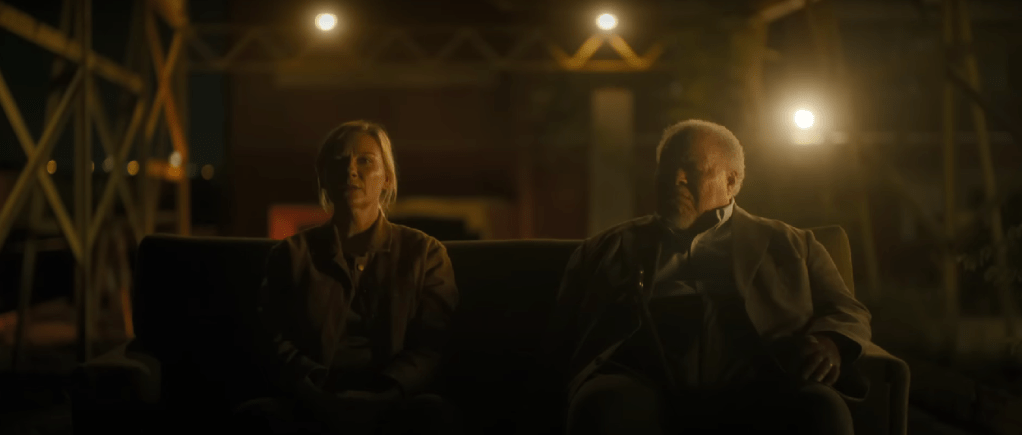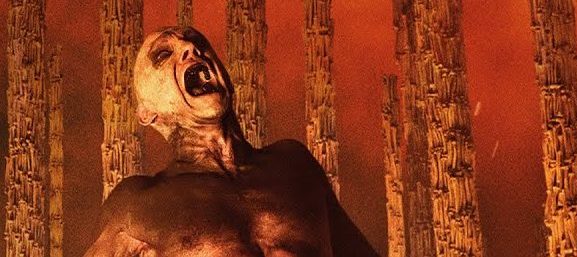
28 Years Later: The Bone Temple Review: Turning it Up to Eleven.

28 Years Later was one of my favorite films of 2025.
I found it to be a gripping post-apocalyptic coming-of-age story, which carried a touching message about the acceptance of death.
That being said, the film was divisive among general audiences, mostly due to its bizarre ending.
While I did enjoy said ending, I can definitely see how a group of ninja, Satan worshipping, Jimmy Saville cosplayers showing up out of nowhere rubbed people the wrong way.

The wackiness of 28 Years Later‘s ending is instantly dropped for a brutal reality.

Nevertheless, after the film ended, I was immediately on board for its follow up, The Bone Temple.
Being shot back-to-back with 28 Years Later, we thankfully did not have to wait two years to see it, like most sequels these days.
Having seen the film on the day of release, I can say that The Bone Temple definitely lived up to my expectations, even if I do prefer the previous movie.
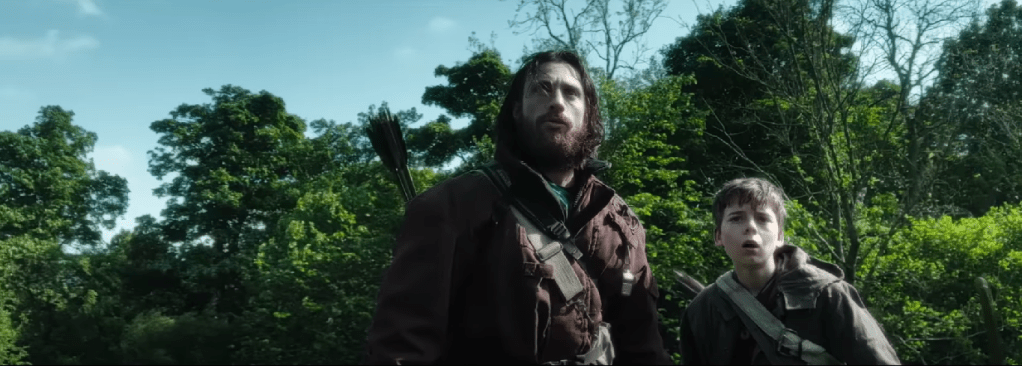
Picking up from 28 Years Later’s cliffhanger, The Bone Temple sees the young Spike (Alfie Williams) violently inducted into the Jimmy gang, led by the charismatic and deranged sadist, Jimmy Crystal (Jack O’Connell).
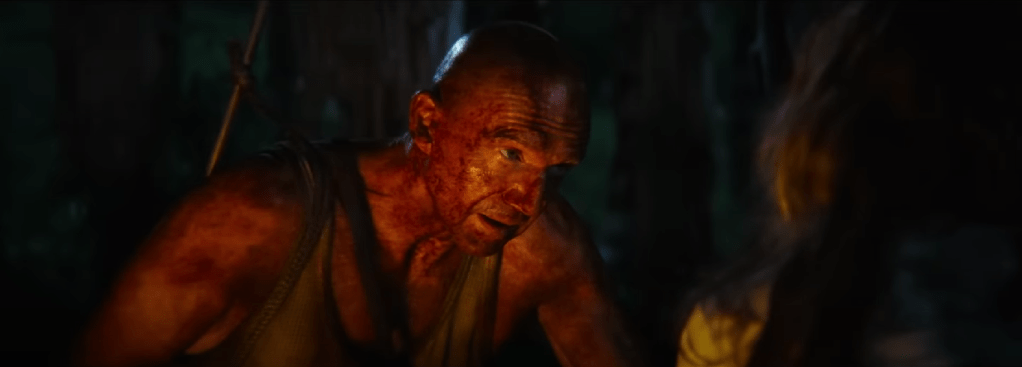
At the same time, Dr Ian Kelson (Ralph Fieness) finds himself forming an unusual bond with the Infected Alpha he has named Samson (Chi Lewis-Parry) and begins to wonder if treating the Rage Virus is possible. 
As the film progresses, the two storylines converge, resulting in a confrontation between Jimmy and Kelson at the titular Bone Temple and the conflict of their embodied ideals: peace vs chaos, kindness vs brutality.
These two opposing characters with their opposing beliefs are the focal point of the film. 
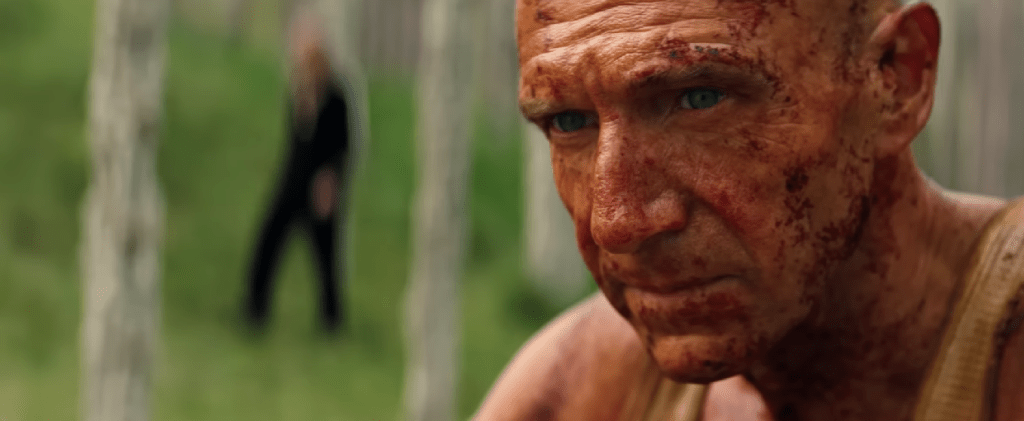
Pure good meets pure evil in The Bone Temple.

I already loved Dr Kelson’s character from 28 Years Later.
Spending over two decades in isolation and building a temple of bone to memoralize the deaths of millions, Kelson kept his humanity, helping to ease the suffering of Spike’s mother.
He continues his humanitarian efforts in The Bone Temple through his aid of Samson, with Ralph Fieness playing the role to perfection. 
In times of despair and chaos, we need a man like Dr Kelson. 
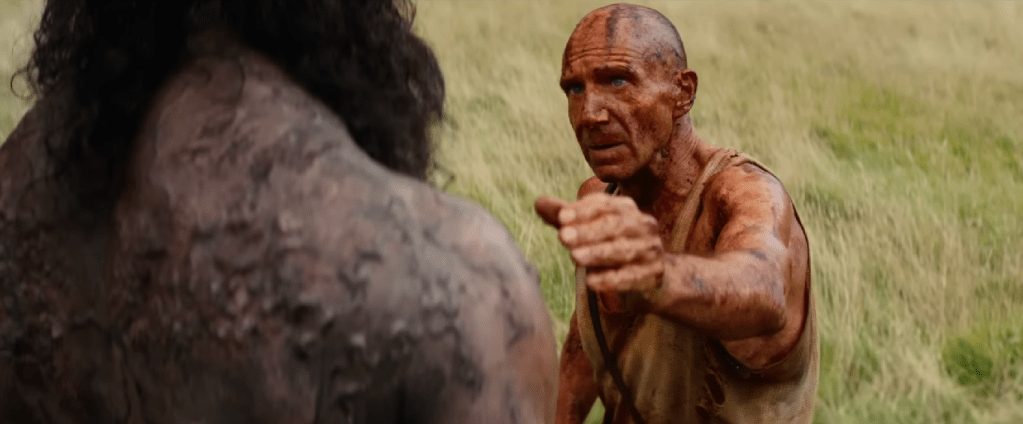
Kelson’s humanity is a shining light in a world of darkness.

What we certainly do not need is a man like Jimmy Crystal.
Played brilliantly by Jack O’Connell, the traumatised young survivor of the outbreak has transformed into a demented cult leader, hellbent on bringing as much pain and suffering he can in the name of his imagined father “Old Nick.”
His cult members are almost as demented, gleefully indulging in Jimmy’s idea of “charity.”
Their childlike nature is just as disturbing, with it being abundantly clear that these violent lunatics were once ordinary children before Britain fell. 
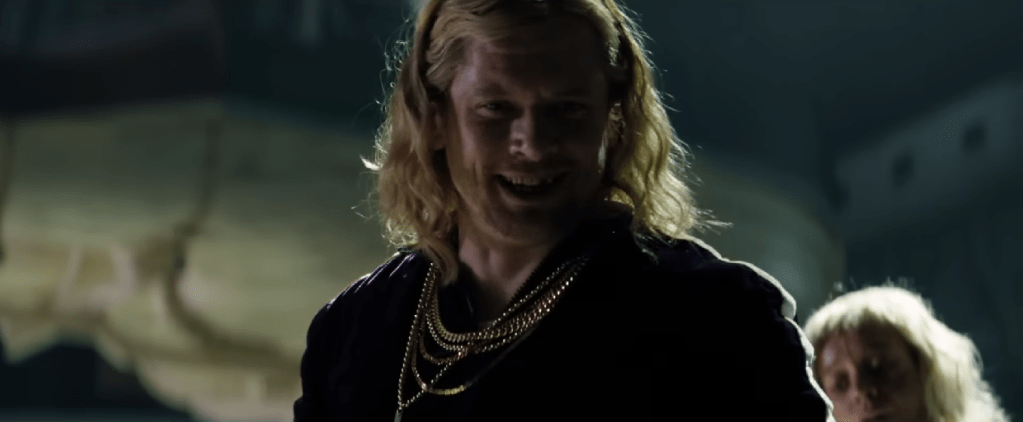
O’Connell has a knack for playing unhinged villains.

This makes the characters obvious visual similarities to notorious predator Jimmy Saville all the creepier.
Just as he twisted the innocence of children in real life, so has this brutal world the Jimmys grew up in.
And, boy, is it brutal.
28 Years Later was violent but The Bone Temple is on another level.
Brains are eaten and skin is flayed in numerous wince inducing scenes which, again, made the humanitarian efforts of Dr Kelson all the more important.
If the Jimmy gang are the children destroyed by the world, Samson is the child Kelson hopes to restore.
Chi Lewis-Parry brings both a sense of brutality and innocence to the role of the Infected Alpha.
Samson is a complex character, whether he is ripping someone’s head off, remembering the past or, more often than not, running around butt naked with all 28 inches flopping around in the wind… 
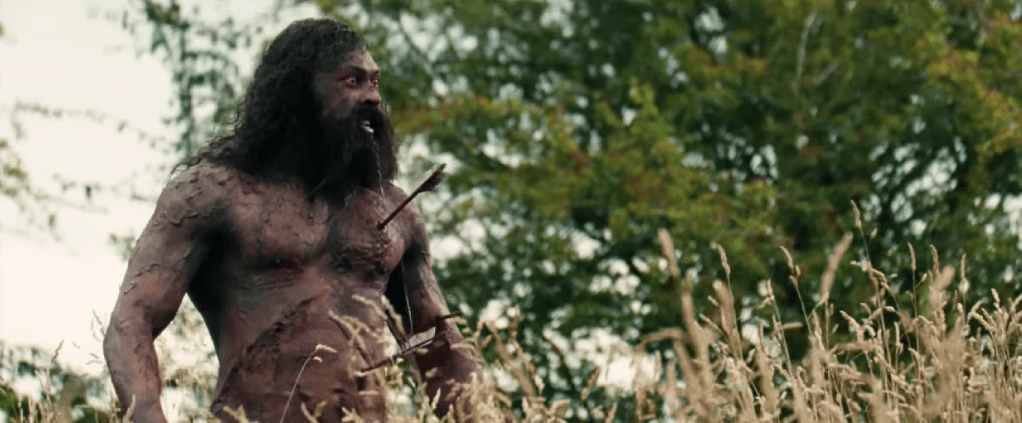
Sorry, could not resist making that joke.

However, while I do think the characters of Kelson, Jimmy and Samson are all great, I unfortunately found Spike’s to be a bit limited in this move.
He mostly just stands around looking horrified at what the Jimmys are doing which, fair enough, but I kind of wanted to see him do more after the first film.
There is also the character of Jimmy Ink (Erin Kellyman), by far the most humanized of the Jimmys, due to her sibling-like bond with Spike.
While I think she was well acted, the writing let her down a little because, even after the movie ended, I was not entirely sure what her goals were, or what she had planned after those goals were met.

I feel like I needed a little more detail to fully understand Jimmy Ink’s character

Along with this, while I liked the style of director Nia DaCosta, I missed the unique flair of Danny Boyle’s from 28 Years Later. 
My final criticism is that there was one scene hyped up in the trailer that was absent from the film.
Although this is more the trailer’s fault than the movie’s.
All of that being said, these are only minor issues, and the rest of the film more than makes up for them, especially the third act.
As I stated, the conflict between Kelson and Jimmy is the highlight of the film, culminating in a tremendous climax, which needs to be seen in theaters. 
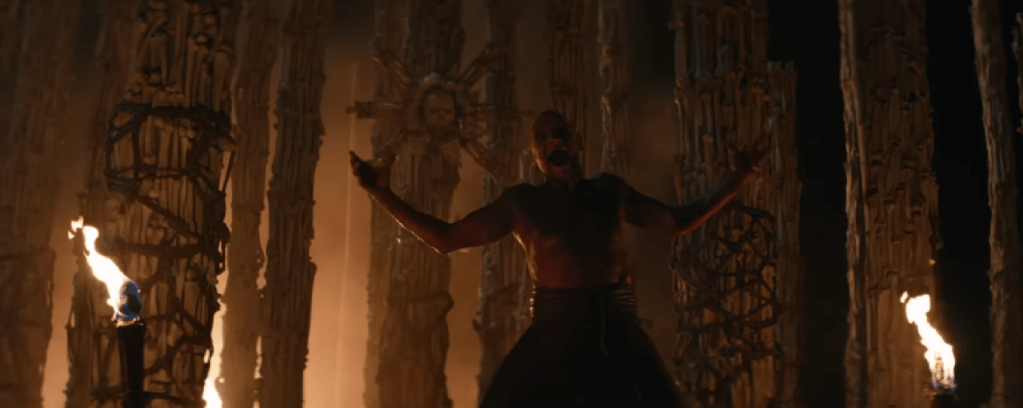
Prepare to get Iron Maiden’s The Number of the Beast stuck in your head.

Although I prefer 28 Years Later’s emotional journey, The Bone Temple offers a more than worthy sequel, with a compelling battle of ideals between its protaganist and antagonist.
I look forward to seeing the third film in this trilogy, where an iconic actor is poised to take center stage… or, at least, he will in about two years when that final film comes out.
Yeah, since the third movie was only recently greenlit, we are unfortunately going to have to wait a while for its release, unlike The Bone Temple. 
So, until then, memento mori.  

28 Years Later Review: A Thrilling and Oddly Moving Return.

In my teens, I went through a zombie phase. 
The Walking Dead, The Living Dead franchise, and The Last of Us were all zombie properties I greatly enjoyed. 
And then there was 28 Days Later. 
The movie which introduced the concept of running zombies (I know, I know, they are called infected in the film), 28 Days Later truly scared me.
Despite liking other zombie movies, I always wondered how the zombies caused apocalypses when they walked so slow.
But the Rage Virus in 28 Days Later convinced me by introducing not only fast zombies, but ones with an almost instant turn-rate upon infection. 
Due to how much this concept frightened me, it took me a while to watch 28 Weeks Later but, when I finally got the courage to do so, I was met with one of the best horror openings in movie history. 

Watching Don abandon his wife to survive was shocking and riveting.

So, when it was announced over twenty years later that Danny Boyle and Alex Garland were returning to make a third installment, I was obviously excited.
My excitement only grew with the first trailer, which I consider one of the best trailers of all time.
It turned an already grim poem, Boots by Rudyard Kipling, and made it even more terrifying.
Now, after many months of waiting, 28 Years Later is finally here. 
Having literally just returned home from having seen it, what did I think of it?
Well, I am pleased to say that 28 Years Later is a great film… but not in the way I expected. 
Directed by Danny Boyle, and written by Alex Garland, 28 Years Later picks up, well, 28 years after the Rage Virus has decimated the UK.
Despite the mainland being full of infected, some have survived on a nearby island.
One day, scavenger Jamie (Aaron Taylor-Johnson) takes his young son Spike (Alfie Williams) to the mainland in the hopes of him getting his first infected kill.

The movie truly begins with Spike’s coming-of-age mission.

While out there, they encounter new kinds of infected, a body mysteriously hung up by the feet, and signs of other survivors. 
Spike learns that one of these survivors may be Ian Kelson (Ralph Fiennes), a doctor who could potentially help his sick mother, Isla (Jodie Comer).
That is all I will say about the plot, though.
The movie is well acted across the board, with the young Alfie Williams being the breakout star, in my opinion.
As for the cinematography and editing, both are stellar, delivering quick and frenetic shots of the infected, which make them just as scary as they were in the first two films, if not more so.
What makes this especially impressive is that 28 Years Later was filmed on an iPhone. 
I know the director did not just pull an I-Phone out of his pocket and start filming, there was clearly other technology involved in making this film look as good as it does.
But, still, it is impressive.

28 Years Later looking so good makes me wonder how other films made using iPhones and similar technology could look.

Moving onto the quality of the story now, what did I mean when I said the film was great but not in the way I expected?
From the trailers, I expected 28 Years Later to be a constant thrill ride, full of horror and tense scenes.
While those things were certainly present, what I was not expecting 28 Years Later to be was moving, with an especially poignant message about death and letting go. 

“There are many kinds of death,” Ralph Fiennes’ character tells us.

Speaking of the unexpected, though, what the hell was up with that ending?
It felt like the movie switched genres. 
That is not a complaint, however.
I thought the abrupt tonal shift of the ending worked brilliantly, especially with how it both paid off prior foreshadowing and also paved the way for the future.
That’s right, a sequel is on the way: The Bone Temple, which was shot consecutively with this film and is expected to release early next year. 
After how great 28 Years Later was, and the impact of its ending, I will definitely be checking the sequel out when it comes to theaters. 

The ending left me hungry for more 28 However Long Later.

So, I have had a lot of good things to say about 28 Years Later, but do I have any negatives?
Well, if I had to nitpick, I would say the CGI could be a bit noticeable at times, but that’s about it.
Otherwise, 28 Years Later is a fantastic film and more than worth the wait. 
It is gory, thrilling and, above all else, surprisingly moving, making 28 Years Later one of my favorite films of 2025 so far, alongside Sinners.
I am already looking forward to The Bone Temple.    

Civil War Review: A Warning Which Should be Heeded.

With the political climate in America being so tumultuous, Alex Garland’s Civil War was destined to be a controversial film.
Like many other people, I was curious to see what side, if any, the film would take in its depiction of a new American civil war.
Quite wisely, in my opinion, Garland chooses not to take a side, but instead focuses on the horrors of such a war if one were to occur. 

Certain states allying may not quite make sense politically, but this film is not focused on the politics.

The film follows four journalists played by Kirsten Dunst, Wagner Moura, Cailee Spaeney, and Stephen McKinley Henderson, who are travelling to Washington DC in the hope of interviewing the US President (Nick Offerman) before he is killed by the rebel Western Forces.
What follows is essentially a road trip movie, with each stopping point delivering a different kind of horrifying war crime committed by both sides and general lunatics.
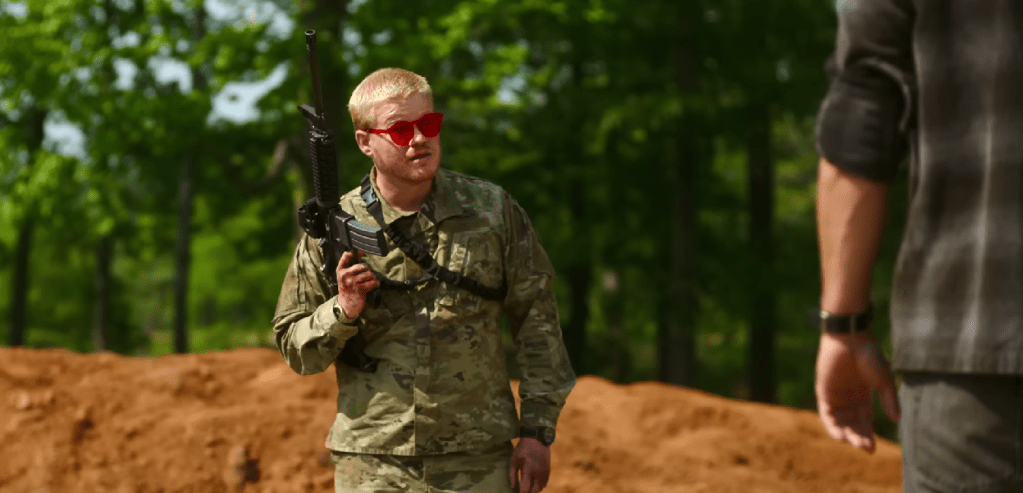
One such lunatic is Jesse Plemons’ character, a sadistic yet nonchalant militant who holds our main characters at gunpoint in one of the movie’s most tense scenes. 

Plemons has a knack for playing creepy psychos. First there was Todd in Breaking Bad, now this guy.

All of these actors do great jobs in their respective roles, really selling the trauma developed from the events they encounter.
This is the main focus of the film instead of the political climate.
While reasons for the conflict are alluded to, mostly coming down to the fascist POTUS, Garland spends most of the film pointing out to the audience just how horrible a civil war would be.
This is best encapsulated with a line from Dunst’s character, “Every time I survived a war zone, I thought I was sending a warning home: ‘Don’t do this.’ Yet here we are.’

It felt like Garland was speaking directly to the audience during this scene.

Such warnings are going unheeded right now by some, as I have seen some crazy people calling for a civil war long before this movie came out.
The choice to focus on the horrors of war, rather than the politics, helps sell this message extremely well, especially with how some of the journalist characters become desensitized to the deaths of their fellow countrymen and even friends.  
Along with the characters and themes working well together, what also helps Civil War land is the great cinematography and sound design.
The sound of bullets and gunfire feel terrifyingly impactful, and there were many shots which would be beautiful if they were not so disturbing. 

The shots, in terms of both the camera and the guns, are visually and audibly haunting.

I do have a few criticisms with the film, though.
For one thing, sometimes the choice in music felt a little wrong for the scene.
And then there is the ending, which was a little too predictable and also a little overly dramatic at one point.
Other than that, one particular point, however, the ending to Civil War lands mostly perfect, with its final image being very striking. 

The ending to the film really sells the message Garland is going for.

Civil War is a terrifying look at the chaos which would unfold in America if things truly came to that.
Time will tell if this film will be looked back upon as a chilling what could have been, or an even more chilling representation of what was to come.
We had all better hope it’s the former.