There are a lot of opinions out there about Hazbin Hotel. Some love it, others hate it. However, I think that even those who dislike the show have to admit the songs are the best part of it. After loving the Season Two musical numbers so much, I decided to rank my Top Ten favourites. Before beginning this list, though, I have to say that this ranking is from someone who has zero music experience or expertise. This list is not based upon any understanding of musicals, but upon my personal opinion of the songs. Quick honourable mentions go to, “More than Anything,” “Sera’s Confession” and “Love in a Bottle.” With those disclaimers out of the way, let’s start this list with number 10, which is…
10. Clean It Up, Season Two, Episode Four.
Ah, Nifty, you adorable little murder gremlin, you. She is not only one of my favourite characters in the series, but also the one I believe to be the funniest. Leave it to the song’s writers to make her musical number just as chaotic and hilarious as she is. “Clean It Up” sees Nifty proclaim her love for the hotel in the niftiest way possible, singing of disgusting floors and rat murders. Horrified, Charlie asks Nifty to help “differently”, and she interprets this as singing in Japanese. Hilariously and ironically, it is at this point that Nifty starts singing about thing most people would consider to be good about the hotel, not just her, like that Charlie is a good boss and that she believes in her dream. The style also changes from that of an American cartoon to anime, all of this hinting to Nifty’s Japanese roots, which I am sure will be touched upon in a later season. Although short, “Clean It Up” is a great song, delivering a lot of laughs and further insight into Nifty’s chaotic mind. More murder gremlin songs next season, please.
9. Respectless, Season One, Episode Three.
A positive of Hazbin Hotel is that their villains have fantastic songs. You will see many of these songs throughout the list, the first of which being Respectless, sung mostly by Velvette. Carmilla Carmine starts the song and gets a few words in but, come on, this song is clearly Velevette’s. As the only Vee without a connection to the main cast, she needed a moment to make her truly stand out. Boy, did Respectless make her stand out, with Velvette using her time to completely diss Carmilla and the other Overlords. On top of that, a lot of the rhymes in this song are really catchy like, “Why are you afraid of war? That’s what the guns you sell are for.” The song even ends on a funny note, with Alastor declaring, “That was a productive meeting,” after Carmilla cancels it. Respectless does a fantastic job of making Velvette stand out, along with having great rhymes and disses, so it more than earned its spot on this list.
8. Finale, Season One, Episode Eight.
The two season finale’s of Hazbin Hotel both have their cast deliver a big ensemble musical number. “Finale” was the first song to set this trend and sets up the events of Season Two nicely. We see our main characters rebuilding the hotel to be better than ever, mourning Sir Pentious, and see both the Vees and Alastor plan to take over it all. Alastor’s solo moment in the song is especially great, with Amir Talai doing a great job showing his desperation to escape his deal, after almost being killed by Adam. His return to the hotel also gets a laugh, when Lucifer declares, “Not this guy.” Their rivalry will never not be funny. The first of Hazbin Hotel’s big ensemble musical numbers, “Finale” does a good job of setting a trend that would later be continued with “Hear My Hope.” Personally, I hope it is a trend that continues with every season finale.
7. Hazbin Guarantee (Trust Us), Season Two, Episode One.
The first song of Season Two, “Hazbin Guarantee (Trust Us)” set the stage for the many excellent musical numbers which would follow. For the first half of the number, it is very similar to “Finale”, in that it sees Charlie and the rest of the cast singing about the hotel, before the second half depicts the Vees singing about their business. Both haves of the song do an excellent job of showing the difference between our heroes and villains. Charlie sings of redemption and hope, while Vox and the rest of the Vees draw in a sinner with promises of success, only to throw her in the gutter once everyone loses interest. And, honestly, with how catchy the Vees part of the song is, I can see how they draw many people into their clutches. It also speaks a lot about the modern entertainment industry. Providing a great contrast between our heroes and villains, “Hazbin Guarantee (Trust Us)” was an excellent way to kickstart Season Two.
6. Vox Dei, Season Two, Episode Five.
When Season Two started, I did not think Vox’s plan to take over Heaven had much of a chance of working. This was the guy who got easily clowned by Alastor back in Season One, after all. Well, “Vox Dei” was the song that made me rethink this. Vox rolls a nat 20 on charisma and intimidation, declaring war on the angels, while pretty much aura farming with his pet shark, Shok.wav. Had I been Sera, I too would have fled in fear, what with the fantastic visuals and vocals. Speaking of the vocals, Christian Borle nails it as Vox, delivering intimidating line after intimidating line of Vox hyping himself up. However, pay close attention to the lyrics and you will notice Vox borrowed the flow of the song from Lucifer in “Vox Populi”, foreshadowing just how unoriginal he is. Brief but epic, “Vox Dei” was the song that convinced me he might actually succeed in taking over Heaven.
5. Stayed Gone, Season One, Episode Two.
Just above the song that proved Vox’s worth, we have the song which showed his one weakness to be Alastor. After learning of the Radio Demon’s return, Vox takes to airwaves to insult his obsession, only to be made a fool of in front of all of Hell. Vox’s first part of the song is fast paced and also foreshadows all of the roles he stole in life, including that of a talk show host and TV Chef. He tries to make it seem like he does not care about Alastor, despite constantly insulting him, only for the Radio Demon to join in on the song and basically bully him into self-destruction. Just as “Stayed Gone” foreshadows Vox’s past, it also foreshadows his defeat, signifying that Alastor will use the TV Demon’s obsession with him to spark his downfall. With Vox losing his signal, it is Alastor’s turn to intimidate, morphing into a grotesque, eldritch form, and promising Vox to make him, “wish I’d stayed gone.” Given what happened at the end of Season Two, I can say Alastor definitely lived up to that promise. Stayed Gone set up the rivalry between Alastor and Vox perfectly, and for that it reaches the halfway mark on this list.
4. Hear My Hope, Season Two, Episode Eight.
Continuing the trend of the season finale’s final song being an ensemble, “Hear My Hope” pulls out all the stops. What first looks like it is going to be a self-sacrifice from Emily, eventually turns into an epic chorus, with most of the cast joining in to unite under the power of friendship, stopping Vox’s weapon. And, no, when I say “power of friendship” I do not mean it sarcastically. I would say that the song pulls that trope off flawlessly. What is less than flawless is Abel and Lute’s part in the song. Their section is definitely well sung but, at the same time, it feels rushed writing-wise, and pretty much ends Lute’s Season Two storyline with a whimper. Alastor and Rosie’s following part of the song, more than makes up for this though, raising more interesting questions about Rosie, and showing how truly manipulative Alastor can be. Of the two finale songs, “Hear my Hope” is definitely the better. Although the Lute and Abel part brings it down somewhat, Alastor’s moment and the magnificent chorus brings it up significantly.
3. Gravity, Season Two, Episode Two.
If someone were to ask me what an example of a good revenge song is, I would immediately point them in the direction of “Gravity.” This was one of the songs used to tease Season Two, and this was a great marketing decision, considering it is one of the best songs of the season. Following Adam’s death, Lute begins hallucinating him and swears vengeance in rock ballad, while destroying his room. The lyrics for this song are incredible, being stuck in my head for weeks after I first heard it. Jessica Vosk does an amazing job of portraying Lute’s rage and grief, directing her to a downward spiral of revenge, with Alex Brightman’s Adam egging her on. The only thing stopping this song from being higher is that Lute’s revenge did not turn out to be inevitable, like gravity. In the end, she barely does anything in Season Two, so it is disappointing to see such an incredible song amount to so little. I wish it had been saved for a season where Lute actually does something. Despite this issue, “Gravity” is still an incredible song of revenge, but it is not the best of Season Two. No, that title goes to…
2. Brighter, Season Two, Episode Seven.
Vox has a lot of excellent songs in Season Two, but by far his best, and the best song of the season, is “Brighter.” This is the musical number that details his backstory, from small beginnings as a weatherman, to his death as a serial killer, cult leader. This journey Vox (Or Vincent as he was known in life) goes on pays off the setup from “Stayed Gone,” showing him kill a news anchor, a talk show host, a TV Chef, and just about anyone who he sees as standing in his way to reach the top. In the end, this suitably brings about his downfall, with his head being crushed by a falling TV, electrocuting him and his followers because he stupidly decided to hold his cult meeting in an indoor pool. Although this probably explains how Vox became an Overlord in Hell, since he already had followers when he arrived. The song also does a great job at how Vox’s ambition to be “Brighter” will eventually ruin him, with his defeat being delivered in the very next episode. Backed up by Christian Borle’s as always fantastic singing voice, “Brighter” is an amazing song that shows us Vox’s past, pays off then unknown setup, and foreshadows his fall from grace. It is the best song Season Two has to offer, but not the best song of the series. My favourite song of Hazbin Hotel is…
1. Loser, Baby, Season One, Episode Four.
“Masquerade” is the most depressing episode of Hazbin Hotel so far. The episode is centered around showcasing Angel Dust’s abuse at the hands of Valentino and the mental trauma this has caused him. So, it was a very much needed relief to reach the end of the episode and get the most uplifting song of the entire series, and my pick for the best song of Hazbin Hotel, “Loser, Baby.” After chasing Angel Dust down and confronting him, Husk realizes they are not so different. Instead of trying to cheer Angel up by singing about how his life can be better, Husk sings about being a loser. The touching message at the core of “Loser, Baby” is that things may be bad, and you might not see a way out, but there are many other people in the same boat, so embrace those parts of yourself you may not like and show them proudly. Keith David and Black Roman deliver this message with their fantastic singing voices, and I listen to the song often (with headphones of course because, come on, I obviously don’t want people overhearing lyrics about sex toys and misinterpreting what I’m listening to). The song even ends on a humorous note, with Angel and Husk’s romantic moment being cut off mid-sentence by a bunch of angered gang members. After such a depressing episode, “Loser, Baby” was the uplifting musical number we needed. Whenever I feel down, I find myself listening to it to remind myself I am not alone and, to quote the song, play my card, be who I am, a loser, just like- HEY, THERE HE IS! HE’S FUCKING SINGING! GET HIM! Joking aside, it is for this, and many other reasons that “Loser, Baby” is my favourite Hazbin Hotel song, and I am interested to see if it can be beaten one day. Thank you for reading and have a Merry Christmas.
Right from Season One of Arcane, I was impressed with the depth of its characters, from the minor ones to the big players. So, with Season Two over and these characters’ stories over, I figured it was time to list the ten characters I believe are the best of the best. Of course, I could not list every character I wanted, so honorable mentions go to Mel and Ambessa Medarda, and Heimerdinger. All three are great characters, but they had certain issue that kept me from putting them in the top ten. With that out of the way, let’s get this list started.
10. Sevika.
If I had to describe Sevika with a single word it would be loyal. This may seem strange, considering her first act in the story is to betray Vander for Silco, but Sevika’s loyalty is not to a single person but to a nation: Zaun. We see this through what she sacrifices and how she puts aside her grievances for the betterment of her cause. She pushes Silco out of the way of the cannery explosion Jinx caused, losing her arm in the process, and then later encourages Jinx to become Zaun’s hero, despite previously hating her guts. Both of these actions were done because she believed Silco and Jinx were best for Zaun at the time. But the moment that most encapsulates Sevika’s mindset is when she sides with Silco over Finn in the Season One finale. After she kills Finn, Silco asks her, “were you tempted?” Sevika responds, “Not for a worm like him. But he won’t be the last.” In saying this, Sevika readily admits that she would betray Silco if the person overthrowing him was the better option for Zaun, which Finn was not. Along with Sevika’s interesting motivations, she also has some of the best one on one fights in the series, whether it be her two fights against Vi in Season One, or her fight against Smeech in Season Two, the latter of which incorporates her gambling habit into her fighting style. As for why she is not higher on the list, well, she pretty much stops existing as a character after the fourth episode of Season Two. Yes, she comes back for the final fight, and we see she becomes Zaun’s voice on the council at the end, but she has zero dialogue or development building up to this. My biggest criticism of the ending is that it felt like it pushed the conflict between Zaun and Piltover to the side. With Sevika getting a seat on the council at the end, I feel like she could have been the perfect character to pursue this storyline. Unfortunately, her character was left behind just like that conflict. Still, Sevika is one of Arcane’s best side characters to me, having an interesting concept of loyalty and some of the best fights in the series.
9. Singed.
I did not think much of Singed when we first met him in Season One. He just seemed like a random mad scientist, created just to explain who made Shimmer. So, imagine my surprise when it was revealed he not only survived Jinx’s explosion, although severely maimed, but he also knew Viktor and motivates his descent into becoming the Machine Herald. From here, Singed emerged as the character responsible for pretty much 90% of the problems our characters experienced, with most of them being none the wiser to his behind-the-scenes involvement. He created Shimmer, motivated Viktor, experiment on Jinx, resurrected Vander as a mechanical werewolf, also resurrected Viktor leading up to the final battle, and probably a hundred other things. And you know what’s funny? After all those horrible things he did, he won. It is revealed in “Blisters and Bedrock” that everything he has done has been to revive his daughter Orianna, another League champion. In the end, he succeeds, facing absolutely no repercussions for his horrible deeds. And just because Singed’s ultimate goal is a sympathetic one does not mean he finds no enjoyment in the brutal things he does. Quite the contrary, actually. We see him take sadistic pleasure in experimenting on Jinx, even though he showed mercy to Silco earlier by drugging him unconscious so he would not have to see his adopted daughter tortured. “I too once had a daughter.” My only criticism of Singed is that I think we could have just a little more exploration of his backstory. He is revealed to have been a Piltovan alchemist named Corin Revick, so that works, but he also reveals a connection to Heimerdinger which is never explored. Despite that, Singed is still a very compelling side character. He has a sympathetic motive but also finds joy in the horrible experiments he commits.
8. Viktor.
After Season One, Viktor was in my top five favourite characters of the series. His journey and the beginning of his descent was engaging to watch. Starting out as judgemental of Jayce’s Hextech experiments, he eventually joins his side after realizing its potential. He also proves himself to be a funny character with the, “Wait a minute. This isn’t my bedroom” joke. After Hextech becomes mainstream in Piltover with the creation of the Hexgates, Viktor takes a back seat in public compared to Jayce, obviously more focused on his deteriorating health, which leads him to create the Hexcore and, later, go back to Singed for help. His experimentation on himself results in one of Season One’s most moving scenes, where he finally manages to run, passing a boat, which he was not able to do as a child. However, because the Arcane writers do not like it when their characters are happy, this joyous moment turns into one of horror, when Viktor’s next experiment results in the death of Sky. Sky was not focused on all that much before this moment, but her death does motivate Viktor to tell Jayce to destroy the Hexcore, no matter what happens to him. Unfortunately, he does not get a say in the matter, because he is mortally wounded in Jinx’s attack, forcing Jayce to merge him with the Hexcore to save his life. Upon awakening in a new form, Viktor is guided underground by a mysterious vision of Sky, which leads to him creating a cult in the fissures based on helping people. However, there are signs that what Viktor is doing to these people is not exactly help, as we see in numerous scenes that they do not actually breath after Viktor has changed them. Viktor’s motives remain pure, however, as he refuses to sacrifice Vander to save himself. At least, he refuses until Jayce attacks him, leading Viktor to believe he needs to take all individuality away from people in the Glorious Evolution, becoming the series’ main threat. His final confrontation with Jayce is tragic, given how they started, yet also hopeful in how Viktor abandons his goal. The reveal that an alternate version of Viktor saved Jayce was excellently handled, and the two of them sacrificing themselves to put an end to the Glorious Evolution was a fitting end. Viktor also has some of the best lines in the series from, “In the pursuit of great, we failed to do good.” And, “There is no prize to perfection. Only an end to pursuit.” But, if he has the best lines and he used to be in my top five, why is he now at number eight? Well, unfortunately, I think Viktor suffered a bit from Season Two’s breakneck pace. The places his character went made sense, but I think we needed a few bridging scenes to better explain them. The prime example of this is his strange connection with Sky, which is never explained. Was she a hallucination, a manipulation by the Hexcore, or was she actually there? We don’t know and it feels pretty underdeveloped. That being said, Viktor is still a great character, with some excellent quotes backing him up.
7. Caitlyn Kiramman.
Only having a minor role in Season One’s first act, Caitlyn stepped up in Act Two with the showcase of her brilliant detective skills. She became instantly sympathetic, as the sole Enforcer with the skill and drive to dig for the truth, even though she was inexperienced and dealing with the corrupt Sherrif Marcus. This leads to her meeting Vi at Stillwater, and the two of them have excellent chemistry right from the start, with Episode Five showing this off particularly well. They grow closer over the course of their adventure in Zaun, learning about one another while being chased by Silco’s goons, having a tense encounter with Jinx, and then being kidnapped by the Firelights. Eventually making their way back to Piltover, Vi leaves Caitlyn after the Council refuses to listen to her, which is an emotional moment in of itself. Caitlyn certainly thinks about it a lot in the aftermath; however, this immediately leads into her being kidnapped by Jinx and then being unable to stop her from firing the rocket which kills her mother. The guilt of having the shot on Jinx and not taking it follows Caitlyn into Season Two, as we see her grief drive her to take drastic measures, most notable of all being using the Grey as chemical warfare against Zaunites. This culminates in the third episode, where she abandons Vi and falls under Ambessa’s thrall. We see her acting as Piltover’s general for the next two episodes. Up until this point, Caitlyn’s character development has been great, going from a driven rookie detective to a vengeful general. Her next bit of development is a little rocky though. As soon as Vi comes back into her life, she betrays Ambessa for her, with there being not much of a showcase for why she would do so. Still, her character development gets back on track in the next act, as she finally lets go of her hatred for Jinx, allowing Vi to free her sister. She and Vi then have a long sex scene, pleasing many a CatVi fan. In the final episode, we see Caitlyn take on her former mentor, fittingly using Ambessa’s ideal of sacrifice to defeat her at the cost of her eye. Caitlyn’s final scene shows her and Vi happy together, a more than deserving ending for a character who had quite the journey in Arcane. Caitlyn truly earns the title of Piltover’s Finest.
6. Jayce Talis.
The founder of Hextech, and later the advocate for its destruction, Jayce first appears in the series as an ambitious scientist who wants to use magic to improve the lives of Piltover’s citizens. Unfortunately for him, Vi and the gang rob his apartment, leading to an explosion which shows just how dangerous the magic he is dealing with is. This nearly gets him banished from the very city he wanted to improve. Fortunately for him, Viktor and Mel see the potential of his dream. With his new partner Viktor at his side, Jayce succeeds in creating Hextech, which propels progress in Piltover to new heights with Mel’s backing. Jayce is met with the consequences of this right from Act Two when Jinx steals the Hexgem, resulting in him gaining a Council seat to watch over Hextech related matters. But, as Caitlyn would later show in Season Two, it is easy to fall from grace while in power, and Jayce has to work with corruption, all the while trying to save the ailing Viktor. This eventually drives him to lead a coup against Heimerdinger, forcibly retiring him from the Council. He falls further when Vi recruits him to take out one of Silco’s Shimmer factories, which results in him accidentally killing a child. It is from this tragedy that Jayce’s goodness shines through, as he offers Zaun independence to try and stop the bloodshed. Sadly, his efforts are in vain, due to Jinx’s attack and, right after, he is again faced with the consequences of his actions, nearly being killed by the vengeful Renni, the mother of the boy he accidentally killed. This leads to Jayce finally building Hextech weapons, which drives Viktor away when he recovers from his merging with the Hexcore. Now alone, Jayce seems to be in a state of limbo until the arrival of Heimerdinger and Ekko, leading to the discovery of the Wild Rune, and Jayce’s transportation to the alternate universe where Hextech destroyed Piltover. Over many months Jayce suffers in this universe until he finally meets a future version of Viktor, which tasks him with stopping his other self. Now aware of the dangers of Hextech, Jayce accepts this mission and immediately shows his dark growth by murdering Salo. Jayce is clearly a very different man from the one who let Vi leave with the gauntlets back in Season One. He further proves this when he attempts to kill Viktor as soon as he reunites with him. Later facing his old partner in the final battle, Jayce instead reasons with him, showing Viktor the truth of what he saw in the alternate universe to save the world. This does raise the question of why Jayce did not just show Viktor this in the first place, instead of trying to kill him, but he had been through a lot of traumatic stuff so I will let it slide. And so, Jayce’s story ends with his sacrifice. It is a story of redemption, as he ends his creation with his partner, saving both Piltover and Zaun from the Glorious Evolution he inadvertently started with the creation of Hextech. Flawed yet always with good intentions, Jayce is a relatable character with a lot of growth.
5. Vander.
Vander’s primary moment of character development comes in the very first scene of Arcane. The show begins with Vi and Powder finding their dead parents, who were killed during the revolution Vander lead across the bridge. Vander sees this and realizes he can no longer take the burden of the dead, releasing his gauntlets and taking in Vi and Powder as their new father. We next see Vander years later, watching over the people in the Lanes who need help, like Huck. He also serves as a mentor to the children he now raises, Vi most of all. “You say light a fire, they show up with oil,” he tells her, teaching her the responsibilities of leadership However, Vander also has his weaknesses, as shown by Sevika calling him out on it and later betraying him for Silco. As the leader of the Lanes, Vander had to defend his people, yet was willing to let the Enforcers walk over them to protect his kids and prevent bloodshed. This ultimately leads to Silco taking advantage of the situation, manipulating Marcus into getting his hands on Vander and killing Benzo. Yet, when his kids are in danger, the gauntlets get put back on. In the aftermath of Jinx’s explosion, with Mylo and Claggor dead, and Vi in danger, Vander marches to her defence, taking on the Shimmer enhanced Dekard, even though he is still badly injured. His final moment in Season One is one of sacrifice, as he takes Shimmer to save Vi, his last words to her being, “Take care of Powder.” This shows that Vander was, above all else, a father, which makes his eventual fate in Season Two probably the most tragic of any character. He is resurrected as a mechanical werewolf by Singed, and slaughters numerous Enforcers inside Stillwater to get to him, only to regain some of his former self when he reunites with Jinx. Later tracked down by her and Vi in the mines where he once worked with Silco, Vi calls out to him, leading into a flashback where we see just how close he used to be with both Silco and Vi’s mother. The following scene of him embracing Vi, Jinx and Isha is the emotional scene in all of Arcane for me. But because the writers love our suffering, Vander meets an unfortunate end. It seems hopeful at first, with the sisters taking him to Viktor to be healed. However, because the connection between him and Viktor is broken by Jayce’s attack, the wolf resurfaces. Incapacitated by Isha’s sacrifice, Vander is then transformed in Viktor’s Glorious Evolution, completely destroying Vander’s identity. His final scene is incredibly tragic, as the husk of Vander’s body attempts to kill his two adopted daughters, potentially leading to the death of Jinx herself. Vander’s story is one of tragedy. He turned away from violence at the beginning of the story, only for this to lead to his death and eventual resurrection, with his body being used to further someone else’s agenda. However, I say that Vander should be remembered as, above all else, a father.
4. Ekko.
When I started watching Arcane, I had no knowledge of League lore, so I did not know of Ekko’s importance during Act One. Despite this, I was still able to guess that he would be the mysterious masked leader of the Firelights, given that he was the only living named character from that first act we had not seen yet. Unmasking himself in the episode named after him, “The Boy Savior” Ekko makes an immediate impression, being cautious to protect his people, while also being willing to listen to new ideas, which Caitlyn presents him. Going with her and Vi to Piltover, Ekko is nearly killed by the corrupt Marcus and must then fight Jinx to give Vi and Caitlyn time to escape. We did not see much of Ekko and Powder’s friendship in Act One but their fight scene more than makes up for it with the tragic visuals of their playtime as children intermixed with their current deadly fight. However, despite all of his statements about Powder being gone, Ekko still sees her in Jinx so hesitates, giving Jinx enough time to attempt suicide with one of her bombs. For a moment, his fate is left unknown, until he is found by Heimerdinger. I do find it a bit strange that he never blames Heimerdinger for Zaun’s suffering, given that he was literally a Councilor, but their mentor and pupil bond is still endearing. This is where Ekko’s story ends in Season One and I was very excited to see where his character would go in Season Two. Imagine my disappointment when Ekko barely got anything to do in the first two acts. He investigates the pollution of his tree by Hextech with Heimerdinger and Jayce, and then the three of them are transported away by the Wild Rune. That’s it. With his minimal screen time in Act One and zero screen time in Act Two, I honestly doubted Act Three could give him enough significance to standout. Well, I am happy to say that I ate my words because, in my opinion, Ekko was without a doubt Act Three’s best character. First, there is Episode Seven, where he is the main focus. We see his time in a happier, alternate universe where he and Powder are together. I knew about the Timebomb ship, but I honestly could not see it working since Ekko and Jinx had so much bad blood between them. Well, the writers found the perfect way to make it work, by having it be an alternate version of her Ekko connects with, teaching him that Jinx is not beyond saving. Thank god he was taught this because his first scene in the final episode is using his Z-Drive to save Jinx from suicide multiple times. I literally screamed, “Ekko you bloody legend!” during this moment. His entrance with Jinx in the final battle is likewise epic, although not as epic as his last stand against Viktor, pushing his Z-Drive past its limits to save the world. Boy Savior could not be a truer title for Ekko. He literally abandoned an almost perfect world to save the friends of his corrupted one. I love Ekko’s character, despite his brief screen time in the first two acts of Season Two. I mean, just imagine how much higher he would be on this list if he actually had more time to shine.
3. Vi.
Vi is a protector. This trait of hers is established right from the beginning, as she guides her little sister through the aftermath of the battle which killed their parents. Leader is another word used to describe Vi, as we next see her lead Powder, Mylo, and Claggor on a job in Piltover, resulting in the explosion which kicks off the series. From here, Vi struggles with her role as protector and leader of the group with Vander’s guidance, eventually deciding to turn herself in to save her family. Unfortunately, Silco has other ideas, leading to the kidnapping of Vander, and Powder accidentally killing their entire family. Vi lashing out at Powder for her tragic mistake could have resulted in me turning against her but it is a testament to the writing that I understood her grief. Not wanting to hurt Powder any further, Vi steps away to calm down, only to be kidnapped by Marcus and locked away in Stilwater for years. It is here where Caitlyn finds her in Act Two, and Vi sets out to find and save her sister, unaware of who she has become. We also see her connection with Caitlyn flourish and get a great look at her fighting skills in a brawl with Sevika. All of this builds to her emotional reunion with Jinx before the two are cruelly separated again. Now having an idea of what Powder has become, Vi makes her way to Piltover with Caitlyn to try and find a way to stop Silco, only for Vi to ally with Jayce and gain her Gauntlets from the game. The following battle with the Chem-Tanks is a great showcase of her abilities, but it all builds to her being kidnapped by Jinx and taken to the cannery where the tragedy started. There, Vi tries to bring Powder back by reminding her of their past, not realizing how this is tormenting her sister. This misunderstanding, and Silco’s death leads to Jinx embracing herself, forcing Vi to come to terms with Powder being gone, which we see her struggle with in Season Two. She eventually joins the Enforcers to stop her sister, ironic considering she once so hated them. The following fight between the sisters is tragic, with them literally crashing through graffiti of their childhood. But, in the end, Vi is still able to see Powder inside Jinx when Isha saves her, leading to her stopping Caitlyn from taking the shot again. Caitlyn then abandons Vi, leaving her at rock bottom to become a drunken pit fighter. And who should come to her aid but Jinx, dragging Vi from the brink to save a resurrected Vander, which results in one of the most emotional scenes of the series when the family embrace. It is one of the last moments of happiness they all together, but it also leads to Vi reconnecting with Caitlyn and then joining her in the defense of Piltover. If I had any criticisms of Vi, it would be how little she gets in the final episode character wise. I believe she only has three lines of dialogue, which feels weird for a character so pivotal. We could have used more time detailing her grief over Jinx’s supposed death. A leader, a protecter, and a sister, Vi is an excellent character.
2. Jinx.
I feel like most people would rank Jinx as their number one Arcane character and deservedly so. She is an incredible and tragic character with an ambigious ending. When we first meet Jinx, then known as Powder, she is an intelligent but insecure kid. She wants to help but her inventions keep failing. This seems like it will change when she uses the stolen Hex Crystals as a bomb to save her family. However, in one of the most tragic scenes in television history, her attempted rescue results in the deaths of the very people she was trying to save, all except for her sister who slaps her and then calls her the one thing she always feared she was: A Jinx. Believing that Vi abandoned her, Jinx is taken under the crime boss Silco’s wing, becoming like a daughter to him, and a severely traumatized one at that. Her need for validation is still apparent, as it drives her to launch a terrorist attack on Piltover to steal the Hexgem. Then, just as Silco pushes her to let Powder die, Vi comes back, throwing Jinx’s newfound state of identity into chaos. The moment she lights up the flare to call Vi, while being haunted by hallucinations of Mylo and Claggor, is both beautiful and a gut punch. The sisters reunite but Caitlyn’s arrival causes Jinx’s paranoia to surface, which continues up to the brilliant bridge fight with Ekko where she attempts suicide. Found by Silco, she is rushed to Singed where, in a brutal scene, she is experimented upon, being infused with Shimmer to save her life. This further decays her already fragile metal state. The next time we see her is almost like a horror movie, as she abducts Caitlyn from her bathroom, and then also kidnaps Vi and Silco. She takes them to the cannery where Jinx was born to decide who she is, as both Vi and Silco fight for her. When Silco attempts to kill Vi, Jinx’s sisterly instincts kick in and she shoots him. His final words drive her to fully embrace her identity as Jinx. In true jinx fashion, she then attacks Piltover just as they were agreeing to allow Zaun’s independence. In Season Two, Jinx is lost without Silco, but she unexpectedly finds companionship in a young mute orphan named Isha. Following her fight with Vi, we see her resisting her hero status in Zaun, wanting a simpler life with Isha as her little sister. The choice is taken away from her, however, when Isha is captured and taken to Stilwater. Rescuing her and the other Zaunites, Jinx finally realizes how she has become a symbol of hope in Zaun, only to be immediately reunited with a resurrected Vander. This leads to her attempting to mend the bridge between her and Vi, taking her into the mines to save Vander. By Episode Six, Jinx has it all. She has a new little sister and has reunited with her older one and adopted father. Of course, the writers had to absolutely destroy this happiness with Isha’s sacrifice. Following the loss, Jinx gives up on life, allowing herself to be arrested, before leaving to commit suicide when Vi frees her. “There’s no good version of me,” she says, but we know this is not true. Not only has she done good by providing hope to Zaunites and giving Isha a good life before her death, but we also saw the alternate version of her doing good as well. Speaking of, it is this alternate version of her that convinces Ekko to save Jinx. The scene of him doing so is particularly hard to watch, due to how many times Jinx attempts to take her life. Thankfully, Ekko convinces her that life is worth living, and she joins the final battle. Her story ends when she seems to sacrifice herself to save Vi, but I personally refuse to believe she is dead. We see a purple Shimmer streak before the explosion, Caitlyn is shown investigating the air ducts, and the last shot of the show is an airship flying away, which Jinx said she wanted to fly in Episode One. At the very least her ending is ambiguous, and maybe it is better that way. However you view Jinx, as a hero to Zaun, a terrorist, or as a girl traumatized by the cruel world she inhabits, she is undoubtedly one of Arcane’s best characters. There is one I consider to be better though.
1. Silco.
Much like Singed, when we were first introduced to Silco, I did not expect to like his character very much. With his scarred face, way of manipulating people, and scheme to obtain power, I expected him to be a cliche villain with no redeeming qualities. Oh, how wrong I was. My first indication of this was in Episode Three, which begins with a flashback hinting at him and Vander’s shared past. Through their later conversations, I understood that Silco was driven by feelings of betrayal and a desire to see his nation independent. And then came the pivotal moment where he met Jinx. At first, he clearly intends to kill her, but then she jumps into his arms, revealing how Vi left her. Silco looks up at Vander’s dead body and clearly associates Jinx’s abandonment with Vander betraying him. He wraps his arms around the weeping, traumatized girl and tells her, “It’s okay. We’ll show them. We will show them all.” My first reaction when watching this was to question if Silco was being genuine. He sounded so sincere to me and, sure enough, in Act Two we see how much he has come to love Jinx as a father. He accepts failure from her where he would not from others, couches her through her trauma, and is desperate to make sure she stays with him when Vi returns. Is all of this to say that Silco is a good father? Oh, absolutely not. No, his love for her is clearly toxic, as he tasks her with killing his enemies, projects his own trauma onto her, and manipulates her into believing Vi is only there for the gemstone so she will not leave him. Despite all of that, his bond with Jinx is fascinating to watch play out through how it conflicts with his desire to make Zaun a nation. This culminates in the final episode, where he is forced to choose between the two with Jayce’s ultimatum: “Get me Jinx and I’ll give you your nation of Zaun.” The conflict in Silco over this decision leads him to Vander’s statue, where he reveals he finally understands how Vander could put aside his dream for the safety of his children, stating, “Is there anything so undoing as a daughter?” This is my favorite line in Arcane because it is a broad statement on one of the series’ main themes. So many characters are undone by their love for their daughters, from Vander, to Singed, to Marcus, to Ambessa and, of course, Silco himself. And so, when Silco tells Jinx he never would have given her to Piltover after she has shot him, I believe him entirely. His final words to her, “Don’t cry. You’re perfect.” brought a tear to my eye, and I never expected to cry for Silco. He was a drug lord who brought misery to so many people and yet his love for his daughter was so compelling despite its unhealthy nature that I could not help but care for him. Silco’s legacy lives on in Season Two, as Jinx gives him a fitting burial in the waters where he was reborn after Vander’s betrayal. We also see a younger version of him in a flashback, with hairstyle similar to Jinx’s, making many believe that he himself styled it for her. Finally, he appears to her as a hallucination, advising her, “I think the cycle only ends when you find the will to walk away.” If you subscribe to the theory that Jinx lived and walked away, like I do, then Silco’s influence on her ending cannot be overlooked. And so, in a cast full of amazingly complex characters, Silco stands out as the best to me. A monster to most but a father to Jinx, Silco is not only my favorite Arcane character but one of my favorite antagonists in all of fiction.
When I ranked the ten books in The First Law series, I kept bringing up how the author, Joe Abercrombie, excelled at writing his characters. Not only do these characters have some of the most distinct voices in fiction, they are also mostly terrible people. If they existed in real life, I know that I would hate many of them, and yet Abercrombie is able to make us like and care about them, despite all they have done. With so many complicated yet stellar characters, I decided to rank my top ten. However, even narrowing the series’ expansive cast down to ten was extremely difficult because of how good so many of them are. So honourable mentions go to Temple, Ferro Maljinn, Collem West, the Dogman, Bremer dan Gorst, Whirrun of Bligh, Calder, Black Dow, and Leo dan Brock. Yes, that is a lot of honourable mentions, but that should show how amazing the cast of The First Law is, since I considered placing all of these characters in the top ten. In the end, though, I had to keep the list at ten, so now let’s get into the list of who I think are the best characters in The First Law, starting with…
10. Jezal dan Luthar.
Jezal had a pretty funny starting point, regarding my perception of him. When I first read The Blade Itself, Jezal was my least favourite of the main characters, due to his over-the-top narcissism. The reason this is funny is because the rest of the cast consists of mostly mass murderering torturors, yet Jezal is somehow more hateable than them. Again, this shows off just how good Abercrombie is at getting us to like terrible people. As for Jezal, his unlikeability does lead to some humorous moments. I know I burst out laughing when Jezal started admiring his reflection in the mirror, with his inner monologue gushing about how handsome he was. It was so over-the-top, I just could not help but laugh. Jezal does not stay this way, though, because he has some of the most significant character development in all of Before They Are Hanged. The moment he decides to be a better person, while recovering from an injury, is one of my favourite moments in that book, and it builds well into Last Argument of Kings, where Bayaz manipulates the Union into accepting Jezal as the new king. Jezal could have actually been a pretty good king too. He seemed to have plenty of good ideas, and his growth made him a much more caring person. Unfortunately, it is at this point that Bayaz reveals himself to be the master manipulator, pulling all of the strings behind the scenes, including Jezal’s. The chapter where he threatens Jezal into submission is one of my favourites of the series. And so, Jezal ends the first trilogy as a pawn of Bayza, in constant fear of his life. He has a few brief appearances later on in the story, before dying of mysterious causes at the end of A Little Hatred, the first book in the sequel trilogy. Jezal ultimately lived a tragic life. He became a better person, only to become a puppet king, one mistake away from being killed, unable to implement change, and married to a woman who could never love him. Jezal’s journey from insufferable narcissist to tragic figure was one that I enjoyed reading.
9. Savine dan Glokta.
My first thought following Savine’s introduction was, “Yep, she’s Glokta’s daughter, alright.” Born of the affair between Ardee and Jezal, Savine was raised under the belief that she was Glokta’s biological daughter. Even though this is not true, she is still his daughter in every other way that counts. Unfortunately, that results in a lot of suffering because Savine is almost as ruthless as Glokta is. Right from the beginning, it is clear she is not a good person, as we quickly learn about the harsh conditions in her factories. But then, much like Jezal, Savine is given an opportunity to change. She gets caught up in the first uprising of the Breakers and the Burners, resulting in her seeing and experiencing the suffering she has caused. This makes her resolve to be a better person… until she gets rescued that is because then she completely doubles down, in the worst of ways. She becomes more ruthless, eventually resulting in her manipulating her husband Leo into rebelling against Orso in the hopes of becoming queen. It is only upon seeing the devastation her actions cause, along with the birth of her children, that Savine changes for the better, if only slightly. She is still as manipulative as ever, writing a letter to Gunnar where she pretends to be his wife to get him to save her. However, she does attempt to do some good, like freeing Orso, even though that unfortunately does not pan out. I do think Orso is right, in the end, though, as Savine is definitely a smart person to have in charge, considering that she has the power to reign in Leo’s destructive tendancies. She will at least be able to keep the Union afloat with Glokta’s help, even if it does result in more abuse of the peasantry while Savine is painted as a saint. Savine does admit to being the “villain” by the end but she remains charismatic throughout her time in the story.
8. Rikke
The Dogman’s daughter, Rikke immediately makes a strong impression with her first appearance. Gifted or cursed with the power of the Long Eye, Rikke has obscure visions of the future, which causes seizures, and this is made clear from the moment she sees Stour Nightfall’s invasion before it happens, at the beginning of A Little Hatred. Reading her flight from his forces was thrilling, and it is not long after Rikke is rescued that we get one of my favourite moments from her, when she tells the battle hardened Caul Shivers that he is still in there. For Rikke to say this to such a hardened character and seeing the effect it had on him was especially moving. Rikke also has some of the most creative chapters in the entire series. There is the moment she uses her Long Eye to help Leo win his fight against Stour Nightfall at the end of A Little Hatred. The depictions of her ability in The Trouble with Peace only get crazier, as Rikke has a vision of the events of a chapter before they happen, and, in another chapter, she witnesses events backwards. Joe Abercrombie really went wild with her ability and it was a joy to read. Just as joyous was seeing Rikke outsmart Savine and Stour Nightfall, by attacking while they were off rebelling against Orso. Unfortunately, I found her storyline in The Wisdom of Crowds to be the weakest of the bunch, although that was mostly because of how obvious the twist of her tricking Calder was. As for the twist of her betraying Orso, I also quickly saw it coming, but it still made for a crushingly tragic moment. I can’t even blame Rikke for handing Orso over. She needed a way to protect the North from Leo’s newfound bloodlust and handing Orso over was the only way. Despite this sacrifice, the peace Rikke has created will definitley end at some point, with her final vision showing revenge coming from both Hildi and Calder’s hidden son. Rikke keeps this vision to herself and this will almost certainly backfire whenever we get a follow up. When we eventually do, I will be anticipating reading more chapters from Rikke’s POV again.
7. Monza Murcatto.
The main character of the best stand alone in the series, Best Served Cold, I was instantly on board with Monza’s revenge quest after reading the first chapter in a preview at the end of Last Argument of Kings. Starting her story as a Styrian mercenary working for Grand Duke Orso, Monza and her brother Benna are betrayed by him because he fears they mean to replace him. Benna is killed and Monza is thrown off a cliff but she survives, vowing to kill the seven men who hurt her and killed her brother. This ultimately results in her dragging all of Styria even further into bloody conflict. The main thing that I like about Monza so much is that we as the readers experience the issues with her revenge and the intent behind it, just as Monza does. We see the cost of her vengeance, as multiple innocent people are killed in the poisoning assassination, along with Mauthis. There is also Monza’s slow realization about how cruel Benna truly was, leading to her realising that he actually was intending to overthrow Duke Orso and put her in charge. Some of these realisations come from other characters as well, with Shivers learning that Monza and Benna were actually lovers, yet another reveal showcasing just how toxic Monza’s relationship with her brother was, and how she was blind to his many faults. These realizations lead to Monza actually softening somewhat across the story, as she tries to save Faithful Carpi, decides to spare Foscar (before Shivers kills him anyway), and kills Orso with decidely little fanfair. In the end, Benna gets what he wanted posthumously, as Monza essentially becomes the ruler of Styria in all but name, before crowning her son Jappo as king after fighting off Union invasions. Going into the Age of Madness trilogy, I was excited to see what Monza would be up to but, unfortunately, we did not get to see her. We were introduced to Jappo, though, and his scene with Leo and Orso was excellent, but I do hope to see Monza again because there is a lot of potential for interactions with other characters, most notably Shivers. Flawed, yet sympathetic, Monza is my favourite female character in the series and I hope the upcoming adaptation of Best Served Cold does her justice.
6. Nicomo Cosca.
Nicomo Cosca is a character who was first introduced in Before They Are Hanged, serving as the eccentric mercenary hired by Glokta. Despite playing a pivotal role in the defence of Dagoska, and in the arrest of Arch Lector Sult, Cosca was still a character I was not particularly attached to. I certainly did not think he was a bad character but he was far from being anywhere on this list. Then, Best Served Cold happened and everything changed. Cosca is one of the best characters in this novel, practically stealing every scene from the moment he is introduced, often managing to be hilarious, awesome, and pathetic all at the same time. We even see him go on a parallel revenge quest to Monza, with him killing each of his traitorous companions in increasingly funny ways. His unexpected friendship with Friendly is also one of the highlights of the book, with the two of them having many morbidly hilarious moments. Unfortunately, their last scene serves as an indicator of what is to come. Cosca tells Friendly that, “Sometimes men change for the worse. And often, very often, given time and opportunity… They change back.” Well, Cosca certainly changes back and for the worse. He started Best Served Cold as a drunken mercenary has-been, and he starts Red Country as a drunken pillager, terrorizing the countryside, having lost his way again. Though, he is still hilarious, thankfully. Cosca’s darkness is much more apparent, as his story ends when the author he hired to write heroic tales of him is so disgusted by his actions that he stabs him from behind with his own sword (ironically enough, this same author would also go on to be a terrible person in TheAge of Madness trilogy). I have heard many criticisms about Cosca’s depiction in Red Country, describing it as character assassination. While I certainly understand this criticism, personally, I feel this character regression was well set-up and executed. Cosca got his chance to change and yet, like so many characters in this series, he changed back for the worse and it all led to tragedy for him.
5. Orso dan Luthar.
If you were to ask me which character in the series has the most tragically poetic story, I would instantly say Orso dan Luthar. The son of Jezal, Orso grew up extremely privileged, having everything handed to him, and had little to no ambition. Orso is no Ladisla, however, as he is aware of his own flaws, shown through him knowing he could stop a hanging at the beginning of his story, yet doing nothing to stop it. Orso eventually gains the backbone to try and stop more death, however, as he peacefully negotiates with the Breakers. However, both Glokta and Pike are working against him, and cement his image to the public as a villain by executing many of the Breakers without Orso’s knowledge. This negative depiction of Orso to the public continues in The Trouble with Peace, eventually leading to the bloody battle with Leo. It is here that Orso is finally given the reigns to be a king and, much like his father, proves that he has the chance to be a very good one, outsmarting Leo and winning the day. Unfortunately, he lacks the ruthlessness that one needs in the world of The First Law, and spares Leo, which comes back to bite him hard in Wisdom of Crowds when Leo betrays him again to take power. He even gets betrayed by Rikke, leading to his poetically tragic last visit to the gallows. His story began with him watching a hanging, and his story ends with him being hung. At least he gets some of the best last words in fiction: “How’s the leg?” I hope Leo was feeling the sting of that last barb for quite a while afterwards. Despite Orso’s tragic death, his legacy lives on in characters like Hildi. Sadly, this will only lead to more tragedy as, despite Orso’s wishes for Hildi to live her life, she has teamed up with Bayaz to get revenge for the brother who essentially adopted her. Still, even if her negative turn is tragic, I will still enjoy whatever kind of suffering she brings to Leo. With the poetic tragedy of his story, Orso is easily the best character in The Age of Madness trilogy.
4. Bayaz.
Right from the moment of his introduction in The Blade Itself, Joe Abercrombie makes it clear that Bayaz is not going to be a typical fantasy wizard. Logen certainly seems to think so, as he approaches a wise looking man, only to learn that Bayaz is the man who he first thought was a butcher. This impression of Bayaz as a butcher is aptly fitting, given what is later revealed about him. The first two books spend a lot of time setting up this reveal, and I can distinctly remember thinking that there were too many horrible events helping Bayaz’s plans out, like Prince Raynault’s death, for it to be a coinicidence. Sure enough, Joe Abercrombie finally pulls the curtain back in Last Argument of Kings to reveal Bayaz as the master manipulator, pulling the strings behind the scenes to give himself all of the power, without most of the population even knowing. He killed his old lover Tolomei for power, likely killed Juvens, and sacrificed thousands of innocents using the Seed. His subsequent interactions with the four main characters of Logen, Glokta, Jezal and Ferro are all chilling in their portrayal of him. His conversation with Glokta finally reveals him to be the man behind Valint and Balk, while also setting up the means of his eventual downfall by appointing Glokta as Arch Lector. As for his conversation with Jezal, as I have said this is probably my favourite scene in all of The First Law. Bayaz is absolutley terrifying as he beats and terrifies Jezal into submission without even touching him. I was excited to see what Bayaz would be up to in The Age of Madness trilogy but unfortunately he did not have much to do here. The ending of A Little Hatred seems to hint that he had something to do with Jezal’s death but this is never confirmed, and Bayaz has the Union ripped away from him at the end, due to Glokta’s conniving. Bayaz is certainly not going to take this sitting down though, as he has already recruited Hildi and Calder’s son, probably planning to set them up as big players in the next part of the story to take back the country he created. Bayaz is a terrifying subversion of the wizard trope and I think we can expect him to do darker things whenever the story continues.
3. Logen Ninefingers.
The main POV character of The First Law trilogy, Logen starts the story as a man on the run from his violent past, hoping to be better. This brings him into the company of Bayaz which has the opposite effect, as Logen’s horrifying alternate persona of the Bloody Nine begins to emerge more and more. Still, there is hope for Logen to be a better person, as shown by his relationship with Ferro in Before They Are Hanged. Like most First Law characters, Logen does change, only not forwards. No, instead, he changes back to his worse self, travelling back to the North to fight Bethod. Here we truly see how monstrous Logen can be, as he not only kills a close friend, Tul Duru Thunderhead, while in a state of bloodlust, but it is also revealed that he was the one responsible for making Bethod king. Bethod only wanted peace but Logen keep disobeying his orders, murdering and butchering as he pleased, forcing Bethod to name himself King of the North. This is backed up by the short story, “Made a Monster”, where we see Logen brutally murder a prisoner, throwing away any chance at peace Bethod had. Logen may want to deny this but Bethod will not let him forget it, even when he defeats Fenris the Feared in the Circle, which is one of the best fights in the series, and then kills Bethod. This causes Logen to take Bethod’s place as King of the Northmen and, of course, he immediately uses his newfound power to lead the North to war against the Gurkish to help the Union, resulting in more deaths for the Northmen. Logen has one more chance at positive change, as he goes to talk with Ferro, only for her to be too affected from using the Seed’s power to notice him, making Logen think she is not interested in him anymore. Upon realising Bayaz’s manipulations, Logen refuses his help and goes back to the North, only to be betrayed by Black Dow and flee, ending the trilogy as he began it, a man on the run from his violent past. This is not the end for Logen, however, as, much to my surprise, he turns up again in the stand alone Red Country, having taken the name Lamb. The book sees him go on a journey with his step-daughter Shy to rescue her kidnapped siblings, providing Logen with the excuse he needs to let the Bloody Nine loose once more, which almost ends disastrously when he nearly kills Shy and her sister. Red Country has some of the creepiest Bloody Nine moments, so it is fitting that Logen realizes he is too dangerous to be around his adopted family after his confrontation with Shivers. And so Logen rides off into the sunset to an unknown future. If we will see him again in the story is unknown at this point but, if we do, I do not expect to see a happy ending for him. We have to be realistic.
2. Caul Shivers.
Much like Nicomo Cosca, Caul Shivers was a character who I did not think much of in The First Law trilogy. He approaches the Dogman to help fight against Bethod, only to be greatly displeased when he finds himself fighting alongside the Bloody Nine, who murdered his brother. In the end, Shivers decides revenge is not worth it and leaves the North. We see him again in Best Served Cold and, also just like Cosca, this is the book where he becomes one of the best characters in the entire series. I would go as far to say that he is my favourite character in this book. Watching his optimism slowly get beaten down while he accompanies Monza on her revenge mission, only to lose an eye and much of his dignity in the process was tragic to watch. By the third act, he is just like Monza at the beginning, hungry for revenge. He would have killed Monza had it not been for Friendly and Shenkt. The book even ends with his POV, as he is allowed to live by Monza and decides to go back to the north, with the sky being the colour of “bad blood” signalling Shivers’ bloody future. He goes on to become Black Dow’s right hand man in The Heroes, doing all of his dirty, bloody work and yet receiving none of the recognition. This goes well for Calder, as Shivers betrays Black Dow for his mistreatment, killing him and taking the sword he stole from Logen. In Red Country, Shivers is then sent on a mission to find out if rumors about Logen being alive are true. He finally tracks him down at the end of the book but, after seeing the family he has found, decides to let go of revenge once more. Although, to be honest, if Shivers had actually tried to kill Logen, I doubt this would have gone very well for him. Shivers’ decision does create a positive change, however, as he switches sides to the Dogman, serving a surprisingly parental role to the chief’s daughter, Rikke. This bond is touching in The Age of Madness trilogy, as Rikke tells Shivers she can still see his softer side inside his brutal exterior. Speaking of that exterior, Shivers remains ruthless despite his bond with Rikke, as he even goes on to kill Calder for her later, which is fitting since he saved him at the end of The Heroes. As for his future in the story, I hope Abercrombie decides to reunite him with Monza at some point. It would be interesting to see how he would now perceive her, and how she would react to a changed Shivers. He could also meet his son Jappo, which would be interesting. Overall, Shivers is the character in The First Law series with the most appearances, and it is easy to see why with how excellent of a character he is, only being beaten from the number one spot by…
1. Sand dan Glokta.
Honestly, was it going to be anyone else? It seems like most people rank Sand dan Glokta as their favourite character in the series, and for damn good reason. He is the character who most epitomizes Joe Abercrombie’s skill at making us like terrible people. Glokta started out as a confident, womanizing noble, who was a great fighter. This can be seen in the “A Beautiful Bastard” short story, where he resembles Jezal quite a bit. At the end of this short story, Glokta leads a charge against the Gurkish. This results in his capture and torture, leaving him a crippled and broken man, in constant pain and often even unable to control his own bowels. So, what does a man who lost everything he learned to torture do? Use his newfound knowledge of torture from the horrors he experienced to inflict those horrors on others.
Glokta joins the Inquisition and tortures accused traitors for information.
It goes without saying that many of these people are not guilty of the crimes they are accused. Despite this, Abercrombie is somehow able to make Glokta both charismatic and sympathetic, with his inner thoughts presenting some of the best cases of dark humor in the series. His search for the truth across the trilogy is riveting, all building up to his confrontation with Bayaz, where everything is revealed and the first of the Magi leaves him in charge of the Union as his puppet. Even Glokta’s relationships allow us to feel sympathy for him. I was surprised to find myself happy for him when he reforged his friendship with West, after learning of the misunderstanding that separated them. His relationship with Ardee is probably also the healthiest in the series, which leads into my point about Glokta being somehow likeable while also being an absolutely terrible person. I remember reading the chapter in Last Argument of Kings where Ardee is looking after Glokta and feeling glad for him, only to be completely horrified in his next scene, where he threatens Queen Terez’s lover if she does not have children with King Jezal. Glokta even finally admits to himself at the end of the trilogy that torturing people amuses him, and yet he is still somehow likeable. Well, at least he is preferable to Bayaz, which is why his overthrowing of him in The Age of Madness trilogy feels so victorious. After decades of working as his puppet, Glokta has done what no one else could for centuries: Get the better of Bayaz. Although, as Savine points out, this essentially makes him the next Bayaz, rather than a representative of positive change and, even then, Bayaz is certainly not going to take this sitting down. It will be interesting to see what role Glokta has to play in the future of the story, if he is still alive during the next book, given how old he is. Regardless, Glokta is undoubtedly The First Law’s best character. He is a person who I would absolutely despise in real life but because of Joe Abercrombie’s fantastic writing he is the most interesting of the bunch.
Whenever people rank their favourite fantasy series, I usually see Joe Abercrombie’s First Law books taking the top spot or at the very least near it. After seeing so much praise for the novels, I finally gave in and read them. Once again, the praise was warranted because this is now also among my favourite fantasy series. Abercrombie has created a riveting world with some of the most compelling characters in the fantasy genre. So, since there are ten books in the series at the moment, I decided to do a top ten list, ranking them from weakest to best. Although, I should note before I begin the list that weakest does not mean bad. I truly do not think there is a bad book in this incredible series, with even the tenth book on the list being very enjoyable, which is…
10. Sharp Ends.
I think that Sharp Ends would rank at the bottom of every First Law ranking list. This is because Sharp Ends is not technically a novel but a collection of short stories from the world of the First Law. That being said, these are some damn good stories. “A Beautiful Bastard” gives us a look at what Glokta was like before he was captured and tortured by the Gurkish. “Hell” provides Temple’s POV of the fall of Dagoska and the death of Kahdia. “Wrong Place, Wront Time,” tells the untold stories of those who suffer because of Monza’s quest for vengance. And, best of all, “Made a Monster” shows exactly what kind of monster Logen used to be while he was the Bloody Nine working under Bethod. All four of these stories are fantastic and my favourites of the book. Almost as good are the tales told about Shev and her friend Javre. These two are the continuous thread in Sharp Ends, with five of the thirteen short stories being about their journeys. The two make for a great comedic duo throughout, and the slow realization Shev has, that Carcolf is more of a snake than a love interest is great… until this is undone with their final story “Tough Times All Over” where it felt like all of the character development in “Three’s A Crowd” was undone. It is for that reason that “Tough Times All Over” is my least favourite of the short stories but it is more than made up for by the other fantastic ones. All in all, Sharp Ends is definitley the weakest of the books, due to it not really being a novel, but is has plenty to love with its collection of unseen stories. There is bound to be one that you like.
9. The Blade Itself.
The first book in the First Law series, The Blade Itself is a compelling start to Joe Abercrombie’s epic series. What puts The Blade Itself in the lower half of the list is that it is mostly a set-up novel for the adventure Abercombie is about to set his characters on. This first book is devoted to establishing these characters and their arcs going forward. There is Logen Ninefingers, a Northen warrior trying to escape his past as a mass murderer known as the Bloody Nine. Sand dan Glokta is a former soldier who was tortured to the point of being crippled and in constant pain, and now inflicts this pain on others as a torturor for the Inquisition. Ferro Maljinn is an escaped slave who is focused on her vengance, wanting to kill any Gurkish she can get her hands on. Finally, there is Jezal dan Luthar, a nobleman half-heartedly preparing for a jousting contest. Of all these characters Jezal is definitely the most unlikeable, given how narcissistic he is. This is surprising since the rest of the main cast consist of mass murderers and torturers but this highlights one of Abercrombie’s greatest strengths as an author. He is able to create characters who are absolutley terrible people and then, unbelievably, make us like them. This is most evident with Glokta who is torturing people more often than not in this first book, and he is easily the most entertaining character with his sympathetic backstory and hilarious dark humor. All of these characters fall under the thrall of Bayaz, the First of the Magi, who begins to subtly manipulate them in his grand plans, not that the characters or even us as the readers are aware of it at this point. This makes The Blade Itself great for second read throughs after finishing the first trilogy because, although there does not seem to be much of a story yet, Joe Abercrombie is planting the seeds for the big pay-off which will come by the third book. After reading The Blade Itself for the first time, I had no idea where the series was going but I definitely wanted to know.
8. A Little Hatred.
We go from the first book in the First Law trilogy to the first book in The Age of Madness trilogy. Abercrombie decided to follow up the first trilogy and three stand alone novels by focusing on the kids of the previous generation. This could have easily backfired but I think all of the characters he chooses to focus on are fantastic. Orso, Savine, Leo, Vic, Clover, and Gunnar all make great first impressions but, to me, Rikke of the Long Eye is the best of A Little Hatred. The Dogman’s Daughter, Rikke is either cursed or blessed with the Long Eye, which gives her visions into the future, and the way she gains control of this power during Leo’s fight in the circle with Stour Nightfall was a joy to read. Her telling Caul Shivers that he is still in there was also incredibly touching. Coming close behind her in likeability is Orso, a spoiled prince who struggles to do right in a world that is actively conspiring against him, although this would not become apparent until The Wisdom of Crowds. The rest of the cast is just as compelling, with A Little Hatred being much clearer than what the story is than The Blade Itself. Both the stories of Stour Nightfall’s invasion of Uffrith and the beginning of the Union’s own French Revolution were very compelling. Another interesting thing about A Little Hatred is that it has a couple swap. In the first act of the novel, Rikke is with Leo, and Savine is with Orso, but in the end Rikke gets together with Orso, and Savine with Leo. The reason I mention this is that, in any other book, I would be criticizing this as contrived and for the sake of drama. So imagine my surprise when I was reading this and found that Abercrombie had convinced me on the realism of this whole situation. The book ends ominously, with the death of King Jezal, which I definitley think either Bayaz or Glokta had to have some kind of hand in, although such is never confirmed. A Little Hatred was a great start to The Age of Madness trilogy but it is its focus on the story which put it above The Blade Itself for me.
7. The Heroes.
When I see people rank the First Law series, I usually see The Heroes in the top five, if not top three. As for why I have ranked it lower, it is through no fault of this novel. The Heroes is great and it just comes down to me liking the other books more. The novel follows the three-day battle at the titular Heroes, where the forces of the Union face off against Black Dow’s Northmen. One thing I like about The Heroes is how it turned Calder and Brenner dan Gorst into complex characters. In the first trilogy, Calder came across as a one-note villain, yet here he is one of the best POV characters, as Abercrombie focuses on his guilt, love and ambition very well. Then there is Gorst who seems like a hero on the outside, yet his inner thoughts reveal him to be a depressed, suicidal, murderous incel who is simultaneously sympathetic and detestible. His “August Fuck-Hole” letter is one of the most hilarious moment in the entire series, for me. This old cast is not alone in greatness, however, for the new characters are also fantastic, with Finree and especially Whirrun of Bligh being highlights. The only character POV I did not really care for was Tunny’s but I did like his role in The Age of Madness trilogy so this served as a good introduction for him. The Heroes also has the privilege of being the first book in the series to have a chapter where Abercombie goes over the perspectives of all the normal people in a battle. This begins with the “Casualties” chapter, which is one of the best in the entire series, and followed up by the “The Little People” chapters in The Age of Madness Trilogy. The ending of the book also builds perfectly into that trilogy, with Calder becoming the new leader of the North being key to understanding the contextual politics. This makes The Heroes the most important of the stand alones to read, even if its my least favourite of them.
6. Before They Are Hanged.
The second book in the First Law trilogy, Before They Are Hanged is a great follow up to The Blade Itself, which continues to lay the seeds the first novel started. Before They Are Hanged follows three main storylines. First, we have Bayaz journeying with Logen, Ferro, Jezal, Quai and Brother Longfoot to the edge of the world to locate the Seed, a weapon Bayaz needs. All three of our POV characters in this storyline experience growth, with a relationship forming between Logen and Ferro. The character who grows the most is undoubtedly Jezal, as an injury he recieves causes him to reevaluate his life and narcissistic attitude, allowing himself to form a friendship with Logen. This growth is my favourite of any character in this book and made the narcissistic rants from him we had to endure in The Blade Itself more than worth it. This storyline ends in an anti-climax, where Bayaz and the others realize that the Seed is not there, making their journey mostly pointless, an interesting twist on the usual fantasy adventure but one that is pure Joe Abercrombie. The second storyline follows Glokta, who has been tasked by Arch Lector Salt with defending Dagoska from Gurkish invasion. Golkta’s POV is, as always, darkly humorous, and also horrifying during his first encounter with an Eater, the cannibalistic wizards of First Law. Upon Glokta’s return from Dagoska, we also get a hint of the character dynamic between him and Ardee, which will be an unusually endearing part of the third novel. The final main storyline of Before They Are Hanged is the combined one of Collem West and the Northerners rebelling against Bethod, among them Dogman, Threetrees, Black Dow, Tul Duru Thunderhead, and Grim. There are many highlights to this storyline, such as the first encounter between West and the Northmen, West getting the name “Furious” from them and then throwing Prince Ladisla off a cliff for attempting to rape Cathil. And then, of course, there is the first fight with Fenris the Feared, ending with Threetrees’ death and the Dogman becoming the new chief, a job he would retain for the rest of his life. All three of the storylines in Before They Are Hanged combine to create a great novel filled with plenty of surprise for the big pay off in the final book of the trilogy, which I will get to much later on in the list.
5. The Wisdom of Crowds.
The final book in The Age of Madness trilogy, The Wisdom of Crowds was an expectedly tragic close to this section of the First Law storyline. After the cliffhanger of The Trouble With Peace teased a peasant uprising against the nobels, The Wisdom of Crowds follows through on this promise, with the uprising ruining Orso’s victory against Leo, making him a prisoner of the Breakers and the volatile Burners. The story then follows Orso, Leo and Savine attempting to navigate this extremely dangerous political climate, so that they do not get executed for going against the Great Change, Joe Abercrombie’s version of the French Revolution. As this is happening, Rikke prepares for war against Black Calder, leading to what I feel is the most predictable storyline in all of First Law. This is not to say that the storyline was bad but I realized that Rikke was attempting to fool Black Calder’s spies into thinking she was throwing away her allies very quickly, and this made this part of her storyline drag a bit for me, which is the reason The Wisdom of Crowds is not higher. That being said, watching her defeat Black Calder was still great and her betrayal of Orso at the end was fittingly unfortunate. As for Orso, his ending is the most poetically tragic in the entire series, as he is hanged all so Leo can maintain his grip on power. Speaking of Leo, oh, my god, I absolutely hate him. The Trouble With Peace made me dislike him but The Wisdom of Crowds made me want to jump into the book and push him down a flight of stairs. Still, I cannot deny his downward spiral is amazingly written and he is still not quite a bad person as Savine. This again speaks to Ambercrombie’s writing ability, as he made me like Savine more than Leo, when she readily admits that she is the “villain” in her final chapter. She is probably not as big of a villain as her adoptive father though, as Glokta literally becomes the next Bayaz, wrestling control of the Union away from him. Bayaz is definitely not taking this sitting down, however, as he has recruited Hildi and Calder’s unnamed son to get his revenge and take back control. Rikke’s vision at the end foreshadows this eventual storyline, along with the return of an as yet unnamed character. Whatever storylines eventually follow, for now, The Wisdom of Crowds is a fantastic temporary conclusion to the series.
4. Red Country.
Red Country is, without question, the most divisive book in the First Law series. Most seem to either love it or hate it. Personally, I fall into the love it camp, as it is my second favourite of the stand alones. Red Country stands apart from the rest of the First Law series because, while all the rest of the books are strictly fantasy, Red Country is a western with a pinch of fantasy. The story follows a former outlaw named Shy South, who goes on a journey with her step-father, Lamb, after her siblings are kidnapped. Oh, and Lamb? Yeah, he’s Logen. I cannot tell you how joyous it was to read the first few chapters and realize Lamb’s identity through his dialogue and the the physical description of him. I also liked how Abercrombie never addresses him as Logen or even the Bloody Nine in this book, just as Lamb, yet both sides of his character are readily apparent in all of their darkness. As for Shy, sure, she is not the most interesting of Abercombie protagainsts, but where she lacks is more than made up for by the other characters, most notably Temple, a former lawyer who now works under Nicomo Cosca. Temple’s story of redemption with Shy was fantastic, making him a successful parallel to the tragic Cosca who has sunk low after the highs of Best Served Cold. His fall from grace and somewhat pathetic demise was sad to see play out, yet felt fitting. Just as fitting was how the few fantasy elements were incorporated into Red Country, with the reveal of the mechanical dragon made by Kanedias being a highlight scene. Red Country is also capable of being incredibly funny at times. The reveal that Lestek was acting as the Gurkish Legate had me laughing my head off. As for the ending, we get a final, satisfying confrontation between Logen and Shivers, before both ride off, Logen into an uncertain future. Will we ever see him again? Time will tell but if not this was a fitting end for the character. Red Country may be the most divisive First Law novel but I consider it to be a compelling story and one of the best western tales told in recent years.
3. The Trouble with Peace.
The second and, in my opinion, best book in The Age of Madness trilogy, The Trouble With Peace depicts the aftermath of King Jezal, King Scale, and the Dogman’s deaths. As the leaders of their respective kingdoms, their deaths throw these countries into states of unrest, which all of the main characters have to deal with. This is especially the case for Orso, who attempts to step up as King, only to learn just how trapped his father was in the position. Orso is the highlight of this book, for me, as his attempts to do right are continuously sabotaged, leading to the eventual battle at Stoffenbrek, which allows him to truly become a leader, outsmarting Leo. If only he had the ruthlessness to execute him at the end. As for Leo, this was the book where I began to dislike him, although he is still very well written. Watching him be manipulated into starting a rebellion was frustrating but the good kind, especially when Savine got involved, doubling down on her own ruthlessness from A Little Hatred. And then there is Rikke who has some of the best chapters of the novel because of just how creative Abercrombie got with her Long Eye. There is a chapter where it is revealed that everything we just saw was Rikke’s vision of the future, and a chapter where the events take place in reverse as Rikke can no longer tell between the past, present and future. This leads to her getting her Long Eye contained, with her becoming cunning enough to eventually take her father’s place, outwit Savine, and take Stour Nightfall’s castle while he is away at war. Watching both her and Orso have the opportunity to become great leaders was thrilling to read. The Trouble With Peace also has some of the best chapters in the series. I have already mentioned the creative Rikke chapters, but the one where Orso and Leo have very different confrontations with Jappo is also a highlight. The book also ends on an intense cliffhanger, with the joy of Orso’s victory being crushed with the false reveal of Pike as the Weaver, and the beginning of the Breakers and Burners’ Great Change. The only issue I have with it is that Gunnar’s role in this book feels pointless but that is it. The Trouble With Peace is the best book in The Age of Madness trilogy and more than deserving of the third spot on this list.
2. Best Served Cold.
I can still remember reading the first chapter of Best Served Cold, which was used as a teaser at the end of the Last Argument of Kings book I have. That first chapter hooked me in on Monza’s journey of revenge and, when I finally read the rest of the novel, I was not disappointed. Best Served Cold follows mercenary Monza Murcatto, a woman hellbent on revenge after her brother Benna is killed and she is thrown off a mountain. She enlists a cast of colourful and morally dubious characters to help her, consisting of Caul Shivers, Nicomo Cosca, Friendly, Castor Morveer, Day, and Shylo Vitari. All of these characters are fantastic, especially Cosca, as this was the book which finally made me take notice of him as a character. His friendship with Friendly was an unexpectedly endearing one and full of hilarious moments, both light-hearted and dark. It is Shivers who is the best character in this book for me, though. Much like Cosca, this was the first book in which I truly took notice of him, and his own descent into murderous revenge was tragic to watch, yet highly understandable. As for Monza, her journey is also very compelling through what she learns about revenge. In most revenge tales, the author focuses on the cost of revenge, with the main characters often questioning whether they should abandon it altogether. This is not the case for Monza because the negative effects of her revenge are made clear from the first dozen murders, and she remains devoted to her goal of killing Grand Duke Orso. What makes Monza’s revenge tale unique for me is how she comes to learn the man she is seeking revenge for, her brother, was actually a bit of a jerk, to put it lightly. Across the novel, both Monza and the reader come to realise what a monster Benna was and how his actions lead to the chaos that Monza is now wreaking through Styria. This results in multiple stages of the novel, each dedicated to Monza taking out one of the seven men she has sworn to kill. Each of these instances of revenge stand out from the other, from Morveer poisoning dozens of people in a bank, to the fight with Ganmark, which is one of the best sword fights in the series. Then there is so-called grand finale with Duke Orso, who Monza takes out with fittingly little fan-fare. She is aided by Shenkt, who is revealed to be the one who saved Monza at the beginning of the novel in a great twist reveal. When Abercrombie decides to incorporate twists into Best Served Cold he absolutely nails them. There is of course Shenkt’s reveal and the twist of Benna’s true nature to the reader, but also the reveal that Monza is sleeping with the Duke of Delay. That last one was particularly funny, as I was getting uncomfortable with how much detail the sex scene between Monza and Shivers was getting, while wondering why the POV kept changing between them, only for Monza’s POV to finally reveal she was sleeping with Rogont as well. Best Served Cold has many twists and turns, along with fantastic characters, so it is no wonder that this is the first of the series to be getting a movie adaptation, which I hope they nail. Best Served Cold is my favourite of the stand alones and, in my opinion, the second best book in the whole series.
1. Last Argument of Kings.
It’s funny but, before I actually got to writing this list, I actually intended for Best Served Cold to be number one. However, the more I thought about it, the more I realized just how often I was going back to re-read the chapters in Last Argument of Kings, the final book in the First Law trilogy. Once I realized that, there was no doubt in my mind that this was the best book in the series. Remember how I kept mentioning that The Blade Itself and Before They Are Hanged were set-up books for the big pay off? Well, boy, does Last Argument of Kings ever pay off. Every single one of our main POV characters has an impactful storyline. Logen returns to the North to fight Bethod, only to fall further into the Bloody Nine side of his personality, resulting in more bloodshed. Bayaz manuvers Jezal to take the throne of the Union, putting Jezal’s supposed positive change in Before They Are Hanged to the test. Glokta is stuck between two masters who could both very easily destroy him, as he attempts to figure out the plans of both Sult, and the Valint and Balk bank. Ferro’s discovering of the Seed leads to her finally gaining the means to accomplish her revenge against the Gurkish, while also finally revealing the true evil behind the scenes this entire time, Bayaz himself. The First of the Magi reveals himself to be the power hungry overlord, controlling the Union from the shadows, and each of his conversations with the four main characters disclosing this are riveting. In particular, his conversations with Glokta and Jezal are standouts. In his talk with Glokta, Bayaz reveals all of his secret moves, paying off two whole books worth of foreshadowing. As for Bayaz’s confrontation with Jezal, this may be my favourite moment in the entire series. Watching Bayaz completely tear Jezal down, forcing him to be his puppet was devastating to watch in the best of ways. There are numerous other highlights in this book, from Glokta and Ardee’s relationship, to Logen fighting Fenris the Feared in the Circle, to Pike’s reveal as Salem Rews following the tragic death of West and, of course, how so many of the characters’ endings come full circle. Ferro is back on her revenge quest by the end, with the power to now actually achieve it, and Glokta continues to torture, only with much more power and now admitting to himself that it amuses him. Finally, there is Logen, whose story ends exactly as it began, word for word. Logen started the trilogy as a man on the run from his bloody past, and he ends the trilogy as a man on the run from his bloody past. Last Argument of Kings has probably one of the most depressing endings of the series, with Logen’s fate unknown and Jezal now a fearful puppet of Bayaz, yet it is the perfect conclusion to this dark and delightful trilogy of books. There is not a single bad novel in the First Law series and, in my opinion, Last Argument of Kings is Joe Abercrombie’s masterpiece.
I often find that whenever it is asked which video game has the best cast of characters, the Mass Effect trilogy is almost always the answer, and for good reason. Created by Casey Hudson and releasing from 2007 to 2013, the trilogy has some of the best characters in all of video games, with the Legendary Edition, released in 2021, giving players a reason to get reacquainted with them all over again. Having recently replayed the trilogy myself, I decided to find out which of these characters I consider to be the ten best. This was not easy because there are so many fantastic characters in the trilogy so I have to leave a couple out, those characters being Miranda Lawson and Edi. They nearly made the list but there were ten characters I considered to be better, starting with..
10. Javik.
“Stand amongst the ashes of a trillion dead souls, and ask the ghosts if honour matters. The silence is your answer.”
Javik is a character who was locked behind day one dlc when Mass Effect 3 launched. This scummy practice was a shame because it locked one of the trilogy’s most interesting characters behind a pay wall. Javik is the last survivor of the Prothean species and has fought the Reapers for his entire life. After being awakened from stasis by Commander Shepard, Javik joins the crew to help complete the task his people unfortunately failed in. The trilogy up until that point had portrayed the Protheans as an enlightened race but Javik serves to contrast this, what with him having been at war his entire life and also revealing the more colonial aspects of the Protheans. Along with revealing more about his species, Javik also serves as a challenge for other characters. Bringing him to Thessia is pretty much a must in my book because of how it can lead to him motivating Liara. With his ruthless and cold personality, it can be hard to like Javik at times but what makes it easier is just how funny he can be with his deadpan humor. The scenes where he disses the Salarians and him being on the film set in the Citadel DLC are comedic gold. His ending is uncertain, however, as depending on your choices, he can wish to take his own life to be with the rest of his people after the Reapers are defeated so we will have to see if this plays any part in the next Mass Effect game, should he return. Javik is a character with a lot of depth behind his cold visage. It is just a shame that he was not available for many players until the Legendary Edition because of the dlc.
9. Jack.
“I figure every time someone dies and it’s not me, my chances of survival go up. Simple.”
Honestly, when I first played through the Mass Effect trilogy as a teenager, I did not like Jack. Her hot-headed personality made me barely interact with her and I stupidly did not upgrade the Normandy for the suicide mission so Jack died in its opening section, leaving her story unavailable for Mass Effect 3. It was only when I bought the Legendary Edition that I was able to finally connect with Jack’s character. Tortured and experimented on by Cerberus for her Biotic abilities as a child, Jack escaped and lived a life of crime until her capture, after which Shepard is sent to recruit her for the suicide mission in Mass Effect 2. Unwilling to trust Cerberus after what they did to her, Shepard has to earn that trust through her loyalty mission, which sees them travel back to the destroyed science facility where Jack was held. Shepard helps her uncover new details about her escape and maybe even get some closure through dealing with the other escapee turned potential perpetrator, and then blowing up the base. I have not had my Shepard romance Jack but, looking up clips, it uncovers an even more vulnerable side to her character. Shepard helping Jack through her trauma allows her to do some good in Mass Effect 3, becoming a teacher at Grissom Academy, teaching other powerful biotics like her and then protecting them from the fate she suffered by fighting off Cerberus. I am glad that I got to know Jack better in my replays of the trilogy, as she went from probably one of my least favourite characters in the trilogy (although that perception was more my fault) to one of the best human characters.
8. Grunt.
“I am pure Krogan. You should be in awe.”
Introduced in Mass Effect 2, Grunt was a character I liked instantly. At first, we think Shepard is going to recruit the Krogan Okeer but, after he dies, Shepard instead takes his creation, a Krogan bred in a tank to be a perfect warrior. After releasing the creation, he takes the name Grunt and decides to fight for Shepard to live up to the purpose he was made for. This is a purpose he does struggle with, though, because Grunt is pretty much a grumpy teenager when he comes out of the tank, and buying him a few dances at Omega is not going to fix the problem, Garrus; thank you for the input, though. Taking him to the Krogan homeworld of Tuchanka, Shepard helps Grunt through a rite of passage, potentially becoming the first Krogan since Wrex to take down a Thesher Maw during the trial. Should he survive the suicide mission, Grunt will then help Shepard take down a group of Rachni indoctrinated by the Reapers. This is an encounter he can die from if you do not have his loyalty. If he survives this mission as well, he will reappear in the Citadel DLC and I would highly recommend saving him because he has some of the funniest gags in that dlc. From him crashing out of a window, to him constantly denying guests who want to come up and party, to him and Wrex constantly saying Shepard’s name; Grunt gets a lot of laughs. His ending is also great, as it is shown in the extended cut that he and Wrex are working togethor to rebuild Krogan society. Grunt is both an awesome and funny character to watch and I hope he makes a return in the next game.
7. Legion.
“Shepard-Commander. I must go to them. I’m… I’m sorry. It is the only way.”
The Geth were one of the main antagonists of the first Mass Effect so it was quite the surprise to encounter Legion in the second game. There is a great misdirect where the player initially thinks he is going to take a shot at Shepard, only to kill the husk behind him and then address him in this iconic moment as, “Shepard-Commander.” Named Legion by Shepard, there are signs that he is different from other geth right from the get-go, as he uses a piece of Shepard’s armour to patch a hole, indicating some kind of sentiment, when all other Geth are devoid of this. Following his recruitment to the team, you can go on his loyalty mission to either kill or reprogram Geth working for the Reapers. If you have not completed Tali’s loyalty mission by this point, then I would highly recommend taking Legion along, both because of how the Quarians react to him and also because of how hilarious it is to just see Tali defend herself by stating she only sent deactivated Geth, while currently working with a very active Geth. Legion will then return in Mass Effect 3, being held captive by the rest of the geth who are now working with the Reapers for survival. Going on numerous missions with Legion, allowing for exploration into the events of the Morning War between the Quarians and the Geth, Shepard then has to choose which species to save or to save them both. Either way, it ends tragically for Legion, as he either dies trying to give his people sentience, or dies succeeding in doing that, finally gaining full awareness as he refers to himself as “I.” Legion is a great character who could have been a lot higher had he more screen time, since most players recruit him late, due to his recruitment starting a time limit to save the crew of the Normandy.
6. Thane Krios.
“The universe is a dark place. I’m trying to make it brighter before I die.”
Out of all the characters to recruit for the suicide mission in Mass Effect 2, Thane certainly makes one of the bigger impressions. His introduction is one of contradictions, as we see him efficiently assasinate a group of thugs, before praying over their bodies. We can gain a better understanding of how these supposed contradictions actually equate to Thane’s way of life, especially when considering his terminal illness, by talking to him on the Normandy. I actually had a lot of fun learning about him and Drell culture on my most recent play through. Thane’s loyalty mission is also unique as, unlike the others, it contains very little combat, centering around finding Thane’s son Kolyat and stopping him from becoming an assassin, like his father. His potential relationship with Shepard is also considered to be one of the better fem-shep romances from what I have heard. Much like Jack, though, Thane was a character I did not see any of in Mass Effect 3 because I did not think upgrading the ship would be important for the suicide mission. Making sure to do so to keep Thane alive, I was finally able to see Thane’s complete story in the Legendary Edition, catching up with him on the Citadel before seeing him dealt a fatal wound by Kai Leng during the Citadel attack. Thane’s last movements with Kolyat and Shepard were very moving and his death made it all the more satisfying to put an end to the annoyance that is Kai Leng. Holding his funeral in the Citadel DLC also served as another moving sendoff for his character, with the messages he leaves for Shepard. Thane is a complex character who I enjoyed creating a friendship with after I stupidly got him killed on my first playthrough.
5. Liara T’Soni.
“It would be easy for a single ship to get lost up there, wouldn’t it? To find someplace very far away, where you could live the rest of your life in peace, and happiness.”
Of all the characters in Mass Effect, Liara is among the ones who changes the most throughout the trilogy. When Shepard first meets Liara, she is a scientist studying the Prothean Ruins, considered too young to be taken seriously by other Asari, at the young age of 106 (Yes, Asari have ridiculously long life spans). How Liara plays into the narrative of the first Mass Effect depends entirely on when you choose to recruit her, leading to a humorous moment where, if you wait too long to do so, Liara will believe Shepard is a hallucination. From her recruitment, we see Liara grow, as she can help Shepard take down her indoctrinated mother for the good of the galaxy. Liara returns in Mass Effect 2 but not as a potential member for the suicide mission. Instead, she gets one of the best dlcs in the series centered around her, Lair of the Shadow Broker. There are numerous great interactions between her and Shepard in this dlc, especially one in a taxi, and it all ends with Liara taking on the role of the Shadow Broker, gaining a vast information network, which she utilises in Mass Effect 3 in the war against the Reapers. It is through her that we learn about the Crucible, and the later loss of Thessia hits her hard, ending with plenty of development spurred on by Javik. There are also many ways Shepard can impact Liara’s life because, if you choose to do so, you can motivate Liara to reconnect with her father. As for Liara and Shepard’s relationship, I did find a lot of their scenes to be romantically coded, even though I have yet to romance Liara in any of my play throughs. Liara starts off the trilogy as an often flustered scientist and transforms into one of Shepard’s greatest allies with a vast information network, making her one of the best characters in the series.
4. Mordin Solis.
“Had to be me. Someone else might have gotten it wrong.”
First introduced in Mass Effect 2 as another recruit for the suicide mission, Mordin makes a quirky impression on the player, right from the start. A fast talking and ruthless scientist, Shepard first meets Mordin when he is attempting to cure a plague on Omega started by the Collectors. After helping him do this, Mordin joins the crew of the Normandy, serving a key role in the squad, as it is his study of the Collectors which allows Shepard to negate the seeker swarms. His loyalty mission leads to darker areas of Mordin’s character as we eventually learn he was one of the scientists behind a modification of the Genophage used to quell the Krogan’s numbers. This mission does play a role in his eventual redemption because, if he saves Maelon’s research data, it leads to him saving Eve in the future. Mordin also serves as a great source of comic relief on the Normandy, with him showing off his singing skills to Shepard and even offering them sexual advice depending on who is romanced. It is Mass Effect 3, though, where Mordin really shines, having had a change of heart about his role in the Genophage. In one of the best missions of the game, Mordin travels with Shepard to Tuchanka to cure the genophage which, unfortunately, will mean that he has to commit the ultimate sacrifice. There is a way to stop him, however… which is shooting him in the back. Honestly, sabotaging the Genophage cure is probably something I’ll never do (unless Wreav is in charge), especially because you have to murder Mordin to do so (again, unless Wreav is in charge). It is much more fulfilling to have Mordin sacrifice himself to cure the genophage, going out while singing a tune to himself: “I am the very model of a scientist Salarian.” That you were Mordin, that you were.
3. Urdnot Wrex.
“That’s why I love hanging out with you guys! Why shoot something once when you can shoot it 46 more times?”
In the Citadel DLC, Tali describes Wrex as the “crazy, head-butting uncle I never had”, and that is the perfect description of him. Upon meeting him in the first Mass Effect, Wrex certainly lives up to the “crazy, head-butting” part of Tali’s description, for he is working as a merc hunting down a criminal named Fist. You can choose to enlist his help, after which he will kill Fist and join Shepard’s crew. From there, conversing with Wrex will lead to exposition about the Krogan, the genophage, and Wrex’s own traumatic past, since he had to kill his own father. This leads into another mission in which Shepard retrieves Wrex’s family armour for him, which can be a big help in saving Wrex on Virmire when he learns of the genophage cure Saren is creating and nearly turns on Shepard. This interaction is one of the best character moments in the first Mass Effect with Wrex’s potential betrayal, also potentially leading to his death, revealing him to have the most layers out of any of the crew by that point. Should he survive the first game, he is unfortunately never a squad mate again in the main story, only being available in the Citadel DLC. His story is still impactful despite this, however, as we can meet him on Tuchanka on Mordin and Grunt’s loyalty missions, where he is the leader of Clan Urdnot. Him running up to Shepard and shouting “My friend!” never fails to bring a smile to my face. Then there is his role in Mass Effect 3, with the curing of the Genophage storyline being one of the best of that game. Once again, Wrex has many standout scenes here, from him hilariously interjecting when Shepard is trying to get past the Reaper, to him fighting off some of the Reaper’s forces on his own to, of course, him declaring that Shepard’s name shall mean “hero” to the Krogan people. It is for all of these reasons that I find it impossible to sabotage the Genophage cure, since it will mean betraying Wrex, who will eventually find out, forcing you to kill him. Wrex may only be a main squadmate in one of the game’s but he makes such an impact across the trilogy that he easily makes the top three.
2. Garrus Vakarian.
“Not sure if Turian heaven is the same as yours, but if this thing goes sideways and we both end up there… meet me at the bar. I’m buying.”
When looking at other lists ranking Mass Effect characters, it becomes obvious that Garrus Vakarian is the most popular character in the trilogy, given that he nearly always ranks at number one. I, myself, almost gave him the top spot but, in the end, I rewarded another character with it for reasons I will get into later. As for Garrus himself, his start in the first Mass Effect is certainly strong, what with him being introduced as pretty much the only C-Sec officer willing to investigate Saren, making him a natural choice to ally with to help take down the rogue spectre. Frustrated with how the system always seems to let criminals get away with their crimes, Garrus then joins Shepard’s crew. While not having much of a role beyond that in the first game, the player can decide how his character turns out through helping him hunt down an organ harvester named Dr Saleon. Thus, when Shepard reunites with him in Mass Effect 2, he will either had gone down a more paragon or renegade path. Either way, he still begins the second game as a vigilante on Omega, with his return coming as a welcome surprise. He then has a fantastic loyalty mission where Shepard helps him track down Sadonis, the Turian who betrayed Garrus, getting his entire squad killed. Again, the player can either set Garrus on the paragon or renegade path, allowing him to kill Sadonis or convincing Garrus to spare the guilt ridden traitor. Gaining Garrus’ loyalty also makes him a vital member for the suicide mission, as he is great in leadership roles when the squad has to separate. Should he survive the mission and return in Mass Effect 3, he will have become the Turians’ advisor on the Reaper threat, with the help of his father. Rejoining Shepard and the Normandy crew once again, Garrus is again essential in the galaxy’s fight against the Reapers, while also having plenty of great downtime moments, like when he and Shepard hang out on the Citadel, having a shooting contest. Speaking of the Citadel, in the dlc centering around it, we see how awkward he is at flirting, when he tries to win over a female Turian. I was dying with laughter as Garrus kept accidentally insulting the woman but was all too happy to serve as his wing-man. As for Garrus’ other romantic pursuit, his relationship with a female Shepard is one of the best romances in the series. I have never played as Fem-Shep before but looking up their romance on YouTube provided a lot of laughs at how this skilled C-Sec Officer, turned vigilante, turned military advisor can be such a dork in private. The dance scene in the Citadel DLC is one of the most romantic scenes in all of Mass Effect, As Shepard says before the final mission of Mass Effect 3, “There’s no Shepard without Vakarian.” Whether Garrus serves as Shepard’s best friend, or boyfriend for a female Shepard, Mass Effect would not be complete without him.
1. Jacob Taylor.
“I probably deserved that.”
April Fools! The True Number One Is…
1. Tali’Zorah vas Normandy.
“You’ve treated me just like everyone else on your crew. Like an equal. That means a lot.”
Taking the top spot, Tali is the only squadmate alongside Garrus who is with Shepard for all three games. Speaking of Garrus, I mentioned previously that he nearly took the number one spot. Well, the reason I ultimately decided to put Tali above him and at the top of the list is because, in my opinion, she has by far the best missions of Mass Effect 2 and 3, but I am getting ahead of myself. In the first Mass Effect, Tali serves a vital role in the game’s opening act. Starting off as a young Quarian on her pilgrimage, Tali uncovers evidence of Saren’s betrayal and Shepard has to rush to save her, before she is killed and the evidence is lost. Tali, however, proves herself more than capable, taking out many of her assassins alongside Shepard. After exposing Saren, Tali boards the Normandy as part of your crew, helping to work on the ship and serving to explain the history of the Quarians and the Geth, the latter of whom is especially important, given that the Geth are one of the main antagonists of the first game. We meet Tali again early in Mass Effect 2, as Shepard encounters her while investigating a human colony attacked by the Reapers. Tali has clearly changed in the years that Shepard has been dead, now being a much more confident leader, with Shepard helping her rescue one of her people driven mad by the attack. Tali’s actual recruitment comes later in Mass Effect 2 and it is followed by what is, without a doubt in my mind, the best loyalty mission in the game. In this mission, Tali is recalled to the Migrant Fleet to stand trial for sending active Geth, leading to the deaths of many, including her father, a crime of which she is innocent. Serving as Tali’s lawyer, it is up to you how Shepard will defend Tali, with there being multiple different ways to have her declared innocent and gain her loyalty. A loyal Tali will then also prove essential during the Suicide Mission, as her tech skills make her the perfect squadmate to send into the vents (unless you just want to send Jacob in to die because that’s also a reasonable call to make). Tali then reappears in Mass Effect 3 as an admiral of the Migrant Fleet and, in the best storyline of the game, alongside the Genophage storyline, Shepard must help her end the war with the geth, whether this ends in a Quarian or Geth victory, or with the two sides making peace. However, this can end tragically because if Shepard sides with the Geth and the Quarians are wiped out, Tali will take her own life in her grief. Should she live, Tali has a lot of funny moments towards the end of the game as well. There is the already mentioned comment about Wrex being like an uncle in the Citadel DLC, along with Shepard seeing Tali drunk on the Normandy, toasting Miranda. Tali’s romance is also one of the best in the entire trilogy, as she starts off nervous in the beginning before growing out of her shell in this new relationship. This results in numerous touching moments, such as her badly singing to Shepard in the Citadel DLC and the best goodbye to a character at the end of Mass Effect 3, when she tells Shepard, “I have a home” in a heart-breaking scene. Proably the only thing I did not like about Tali was how terrible her face reveal was in the original Mass Effect 3, with it just being a photoshop edit but the Legendary Edition fixed this. Tali has incredible development across the trilogy, along with the best missions in the trilogy as well, and it is these factors which make me believe she is the best squadmate in all of Mass Effect.
From 2009 to 2021, mangaka Hajime Isayama gifted us with Attack on Titan, delivering a chapter every single month, except for one due to the COVID-19 Pandemic. After all these years of dedication, he brought his series to a close at 139 chapters. Now, the second half of the final season for The Attack on Titan anime is set to begin airing soon. To honour this occasion, I decided to give the manga a reread and then do a top ten list ranking my favourite chapters. And you know what? I’m glad I decided to do the reread. I made it clear in my review for the final chapter’s updated version that I do not like Attack on Titan‘s ending, and when it comes to a long running series, the ending is usually the first thing that comes to my mind. So, in the months since the story ended, I have been left with a feeling of bitterness over how it all concluded. Giving the story another read really reminded of how incredible of a writer Isayama is. He delivered so many fantastic chapters that I honestly struggled narrowing them all down to a top ten list. Naturally, this left me with some honourable mentions, so I will get into those before I begin the list. The chapters that just missed the cut were Chapters 122, “From You, 2,000 Years Ago”, and 123, “Island Devils”. I really wanted to put these chapters on the list, but they didn’t get in because of how the ending recontextualized them in negative ways for me. This was especially the case for Chapter 122, which pained me not to include because it used to be my favourite chapter, before the final one changed my interpretation of “From You, 2,000 Years Ago” so drastically that it shot it right out of my top ten. With these honourable mentions now listed, here are what I consider to be the top ten best chapters of Attack on Titan, starting with…
10. Chapter 80: Nameless Soldiers.
Beginning with a chapter from the Return to Shiganshina Arc, “Nameless Soldiers” is the chapter that is the culmination of Erwin Smith’s character arc. Erwin is my favourite character in Attack on Titan and this chapter really exemplifies why. “Nameless Soldiers” centers around the conclusion for his arc as, stuck between choosing to die for humanity or be selfish and flee to the basement to find out the truth his father sought, Erwin cannot make that decision. So, in a powerful moment, Levi makes the choice for him, telling his friend to give up on his dream and die for humanity. And so, Erwin speaks to his recruits, informing them that they will begin a mounted suicide charge against the Beast Titan, distracting their enemy long enough so Levi can kill him. Erwin told Levi earlier than in order to convince the recruits to take part in this plan, they would need, “the skills of a first-rate conman”, meaning himself. However, the impassioned words he speaks to the recruits to convince them to ride to their deaths with him rings entirely true, as he speaks of how they give meaning to the lives of their fallen comrades, and whoever follows them will give meaning to theirs. Thus, in his final moments, Erwin becomes what he always pretended to be: a soldier dedicated to saving humanity, no matter the cost. And with Erwin’s fall we begin to see the rise of other characters, although some of them in a negative way, like Floch. His breakdown in this chapter is the perfect prelude for how his trauma will lead to him becoming a dangerous extremist. There is also the continuation of the fight between Bertholdt and the Scouts of the 104th, the bad situation getting much worse with the reappearance of Reiner. This serves as a prelude for Armin’s big sacrifice, two chapters from then in “Hero” but we’ll get to that later. As for “Nameless Soldiers”, it is a fantastic chapter that begins the end of Erwin Smith’s tragic character arc.
9. Chapter 119: Two Brothers.
I read this chapter in public and when I got to the end my jaw was on the floor… I got a lot of strange looks from people. Chapter 119, “Two Brothers” is one of the chapters I am most excited to see adapted in part two of the final season. Centering on the battle of Shiganshina the first part of the anime left off on, “Two Brothers” is an action packed chapter with the core theme of the connection between brothers, and the tragedies this connection can recreate. We see this tragedy replicated through three different sets of brothers. First, there is Falco and Colt. Colt storms onto the battlefield, dragging Falco along, begging Zeke not to scream and transform his brother into a Titan. However, Zeke too has a little brother who he wants to protect: Eren, and so is not deterred, although he does show sympathy. When Zeke screams Colt could have simply abandoned Falco but he sticks with his brother to the end, holding him close and declaring that he will always be with him, before Falco transforms, killing him. It is then we get the second brotherly tragedy with Porco and Marcel. Earlier in the chapter, Porco finally got to see his brother’s memories, learning how Marcel made sure he did not get the Armoured Titan to protect him. This knowledge, along with seeing Colt give his life for his own brother (and also never giving up the chance to one up Reiner) motivates Porco to sacrifice himself to Falco so he can return as a human. The deaths of Porco and Colt are quite emotional, which surprised me the first time I read the chapter. To be honest, I never really cared about either of them before their deaths, but Isayama did such a great job writing their endings that I came to care about the both of them because of this. It’s not just them either because we also get the Titanization of Pyxis, Nile, Roeg (although who really cares about him?), and hundreds of other soldiers. And then we get the big cliffhanger of Eren’s head being shot off by Gabi, finishing off the tragic theme of brotherly connection with Zeke’s horrified face at seeing his brother decapitated. This was the part of the chapter that made my jaw drop and earned me the odd looks from the people sitting next to me when I read it. “Two Brothers” is easily one of Attack on Titan‘s most tragic chapters, with the compelling theme of the bonds of brotherhood ending in disaster.
8. Chapter 82: Hero.
The Return to Shiganshina Arc was a storyline full of sacrificies. First there was Erwin in Chapter 80, and then Armin in Chapter 82, “Hero.” This is definitley Armin’s best chapter, with him giving up on his dream to see the ocean for humanity, much like how Erwin gave up on his dream for the same thing, aligning Armin as Erwin’s future successor. The chapter begins with Armin finishing the explanation of his plan to Eren over panels of Historia, Hitch and other military personel to show what they will lose if they don’t defeat Bertholdt here and now. Armin tries to reassure Eren by telling him he has never been much of a hero but before Eren can in turn reassure him that this is not true, Bertholdt approaches and they begin to enact their plan… only for it to seemingly fail immediately when Eren falls off the wall. This leaves Armin to fight Bertholdt alone, holding onto the Colossal Titan’s teeth with his vertical manuvering gear, so he will not get blown away by the intense heat. As this is happening, Mikasa, Jean, Connie and Sasha face off against Reiner, to stop him from interfering with Armin’s plan. Unfortunately, their plan of attack initially goes as smoothly as Armin’s seemed to, with Sasha being injured and Reiner’s jaw not being shot open, meaning Mikasa cannot blow Reiner out of his Titan from the inside with her remaining Thunder Spear. This creates the perfect oppurtunity for Hange to come flying in, missing one eye and using her Thunder Spear to force Reiner’s mouth open, allowing Mikasa to deal the finishing blow. More exciting and horrifying, though, is Armin’s struggles, as he quickly finds himself burning alive under the intense heat created from Bertholdt’s steam attack. As the heat overwhelms him, Armin thinks of how he will pass on his dream of seeing the ocean to Eren, again much like how Erwin passed on his dream to see the basement to those who followed him. With Armin down, Bertholdt suddenly notices that Eren has hardened his Titan, realizing this was all a part of Armin’s plan far too late, as Eren flies up behind him in a glorious full page spread to cut him out of the Colossal Titan. Eren then descends to Armin’s resting place on the roof, telling him what he was about to when Armin said he was never much of a hero, that he was the bravest of them all, bringing a crushing end to the chapter. “Hero” is an action packed chapter that follows on from “Nameless Soldiers” with the Return to Shiganshina Arc’s constant theme of sacrifice. The anime adaptation of this episode is often ranked as one of the series’ best, and it is easy to see why, with “Hero” providing some fantastic, logically planned fights, with sacrifice being a key motif, leading perfectly into the choice between Erwin and Armin, which we will also get to later.
7: Chapter 66: Wish.
The best chapter of the Uprising Arc, “Wish” centers around the fantastic character development of Historia and Eren in the Reiss cave. Despite Eren being the main character of the story, this is definitley Historia’s chapter though. Her character arc in this storyline is one of my favourites and, much like how “Hero” is Armin’s best chapter, “Wish” is Historia’s, being the moment she finally decides to follow Ymir’s advice and live for herself. The build up to this moment is excellent as well, focusing on the dilemma going on in her head perfectly as her father, Rod, attempts to manipulate her into eating Eren and becoming the next Founding Titan. We see her memories of Ymir and Frieda, leading her to confront Rod, who tells her the truth about the Founder: that whoever from their family inherits it comes under the influence of the first king’s ideology. We can clearly see that Rod believes this is the right thing, even though he is still manipulating his daughter. Historia, however, is not having it because, when Rod tries to force the transformation upon her, she remembers what Ymir told her back in the Clash of the Titans Arc. “Live your life with pride,” Ymir tells her in a great full page spread, and, boy, does Historia live her life with pride in this moment, slapping the injection out of Rod’s hands and then throwing him over her shoulder to the floor, possibly breaking his back. She then declares that she will not allow her father to kill her, dashing up the stairs to free Eren, only to berate him as well when he insists that she eat him to save humanity. In the heat of the moment, she declares that she thinks humanity should be wiped out by the Titans and she does not care if that makes her humanity’s enemy. This is a character literally saying she wants humanity to be destroyed and we’re cheering her on. Even Kenny of all people is cheering her on. It is one of Attack on Titan’s most inspirational scenes, and the anime completley did it justice when it was adapted with the fantastic song “Zero Eclipse” by Hiroyuki Sawano. Eren’s arc in this chapter is also great, as he finally breaks down after learning of how his father murdered Historia’s family and potentially doomed humanity. However, when Rod licks the Titan serumn, causing him to transform into the second largest Titan of the series, and Eren’s friends are in danger, he is again left with a choice by Levi, and chooses to fight. Lunging forward, Eren grabs a vile of Titan sermun labelled “armour” and bites down on it, hoping to believe in himself one more time, bringing an end to the chapter as he transforms. These two arcs of Eren and Historia are amazing, especially Historia’s, with hers being one of the most inspirational of the entire story, as I already stated. This is why it was such a let down to read the final arc and see her character assassinated and sidelined with a degrading pregancy subplot. Isayama really dropped the ball with her more than any other character in the final arc. That said, this does not change how incredible her character development is in “Wish.”
6. Chapter 42: Warrior.
“I’m the Armoured Titan and he’s the Colossal Titan.” With just a single sentence, Isayama made the entire fandom go, “wait, what!?” Sure, some did see the twist of Reiner and Bertholdt being the Armoured and Colossal Titans coming but Isayama still managed to subvert expectations by having the biggest twist of the story, at that point, revealed in the most casual of ways. It is honestly one of the most creative twist reveals I have ever seen, and the buildup to it and its fallout are absolutley excellent. First, we get some subtle hints of what is about to happen, like Bertholdt bringing up going back to their home town and Reiner responding enthusiastically. We even see some signs that Eren and the others are onto the two, as Eren seems to purposely bring up their home town first and he, Mikasa and Armin seem reluctant to tell Hannes why they are really there. Then we get the reveal which, along with being creatively casual, also does a great job at showcasing how far gone Reiner is mentally, suffering from a split identity, with his soldier and warrior personality in constant confliction. Reiner’s admittance to his and Bertholdt’s true identities is the moment that these two personalities intertwine into a full breakdown, where Reiner is not able to understand how confessing to Eren would be bad for his mission. It’s some great character writing, however one that also ends up saving Reiner since it is revealed that Eren and the others already knew, with a flashback to this discovery uncovering all of the foreshadowing in prior chapters that lead up to the reveal. After Reiner’s confession, Eren is smart enough to play it off to try and lead Reiner and Bertholdt into a trap but this causes Reiner to snap completley in the moment, his dialogue hinting at his tragic past, which would be revealed in the Marley Arc. Before he and Bertholdt can attack though, Mikasa strikes first but she hesitates, resulting in the two warriors transforming before Eren’s eyes, forcing him to transform as well, while shedding tears over the betrayal of two close friends. “Warrior” was the moment when everything in Attack on Titan clicked for me. Before this moment, I had been enjoying the story, but it was the genius casualness of this twist that made me realize Attack on Titan was something special. This was the beginning of Eren and Reiner’s rivalry and it only got better from here.
5. Chapter 100: Declaration of War.
The 100th chapter of Attack on Titan, “Declaration of War” was one hell of a way for Isayama to celebrate reaching that milestone, starting the war between Marley and Paradis with Eren’s confrontation of Reiner. Before this point, the Marley Arc had been building up Reiner’s character, turning him from an antagonist to a sympathetic victim of the cycle of violence. As such, Eren represents the reader in a way this chapter. Just like we as the readers have come to understand and sympathize with Reiner’s motivations and trauma, Eren has also come to feel the same way about his rival, now understanding that not just Reiner but the entire conflict between Paradis and the rest of the world is far more complex. This is such fantastic character development for Eren who, at the beginning of the story, saw everything in black and white: a battle of good vs evil. Yet, while he has changed in his beliefs on the nature of the conflict, one thing that has not changed about Eren is his resolve to keep moving forward. I feel that even the smallest of expressions on Eren’s face in these panels hold a lot of meaning, like when he hears Willy say he does not wish to die, “because I was born into this world”, the same phrase Eren’s mother used to speak of him. So, even though he now understands Reiner and the rest of the world, Eren has to act, committing his own declaration of war just like Willy Tyber at the end of the chapter, only with the instant action of killing Willy and many innocent civilians in front of hundreds of spectators. Speaking of Willy, he was in the manga for a short amount of time, only four chapters, yet his character is quite compelling, with his own self hatred and sacrificial mission being perfectly explored across the chapter, especially in his opening scene with Magath. “I’m certain that Eldians are the descendants of devils. And I’m certain that we too are devils,” Magath states in an excellent assessment of the conflict in Attack on Titan. The war that starts right at the end of Chapter 100 may be based off years of hatred, yet both sides are completley capable of being devils. My only issue with this chapter is that the impact of Eren asking Reiner why his mother had to die is lost after it is revealed Eren played a hand in her death in the final chapter. Other than this, “Declaration of War” is amazing with its focus on Reiner’s guilt, Willy’s self hatred, and Eren’s understanding of both of them, yet unflinching resolve. What a fantastic way for the story to reach its 100th chapter milestone.
4. Chapter 131: Rumbling.
I’ll admit it, when I finished Chapter 130 I did not think we needed any more of a showcase of how horrifying Eren’s Rumbling was. Then I read Chapter 131 and I realized just how naive I was. We needed to see this and it is by far the most horrific part of the entire series. When I reviewed this chapter for the first time, I described it as “Attack on Titan’s Third Impact” and I still think of this as an apt description, since I still got the same feeling rereading this as I did when watching The End of Evangellion: Shock, horror, awe, and a wonder if what I was seeing was even really happening. The chapter picks up with Ramzi, the young boy whose family Eren and the others partied with in Chapter 123, their last moment of happiness togethor. Since leaving Ramzi, the young boy has had his hand cut off for stealing, showing just how cruel the world of Attack on Titan is. It gets even crueler when the Rumbling arrives, as the chapter constantly cuts between Ramzi attempting to flee from hiz oncoming death, and Eren’s first meeting with Ramzi where he saved him, despite knowing he would end up killing him eventually. This crushing dilemma is clear for Eren, as we see him wandering Marley’s streets in the flashback, knowing that if he did nothing then much less people would die, however it would end with the deaths of his people and that is not something he can accept. He then comes across Ramzi being attacked and berates himself for thinking about the justice of saving him when he knows he is going to kill the boy, yet his conscience still gets the better of him and he saves him, only to break down upon returning Ramzi to his family. As he apologises, he admits to himself a horrifying truth: that the Rumbling is not just to protect Paradis and his friends but also because he was disappointed that humanity existed outside the walls and wanted to wipe it all away. This terrifying admittance is interspliced with the brutal death of Ramzi and his brother, who die alone and scared, crushed under the feet of Titans. Yet the most horrifying moment of “Rumbling” comes not in these bloody displays, but in the full page spread of a child Eren basking in the freedom he is experiencing during this moment of brutal mass murder on a global scale, telling Armin in Paths that he has finally reached that sight. We then get the final scene of the chapter between Annie and Armin, a nice moment after all the horror that builds up their relationship, and ends on the cliffhanger of Eren’s head only connected to his Titan through his exposed spinal column. “Rumbling” is easily Attack on Titan‘s most horrifying chapter, portraying the massive loss of life because of Eren perfectly and in gruesome fashion. It is a chapter that I am eager to see adapted in the anime, so I can be horrified all over again.
3. Chapter 84: Midnight Sun.
Before this chapter, we had the “deaths” of Erwin and Armin, two characters who both set aside their dreams to sacrifice their lives for humanity. Yet, Chapter 83 reveals that not only are both still barely clinging to life but also only one of them can be revived by eating Bertholdt. Chapter 84, “Midnight Sun”, begins with the conflict over who should be revived officially starting, with Eren and Mikasa fighting for Armin, and Levi and Floch fighting for Erwin. What follows is one of the most emotional chapters of the entire series as all four characters likewise let their emotions dictate who should get the Titan serum, with violent results, Levi punching Eren and Mikasa attacking Levi in retaliation, attempting to take the serum from him. What makes the tension even more heightened is how each of these characters has a good point about who should be revived. Eren brings up all of the times Armin’s genius has saved them, from his plan to save Trost District, to him discovering Annie’s identity as the Female Titan, declaring that Armin will be the one to save humanity (something that actually comes true in the final battle). Floch hits back with the story of how Erwin lead them all against the Beast Titan to their deaths, saying he deserves to spend more time in this hell because the only one who can save humanity is the devil himself. Floch then goes on to say that him bringing Erwin back is the only reason he survived while others died which, much like Chapter 80, is great setup for him becoming a follower of Eren, coming to see him as the Devil who will save the Eldians. Floch’s comments even seem to strike a cord with Levi, although not the one he intends, as Levi looks devestated at the thought of his leader and long time friend having to spend more time in their hell. Then, when Hange and the others arrive, dragging Mikasa and Eren away from their dying friend, Levi has to make the choice. He is about to inject Erwin when he remembers Kenny’s words, “They were all slaves to something… even him.” Erwin then slaps Levi’s hand away in a dazed state, hallucinating about the question he asked his father, starting his dream. Levi realizes that Erwin is a slave to his dream and believes it would be cruel to consign him to more time in hell, as Floch described it, so he injects Armin. This was not Levi choosing Armin over Erwin, this was Levi choosing to allow his friend to rest and die the man who sacrificied everything for humanity in the end. We also say goodbye to Bertholdt in this chapter, as he is eaten by Armin to bring him back, screaming at the 104th to save him despite everything he’s done, still thinking of them as his friends. Even the death of Moblit, a minor character, carries plenty of emotional weight. It is Erwin’s death that hits the hardest though, with this being the perfect sendoff for him, in my opinion, solidifying him as my favourite character. “Midnight Sun” is an incredibly emotional chapter, with a storyline that still has the fans debating over whether the characters made the right choice to this day.
2. Chapter 86: That Day.
The mystery of what was in Grisha’s basement had been built up right from the beginning of the story. There were 84 chapters of buildup before we got the answer in Chapter 85, so the answer had to be satisfying. And, boy, was it. Chapter 85 may answer the question of what is in the basement, but it is the following one, “That Day”, which goes all out on the epic reveal of the outside world. This twist that our main cast is part of a race of people known as Eldians who can turn into Titans, making most of the world hate them, and the history behind all this was the biggest gamechanger in the entire story. I remember reading this chapter for the first time and just sitting in silence for a couple of minutes, as I took in the enormity of this reveal. It’s also not just the twist itself which makes “That Day” so great but the characterization of Grisha as well. Grisha is easily one of Attack on Titan’s most tragic characters and this chapter perfectly illustrates this, as his sister is murdered by a Marleyan military officer, who feeds her to his son’s dogs, while she is still alive. This horrifying event causes Grisha to blame himself and, like most traumatic events for other characters, leads him to extreme ends, joining a resistance organization known as the Eldia Restorationists, before marrying a woman of royal blood, named Dina. The two go on to have a son, Zeke, the Beast Titan, with Grisha’s trauma driving him to treat his son terribly for Eldia, leading Zeke to turn in his parents, bringing an end to the chapter. I got spoiled about Zeke’s identity before he was officially revealed to be Eren’s half-brother but it made the twist no less impactful, with the tragic showcase of his terrible relationship with his father and what it lead him to do. “That Day” was the chapter that turned Attack on Titan from a story where its characters’ main goal was to save humanity, to a story where the goal was to somehow survive a world that unjustly hates them for what they are and the actions taken by their ancestors centuries before. The series was all the better for this reveal too, eventually leading to the fantastic chapters that appeared earlier on in this list and the incredible chapter at the number one spot.
1. Chapter 121: Memories of the Future.
My favourite chapter of the entire series is Chapter 121 “Memories of the Future.” It is the one where Isayama showed off the best of his writing skills, creating the greatest use of time travel that I have ever seen in fiction, if it can truly be called time travel rather than memory travel. “Memories of the Future” picks up from the previous chapter, with Eren and Zeke exploring their father’s memories, as Zeke slowly comes to realize that Grisha did not brainwash Eren and really did change, while Eren commits one of his most shocking acts. This all begins through Eren insisting to Zeke that he has always been himself and it is Zeke that misunderstood him this entire time, proving this by showing him Grisha’s memories of the time Eren killed Mikasa’s kidnappers to save her life. Following this, we get the big hint of the memory travel twist, as we see the beginning of Chapter One from a different perspective. Through Eren exploring his father’s memories, we see that Grisha was actually aware that Eren and Zeke were there in the first chapter, completley recontextualizing the beginning of the story in the best of ways. So, did Isayama really plan this development from the start, or did he just write it to look like he did? Either way, it’s genius, and what comes next is even better, as Grisha finally goes to the Reiss family cavern to attempt to talk Frieda into using her powers to save humanity. When this fails, Grisha reveals the secret power of the Attack Titan: that it is able to see the memories of its future successors. This is where the brilliant time/memory travel element comes into play since, because Grisha can see Eren’s future memories, he can see his two sons exploring his own, allowing a conflict between timelines. In the past, Grisha was influenced by the future memories of Eren talking to him, and in the present, Eren enters Grisha’s past memories to manipulate him. Into doing what? Well, murderering the Reiss family. That’s right, Eren broke down in Chapter 66 because of what his father had done, completley unaware that he would go on to be the cause of the massacre. Seeing Eren commit this monstrous act left me speechless when I first read it, and this reaction quickly changed to an emotional one when we got the next scene. As Grisha emerges from his Titan outside the Reiss chapel, he screams out to Eren in anguish, before revealing he knows Zeke is there, warning him with a hint about the Rumbling Eren will go on to commit. Grisha then looks up and sees Zeke is there through Eren’s future memories, allowing for the two to finally reconcile thanks to the time/memory travel. This was a genius use of the power by Isayama, creating a panel that made me cry when Grisha embraces Zeke and tells him that he loves him, something I thought Grisha had always been unable to do before his death. The fact that I teared up for both Zeke and Grisha, when both have done terrible things, shows how excellent Isayama’s writing of their characters is. The weaving of the reveal that Eren saw his own future memories of what he would do when he kissed Historia’s hand in Chapter 90 during this is just the icing on the cake. Not to mention it leads to one of Eren’s most unnerving moments, as when he and Zeke leave Grisha’s memories, Eren implies to his half-brother that he liked the horrible event he saw when he kissed Historia’s hand, stating, “what a sight it was.” This eventually leads into the “freedom” panel in Chapter 131, but even not knowing what Eren is hinting at in Chapter 121 makes it terrifying, to the point that I was actually temporarily rooting for Zeke to stop Eren as Grisha asked. Again, I thought this when Zeke had done plenty of terrible things and was currently planning to do terrible things, even though in his mind his Euthanization Plan was right. Zeke is unable to stop Eren, however, as his drive for freedom allows him to break from his chains, minus his thumbs, and run to catch Ymir, ending what I consider to be the best chapter in Attack on Titan. “Memories of the Future” has everything. A brilliant twist with genius writing that recontexualizes the beginning of the story, and fantastic character writing that made me tear up for characters who are honestly pretty bad people. I am incredibly excited to see this chapter finally adapted in the anime and cannot wait to see how the anime only fans will react to how amazing it is. Whenever someone brings up fantastic uses of time travel in fiction, Attack on Titan Chapter 121 “Memories of the Future” should be right up there with the best of them.
So, that’s my top ten favourite Attack on Titan chapters. All that’s left for me to do now is wait for part two of the final season to begin airing, where I will review an episode every week. There are also rumors of the ending being adapted into a movie from Chapters 132 to 139 so it will be intriguing to see if that happens. If it does, I will be sure to review that movie as well, whenever it comes out.
This post contains spoilers for the Attack on Titan manga, including the ending.
Out of all the stories I have heard, none has had characters that I have been as attached to as those in Hajime Isayama’s Attack on Titan. There are so many characters from this manga who I will always remember fondly. So, with the story now over, I figured it would be a good time to list my top ten favourite characters. Making this list was not easy because there were so many characters who I considered putting on the list but just missed out, like Gabi Braun, Kenny Ackerman, Sasha Blouse and Bertholdt Hoover. However, the character who hurt the most not to put on this list was Mikasa Ackerman, especially considering how high I ranked her in my first list after watching Season Two. It was honestly very close between her and the character who took the number ten spot but, at the end of the day, there were just a few too many missed opportunities with her character arc, which kept her out of the top ten. Still a great character, though and she should be considered my eleventh favourite character. Now, it’s for the characters I consider to be the best of the best in this amazing story. Here are my top ten Attack on Titan characters, starting with…
10. Hange Zoe.
Coming in at number ten, we have the eccentric scientist and Titan lover, Hange Zoe. Right from her introduction, Hange was one of the most entertaining characters, with her constant wacky hyjinks keeping her assistant Moblit at his wits end. This resulted in many hilarious situations where Hange was the root cause. Along with being comedic, Hange could also be deadly serious when the situation called for it, like when she threatened Pastor Nick after the first Wall Titan was uncovered and when she tortured Sannes for information. However, despite being a capable squad lead, she would have to face her most difficult challenge yet with the death of Erwin, forcing her becoming the new Survery Corps commander. This was difficult for her because, although a very smart person, she was nowhere near the leader he was and thrust into a situation that even he would struggle to handle. The struggles she went through because of this caused some in the fandom to call her completely useless but Hange quickly proved herself, saving Levi’s life and helping form the Alliance, later leading them to victory against the Yeagerists. But her standout moment came at her end, where she stayed behind to hold off the advancing Wall Titans, so the Alliance could get the plane in the air to go and stop Eren. Her looking in awe at the countless Colossal Titans and declaring, “Titans really are incredible” was her returning to the mad Titan lover we all love, right at her end, and in a way that helped save the world. She definitely earned her final moments, as she sees all the ghosts of the dead Scouts and prepares to tell them her story. From mad scientist, to Commander, to a mixture of both in her final moments, Hange is a great character deserving of making it into the top ten.
9. Jean Kirstein.
At number nine is the horse face himself. Appearing for the first time all the way back in the Trost Arc, Jean quickly became one of my favourite characters because of how well his arc was handled. Starting out as stuck up and self centered, Jean’s only goal in life at the beginning of the story was to join the Military Police and live the good life. This mentality instantly caused conflict between him and Eren, with Eren seeking freedom outside the walls and Jean seeking safety behind them. The two even coined insulting nicknames for one another, those being horse face and suicidal maniac. However, then the attack on Trost happened and Jean began to change. Being forced to take on a leadership position, Jean was inspired by one of his friends from the 104th, Marco. After the battle, he found Marco’s half eaten body, which was one of the most significant moments in his life because it forced him to make a choice. This being to do what he wants and join the Military Police, or what is right and join the Survey Corps, fighting for humanity. Jean chooses the latter, showing what kind of person he has grown into, so much so that even Eren is surprised by his sudden resolve. After this, Jean sort of fades a bit into the background. He has big moments, sure, like when is faced with the decision and consequences of killing humans in the Uprising Arc but it never felt like he had as big of a moment as he did when he chose to join the Survey Corps. Then Chapter 127 happened, where he finally got to confront Reiner over Marco’s death, letting out all his rage and grief, before pulling himself togethor and continuing to do what needed to be done for the betterment of humanity. This was a standout moment for him and one that made me love his character all the more, making it more tragic when he was turned into a Titan in the final battle. Now, while it was a little too convenient for him to just turn back into a human when Eren was defeated, I was personally just glad to see that he survived and got a happy ending. Jean is a soldier who wanted to fight for himself but instead fought for humanity, making him an easy choice for the ninth best character of the story.
8. Ymir and Historia Reiss.
I know, I’m kind of cheating by including two characters in the eighth spot but I just could not put one above the other here. If I’m honest, when I first got to the Clash of the Titans Arc, I didn’t even remember Ymir and Historia, or Christa as she was then known. So, imagine my surprise when that arc and following Uprising Arc provided the both of them with character arcs that are among my favourites in the entire story, along with a complex relationship that actually made me ship them quite a bit. First there is Ymir, whose tragic arc in the Clash of the Titans Arc really grabbed me. Ymir is essentially a selfless person who wants to be selfish. Being turned into a Titan for sixty years because she tried to protect those she cared about, Ymir miraculously returned to human form after eating Marcel, upon which she decided to live selfishly for herself. Yet, she just could not do this. Once she heard about Historia and their similar circumstances, she devoted everything she could to protect her, while continuing to act as selfish while being selfless, saving Daz in a blizzard for Historia, and throwing herself into a hoard of Titans to keep her safe. Ymir was finally able to recognise she never could be selfish, going back to save Reiner and Bertholdt and finally admitting to herself that, “being a goddess doesn’t feel so bad.” This tragic arc is just as good as Historia’s, whose is pretty inspiring. In the Clash of the Titans Arc, it is revealed that the Christa personality we have seen from Historia this entire time has been her acting nice, so when she dies people will remember her as a good person. This suicidal ideology was created from her terrible childhood and was thankfully shattered through Ymir motivating her. However, once Ymir leaves, Historia is not sure where to go in her life. It is here that her storyline progresses magnificently in the Uprising Arc, with her slowly gaining insight into who she is and who she wants to be, eventually choosing to be queen for herself, despite that role having been shaped for her. This all culminates in the epic scene where she goes against her father and saves Eren, finally deciding to live her life with pride as Ymir wanted. Hopefully, I have given you an idea of why I consider Historia’s inspiring character arc and Ymir’s tragic one to be some of the most powerful in the entire story. But, if their arcs are so powerful, then why are they only at number eight and not in the top five? Well, because, unfortunately, I think Isayama severely dropped the ball with them after these arcs concluded. First, there’s Ymir, who is killed off screen in what has to be worst written death of the whole manga, due to it not being written at all. Then, there’s Historia, who is paired off with a complete nobody, gets pregnant, and is then sidelined for the rest of the story, ending with her pregnancy amounting to absolutely nothing, even though children being the future is one of the story’s main themes. In my opinion, it is pretty clear that Isayama had no idea what to do with Ymir or Historia once their character arcs concluded. However, given that they come in at number eight, that should show you how great I consider these arcs to be.
7. Eren Yeager.
Eren is a character who my opinion about has changed quite a bit as the story has gone on. If you look all the way back at my Season One review, you will see that my main criticism of the story was Eren himself. In the first few arcs, I found him to be extremely stuck up and unlikeable and only actually started to cheer him on in the Clash of the Titans Arc. I finally came to recognize him as a good character when he was confronted with the Titan who killed his mother, Dina, and he broke down into tears of laughter, not being able to cope with what was happening. As the story progressed, Eren only got better, becoming very relatable to me in the Uprising Arc, as he realized his own flaws and how he is not special, before his friends’ motivations and his dead mother’s words to Keith Shadis taught him that everyone is special just for being born. However, then he was met with the dark truth of their world, with the truth about Eldians and Marleyans, and him seeing the future through the Attack Titan, which caused him to change drastically. When we see him again in Season Four, Eren has progressed dramatically, having become someone who is willing to do anything to achieve freedom for himself and his friends. This ruthless, yet understanding, Eren is incredibly compelling and his confrontation with Reiner in the 100th chapter of the story made him one of my favourites. Eren just got better after this, with the mystery surrounding what he wanted to do and why he was doing it being built up magnificently. Him saying he hated Mikasa and beating up Armin and everything he does in the Paths chapters, from convincing Grisha to kill the Reiss family to later convincing Ymir to join him, all of this made him climb higher and higher on my list of favourite character. Eventually, Eren reached the second spot on this list with Chapter 131, as we saw part of his motivations for starting the Rumbling and also the intense guilt he was suffering from. His death at the hands of Mikasa in Chapter 138 was also immensely tragic and got me tearing up. Then, Chapter 139 happened. Not going to lie, the more I read the final chapter the less I like its depiction of Eren and his plan. It’s not that its terrible but the execution could have been so much better. That said, there are terrible parts to it, like Eren being revealed to have played a part in his mother’s death, which, in my opinion, is not in character at all. All of this pushed Eren further down on my list to number seven. Some say that Eren’s depiction in Chapter 139 ruined him as a character for them but that’s not the case for me. Even though I think the reveal of Eren’s plan could have been done way better, I cannot deny that he is still a fantastic character, with his POV chapters like Chapter 131 being some of the best of the final arc and the manga. He is a character who I have enjoyed reading quite a bit.
6. Reiner Braun.
If there is an example of how to make a character, who was once a villain, sympathetic to the reader, Reiner is a perfect one for that. Starting out as a soldier in the 104th, my initial perception of Reiner was as a loyal friend, who would most likely be Titan canon fodder soon. This perception was proven wrong when, in one of the best twists of the story, Reiner just casually outs himself and Bertholdt as the Armoured and Colossal Titans. From here, the story begins to explore Reiner as a villain, although a slightly sympathetic one, as his actions have caused him to suffer from a split personality, created by his PTSD. Afterwards, though, Reiner is solely an antagonist for the next few arcs, as he fights against the Scouts in the Shiganshina Arc. However, then we get the Marley Arc, where Reiner becomes an absolutely amazing character. The depiction of his PTSD and the suicidal depression this has caused him is quite disturbing and makes Reiner extremely sympathetic. The panel of him with the gun in his mouth has haunted me for a while, and his confrontation with Eren in Chapter 100, where he admits to his guilt, is one of the best chapters of the story. Reiner continues to get more attention in the story, as he pushes past his depression to focus everything he has on saving Gabi and Falco, and then on saving the world from Eren’s Rumbling. This resulted in a few underrated momentes like the infamous “save the world” moment from Chapter 126. Now, I do agree that “Pride” is one of the weakest chapters of Attack on Titan, but I really enjoy how its ending ties into Reiner’s arc. All this time, Reiner has suffered and done horrible things because of his drive to become a hero and save the world, now he is being given a chance at redemption through actually saving it. And save it he does, joining forces with the Alliance and playing a pivotal role in the final battle, holding back the Hallucigenia from reaching Eren. As for why he’s not higher on the list, I do wish he’d been given a bit more to do in the final few chapters, considering his rivalry with Eren was so pivotal for his character. Also, his sendoff being him sniffing Historia’s letter felt a little weird. Certainly not out of character, like some claim, but I feel like such a well-written character deserved a more powerful ending than a gag. Still, Reiner is a fantastic character who is a great showcase of how to make a once hated villain sympathetic.
5. Levi Ackerman.
Probably the most popular character in all of Attack on Titan, Levi has been a fan favourite from the moment he first appeared. As humanity’s strongest soldier, Levi makes an immediate impression on the viewer through how Isayama shows just what kind of person he is. In his first action scene, it is shown how he is a clean freak, disgusted by dirtiness. Yet, when a comrade is dying, Levi doesn’t hesitate to grab his dirty, bloodied hand and reassure him that his death had meaning. This shows Levi is the kind of person to push his own feelings aside to complete a mission or help a comrade, no matter the cost. We unfortunately see this first hand with his reaction to the deaths of his entire squad in the Female Titan Arc, where he pushes his pain about their deaths away to focus on rescuing Eren. After suffering an injury during this fight, he took a back set for the Clash of the Titans Arc but there was his spin off manga that showed his tragic backstory to satisfy us. His backstory was expanded upon in the Uprising Arc where we got the fantastic dynamic between him and his uncle Kenny and commanding officer Erwin. This lead into the Return to Shiganshina Arc, where we got one of the best fights of the story between him and the Beast Titan, if you can even call it a fight considering how one sided it was, leading to the incredibly impactful serumnbowl. Here, Levi showed even more growth, for once making an emotional decision as compared to a logical one when it came to a mission, choosing to let his friend Erwin rest and revive Armin instead. Levi’s decision may be the subject of much debate in the fandom but in my opinion it was the right choice for his arc and the story. Post time skip, Levi continued to be a great character, with the theme of everyone dying around him continuing. First he lost his all of his squad to Zeke, then he was badly injured when he underestimated him, and finally Hange gave her life to help the Alliance, causing Levi to tell her to “devote your heart” for the first time. All of this is great stuff for Levi but it wasn’t enough to get him in the top five for me. So, why is he here? Well, because of the conclusion his character got in Chapter 139. I have my own issues with the final chapter but the one thing I think everyone can agree on is that Levi’s ending is perfect. The scene where he sees the specters of his comrades in the smoke and tells them that this victory is the result of their dedicated hearts, returning their salute and shedding a tear, had me tearing up alongside him. Such a fantastic conclusion for Levi is what pushed him into the top five and I cannot wait to see it animated in the second half of the final season.
4. Grisha Yeager.
It’s kind of funny how Grisha reminds me so much of Van Hohenheim from Full Metal Alchemist. The way my opinion about both characters changed across the series is strikingly similar. When we first met them, I got the impression of them as deadbeat fathers who would never be be among my favourite characters of the story. Then, we learned their tragic backstory’s, which made me realize there was so much more to their characters, ending with the conclusions to their story’s actually making me cry. Like Hohenheim, Grisha goes from deadbeat dad to one of the most tragic characters in the entire series, as we learn all about his backstory at the end of the Return to Shiganshina Arc. Originally coming from Marley, Grisha was an Eldian who lived in the Liberio Internment Zone with his family. One day, he took his sister outside the walls to see an airship, only for her to be murdered by a Marleyan officer who fed the child to his son’s dogs for entertainment. This horrific injustice put Grisha on the radical path, joining the Eldia Restorationists, becoming indoctrinated in the mindset that Eldia could do no wrong, marrying a woman of royal blood, Dina, and having a child, Zeke, for the sole purpose of using him to restore Eldia. All of this resulted in Grisha mistreating and neglecting his son, pushing him to become a Warrior and double agent inside the Marleyan government, even though his son just wanted a normal life. When this finally resulted in Zeke turning him and Dina in, Grisha finally realized what a horrible father and person he had been, deeply regretting his actions. He is then given the chance to redeem himself when his sister’s murderer is killed and he is saved by Kruger, the head of the Eldia Restorationists. Eating Kruger to obtain the Attack Titan, Grisha infultrates the walls to continue his mission to restore Eldia, eventually falling in love with Carla and marrying her, resulting in Eren’s birth. All of this was great development for Grisha and really made me care for him, easily putting him in the top ten. It was what came in Chapters 120 and 121 that put at the number four spot. Before these chapters, I thought Grisha had fallen back into the exact same mindset, killing the Reiss family to complete his mission and turning Eren into a Titan, even though he allowed his son to come to his own ideology this time. However, when Eren and Zeke explore Grisha’s memories, it is revealed that he truly did learn his lesson and actually abandoned his mission in favor of staying and loving his family, especially his son Eren. He only went to take the Founding Titan when left with no choice and, even then, this was because Eren manipulated him into doing so, using the Attack Titan. This lead to one of the most emotional moments of the entire story, as Grisha has a reunion with Zeke, finally apologising for how he treated him and embracing him, telling Zeke what he always wanted to hear from his father… that he loves him. Much like the Levi scene, I teared up in this moment. It was such a beautiful conclusion to Grisha’s character, learning that he truly had changed for the better and could make amends with Zeke in the end. Grisha is easily one of Attack on Titan’s most tragic characters, losing those he loves and changing to better as a result, only to lose it all again. Just like Levi, I cannot wait to see the rest of his story adapted in the anime.
3. Zeke Yeager.
Taking the third spot, Zeke is an interesting character from the moment we meet him. First appearing in his Beast Titan form at the beginning of the Clash of the Titans Arc, Zeke makes a shocking and brutal impression. Not only is he is the first Titan we see speaking fluently but he also allows Paradis’ second strongest soldier, Mike, to be devoured by Titans, as he screams for mercy, with absolutely no remorse. It sets Zeke up as a cold and remorseless character, who we should all fear. This is supported by the way he is portrayed initially in the Return to Shiganshina Arc. His first appearance in human form is dramatic and promises him to be a big threat, a promise that is fulfilled when he kills countless Scouts by throwing crushed rocks and treating it like a good old game of baseball. This is why it is absolutely hilarious when, after all his build up, he is absolutely demolished by Levi, not even landing a hit on humanity’s strongest soldier. Another thing that cuts away at Zeke’s initial persona as a remorseless villain is his flashback scene with Reiner and Bertholdt, and his first meeting with Eren. In the flashback, he tells the two Warriors that he wants everything to end with them, foreshadowing his hidden motivations, and he shows genuine care for Eren when he first meets him, telling him that Grisha has brainwashed him. The reason for this care is revealed when the truth in the basement is unveileved and, along with it being revealed that the rest of the world is still alive and hates Paradis, it is also revealed that Zeke is Grisha’s son, who turned him and his mother in to Marley. The irony here seems to be that Zeke believes Grisha brainwashed Eren, when in reality Zeke is brainwashed by Marley, but not everything is as it seems. Zeke begins to act very suspiciously post time skip, not informing Marley of his royal blood and allowing Reiner to follow Falco and meet Eren. His anticlimactic death at the hands of Levi is even more suspicious, leading to the reveal that Zeke has betrayed Marley for Eldia, leaving his true motivations a complete mystery. These motivations are finally revealed when he is once again beaten by Levi in a fight after brilliantly but coldly turning his men into Titans. Seeing Eldians suffer his entire life and suffering from the neglect of his parents, Zeke came to believe that the way to solve this problem would be to sterilize all Eldians, so their race could eventually die off peacefully. This is why Zeke was so remorseless when he killed those on Paraids, because he believed he was saving them from the cruel world they live in. Guided by his mentor, the previous Beast Titan, Tom Xaver, Zeke sought to make this horrific dream a reality, only for Eren to betray him, leading to one of the most emotional moments of the story, where Zeke was able to reconcile with Grisha through the power of the Attack Titan. After Eren activates the Rumbling, Zeke disappears for a while, which is why he doesn’t take the second spot: his absence. I wish he got more to do in the final part of the story. Still, when he does show up again briefly for the end of his arc, it is more than worth it. Inspired by Armin’s words about the meaning of life, Zeke realizes that his life wasn’t entirely suffering and, even if it doesn’t change his opinion about his euthanization plan, he still wishes he could be reborn to play catch with Xaver once more. Zeke then forms outside Eren’s gigantic Titan and allows Levi to kill him to stop the Rumbling, ending their long rivalry. Like Reiner, Zeke is a fantastic showcase of how to make a villain sympathetic, only even better in my opinion. The slow reveal of his motivations and the emotional scenes he has, made him an incredible character, who you first hate and fear, then are curious about, then sympathize with despite all he has done. Zeke is surely not a good person but he is one of Attack on Titan’s best characters.
2. Armin Arlert.
Armin has been one of my favourite characters from the moment I first got into Attack on Titan. I liked him so much that he took first place in my top ten list after watching Season Two. The reason he is at number two now is not because of any short comings he has had as a character since then but just because I came to like the character who took the top spot more. In fact, I would go as far to say that I think Armin is the most over hated character in the story. I have seen people who don’t like his character dub him as both useless and a Gary Stu, which is weird since those arguments really don’t work well together. Armin starts off as a character with a lot of self doubt and insecurities, which I really related to, and watching him overcome them to become a leader figure in the Trost and Female Titan Arcs was amazing. The moment when he realizes that Eren and Mikasa are depending on him and never saw him as a weak link who needed to be watched over is the moment his character changes into someone more confident. The brilliant strategist part of his character then comes into play, until the timeskip. We see him deduce Annie’s identity, lure her into a trap, realize how Reiner was able to work with her when his and Bertholdt’s identities were uncovered, and eventually nearly sacrifice himself in a plan to defeat the Colossal Titan. As Armin shows his genius during these moments, he also gets a lot of great development as well, with him losing a large part of his innocence when he is forced to take someone’s life to save Jean in the Uprising Arc. Then, after the serumnbowl, he is both gifted with the Colossal Titan and cursed with the burden of living up to Commander Erwin’s legacy. This is where the opinions about him being useless come into play, as Armin, along with Hange, struggle with the burden of dealing with a world that hates them. Armin not really being able to do much tactically here is pretty much the point, though, because it all leads to him admitting that Erwin should have been revived over him, only to later prove himself as the successor to Erwin’s legacy in Chapter 137 through saving the world, just as Eren said he would. Even then, he still does a lot of things before this point, like attacking the port, despite the civilian casualties, and saving Eren from being killed by Magath and Pieck. There’s also his relationship with Annie, which adds a layer of hope to the grim happenings of the Rumbling. As for Armin finally proving himself, he takes the credit for killing Eren in order to become a diplomat for peace between the world and Paradis. It is even hinted that his narration is him explaining their story to the people of Paradis, a detail about his ending which I love. The only thing I don’t like about Armin that I can think of off the top of my head is him thanking Eren for committing genocide in the final chapter. However, reading a leaked interview from Isayama, it thankfully looks like this was not the intent and Isayama just had trouble writing what he wanted to convey in this moment. Other than this, Armin is a fantastic character and has been one of my favourites since the very beginning.
1. Erwin Smith.
There are so few characters in fiction who deserve the title of having a perfect character arc. An example of one of these characters would be Zuko from Avatar: The Last Airbender. Well, Attack on Titan’s perfect character arc and my choice for the best character of the entire story goes to Erwin Smith. While there are a few things I would change about other characters in the story, even ones that I love, like with Armin thanking Eren for being a mass murderer, which I already mentioned, I would not change a single thing about Erwin’s character arc. In my opinion, it is perfect from start to finish. From the moment we meet Erwin, we get a very specific interpretation of his character. A soldier who will sacrifice anything to save humanity from the Titans. This is proven to us time and time again. We see him risk his comrades lives in the Female Titan Arc, all to draw her in and capture her. We see him do the same with the civilians of Stohest, when the first attempt to capture her failed. Most notably, we see it in one of his most epic scenes, when he is dragged off by a Titan but he keeps screaming for his soldiers to “Advance!” Not only this, he also quickly makes a reappearance, saving Eren’s life, with one arm no less. All of this paints a perception of Erwin as a man who is dedicated to saving humanity, no matter the cost. However, this perception is a lie, a persona created by Erwin to motivate his soldiers. It is revealed in the Uprising Arc that Erwin’s main goal is not to save humanity but to find out the secrets that his father had been looking for before he was murdered. When he was a boy, Erwin’s father told him of how the royal government was covering up the truth about the outside world. Not knowing that he should keep this quiet, Erwin told his school friends and word got around to the Interior Military Police, who killed his father and made it look like an accident. This lit a fire in Erwin to take down the government and prove his father right. He achieved the first goal in a military coup that placed Historia Reiss as Queen and set the stage for him finding out the truth about the world, the very thing he desired since he was a boy. He even flat out admits to Levi that this is more important to him than saving humanity. However, then the moment of truth comes. The Scouts are quite literally pushed up against the wall, with the Beast Titan chucking crushed boulders at them with terrifying speed, planning to pulverize them all. The situation is hopeless and the only way Erwin can think of to overcome it is to sacrifice himself and the recruits to give Levi the slightest chance of killing the Beast Titan. Erwin has to choose between achieving his lifelong goal of learning the truth, or giving his life for humanity… and he does not know what to do. Despite the crushing guilt of his comrades’ deaths, he just cannot make the decision he knows is right. So, Levi makes the decision for him, telling him to give up on his dream and die. Free from the burden of this choice, Erwin thanks his friend and gives one last rousing speech to his comrades as they ride to certain death. This time, however, he is not saying these things with the intention of using it to further his goal, no, he is fully becoming what he always pretended to be: the Commander who would do anything, even give his own life, to save humanity. And he almost does give his life, taking the brunt of the Beast Titan’s attack, fatally wounding him. As he lies dying, he is saved by the lone survivor of his charge, Floch, who carries him to Levi with the hopes of reviving him with the Titan serumn. Erwin, however, slaps Levi’s hand away in a delirious state, reminiscing on his dream to learn the truth of the world. This causes Levi to remember Kenny’s words to him about everyone being a slave to something. Levi decides to free Erwin from his enslavement to his dream and the uncertainty of what would come afterward, allowing him to die the hero who sacrificed himself to bring humanity forward, the thing he always pretended to be and finally became in the end. Erwin is just a perfect character. His introduction, the reveal of his true intentions, and how this all results in him having to give up on his dream and become the hero he always acted like he was is as tragic as it is incredible. He is easily the best character Hajime Isayama created, in my opinion. Standing among the others on this list, Erwin Smith is the best character in Attack on Titan.
I recently revisited the Definitive Edition of Telltale’s The Walking Dead and was once again amazed by the quality of its episode.
Given this, I decided to rank my top 10 favorite episodes.
However, no matter how hard I tried, I found it impossible to cram it into ten because there was always one episode that fell outside that I just had to mention.
Therefore, I decided to make this a Top 11 list instead of Top 10.
And the one episode that made this list a Top 11 is,
11. Done Running – Season 4, Episode 1.
“Done Running” was a real breath of fresh air after the forgettable third season.
It put the final season on the right track again, delivering on an interesting story and a relatable cast of characters that were fun to interact with.
Picking up with Clementine and A.J, who has now grown into a miniature force to be reckoned with, the two are in an accident, which leads to them being found by the former students of Ericson’s Boarding School for Troubled Youth.
What follows is great setup for the rest of the season, with you getting to know almost all the troubled kids and get a sense of their personalities.
It is great character building and all leads up to the epic ending where Clementine learns how the school’s leader Marlon let two of his own people be taken away to save his own skin.
A skin that certainly didn’t last long because, in the shocking cliffhanger, A.J takes Clementine’s advice a little more seriously than she intended and puts a bullet in his head after he surrenders.
A shocking ending for a great setup episode, and the season would only get better from here.
10. Around Every Corner – Season 1, Episode 4.
Another great episode, “Around Every Corner” has strong moments throughout.
The opening Walker attack, the zombie child, Molly’s introduction, Ben’s fate and, of course, Lee getting bitten.
The build up to this final moment and the ending, with characters potentially choosing to come with you or not based on your choices, felt like an earned payoff to all the time you spent interacting and bonding with them.
Along with this, there are plenty of other choices that had impact.
For example, you can get Molly killed if your aim is awful, and choose to drop Ben to his death and save him.
Speaking of deaths, one that you cannot change is Chuck’s, as he kills himself when he is cornered by Walkers after saving Clementine’s life.
It was a tragic death for a small time yet great character.
Another nice addition is the Crawford storyline, which shows just how desperate people can become once the apocalypse hits, as it can lead them to commit atrocities.
And, while Lee and the others have to deal with all of this craziness, the mysterious stranger in contact with Clementine stalks you.
Overall, “Around Every Corner” is a solid episode that builds into the perfect “No Time Left”
9. Take Us Back – Season 4, Episode 4.
The final episode of the final season, I and many other fans were incredibly nervous coming into “Take Us Back.”
We wanted to know what the fate of Clementine, A.J and all the kids at the school would be, hoping they would make it, and that their story would conclude in a satisfying way.
And it did… for the most part.
I’ll get my few negatives that hold the episode back out of the way first.
For one, I didn’t like the roles Lily and James played in the episode, depending on which one of them survived the previous one.
James’ character is basically ruined in this episode when he tries to take A.J away.
Also, I wish there was more variety with Clementine’s ending and not just one set down fate for her.
That said, her fate is a great way to end Clementine’s story.
The bait and switch of her fake out death was fantastic and led to a lot of cheers.
Many of the decisions were also incredibly hard to make and the one about whether or not to trust A.J does leave a big impact on who survives.
Minnie is a terrifying villain in this final episode, reminding me of a horror movie slasher.
It is the emotional ending above all else though that makes “Take Us Back” worth it.
“Thank you for playing” indeed.
8. Long Road Ahead – Season 1, Episode 3.
“Long Road Ahead,” or as I like to call it “Another One Bites The Dust,” is an episode full of deaths and departures.
I’m sure we all screamed when Carley/Doug was shot out of nowhere, and I’m doubly sure that no tears were shed when their murderer Lily left, either through escaping us or us kicking her out, depending on our choice.
Then there was the deaths of both Duck and Katjaa, which was just a gut punch of a scene.
Once Duck was bitten, he was a dead kid walking, but Katjaa committing suicide was something I’m sure none of us expected.
The effect this would have on Kenny going forward in the story was great for his character.
With all of this death, Chuck then encouraged Lee to teach Clementine how to defend herself, which he does, showing her how to use a gun and keep her hair short, which would help her survival greatly later on.
As for Chuck, he is first introduced in this episode and, while he did not stick around long, he is still an important character for encouraging Lee to make sure Clem could protect herself if he ever died.
Then there is Christa and Omid who are both welcome additions to the cast as well.
“Long Road Ahead” is an episode of gains and losses.
We lost some truly fantastic characters and gained a few new ones, in an episode that was hell of an emotional roller coaster.
7. A House Divided – Season 2, Episode 2.
Speaking of emotion, how about that unexpected Kenny reunion in “A House Divided”?
Of all the characters I expected to return in this episode after the “I thought you were dead” trailer, Kenny was certainly low on my probability guess.
Not that I was complaining though as he continued to be one of the series’ best characters.
Along with the emotional Kenny reunion, there are a lot of other great things about “A House Divided,” like the introduction of the series’ greatest villain Carver.
His interrogation scene with Clementine is so intense no matter how you play it.
The final confrontation with him at the end of the episode, with the possibly of Alvin being killed by him based on what you choose, is even more intense.
The episode also gives you the time to get to know the new characters of the group Clementine met in the first episode, along with Kenny’s group.
Although, Nick continues to be an idiot by stupidly shooting a man trying to help us.
However, it did lead to a great payoff with Walter who can either save Nick or let him die based on what you tell him.
So, with some great choice variety, a fantastic villain, and an emotional reunion with Kenny, “A House Divided” is the first great episode of season two.
6. No Going Back – Season 2, Episode 5.
The second best finale of The Walking Dead Telltale series, “No Going Back” also has one of the best choices as well.
By that, I of course mean the final ones, where you have to choose to either let Kenny kill Jane or shoot him, and then whether or not to stay with the survivor.
These choices were some of the hardest I had to make and I cried a lot at the Kenny ones.
Although, I will say that I wish it had been Luke we had to choose to save rather than Jane because he is a much better character and had more conflict with Kenny but, alas, he dies rather stupidly earlier in the episode.
Luke’s death is not the only bad part about this episode sadly, as no one dies in the fight with the Russians, which was the cliffhanger of the previous episode.
The group are also robbed by Bonnie, Mike, and literal worst character Arvo, who has the nerve to shoot Clementine when they’re robbing a group that has a baby.
Honestly, the first portion of this episode does have a lot of problems but the endings more than make up for them.
It was an intense way to end season two and, at the time, I couldn’t wait to see how season three would follow them up.
Too bad season three insultingly threw these endings in the trash but, in my opinion, that does not damage how great these endings are.
They literally saved the episode and made it good enough to put at number six on my list.
5. Suffer the Children – Season 4, Episode 2.
After the great setup episode that was “Done Running,” “Suffer the Children” continued in making the final season even better, starting off with the moral questions surrounding A.J’s execution of Marlon.
How you chose to react to the murder clearly shapes A.J, and we get a realistic look at how him and the other survivors at the school react to the situation.
After inevitably being kicked out, Clem and A.J then run into Lily, whose arrival was unfortunately spoiled by the episode trailer.
It was a cool idea to bring Lily back and she serves her role well both in this episode and the following one, which we will get to later.
Clem’s reunion with Lily also leads to her meeting new character James, who is a former Whisperer in a fantastic reference to the comics.
Upon returning to the school, we get more amazing interactions with the characters, including the choice of Clementine romancing either Louis or Violet, both of whom make great love interests for her.
This all builds into the final battle of the episode with Lily and her Delta forces, which is a blast to play through.
The final choice between saving either Louis or Violet is a little too easy though because why wouldn’t you save Clem’s love interest?
Overall though, “Suffer the Children” is a fantastic episode with a lot of great character development and action that would build into one of the best episodes of the series, “Broken Toys.”
4. In Harms Way – Season 2, Episode 3.
After the great “A House Divided,” “In Harm’s Way” continued in making Carver the best villain of Telltale’s The Walking Dead.
Having kidnapped Clementine’s group, he proves how much of a psychopath he is by killing Reggie, beating Alvin to within an inch of his life (if he’s still alive at this point), and bashing Kenny’s eye in.
Carver alone is one of the big reasons why “In Harm’s Way” is such a fantastic episode.
His threatening presence is constant, even when he is not on screen, and everyone is rightly afraid of him.
It is his interactions with Clementine though that probably make him the most interesting as he notices their similarities.
His ending in this episode is also great, with Kenny bashing in his face with a crowbar, which you can choose to have Clementine watch.
I just wish he had stuck around to episode four because his presence really could have fixed that awful episode.
Carver is not the only fantastic character this episode though as others are given the chance to shine like Alvin, who goes out in epic style.
In any case, the rest of “In Harm’s Way” is amazing as well, especially the ending, which sees the group attempting to escape through a heard of Walkers, only for Carlos to be shot and killed, causing Sarah to run off, and Sarita to be bitten.
The only downside to this episode is the choices, as they don’t really have that much of an impact.
Despite this, “In Harm’s Way” is easily season two’s best episodes.
3. Starved for Help – Season 1, Episode 2.
The first ever episode of Telltale’s The Walking Dead, “A New Day,” was a great start to the series, and almost made it on the list, but its followup episode, “Starved for Help,” is in a league of its own.
Picking up three months after the first episode, “Starved For Help” kicks off with an intense sequence that sees Lee and his group rescue new character Ben and his friends.
Only problem is that you have to either cut off one his friends’ legs to free him from a bear trap or leave him to die.
Either way, both of Ben’s friends die, with one of them turning, revealing to the group that they are all infected and will turn into a Walker when they die, unless the brain is destroyed.
From here, the tension only gets higher as you meet the St. John family who invite Lee’s group over for a nice friendly dinner with Marks legs as the main dish.
Yep, they’re cannibals, and the build up to this reveal is magnificent.
Finding Mark with his legs hacked off is easily one of the most horrifying moments of the entire series and the following events are just as iconic.
Having to choose to either kill Larry after he has a heart attack or try to help, only for Kenny to kill him, and taking down the St. John brothers are all intense scenes.
What’s make it even more horrifying is that many of these events are foreshadowed by what Mark says at the beginning of the episode.
Along with this, “Starved for Help” also has a lot of hard choices, like who to give food to and whether we should take food from the car or not at the end.
And, while the car choice does not lead to a different experience based on what you choose, the impact that this moment had on the rest of the season would be huge.
Intense, horrifying, and even having a couple of light hearted moments, “Starved for Help” is one of season one’s best episodes.
2. Broken Toys – Season 4, Episode 3.
Without a doubt in my mind, the best episode of season four, “Broken Toys” is a fantastic penultimate episode that was a great way to return to the series after Telltale Games’ shutdown.
Thank god Skybound was able to deliver this episode because it is not only the best in season four but my second favourite episode of the entire series.
After the raid on Ericson’s, Clementine prepares to launch a rescue mission to get her friends back from Lily and the Delta.
What follows is an episode with a lot of stellar moments from Abel’s interrogation, to James having you walk with the Walkers and, of course, the intense third act, which sees Clementine raid the Delta’s boat.
This was an amazing ending that had plenty of shocking moments packed into a half hour segment.
Minnie’s betrayal was surprising and made her easily one of the most hateable characters of the season.
Then there is the final battle with Lily, which is one of the most intense fights of the series, resulting in the deaths of either her or James.
Speaking of James, his role in this episode is perfect and I came to appreciate him a lot.
Too bad he was ruined in the final episode if he survived.
Other stand out characters are Violet and Louis whose relationship with Clementine continues to grow, depending on which one you had Clem romance.
Although, this does tie into the one criticism I had that keeps “Broken Toys” from taking the top spot.
This criticism is that if you didn’t save Violet in the previous episode then she will turn on you and her reasons for doing so seem contrived to me.
But, this said, if you save Violet instead of Louis it leads to the horrifying moment when you learn Louis had his tongue cut out, which is very well done.
Along with the horror, there are also heartfelt moments though, like Clementine’s final meeting with Lee, which was all kind of tear inducing.
My second favourite episode in all of Telltale’s The Walking Dead series, “Broken Toys” is an intense ride with a lot of shocking and emotional moments.
1. No Time Left – Season 1, Episode 5.
There was not a dry eye in the house of many players upon first finishing the final episode of the first season, “No Time Left.”
The greatest episode of the entire series, “No Time Left” centers on Lee’s final, desperate struggle to rescue Clementine and prepare her for a world without him, having been bitten in the previous episode.
This culminates in his death at the end, with the player having to choose to either have Clementine shoot him or leave him to turn.
Either way, Lee’s final words to Clementine are heartbreaking and always leaves me with tears at my eyes.
It is the most emotional moment of the entire series and one of the most emotional in all of gaming.
Along with Lee’s traumatic death, there are many other emotional moments, like Kenny’s fake out death, which is perfectly handled, no matter how it turns out.
Either Kenny appears to go out saving Christa, saving the soon to be life of a child after he lost his own, or he appears to go out by mercy killing Ben, forgiving him, in a sense, for his family’s death.
And then there’s the stranger.
The group taking the food from the car seemed insignificant on the first play through of “Starved For Help” but “No Time Left” proved that perception wrong because the owner of the car is the one who kidnapped Clementine.
Revealing the tragic loss of his own family because of the group’s actions, the Stranger judges Lee and, by extension, the player for every bad choice they made.
There is a piece of optional dialogue Lee can give here about his wife and how he caused her a lot of pain through his actions and this has always stuck with me.
Lee’s fight to reach Clementine and the Stranger and his final fight with the kidnapper are both great moments, especially in how it results in Lee and Clementine learning that Walker blood can help hide you from the Walkers.
It also leads to Clementine seeing her parents as Walkers, which is a real gut punch.
It is Lee’s emotional goodbye though that is the centerpiece of this episode.
His death turns season one of The Walking Dead into a tragic story about one man who made a bad choice sacrificing himself to save a little girl, redeeming himself.
“No Time Left” is Telltale’s The Walking Dead’s best episode that always leaves me in tears by the end.
Having caught up with the My Hero Academia manga by Kohei Horikoshi, and with season four of the anime right around the corner, I thought it fitting to list off my top ten favourite characters in the series.
Ranking these characters was very difficult because My Hero Academia has an incredibly large cast of heroes and villains.
Characters like Endeavor, Dabi, Toga, Twice, Iida, Uraraka, Tsuyu, and Overhaul were all considered for this list but, at the end of the day, they just missed out.
So, now let’s get into the list.
Spoilers ahead.
10. Chizome Akaguro AKA Hero Killer Stain.
Despite his brief time on screen, Stain is one of the most important villains in My Hero Academia’s story.
He is the first antagonist we meet with an ideology, and one that inspires numerous other villains like Dabi, Toga and Spinner to rise against the heroes.
With his extreme conviction, it is easy to see why he inspired so many to become villains.
His disdain for the corrupt hero society led him to kill any hero he thought of as unworthy of the title, using All Might as a basis for the standard.
His quirk, Bloodcurdle, allows him to paralyze anyone whose blood he consumes, making him a very lethal opponent with his swords.
This results in a great fight between him, Deku, Todoroki and Iida in which he is defeated and imprisoned.
As stated, though, even though he is locked up, he still influences the world of My Hero Academia by inspiring many villains.
Along with the impact he has on the story because of his ideology, another thing that makes Stain a compelling villain is his morality.
If he encounters someone he views as a legitimate hero he will spare them, which is shown when he saves Deku from a Nomu.
This makes Stain one of the most interesting villains in the series, with his complex ideology and morality.
I hope he will appear in the story again at some point.
9. Eri
Protect. This. Innocent. Child. At. All. Costs.
Seriously, Eri is one of the most adorable children in fiction, in my opinion, and every time she shows up it puts a smile on my face.
Eri is essentially going to be the centerpiece of My Hero Academia’s fourth season because she will have important roles and meaning in both the Overhaul and Cultural Festival arcs, making her the emotional core of the season.
And, boy, will she bring the emotion when that season arrives.
The reason for this is that Eri has an incredibly hard life before meeting Deku, basically being killed and resurrected time and time again by Overhaul to experiment on her dangerous quirk.
After being rescued by Deku and Mirio, she gets the chance to experience true happiness for the first time, resulting in a few happy cry moments for me.
I distinctly remember crying when she smiled during Deku’s performance at the Culture Festival because of how heart warming it was.
Along with this, Eri often brings quite a bit of adorableness to the series but also sadness, often at the same time.
A clear example of this is in one of the more recent chapters where she got Christmas, Halloween, and Easter mixed up.
This was adorable because of how cute is was for her to mix them all up, but sad because it reminded us of how much of a cruel, sheltered life she had before.
Eri is a character who brings a lot of emotion to the story of My Hero Academia and I cannot wait to finally see her in season four of the anime.
8. Mirio Togata AKA Lemillion.
Mirio is a very odd looking character to say the least.
He stands out visually from all the others because of his unique eyes, which are different from any other character and often make him look quite cartoonish.
There is nothing cartoonish about Mirio’s personality, though, because he is one of the most interesting character of the series.
I swear, the only reason he is not higher on the list is because of his limited screen time, only really being important to the Overhaul and Cultural Festival Arc.
That said, the role he does play in those arcs, especially the Overhaul arc, is enough to put him on this list so that should tell you how good his story is in them.
Appearing at the end of season three, Mirio immediately establishes himself as a great hero with a lot of skill, turning a quirk that many thought to be useless into an enhanced technique.
However, his confidence in his abilities is impacted greatly upon leaving Eri in the hands of Overhaul.
Upon learning of what she is going through, Mirio vows to save her.
He succeeds in this but it comes at the cost of his quirk, being shot with a quirk removing bullet.
Despite this extreme setback, and inspired by the words of his dying mentor, Sir Nighteye, Mirio resolves to still be a hero.
He has often been seen looking after Eri in the aftermath of this but has not appeared in the manga for a while.
I hope to see him play a major role again some time soon.
7. Eijirou Kirishima AKA Red Riot.
Honestly, Kirishima was not a character I took that much notice of in season one.
He had a pretty cool quirk but, other than that, he was just a regular side character.
I grew to like him quite a bit more in season two through his antics in the Sports Festival and then came to love his character when he showed his duty to his friends in the Hideout Raid arc.
It was his storyline in the Overhaul arc, though, that put him at this point on the list (and, with so many characters popping onto this list because of the Overhaul arc, that should tell you how good it is).
It is in this arc that we get to see Kirishima’s backstory and how he failed to anything when a villain was threatening some of his fellow students.
Rather, it was his future classmate Mina Ashido who stepped in to be the hero and, realizing what he need to do, Kirishima began to move forward in his strive for heroism and manliness.
This ties significantly into his storyline during the Overhaul Arc where he fights alongside the hero Fat Gum and develops his new unbreakable technique, using it to defend the hero during their battle with Overhaul’s men.
This takes quite a toll on him but thankfully thankfully recovers, and even gets the villain they were fighting’s respect.
Kirishima is a great hero in the making and a loyal friend to characters like Mina (who I ship him with), and Bakugo.
6. Toshinori Yagi AKA All Might
The number one hero, All Might stands as the pillar of justice with his role as the symbol of peace.
Serving as the main character Deku’s mentor, we first see All Might as a confident figure who always wears a smile.
However, this perception is quickly shattered when Deku inadvertently uncovers his secret; that his true form is a much weaker, starved looking body who can only be a hero for a shortening span of time.
But, upon recognizing Deku’s potential as a hero, All Might resolves to have him inherit his quirk One For All and become the next symbol of peace.
This kick starts the entire story of My Hero Academia with All Might serving as a guiding force for, not just Deku, but other characters like Bakugo as well.
With plenty of inspiring and awesome moments in combat, All Might also manages to be pretty funny at times with his constant “I am here!” jokes.
When All Might gets serious, though, the story takes a turn for the dramatic, especially in his final fight with his arch enemy, All For One, which is one of the best fights of the series.
With All Might’s true form exposed, and now being unable to transform again, he has to retire, but still remains a trusted and inspirational mentor for the other characters.
Unfortunately, since All Might’s retirement in the Hideout Raid Arc he has not had as much screen time as he did before.
He is still prominent but to a far lesser degree, which put him lower on the list.
Still, All Might is a great character and I am interested to see where his story goes in his journey to help Deku become the next number one hero.
5. Shota Aizawa AKA Eraserhead.
Upon first meeting Class 1-A’s homeroom teacher, Shota Aizawa, he looks to be a minor antagonistic force with his threats to expel students.
However, this is quickly proven to be false during the USJ arc where he puts his life on the line, battling multiple villains to protect his students.
Through this, it quickly becomes apparent that Aizawa is stern with good reason, hoping to push his students into becoming the best heroes they can be.
From here, he emerges as one of the most prominent pro heroes in the series, although one that likes to understate his presence.
He is extremely good in a fight, due to his useful quirk of being able to shut down someone else’s just by looking at them.
Along with this, Aizawa can be diplomatic as can be seen when he stood up for Bakugo against the media when he was kidnapped by the League of Villans.
Because of Aizawa’s skills, he also proved to be a great help in the Overhaul Arc where he joined Deku and Mirio to save Eri, which lead to him looking after her because he is the only one that can shut off her quirk when it becomes dangerous.
With Aizawa now looking after Eri, this has resulted in a few cute scenes between the two, like how he recently corrected her when she mistook Christmas for Halloween.
Aizawa meeting up with other characters also results in some of the best interactions of the series, like with Ms Joke in the Licensing Exam arc (again, I ship).
Overall, Aizawa is a great character and it will be fun to see him in the Overhaul arc in season four.
4. Tenko Shimura AKA Tomura Shigaraki.
After the first battle with Shigaraki in season one, he is described as a “man child” and this is particularly true due to his almost bratty nature during the fight.
But, how could a “man child” be one of My Hero Academia‘s best characters?
Well, this is because I think Shigaraki’s character arc is a lot similar to Eren Jeager’s from Attack on Titan.
Both start out as fairly generic, naive characters but this is so they can grow from this point and mature into the multifaceted characters they are now.
The big difference between the two is that Shigaraki’s arc directly mirrors his opponent Deku’s.
While Deku is slowly moving towards becoming the new symbol of peace, Shigaraki is slowly moving towards becoming the new symbol of terror, as All For One put it.
This is epitomized by Shigaraki’s confrontation with Deku at the end of season two, where Deku unintentionally helps him find purpose and reasoning behind his desire to destroy.
From here Shigaraki continues to grow until the recent My Villain Academia arc and it is here that Shigraki becomes one of the manga’s best characters.
The reveal of his tragic backstory, in how he wanted to be a hero when he was a kid only to be corrupted by his quirk and the actions of All For One, is both sad and frightening.
This mixture of emotions is fully apparent in the chapter where Shigaraki kills his father, giving him his most nightmarish look so far, and at such a young age.
Now, Shigaraki looks to be almost unstoppable with the new army he gained from defeating Re-Destro in this arc.
I have no idea how Deku will go about beating him but if one thing is for sure it is that the two will meet again as the symbol of peace and the symbol of terror.
And, on that day, only one will emerge victorious.
3. Katsuki Bakugo.
After finishing season one of My Hero Academia, I was very surprised to learn that Bakugo is a lot of people’s favourite character.
I could not understand this because in that first season he is a massive bully, causing him to be completely unlikable.
Then, he finally began to grow at the end of season two and I started to get what people were talking about.
Bakugo is a character who realizes his faults and attempts to grow from them.
Now, while this did warm me up to his character a little more, I still did not consider him one of my favourites.
What changed this was season three.
Bakugo has by far the best development in this season, proving his desire to become a hero after he fights back when he is kidnapped by the League of Villains.
His best moment in season three, though, is definitely his second fight with Deku.
It is here that we learn the guilt that is weighing on Bakugo because he believes he is the reason All Might was forced to retire.
This moment shocked me when I first watched it because I had no idea Bakugo was going through this self punishment, and it is in this moment that Bakugo finally becomes Deku’s rival as opposed to his bully.
He has continued to grow in the manga, and now actively helps Deku in his pursuit of becoming a hero, albeit aggressively.
Bakugo is a very flawed character but he himself realise this and is making an effort to be better, even if I don’t think he will ever let go of his extreme anger management issues.
After watching him go through this character growth, I can see why he is considered a favourite character by many, and I can now say he is one of my favourites as well.
2. Shoto Todoroki.
Much like Kirishima, Todoroki was a character that did not do that much in season one.
Sure, he did make an impression through being the one with the strongest quirk in Class 1-A but as a character he did not stand out very well.
This changed in season two where he became my favourite character during the Sports Festival Arc because of his backstory and growth.
Todoroki comes from an abusive household, as his father forcefully married his wife to produce children with powerful quirks.
When Todorki was born, he was quickly subjected to intense physical training.
Not only this but because of the abusive situation she was trapped in, Todoroki’s mother suffered a mental breakdown and poured boiling water on her son’s face, scarring him for life.
At the time of the Sports Festival, Todoroki is trying to prove he can be the strongest without using his father’s fire power, only his mother’s ice.
This results in an enthralling character study in his battle with Deku who challenges Todoroki’s perceptions and makes him accept both sides of his power.
It is for this and many other reasons that I consider Todoroki’s fight with Deku to be the best of the anime so far.
From here, Todoroki has continued to grow, still struggling with the effect his father has on him.
In the manga their relationship has become even more interesting as Endeavour attempts to change like Bakugo, accepting responsibility and attempting to make amends for what he did to his family.
Because of this, I am honestly interested to see not just where Todoroki will go but his entire family as well.
Todoroki is a great character with amazing development (who may or may not be inspired by Zuko from Avatar: The LastAirbender).
1. Izuku Midorya – AKA Deku.
I sympathized with Deku right from the beginning of My Hero Academia.
A quirkless boy, living in a life where no one believes in him, Izuku Midorya is a character who strives to be the best hero he can, wanting to help people no matter the cost.
This admirable quality is inspired by his hero All Might who he encounters by chance in the first episode.
Upon seeing Deku’s heroism, All Might recognizes his potential and decides to make him his successor as the new symbol of peace by giving him his quirk, One For All.
Izuku’s story then unfolds, with him joining U.A High and finding a way to work around any situation that threatens him.
He even adopts Bakugo’s mocking nickname for him, Deku, as his hero name and a sign of strength (although this is first motivated by his crush Uraraka liking the name).
As the series has gone on, we have got many powerful moments from Deku as he strives to become a hero, from him helping Todoroki, to saving Kota and Eri, to learning he will get all the quirks from the previous One For All users.
All of these moments are great but they were not enough to put him above Todorki as my favourite character in My Hero Academia.
What did do that was the role Deku played in the Gentle arc.
This arc is not many people’s favourite but I loved what it did for Deku as a character.
The fight Deku is having here is not life or death.
If he fails to defeat Gentle and La Brava then no one will die.
However, if they ruin the Cultural Festival then Eri’s chance of smiling will be ruined.
This will teach her that the world is unfair and cruel just like when she was a captive of Overhaul.
So, essentially, Deku is fighting his hardest all to save a little girl’s smile and show her for the first time that there is good in the world and that is incredibly powerful.
It was this act that made Deku my favourite character of My Hero Academia. He is strong, resilient, and the true definition of a hero, even if he does not have the full qualifications yet.
With Attack on Titan having finished its third season there have been ten intros and outros, and I have found many of these to be highly enjoyable to watch and listen to.
So, I have decided to count them down from the weakest to the best.
In order to rank them, I took things like song, visuals, and symbolism into account.
Now, let’s start the countdown.
10. Shoukei to Shikabane no Michi by Linked Horizon – Season Three Second Intro.
It is a shame that I consider “Shoukei to Shiabane no Michi” to be the weakest Attack on Titan intro because it comes during the best arc of the series.
The big reason I think this can be narrowed down to one word: Spoilers.
This outro is jam packed with them, spoiling many events that happen in the arc.
Erwin’s suicide charge, the thunder spear attack, Armin being horrifically burned before becoming the Colossal Titan.
If you look carefully enough you can be spoiled about all these things in the intro.
It feels like they could not bother to make a symbolic intro like the previous ones so just opted for a spoiler one to draw people in.
Not only this, but the intro also reuses some images from previous ones like “Guren no Yumiya” and has some pretty bad CGI with the Colossal Titan.
It also does not match with the arc once the fighting stops and the basement reveal begins.
So, that means there are three episodes where the intro plays and it does not mix with the story.
I will give “Shoukei to Shiabane no Michi” props though because the song itself is great, as expected of Linked Horizon, and its usage of slow motion is well done.
Also, while I did not like the majority of images in the opening, the final shots of the places from Armin’s book and the basement are magnificent and highlight what the characters are fighting for very clearly.
However, the intro’s positives are definitely outweighed by its negatives, making “Shoukei to Shiabane no Michi” the weakest of all the intros and outros.
9. Yuugure no Tori by Shinsei Kamattechan – Season Two Outro.
Like “Shoukei to Shiabane no Michi”, the reason I believe “Yuugure no Tori” is the weakest outro of Attack on Titan is because of spoilers.
The visuals of this outro actually shows the origins of the Titans a season before it was revealed.
Thankfully, I did not know what these visuals meant when I first saw them so the twist still worked for me.
But “Yuugure no Tori” still gives so many hints that some people may be able to guess what is being foreshadowing.
More than this, there are some visuals in this outro that we have not seen in the story yet so there is still more for it to spoil.
Aside from this, though, “Yuugure no Tori” is a great outro, bringing the creep levels to new heights.
The images are incredibly disturbing with their unique art style and gory imagery.
Then there is the song itself, which is purposefully distorted to bring across a feeling of unease.
The lyrics speak of choosing a clan, which may be another spoiler but we will have to wait and see.
In any case, “Yuugure no Tori” may deliver too much information but it is still good at making the audience feel unease and dread.
8. Name of Love by Cinema Staff – Season Three Second Outro.
When I first heard “Name of Love” I was not a big fan of it.
I did not hate it but I still felt that the outro showed a lack of effort through its imagery, just like its intro counterpart “Shoukei to Shiabane no Michi.”
However, after watching it again, I have actually come to appreciate it more.
Sure, the images are a little too simple, but they still succeed in their aim of conveying to the audience how much the characters have changed from their training days in season one.
When you compare the characters from the end of the Return to Shiganshina arc to how they appear in the outro, it is clear they are massively different from when we first met them.
Eren has gone from wanting to kill all Titans to understanding their suffering, Armin has become confident in himself and his plans, and Mikasa has learned she does not need to keep watching over Eren.
Then there are characters like Reiner, Bertholdt and Annie who used to be friends with them but are now deadly enemies.
The outro does a fantastic job at establishing these differences.
Not only this but the song “Name of Love” is also amazing.
I have found myself listening to it more and more as time goes on.
It is just a shame that the images of the outro are too simple.
They get the message across but are not anything special.
7. Utsukushiki Zankoku na Sekai by Yoko Hikasa – Season One First Outro.
Honestly, I never paid much attention to Attack on Titan‘s first outro, “Utsukushiki Zankoku na Sekai”, when I first started watching the anime.
After rewatching it for this list, though, I wished I had because it is certainly a great one.
The big thing that immediately catches your attention about the outro is its art style.
The almost painting-like shots, with the fade in movement, presents Mikasa’s journey from child to teenager in the cruel world she lives in brilliantly.
“Utsukushiki Zankoku na Sekai” begins in space, oddly enough, before it pans down to Mikasa on earth running toward, or most likely away, from something.
However, even if she is running, she cannot escape the cruelty of the world as illustrated by her running into a field of knives.
The look on her face when she realizes what she has run into and stops is palpable, with her finally deciding to face the cruel world with her own knife in hand.
From here, Mikasa grows into her teenage years and a brilliant burst of color emerges, different from the childlike innocence of the black and white, seen beforehand.
The outro ends with Mikasa seeing Eren, the one who made her realise she has to fight to survive, and walking towards him with the birds that have so often come to represent freedom in Attack on Titan flying overhead.
The first of the anime’s outros, “Utsukushiki Zankoku na Sekai” does a great job presenting the kind of symbolism that would be seen in future outros, which you will be seeing further down the list.
6. Shinzou wo Sasageyo by Linked Horizon – Season Two Intro.
“Sasageyo! Sasageyo! Shinzou o Sasageyo!”
Try not to get these lyrics stuck in your head after hearing this song and you will find it is impossible.
The intro for Attack on Titan‘s second season, “Shinzou wo Sasageyo” is a song that sings of sacrifice with plenty of amazing visuals that get the viewer hyped for the season.
Probably the best moment of this comes with those central lyrics I mentioned, which translate to “Offer up! Offer up! Offer up your hearts!”, accompanied by the visuals of the scouts going up against the Colossal and Armoured Titans.
This moment does a fantastic job of hyping the viewer up for an episode every time they watch it.
The intro is also great when it comes to individual character moments, highlighting the importance that some of them like Ymir and Historia have in the season.
Before rewatching it, I honestly thought “Shinzou wo Sasageyo” would be higher on the list than six but, when I went back to watch it, I saw that there are some things that hold it back.
One of these things is that some of the visuals, although great, are very confusing, like the shot where the Beast Titan is seen running with dinosaurs and whales.
The first time I saw this, it made me concerned that Attack on Titan was actually going to jump the shark by featuring these things.
Thankfully, it just turned out to be some kind of symbolism but, along with this, I also felt like a lot of the symbolism was inferior to that see in the other intros and outros further down the list.
Still, “Shinzou wo Sasageyo” is a fantastic opening with music that is sure to get stuck in your head.
5. Red Swan by YOSHIKI feat. Hyde – Season Three First Intro.
When I first started watching Attack on Titan season three, I was not a fan of its intro “Red Swan.”
Being the only intro song not done by Linked Horizon, I felt the song and the visuals of it were good but did not fit the series.
However, as the Uprising arc went on, I began to see how this is the perfect intro for the first half of season three.
A harmonious and reflective intro, but one that hides the darker side of the story, “Red Swan” is very symbolic.
There are so many amazing visuals, like a younger Eren running into his older self, and Erwin looking through a window at himself as a boy with his father, which shows how his past consumes him.
But my favourite visual of all has to be when the lyrics begin to ask questions about truth and belief (core themes of the arc) while we see a hand with a bloody cut over Armin.
This is almost certainly a representation of a Titan user cutting themselves to transform, symbolizing Armin becoming the Colossal Titan in the next arc.
“Red Swan” is just an amazing intro, with its reflective song, and great symbolism for characters like Erwin, Kenny and Armin.
It has really grown on me sine I first watched it.
4. Akatsuki no Requiem by Linked Horizon – Season Three First Outro.
While it took me a while to warm up to “Red Swan”, I took an instant liking to season three’s first outro “Akatsuki no Requiem.”
Much like “Utsukushiki Zankoku na Sekai”, Akatsuki no Requiem has a unique art style to it that draws the viewers in.
Its representation of Historia’s backstory is both moving and symbolic, with representations of the abuse she suffered, and of those who tried to make her life better.
The abuse can be seen in the symbolism from when a rock is thrown at Historia, causing her to sink beneath the waves overlooking the fence that keeps her trapped on her farm.
This is accompanied by the telling line, “those who cast stone, and those who they strike. Between them lies fences difficult to overcome.”
As for the hope, this comes in the outro’s most moving shot where Historia sees a young Ymir transform into adulthood before reaching out to her with a smile.
However, this hope vanishes when Historia’s hand passes through Ymir’s as if she is a ghost, symbolizing her tragic fate.
As a fan of the two’s relationship I greatly appreciated this moment.
There is also plenty of foreshadowing to the Grisha reveal and Frieda Reiss, which is well done.
Above all else, though, the song for this outro is just amazing.
Not to mention the incredible teaser for the second half of season three that was inserted halfway through this outro the final time it was played.
“Akatsuki no Requiem” is one of Attack on Titan‘s best outros and perfectly reflects the backstory and character arc of Historia in the Uprising arc.
3. Guren no Yumiya by Linked Horizon – Season One First Intro.
Admit it, you thought this was going to be number one.
In all seriousness, though, Attack on Titan‘s very first opening “Guren no Yumiya” is one of the most iconic anime intros out there, and for good reason.
Almost every anime fan would recognize “Guren no Yumiya” if they heard it, with its bombastic music and epic visuals.
It does an amazing job at hyping up the viewers for the war and slaughter to come in the series.
The dark symbolism of this intro is apparent right from its first few seconds where the very title of Attack on Titan is surrounded by chains, symbolizing how the people of the walls are essentially enslaved by their lack of knowledge about the outside world.
The lyrics work well with this symbolism, being equally dark as they speak about how praying will not save anyone.
There are also numerous stunning shots like the introductory one for Eren, Mikasa and Armin, and the long tracking shot of the cadets flying above Trost, until Eren strikes a Titan from above with the explosive line, “Jaeger!”
This intro just has so many fantastic moments.
As for why it is not higher, or even at number one where a lot of other people would place it, this is because I just like the intro and outro I placed as numbers one and two better with their fantastic use of symbolism, music and visuals.
Still, “Guren no Yumiya” is an iconic intro that gets you hyped for the series every time you watch it.
2. Jiyuu no Tsuba by Linked Horizon – Season One Second Intro.
One of the most underrated intros in Attack on Titan, “Jiyuu no Tsuba” is one that deserves a lot more credit.
It had a difficult job following up the excellent “Guren no Yumiya” and, in my opinion, it more than succeeded.
The intro sounds more like a national anthem than any other one in Attack on Titan, and it has amazing visuals and symbolism to boot.
The big character introduction shot, for example, does a brilliant job of foreshadowing the reveals that Annie, Reiner and Bertholdt will betray the Scouts.
Then there is the shot of Armin standing in blood rain before he focuses on a single thing, represented by a candle, showing how his mind works.
Even Hange losing her eye two seasons later is foreshadowed.
Another thing I have to mention about this intro is the credits.
The way they are implemented into the visuals just draws your eyes to them to the point that they actually look like they are part of the environment.
It really is impressive.
All of this is accompanied by another great Linked Horizon song that gets you rooting for the scouts.
“Jiyuu no Tsuba” is the best opening of Attack on Titan and I honestly considered putting it at number one, but its outro actually managed to top it.
1. Great Escape by Cinema Staff – Season One Second Outro.
Its funny how my favourite arc of Attack on Titan has the weakest intro and outro, in my opinion, while one of the weaker arcs, the Female Titan arc, has the best two of the series.
First there is “Jiyuu no Tsuba”, and now my favourite of all the Attack on Titan intros and outros “Great Escape” by Cinema Staff.
I really enjoyed this outro the first time I heard it, but came to love it immeasurably when I rewatched it after seeing season two.
This outro contains so much amazing symbolism in both its lyrics and visuals right from its opening lines.
After seeing a seed fall down a wall we then get a panning shot of all the cadets turned scout characters we will see.
The shot is accompanied by the lyrics, “Let’s say I’m not who I say I am, can you say then whether you are you?”
This line has so much symbolic meaning with many of the characters suiting it.
It could be referencing Reiner with his split personality that leaves him unsure of who he really is, or it could be referencing Historia who is hiding her true self because she is suicidal and wants to be remembered as a hero.
However, it is not just the lyrics that have massive symbolic value but the visuals as well.
When this line is said. and the shot pans, the characters are shown to be on two different sides of a wall.
Eren, Armin, Mikasa, Sasha, Jean and Connie are on one side while Reiner, Annie, Bertholdt, Ymir and Historia are on the other.
The significance of this?
Everyone on Eren’s side of the wall is being true to themselves while everyone on Reiner’ side is hiding something.
Once all of these secrets are revealed in season two it makes “Great Escape” an amazing rewatch.
With plenty of great action shots to go along with these symbolic lyrics and visuals, and also another interesting art style, it makes the outro worth viewing multiple times after each season to see if something new will be uncovered.
It is for all of these reasons that the second outro of season one of Attack on Titan “Great Escape” is my favourite out of all the intros and outros in the entire series.

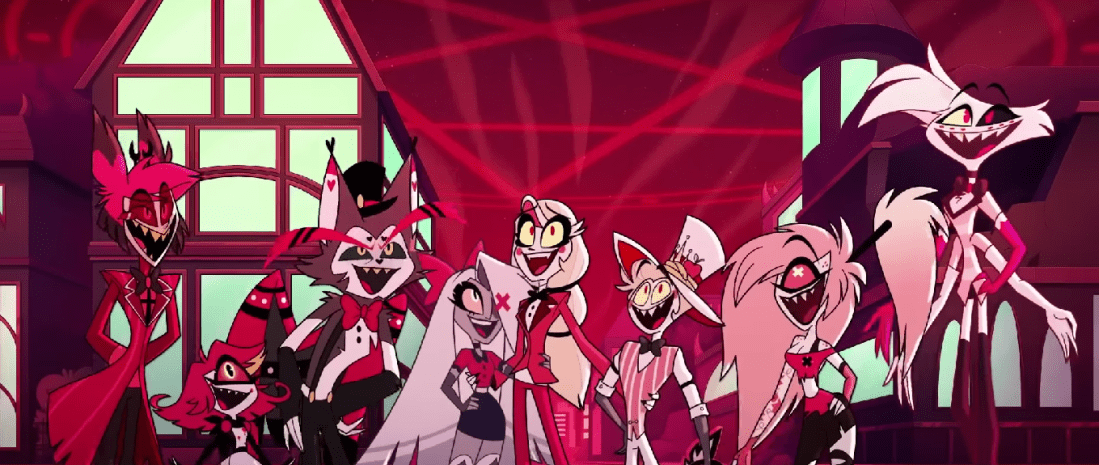


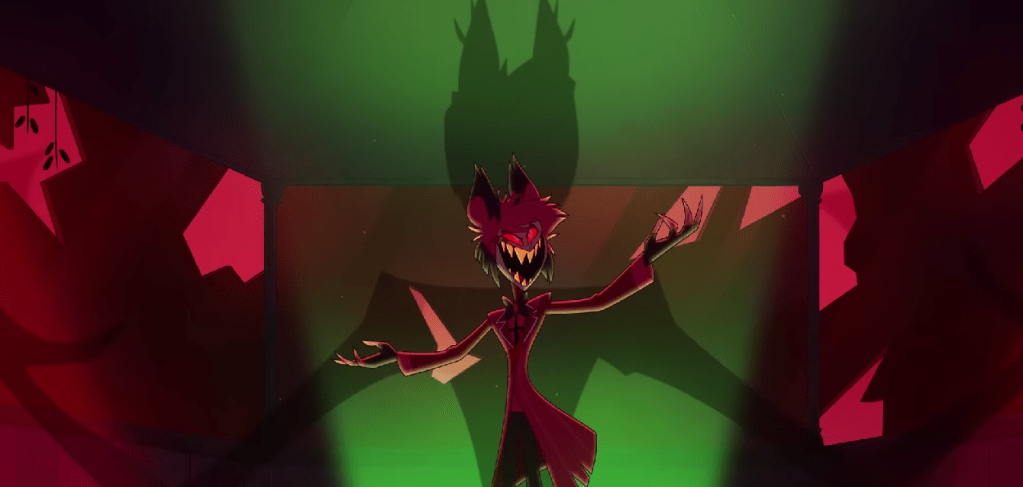
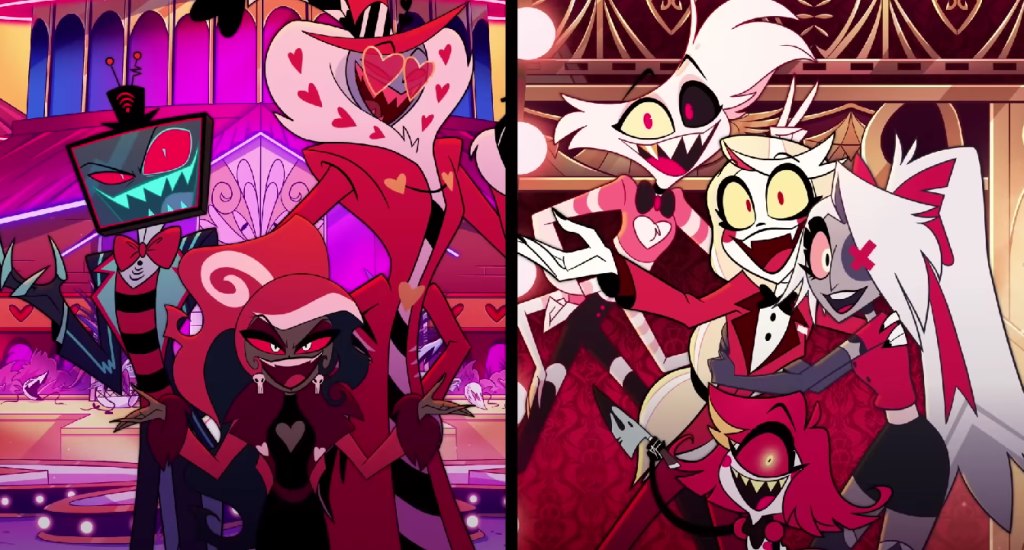
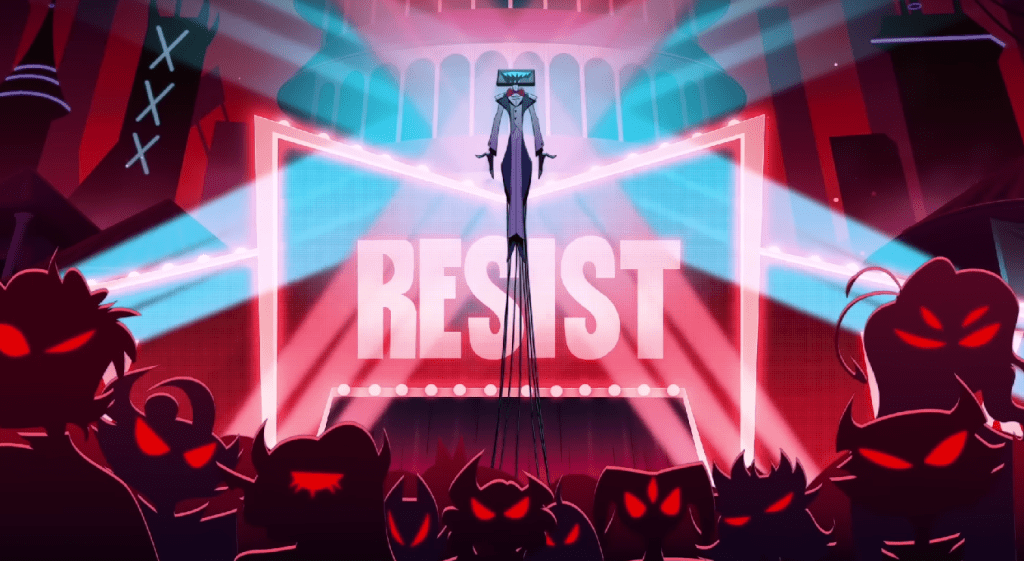

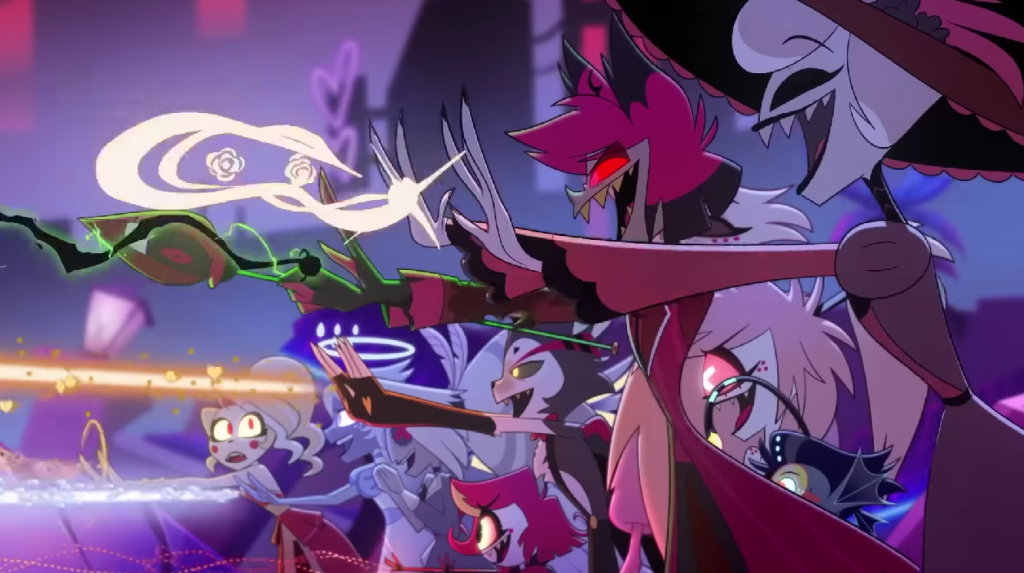
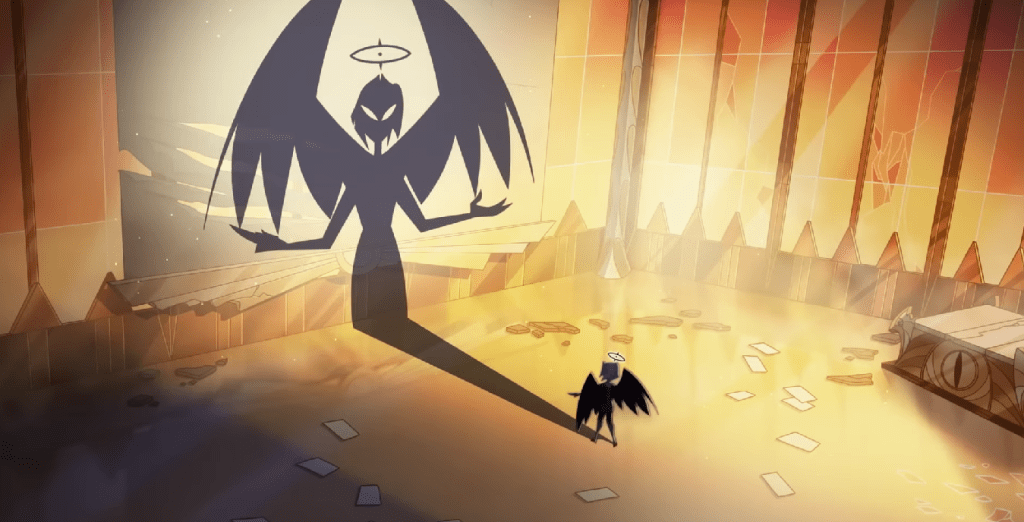
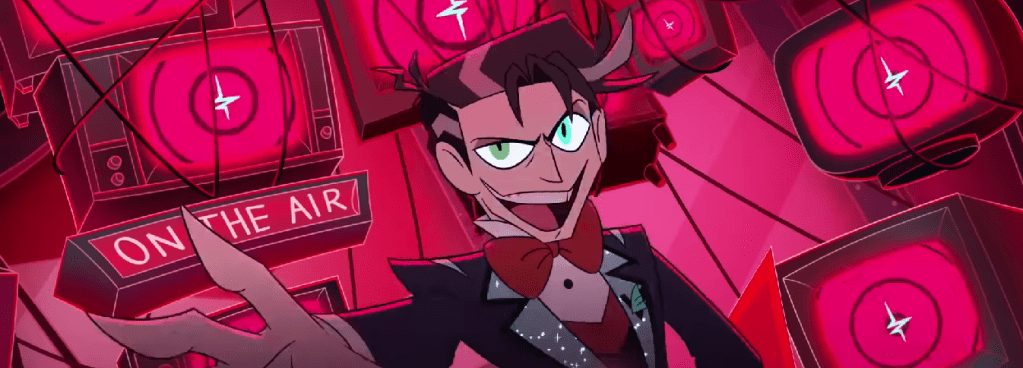
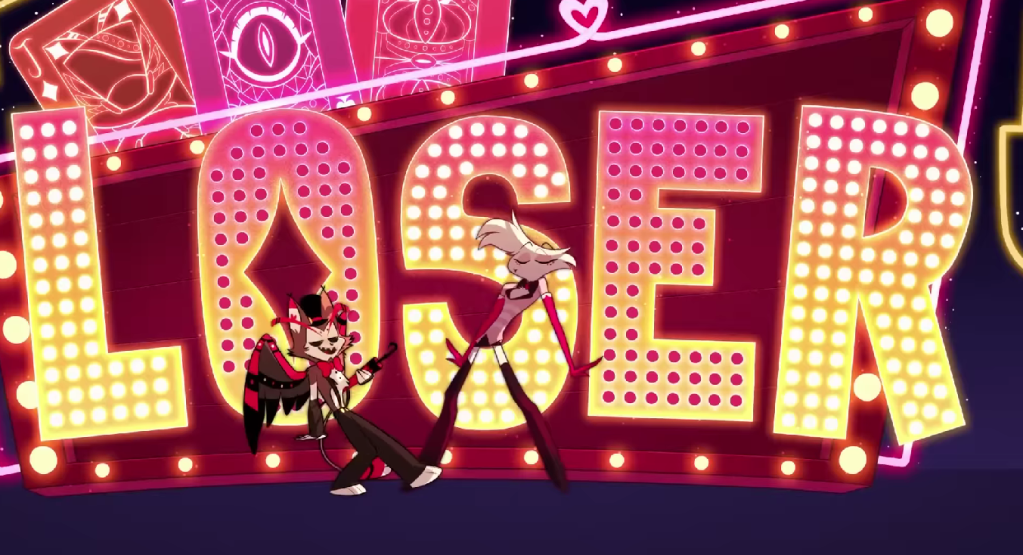

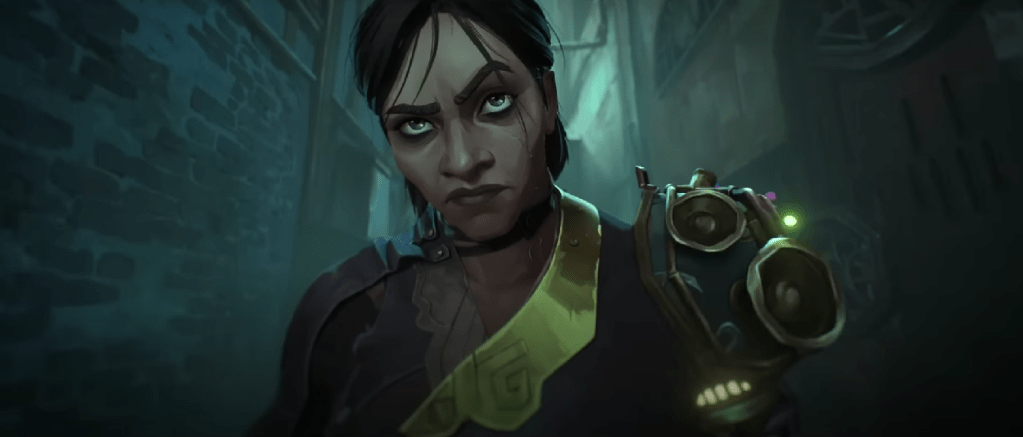


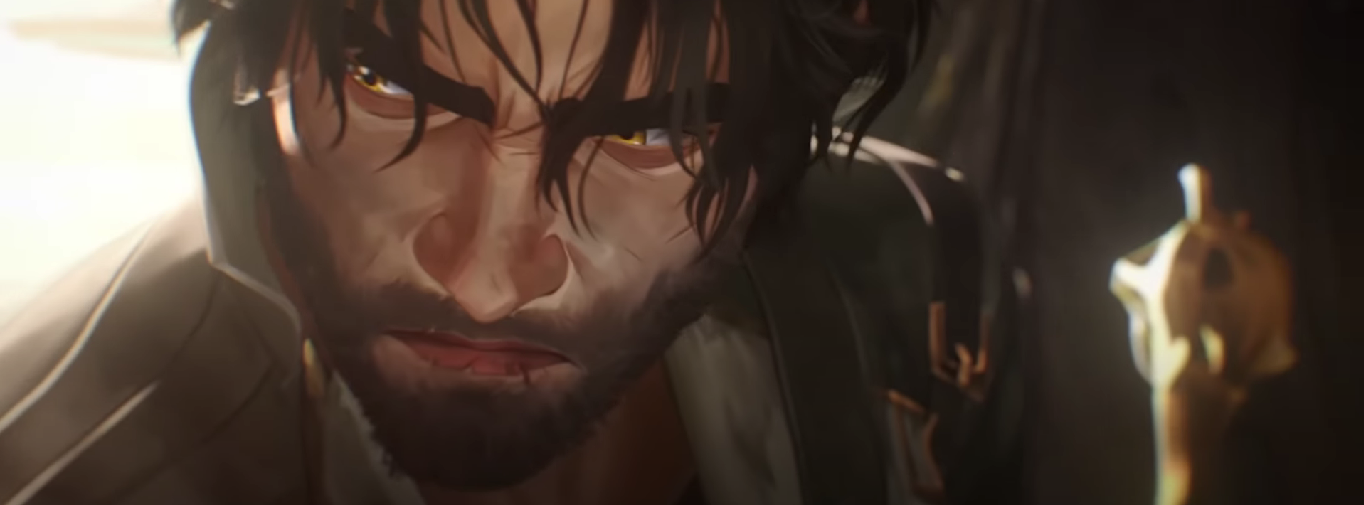
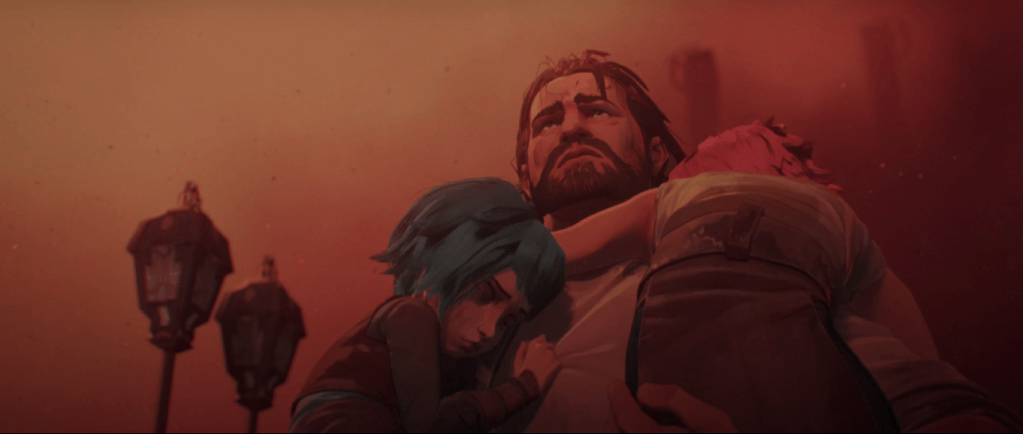
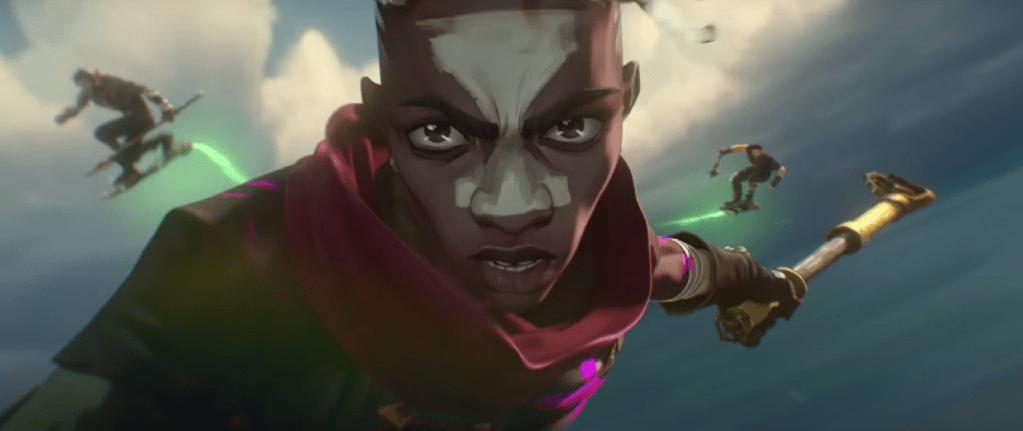
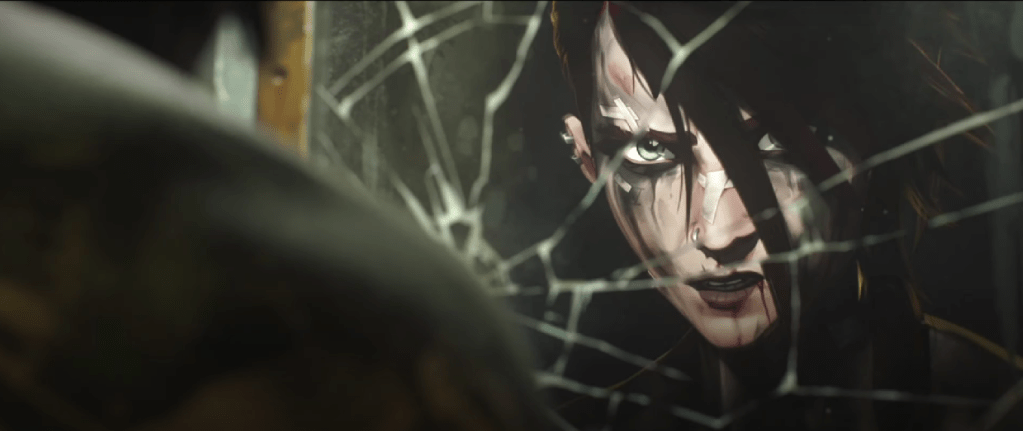
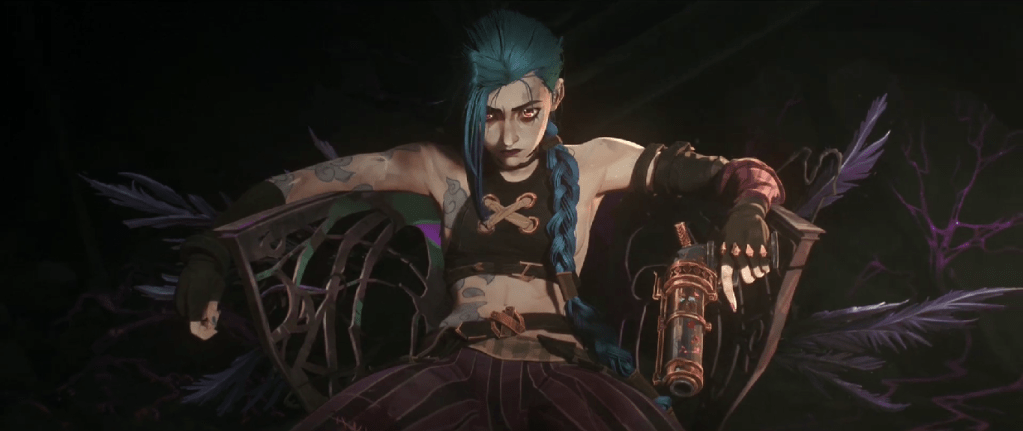

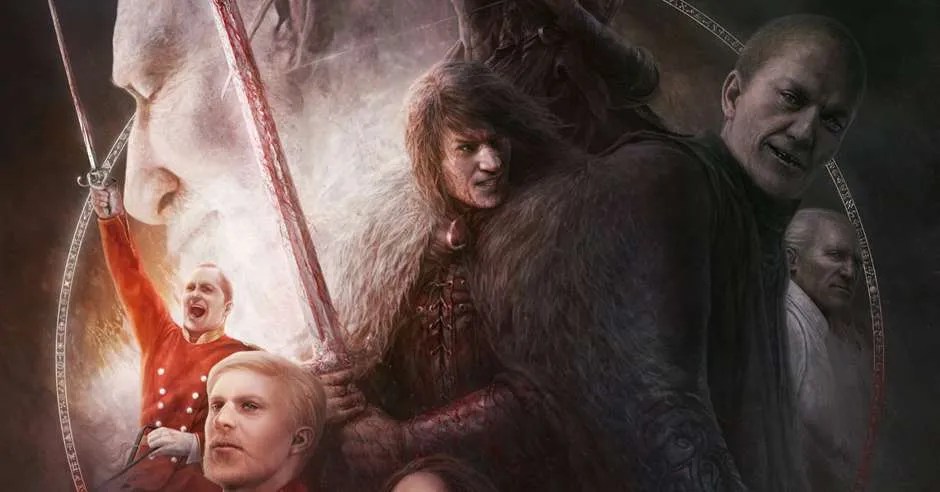
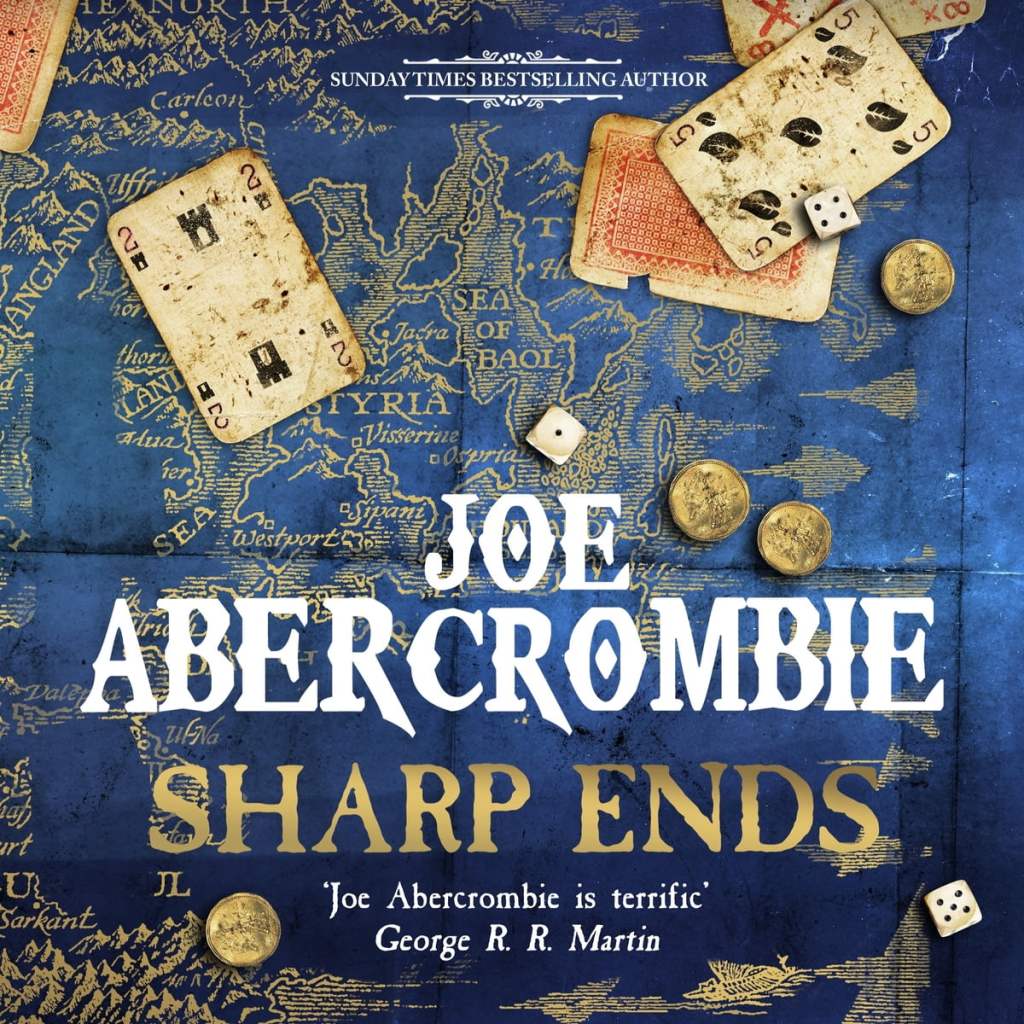




























 THE REVIEW MONSTER