Going into Chainsaw Man Chapter 180, “Aging’s World”, I was expecting to see Yoru and Pochita temporarily team up to fight the Aging Devil.
Instead, the chapter opens with the Aging Devil sending Denji, Asa and Yoru into a different dimension, where it has trapped many people who have made contracts with it.
Asa gets this information from one of these men who has been trapped in the dimension for over 80 years.
The man has understandably gone insane and imitates a cicada in a typically bizarre ending.
Before this ending, though, the man does mention that someone managed to escape the Aging Devil’s dimension before.
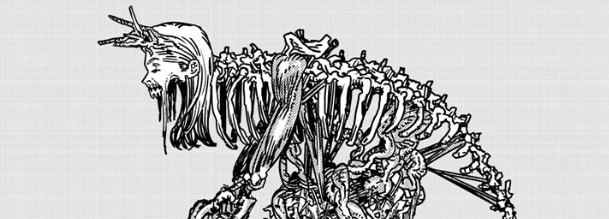
Yoshida and Kishibe seem to be the most likely candidates but I am personally going with Yoshida, since an artwork by Fujimoto depicted him standing in a forest very similar to the one Asa, Yoru and Denji are now trapped in.
Asa tries to find a way out in Chapter 181, “Trees on the Mind”, but her hopeful thoughts are stopped dead by Yoru taking control of her body and attempting to shoot Asa in the head with her powers.
This moment made my jaw dropped because, if Yoru’s powers had been working, Asa would have definitely died here.
Yoru has been pretty sadistic in the past few chapters, but I thought she would at least hesitate if she needed to kill Asa to facilitate her plans, given all they have been through.
Apparently, I was wrong.
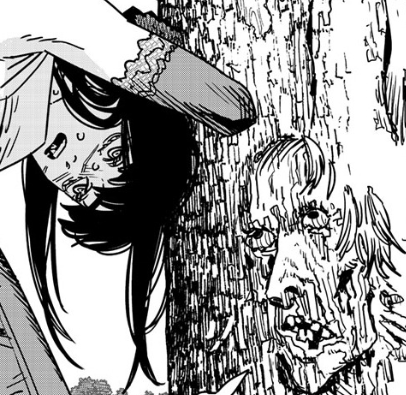
Asa, however, seems to brush aside Yoru trying to kill her as an experiment pretty quickly, and Yoru punches a tree, only to realize that tree is a person.
This is the fate of all who end up in the Eternity Devil’s prison: They are trapped for a thousand years, slowly going mad, until they are turned into a tree.
It is among the most disturbing fates in all of Chainsaw Man and it breaks Yoru, who starts blaming Denji for everything.
This causes Denji to break down as well.
He still undoubtedly blames himself for Nayuta’s death.
Drowning in his own guilt for the misery he sees himself as having brough onto others, Denji declares he will stay to become a tree as a punishment “for being a horny, empty-headed idiot.”
Yoru once again proves she cannot help herself and kisses Denji for the third time, ending the chapter.
The last time Yoru kissed Denji, it ended with her giving him a hand job in an alleyway.
This time?
Well, let’s just say I would not be surprised if next chapter turned into Tokyo Ghoul Re: Chapter 125.
Fujimoto has got away with plenty before so I definitely think he can get away with that.
Although, I question what Asa would even think if that happened, considering that is once again Yoru making a move on Denji in Asa’s body.
Also, Denji still does not know Asa is possessed by the War Devil so that will be a whole can of worms if they end up having sex.
That is if it happens though.
Who knows, they could be interrupted by figuring out a way to release themselves from the Aging Devil’s prison?
Either way, these two chapters are brief but solid, clearly showing off the disturbing power of the Aging Devil.
Category: Review
All of Us Are Dead Review: High School of the Dead.
After another rewatch of Train to Busan, I suddenly remembered the trailer of a South Korean zombie show I had never got around to watching, All of Us Are Dead.
Based off the manhwa by Joo Dong-geun, the story is set at a high school where a zombie outbreak occurs and then spreads to the rest of the fictional city of Hyosan.
The show then follows the students and various other survivors in the city as they attempt to survive the outbreak in twelve episodes.

Starting off with the positives, the characters are all pretty well done, for the most part.
The characters the writers want you to like you like, and the characters the writers want you to hate you really hate.
In particular, I want to commend Lee Yoou-mi’s performance as Lee Na-yeon.
She played Ji-yeong in Squid Game.
I mention this because, whereas I really sympathized with her character in that show, I absolutely despised her character in All of Us Are Dead.
It really showed off her acting range.

As for characters I liked, I personally found myself gravitating towards the side characters more than the main ones, like Yang Dae Su (Im Jae-hyuk), the group’s cheerful heavy hitter.
That is not to sell the main characters short, though, because they are all pretty good.
As for the zombies pursuing these characters, they are all threatening, what with their speed and resemblance to the ones from Train to Busan (which is referenced).
There are also things which make them fairly unique compared to other zombies, such as the concept of “Hambies.”

Just as interesting are the characters ways of surviving the zombies, usually twisting their school supplies into methods of survival.
While it is a plus to see how smart these characters are in certain situations, it unfortunately makes times when they make mind blowingly stupid decisions standout.
This, sadly, happens often, culminating in the most unnecessary self-sacrifice I have seen in a long time, making me roll my eyes.
There are also quite a few moments of convenience and, to top it off, I would say that there was an overabundance of subplots.
I think at least a few of the extra storylines could have been cut down or removed entirely and not much would change.

Still, despite these many criticism, I would still recommend All of Us Are Dead.
Yes, the story can be pretty frustrating with characters making stupid decisions, moments of convenience, and a few too many subplots.
But, on the other hand, the zombies are threatening and have some unique qualities, the methods used to combat them are interesting, and the characters are engaging, whether they are likeable or purposefully unlikeable.
It will be a while until Season Two, though, since filming is supposed to take place in 2025.
When we eventually do get it, I hope it does not repeat Season One’s flaws.
Night Light Hounds Chapter One, Night Hounds Review: Gangsters, Vampires and Werewolves.
I am the kind of person who usually reads manga based off recommendations.
If I hear a lot of praise about a series, or the mangaka is connected to another one I follow (like with Centuria), I will check it out.
It is rare for me to just check out a first chapter with no expectations, but when I stumbled across the link to the first chapter of Night Light Hounds, I had nothing else to do so gave it a shot.
Upon finishing the chapter, I knew I just had to review it.
Night Light Hounds is written and illustrated by Haruhisa Nakata, a mangaka with experience in the industry.
He is most known for Levius, which I have not read so cannot speak about its quality.
I can speak about the quality of Night Light Hounds’ first chapter though and, if that is any indication of its future potential, then this is going to be really good manga.
Chapter One, “Night Hounds” begins by presenting the story’s setting of Silent Bay City, a 1920s inspired city ruled by gangs.
We see this immediately, with the first scene following a group of gangsters shaking down a business and attempting to threaten the owner into joining their protection racket.
The artwork immediately stands out, with the city and characters having a realistic style that persists throughout.
The business owner refuses to cave to the lead gangster’s demands, so he calls in the lookout, our main character, Jimmy, instructing him to act like he is going to kill the businessman to get him to cooperate.
This serves as a test for Jimmy, but he fails it, as his hesitation and compassion give the old man enough time to leap up and grab the gun from him, resulting in the gang leader killing the businessman.
While failing in his task, this also gives the reader plenty of reason to care about Jimmy, as we get our first look at how he is not a bad person but is rather forced into this cruel line of work by circumstance.
The gang leader is nowhere near as compassionate, punching Jimmy for his failure and ordering him and another gang member, Viktor, to dispose of the body in a shed.
However, only Viktor is allowed in the shed because he has the mark of the family and Jimmy does not.
Whatever Viktor sees in there clearly gets to him because he is prepared to leave the family immediately after.
He seems to almost warn Jimmy about what he saw inside the shed but stops himself.
Later that night, Jimmy is at the roof of his apartment, where he considers suicide, due to the state of his life, only to be halted by a baseball being repeatedly thrown to him, seemingly from nowhere.
Attempting to find out the identity of the thrower leads to Jimmy accidentally falling off the roof, only to be caught by a little girl with absurd strength.
In a humorous exchange, Jimmy has to throw the ball back onto the roof to get her to drag him back up, since the girl does not seem to understand him.
Over the next few nights, Jimmy meets with the girl on the roof and bonds with her, suspecting that she is an orphan.
It is kind of funny that, although Jimmy clearly comes to care about the girl, he does not focus on her absurd strength too much, and also fails to notice what looks like a muzzle hanging around her neck.
Still, Jimmy does act like a big brother, teasing her about the vampires she claims are at the gang’s headquarters across the city.
He also tells her his backstory, informing her and the reader of how he lost his parents, brother, and then became indebted to the gang.
Is it a bit too convenient for Jimmy to reveal his backstory to a little girl he just met so we can care about his past?
Yes.
But it gets the job done, and Jimmy even says the girl reminds him of his little brother.
Continuing the brotherly connection, he even gives her a name when he learns she does not have one: Lili.
Just when it seems Jimmy is set on looking after Lili, her caregiver arrives, a mysterious man in a suit she calls K.
Jimmy gets angry at the man for leaving Lili alone but he, in turn, calls out Jimmy, saying he looks disappointed knowing Lili is better off than him.
This may be too cruel of an assessment, though, as Jimmy saw Lili as having no one, like him.
He is most likely saddened by the apparent loss of that connection, and obviously insulted when K tries to pay him off with cash.
Jimmy throws away the money and storms off, which Nakata uses to show off more world building, as numerous homeless people begin desperately grabbing the thrown money, showing just how bad off the poor are in Silent Bay City.
The next day, Jimmy is still fuming about the exchange, while also being curious about how a wound on Lili’s hand disappeared.
His distraction accidentally leads him and his fellow gangsters back to the shed where he and Viktor dumped the body.
The gangsters go inside, leaving Jimmy in the car.
When he hears gunshots, he goes inside to investigate and finds the horrifying sight of his coworkers dismembered bodies, and a shadowy figure standing over them.
Fleeing the shed, Jimmy goes to the police.
Probably subconsciously leaping onto Lili’s vampire claim, he tells the police officers that is what he saw, only to switch tracks when he realizes this is not working and turning on the gang.
Unfortunately, the police are bought by the gangs, and they turn him over to the lead gangster, who brings him tied up to the shed, where Viktor has also been killed for trying to leave the family.
Here, Nakata shows off his artistry once more, as the gangster actually reveals himself to be a vampire, showing off his snake-like eyes, long fangs and enlarged tongue.
Revealing that there are other vampires within the family, the gangster goes off on a monologue, knowing Jimmy will tell no one since he is going to kill him anyway.
This proves to be his mistake, as it gives Jimmy enough to time to break free and prove he does have the guts to shoot a gun.
Jimmy nearly makes it out, but the vampire’s healing abilities and supernatural strength get the better of him.
He accepts his death, only for the vampire to stop dead, horrified at something on the roof above him.
Jimmy looks up, and we get the best panel of the chapter, a double spread revealing a shadowy wolf-like creature lurking above.
The wolf easily and brutally kills the vampire, and is then joined by K, who blows up the shed.
The werewolf then drops Lili’s baseball at Jimmy’s feet with “I am Lili” written on it, revealing her identity.
Although it was pretty obvious that Lili was the wolf from the moment it showed up, what with her previously shown super strength, healing ability, muzzle, and knowledge of vampires.
K tells Jimmy that they are the Night Hounds and will meet again.
The chapter then ends on another sprawling panel of the city, with Jimmy narrating, “This is how, in Silent Bay City, a good-for-nothing like me got caught up in a conflict between monsters.”
I am curious to see what K wants with Jimmy.
Perhaps he wants him to join the Night Hounds, given his connection with Lili and proving himself competent by surviving the vampire attack?
This first chapter also foreshadows potential future conflicts in the story, with the vampire working for the unseen underboss named Dorothera, who Viktor claims is going to be the next head.
Since the lead gangster was a vampire, it stands to reason Dorothera is too.
It seems likely Jimmy is going to find himself on the side of the werewolves in this conflict.
Overall, “Night Hounds” is a solid start to this story.
The artwork is great, its main character is likeable, as is his bond with the child werewolf, and it seems like Nakata has set up the future of the story nicely.
This was a great first chapter, and I am already looking forward to seeing where Night Light Hounds goes.
Shōgun Review: My Secret Heart Loves This Show.
I have heard praise of Shōgun for a while now.
That praise, along with the show’s outstanding performance at the Emmys, and its intriguing setting of 1600 Japan left me eager to check it out.
The only thing stopping me was the lack of Disney Plus in my household.
Having finally got it, Shōgun was one of the first shows I checked out and was by far the most engaging.

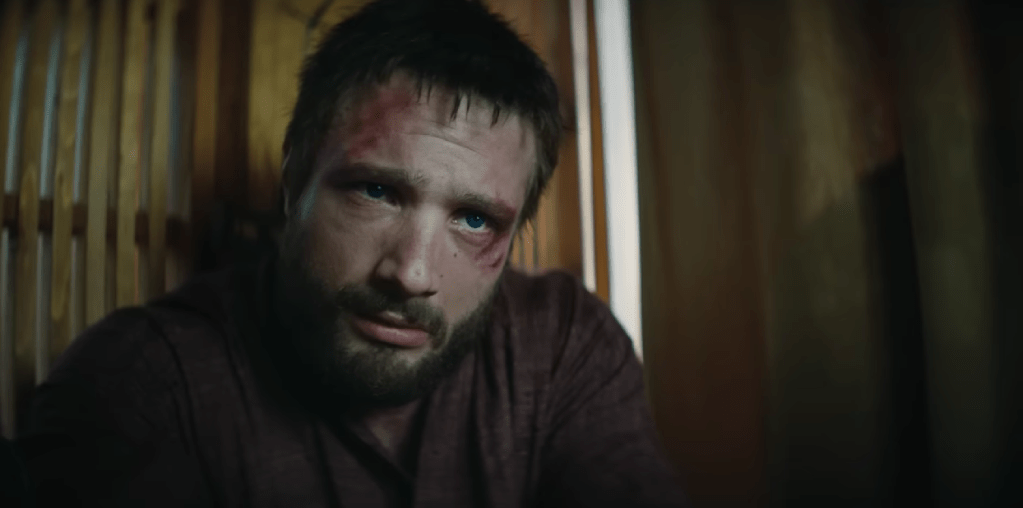
Based off the 1975 book of the same name by James Clavell, the show kicks off with the arrival of John Blackthorne (Cosmo Jarvis), a foul-mouthed protestant sailor from England.
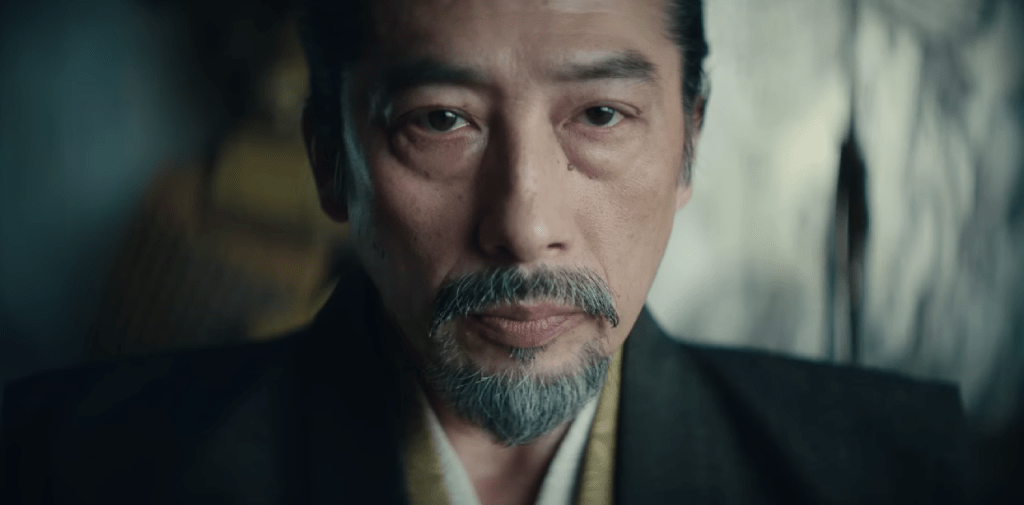
The first Englishman to set foot on Japanese soil, Blackthorne becomes of immediate interest to the Lord of Kantō, Yoshiii Toronaga (Hiroyuki Sanada), much to the dismay of Blackthrone’s catholic Portugese enemies.
He has arrived at a time of great turmoil in Japan, where Toronaga is embroiled in a bitter struggle for power against his fellow lords for the fate of the country.
With the help of his Japanese interpreter and Toronaga loyalist, Toda Mariko (Anna Sawai), Blackthorne begins to assimilate to the culture, while experiencing events that will shape Japan’s history.

I know from the way I have described the plot so far, it seems like Blackthorne is the main character of this story, but that is actually not the case.
Yes, his arc is great to watch play out, and Jarvis’ performance is fantastic, but Blackthorne’s role mostly serves as an introductory lens for viewers who are not familiar with this period of Japanese history and its customs.
The real main players are the Japanese cast, all of whom do incredible jobs with their performances.
Hiroyuki Sanada is of course an incredible actor, and he transforms into Yoshii Toronaga, being more than deserving of his Emmy win.

Tadanobu Asano is also great as Kashigi Yabushige, a character so self-serving that you want to hate his guts, but his personality is so entertaining you find it difficult to do so.
The real standout, though, is Anna Sawai as Mariko, who goes on an intense journey, as she finds herself struggling with her difficult past, abusive marriage, faith, and her growing closeness to Blackthorne.
All of this culminates in “Crimson Sky,” the ninth and best episode of the show, where she delivers a powerhouse of a performance.
Just like Sanada, she was more than deserving of her Emmy win.

What makes these characters even more interesting is that many of them are based off real people, important to Japanese history.
After finishing Episode Ten, I immediately found myself looking up information about these people and how the events of the show differed from real life.
Just imagine how many other viewers did the same after finishing the series and thus became more knowledgeable about the history of Japan.
But it is not just the characters that make Shōgun great, obviously.
The production quality of the show is excellent, with the costuming and sets perfectly reflecting the time period.
The CGI is also top quality, with not a single shot drawing me out of the moment.
Speaking of shots, the cinematography and editing are also stellar throughout, as is the score which makes every enthralling scene only more gripping.
This includes the opening theme, which has great visuals that remind me a lot of Game of Thrones’ intro.

Sadly, this is not the only thing about Shōgun which reminds me of Game of Thrones, but that has nothing to do with the present quality of the show, rather the future quality.
You see, Shōgun completely adapts James Clavell’s book, and the show was originally intended to be a single season.
Well, money talks, and Shōgun’s success has resulted in the green light for a second season.
With nothing left to adapt, that means the writers are going to have to write their own original stuff for season two.
We all know how Game of Thrones degraded after the writers ran out of book material, so there is always the concern for this happening with the second season of Shōgun.
However, as stated, the original novel was based off very real people and events, so the writers at least have something to work with, unlike the Game of Thrones writers.

And no matter the quality of this eventual second season, this first season of Shōgun will remain a masterful work with excellent characters, acting, production and score.
It has also undoubtedly helped spread knowledge about 1600s Japan and that is probably the highest praise a show based in that setting could receive.
Chainsaw Man Chapter 179, Vamvagh Review: Gaslight, Gatekeep, Devilboss.
Going into Chapter 179 of Chainsaw Man, “Vamvagh”, I am sure that many of us were concerned about Pochita possibly eating the Aging Devil.
If he did so, it would cause the deaths of thousands of children.
I had my doubts that Pochita would eat the Aging Devil, and I was right but for the wrong reason.
Instead of refusing to eat the Aging Devil to save the children, Pochita instead refuses to eat the Aging Devil because… he’d rather focus on continuing the blood drive?
Yeah, still not sure if this is Fujimoto referencing Power or not.
It does make for some funny panels, though, as the Aging Devil watches Pochita slowly crawl away from him, grab the sign and continue to shout, “Vamvagh!”
Whatever that means.
As the Aging Devil tries to get Pochita to eat him, Yoru is preparing to attack again.
Asa, however, is attempting to convince her to stop, horrified by Yoru’s Devil nature.
She is also obviously concerned about Denji, and so Yoru tells her turning Chainsaw Man into a weapon would free Denji.
Is Yoru outright lying here?
Perhaps.
At best, she thinks there is a chance of it but, either way, she is willing to risk it.
Though, we as the readers know that Pochita is Denji’s heart, so separating the two would probably kill him.
Thankfully, Yoru does not get the chance to test it, at least not at first, because Asa’s newfound fear of Yoru forces the Devil out of her body.
And then we get the ultimate moment of gaslighting from Yoru.
She acts all sad about Asa being scared of her, and yet the moment Asa feels guilty enough to let her back in she continues the attack.
The Makima parallels are evident, as she joyfully uses her finger gun attack to take another shot at the Aging Devil.
Being a Primal Fear, it takes more than that to wound the Aging Devil, as he stops the bullet mid-air, transforming it into a giant thumb, which he then disintegrates.
Declaring both Chainsaw Man and the War Devil too immature to talk with him, the Aging Devil ominously states, “Time to have them grow up,” ending the chapter.
Looks like we are going to see a team-up to defeat a Primal Fear again.
Only this time, it will not be Asa and Denji vs the Falling Devil, but Pochita and Yoru vs the Aging Devil.
As for the “grow up” comment, it would be creepy if the Aging Devil caused Denji or Asa to rapidly age with his attacks.
Not sure how that could be reversed, if Fujimoto takes that route.
There is also the matter of Yoru gaslighting Asa to oblivion this chapter.
She really is moving towards being a full-on villain this arc, and she may have just ruined any trust she and Asa have built with her actions.
I am extremely interested to see both the fight with the Aging Devil, and how complicated Asa and Yoru’s relationship will be going forward.
“Vamvagh” is another short, yet great chapter, which continues to widen the divide between Asa and Yoru.
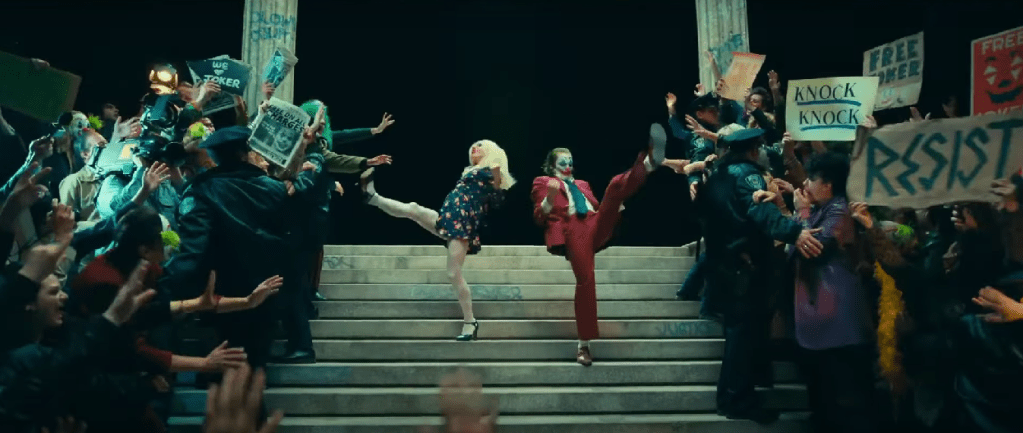
Joker Folie à Deux Review: Folly à Deux.
Joker was one of my favorite films of 2019.
It had an excellent lead performance from Joaquin Phoenix, fantastic cinematography from Lawrence Sher, and a haunting score by Hildur Guðnadóttir.
However, after watching it, I believed it did not need a sequel.
The story seemed perfectly wrapped up, yet open ended, so I figured there was no reason to make one.
Well, the studio definitely had a reason to when the film grossed over a billion dollars.
Fans of the first movie’s concern only grew when news that the sequel would be a musical started floating around.
When I heard this, though, it actually made me feel a little optimistic.
It showed me that those making the film were taking a risk rather than playing it safe.
The trailers also made the movie look great.
But, as we all know, trailers can be deceiving and, when Joker: Folie à Deux finally released, it received a less than positive reaction to say the least.
This did make me more curious about what I would think of the film, though.
Would I agree with the masses and dislike it, or would I be in the minority and find it to be misunderstood?
Unfortunately, I am with the masses on this one.

Directed again by Todd Phillips, Folie à Deux takes place two years after the first movie.
Arthur Fleck is in Arkham Asylum, waiting for his trial where, if found guilty, he could receive the death penalty.
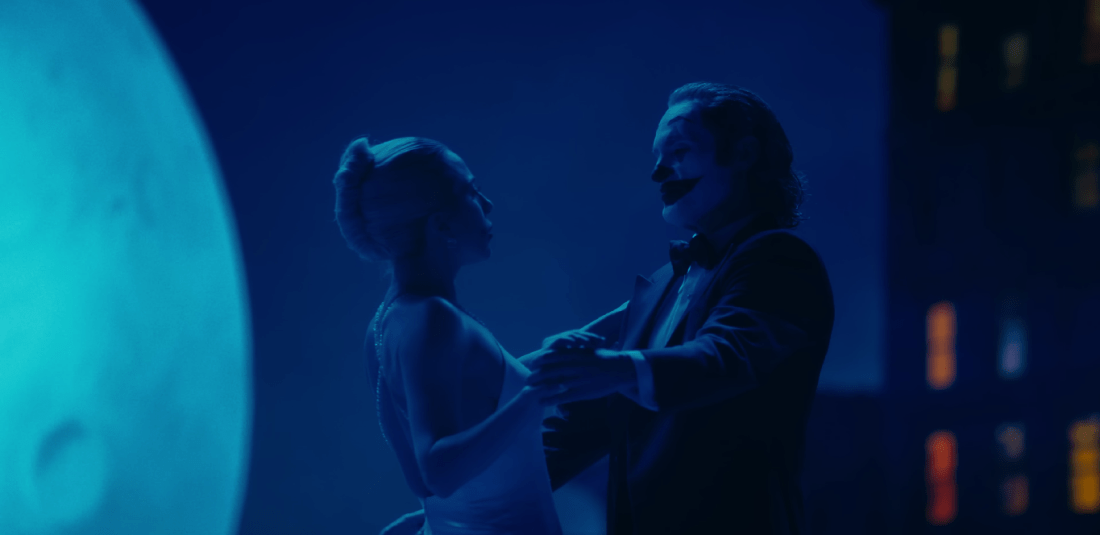
It is in Arkham that he meets Harley Quinn, or Lee as she is called in the movie, played by Lady Gaga.
The two form a connection, as the film details Arthur’s life in Arkham and his trial, interspacing this storyline with various poorly timed musical numbers.
But I will get to that issue later.
First, I want to talk about the positives of this movie.
For starters, the performances are all great, with Phoenix once again delivering an excellent performance.
Lady Gaga is pretty much just there to sing and she has a great voice, so she obviously does a great job with that.
Brendan Gleeson is also pretty good as an abusive guard at Arkham.
The standout performance for me though was unexpectedly Leigh Gill as Gary Puddles, Arthur’s former coworker who played a minor role in the first film.
He returns to testify at Arthur’s trial and Gill’s performance is mesmerizing, as he details the trauma Arthur’s actions have unleashed upon him.

Sher’s cinematography is also once again spectacular, as is Guðnadóttir’s score, with what little we hear of it due to the musical numbers.
And it is here I have to get into the many negatives of the film.
Sadly, these musical numbers almost always feel pointless and poorly placed.
There is one during the trial where I thought the music and Phoenix’s performance showed what was going on in Arthur’s head really well but, otherwise, if you remove them all, nothing changes about the movie.
They usually felt like a waste of time, and it got to the point that I actually chuckled when one character asked another to “stop singing” near the end of the film.

Along with the issue of the musical numbers, there is the general unfocus of the movie’s story.
Arthur and Lee’s relationship feels entirely underdeveloped.
Lee serves as a representation of women who bizarrely fall in love with real life murderers but, other than that, there is zero characterization for her.
As a result, Lady Gaga feels pretty underused.

The court room scenes pretty much just recount events which we all saw in the first movie, so they hold no interest.
That leaves the Arkham scenes, which are just so bleakly depressing, even for a Joker film.
Speaking of, I do not even know if we can call this a “Joker film,” given how little the character is present.
The first film centered around Arthur’s disturbing metamorphosis into the Clown Prince of Crime, yet the sequel strangely decides to focus on the destruction of that persona, making that original movie feel pointless in hindsight, especially with the ending they chose.

Along with this, Folie à Deux also removes a lot of the intrigue from the first film.
In Joker, there were many scenes which were left up to the audience’s interpretation over whether they were real or not.
Folie à Deux, however, unnecessarily tells the audience what was real in that movie, destroying a lot of its ambiguity.
It would be like if Christopher Nolan decided to make a sequel to Inception and revealed if the spinning top really fell at the end or not.
It would remove the impact of that film’s ending, just like Folie à Deux takes away a lot of the intrigue from Joker‘s ambiguity.

Joker: Folie à Deux is a poorly thought-out sequel.
It may have great performances, cinematography and score, but that means little when the story is so disorganized, has poorly placed musical numbers and, worst of all, arguably weakens the prior amazing film just by existing.
If you are a fan of the first film, like I am, this is definitely a folly you should skip.
Terminator Zero Review: A Much-Needed New Direction.
The Terminator franchise has been unable to move onto new ideas for a while.
This was especially apparent with the latest movie, Dark Fate, where the writers got rid of John Connor and Skynet, only to replace them with pretty much exactly the same thing.
So, it is quite the welcome surprise to see an anime of all things finally take the series in a fresh direction with Terminator Zero.
Don’t get me wrong, the anime definitely rehashes things from the previous films, most notably the Terminator traveling back in time to achieve a goal for Skynet, and a human also going back to stop them.
But there is not an overload of these Terminator tropes, and it balances well with the new stuff.

Directed by Masashi Kudō and written by Mattson Tomlin, the series focuses on the Lee family in the leadup to Judgement Day.
The father, Malcolm (Yuuya Uchida), is somehow aware of the coming AI apocalypse, and is creating the AI known as Kokoro (Atsumi Tanezaki) in the hopes of combating it.
In the future, Skynet sends a Terminator to stop him, and this Terminator is pursued by a highly skilled resistance soldier named Eiko (Toa Yukinari).
However, the Terminator will stop at nothing to get to Malcolm, even using his children Reika (Miyuki Sato), Kenta (Hiro Shimono) and Hiro (Shizuka Ishigami) against him.
It is up to Eiko and the children’s nanny Misako (Saori Hayami) to protect them from the Terminator, all the while Malcom engages in a philosophical debate with Kokoro to convince her to stop Judgement Day.
The Terminator franchise has been focused on the Connors and America since its inception, so it was fresh for the story to center on a different part of the world and a different family.

The events of Judgement Day play out very differently than America, so it made for an interesting watch.
As for the Lee family, some of them are more likeable than others.
Reika is definitely the standout, while Malcolm and Kenta could be pretty unlikeable at times, although their decisions still seem in character to me.
Eiko remains a strong fighter throughout, but it was Misaki’s storyline that I gravitated the most to, especially with how the mystery surrounding her played out.

Speaking of mysteries, there are a few good twists in here that brought some fun surprises.
The animation is solid, even if the CGI did stick out like a sore thumb on a couple of occasions.
This was only occasionally though, as the CGI is usually great, and the action is really enjoyable.
There is an action scene which is definitely a direct homage to an iconic moment from the first Terminator, so the series does a good job of bringing new things to the table while paying tribute to the old.

Another thing I want to praise is the score, with one track played towards the end of Episode Four being a particular highlight.
So, the production quality of the anime remains pretty consistent throughout, even if the writing does falter a bit towards the end.
Yeah, for me, there was a drop in writing quality during the last few episodes.
The way characters came to certain conclusions did not really work for me, and a couple of things felt a little rushed.

There are also some plot holes or just things unresolved with the time travel aspects of the show, but these issues could be fix with a second season, if we get it.
Overall, though, Terminator Zero is the freshest direction the franchise has taken in a while.
I might even go so far as to say it is the best installment since Terminator 2, although that is one of the greatest movies ever made so there is quite a big gap between that and this.
If you are a fan of the Terminator franchise, I would definitely recommend Terminator Zero.
Chainsaw Man Chapter 178, Gun Goddess Review: A Grim Reminder.
In almost every review I do for a Chainsaw Man chapter, I talk about my complete inability to predict what Tatsuki Fujimoto will do next.
Well, in a nice change of pace, I actually got two of my predictions right, both of which played out in horrifying ways.
In my previous review, I joked about a Titan breaking out of the Statue of Liberty.
Well, Chapter 178, “Gun Goddess”, begins with exactly that happening.
A massive, skeletal monster holding a gigantic rifle emerges from the statue, once again proving Fujimoto’s skill when it comes to monster designs.
This monster was probably created from fragments of the Gun Devil, and Yoru uses it to attack Pochita.
In a moment eerily similar to other Gun Devil attacks, the monster fires on Pochita, absolutely decimating the city around him and no doubt taking hundreds, if not thousands, of lives.
And so, my second prediction comes true, as we see Asa’s horrified reaction to what Yoru has used her body to do.
In my previous review, I said Asa had an expression which screamed, “Oh, yeah, Yoru’s a Devil!”
Well, this is almost word for word what Asa thinks as she looks on in horror, while Yoru laughs behind her.
The sight of the destroyed city is certainly terrifying, especially given how fantastic Fujimoto’s artwork is this chapter.
He not only gave us a terrific design for the Statue of Liberty monster, but also plenty of cinematic panels of the destruction Yoru wreaths.
It is kind of funny because, for the past few months, some readers have been complaining about Fujimoto’s artwork not being as good as Part One.
Now, with this chapter he has, in my opinion, delivered some of his best work.
Yoru’s attack on Pochita leaves only his head and chest area remaining but, luckily for him, the Aging Devil is there to help him out.
Unluckily for many children in Japan, the Aging Devil is only doing so because, if Pochita eats him, then that means a lot of these children will die because of the Aging Devil’s contract.
The creep even has a window open up so he can get a front row seat of the children dying while Pochita eats him.
Honestly, though, I don’t think Pochita will eat him.
He will probably just ignore him, like he did Yoru last chapter.
Although that could be just wishful thinking on my part.
Hey, I don’t want to see a bunch of children die, sue me.
“Gun Goddess” is a fantastic Chainsaw Man chapter.
The artwork is incredible, and the reactions to the horror they have unleashed from both Yoru and Asa are great.
It would not surprise me if Asa started working against Yoru starting next chapter.
She was orphaned in a Devil attack so there is no way she is okay with Yoru orphaning others in her destructive attempt to kill Chainsaw Man.
Way back in my review of Chapter 146, I said that Part Two had crossed the precipice into Fujimoto’s brand of insanity.
Looking back with the benefit of hindsight, I can definitely say I said this way too soon.
The actual crossing of the precipice came with Nayuta’s death (if she really is dead) in Chapter 170.
Ever since, every chapter has been insane moment after insane moment.
Ears and mouths were erased and returned, the entire concept of aging is at risk of disappearing, Yoru got two new arm gauntlets, and now, in Chapter 178, Yoru has launched an attack of Gun Devil proportions while using Asa’s body as an unwilling host to deliver it.
I expect things will only get crazier next chapter.
Spice and Wolf: Merchant Meets the Wise Wolf Review: Wholesome Economics.
Spice and Wolf was one of those anime I heard a lot about, but never really got around to checking out.
So, when I learned there would be a reboot, Spice and Wolf: Merchant Meets the Wise Wolf, I figured watching it would be the best way to introduce myself to the story.
And I am very glad it was my introduction.

Based off the light novel of the same name by Isuna Hasekura, Spice and Wolf begins with Kraft Lawrence, a travelling merchant who encounters a wolf deity named Holo.
Taking the form of a young woman, Holo makes an agreement with Lawrence.
As the two travel together, Holo’s knowledge helps Lawrence grow his profits, while he helps her find information about her mysterious hometown, which she wishes to return to.
Over the course of their 25-episode journey, Lawrence and Holo grow closer, often bickering like an old married couple.

Their chemistry is sold both through the solid animation and the excellent work done by their voice actors, Jun Fukuyama and Ami Koshimizu.
The latter in particular does an excellent job, with Koshimizu bringing Holo’s charming cheekiness to life.
Lawrence and Holo play off each other so well that I would say the weakest part of the show is the arc where they are separated and we have to spend a long time with Lawrence alone.

This is only one arc, however, and the payoff to it is pretty good.
Speaking of, charming moments between Lawrence and Holo are not the only payoff we get because Spice and Wolf also does an excellent job of making the economic elements of Lawrence’s trade interesting.
It was always interesting to see how he and Holo would work around their monetary and debt issues with corrupt officials, which constantly plagued them throughout the season.

What also helped is that the characters the two meet on their journey are likeable, or at least understandable in their motivations.
The real focus is on Holo and Lawrence though, as it should be.
Watching their bond grow, along with their clear romantic feelings for one another, made for a fun watch.
It is clear that many others agree because, immediately after the finale aired, a Season Two was announced.

If Season Two is anything like the first, it will be more than worth the watch.
Spice and Wolf: Merchant Meets the Wise Wolf has a fantastic dynamic between its two romantic leads and does a great job of explaining and making its economic nature entertaining.
If, like me, you had not experienced this story before, I would recommend this series as a great way to introduce yourself.
Chainsaw Man Chapter 177, Trigger Finger Review: A Possible Return Hinted?
I ended my review for the previous Chainsaw Man chapter by saying, “I do not know how the fight between Yoru and Pochita will progress, but it is sure to be epic.”
Well, for what feels like the hundredth time, Fujimoto pulled the rug out from under me, this time by having Pochita not fight Yoru at all.
Yeah, he just leaves the fight as if Yoru is not even worth his time.
Where does he go?
To take part in a blood drive.
He was even kind enough to give the girl advertising it a break.
It was kind of rude of her to run off screaming, though.
As for why Pochita is taking part in a blood drive, I cannot help but wonder if Fujimoto is hinting at the return of Power with this?
I mean, she asked Denji all the way back at the end of Part One to find the Blood Devil and turn them back into Power.
Of course, as Fujimoto proved this chapter by having Pochita run off instead of fight Yoru, it is almost impossible to predict what crazy thing he will write next, so I am probably reading too much into this supposed Power hint.
As for Yoru, she does not take Pochita’s refusal to fight sitting down.
Instead, she uses her newfound strength in typical Devil fashion, by destroying the index fingers of 400,000 NRA members.
She appears to be sacrificing these fingers to awaken some kind of power inside the Statue of Liberty, which cracks at the end of the chapter.
What, is a Titan about to emerge from it?
My best guess for why Yoru is able to affect the statue is because it was a gift from France to the USA after they won the American Revolution which, as a war, Yoru undoubtedly benefited from.
We will see whatever she plans to use the statue for next chapter, along with probably more disturbed reactions from Asa about Yoru’s attitude.
She looked pretty horrified when Yoru was so nonchalant about turning her children into weapons.
It was like she remembered, “Oh, yeah, Yoru’s a Devil!”
I do believe Yoru had to feel some guilt from the sacrifice because, as has been explained before, powerful weapons are created by guilt.
Given that Yoru’s new hand gauntlets were able to wound Pochita, I imagine the guilt would have to be pretty strong.
Yet it is not Yoru destroying 400,000 index fingers, cracking the Statue of Liberty, or her possible guilt over weaponizing her children that is getting the fandom talking about this chapter.
No, it is Yoru’s other asset… Yes, I know, I am ashamed of myself for making that pun too.
It is kind of funny though that this became the main talking point of the chapter, rather than all of the other crazy stuff that happened.
I guess people are just used to whatever insane concepts Fujimoto comes up with.
I certainly expect we will see more insanity next chapter, as Fujimoto reveals what Yoru is doing to the Statue of Liberty.
As for Chapter 177, “Trigger Finger” is another blast to read, with great comedy and typical Fujimoto craziness, among other assets… I know, I will stop now.