The anime community has been blessed with some fantastic anime as of late, two of which being particular standouts. The first of which is Frieren: Beyond Journey’s End, the greatest anime adaption of all time, in my opinion. The second of these is The Apothecary Diaries, an amazing anime in its own right. Based off the light novel by Natsu Hyūga, the story is set in a country resembling Imperial China. Our main character is Maomao (Aoi Yuki), an apothecary who is kidnapped to sell as a servant for the Imperial Palace. Recognizing an illness that is affecting the concubines and children of the Emperor, Maomao anonymously writes a letter to stop the unintentional poisonings.
Maomao is relatable for the beginning. She does not want to get involved in court politics but steps in when her morals and interests compel her.
This catches the attention of the important eunuch Jinshi (Takahiro Sakurai), who sets about using Maomao to solve other mysterious poisonings and illnesses within the palace. And so, the story follows the friendships and rivalries Maomao forms as she investigates case after case, while she and Jinshi grow closer. Maomao, herself, is an excellent character, as her obsession with poisons often drives her to humorous, cat-like behavior. However, this behavior can often flip to being more like a tiger, as Maomao’s anger is pretty fearsome to behold. Just ask Jinshi.
I would not have blamed Jinshi for having a heart attack when Maomao glared at him like this.
Speaking of the supposed eunuch, he is also a great character with a lot of mystery to him. He has great chemistry with Maomao as well, often finding himself exasperated by her antics. The cases these two end up investigating creates what feels like a Sherlock Holmes and Dr Watson dynamic, only with a more humorous spin on the relationship. Like Sherlock Holmes though, the story often gets dark, with many working behind the shadows in the Imperial Palace. This leads to explorations of many shady characters, like Lakan (Takuya Kirimoto), the spy master with an interest in Maomao.
Lakan is suspicious and intimidating right from the start.
The ending revelations about these mysterious characters and the events around them are always satisfying, with some of these mysteries even being currently unsolved, leading into Season Two, which has thankfully been confirmed. I look forward to seeing the resolution to these mysteries, just as much as I look forward to seeing Maomao and Jinshi’s relationship progress, alongside the inevitable comedy that will result from this. The Apothecary Diaries is an excellent anime, which will often have you laughing at its characters’ antics, while also being intrigued by the many questions the show raises.
I have been keeping up with Frieren: Beyond Journey’s End ever since I first read the manga back in 2021. Written by Kanehito Yamada, the manga has a unique spin on the fantasy genre. Rather than follow the heroes Himmel (Nobuhiko Okamoto), Frieren (Atsumi Tanezaki), Heiter (Hiroki Tochi) and Eisen (Yoji Ueda) on their adventure to defeat the Demon King, the story instead takes place decades later, with Frieren reminiscing on that epic, ten-year journey. This was a journey that passed in the blink of an eye for Frieren, due to her long life as an Elf. By the time she realizes what that time meant, the hero Himmel and the rest of the party are either gone or fading. The current story thus follows Frieren, as she embarks on a new journey with Heiter’s adopted daughter Fern (Kana Ichinose), and Eizen’s apprentice Stark (Chiaki Kobayashi), while reflecting on her old adventure. It is a moving story that I was quite excited to see animated by Madhouse.
Past events take new meaning for Frieren on her current adventure.
Directed by Keiichiro Saito, the studio clearly had a lot of faith in Frieren: Beyond Journey’s End because, not only did they greenlight 28 episodes, but they also aired four of the first episodes together. Seeing this faith in the project made me excited for the adaptation but nothing could have prepared me for how masterful it was. I would go as far to say that Frieren: Beyond Journey’s End is the greatest anime adaptation for a manga of all time. This is a bold claim but I feel that it is more than warranted with just how much the anime elivates the source material. So many battles in the manga take place in single panels, yet the anime adapts these into fully fledged and meaningful fights, with stunning animation that never falters. The incredible animation even applies to character building scenes, with a moment as simple as Frieren jumping out of a bed being unbelievably detailed.
The humor of this scene was enhanced by the animation.
The emotion of the anime also just hits deeper, with the soundtrack by Evan Call working with the animation to bring the viewer into the scene, whether that be a fight scene or a character growth one. Staying on tune with the sound of the anime, the voice acting is also superb, with the actors ironically bringing a lot of life to the often-monotone voices of the characters. This monotone style of speaking creates a lot of humorous situations, as do the few moments when characters break out into explosions of expression, as mostly seen with Stark.
Stark reacting to Fern being angry at him will never not be funny.
I have been heaping praise upon praise for this anime adaptation but now comes the time in the review where I have to state my criticisms… or I would, if I had any. Seriously, this adaptation is so good it even removed some of my criticisms of the manga. In my review for the manga, I said that it felt like some storylines overstayed their welcome, yet the flawless nature of this adaptation made the scenes flow so well together. Seeing the quality of this adaptation made me extremely excited to see future arcs in the story adapted.
Epic scenes like this one make me even more excited for Season Two.
If the anime can keep up this level of quality for future seasons, then Frieren: Beyond Journey’s End could stand among the best anime of all time. I would even argue this first season is one of the best in all of anime. Frieren: Beyond Journey’s End is now the gold standard of anime adaptations, for me. I would say goodbye to it, until hopefully Season Two, but it would be embarrassing when we meet again.
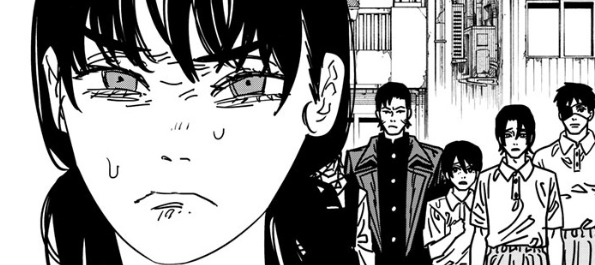
Chapter 159 of Chainsaw Man, “Attack on Samurai,” continues the ongoing rescue arc with more hilarity. The chapter begins with Haruka telling Nobana and Akoku that they don’t have to come with him, but they both have their own reasons for doing so. Nobana’s is simply that he does not know how to get out of the building, while Akoku claims he has nowhere else to go. Although, if Akoku does turn out to be the Fire Devil, then following Haruka to Chainsaw Man would most likely suit whatever his motive is. Nobana, on the other hand, eventually comes across what he thinks is an exit, only to find it is a cell for people transformed into Chainsaw Men. The group is confronted by a Public Safety Officer, whose wife is transformed inside the cell. The man contemplates why his wife transformed, while his annoying neighbor and the Chainsaw Man Fan Club remain human. When the man claims to have done nothing bad in his life, Asa asks if that’s really true, and the man reveals he cheated on his wife. Yoru calls him a piece of crap, not for cheating, but for trying to buy time. She then kicks Fami out of the way, as Katana Man bursts through the wall like he’s the Kool Aid Guy. Fami tries to get Guilly to protect her, but the Guillotine Devil has already changed back into its totem. It’s kind of funny how last chapter I wondered how long Guilly would stick around, only for them to immediately leave in the next chapter. Fami also almost takes her leave, as the Hammer Fiend arrives next to bash her head in with a hammer. Thankfully, Yoru is there to once again kick her sister in the head. What else are siblings for? The chapter then ends with the Hammer Fiend mocking Yoru for kicking Fami out of the way, and Yoru replying that they should try having one arm. And so, we are left with a cliffhanger teasing the fight with Katana Man and the Hammer Fiend. We could also hopefully learn the Hammer Fiend’s name and what their deal is next chapter. As for the fight itself, I think Yoru and Fami will be able to handle it, so long as there are no other complications. One such complication could be Quanxi. If she shows up then, yeah, they are probably screwed. “Attack on Samurai” is a solid Chainsaw Man, which has great physical humor, with Yoru constantly kicking Fami to keep her safe.
It took me a while to hear about Netflix’s Blue Eye Samurai. Created by Amber Noizumi and Michael Green, I only became aware of it when a YouTuber I follow gave it a glowing review. Hearing about its animation similarities to Arcane, which I loved, I decided to check it out and was rewarded with a compelling and thrilling revenge story. The story is set in Edo period Japan, where the Shogun has expelled all white men from the country. However, some do remain in the country illegally. Hunting these men is Mizu (Maya Erskine), a samurai whose father is one of these white men. Shamed for the blue eyes of their father, Mizu seeks their revenge and, oh, is that revenge bloody.
Blue Eye Samurai is one of the bloodiest animated series I have ever seen.
I had heard Blue Eye Samurai was violent, but nothing could prepare me for the sheer amount of animated bloodshed I was about to see. I would say the animation looks stunning, and it does, but the constant grizzly kills had me wincing quite a few times. Not that I am complaining about that. Another positive, alongside the animation, is the characters. Mizu is a relatable main character, and their past perfectly shows how they ended up on the violent path they are now set upon. This past of theirs results in some truly fantastic episodes, like Episode Five, “The Tale of the Ronin and the Bride”, which is the best episode of the season.
Episode Five is tragic, full of mystery and, of course, extremely bloody.
Mizu also goes through a lot of growth, as they often have to choose between their revenge and the lives of their allies. These allies consist of Ringo (Masi Oka), a sweet handless man who insists on being Mizu’s apprentice, Tagen (Darren Barnet), a cocky swordsman who was once a childhood bully of Mizu’s, and Akemi (Brenda Song), a princess trying to escape the bounds of marriage to powerful men. All of these characters are great and have their own arcs, especially Tagen and Akemi who switch perspectives by the end of the season. Just as good is the villain of the season, Abijah Fowler (Kenneth Branagh), the white man Mizu hunts. Terrifying, eloquent, and also gross, Fowler has many great scenes displaying his villainy, my favorite of which being when he attempts to make a bargain with God.
Fowler’s monologue is one of my favorite scenes in the series.
Arrogant and depraved, Fowler makes for an excellent antagonist, although he unfortunately does suffer some writing issues in the final episode, when he has multiple chances to kill Mizu but just runs away instead. The writing for this final episode was quite inconsistent overall. There were great scenes in it but there were also quite a few rushed and poorly written moments. Sadly, the last episode was not the only inconsistent thing about the show. Another such thing is Mizu’s fighting ability. In one episode, they go from being easily defeated by common thugs, to defeating a master swordsman in their very next fight. It felt a bit jarring to see.
Mizu’s changing fighting ability is my one criticism with Episode Five.
Still, the slightly inconsistent nature of Blue Eye Samurai did little to dull my enthusiasm for it. The story is compelling, the characters and their arcs are interesting, and the animation is both beautiful and bloody. I am already anticipating Season Two, especially since a new location was teased. If you have not checked out Blue Eye Samurai yet, it is more than worth your time.
After Asa hilariously tripped again at the end of Chainsaw Man Chapter 157, I was intrigued to see what kind of Devil Fami would use to protect them.
Chapter 158, “Gyohneee Guillotine,” starts by revealing this Devil.
As the Public Safety officers fire their guns, Fami drops the totem, releasing the Guillotine Devil, whom she calls Guilly.
A giant bird with a tilted head, like Fami, a skeletal body beneath its wings, and a guillotine hanging below its neck, Guilly makes for quite a unique and unsettling design.
It certainly makes an impression as well because, when Fami orders it to kill the Public Saftey officers, Guilly instead cuts apart their guns and clothes with a flap of its wings, leaving them all naked.
This also raises the question if Guilly is just dumb or reluctant to kill, the latter of which would be interesting for the literal Guillotine Devil.
Asa demands to know why Fami did not release Guilly earlier, before she fell and embarrassed herself, and Fami explains that the Devils she summons are weakened.
It is pretty terrifying to think that this means the Falling Devil was weaker than usual when Fami summoned it.
Despite this weakness, it was still strong enough to have consequences for the entire world.
That just goes to show the overwhelming power of the Primal Fears.
Another reason Fami did not use Guilly sooner is because her power to use Devils has restrictions.
When Asa asks what Fami means by this, she refuses to say.
I smell something being hinted at which will be important later.
Asa and Fami’s conversation is then interrupted by one of Public Safety officers, this one thankfully wearing underwear, who tries to attack them.
Asa manages to parry them, however, and Yoru takes them down, before complimenting Asa’s skill.
It’s nice to see these two getting along and I am interested to see if it lasts.
Before they can deal with the other Public Safety officers, they are again interrupted, this time by Haruka, Nobana and Akoku, who appear just like I predicted in my review of the previous chapter.
Thinking that Fami is there to save them, Haruka instead demands that she leave them alone.
“Okay,” Fami responds.
Haruka then declares himself his own man, free from Fami’s influence, and expels both her and Asa from the Devil Hunting Club.
“Okay,” Fami responds again.
Fami’s deadpan, uncaring response to Haruka’s character growth is by far the funniest moment of the entire chapter.
Haruka gives this big speech he thinks is going to shake Fami to her core and she just does not care.
Instead, Haruka is the one who actually comes to care because, as soon as Asa tells him they are only there to save Chainsaw Man, his decision flips entirely.
The chapter then ends with Haruka, Nobana and Akoku following an unwilling Asa and Fami, while Guilly continues to squawk behind them.
Of course, being a Chainsaw Man fan, Haruka would immediately throw his character development away to meet his hero.
I wonder if he will be disappointed to learn that this hero is Denji?
However, him, Nobana and Akoku going with Asa and Fami will probably not end well, if the theory of Akoku being the Fire Devil turns out to be true.
Overall, “Gyohnee Guillotine” is another hilarious chapter for Chainsaw Man, with Fami and Guilly delivering the best laughs.
I am curious to see if Guilly lasts a while or is simply a Devil who will leave the story quickly.
In the week following Chainsaw Man Chapter 156’s release, there was a lot of debate about who was going to attack the facility Denji is being held at.
Asa was the most obvious candidate, but Reze’s name was also being thrown into the ring, along with Kishibe’s as a joke.
Chapter 157 “College Fund” begins by confirming that it was indeed Asa we saw preparing to free Denji.
While it would have been good to see Reze again, I am glad Asa is finally back in the story.
She has only shown up in a couple of chapters since the Falling Devil Arc, so it is good to have her back as an important character.
It is also interesting to note that Asa’s arm has not grown back.
This makes her fundamentally different from hybrids like Denji and the Weapons.
It also reminds me a lot of Aki, which I hope is not Fujimoto hinting that something terrible will happen to her, like it did Aki.
Asa is not alone, however, because Fami is joining her in the assault on the facility.
We get a little more insight into Fami’s personality, as she refuses to respond when Yoru calls her “Famine,” only answering to “Fami.”
There is also this curious question from Asa: “Beating Chainsaw Man… will really save Chainsaw Man, right?”
Unless this is a mistranslation, Fami seems to have manipulated Asa into believing that she needs to beat Chainsaw Man now.
I am not sure why she would do this since Nayuta stated her plan is to make both Chainsaw Man and the War Devil stronger, but I guess we will have to wait and see.
In any case, Asa and Fami make their move on the facility, only for the staff to try and kill them with turrets.
This does not work because of how Asa’s power has increased, due to the growing fear of war.
Fami wrote up a fake contract to buy the turrets, which Asa believes she bought using her college fund money, from the work she did with the Chainsaw Man Church.
Not only is this humorous because of Asa’s naivety but it also shows how powerful she is now, being able to turns things into weapons without touching them.
Asa uses her “College Fund Turrets” to blow a hole in the facility.
She and Fami then run inside but the latter refuses to fight because she is the trump card which should be used last.
The two come across armed guards waiting for them and attempt to sneak past but, Asa being Asa she, of course, trips and faceplants.
The recurring joke of Asa tripping at critical moments, followed by an inevitable panel of her dying inside, always gets a good laugh out of me and this time was no different.
With the guards now aware of them, it forces Fami to release her trump card early.
The chapter ends with her calling Asa a klutz, and pulling out a small figurine, similar to one she put the Falling Devil in.
Does this mean that Fami is about to release the Falling Devil or some other Primal Fear on the facility?
That would be pretty overkill, but it would definitely ensure success.
As for what happens next chapter, it was stated that the leaders of the Chainsaw Man Church were being held in the facility.
This means Haruka and Nobana could be returning so Asa might just free them.
It will also be interesting to see if this is the arc Asa will finally learn Denji is Chainsaw Man.
Either way, “College Fund” is a great, short chapter.
It reintroduces Asa and brings back a funny, recurring gag.
With there once again only being a week break between chapters, it will not be long before we see what happens next.
I absolutely adored Denis Villeneuve’s Dune: Part One. Adapted from Frank Herbert’s novel of the same name, which is widely regarded as one of the greatest science fiction novels of all time, Part One did a fantastic job of setting up this world’s story, characters and themes. I had been anticipating the sequel ever since I saw the first one in theaters, even waiting through a few delays. Once I got the chance to see it, I figured there would be no way better than to watch a double feature, with both Parts One and Two played back-to-back. This resulted in undoubtedly one of the greatest cinematic experiences I have ever had, and it is through watching this double feature that I can confidently say that Part One flows perfectly into its sequel.
Both movies feel at their best when watched together.
Dune: Part 2 sees Paul Atreides (Timothée Chalamet) and his mother Jessica (Rebecca Ferguson) take shelter with the Fremen of Arrakis after the Atreides family is massacred by their old enemy, the Harkonnens, under the orders of the Emperor (Christopher Walken). From there, the film follows Paul’s journey to get revenge upon the Harkonnens and help the Fremen, while also attempting to avoid the messiah role being crafted for him. After watching the first movie, some fans of the book were concerned that Villeneuve was not leaning into the theme of not trusting charismatic leaders, which was Herbert’s key message when writing Dune. This second film, however, should dispel any doubts about that. Timothée Chalamet does an excellent job of showing Paul’s gradual transition into becoming the Lisan al Gaib, culminating in a confrontation scene which left the audience I saw the film with in stunned silence.
Chalamet nails his performance as Paul Atreides at his most tyrannical.
Everyone else in this film does a fantastic job as well. Rebecca Ferguson is unexpectedly terrifying in her manipulation as Jessica. Austin Butler is also terrifying but for very different reasons as Feyd-Rautha. Then there is Javier Bardem who somehow works as both the comedic relief of the film and a chilling representation of radicalization. Josh Brolin, Stellan Skarsgård Florence Pugh, and Dave Bautista all do great, as well. The most surprising character in the film, for me though, was Chani, played by Zendaya. She has so much more agency than her book counterpart, and the way her ideas differ from Stilgar’s helps make the Fremen feel much more realistic as a culture. This also makes her movie-only conflict with Paul interesting, and I look forward to seeing how this is followed up on in the inevitable adaptation of Dune: Messiah.
I much prefer movie Chani to book Chani.
So, the characters and the themes they portray are all excellent, but what about the visuals and soundtrack? Well, if you saw the first movie then you definitely had no doubt that they were going to be just as amazing. Watching this movie on Xtremescreen was a sight to behold, and I would not be surprised if Greg Fraser received at least an Oscar nomination for his cinematography. The same goes for Hans Zimmer, whose score is just as epic as it was in the first film. These visuals, supported by excellent CGI, along with the score, made for a jaw dropping experience.
Part Two is full of stunning shots like this.
As you have read, I have been heaping praise upon this movie from the moment the review started but do I have any criticisms? Well, yes but those issues really only come down to things from the book that were not included. For example, one of my favorite characters in the novel had their role greatly reduced and this was disappointing to see. However, at the same time, I do acknowledge that this character would have been difficult to adapt completely. Besides Part Two clearly sets up their importance in the future of the story. Not only this, but I cannot deny that if I had never read the book then this would not have been an issue for me.
Although I was sad to see a certain character’s role reduced, I liked how their importance was foreshadowed.
Other than a few, biased, book reader issues, Dune: Part Two is just as much a masterpiece for me, as the first. It and Part One are the greatest science fiction movies in years. If you still can, I would highly recommend watching them as double feature, like I did. Watching these movies on the big screen was a cinematic experience I will remember for years to come. Whenever I decide to rewatch these films, it will definitely be back-to-back. Let the sequels continue to flow.
After Nayuta’s fate was once again left uncertain in Chapter 155 of Chainsaw Man, I had no idea where the story was going to end up.
Well, I certainly did not expect what Chapter 156 gave us.
First of all, when looking at the chapter’s title, “Whup Whup Whup Whup Bzzz Split Split”, I was a little baffled.
Yes, Fujimoto is known for getting creative with his titles, but I wondered what exactly that supposed nonsense could mean.
I did not have to wait long to find out.
The chapter begins with Denji in his hospital room being confronted by Yoshida, who reveals that Denji has been asleep for a week.
He also has no idea what happened to Nayuta, so we are still left in the dark on her fate.
The Darkness Devil must be getting stronger from that.
Joking aside, Denji tries to get up but collapses and is berated by Yoshida for refusing to live a normal life.
He leaves the room and, after Denji falls unconscious, it is revealed that Public Safety plan to dismember him.
Now, I’m doubly curious about what happened to Kishibe because I refuse to believe he would be willing to have this happen to Denji after his actions at the end of Part One.
Well, Kishibe is not there.
Unfortunately, Fumiko is.
As if she could not get any more unlikable, Fumiko wants to pluck some nails and hair from Denji before he is dismembered to add to her “collection.”
Yeah, I’m now 99% sure the sob story she told Denji was a complete fabrication.
As for Denji himself, we see him having another dream about Pochita.
Denji tells his old friend how he has to save Nayuta, only for Pochita to chillingly reply, “How can you do that without your legs?”
The chapter then cuts to reveal Denji on an operating table, his legs being amputated by surgeons.
And so the disturbing meaning of the bizarre title is revealed.
While “Whup Whup Whup Whup Bzzz Split Split” might sound like nonsense, it is actually the sound of Denji being dismembered.
Even more sickening, it appears that the surgeons have amputated Denji’s limbs multiple times.
The lead surgeon says they have amputated “right leg 26” and will amputate “right leg 27” next.
This whole “surgery” also reminds me a lot of what happened to Sun in Fire Punch.
It is always nice to see Fujimoto making callbacks to his prior works, even if those callbacks are disturbing.
I have to wonder why Public Safety are subjecting Denji to such torture, though.
Is it just so they can keep him from escaping or is there some other reason?
Public Safety’s whole motivation in Part Two is one of the story’s biggest mysteries right now.
Another mystery going on at the moment is where exactly Asa and Yoru are, but Fujimoto may be just about to reveal that.
The Devil Hunter guarding Denji during the operation states that he is being held in the Tokyo Devil Detention Center, which is so secure that, “It would take a war to compromise this facility’s safety.”
The chapter then ends on the panel of a woman’s legs facing the prison, with the implication being that whoever this person is will save Denji.
Given the mention of a “war” being the only thing that could breach the facility, Asa and Yoru seem to be the most likely candidates.
It would be great to see them again, and perhaps Fami put them on Denji’s trail in the week that passed.
However, there is always the possibility that Fujimoto is trying to trick us into thinking it’s Asa.
Another candidate being thrown around is Reze.
She is the only Devil Hybrid missing, would have a motive to save Denji, and the “war” foreshadowing would still apply to her since she is the Bomb Hybrid.
Although, if I had to choose between the two, I would want it to be Asa since I am more emotionally attached to her character.
Reze is still great and I want her to come back, but I would rather see what Asa has been up to first.
Or, who knows, maybe the person coming to save Denji is Kishibe in a dress?
Hey, it could happen.
This is Fujimoto we’re talking about.
Overall, Chapter 156 is a disturbing read but for the right reasons.
What is even better about it is that there is only a week until the next chapter, so we will not have to wait long to see who Denji’s savior will be.
Asa, Reze or Kishibe in a dress?
Take your pick.
When the Netflix live-action adaptation of Avatar: The Last Airbender was first announced, I was cautiously optimistic about it. This optimism faltered a bit when the creators of the original show departed, but my hopes started climbing again when I saw the trailers, which were quite good. Well, the show is out and the consensus is in. Turns out, the fandom is as divided as the two tribes in “The Great Divide” episode.
I have seen plenty of people hating and liking the adaption.
As for me, I quite enjoyed Netflix’s adaptation of Avatar. Is it as good as the original? No, but it was never going to be. Going into the show, I wanted a retelling of the story with changes that stuck true to the soul of the original and, for the most part, I got that. Like the cartoon, the adaptation follows Aang (Gordon Comier) who, as the Avatar, is the only one who can master all four elements of Water, Earth, Fire and Air. However, after being frozen in ice for a hundred years, he awakens to find that, in his absence, the Fire Nation has been waging war on the world and killed all of the Air Nomads.
The depiction of the Air Nomad genocide was grim but thankfully pulled its punches where it needed to.
Teaming up with Katara (Kiawentiio) and Sokka (Ian Ousley) from the Water Tribe, Aang sets out of a journey to master all the elements to save the world, all the while being pursued by the disgraced Prince Zuko (Dallus Liu) and his tea loving uncle Iroh (Paul Sun-Hyung Lee). For the most part, I would say that the actors chosen to play these iconic characters do a good job portraying them. My favorites of the bunch were definitely Ousley as Sokka, Liu as Zuko, Sun-Hyung Lee as Iroh, Daniel Dae Kim as Ozai, and Ken Leung as Zhao. Ousley in particular is excellent as Sokka who, while some of his character growth is unfortunately cut, still portrays the character with a lot of spirit and humor.
Ousley was, in my opinion, the perfect casting for Sokka.
The comedy of the adaptation is definitely in keeping with the original, with a lot of great laughs from both Sokka and the interactions between Zuko and Iroh. The maintaining of this humor was good to see since this adaptation is darker than the original cartoon, what with the showing of the genocide. The series also has plenty of good emotional moments, with the hardest hitting being an added scene at Lu Ten’s funeral. This scene had me tearing up, although I will admit that this was mostly due to the context I had as a fan of the original show.
The added scene between Zuko and Iroh will leave fans in tears.
So, the adaptation definitely maintains the soul of the original in regard to its tone with the good mixture of humorous, dark and emotional moments. Where it deviates from the original is what I was most interested to see going in. I wanted to see how the writers would introduce characters in different places and blend them into other storylines. I think the writers nailed this in some areas and failed in others. For example, I think episodes three and four did the mixing of different storylines and characters to create a new and cohesive storyline excellently. However, I think the writers also dropped the ball with it, as Episode Five feels quite disjointed and like things were only added for fan service reasons, rather than them being necessary.
Hei Bai’s storyline takes a considerable drop in quality.
I would not say that Episode Five is the weakest episode, though. No, I think the first episode is, what with its constant clunky exposition. This clunky exposition is an issue which sadly persists throughout the season, and I hope future seasons can improve upon it. Another thing I hope they improve upon is the CGI. Don’t get me wrong, the CGI is not bad. There are a lot of moments of fantastic computer-generated environments across the season. It’s just that sometimes, when the actors interact with these environments, I could clearly tell that they were looking at a green screen.
Some moments in the season definitely could have used more work in the CGI department.
And then there are a few things that the adaptation did which I just think were straight up bad ideas. The first of these is the portrayal of Roku (C.S Lee). He is the first past Avatar we see in the original show, and he is by far the most important as he warns Aang about Sozin’s Comet. In the adaptation, however, he is overshadowed in importance by Kyoshi (Yvonne Chapman) and Kuruk (Meegwun Fairbrother), and he feels completely different from the Roku of the original. The second, and by far the worst thing the adaptation did was Aang not learning Water Bending. Seriously, this season is an adaptation of Book One. You know, the book named Water. Each season of the show focuses on Aang learning an element. Book One is water, Book Two is earth, and Book Three is fire. Aang not learning to Water Bend is honestly baffling to me.
The Avatar is supposed to learn to bend the elements, yet Aang takes no time to do so, even when there clearly is.
Aang is probably going to learn to Water Bend in between now and the next season, and I really hope the show does not do the same for earth and fire. Still, there are a couple of changes that I think are actually improvements the original show. Having Zuko’s crew be the division he saved, and having Han be an actually pretty nice guy were both great decisions. So, with plenty of positives and negatives in this first season, it is easy to see why the fandom is divided. For me, I would say that I am satisfied with this adaptation, so far. Yes, there are some questionable deviations but there are also plenty of good changes as well, and the soul of the original show is still there. I look forward to seeing the next season of this adaptation and hope they can improve upon it.
The previous chapter of Chainsaw Man left Nayuta’s survival up in the air.
Going into Chapter 155, “The Old Me” I was interested to see what the resolution would be, only to be meet with another cliffhanger concerning Nayuta’s fate.
The chapter begins with some members of the angry mob regaining their senses, not wanting to attack Nayuta because she’s a kid.
Of course, Barem has to ruin this positive change, as he puts the gun to his head, pretending that Nayuta is trying to make him kill himself.
This turns the mob against Nayuta again, and they all lunge at her, right as her and Denji’s burning apartment collapses.
The chapter then transitions into a flashback from Nayuta’s perspective, showing what happened when Denji first took her in.
We see that Nayuta looked into Denji’s memories while he slept and learned of her past life as Makima.
Wanting to know who she was, Nayuta decided to continue Makima’s plan of making Denji happy and then destroying that happiness.
Fortunately, Denji’s role as a big brother in Nayuta’s life changed her for the better, as we see her running with Denji and their dogs, an adorable smile on her face.
The chapter then changes to Denji’s perspective of the flashback, with him reassuring Nayuta that they are family one night.
This memory causes Denji’s negative emotions to emerge, with a younger version of himself appearing out of the darkness to remind Denji that he told Nayuta he no longer needed her.
“There’s no way I could ever have a family,” the younger Denji says. “I mean, I killed my own dad.”
Denji killing his own father is what haunts him the most, and he is clearly still traumatized from how Makima weaponized this against him.
The chapter then ends with Denji waking up in a hospital, with Nayuta’s fate once again left up in the air.
I have to hope that Nayuta is alive, considering that I don’t think even Fujimoto would kill her off screen.
There is also the mystery of where exactly the story goes now.
Since the mob saw Denji transform, is the whole world going to know he’s Chainsaw Man now?
Is Denji in the custody of Public Safety, or just in a regular hospital?
And what happened to Asa and Yoru after they got that power-up?
Those two have been gone for what feels like forever.
We will have to wait for the next chapter to hopefully find out some of these questions.
“The Old Me” is another short chapter, but it still does a good of characterizing Nayuta, and how Denji’s influence has changed her for the better.
Let’s just hope she survived.