Top 15 Elden Ring Bosses – Including Shadow of the Erdtree.

Elden Ring is one of my favorite video games of all time. 
Created by Hidetaka Miyazaki and George R.R Martin, the game is notoriously punishing yet is somehow also one of the most rewarding games I have ever had the pleasure of playing.
FromSoftware is a studio that is notorious for making games with extremely difficult but also incredible bosses, and Elden Ring is no different.
With nearly 300 hours spent playing this masterpiece, consisting of three playthroughs of the original game and two of the recently released Shadow of the Erdtree DLC, I decided to rank my favorite of the bosses.
This was no easy task, since the bosses of Elden Ring are so amazing that I had to increase this list from a Top 10 to a Top 15 just to talk about every boss I wanted to.
After much debate with myself, and an unhealthy amount of screaming as I died in-game over and over, I finally managed to settle on my Top 15 bosses in Elden Ring.
I will be ranking these bosses based off lore, soundtrack, challenge, fairness and, of course, fun.
So, without further ado, let’s start this list with number 15, which is… 

15. Radahn, Consort of Miquella. 
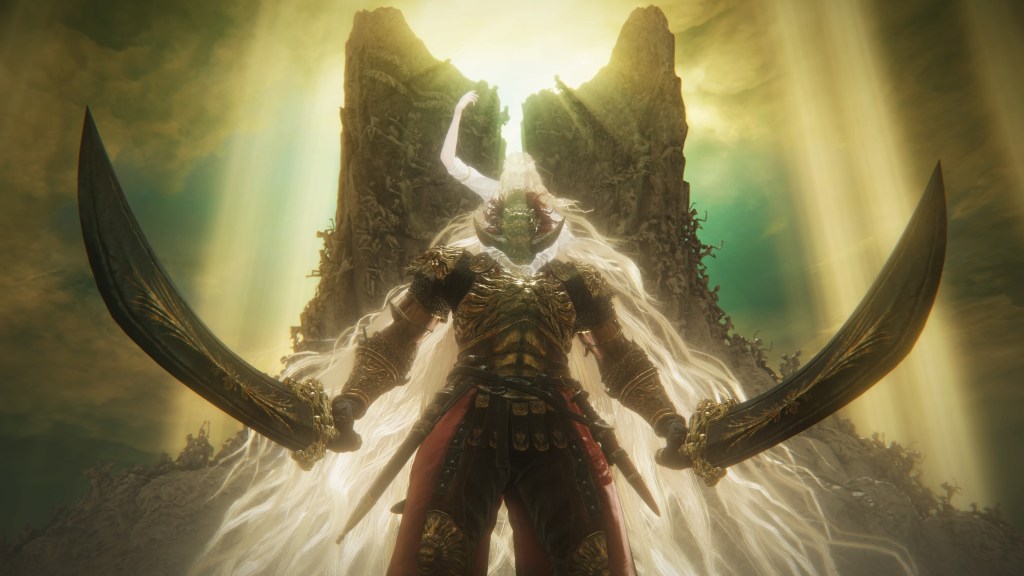
The most difficult boss in all of Elden Ring, Shadow of the Erdtree’s final boss is also its most controversial.   
Many were unhappy with Radahn coming back, saying it came out of nowhere, but I disagree with this.
If you followed Ansbach and Freyja’s questlines, the story perfectly built-up Miquella reviving his brother using Mohg’s corpse so he could marry him… yep, this was definitely something George R.R Martin came up with.  
I do have an issue with the lore surrounding Radahn’s return but I will save that for when I talk about another boss further down the list.
As for the fight itself, Radahn’s first phase is brutal, yet mostly fair.
The arena of the Divine Gate is excellent and makes for the perfect place to fight him.
Radahn will usually start the battle by launching himself at you with gravity magic, which is easy to dodge and punish.
He follows this up with various sword slashes and gravity attacks, almost all of which have a way to dodge, and it is fun to establish a rhythm when doing so.
Notice I said, “almost all.”
There is one cross-slash Radahn does that is almost impossible to dodge.
I have managed to dodge it a few times, but I cannot tell you how I did it, other than blind luck.
Besides this attack, Radahn’s first phase is a lot of fun, even though it is brutal.
Then Miquella gets involved in the second phase, and the fight devolves into complete insanity.
Radahn maintains many of his attacks from the first phase, but now they come with Holy AOE attacks which often blind the player.
This, and the fact that Miquella’s absurdly long hair covers up a lot of Radahn’s massive body, makes telling what is going on in this fight an extreme challenge.
It felt like half of my many deaths in the second phase were because I could not see what was happening, rather than through any fault of my own.
Still, there are some good new moves in the second phase, like Miquella charming the player, and Radahn using a new version of his iconic meteor strike.
However, the unfairness of the second phase is still difficult to get past.
The only way I could even beat Radahn in my two playthroughs of the DLC was to use a shield to block most of his attacks, and to also throw two Hefty Rot Pots at him as soon as the second phase started.
That whittled down his health enough for me to kill him.
Sure, I could have summoned Ansbach and Thiollier, but their presence only makes the fight harder through boosting Radahn’s health and making his movements more sporadic.
At least the soundtrack for his fight is one of the best in the DLC.
In the end, I would say that Radahn is a good boss fight.
He ended up on the list, after all.
But he could have been a lot higher were it not for the unfairness of his second phase.  

14. Godrick the Grafted.
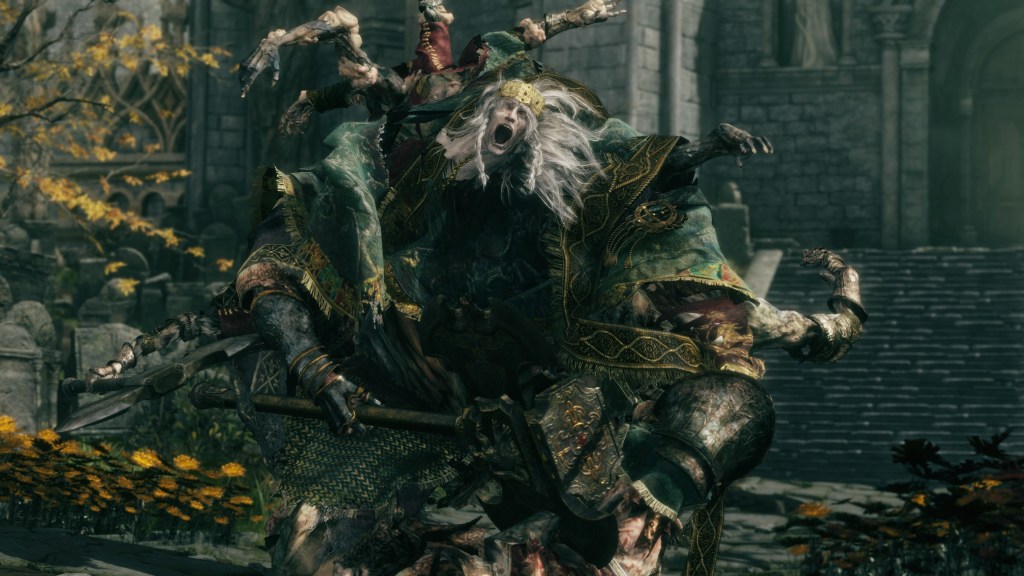
We go from the hardest boss in all of Elden Ring, to the easiest demigod of them all.
Godrick the Grafted is a complete pushover compared to the rest of the game’s main bosses, but I would have it no other way.
Even in the lore he is a joke because he needs Margit to protect him so Tarnished will not kill him for his Great Rune.
We encounter Godrick at the end of Stormveil Castle, one of the greatest areas in both the original game and the DLC.
He makes for a disturbing sight, having grafted multiple body parts onto himself in an effort to make himself stronger.
Using his numerous limbs, Godrick strikes at the player with his axes, and ground slams.
My first death to him was from a ground slam but a lot of his other attacks are especially easy to dodge.
Easiest of all is the one where he launches himself up in the air.
All you need to do to dodge that is simply walk behind him when he jumps up.
I have never once been hit by that attack.
The fight does get a bit harder when he reaches second phase, as he amputates his own arm and then stuffs a decapitated dragon head onto it. 
“Forefathers, one and all,” he cries, throwing his new dragon head-hand up in the air to spew fire, “Bare witness!”
It is one of the most iconic cutscenes in the whole game, and the dragon does add a slight challenge increase, especially with his grab attack, which killed me twice.
That brought my death count against Godrick to three before I killed him on my first playthrough, a miniscule amount compared to other bosses.
You can also summon Nepheli Loux to join the fight, making him even easier.
Godrick is Elden Ring’s easiest main boss by a large margin, but this adds to his charm, along with his excellent phase two cutscene, fun move set, and chaotic soundtrack. 

13. Rellana, Twin Moon Knight. 

Excluding Radahn, Rellana was without question the hardest boss for me in Shadow of the Erdtree.
Even now, I still have not mastered her move set 100%.
Found in Castle Ensis, Rellana was Carian Royalty until she abandoned her nobility to side with Messmer in his crusade against the Hornsent.
Known as the Sword of Messmer, this title is definitely earned as her fight was brutally challenging for me.
Honestly, Malenia’s movements were easier to predict than Rellana’s.
That’s right, I said it.
Her combos seem never ending and with inconsistent endings.
I am not saying this as a complaint, however, because, unlike Radahn, I do not think this fight is unfair.
No, I just suck at it.
Her magic sword swipes and slashes are easy enough for me to dodge most of the time but, when it comes to her combos, I am getting hit at least once nine times out of ten.
This skill issue forced me to use summons to beat her in my first playthrough but, even then, it was not easy, especially when she reaches her second phase.
It is then that Rellana illuminates her swords with magic and fire, like Pontiff Sulyvahn from Dark Souls 3.
Her strikes are crushing, with one combo being capable of killing the player in just two hits.
And then there is her moon strike, where she slams the ground three times, forcing the player to jump over the blasts.
If the player gets hit by the first blast, it is basically game over, since you will be hit by the other two.
Despite all of this difficulty, though, I still find Rellana to be an incredibly fun fight.
The only thing holding her back is her lack of a cutscene.
Shadow of the Erdtree as a whole could have used more cutscenes and Rellana is the prime example of this.
She felt like she had so little fanfare for such a fun fight.
This holds her back from a higher spot on the list. 

12. Rykard, Lord of Blasphemy. 
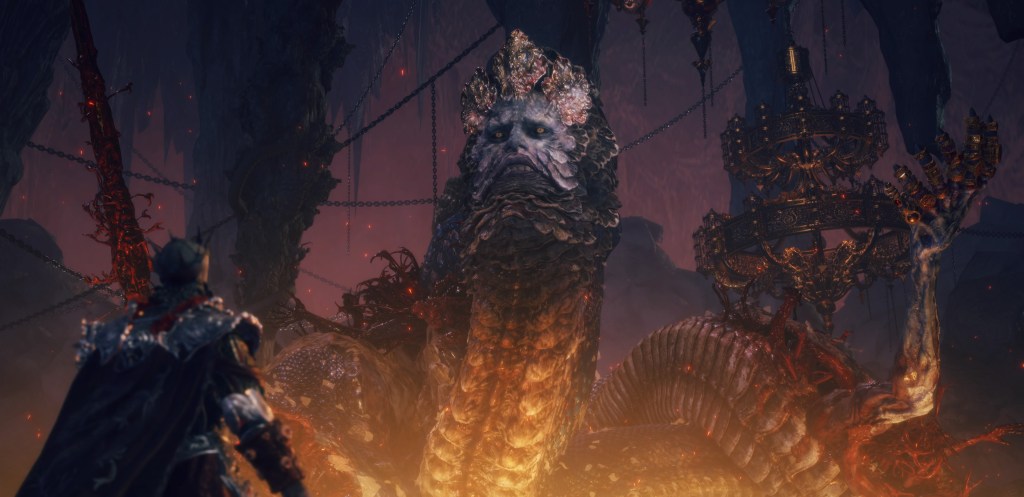
Rykard is one of the bosses I feel pretty guilty about not putting in my top ten. 
You can encounter him in one of two ways: Either complete the Volcano Manor questline, or traverse the Manor itself, which is also one of the best dungeons in Elden Ring.
Once you reach the boss, his fight is horrifying.
The arena is covered in corpses, and the bit of fire surrounding the God Devouring Serpent means you cannot attack it with your regular weapons.
Thus, the game forces you to use the Serpent Hunter sword to fight.
Again, this is not a criticism, because the sword’s effects make for quite the spectacle.
The first phase of the boss is simple enough, with the serpent’s attacks being easy to dodge once you understand its patterns.
The exception to this is when it slams its head into the ground to launch a ground explosion at you.
This move is even more unfair than Radahn’s cross slash, as I have never been able to dodge it.
Aside from this, the first phase is enjoyable, but it is the second phase that steals the show.
Once the serpent is defeated, Rykard reveals himself in one of the most memorable cutscenes in the game.
Seeing his monstrous face emerge from the back of the serpent, only to pull a sword made from corpses out of its mouth, is absolutely gruesome.
His goofy exclamation, “Together we will devour the very gods!” somehow only adds to the appeal.
From here, the second phase begins, with Rykard using various sword swipes and stabs.
His ultimate move is sending a bunch of flaming skulls after the player, forcing them to run away, which can be a bit frustrating.
Almost as frustrating is when the serpent temporarily revives itself to attack.
I swear I died more times to that than the constant flaming skulls.
While frustrating, all of this adds to Rykard’s demonic villainy, with his operatic score being perfect for one of Elden Ring’s most evil characters.
Rykard is a horrifying boss, who does not make the top ten through no fault of his own.
I just like the other bosses more. 

11. Radagon of the Golden Order/ Elden Beast.
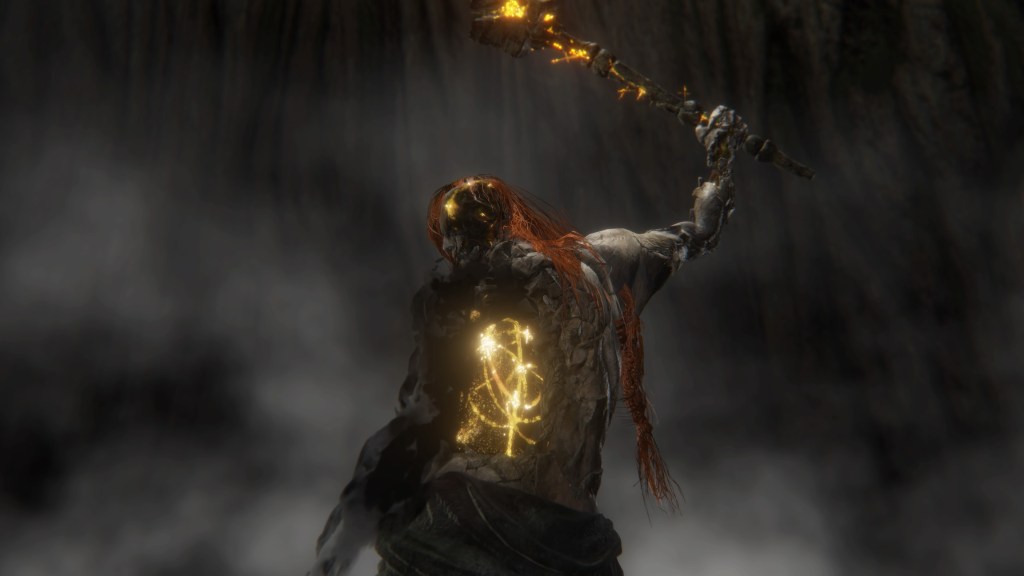
The final boss of the original game, Radagon and Elden Beast are the other fight I felt guilty for not putting in the top ten.
On my first playthrough, I loved this fight, especially Radagon’s phase.
His introduction is fantastic, with the twist reveal that he and Marika share a body, along with the main theme of Elden Ring kicking in.
Radagon excels in delayed attacks, and these are extremely difficult to get a handle of, at first.
Whether it be his hammer strikes or holy attacks, Radagon is only beaten out by Mohg in how difficult his delayed moves are to dodge.
Still, once you begin to understand the pattern, you begin to feel like a god dodging him… only for him to suddenly teleport to the middle of the arena and wreck you with three ground slams.
The second part of his fight is much harder, as he often teleports right in front of you, forcing you to dodge holy attacks.
Worse, if you are two slow to kill him, he will pull out the ground slam move again.
Radagon is definitely a top ten fight.
The only reason he is not that high is because of phase two with the Elden Beast.
Like I said, I enjoyed fighting the Elden Beast on my first playthrough.
However, I think this was because I got lucky.
It only took me three attempts to kill the Elden Beast, as opposed to the somewhere around 50 attempts I had with Radagon, so I had a lot more favorable view of the fight.
This view diminished somewhat in my second playthrough where I began to feel more frustrated with the Elden Beast, due to it constantly moving around, and the obnoxious move that is Elden Stars.
The developers listened to player feedback, however, for they added Torrent for the player to ride into the fight.
This was the entire reason I began my third playthrough: To see if this made the fight with Elden Beast any better.
Having fought using Torrent to close distance with the Beast, I can say it certainly does improve the experience.
Dodging Elden Stars has never been easier.
That being said, if the Elden Beast starts flinging holy attacks at you, for the love of God, get off Torrent.
You will die if you try to jump over those attacks.
Rolling through them is the way to do it.
So, adding Torrent to the fight did improve my experience with Elden Beast, but I would still say he drags Radagon down a bit to keep them just out of the top ten.
But with a cool first phase, great music, and an amazing arena for Elden Beast, this was certainly a worthy way to end the base game of Elden Ring. 

10. Starscourge Radahn. 
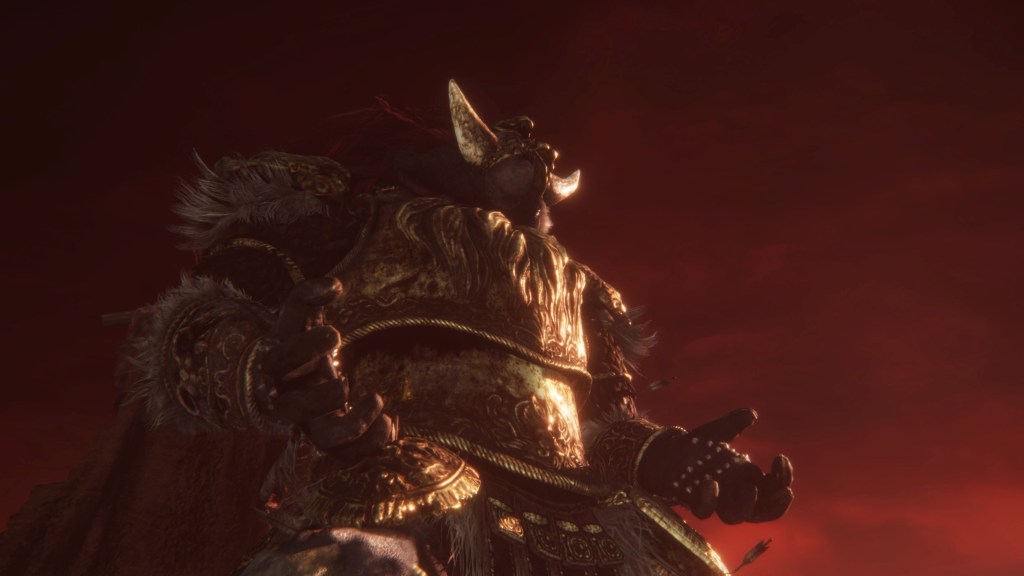
Of the two Radahn boss fights in Elden Ring, the first is definitely the best. 
In my first playthrough, I ended up getting transported to Caelid by a chest and dying repeatedly.
Wanting to return when I was stronger, I did not go back until I had completed Leyndell and Volcano Manor.
So, when I finally got around to fighting Starscourge Radahn, I was over leveled and it only took me a few attempts.
Even so, I found him to be one of the best bosses in the base game.
His buildup is masterful, whether you stumble across Redmane Castle or find it through Ranni’s questline.
Jerren hypes up the epic fight to follow with his speech, as do the other NPCs talking about Radahn.
Upon entering the arena, Radahn will start shooting arrows at you using gravity magic.
While dodging, you have the option to summon the NPCs to aid you in the battle.
It is incredibly cinematic to charge up to Radahn with other warriors like Blaidd, Alexander and Patches (okay, maybe not Patches).
Once you reach Radahn, he will take out his blades and strike at you while constantly moving around on his emaciated horse, Leonard.
It makes for quite the visual, and the fight only gets more intense with his second phase.
He shoots up into the air, the music fades, and the player is left wondering if Radahn ran away, only for him to crash down upon them like a meteor.
This will kill you if you are not prepared, and it was this attack that resulted in one of my few deaths fighting him on my first playthrough. 
From here, Radahn has a slew of gravity magic attacks, the most difficult to dodge being these meteors he spawns beside him to throw at you. 
Killing him is both satisfying but also reflective, as you are giving this warrior cursed with Scarlet Rot an honorable death.
This lore is one of the issues I had with Radahn’s fight in Shadow of the Erdtree.
As I said, the whole point of this fight is giving Radahn an honorable death but the impact of that is taken away slightly when he returns as the final boss of the DLC.
Another issue I have is that, when I fought Radahn at a weaker level on my second playthrough, I realized it can be kind of tedious to run around the arena summoning all of your allies every time you die.
These problems took Radahn from a top five placement to the number ten spot.
Still, easily the best of the two Radahn fights. 

9. Dragonlord Placidusax. 

Placidusax is a boss who, while already being a great fight, was improved by the context given in Shadow of the Erdtree.
In the DLC, we learn that, as the Elden Lord of the dragons, Placidusax was betrayed by Bayle the Dread.
The dragons wounded each other grievously, before they both retreated, with Placidusax freezing himself in time at Farum Azula.
This explains why Placidusax is missing two heads when we find him… or, at least, when we find him thanks to online guides telling us where to go.
Placidusax is probably the most difficult boss to find in the original game, being quite off the beaten path, but he is more than worth it when you find him.
His arena is also one of the best in the entire game, with the player having to pass through the pillars at the center before he awakens.
From there, Placidusax attacks with lightening, claw strikes, and fire breath but stays mostly stationary.
This changes in the second phase, when he floats up into the air, before disappearing.
Much like Radahn, the player is left to wonder where he went, until they see a storm cloud forming in the sky, which Placidusax flies down from in a ferocious lightning strike that is always fun to dodge.
Placidusax then begins teleporting in between claw strikes, which would be disorientating if the player could not stay locked on but, thankfully, we can.
The fight is significantly more difficult in the second phase, but it gets even harder when Placidusax starts firing off lasers that will kill you on quite a few attempts if you do not pay close attention or start panic rolling.
My only criticisms of Placidusax are that I think the runback can be a bit annoying, and I think that his nuke blast should be a one-shot if it hits you.
I know it is probably weird that I am complaining about a boss not being harder but, to be fair, this attack gives you plenty of warning to avoid it, so I think it could stand to be more punishing.
Overall, Placidusax is an already excellent boss who is improved even further by the lore of the DLC.

8. Morgott, the Omen King. 
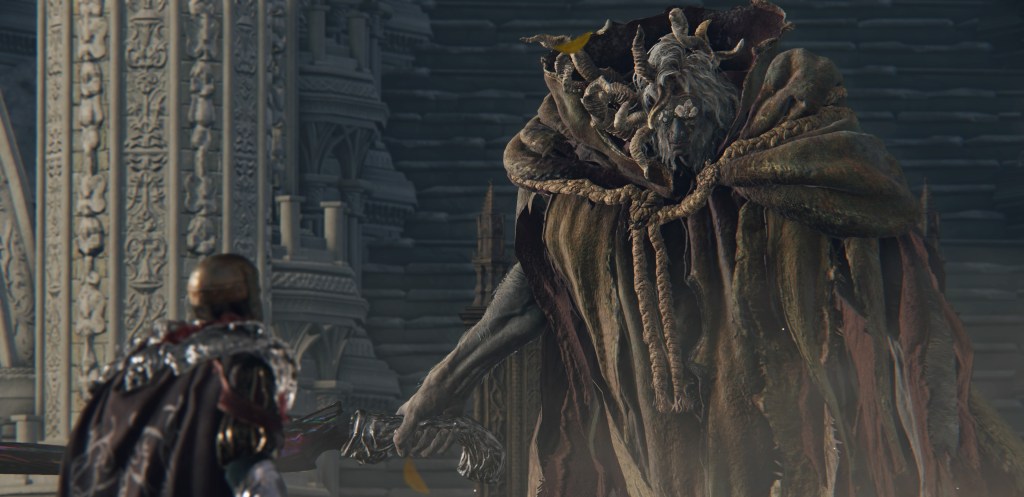
One of Elden Ring’s biggest problem is its repeat of bosses.
Amazing fights like  Mohg and Godfrey suffer somewhat when you have already fought weaker versions of them.
The one repeat boss where I would say fighting him again is not an issue is Morgott.
First encountered as Margit at Stormveil Castle, he serves as an excellent roadblock to teach the player that exploring before they return stronger is the best strategy.
The player can then encounter Margit again on the way to Leyndell, where he will ambush the Tarnished while disguised as a basic enemy.
His third encounter in Leyndell is definitely the best, though, as he reveals himself to be the King Morgott.
Born an Omen, Morgott was thrown away a baby to live in the sewers by his mother, Marika.
He has every reason to hate the Golden Order for how it has treated him, and yet he still valiantly defends it in this final epic fight with him.
Morgott’s first phase is similar to his time as Margit, only he is much more aggressive, with quite a few new attacks like dropping a rain of holy swords and shooting a javelin at you.
Once you take him down to half health, he staggers, and this can trick the player into running in to get some hits.
It is actually a trick, as Morgott enters second phase, unleashing the true power of his curse.

As the arena fills with what can only be described as some form of vomit, Morgott admits his shame and self-hatred for unleashing his curse, all the while he launches old and new attacks at you.
He even has a few new blood attacks, including a grab one with his sword which is awesome.
In the end, though, I would not say that Morgott is a difficult fight, if you explored a lot before you fight him that is.
On my first playthrough, it only took me a couple of attempts.
You can also summon Melina to fight with you which, not only makes the fight even easier, but also enhances the experience to fight alongside someone who has been with you across your entire journey.
I would say that Morgott’s potential ease is warranted, as it can serve as a rewarding experience, showing the player just how far they have come since fighting Margit. 
Morgott’s lore is also some of Elden Ring’s saddest.
He dies defending an order which despised him, which gets even more tragic when you play Shadow of the Erdtree and learn his mother hated Omen because of what the Hornsent did to her people.
Morgott is one of Elden Ring’s most tragic characters and his final fight is great. 

7. Malenia, Blade of Miquella. 
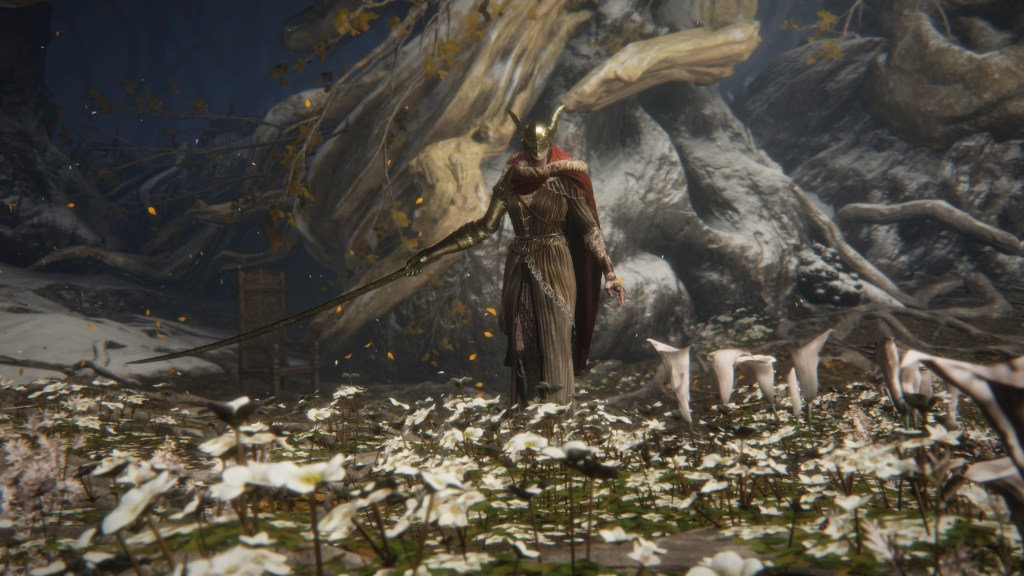
“I am Malenia, Blade of Miquella.” 
That is a saying I am sure we all got tired of hearing after dying for the thousandth time to the Waterfowl Dance.
Before we got Radahn in Shadow of the Erdtree, Malenia was the hardest boss FromSoftware had ever created.
Tucked away in the hidden area of Miquella’s Haligtree, Malenia awaits her brother’s return, only to be confronted by the Tarnished, drawing her sword and kindly informing us that she has never known defeat.
Any feeling of confidence the player may have had about this fight are then instantly humbled as Malenia leaps forward and most likely kills them in two hits.
Returning for another attempt, the player quickly discovers a little trick Malenia has up her sleeve: She heals every time she hits the player.
This is not too big of an issue considering that a lot of her moves are easy to read.
The issue comes, of course, with the Waterfowl Dance.
The most infamous move in all of Elden Ring, the Dance feels nigh undodgeable.
On my first playthrough, I certainly thought so.
The fact that every time I got hit by Waterfowl caused her to heal more proved to be an especially frustrating lesson.
Eventually, I got tired of constantly dying to that move so I left and came back with a fully leveled up Mimic Tear, which managed to power me through not just the first phase but the second, after a few attempts.
On my second playthrough, however, I vowed that I would defeat her without the Mimic Tear.
It was a grueling experience, but I did it.
The only way I could find to dodge Waterfowl which worked for me was to equip the Bloodhound Step Ash of War.
When Malenia leaps into the air, run or Bloodhound Step away from her to avoid the first strike, Bloodhound Step through the second strike, and then simply walk under the third strike.
This strategy should get you through to second phase, which is a whole different beast.
Malenia always begins this second phase with a Scarlet Rot slam attack, which is easy enough to dodge, but she is much more aggressive and a lot of her attacks inflict Rot, including Waterfowl.
Her most difficult move in this phase, however, is her clone attack, which killed me nearly as much as Waterfowl did.
The best advice I can give to avoiding this attack is to either be far enough back that you can run away from it or dodge it and hope to God your timing and placement is right.
Beating Malenia without a summon provided me with one of the biggest rushes of the game.
If you want Malenia to be easier, though, I suggest fighting her after playing through Shadow of the Erdtree.
This is what I did in my third playthrough of the original game and, with the experience I gained from the DLC, she was significantly weaker. 
I did not even have to Bloodhound Step though Waterfowl, as I could simply dodge through the strikes, taking some hits, and then deal so much damage that I negated whatever health she had stolen back.
The one thing that holds Malenia back from being higher on this list is the unfairness of the Waterfowl Dance.
While I have learned how to dodge it, that only really came about because I looked up how to. 
Had I not, I probably never would have beaten her alone, much less got her to second phase.
Still, Malenia is a great boss, and certainly the hardest boss of the original game.  

6. Bayle the Dread.
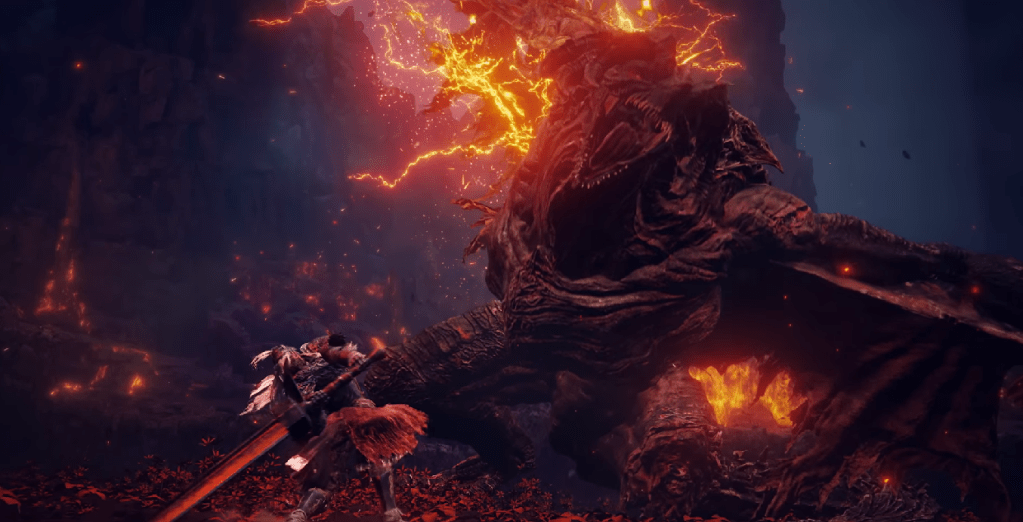
 

CURSE YOU, BAYLE!!!


Enough said… 
Okay, in all seriousness, Bayle is definitely the best dragon fight in Elden Ring.
I remember thinking how awesome he looked when I first saw him in the Shadow of the Erdtree launch trailer.
Then I fought him in the DLC, and he did not leave me disappointed.
Located on the Jagged Peak, Bayle’s buildup is so great that he did not even need a cutscene.
You first hear of him from Igon, who vows vengeance against him, despite being cripped.
The second time the player hears about him is from the dragon priestess, who informs us that Bayle was the one who betrayed and wounded Placidusax, not only hyping up Bayle’s eventual fight but also improving Placidusax’s. 
Scaling the Jagged Peak, you fight numerous dragons (who are among the weakest fights in the DLC, unfortunately), and pass many dragon corpses, all building up to the arena where Bayle crashes into the ground to face the Tarnished.
Sporting ruined wings, a missing leg, and having two of Placidusax’s decapitated heads biting into his body, Bayle is still no pushover.
He has a mixture of fire and lightening attacks, combined with swipes from the serrated bones sticking out of his mutilated wings, tail swipes, a ground slam, and a grab attack, all of which are extremely punishing.
Your best bet is to keep hitting either his head or the stump where his leg once was.
When he enters second phase, however, Bayle gets an awe-inspiring transition, as he forms a set of magical wings in a fiery explosion.
Taking off into the air, multiple fireballs shoot at the Tarnished in his wake, leading to Bayle doing another ground slam, followed by an AOE.
Many of his attacks now have follow-up AOEs but they do not make the fight difficult to follow, like with Radahn.
His most cinematic attack, though, is easily the one where he forms his wings again and flies up into the air, before blasting the arena with two lines of fire.
Bayle is just an awesome boss fight, made only more awesome by his summon.
Bringing Igon into the fight is a must during one of your playthroughs, as Richard Lintern gives his all to the performance, providing the perfect hype man and the best summon in all of Elden Ring.
For my first playthrough of Shadow of the Erdtree, I fought Bayle with Igon and for my second I fought him without.
Sure, it was sad not to hear Igon hyping up my fighting skills, but it made the fight against Bayle much more challenging, in a good way.
The only minor issues I have with Bayle, which keeps him from being higher, is that sometimes the camera can work against you in the fight.
You can also get stuck inside Bayle, often leading to death.

Otherwise, Bayle is a glorious boss, who serves as not only Elden Ring’s best dragon, but also provides the best summon through Igon.
In the end, the only thing that can be said about this fight is, say it with me…


CURSE YOU, BAYLE!!!

5. Maliketh, the Black Blade. 
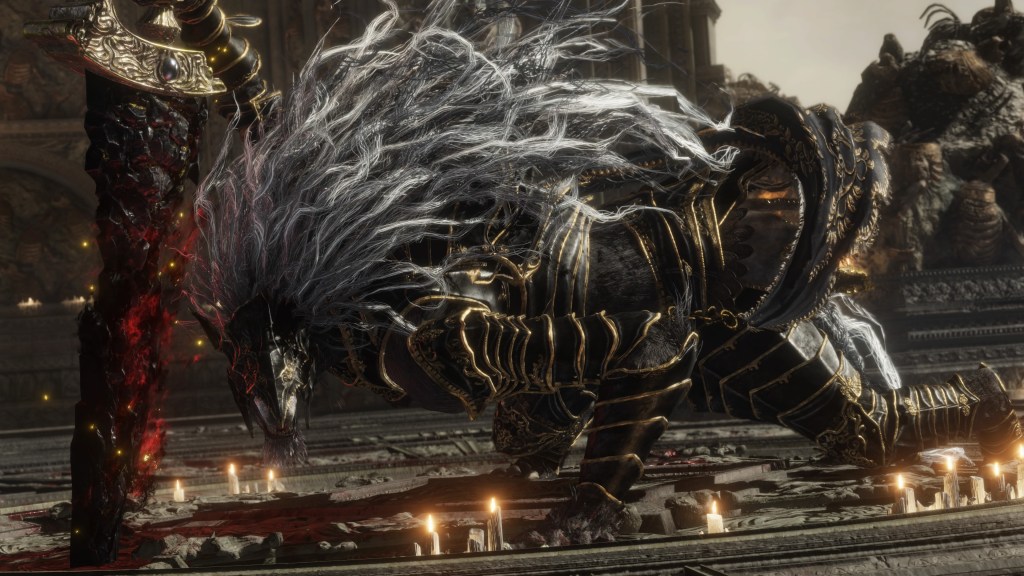
On my first playthrough, Maliketh was my favorite boss.
While he has been overtaken by other bosses now, he is still an excellent fight, especially his second phase.
As for his first, players who followed D’s questline will automatically recognize him as Gurranq, the Beast Clergymen in Caelid who we fed Deathroot to.
During this questline, Gurranq will lose his mind and attack the player.
This assault is very similar to the first phase of the Maliketh fight.
Found at the end of Farum Azula, the Beast Clergyman will rush the player, attacking with various swipes, which you always have to be careful of at close range.
At long range, the Clergyman will often resort to throwing rocks at you, which are usually easy to dodge.
Less easy is the attack where he slams the ground and then sends waves of slashes at you.
Once he hits 50% health, he will enter second phase.
“Oh, death,’ he says in one of the most metal cutscenes in the game. “Become my blade once more.”
Stabbing the Rune of Death on his hand, Gurranq pulls forth his Black Blade while his cloak disintegrates, revealing himself to be Maliketh, Marika’s shadow who Ranni stole a fragment of the Rune of Death from.
This cutscene is followed by one of the most difficult fights in Elden Ring’s base game.
Maliketh is incredibly mobile, often jumping onto pillars around the arena and using them as vantage points to attack the player.
However, these pillars can also be used to the player’s advantage, creating distance between them and Maliketh.
What makes things more difficult, though, is that many of Maliketh’s attacks are powered by the Rune of Death so come with a status effect that not only continues to drain health after attacks, but also temporarily cuts a chunk off the Tarnished’s vigor.
Still, all of these attacks can be dodged, and it is a rush to avoid his four hit combo where he flings slashes at you and then rushes in for a final strike.
You can actually parry this final part of the move if you have the Blasphemous Claw, making it even more fun.
The only move of his I am not sure how to dodge is his slam which creates status effect causing slashes.
That move just seems to hit me every time.
The rest of his moves are completely fair, if challenging, and what makes Maliketh even more interesting is that you can experience different dialogue from him, depending on if you fed him all of the Deathroot.
If you did so, Maliketh will recognize the player upon entering the arena and call out to Marika with his final words.  
Maliketh is one of the base game’s best bosses, with his fun but incredibly challenging second phase.

4. Mohg, Lord of Blood. 

Mohg is a boss who has slowly climbed higher on my ranking with each playthrough.
Discovered either through completing Varre’s questline or by exploring the Consecrated Snowfield, his location at Mohgwyn Palace is fun to traverse and perfectly paints the picture of the madman running it.
Mohg has probably the creepiest cutscene in Elden Ring, emerging from a pool of blood, seemingly dismayed that his kidnapped brother still does not want to be his consort… once again, I have to say George R.R Martin definitely wrote that part.
Upon noticing you, Mohg welcomes you to the birthplace of his dynasty.
This welcome includes bloodflame attacks which build bleed, and the most delayed attacks in all of Elden Ring.
Mohg may call himself the Lord of Blood but I would say the Lord of Delayed Attacks is much more fitting.
You will die many times in his first phase trying to figure out the timing of his strikes but, once you do, you can establish a satisfying rhythm with his combos.
Throughout this first phase, Mohg will begin to count down for his Nihil attack in second phase, where he quickly drains the player’s health to reform his own.
Not only does this drain at least three flasks from your inventory, it also gives Mohg wings and makes every attack come with bloodflame.
Now, you not only have to watch out for Mohg, but the bloodflame as well, which will slowly build bleed and can kill you quickly if you are not careful.
This makes Mohg’s second phase chaotic and honestly the hardest fight in Elden Ring’s base game, excluding Malenia.
There are ways to get around Mohg’s lethality, though.
For example, you can use Mohg’s Shackle to hold him in place for a bit to get a few hits in.
You can also drink a Wonderous Physick to completely negate his Nihil attack.
Most ironic of all, the Lord of Blood is especially weak to bleed damage, so applying it to whatever weapon you have can help end the fight quicker.
There are just so many ways you can defeat Mohg and that makes him such a great fight.
Much like Placidusax, the DLC also improves him through his lore.
In the original game, Mohg seemed liked a creepy psychopath, kidnapping his young-looking brother in the hopes of making him his consort.
In Shadow of the Erdtree, however, we learn that Miquella charmed Mohg into doing this, so he could eventually use his corpse to revive Radahn.
This raises the question if Mohg really was always as evil as he seemed?
A lot of especially gruesome stuff he does was to revive Miquella, who charmed him, and there had to be some good aspects of Mohg’s character to get a legend like Ansbach’s loyalty.
On the other hand, Mohg did also attract the loyalty of freaks like Varre so there is that counterpoint.
Mohg is just a really ambiguous character, which I like a lot.
The only downside to his boss fight, is that you can fight a weaker version of him in the Subterranean Shunning Ground, which kind of takes away a bit from this fight if you battle that weaker version of him first.
Otherwise, Mohg is an excellent boss with a lot of fun ways to combat him. 

3. Midra, Lord of Frenzied Flame. 

When I watched the first trailer for Shadow of the Erdtree, one of the bosses I was the most interested in was Midra.
I had so many questions about the guy pulling a sword out of his head, and the answers did not disappoint.
Midra was one of the last bosses I fought in the DLC because of how out of the way the path to finding him is. 
The build up for him on this path is excellent, however, as the player arrives at the Abyssal Woods, one of the creepiest areas in all of Elden Ring.
Exploring the woods, leads you to Midra’s Manse, where you are welcomed outside by a line of decapitated corpses with swords sticking out of their necks, preparing you for the horror to come.
Searching the manse eventually leads you to Midra who, at first, appears surprisingly pathetic.
He is a weak enemy, with his only skill coming in applying madness.
Then, upon defeating him, we get the most gruesome cutscene in the game.
Midra declares he has had enough before he pulls the sword out of his head, decapitating himself.
His headless body then turns around to face us, and the Frenzied Flame appears above his head.
The operatic score that follows is both absolutely haunting and the best theme of the entire game, in my opinion.
The fact that I was about to fight a Lord of Frenzied Flame made me tense up for what would certainly be one of the hardest fights in the game.

Surprisingly, Midra is actually on the easier end of bosses in Shadow of the Erdtree.
Don’t get me wrong, it still took me an hour or so to kill him, but I do wish he posed more of a challenge.
That being said, that hour I spent fighting him was one of the best in the entire game. 
For being possessed by a god which embodies chaos, Midra is surprisingly refined and graceful in his fighting style, with his elegant sword swipes being easy to dodge once you get the timing down.
It is the madness attacks you have to watch out the most for, though, as they can easily cause a death if you allow the status effect to build up, like with Mohg.
Once Mirda hits second phase, he will cause an explosion which I am sure the only way to dodge is to run like hell.
From there, the fight escalates, as even Midra’s once simple sword strikes carry frenzy.
He can cause madness explosions, and has a grab sword strike, which lures the player into a false sense of security before spikes emerge from the ground to hit them.
All of this is happening while the (as already stated) incredible operatic score is playing in the background.
Beating Midra was an exhilarating experience that literally made me cheer once I had done it.
Another thing I like about Midra is that he is definitely the most lenient boss when it comes to recollecting your runes.
Instead of the fight beginning during his Lord of Frenzied Flame phase when you die, it begins in his weaker form, allowing the player plenty of time to pick their runes up. 
Midra’s lore is also quite tragic, as everyone in his manse was massacred by the Hornsent for being affected by the Frenzied Flame.
As for Midra he was left to live on in agonizing pain, with the only reason he did not allow the Frenzied Flame to take hold being because Nanaya asked him to endure.
There is a lot of mystery around Nanaya, causing many to believe she was a maiden of the Frenzied Flame, hoping to corrupt Midra.
If true, this makes his story even more tragic because Nanaya was clearly very important to him.

Midra is a fantastic boss with tragic and horrifying lore, whose fight is both elegant and chaotic, and, in my opinion, has the best score in the entire game.
I just wish the fight was a little harder. 

2. Godfrey, First Elden Lord. 

In my opinion the best boss in Elden Ring’s base game, Godfrey, First Elden Lord is the penultimate fight before the final battle with Radagon and the Elden Beast.
The father of Morgott, the Tarnished encounters him upon returning to the Erdtree after burning it, where they see Godfrey cradling his fallen son, a spectral lion named Serosh on his back.
The lion roars as Morgott fades away, showing Godfrey’s inner rage over his son’s death.
What makes Godfrey unique compared to other bosses is that he is a Tarnished, like us.
This is apparent through his own grace of gold pointing us.
Throughout the game, this grace led us to important bosses and now this grace points Godfrey to us, his own boss.
It certainly does not feel that way though because Godfrey hits like a truck with his great axe, the most difficult attack to dodge being one where he uses it to cause an eruption of rock from the ground.
Otherwise, this first part of the fight is easy to get a handle on, until you reach the second part of his first phase, where he will constantly rush you and slam the ground, creating an arena-wide AOE.
While this makes Godfrey more challenging, once you get the hang of it, the fight quickly establishes one of the best rhythm fights in the game.
Then you get to the second phase and, predictably, all semblance of confidence goes out the window.
Serosh begins to materialize into exitance, making the player think they are going to have to fight them, only for Godfrey to murder the lion, which is revealed to have been holding back his barbarian side.
Now shirtless and covered in blood, Godfrey roars in rage before revealing himself to be Horah Loux, the barbarian warrior from the intro.
The fight then changes from an honorable duel with the first Elden Lord to a WWE match.
Horah Loux is one of the most aggressive bosses in the game, constantly rushing the player and launching them up into the air to body slam them into the ground.
This attack knocks off a great deal of health and you will likely die to it a lot. 
Horah Loux’s ground slams are more brutal, his firsts and kicks are somehow more brutal than his great axe.
If I could use one word to describe this part of the fight it would be, you guessed it, brutal.

The fight somehow gets even more challenging when Horah Loux brings back the area wide AOE attacks.
Despite his brutality, Horah Loux clearly has a lot of respect for the Tarnished, as he declares that our strength befits a crown upon defeat.
Thus, I always return the respect by using the bow emote when I finally fell him.
Along with being one of the best bosses, the reason Godfrey is so high is because he also has the story of my funniest Elden Ring defeat.
On my first playthrough, both Horah Loux and I were one hit away from death.
I had no flasks left, so I decided to risk everything on one last Ash of War strike.

I ran in, used the Ash of War, and watched his health deplete to what looked like zero.
I set my controller down, satisfied to have finally defeated such a hard boss, only for horror to fill me as I realized that Horah Loux was somehow not dead.
I desperately grabbed for my controller, but it was too late because Horah Loux had hit and killed me.
All I could do was laugh at how my overconfidence got me killed and it took me another ten attempts to finally beat him.
The only reason Godfrey is not number one is because there is a mandatory fight with a spectral version of his first phase earlier is the game, which dilutes the true fight somewhat. 
Otherwise, Godfrey is a fantastic boss, who changes from an honorable duel to a chaotic struggle.
I have fond memories of him punishing my overconfidence.   

1. Messmer the Impaler.
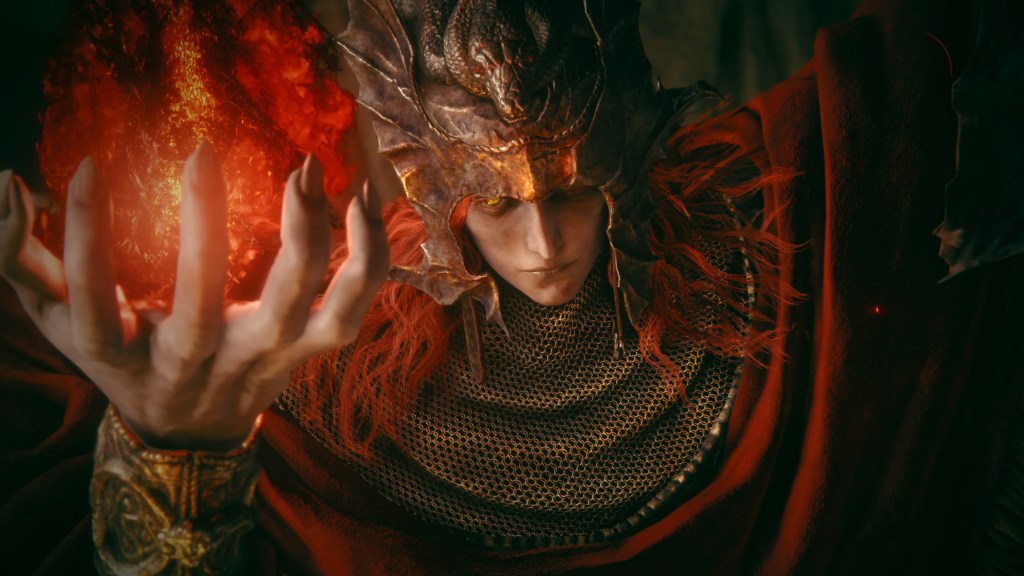
Right from my first attempt, I knew I was going to love Messmer the Impaler.
Out of all the bosses in Shadow of the Erdtree, FromSoftware highlighted him the most in their trailers and, after fighting him, it was immediately apparent why.
From the moment you enter the DLC, Messmer’s presence is apparent, from the ghosts speaking of his atrocities, to the cities he burned.
This all builds to our fight with him at the Shadow Keep, Shadow of the Erdtree’s best legacy dungeon.
Messmer is surprised to see the Tarnished, wondering if his mother Marika would truly sanction our lordship, yet he brushes this concern aside, stating his purpose.
“Those stripped of the grace of gold shall all meet death, in the embrace of Messmer’s flame.”

This is a line which, much like “I am Malenia, Blade of Miquella,” you will become very familiar with, as Messmer kills you over and over.
However, unlike Malenia, Messmer sounds tired when he says this, as if he has had to repeat the mantra Marika gave him over and over.
The reason for this becomes clear once you know his lore.
Before that, though, I will get into his challenging but incredibly fun fight.
Just like Radahn, Messmer will almost always launch himself at the player at the beginning of the fight.
This first attack is extremely easy to dodge once you know how it works and provides a good opportunity to get a strike in once he finishes it.
From there, you have the fun job of trying to figure out Messmer’s move set.
I am not being sarcastic there, either, as I had more fun learning how to dodge Messmer’s attacks than any other boss.
Messmer is fast but every move he makes is avoidable, from his spear launch, to his flame strikes, to his delayed grab which is a death sentence if he grabs you on lower vigor levels.
By far my favorite attack was his combo ending with the flaming spears shooting up from the ground to hit the player. 
The first time I completely avoided that combo without getting hit was an exhilarating experience.
With a lot of trial and error, you will figure out Messmer’s move set enough to get him to second phase. 
In the gruesome cutscene that follows, Messmer, like many Elden Ring bosses, is forced to reveal the inner strength he despises.
Messmer removes his eye, which is revealed to be a seal Marika used to trap the abyssal serpent her son was cursed with at birth.
With this power now revealed, Messmer attacks the player with a variety of snake attacks which, surprisingly, make the fight easier.
You will almost certainly be killed by the snakes on your first few attempts of the second phase, but you will also quickly realize that the end of these attacks leave Messmer wide open for punishment.
Get the timing right on dodging the snake strikes and you will pretty much have him beat.
When you land the final blow, Messmer delivers his last words, “Mother… Marika… a curse upon thee.”
Messmer did everything for his mother.
At her direction he committed genocide against the Horsent for what they did to her people, he had a medical ward established to treat those who were jarred by the Hornsent, and he even made sure his mother’s own deserted village was protected.
Despite Messmer’s devotion to her, Marika still abandoned him in the Land of Shadow, leaving him only with the mantra he has repeated ad nauseum to the point of being tired of it.
“Those stripped of the grace of gold shall all meet death, in the embrace of Messmer’s flame.”

In the end, Messmer is able to realize how he was treated by his mother and uses his final breath to curse her.
It is honestly tragic because Messmer could have been so much better as a demigod.
He had many loyal followers like Relanna and Gaius, and he clearly cared somewhat for the suffering of others, as shown by the medical ward he established.
But Marika asked him to commit an evil deed and then repaid this by abandoning him when he did so.
Messmer not only has some of Elden Ring’s most tragic lore, but he is also the most fun boss fight.
No death is unfair and his move set is a joy to learn with its fast-paced action.
FromSoftware was definitely right to put him at the forefront of the DLC’s marketing.
In my opinion, Messmer the Impaler is not only the best boss of Shadow of the Erdtree, but also the best boss in all of Elden Ring. 

Ranking the Total Drama Seasons from Worst to Best.

Featured

Growing up, the Total Drama series was a cartoon I greatly enjoyed.
I had a lot of fun going into every episode guessing which contestant would be voted off.
So, when I learned that the series had been revived with a reboot in 2023, I decided that it would be fun to rank the seasons, including the newest one.
Unfortunately, distribution for the reboot has been quite poor.
I found it immensely difficult to watch in New Zealand.
Well, after a lot of searching, I finally watched the new season and will now rank it alongside the others.
Before we begin, however, I have to state a few things.
First, I will not be ranking any of the
Total Dramarama seasons.
That is a show I refuse to watch on basic principle.
Second, this ranking will contain spoilers so make sure you have watched all of the seasons before you read it.
With those things made clear, let’s begin the ranking.    

8. Total Drama All Stars. 

All Stars is, without a doubt, the worst season of Total Drama and this is a shame because of how much potential it had.
I mean, a season where the old cast and the new cast compete for the million dollars while forging alliances and rivalries with one another?
That sounds great.
However, what sounds great in concept does not play out well in reality.
For starters, the new cast had only been around for a single 13-episode season.
Therefore, the viewers would obviously care more about the old cast, who we had got to know for three 26-episode seasons.
Another issue is that the new and old characters rarely interact in meaningful ways.
They mostly just stick to their own original groups, with the only significant interactions resulting from Sierra obsessing over Cameron, and Courtney getting together with Scott.
The former is unbearable to watch, and the latter is ruined in the infamous “Sundae Muddy Sundae” episode, which is one of the worst episodes in all of Total Drama because of how it derails Courtney’s character just to get her eliminated.
Unfortunately, character assassination is the norm for All Stars, as many characters are completely different from their former selves.
Duncan cares way too much about what other people think of him, Gwen’s feelings about cheating with Duncan are constantly contradicting themselves, and Alejandro and Heather both make unusually stupid decisions which lead to their eliminations.
These moronic choices are sadly widespread among the characters.
It appears that a lot of them drank stupid juice before their time on All Stars, and most of this is because of the worst character in the entire season: Mal.
Mal is the evil alternate personality of Mike and is one of the worst antagonists in the entire series.
All he does is break stuff with seemingly no plan, and it feels like the only way the writers could think to make him seem evil was to just give him an edgy appearance and dialogue.
Mal is such a terribly written villain that the writers literally had to make the other characters stupider just so he would not get caught.
Alejandro reveals he has a video of Mal’s crimes to his face, and Zoe and Cameron somehow do not realize Mike has been taken over by an evil personality, despite them knowing him very well.
Then there is the whole journey through Mike’s subconscious, which is just a massive eyeroll of a storyline because Total Drama is supposed to be a reality show.
How are the cameras getting into Mike’s subconscious?
Even worse is how this builds into the finale, “The Final Wreck-ening”, which is the most anti-climactic season finale of the series.
Mal is literally defeated with the press of a button.
This season (and the following one) also has Chris at his absolute worst, with him being shown to starve his interns.   
All Stars fails to live up to its potential, while having constant character assassinations, and whatever good storylines it does have are ruined in the “Sundae Muddy Sundae” episode.
It is, without question, the worst Total Drama season.

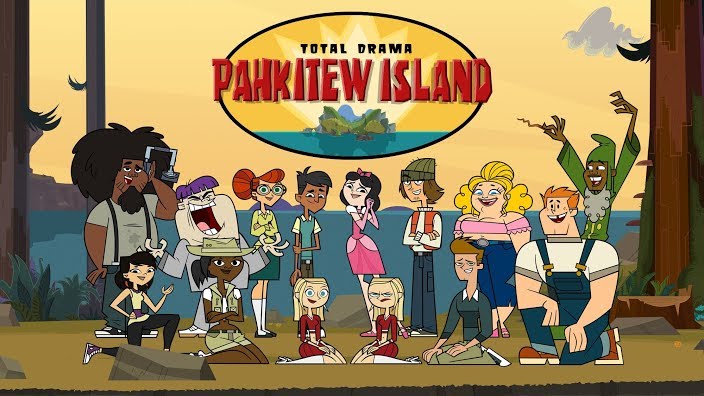
7. Total Drama Pahkitew Island.

All Stars may be the worst Total Drama season, but Pahkitew Island is not far behind it.
The main reason this season is so terrible is the cast.
Pahkitew Island has the worst original cast of any of the seasons and this is in large part due to the stereotypes these characters are based off.
Now, were the characters in the original Total Drama Island based off stereotypes?
Yes, but the thing is that these characters were more than just their stereotypes.
In Pahkitew Island, the stereotype is usually the contestant’s sole defining trait.
Leonard thinks he is a wizard and that is it, Ella acts like a Disney princess and that is it, Sugar is a Honey Boo Boo parody and that is it.
Also, notice how absurd those characteristics sound?
Well, this is another problem with Pahkitew Island’s characters because it feels like the writers ran out of teen stereotypes so they just gave the contestants the most extreme traits that they could think of.
All of this ultimately results in characters who are absurd while somehow also being boring.
Even some of the characters who start off well, like Dave and Scarlett, are eventually turned into insufferable over-the-top villains.
By the end, there were only four characters in the entire cast who I liked, these being Sky, Samey, Jasmine and Shawn, but Sky is just okay, and Samey was eliminated before she could realize her potential.
Shawn and Jasmine, on the other hand, are the shining lights of Pahkitew Island.
Shawn’s constant fear of the zombie apocalypse is always funny, and Jasmine is likeable from the get-go, as shown by her taking Samey under her wing.
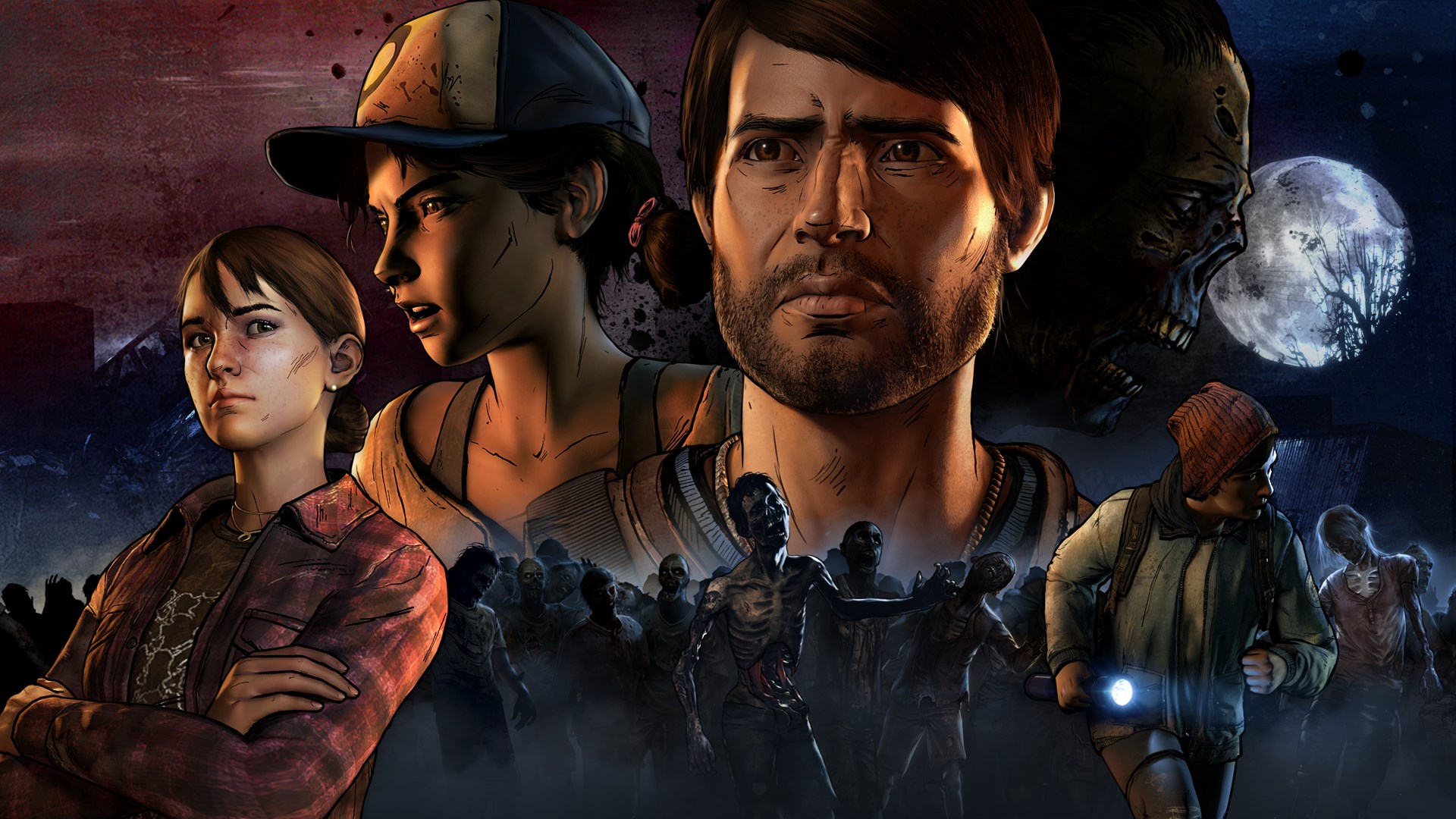
Her and Shawn also somehow work together as a couple and their growth across the season is satisfying to watch.
Jasmine learns to accept Shawn’s weirdness, and Shawn learns to put his fear of zombies aside for Jasmine.
Had it not been for these two characters then Pahkitew Island very well could have been the worst season in my eyes, for there are many other bad qualities about it.
Chris continues to be a psychopath, both starving the contestants and giving them food poisoning.
He even goes so far as to not care if they die when Scarlett takes the island hostage.
Speaking of the island, just like in All Stars, the season fails at most of its concepts which actually had potential.
In Episode Ten, “Scarlett Fever”, it is revealed that the entire island is mechanical.
If this had been known from the beginning, it could have given Pahkitew Island a unique flair.
Instead, the mechanical nature of the island is revealed far too late for it to have any meaningful impact, leaving us with fairly standard challenges competed by a mostly terrible cast.
In the end, all I can say about Pahkitew Island is thank God for Shawn and Jasime because this season would have been a whole lot worse without them.    

6. Total Drama Action.

I just want to make clear that there is a massive leap in quality between Pahkitew Island and Total Drama Action.
While Pahkitew Island is a bad season, I would say that Action is a pretty good one.
That being said, I was surprised to find this season ranking so low because it used to be my favorite as a kid.
This was mostly because of the challenges since, as someone who loves movies, the film-based challenges really appealed to me back then.
They definitely still appeal to me now, with challenges like the superhero contest, the murder mystery, the rock star biopic, and the animal-buddy competition being some of my favorites in all of Total Drama.
Another thing Action does a great job of is giving characters who did not have enough screen time in the first season more time to shine.
Characters like Lindsay, Harold, Courtney, Justin and Beth get way more to do in Action.
This is especially the case for Beth, who makes it all the way to the finale with Duncan.
However, this is where some of my issues come in because, although I like Beth, she is just not strong enough of a character to be a finalist, and her character dynamic with Duncan is poor, making for a bit of a disappointing finale.
It honestly felt like the writers were setting up Lindsay or Harold to be finalists more than Beth.
The finale would have been way better if it had been those two characters going against each other, or one of them against Duncan.
Unfortunately, this is not the only issue because Action does treat quite a few of its characters poorly.
Lindsay accidentally voting herself off was embarrassing and Owen’s return near the end of the season was pointless.
Worst of all is the treatment of Trent.
Apparently, Cartoon Network wanted Gwen and Duncan to get together but, in order to do that, the writers had to break up Gwen and Trent.
They decided to do this by making Trent go nuts, forcing Gwen to break up with him.
This came at the cost of Trent’s entire character, as he started throwing challenges for her.
He was also bizarrely given a sudden obsession with the number nine, which the writers acted like he always had, when he clearly never did until this season. 
There are other bits of character derailment in this season, but Trent definitely gets it the worst.
All of that being said, there is still a lot to like about Total Drama Action.
As I said, many of the challenges are favorites of mine, a lot of the characters were given chances to shine that they were not before and, although the finale is a bit of a let-down, it does have a pretty good arc for Chris and Chef’s friendship.
Action may not be as good as I remembered it being, but it does have a lot to like. 

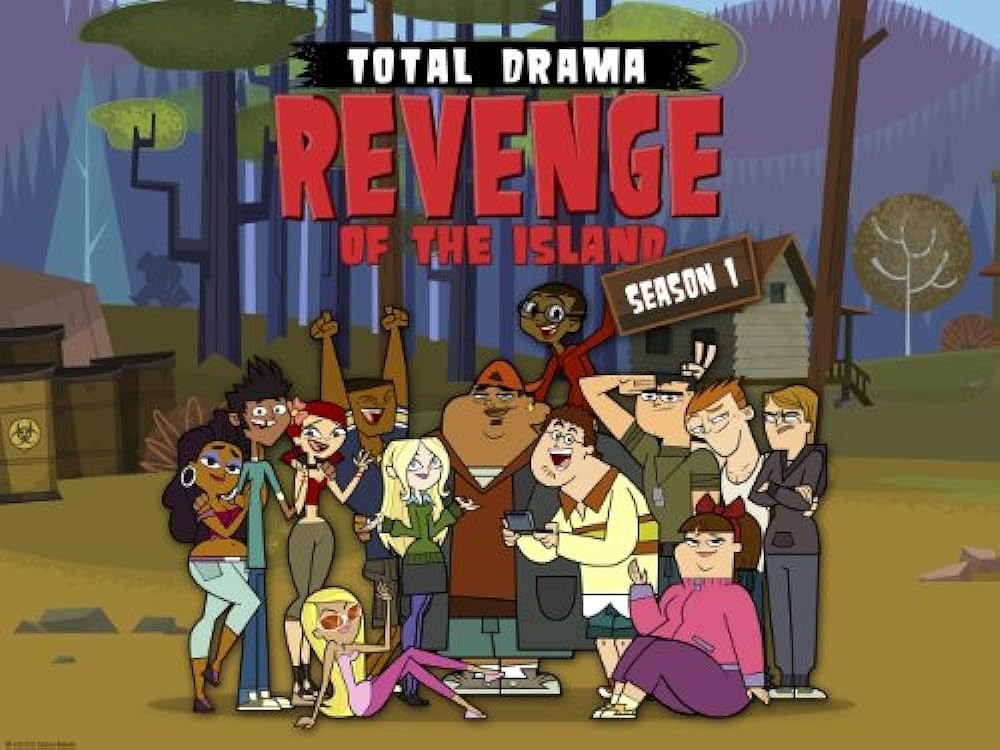
5. Total Drama Revenge of the Island. 

After World Tour, the writers decided to take a risk by returning to Camp Wawanakwa with a brand-new cast.
This was the series’ first attempt at a new cast after the original and, honestly, I think they did a pretty good job.
Almost all of the characters have distinct personalities, whether I liked them or not.
I say “almost” because Staci cannot even be called a character, as she is just the trait of insufferably repeating lies about her family.
Although, to be fair, Staci was created to be this way since she is the first to be eliminated.
Aside from her, every contestant has plenty of defining characteristics.

This does become an issue with how short the season is, however.
At the beginning of the season, I was the most interested in Dawn and B.
This was because they had interesting personalities, but they were both eliminated before they could be explored further.
If Revenge of the Island had been the length of prior seasons, instead of just 13 episodes, we could have got more time to know the characters.
Thankfully, the ones who make it further into the season, like Brick, Zoe, Cameron, Lightning, Scott and Jo, all prove to be interesting. 
Along with this, the setting of Camp Wawanakwa is well defined, with it feeling both nostalgic, due to it being the setting from Season One, and new, due to the toxic waste affecting the island.
This leads to quite a few interesting challenges where the mutated animals prove to be a threat.
At the same time, this does impact Chris’ character negatively, since he intentionally used the island as toxic waste dump.
He had been growing progressively crueler in Action and World Tour, but Revenge was the first season to take it too far with his character, and All Stars and Pahkitew Island unfortunately made him worse.
So, there is a lot to like and dislike about Revenge of the Island.
It has an interesting cast and an interesting setting, but the short length of the season means we don’t get to know many of the characters as much as I would have liked, and this was the first season to really character assassinate Chris.
So, why is it above Action then?
Well, because of the finale, “Brain vs. Brawn: The Ultimate Showdown.”
The rivalry between Cameron and Lightning was built up pretty well before the finale, and the episode’s focus on the theme of brain vs. brawn made for a compelling final fight.
It makes for a great underdog story when Cameron actually wins, if that is the ending you see based on whatever country you are watching it.
Also, the season ends with Chris getting blown up and then arrested for his crimes so that is satisfying.
In the end, the finale of Revenge of the Island was much more gratifying than Action’s and that was enough to push it up to number four on this list, despite the season’s issues. 

4. Total Drama Island Reboot. 

I know the reboot is technically two seasons, but I decided to rank them together since I watched them back-to-back.
After so many years absent, Total Drama made its return to the island with another set of brand-new contestants to compete for the million dollars.
Thankfully, this new cast is great, and we get to know each and every one of them.
Some are done better than others but, overall, they all make an impression.
Julia, Bowie, and M.K make for compelling antagonists, especially Julia who is delightfully cunning in her manipulation.
As for the more positive characters, Raj and Wayne’s friendship is endlessly endearing, Damien has an excellent arc in the first half of the reboot, and Zee’s laidback personality gets a lot of laughs.
The funniest character of the season for me though, has to be Scary Girl.
Every morbid thing that comes out of her mouth made me laugh, and I hope she gets more to do in a hypothetical third season (along with Damien).
So, the new characters are pretty great, but what about the old ones of Chris and Chef?
Well, Chris is voiced by Terry McGurrin instead of Christian Potenza, but his new voice actor does a great job of playing the character.
Chris is still psychopathically cruel in the reboot but, what makes this more acceptable is Chef, who seems quite different from prior seasons.
In the reboot, he is often concerned about the condition of the campers, making him a great contrast to Chris, with the two playing off each other well.
Speaking of playing, the challenges in the reboot are all mostly fun, with them creating a lot of interesting character interactions.
As for the two finales we get in the reboot, both are solid.
Priya makes for a good winner, although I honestly would have preferred Bowie.
As for Wayne, he is also a good winner, but I do wish he got more screen time before his victory.
One downside to these victors is that, unfortunately, there is no alternate ending where we get to see someone else win.
I would have liked to see what would happen if Bowie, Julia or Caleb won.
Sadly, this is not my only issue.
For starters, in the second half of the reboot, there is a romantic storyline between Priya and Caleb, which takes up too much time and simply goes on for far too long.
I liked it in the beginning but it more than overstayed its welcome.
If it had ended just two or three episodes prior, then I think this storyline would have been received a lot better.
I honestly don’t think there’s a way Episode Five could have been well received, though.
Fart humor has always been a part of Total Drama, for better and mostly for worse, but this is by far the worst use of it.
“Jurassic Fart” is so painfully unfunny to watch that it ranks right up there with “Sundae Muddy Sundae” as one of Total Drama’s worst episodes.
It is these things that hold the reboot back from taking a higher spot in the ranking.
However, as stated, there is still a lot to love about it, like the new characters and a much more bearable Chris thanks to his and Chef’s new dynamic.
I hope we get a Season Three of the reboot because I would like to see more of these characters.

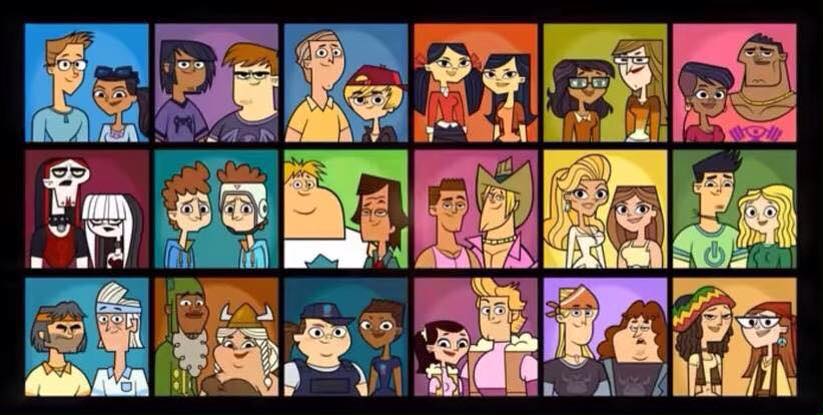
3. Total Drama Presents: The Ridonculous Race.

Growing up, my family and I used to love watching The Amazing Race.
It was one of my favorite reality shows as a kid, so I was pretty much guaranteed to like The Ridonculous Race.
Unless of course it was botched to the same degree as All Stars and Pahkitew were.
Thankfully, this Total Drama spin-off show is great, as a cast of 18 teams travel around the world and compete in challenges for one million dollars, all guided by Don, the new host.
This cast is almost entirely new, with only a few characters from prior seasons returning.
But, wow, do the writers do these old characters justice.
Geoff is as fun as he was in Island, and his friend Brody increases this fun to make them an especially enjoyable team to watch.
Then, there is Noah, whose character continues to improve from World Tour.
His friendship with Owen is charming and his growing romantic relationship with Emma is endearing.
And then there’s Leonard who… okay, why the hell is this insufferable character back?
Just so they could have someone to boot off first?
Okay.
Yeah, not gonna lie, a lot of the early boots are pretty meh characters, and some of the other teams definitely overstay their welcome, most notably the Daters, Ryan and Stephanie.
However, for every meh team there is a great one.
The Sisters grow more likeable with each episode, the Father and Son are great, the Rockers are a lot of fun, and the Goths are endlessly hilarious.
Then there are the Ice Dancers, Jacques and Josee, who are among the best villains in the series, right alongside Heather, Alejandro and Julia.
Their rivalry with the Police Cadets is also fun to see play out.
As for the Police Cadets themselves, MacArthur’s general craziness gets a lot of laughs, and Sanders plays off this well as the straight man to her partner’s insanity.
As for the finale, it is a pretty good one.

The Ice Dancer’s elimination is extremely cathartic, given all of the cheating they have done, and the ending where the Police Cadets win is satisfying.
My criticism come with the other team of finalists, the Surfer Dudes.
While Geoff and Brody are deserving of winning, I cannot help but feel like Emma and Kitty would have been better finalists.
That is not a huge criticism, though, more of a nit-pick based on preference. 
The finale of the Ridonculous Race is a more than satisfactory conclusion to a great parody of The Amazing Race.  

2. Total Drama Island. 

The original season of the show, I had just as much fun rewatching Total Drama Island as I did seeing it for the first time when I was a kid all those years ago.
The original cast is by far the most iconic, with Chris McLean and Chef Hatchet welcoming 22 contestants to Camp Wawanakwa for the first time.
Each of these campers are based off teen stereotypes but, like I said when I was talking about Pahkitew Island, there is more to them than that.
Duncan, despite being a bad boy, has a softer side to him.
Owen may be a fart joke machine, but he also has a heart of gold.
Gwen is the goth girl with a fierce streak, who is also a loyal friend when the other characters push past her walls.
Unless of course that character is Heather, who breaks down those walls with a sledgehammer of meanness.
Heather’s title as the Queen of Mean is perfect for her this season, as she plays the role of the antagonist we all love to hate, and then cheer at her inevitable downfall. 
Almost all of the characters are fantastic, except for a few of them, like Katie and Sadie who take the title of the most annoying Total Drama characters for me.
But, aside from them, and a few others, the cast of the original Total Drama Island is great.
Izzy, Lindsay, DJ, Geoff, Bridget, Leshawna, Harold, Courtney, all of these characters and more are memorable. 
Even Chris and Chef are at their best in this first season, with them actually seeming to care about the camper’s safety (even if it was just to avoid a lawsuit).
These memorable characters all make the first season more interesting when they are pushed to their limits in the challenges, resulting in various great episodes like, “Dodgebrawl”, “Paintball Deer Hunter”, “Hook, Line & Screamer”, and the finale “The Very Last Episode, Really!”
Speaking of that finale, it was great to see Owen and Gwen go head-to-head, even if I prefer Gwen as the winner to Owen.
The extra episode “Total Drama Drama Drama Drama Island” may be the best episode of the bunch, with it perfectly setting up the events of Action.
Overall, this first season is great, with my only criticism being a couple of inconsistencies and a few ridiculously unfair eliminations, most notably Leshawna’s.
Otherwise, this is one of the best seasons.
Total Drama Island was the beginning of this series, and it started it off with a bang. 

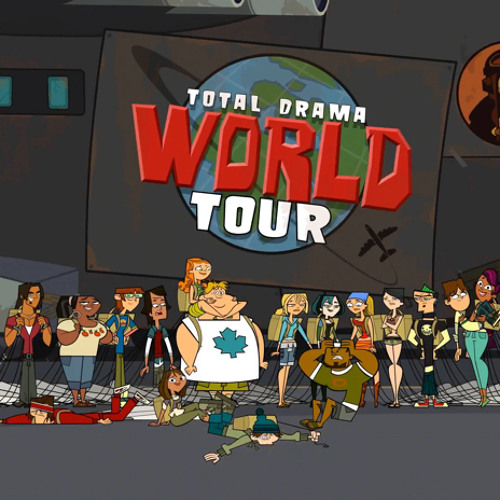
1. Total Drama World Tour.

When I decided to make a list ranking the Total Drama seasons, I knew which season was going to take the top spot.
Sure enough, when I finished my rewatch, Total Drama World Tour was my favorite.
This is hardly an unpopular opinion, as many other fans of the series also have World Tour as their number one.
It is a position the season has more than earned.

The first season to take its contestants around the world, World Tour stands out from the rest of the series with a unique feature.
This feature is Chris requiring the contestants to sing to progress, resulting in numerous fantastic songs, such as “Come Fly with Us”, “Gwen’s Face”, “Condor”, “This is How We Will End It,” and many, many more.
Along with these great songs, the characters singing them are also highlights.
World Tour continues what Action started by giving previously minor characters more time to develop, namely Noah, Tyler, and especially Cody.
Speaking of Cody, he comes with an attachment this season, since Chris adds two new contestants, Sierra and Alejandro.
At first, Sierra was annoying and creepy, but she grew on me by the end.
As for Alejandro, he is, without question, the most intelligent antagonist in the entire series.
His rivalry and simultaneous romantic chemistry with Heather is also fantastic.
Speaking of the Queen of Mean herself, the writers of World Tour did the impossible by making me cheer for her against Alejandro.
Turning Heather from the manipulative antagonist of the first season into the anti-hero of the third was a great idea which more than paid off.
This resulted in the season finale, “Hawaiian Punch”, being the most satisfying finale of the entire series for me.
Watching Heather kick Alejandro where it hurts, slide him off the mountain, and then drop her sacrifice into the volcano to win the million was immensely gratifying.
And, again, Heather was a character I and many others despised in Island.
Her transformation into this anti-hero figure in World Tour made Heather my favorite character in all of Total Drama.
All of these great qualities combine to make World Tour the best season in my eyes.
However, despite this, I would still not say it is a perfect season because there are a few issues I have.
For starters, the character of Blainley really served no purpose in this season, given that she’s brought into the competition late and eliminated just a few episodes after.
You could remove her from the plot and nothing significant would change.
At least it’s fun to laugh at her expense during the “Her Real Name Isn’t Blainley” song.
The second issue I have with World Tour is its portrayal of cheating.
Bridget is forgiven by Geoff for trying to cheat on him with Alejandro way too quickly.
Then there is the infamous Gwen, Duncan and Courtney love triangle.
I have already gone over how this plotline led to the derailment of Trent’s character in Total Drama Action but, in this season, it weakens Gwen’s character as well by painting her as a hypocrite.
Gwen was distraught when she thought Trent cheated on her in Island, yet she kisses Duncan when she’s friends with Courtney.
Honestly, I thought the show was doing a good job building a friendship between Gwen and Courtney, until they brought Duncan back and the love triangle with it.
If anything, though, the fact that I name these issues and still proclaim World Tour as my favorite season of Total Drama should show how fantastic the rest of this season is.
It is so good that I am able to ignore its issues and enjoy myself.
Out of all the seasons, Total Drama World Tour is the undisputed best for me.    
But I hope to see more seasons in the future.      
Fingers crossed that the reboot will be continued, with better distribution this time.

Top 10 First Law Books.

Whenever people rank their favourite fantasy series, I usually see Joe Abercrombie’s First Law books taking the top spot or at the very least near it.
After seeing so much praise for the novels, I finally gave in and read them.
Once again, the praise was warranted because this is now also among my favourite fantasy series.
Abercrombie has created a riveting world with some of the most compelling characters in the fantasy genre.
So, since there are ten books in the series at the moment, I decided to do a top ten list, ranking them from weakest to best.
Although, I should note before I begin the list that weakest does not mean bad.
I truly do not think there is a bad book in this incredible series, with even the tenth book on the list being very enjoyable, which is…   

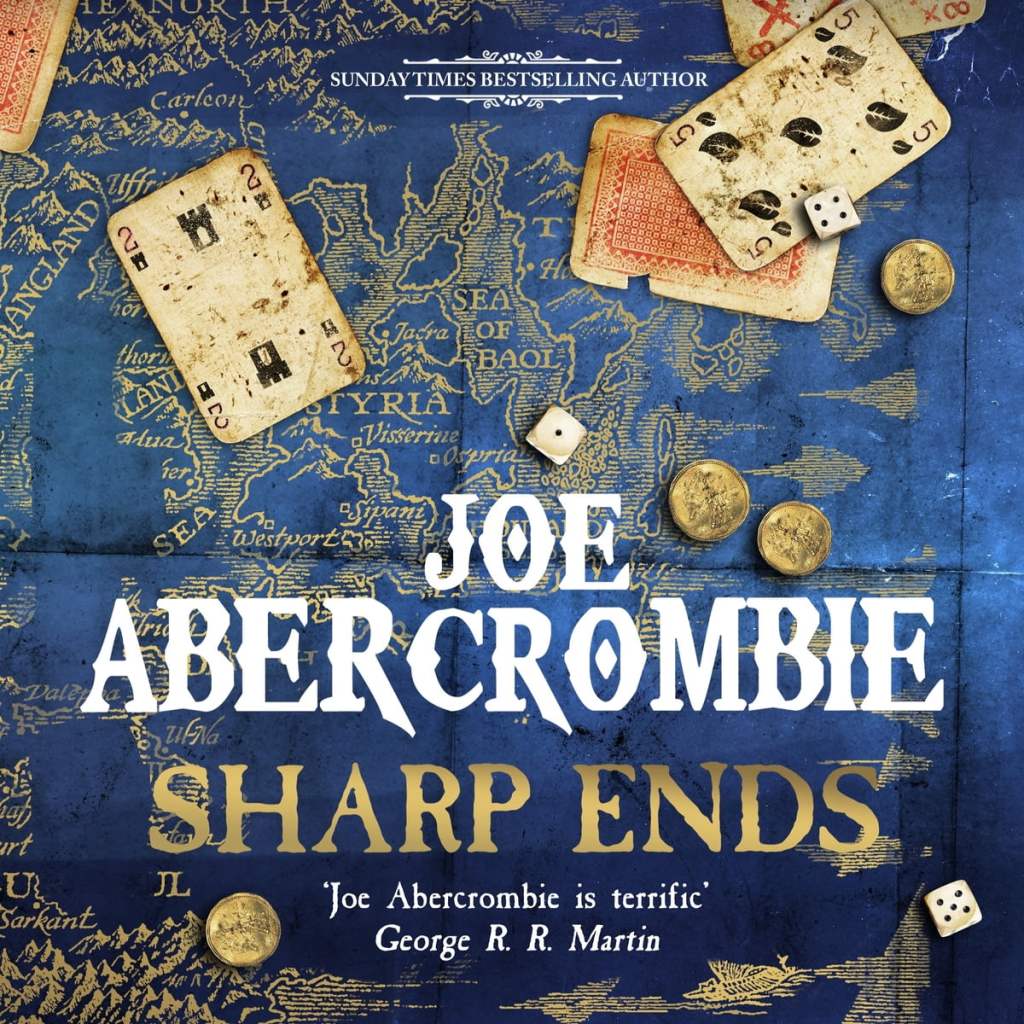
10. Sharp Ends.

I think that Sharp Ends would rank at the bottom of every First Law ranking list.
This is because Sharp Ends is not technically a novel but a collection of short stories from the world of the First Law.
That being said, these are some damn good stories. 
“A Beautiful Bastard” gives us a look at what Glokta was like before he was captured and tortured by the Gurkish.
“Hell” provides Temple’s POV of the fall of Dagoska and the death of Kahdia.
“Wrong Place, Wront Time,” tells the untold stories of those who suffer because of Monza’s quest for vengance. 
And, best of all, “Made a Monster” shows exactly what kind of monster Logen used to be while he was the Bloody Nine working under Bethod.

All four of these stories are fantastic and my favourites of the book.
Almost as good are the tales told about Shev and her friend Javre.
These two are the continuous thread in Sharp Ends, with five of the thirteen short stories being about their journeys.
The two make for a great comedic duo throughout, and the slow realization Shev has, that Carcolf is more of a snake than a love interest is great… until this is undone with their final story “Tough Times All Over” where it felt like all of the character development in “Three’s A Crowd” was undone.
It is for that reason that “Tough Times All Over” is my least favourite of the short stories but it is more than made up for by the other fantastic ones. 
All in all, Sharp Ends is definitley the weakest of the books, due to it not really being a novel, but is has plenty to love with its collection of unseen stories.
There is bound to be one that you like.   

9. The Blade Itself.

The first book in the First Law series, The Blade Itself is a compelling start to Joe Abercrombie’s epic series.
What puts The Blade Itself in the lower half of the list is that it is mostly a set-up novel for the adventure Abercombie is about to set his characters on.
This first book is devoted to establishing these characters and their arcs going forward.
There is Logen Ninefingers, a Northen warrior trying to escape his past as a mass murderer known as the Bloody Nine.
Sand dan Glokta is a former soldier who was tortured to the point of being crippled and in constant pain, and now inflicts this pain on others as a torturor for the Inquisition.
Ferro Maljinn is an escaped slave who is focused on her vengance, wanting to kill any Gurkish she can get her hands on.
Finally, there is Jezal dan Luthar, a nobleman half-heartedly preparing for a jousting contest.
Of all these characters Jezal is definitely the most unlikeable, given how narcissistic he is.
This is surprising since the rest of the main cast consist of mass murderers and torturers but this highlights one of Abercrombie’s greatest strengths as an author.
He is able to create characters who are absolutley terrible people and then, unbelievably, make us like them.
This is most evident with Glokta who is torturing people more often than not in this first book, and he is easily the most entertaining character with his sympathetic backstory and hilarious dark humor.
All of these characters fall under the thrall of Bayaz, the First of the Magi, who begins to subtly manipulate them in his grand plans, not that the characters or even us as the readers are aware of it at this point.
This makes The Blade Itself great for second read throughs after finishing the first trilogy because, although there does not seem to be much of a story yet, Joe Abercrombie is planting the seeds for the big pay-off which will come by the third book.
After reading The Blade Itself for the first time, I had no idea where the series was going but I definitely wanted to know. 

8. A Little Hatred.

We go from the first book in the First Law trilogy to the first book in The Age of Madness trilogy.
Abercrombie decided to follow up the first trilogy and three stand alone novels by focusing on the kids of the previous generation.
This could have easily backfired but I think all of the characters he chooses to focus on are fantastic.
Orso, Savine, Leo, Vic, Clover, and Gunnar all make great first impressions but, to me, Rikke of the Long Eye is the best of A Little Hatred.
The Dogman’s Daughter, Rikke is either cursed or blessed with the Long Eye, which gives her visions into the future, and the way she gains control of this power during Leo’s fight in the circle with Stour Nightfall was a joy to read.
Her telling Caul Shivers that he is still in there was also incredibly touching.
Coming close behind her in likeability is Orso, a spoiled prince who struggles to do right in a world that is actively conspiring against him, although this would not become apparent until The Wisdom of Crowds.
The rest of the cast is just as compelling, with A Little Hatred being much clearer than what the story is than The Blade Itself.
Both the stories of Stour Nightfall’s invasion of Uffrith and the beginning of the Union’s own French Revolution were very compelling.
Another interesting thing about A Little Hatred is that it has a couple swap.
In the first act of the novel, Rikke is with Leo, and Savine is with Orso, but in the end Rikke gets together with Orso, and Savine with Leo.
The reason I mention this is that, in any other book, I would be criticizing this as contrived and for the sake of drama.
So imagine my surprise when I was reading this and found that Abercrombie had convinced me on the realism of this whole situation.
The book ends ominously, with the death of King Jezal, which I definitley think either Bayaz or Glokta had to have some kind of hand in, although such is never confirmed.
A Little Hatred was a great start to The Age of Madness trilogy but it is its focus on the story which put it above The Blade Itself for me.    

7. The Heroes.

When I see people rank the First Law series, I usually see The Heroes in the top five, if not top three.
As for why I have ranked it lower, it is through no fault of this novel.
The Heroes is great and it just comes down to me liking the other books more.
The novel follows the three-day battle at the titular Heroes, where the forces of the Union face off against Black Dow’s Northmen.
One thing I like about The Heroes is how it turned Calder and Brenner dan Gorst into complex characters.
In the first trilogy, Calder came across as a one-note villain, yet here he is one of the best POV characters, as Abercrombie focuses on his guilt, love and ambition very well.
Then there is Gorst who seems like a hero on the outside, yet his inner thoughts reveal him to be a depressed, suicidal, murderous incel who is simultaneously sympathetic and detestible.
His “August Fuck-Hole” letter is one of the most hilarious moment in the entire series, for me.
This old cast is not alone in greatness, however, for the new characters are also fantastic, with Finree and especially Whirrun of Bligh being highlights.
The only character POV I did not really care for was Tunny’s but I did like his role in The Age of Madness trilogy so this served as a good introduction for him.
The Heroes also has the privilege of being the first book in the series to have a chapter where Abercombie goes over the perspectives of all the normal people in a battle.
This begins with the “Casualties” chapter, which is one of the best in the entire series, and followed up by the “The Little People” chapters in The Age of Madness Trilogy.
The ending of the book also builds perfectly into that trilogy, with Calder becoming the new leader of the North being key to understanding the contextual politics.
This makes The Heroes the most important of the stand alones to read, even if its my least favourite of them.  

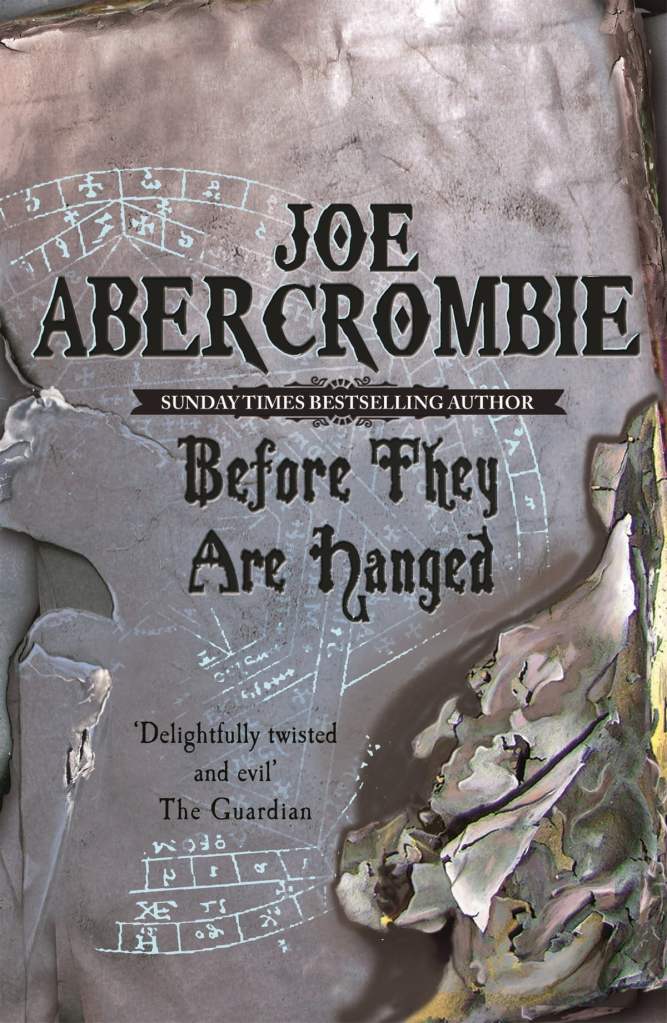
6. Before They Are Hanged. 

The second book in the First Law trilogy, Before They Are Hanged is a great follow up to The Blade Itself, which continues to lay the seeds the first novel started.
Before They Are Hanged follows three main storylines.
First, we have Bayaz journeying with Logen, Ferro, Jezal, Quai and Brother Longfoot to the edge of the world to locate the Seed, a weapon Bayaz needs.
All three of our POV characters in this storyline experience growth, with a relationship forming between Logen and Ferro.
The character who grows the most is undoubtedly Jezal, as an injury he recieves causes him to reevaluate his life and narcissistic attitude, allowing himself to form a friendship with Logen.
This growth is my favourite of any character in this book and made the narcissistic rants from him we had to endure in The Blade Itself more than worth it.
This storyline ends in an anti-climax, where Bayaz and the others realize that the Seed is not there, making their journey mostly pointless, an interesting twist on the usual fantasy adventure but one that is pure Joe Abercrombie.
The second storyline follows Glokta, who has been tasked by Arch Lector Salt with defending Dagoska from Gurkish invasion.
Golkta’s POV is, as always, darkly humorous, and also horrifying during his first encounter with an Eater, the cannibalistic wizards of First Law.
Upon Glokta’s return from Dagoska, we also get a hint of the character dynamic between him and Ardee, which will be an unusually endearing part of the third novel.
The final main storyline of Before They Are Hanged is the combined one of Collem West and the Northerners rebelling against Bethod, among them Dogman, Threetrees, Black Dow, Tul Duru Thunderhead, and Grim.
There are many highlights to this storyline, such as the first encounter between West and the Northmen, West getting the name “Furious” from them and then throwing Prince Ladisla off a cliff for attempting to rape Cathil.
And then, of course, there is the first fight with Fenris the Feared, ending with Threetrees’ death and the Dogman becoming the new chief, a job he would retain for the rest of his life.
All three of the storylines in Before They Are Hanged combine to create a great novel filled with plenty of surprise for the big pay off in the final book of the trilogy, which I will get to much later on in the list.     

5. The Wisdom of Crowds.

The final book in The Age of Madness trilogy, The Wisdom of Crowds was an expectedly tragic close to this section of the First Law storyline.
After the cliffhanger of The Trouble With Peace teased a peasant uprising against the nobels, The Wisdom of Crowds follows through on this promise, with the uprising ruining Orso’s victory against Leo, making him a prisoner of the Breakers and the volatile Burners.
The story then follows Orso, Leo and Savine attempting to navigate this extremely dangerous political climate, so that they do not get executed for going against the Great Change, Joe Abercrombie’s version of the French Revolution.
As this is happening, Rikke prepares for war against Black Calder, leading to what I feel is the most predictable storyline in all of First Law.
This is not to say that the storyline was bad but I realized that Rikke was attempting to fool Black Calder’s spies into thinking she was throwing away her allies very quickly, and this made this part of her storyline drag a bit for me, which is the reason The Wisdom of Crowds is not higher.
That being said, watching her defeat Black Calder was still great and her betrayal of Orso at the end was fittingly unfortunate.
As for Orso, his ending is the most poetically tragic in the entire series, as he is hanged all so Leo can maintain his grip on power.
Speaking of Leo, oh, my god, I absolutely hate him.
The Trouble With Peace made me dislike him but The Wisdom of Crowds made me want to jump into the book and push him down a flight of stairs.
Still, I cannot deny his downward spiral is amazingly written and he is still not quite a bad person as Savine.
This again speaks to Ambercrombie’s writing ability, as he made me like Savine more than Leo, when she readily admits that she is the “villain” in her final chapter.
She is probably not as big of a villain as her adoptive father though, as Glokta literally becomes the next Bayaz, wrestling control of the Union away from him.
Bayaz is definitely not taking this sitting down, however, as he has recruited Hildi and Calder’s unnamed son to get his revenge and take back control.
Rikke’s vision at the end foreshadows this eventual storyline, along with the return of an as yet unnamed character.
Whatever storylines eventually follow, for now, The Wisdom of Crowds is a fantastic temporary conclusion to the series.  

4. Red Country. 

Red Country is, without question, the most divisive book in the First Law series.
Most seem to either love it or hate it.
Personally, I fall into the love it camp, as it is my second favourite of the stand alones.
Red Country stands apart from the rest of the First Law series because, while all the rest of the books are strictly fantasy, Red Country is a western with a pinch of fantasy.
The story follows a former outlaw named Shy South, who goes on a journey with her step-father, Lamb, after her siblings are kidnapped.
Oh, and Lamb?
Yeah, he’s Logen.
I cannot tell you how joyous it was to read the first few chapters and realize Lamb’s identity through his dialogue and the the physical description of him.
I also liked how Abercrombie never addresses him as Logen or even the Bloody Nine in this book, just as Lamb, yet both sides of his character are readily apparent in all of their darkness.
As for Shy, sure, she is not the most interesting of Abercombie protagainsts, but where she lacks is more than made up for by the other characters, most notably Temple, a former lawyer who now works under Nicomo Cosca.
Temple’s story of redemption with Shy was fantastic, making him a successful parallel to the tragic Cosca who has sunk low after the highs of Best Served Cold.
His fall from grace and somewhat pathetic demise was sad to see play out, yet felt fitting.
Just as fitting was how the few fantasy elements were incorporated into Red Country, with the reveal of the mechanical dragon made by Kanedias being a highlight scene.
Red Country is also capable of being incredibly funny at times.
The reveal that Lestek was acting as the Gurkish Legate had me laughing my head off.
As for the ending, we get a final, satisfying confrontation between Logen and Shivers, before both ride off, Logen into an uncertain future.
Will we ever see him again?
Time will tell but if not this was a fitting end for the character.
Red Country may be the most divisive First Law novel but I consider it to be a compelling story and one of the best western tales told in recent years.     

3. The Trouble with Peace. 

The second and, in my opinion, best book in The Age of Madness trilogy, The Trouble With Peace depicts the aftermath of King Jezal, King Scale, and the Dogman’s deaths.
As the leaders of their respective kingdoms, their deaths throw these countries into states of unrest, which all of the main characters have to deal with.
This is especially the case for Orso, who attempts to step up as King, only to learn just how trapped his father was in the position.
Orso is the highlight of this book, for me, as his attempts to do right are continuously sabotaged, leading to the eventual battle at Stoffenbrek, which allows him to truly become a leader, outsmarting Leo.
If only he had the ruthlessness to execute him at the end.
As for Leo, this was the book where I began to dislike him, although he is still very well written.
Watching him be manipulated into starting a rebellion was frustrating but the good kind, especially when Savine got involved, doubling down on her own ruthlessness from A Little Hatred.
And then there is Rikke who has some of the best chapters of the novel because of just how creative Abercrombie got with her Long Eye.
There is a chapter where it is revealed that everything we just saw was Rikke’s vision of the future, and a chapter where the events take place in reverse as Rikke can no longer tell between the past, present and future.
This leads to her getting her Long Eye contained, with her becoming cunning enough to eventually take her father’s place, outwit Savine, and take Stour Nightfall’s castle while he is away at war.
Watching both her and Orso have the opportunity to become great leaders was thrilling to read.
The Trouble With Peace also has some of the best chapters in the series.
I have already mentioned the creative Rikke chapters, but the one where Orso and Leo have very different confrontations with Jappo is also a highlight.
The book also ends on an intense cliffhanger, with the joy of Orso’s victory being crushed with the false reveal of Pike as the Weaver, and the beginning of the Breakers and Burners’ Great Change. 
The only issue I have with it is that Gunnar’s role in this book feels pointless but that is it.
The Trouble With Peace is the best book in The Age of Madness trilogy and more than deserving of the third spot on this list.    

2. Best Served Cold. 

I can still remember reading the first chapter of Best Served Cold, which was used as a teaser at the end of the Last Argument of Kings book I have.
That first chapter hooked me in on Monza’s journey of revenge and, when I finally read the rest of the novel, I was not disappointed.
Best Served Cold follows mercenary Monza Murcatto, a woman hellbent on revenge after her brother Benna is killed and she is thrown off a mountain.
She enlists a cast of colourful and morally dubious characters to help her, consisting of Caul Shivers, Nicomo Cosca, Friendly, Castor Morveer, Day, and Shylo Vitari.
All of these characters are fantastic, especially Cosca, as this was the book which finally made me take notice of him as a character.
His friendship with Friendly was an unexpectedly endearing one and full of hilarious moments, both light-hearted and dark.
It is Shivers who is the best character in this book for me, though.
Much like Cosca, this was the first book in which I truly took notice of him, and his own descent into murderous revenge was tragic to watch, yet highly understandable.
As for Monza, her journey is also very compelling through what she learns about revenge.
In most revenge tales, the author focuses on the cost of revenge, with the main characters often questioning whether they should abandon it altogether.
This is not the case for Monza because the negative effects of her revenge are made clear from the first dozen murders, and she remains devoted to her goal of killing Grand Duke Orso.
What makes Monza’s revenge tale unique for me is how she comes to learn the man she is seeking revenge for, her brother, was actually a bit of a jerk, to put it lightly.
Across the novel, both Monza and the reader come to realise what a monster Benna was and how his actions lead to the chaos that Monza is now wreaking through Styria.
This results in multiple stages of the novel, each dedicated to Monza taking out one of the seven men she has sworn to kill.
Each of these instances of revenge stand out from the other, from Morveer poisoning dozens of people in a bank, to the fight with Ganmark, which is one of the best sword fights in the series.
Then there is so-called grand finale with Duke Orso, who Monza takes out with fittingly little fan-fare.
She is aided by Shenkt, who is revealed to be the one who saved Monza at the beginning of the novel in a great twist reveal.
When Abercrombie decides to incorporate twists into Best Served Cold he absolutely nails them.
There is of course Shenkt’s reveal and the twist of Benna’s true nature to the reader, but also the reveal that Monza is sleeping with the Duke of Delay.
That last one was particularly funny, as I was getting uncomfortable with how much detail the sex scene between Monza and Shivers was getting, while wondering why the POV kept changing between them, only for Monza’s POV to finally reveal she was sleeping with Rogont as well.
Best Served Cold has many twists and turns, along with fantastic characters, so it is no wonder that this is the first of the series to be getting a movie adaptation, which I hope they nail.
Best Served Cold is my favourite of the stand alones and, in my opinion, the second best book in the whole series.    

1. Last Argument of Kings.

It’s funny but, before I actually got to writing this list, I actually intended for Best Served Cold to be number one.
However, the more I thought about it, the more I realized just how often I was going back to re-read the chapters in Last Argument of Kings, the final book in the First Law trilogy.
Once I realized that, there was no doubt in my mind that this was the best book in the series.
Remember how I kept mentioning that The Blade Itself and Before They Are Hanged were set-up books for the big pay off?
Well, boy, does Last Argument of Kings ever pay off.
Every single one of our main POV characters has an impactful storyline.
Logen returns to the North to fight Bethod, only to fall further into the Bloody Nine side of his personality, resulting in more bloodshed.
Bayaz manuvers Jezal to take the throne of the Union, putting Jezal’s supposed positive change in Before They Are Hanged to the test.
Glokta is stuck between two masters who could both very easily destroy him, as he attempts to figure out the plans of both Sult, and the Valint and Balk bank.
Ferro’s discovering of the Seed leads to her finally gaining the means to accomplish her revenge against the Gurkish, while also finally revealing the true evil behind the scenes this entire time, Bayaz himself.
The First of the Magi reveals himself to be the power hungry overlord, controlling the Union from the shadows, and each of his conversations with the four main characters disclosing this are riveting.
In particular, his conversations with Glokta and Jezal are standouts.
In his talk with Glokta, Bayaz reveals all of his secret moves, paying off two whole books worth of foreshadowing.
As for Bayaz’s confrontation with Jezal, this may be my favourite moment in the entire series.
Watching Bayaz completely tear Jezal down, forcing him to be his puppet was devastating to watch in the best of ways.
There are numerous other highlights in this book, from Glokta and Ardee’s relationship, to Logen fighting Fenris the Feared in the Circle, to Pike’s reveal as Salem Rews following the tragic death of West and, of course, how so many of the characters’ endings come full circle.
Ferro is back on her revenge quest by the end, with the power to now actually achieve it, and Glokta continues to torture, only with much more power and now admitting to himself that it amuses him.
Finally, there is Logen, whose story ends exactly as it began, word for word.
Logen started the trilogy as a man on the run from his bloody past, and he ends the trilogy as a man on the run from his bloody past.
Last Argument of Kings has probably one of the most depressing endings of the series, with Logen’s fate unknown and Jezal now a fearful puppet of Bayaz, yet it is the perfect conclusion to this dark and delightful trilogy of books.
There is not a single bad novel in the First Law series and, in my opinion, Last Argument of Kings is Joe Abercrombie’s masterpiece. 

My Wheel of Time Book Ranking.

Last year, I finished reading Robert Jordan’s epic fantasy series The Wheel of Time, and it was quite the experience.
Spanning 15 books, released from 1990 to 2013, Robert Jordan was unfortunately only able to complete 11 books and a prequel before his tragic passing, after which Brandon Sanderson took over to finish Jordan’s work, based off the notes he had left behind.
It is quite a commitment to read these books, with thousands of pages to read and many characters to keep track of, with it taking me almost a year to complete the entire series.
This was time well spent, in my opinion, because The Wheel of Time is now among my favorite novel series of all time.
Therefore, I decided to rank all of the books from the weakest to the best.
Keep in mind, though, that this is solely based off my first read through of the series, so my opinion could change after a second read through.
Also, this ranking will contain spoilers for the entire series, so if you haven’t read the books, then don’t read this.
With that out of the way, I’ll start with what I believe to be the weakest book in The Wheel of Time series, and I’m sure that those of you who have read the books can guess which one it is.   

15. Book Ten – Crossroads of Twilight.

No surprise, the book that most fans seem to agree is the weakest book of the series is the one that I rank right at the bottom.
Coming right at the end of “the slog” section of the novels, I had heard Crossroads of Twilight would be the hardest to get through.
Honestly, before this point, I had actually been enjoying the books of the so-called slog.
Sure, they weren’t up to par with what came before, but they were still enjoyable reads.
Unfortunately, this was not the case for Crossroads of Twilight for me, as I can firmly state it is the only book in the series that I did not like.
One of the biggest reasons for this is that it feels like almost nothing happens in this book.
I remember getting to page 350, setting the book down for a second, and going, “Wow, pretty much nothing of interest has happened, yet.”
This is not helped by how boring a lot of the POV characters are in this book.
Perrin’s storyline of trying to save Faile from the Shaido is still dragging its feet with very little progression.
Worst of all are the Elayne chapters.
My god, were her chapters difficult to get through.
She literally spends a significant portion of one chapter in a bath being told things.
However, this does not mean Crossroads of Twilight is devoid of good qualities.
The ending to the book is actually pretty great.
We get a phenomenal Perrin chapter, where he finally begins to grow in an interesting way, rather than meandering his way through the story, like he was beforehand.
Then there is Egwene getting capture right at the end, which kickstarts her phenomenal storyline of gaining the White Tower’s support from the inside.
Sadly, these great moments come right at the end, and they don’t really redeem what came before, since it’s mostly just set up.
And that is Crossroads of Twilight’s main problem.
It’s mostly boring setup and it ends just as it’s starting to get good.   

14. Book Eight – The Path of Daggers.

I heard a lot of bad things about The Path of Daggers before I read it.
People kept telling me that it was among the weakest of the series, alongside Crossroads of Twilight.
You know what, though?
I’m glad I heard these negative things about this book, because it made me appreciate its great moments all the more.
Yes, I do consider The Path of Daggers to be the second weakest book in The Wheel of Time, but this book was still a decent read for me.
I will get the negatives I have out of the way first, so I can end on the positives for this one.
For starters, this is where the Bowl of the Winds storyline comes to a conclusion and this was never a storyline I really cared about, so when the beginning of the book was largely centered around it, it did not make for a good beginning. 
This was also the book where Egwene’s journey to the White Tower began to tire me out.
Sure, I liked her political maneuvering, but it began to feel like it was taking forever to get to the Tower.
Also, it was a shame to see that there was no Mat POV in this book, especially since his story ended on a cliffhanger in A Crown of Swords.
Then there’s the climax of the book which, while not bad, is a little anti-climactic when you compare it to the other endings in the series.
Now, onto the good.
For starters, I actually like Perrin’s chapters here.
Sure, it does end with the infamous Faile kidnapping plot starting, but I liked seeing Perrin deal with Masema’s men and meet up with Elyas again.
Then, there was Rand, who can always be counted on to be an interesting character and this book is no exception, with him delivering the best scene, when he uses Callandor and loses control, decimating his own forces.
These things made me appreicate The Path of Daggers, even if it is one of the series’ weakest.  

13. Book Seven – A Crown of Swords.

This placement may come as a bit of a surprise for some because I have seen A Crown of Swords ranked in many different places on many different lists.
Some rank it high, some rank it in the middle, and some rank it low.
Sadly, it’s low for me, although I will admit this is mostly for a personal reason, this being that I just did not find a lot of the storylines this book covered to be that interesting.
As I said, the Bowl of the Winds was never a plotline I really cared for, and I especially did not like the way Mat played into it, with him getting raped by Tylin.
Now, I have heard that Robert Jordan intended this to be a commentary on how the rape of men by women is often unjustly mocked, which is a good thing to point out, but I believe it’s mishandled.
With the way the female characters laugh at Mat about it, it feels more like Jordan is just depicting Mat being shamed, rather than making an effective commentary about it.
Another personal reason that I have for ranking A Crown of Swords so low is that I never really cared about the Sea Folk culture either, and a large part of this book is Rand recruiting them.
Not to mention that this is the book where I noticed that a lot of great characters, like Thom and Loial, had been pushed to the side, which was frustrating.
There is still a lot of good things about A Crown of Swords, though.
For starters, the climax, although a bit rushed, is great, being the first time Rand and Moridin meet and interact, working togethor to kill Sammael.
Another thing I loved was a lot of the character relationships.
Lan and Nynaeve’s romantic progression is excellent.
However, my favourite character dynamic in this book, and one I was not at all expecting, was the emerging friendship between Mat and Birgitte.
My favorite scene in A Crown of Swords is actually the two of them becoming friends.
They just have such great chemistry and it leads to a lot of funny moments.
I needed more scenes in the series of these two hanging out, getting drunk, and just being best buds.   
So, despite having a lot of personal issues with A Crown of Swords, it still has a lot of redeeming qualities.

12: Book Nine – Winter’s Heart.

I’ll be honest here.
If it was not for one thing about Winter’s Heart, then this book would not be above A Crown of Swords and The Path of Daggers.
I found most of this book to be a difficult read, with a lot of slow moments that failed to grab my interest. 
The weakest chapters of this book were once again the Perrin and Elayne chapters.
Their whole storylines about rescuing Faile and trying to gain the Lion Throne are some of the weakest in the entire series, and this is really where I began to feel how much they dragged, before that dragging became insufferable during Crossroads of Twilight. 
Then there’s Rand, who sets out to cleanse Saidin at the beginning of the book, however, rather than the story naturally moving towards that point, Rand just spends most of it hunting down the traitor Asha’man, making his story feel kind of disjointed.
At least Mat is back after his absense in The Path of Daggers, and we finally get the beginning of the Daughter of Nine Moons storyline that had been teased, with him meeting Tuon.
Mat’s character development was quite good in this book, and I really liked how he ended up freeing those Seanchan captives.
Another thing that I loved was the scene where Rand admits his love for Min, Aviendha and Elayne.
The reason I loved this scene was because of how awkwardly funny it was, with Nynaeve, Birgitte and Alanna’s reactions leaving me in stitches.
However, these moments were not enough to redeem the book for me.
So, why is it above The Path of Daggers and A Crown of Swords?
The ending.
That. Ending.
The final chapter of the novel, where Rand and Nynaeve cleanse Saidin from the Dark One’s taint, while their allies fight off the Foresaken is absolutely incredible and one of the best climaxes, no, the best chapters in The Wheel of Time.
It took me from feeling quite lukewarm about this book, to making me think it was worth reading all its difficult parts just to get to that conclusion. 
The ending of Winter’s Heart is one of the best endings of the entire series, and it was enough to push the book up two spots, where it now rests at number 12. 

11. Prequel Novel – New Spring. 

I read New Spring before Knife of Dreams and I definitely think this was a good time for me to do so because it added more meaning to Lan’s actions in that book. 
New Spring is a prequel novel that covers the beginning of Moiraine’s search for the Dragon Reborn, leading to her meeting Lan.
Getting insight into both of these characters’ pasts was great and, like I said, furthered my understanding of them in later books.
I also quite enjoyed seeing moments that had been mentioned previously in the series, like Lan throwing Moiraine into a lake.
It was a joy to read these two characters start off as suspicious towards one another before slowing beginning to build trust.
There is a section of this book that drags considerably, when Moiraine begins her search for the Dragon Reborn with Siuan’s help.
However, once she begins her search alone and we get Lan back into the picture, the story picks up again.
Sure, New Spring is pretty inconsequential in the grand scheme of the story but it is a good read that expands on future character motivation and fills in the blanks for some of the backstory.
Reading it made me sad that Robert Jordan was never able to publish other prequel novels, if he intended to do so before his tragic passing.      

10. Book One – The Eye of the World.

The book that started it all, The Eye of the World impressed me quite a bit when I first read it.
This was because of how it both fit the Tolkien formula, yet also diverted from it.
Of all the fantasy novels I have read, many of them have a Lord of the Rings archetype to the point that some have appeared as little more than rip offs.
Robert Jordan, however, was able to put his own spin on this formula, creating quite a few surprises for me, like the attack on Emond’s Field during Winternight.
I was expecting the typical Gandalf stand-in to announce Rand as the chosen one and demand they leave before the evil forces attacked.
What I got instead was Moiraine not knowing it was Rand yet, the Trollocs attacking, and Moiraine then going into the interesting history of the supposedly simple village with the tale of the fall of Manetheren.
The Eye of the World continued to surprise me as it went on, endearing many of the characters to me, most notably Perrin, with his wolf storyline, and Thom, with his heroic supposed last stand to defend Mat and Ran.
Although I did find myself quite confused about what exactly was going on with the ending at first.
Still, The Eye of the World was a great start for the series, with Robert Jordan using Tolkein influences to lay the groundwork, from which he would truly forge the Wheel of Time’s identity with The Great Hunt.  

9. Book Three – The Dragon Reborn.

The Dragon Reborn is a novel I hear getting a lot of praise compared to the other books in the series, so it may come as a surprise that I rank it at number nine.
I did enjoy The Dragon Reborn, it’s just that I found the other books to be more interesting, as there were a couple of things holding this one back, like the final fight.
It is yet another battle between Rand and Ba’alzamon and by that point I was kind of tired of them, wondering if every book was going to end with the same thing which, thankfully, did not happen.
As for the positives that placed this book in its position, one thing that I appreciate about The Dragon Reborn was how it handled Mat.
Reading The Eye of the World and The Great Hunt, I was quite confused about why Mat was many people’s favorite character, since he did not leave a very favorable impression in those two books.
Then I read The Dragon Reborn and I began to get it.
Mat is definitely the standout of this book, starting off great with his quarterstaff fight against Gawyn and Galad and eventually saving Egwene, Nynaeve and Elayne from the Black Ajah’s prison… which he is berated for.
Well, I can’t say that moment doesn’t tie into the common motif of men and women being at odds in this series.
While I did not find the three girls’ part of the story to be as interesting (or likeable), I can say that Perrin again shined in this book, with his story leading to him meeting both Faile and Gaul.
I also thought this book’s pacing and structure was top notch, as it all builds up to the finale of Rand taking Callandor, even if I was tired of the Ba’alzamon fights by that point.
It is Mat who truly stands out in The Dragon Reborn, with his emergence as one of the most likeable characters of the series being the key part of this book to stick in my head. 

8. Book Six – Lord of Chaos. 

Much like The Dragon Reborn, Lord of Chaos may be another book people are surprised to see ranked low because it is commonly viewed as having one of the greatest climaxes in The Wheel of Time.
I cannot argue with this sentiment at all, as the battle at Dumai’s Wells was incredible to read through for the first time, especially with how it all tied into the growth of Rand’s character and his connection with Lews Therin.
Rand is definitely the highlight of Lord of Chaos, with every single chapter of his being compelling to the point that I got excited every time I would turn the page and see that the next chapter’s POV would be his.
Along with his confinement by the Aes Sedai, leading to the ending battle, and his inner conversations with Lews Therin, another thing that was handled excellently in my opinion was the mental assault Alanna subjects him to by forcibly bonding him as her Warder.
This was handled much better than the sexual assault Mat endured in Crown of Swords, with it being treated as the disgusting act it is.
Rand really has to fight his way through trial after trial in this book, both physically and mentally.
Lord of Chaos was the book that made me go, “okay, maybe Rand is one of the greatest fantasy protagonists of all time.”
So, if I enjoyed Rand’s POV chapters and the final battle in Lord of Chaos so much, then why is it only at number eight?
Well, because of everything else.
Lord of Chaos is where the story began to drag a bit for me, with a lot of the other characters’ stories in this book just not being as interesting to me.
Not to mention I felt that some of the characters’ storylines were a bit abrupt, especially with Egwene becoming the Armylin Seat, although I do know that was the point.
Also, Lord of Chaos has what is probably my least favourite moment of the entire series, which is Egwene stumbling into a dream of Gawyn saving her from Rand and suddenly deciding she loves him out of nowhere.
It’s one of the most abrupt and out of nowhere love confessions I’ve seen in fiction.
Despite these issues, Lord of Chaos still has plenty of brilliant moments, with its compelling Rand chapters and one of the best endings to any book in the series.

7. Book Five – The Fires of Heaven.

The Fires of Heaven is a book that I find to be fairly underrated in the series.
Picking up after Rand becomes acknowledged as the Car’a’carn by all of the Aeil except the Shaido, The Fires of Heaven mainly follows Rand’s journey to stop Couladin from pillaging the land. 
Much like Lord of Chaos, Rand’s chapters are great, especially the ones with Asmodean, the Foresaken who was forced to serve him at the end of The Shadow Rising.
Conversations between these two characters are always excellent, with some of my favorite instances of dialogue in the series coming from their conversations.
It is a shame that Asmodean dies at the end of this book, as I was looking forward to seeing if a former Foresaken could be redeemed.
Him dying at the end does not change how great his scenes with Rand are.
Neither Rand nor Asmodean are the best characters in this book, though.
No, in my opinion, that title is shared between Mat and Moiraine.
The Fires of Heaven has what is probably my favorite Mat moment of the entire series, where he unintentionally forms the Band of the Red Hand and rallies them to enter the battle, killing Couladin himself.
Then, there’s Moiraine, who sacrifices herself to defeat Lanfear.
Moiraine being revealed to have survived in Towers of Midnight does not diminish the impact this moment had on me, with her letter to Rand making me tear up for the first time when reading The Wheel of Time.
This all builds into an excellent final battle with Rhavin, resulting in Rand using Balefire to revive his friends, this taboo form of chanelling being referenced by the title of the novel.
As for issues, I do think that Nynaeve and Elayne’s circus storyline is pretty annoying, although there are some great moments like Birgitte being ripped from the pattern.
Also, the cliffhanger of the novel is a false one, with Morgase being built up to go against Rand, only for her subsequent storyline to be pretty disappointing.
Probably the biggest issue though was Perrin’s absence, after his incredible storyline in The Shadow Rising.
These things held The Fires of Heaven back but, otherwise, I loved this book.

6. Book 13 – Towers of Midnight.

The second book in the series written by Brandon Sanderson after Robert Jordan’s passing, Towers of Midnight is probably the weakest of the three written by him.
That said, its ranking shows that I still consider it to be one of the better books.
Perrin and Mat take up most of the page time here and Mat’s storyline is especially fantastic.
This was a relief when reading because Sanderson did struggle to write Mat a bit in The Gathering Storm.
Mostly everything about Mat in this book was great, with him finally finishing off the Gholam and then rescuing Moiraine with Thom and Noal (Jain Fairstrider).
He even gets another drinking scene with Birgitte, so that was an instant plus for me.
As for Perrin, Sanderson also did a great job of developing his character, as he forges his hammer Mah’alleinir, battles Slayer in the Wolf Dream, unfortunately leading to Hopper’s demise, and brings the White Cloaks to his side, Galad among them.
Speaking of, one thing I knew coming into Towers of Midnight was that there would be a chapter focusing on a trial that not a lot of readers liked.
So, I was quite surprised to get to this chapter and find that it did not bother me.
Sure, it is nothing great but it is serviceable for the plot.
Another complaint I have heard is that Egwene’s conflict with Rand is frustrating but, personally speaking, I was still able to see where the characters were coming from.
Egwene’s storyline at the White Tower was my least favourite one of the book though, so that was a surprise, considering how much I adored her POV in The Gathering Storm.
As for Rand, what little content he got was excellent.
Aviendha’s storyline about the potential dark future of the Aeil and the Seanchan was also quite chilling and raised a lot of interesting questions that we still don’t know the answers to, but in a way that I actually like.
My only major criticism is with the Elayne chapters, as she is quite insufferable initially, although she does get better.
Other than that, and a few minor things, I greatly enjoyed this novel.
Towers of Midnight was a great penultimate book heading into the epic conclusion for the series.    

5. Book Eleven – Knife of Dreams. 

I have often heard Knife of Dreams described as Robert Jordan’s swan song and I think that this is an apt description.
This was the final book Jordan completed before his tragic passing, leaving Brandon Sanderson to finish his great work.
In my opinion, Jordan went out with a bang, his final book being a massive improvement from Crossroads of Twilight.
One bit of praise I did give to that book, though, was that Perrin’s storyline picked up at the end.
Well, Jordan carries through with that, as Perrin’s POV chapters in this book are excellent.
This was a surprise to me, since I found the whole rescuing Faile from the Shaido plotline to be quite boring in Winter’s Heart and Crossroads of Twilight.
The conclusion for it in Knife of Dreams was fantastic, with a lot of tragedy to it as well, like with the death of Arram.
It was also quite sad to see how brutal Perrin had to become to save Faile.
Just like in Towers of Midnight, Mat also shares the biggest amount of page time with Perrin, as he continues to travel with Tuon, their relationship slowly growing.
In Crossroads of Twilight, I was unsure about their relationship, but I felt their chemistry completely in Knife of Dreams.
This leads to the moment where Tuon completes the marriage ceremony, a moment that had me laughing harder than any other joke in the series.
We also see Mat’s strategic military genius on full display, as he uses the Dragons Aludra created to fight the Seanchan.
However, just as I said that Knife of Dreams was similar to Towers of Midnight through how both Perrin and Mat got the most POV chapters, another unfortunate similarity is the quality of the Elayne chapters.
Knife of Dreams in the book that I found Elayne to be at her most insufferable, with her getting two Aes Sedai killed and not even feeling any guilt for it.
Sure, it does all end in an admittedly pretty good battle, but I for one breathed a sigh of relief when her storyline came to an end.
The rest of Knife of Dreams is excellent, though, with Rand’s brief storyline ending in brutal fashion, as he loses a hand to Semirhage who then reveals to everyone that he is hearing Lews Therin’s voice in his head.
I saved the best part of the book for last, and this undoubtedly the chapter where Nynaeve rallies the men of Malkier to rush to Lan’s aid, rising the Golden Crane.
This was the second chapter in The Wheel of Time which made me cry and it is my favourite Nynaeve moment by a landslide.
Knife of Dreams is definitley Robert Jordan’s swan song and it made me wonder what his ending for the series would have looked like, even if I am glad that Brandon Sanderson was able to step in to complete his work.    

4. Book Fourteen – A Memory of Light.

The final book in The Wheel of Time, A Memory of Light finishes the story with a bang as Tarmon Gai’don, the Last Battle, finally arrives.
This is the epic final battle that the series has been building to from the beginning.
Does Brandon Sanderson nail it?
Well, judging by A Memory of Light’s placing on this list as the fourth best book in The Wheel of Time, the answer is obviously yes.
The build up to the Last Battle is excellent, with numerous great moments such as Talmanes’ last stand in Camelyn, Moiraine returning to help Rand install his Dragon’s Peace, Rand meeting with Mat and Tam again, and Logain’s rescue from the Black Tower.  
It is the Last Battle that is the true highlight, with an over two hundred page chapter dedicated to it, with the three Ta’veren fighting in their own ways, with Mat taking command of the entire army, Perrin protecting Rand from Slayer in Tel’aran’rhoid, and Rand fighting the Dark One himself in a metaphysical battle of wills.
As the battle unfolds, we get numerous tragic deaths, like those of Birgitte, Suian Sanche and Garethe Bryne, along with many heroic moments, like Olver blowing the Horn of Valere, leading to the dead heroes returning to help win the battle, along with Birgitte coming back to save Elayne.
Most heroic of all is Lan’s battle with Demandred, which had me cheering when he killed the Foresaken, left sad when it looked like he died, only for me to go back to cheering when he arose victorious, presenting Demandred’s head.
A Memory of Light made me emotional numerous time, with me tearing up three times when reading.
The first of these times was when Egwene sacrificed herself.
Apparently, Egwene was one of the characters who Robert Jordan had extensive notes on and that really shows in the best of ways.
The second time I teared up was when reading how Logain obtained his prophesied glory.
Going into the book, I thought he would achieve this glory through a noble sacrifice but to see it be something as simple as saving children, gaining the respect and admiration of the people, something Logain did not think was possible, brought a tear to my eye.
The final time I cried was when I read the ending and realized that I would never experience a first read through of The Wheel of Time again.
As for the ending itself, I loved it.
The conclusion to Rand’s character, transferring his soul into Moridin’s body, and the unresolved mystery of how he lit his pipe was excellent, not to mention how great of an idea it was for the final line to parallel the opening to every Wheel of Time novel.
As for criticisms, I suppose Padan Fain’s ending was a bit of a disappointment, but I had never really been interested in him since the Great Hunt so that was not much of an issue for me.
Otherwise, A Memory of Light was a fantastic way to end this story and I, and many others, are thankful to Brandon Sanderson for bringing Robert Jordan’s great work to a satisfying close.   

3. Book Four – The Shadow Rising. 

The Shadow Rising is viewed by many readers as the greatest book in The Wheel of Time.
After finishing it, I could see why that is the case, even though it is not my personal favourite, since I like the two above it more.
The Shadow Rising starts off strong, with the bubble of evil attacking Rand, Mat and Perrin in different ways, followed by Lanfear confronting Rand.
This lead to one of the first moments of Lew Therin peeking through Rand outwardly, as he actively recalls the past, a moment that gave me chills, almost as much as when Rand fruitlessly tried reviving the girl killed in the following Trolloc raid.
From here, our heroes’ stories diverge with Rand and Mat traveling to the Aeil Waste to recruit the Aeil, Perrin going back to Emond’s Field to save their people from the White Cloaks, and Nynaeve and Elayne continue their hunt for the Black Ajah, leading to a confrontation with Moghidien.
I will start with Perrin’s storyline, since it is undoubtedly one of the best in The Wheel of Time.
At this point in the story, Perrin was my favourite character, so imagine just how much more his amazing story made me love him as he strived to save his people from both the White Cloaks and the Trollocs, all while reeling from the loss of his family.
This all leads to the Battle of Emond’s Field, another great battle in the series, where Perrin bests the Trollocs with Faile’s help, leading to him dismissing the White Cloaks and becoming the unwilling Lord of the Two Rivers, along with having his first encounter with Slayer.
Rand and Mat’s venture into Rhuidean is almost just as interesting, with Rand learning about the true history of the Aeil with one of the most interesting displays of flashbacks I have seen in a novel.
Then there’s Mat’s confrontation with the Eelfinn, leading to him having the blanks in his memory filled by those of ancient generals, eventually leading to his great development in The Fires of Heaven.
This kickstarts their journey to recruit the Aeil, leading to Rand unknowingly having his first encounter with Asmodean, beginning their fantastic dialogue exchanges, eventually culminating in their final fight where Rand and Lanfear force the Foresaken to teach Rand how to channel.
Then there is Nynaeve and Elayne’s story which, while I personally did not find it to be as interesting as the other two, introduced many interesting elements, like some of the terrifying powers the Foresaken have, with Moghidien using compulsion to get information out of them.
Nynaeve gets back at her, however, taking on the Foresaken at the end of her storyline, though certainly not for the last time.
Finally, there is the beginning of the White Tower conflict, as Suian is deposed and stilled, leading to Min having to rescue her and Leanne, before escaping with Logain, in turn setting up his glory plotline, another storyline that greatly intrigued me to the end.
Of all of these storylines, though, I have made it clear that it is Perrin’s one that shines the most, as I was excited every time I would turn the page and see it was his POV chapter next.
The Shadow Rising is a fantastic read, one which I can see why so many people rank it as their favorite.       

2. Book Twelve – The Gathering Storm. 

The first book released by Brandon Sanderson after Robert Jordan passed, I am sure a lot of readers were nervous to see whether Sanderson could pull off telling the story Jordan was supposed to finish.
Well, after reading The Gathering Storm and staring at nothing in astonishment for a few minutes, I concluded that no other writer was a better choice to conclude Jordan’s story after his passing than Sanderson.
While The Shadow Rising has one of the greatest storylines in the entirety of The Wheel of Time, The Gathering Storm has two of them, those being the storylines of Rand and Egwene, both of which are just spectacular.
Rand’s descent down a darker path in this book is haunting, as he closes himself off after being compelled by Semirhage to almost kill Min, leading to him accessing the True Power and turning it on the Foresaken.
This all eventually leads to one of Rand’s darkest moments as, after killing a fortress full of compulsed people in an attempt kill Graendal, Cadsuane sends his father Tam to try and talk some sense into him.
At first, this is quite the emotional scene, with me again tearing up at the father and son reunion, only for it to turn horrifying when Rand loses control and nearly murders Tam.
However, Rand’s darkest moment quickly leads to one of his most triumphant and moving as, when he goes to Dragonmount to destroy the Pattern with the Chodean Kal, Lews Therin proposes that they were reborn to have a second chance and love again.
Renewed with hope, Rand destroys the Chodean Kal and laughs joyfully, now fully prepared to take on the Dark One.
This descent into darkness and then rise into light is one of Rand’s best arcs and just as good as it is Egwene’s rise to power in the White Tower, as she slowly undermines Elaida’s rule, before proving herself in the fight against the Seanchan.
She has multiple fantastic moments, probably my favorite of which is her burn against Eladia, stating that she would call her a Darkfriend if not for the fact that the Dark One would probably be too embarrassed to associate with her.
What is truly amazing about The Gathering Storm, though, is that despite Rand and Egwene having some of their best storylines, they are not the best character in this novel.
No, in my opinion, that title goes to a character who does not have much page time but is still incredibly important: Verin Mathwin.
Verin exposing herself as a double agent Black Ajah to Egwene and then sacrificing herself to make sure she has the means to expose all of the black sisters was incredible to read and, much like Rand’s reunion with his father, made me cry.
Verin went from a character I liked, but nowhere near my top ten, to one of my favorite characters in The Wheel of Time in just a single chapter.
She is not the only character I was glad to see get the spotlight they deserve because Aviendha also finally gets page time again.
Also there is no page time for Elayne so that was a relief after how annoying I found her to be in Knife of Dreams.
One criticism I do have for The Gathering Storm, which keeps it from the top spot, is Sanderson’s writing of Mat.
It has been pointed out by many people, Sanderson included, that he struggled writing Mat and it shows here because he does sound noticeably different.
That said, I did quite enjoy his storyline in this book, with his stay in Hinderstap being especially horrifying.
Aside from the issues with Mat’s character, The Gathering Storm is a fantastic read and was a phenomenal start for Brandon Sanderson in picking up from where Robert Jordan left off. 

1. Book Two – The Great Hunt. 

My favorite novel in The Wheel of Time is without a doubt the second book, The Great Hunt.
This is the one where Robert Jordan truly forged The Wheel of Time’s identity.
In The Eye of the World, he showed that he could take influence from Tolkien while being different and in The Great Hunt he diverges completely to do his own thing, with fantastic results.
The novel begins with Rand finally being told by Moiraine, Suian and Verin that he is the Dragon Reborn, something he is understandably unwilling to accept.
He hardly has any time to grapple with this however because the Horn of Valere is then stolen by Padan Fain who is quite the scary antagonist here.
Later on in the series, I came to view Fain as little more than a caricature but he is honestly terrifying in The Great Hunt.
He is not the only amazing antagonist in this novel, though, because this is also where Jordan introduces the Seanchan,
I cannot remember a time when I have hated a fictional fantasy culture more than them.
Jordan did a fantastic job of making them despicable, by perfectly portraying their disgusting tradition of enslaving women who can channel and quite literally erasing their entire identity and replacing it with something that consitutes as a pet at best and an object at worst.
While this made me despise the Seanchan, it did the opposite for Egwene, as this book truly endeared her to me as she struggled against them.
The moment when she tells Min to remember her and another captured woman’s names before they are removed by the Seanchan’s torture was haunting.
As for Rand, his journey to recover the Horn of Valere is also phenomenal, as he begins his struggle with the weight of his destiny.
This results in my favorite moment of the entire series, where Rand’s use of the Portal Stones results in him experiencing potential alternate versions of himself with futures that all end in tragedy, as the Dark One always wins and always whispers in his mind, “I win again, Lews Therin.”

What makes this moment even more impactful is to look back on it and realize that Jordan was foreshadowing a lot of important events through these alternate universe visions, like Egwene becoming the Armylin Seat.
Other stellar scenes include Nynaeve’s initiation into the accepted, Thom’s return and, of course, Ingtar revealing he is a Darkfriend before returning to the Light and sacrificing himself.
Speaking of Ingtar, him and Hurin are great new characters, and I wish we got to see more of Hurin, since I feel he was underused.
Ingtar’s sacrifice is just a part of the battle at Falme, where Mat is unexpectedly the one to blow the Horn of Valere, and Rand has his second face off against Ba’alzamon, which is my favourite of the three.
“I will never serve you, Father of Lies. In a thousand lives, I never have. I’m sure of it. Come. It is time to die.”
It was hard not to cheer at this moment when Rand seems to finally accept his identity as the Dragon Reborn and fight Ba’alzamon in the sky.
As for criticisms, I would say that, at the time, it was difficult not to get frustrated at Rand for not finding Selene suspicious when she was so obviously Lanfear.
However, after reading further into the series and seeing Rand’s naive perception of women and the dangers this ultimately puts him and his friend in, I recognize it as a good character flaw that he has to overcome.
Overall, The Great Hunt is an amazing book, one which truly forged the series’ identity and set the stage for what was to come with some of the best moments of the series.
Thus, it is my favorite book in The Wheel of Time.   

Ranking The Walking Dead Telltale Seasons.

With Telltale’s The Walking Dead releasing a Definitive Series, I thought it best to buy it and play the seasons I had never got around to.
And, boy, was it an emotional ride.
I forgot how great the writing was for this game series (for the most part), and that made me decide I had to rank each season from the weakest to the best.
So, let’s get into it, starting with what I think is the weakest season.

4. The Walking Dead: A New Frontier.

A New Frontier

A New Frontier is definitely the black sheep of all the Telltale’s The Walking Dead seasons.
It just does not live up to the quality of the other three.
Picking up years after Season Two, the third season follows playable character Javier Garcia in his efforts to save his family in the apocalypse.
After meeting Clementine, he learns of the titular New Frontier, a bad community who raid other communities for supplies.
Working with Clem and other survivors, Javier moves to take down the leadership of the dangerous New Frontier to protect his family.
Now, although this plot does sound interesting, there is sadly not that much to it.
In fact, I found there was very little that stood out about A New Frontier. 
It was not bad, just very forgettable.
Almost none of the new characters are interesting, Clementine is relegated to a side character, the choices are way too easy, there are a few instances of bad writing, and the animation just looks really off.
This is most apparent in Clementine’s flashback scenes where characters like Kenny and Jane look atrocious.
Speaking of them, though, this is where my most hated part of A New Frontier comes in, which is the way it picks up from the great ending of season two.
Literally all of your choices in that ending are made completely pointless in the first episode.
If you saved Kenny or Jane both will die horribly written deaths in a flashback scene and Clementine will always end up in the same place before meeting Javi.
Now, with all my negatives out of the way, I will get into the few positives I have.
I like Javi as the playable character, comic book character Jesus was a nice addition, Conrad is a great example of a determinant character, and the resolution between Javi and David is well written if you make the right choices.
And those are pretty much the only positive things I have to say about A New Frontier.
Everything else about it is either bad or forgettable.
Thankfully, the other seasons are on a completely different level to season three.

3. The Walking Dead: Season Two.

Season Two.jpg

It was very hard to choose between season two and the one that came in at number two.
Both are great seasons but, at the end of the day, what put season two in the third spot is its fourth episode, “Amid the Ruins.”
This is one of the worst episodes of Telltale’s The Walking Dead because of how aimless the plot feels and how absolutely no choice makes any difference.
If it had not been for this episode, though, season two would have easily taken the second spot because the other episodes are fantastic.
The first episode is a decent set-up episode with some great moments, but episodes two, three and five are amazing.
Episode two, “A House Divided” has a lot of intense moments but also some heartwarming ones with the return of fan favourite character Kenny.
Episode three, “In Harm’s Way” has a feeling of dread throughout as Clementine and her group attempt to escape the maniacal Carver.
And, finally, episode five “No Going Back” has one of the hardest decisions in the entire series, which results in a great ending.
This is all helped by a switch to playing as Clementine in this season, which really gives you the feeling of being a little girl in the apocalypse, even if it is a bit weird that said girl is the one making all the tough choices.
Overall, season two is an amazing season with some of the best episodes of the series.
If it had not been for the awful episode four it would have been higher on the list.

2. The Walking Dead: The Final Season.

the walking dead the final season.jpg

After the highly problematic A New Frontier, many people were concerned that season four would be just as poorly done.
Thankfully, the final season is actually amazing, being the second best season of the game series.
The story is basically a reversal of season one, with Clementine looking after the young A.J just like Lee looked after her.
Playing as Clementine, you have to guide A.J through the apocalyptic world, teaching him how to survive and who to become.
A.J is also a great character which makes their bond all the more touching.
Along with him, the other characters introduced in this season are also well done, particularly Louis and Violet who are both possible love interests for Clementine and have great chemistry with her.
The episodes are all fantastic this season, with the best episode definitely being the third, “Broken Toys,” which is one of the best in the entire series.
Then there is the final episode “Take Us Back,” which, while still not as amazing as the penultimate “Broken Toys,” is very emotional and resolves Clementine’s story perfectly.
This season even incorporates gameplay that adds a lot to the experience, even if it is nothing special compared to other games.
Honestly, the only big problem I have with the season does not even have to do with the game itself.
That problem is the horrendous treatment of the Telltale Games employees who were let go with no warning after the company shutdown mid-way through the final season.
Thankfully, Skybound was able to finish the season but that does not change that fact that so many people lost their jobs without a moment’s notice.
This shameful event will remain a blotch on an otherwise fantastic season that ended the series and Clementine’s story right.

1. The Walking Dead: Season One.

the walking dead season one.jpg

As many of you probably expected, I consider season one to be the best Telltale Games Walking Dead season.
I remember when this game first got big and everyone was talking about it.
I played it and found it to be an emotional experience, but I honestly did not expect to be that invested when playing it for the Definitive Series because I knew what would happen.
You know what, though?
I still found season one to be incredibly heartfelt and sometimes tear inducing.
Playing as Lee trying to defend Clementine in a world of the undead is just as engaging as it was all those years ago when I first played it.
This is supported by the great bond between the two, and the excellent story, characters, and choices.
Probably the only bad thing I can say about season one is that it has not aged well gameplay wise.
When I was playing the second episode, I encountered a glitch that has been there for years, with no effort to fix, and it really drew me out of the moment.
Aside from this, and a few other glitches, though, season one of The Walking Dead is a masterpiece of a game.
There are so many amazing episodes, like the intense “Starved for Help,” and emotionally devastating “No Time Left,” which still makes me cry by the end.
Watching Clementine and Lee’s bond grow throughout this game and influencing that relationship with the choices will always be a joy.
It is for this and many other reasons that I consider season one to be the best season of Telltale’s The Walking Dead.