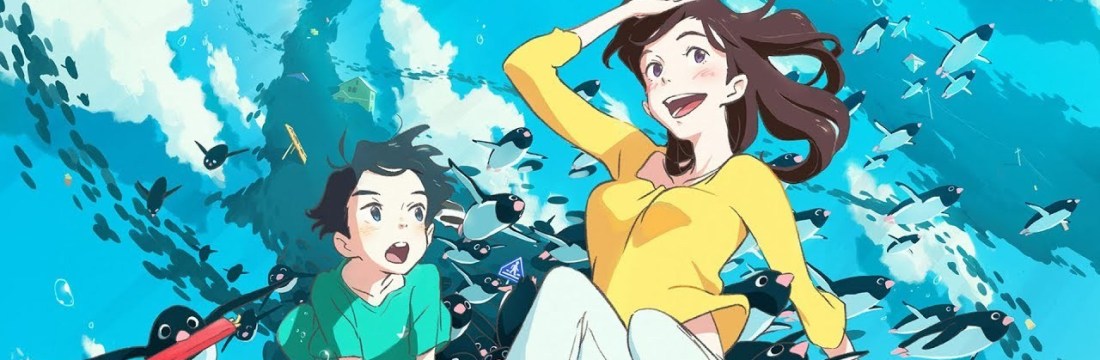
Princess Mononoke Review: My Favorite Studio Ghibli Film.

5 stars
Have you ever watched an anime, no, a film that grips you right from the beginning and has you entranced all the way to the end?
Well, this was my experience watching Hayao Miyazaki’s 1997 anime film Princess Mononoke, two days ago.
I knew right after watching it that it was my favourite Studio Ghibli film so far, and I have been constantly thinking about it since then.
Set in the Muromachi era of Japan, the film centers around Ashitaka (Yoji Matsuda), a young prince who is cursed by a demon that attacks his village.
Instructed by the wise woman of his people, Ashitaka sets out on a journey with his faithful red elk, Yakul, to potentially find a cure for his deadly affliction.

ashitaka and yakul
I liked the bond that was displayed between Ashitaka between Yakul on their adventure.

From here, Ashitaka is pulled into a conflict between the spirits, who watch over the forest, and the humans of Iron Town, lead by Lady Eboshi (Yuko Tanaka).
Among the spirits is a girl named San (Yuriko Ishida), the titular Princess Mononoke, who was raised by a wolf spirit, and has vowed to kill Eboshi.
What I love about this story is how there really is no bad guy.
Both sides of the conflict, that Ashitaka gets caught up in, view the other as evil but both sides also have their own flaws and virtues.
This is a film about perspectives, with Ashitaka stuck in the middle, trying to mediate between the two groups.

San vs Eboshi
Both sides of the battle, whether it be human or spirit, have reasons for what they are doing and it makes their conflict incredibly compelling.

With its focus on nature, Princess Mononoke could have very easily gone the typical environmentalist message route which, while there is nothing wrong with that, has been done quite a lot.
Instead, Princess Mononoke takes a stance on environmentalism I cannot remember seeing before, about hatred and the need for mutual dialogue.
The consequences of not attempting dialogue is apparent through the violence of the movie, which is uncharacteristic for a Studio Ghibli film.
This violence is enhanced by the glorious animation, which had me riveted from the very beginning.
Everything from the action, with its flawless editing, to the slower moments, where we look on in awe, is so well animated.
I was also amazed at how much of it is hand drawn.
It must have taken a lot of effort to get done and the animators deserve so all of the praise for their hard work.

kodama
The animation never failed to take my breath away in Princess Mononoke.
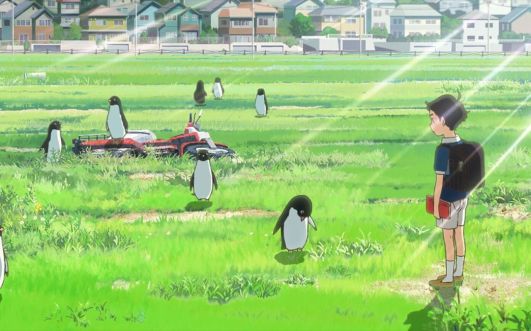
Then there is the music, which is fantastic, serving to enhance the brilliant animation and, in turn, the story and the characters.
Princess Mononoke is a masterpiece.
It is now, not only my favourite Studio Ghibli film so far, but one of my favourite anime films as well.

My Hero Academia Season 4 Episode 22, School Festival Start Review: A Villain’s Love.

4 and a half stars
When Gentle and La Brava were first introduced in My Hero Academia, some anime fans worried that they would be impossible to take seriously because of their goofy nature, especially after the intensity Overhaul brought as the villain, last arc.
However, the 22nd episode of My Hero Academia‘s fourth season, “School Festival”, hopefully showed those who were concerned just how fantastic the two are, not just as villains but as characters.
The Gentle and La Brava vs Deku fight did go by a lot quicker than I thought it would in the anime, lasting only two episodes, however this does not change how fantastic the conclusion of their fight is.
By far the best aspect of it is definitely the backstory and character growth for the two wannabe villains, resulting in a tragic love story ending.
Let’s start with La Brava.
Her backstory shows how the current hero society is unequipped to deal with unusual Quirks.
In La Brava’s case, her Quirk is highly reliant on the love she feels for another person and, because of this, her love was thought to be creepy and she was considered a stalker by the boy she loved.
This caused her to close herself off, clinging only to the internet, and contemplating suicide.
It was then, in her darkest moment, that her “light” appeared.
She stumbled across one of Gentle Criminal’s videos and fell in love with him, vowing to help him carve his name into history.
And Gentle accepted her wholeheartedly, to the point that he even drew dark circles under his eyes so La Brava wouldn’t feel self-conscious about hers.
This flashback expertly brings across many different tones, from dark, like when La Brava considers suicide, to sweet, when Gentle accepts her, and humorous, when the two are shown comedically sneaking away from a police officer.
Their love story then blooms into the reveal of La Brava’s Quirk, Love.
This ability allows her to temporarily power up those she loves by declaring her feelings for them.
The reveal of this, with Present Mic narrating it in a calm voice, as opposed to his over the top loudness, highlights its impact.
And what an impact it has, because it temporarily allows Gentle to overpower Deku.
Only temporarily though, as Deku is back on his feet in seconds, ready to take on a now overpowered Gentle.
From here, the episode transitions into Gentle’s backstory, which is as equally tragic as La Brava’s.
Once hoping to become a hero, Gentle failed every entrance exam he tried at.
One day, he saw someone about to fall to their death and used his Quirk to try and save them, only for this to result in him impeding a hero attempting to save them, resulting in the person being seriously injured.
Treated like trash and kicked out by his own family because of this, Gentle was alone for years, until he came across one of his old school friends who had become a successful Pro-Hero.
Gentle was happy for him, when his old friend revealed he didn’t remember him at all.
Wanting to be remembered, Gentle decided to become a villain instead of a hero.
It is apparent that Gentle has a lot in common with Deku, as both wanted to become heroes and are now fighting for someone’s bright future, Deku for Eri, and Gentle for La Brava.
Deku himself points this out before defeating Gentle Criminal as a sobbing La Brava ineffectively hits him.
Realizing that UA teachers are closing in, and wanting to protect La Brava, Gentle uses the last of his strength to push Deku away to make it look like the fight never happened to make La Brava’s role seem less serious.
Embracing her as the teachers approach, Gentle declares to them he wants to turn himself in, bringing a tragic end to the episode.
I say tragic because, if this episode tells us anything, it is that Gentle and La Brava are not villains.
They are just people who were dealt a bad hand by the society they live in and are trying to change their fates.
Granted, they’re not doing it in a good way but, even so, that does not make them villainous.
They are truly tragic characters and we will learn more about their fate next episode.
The build up to this end was great as well, with not only a fantastic backstory for Gentle and La Brava, but great action sequences as well.
It was not quite as spectacular as it was in the manga but, admittedly, the anime does have a budget to maintain, and it looks like they are actually going to be adapting part of the Pro-Hero Arc this season, which will need great animation, so that’s a reasonable excuse.
As for the beginning of the episode, it just shows the various students and teachers preparing for the festival, which we will also see next episode, along with a scene that I have been anticipating for a while.
“School Festival Start” is another great episode of My Hero Academia, which proves that, while Gentle and La Brava are a little hard to take seriously initially, they are some of the best villains of the series.

My Hero Academia: Heroes Rising Review. A Plus Ultra Movie.

4 and a half stars
Going to see My Hero Academia: Heroes Rising last night was probably the most interesting experience I have ever had when seeing a movie in theaters.
There were so many people in cosplay, many of them jumping around in excitement and shouting out to one another, before the film started.
I was honestly scared that they were going to ruin the movie for me by shouting throughout the runtime but, thankfully, when it started, they quieted down, except for a few occasional cheers.
A good thing too because My Hero Academia: Heroes Rising is a great time that any fan of the anime should see.
Although, anime only fans should know that there are a few light spoilers for where the series will go because the story takes place a little bit further in the manga.
Directed by Kenji Nagasaki, The movie takes place on Nabu Island, where Class 1-A are taking part in a training program by helping out the people of the island in their daily lives.
However, when the villain Nine (Yoshio Inoue), who has multiple Quirks, attacks the island in search of  a young boy, the heroes in training must band together to stop him, with no hope for backup.
For starters, my favourite thing about Heroes Rising is definitely how it uses its characters, especially Deku (Daiki Yamashita) and Bakugo (Nobuhiko Okamoto), who take center stage in their efforts to save the target of Nine, Katsuma Shimano (Yuka Terasaki), and his sister Mahoro (Mio Imada).

bakugo and deku
Deku and Bakugo are the highlights of the film, with their rivalry having come a long way since season one.

It is not just them though because almost every member of Class 1-A is given a moment to shine in this film, creating some terrific action sequences.
This results in the epic final battle of the film, which is among the most glorious animation I have ever seen.
It is also set to the moving song, Might⁺U, that was recently in the anime when Deku saved Eri.
As for the villain of the film, Nine, he is not given much of a backstory so, unfortunately, him and his minions are not that interesting from a character perspective.
Thankfully though, they make up for it through the threat level they possess.

Nine
Nine is definitely a threatening villain, even if he is not that interesting as a character.

Along with Nine’s slightly lacking character, another minor flaw I found with the film is that it does pull a few things to make sure its events are never mentioned again in the anime.
This does make sense but some of the ways the movie goes about it do feel a little abrupt.
Aside from these minor problems, My Hero Academia: Heroes Rising is an absolutely fantastic film with a lot of great character moments, humor, and an awesome final battle.
Apparently, the ending to this film was the original ending Kohei Horikoshi had in mind for the manga but he changed it so decided to put it in here.
And, given how great this ending is, I cannot wait to see how he actually plans to end My Hero Academia. 

Spirited Away Review: Masterful But Not Quite a Masterpiece.

4 and a half stars
When you think of Studio Ghibli, what immediately comes to mind?
I am pretty sure that at least 90% of you instantly thought of Spirited Away, the 2001 Hayao Miyazaki film that is hailed as being one of the greatest anime of all time.
I remember watching Spirited Away once when I was very little, but I had not watched it since then so the film was definitely a new experience for me, going in.
And what did I think?
Well, Spirited Away is certainly a masterful film but I would not call it a masterpiece.
The hero of this story is the young Chihiro (Rumi Hiiragi), who is thrust into a magical world full of Yokai, when her parents are transformed into pigs.
She must then find a way to save her parents and get back to the real world, all while working at a Yokai bathhouse; a strange combination, I know.

no face
Chihiro meets a lot of strange and interesting spirits on her journey.

What’s striking about Spirited Away is its amount of creativity, with multiple interesting Yokai that lead to entertaining interactions between them and Chihiro.
This includes the Yokai No Face (Akio Nakamura) and, in particular, a foul smelling river spirit, in a scene that provided some big laughs through Chihiro and the witch Yubaba’s (Mari Natsuki) facial expressions.

Chihiro and Yubaba
The river spirit scene is definitely my favourite of the film because of how funny it is.

Speaking of Yubaba, I thought that the witch would be the villain of the film, however, much like Dola from Castle in The Sky, she turned out to be a far more complex and interesting individual than I first thought.
Another surprise for me is the connection to another Miyazaki filmwith the soot Yokai from My Neighbor Totoro making an appearance.
What was not a surprise though, because of how much praise the film has had, is how emotional the story gets at times.
This is mostly achieved through the great voice acting of Rumi Hiiragi as Chihiro.
Along with this, the animation is also solid as it contributes greatly to the emotion of the film.

flowers
The animation of Spirited Away is well done, with a lot of striking visuals.

But, like I said, I do not think Spirited Away is perfect.
In my opinion, a certain storyline about the character of Haku (Miyu Irino) felt rushed and some characters befriend Chirhiro way too quickly, since they were antagonizing her a few minutes before.
It these kinds of things that keep Spirited Away from being a masterpiece, in my mind.
It is still an excellent film though, and I would probably rank it as on par with Castle in The Sky as the best Studio Ghibli film I have seen so far.

My Hero Academia, Season Four, Episode 21, Deku vs Gentle Criminal Review: The Gold Tips Imperial Pays Off.

4 stars
Who would have thought that tea would be a villain’s undoing?
Joke’s aside, Gentle really screwed up talking with Deku because of his obsession with Gold Tips Imperial.
The tea that was the title of the last episode paid off here, as it allowed the training hero and the trying criminal to come to blows in the 21st episode of My Hero Academia’s fourth season, Deku vs Gentle Criminal. 
However, before encountering Gentle, Deku still had to prepare for the fight, even though he didn’t know he was preparing for it.
Enter Hatsume, who made Deku gloves, which allowed him to better use the ability All Might taught him, to release a large amount of One For All’s power the moment he flicks his finger.
Another thing that came in handy was Mina’s dance moves, which she taught Deku, allowing him to move quickly in his fight with Gentle.
It’s genuinely cool how seemingly unimportant things, like dance moves, can have such a big impact on fights in My Hero Academia. 
Said fight begins with a moment of chance, as Deku stumbles into Gentle and La Brava when he is getting a rope for Class 1-A’s performance at the Cultural Festival.
It is here that the mention of Gold Tips Imperial sets Gentle off, leading to both him and Deku realizing who the other is in a brilliant scene scored by Gentle’s ridiculous (in a good way) score.
Upon realizing who he is talking to, and that Gentle is most likely going to attack the festival, Deku goes on the attack, ordering him to stay away from his school.
And so the fight begins, with Gentle’s elasticity quirk being revealed.
This quirk comes in handy as Gentle is able to use it to get one up on Deku multiple times.
We also get a brief hint about Gentle’s past because, upon Deku mentioning the festival, Gentle also reveals he also took part in such things as a student.
This hint at his backstory will almost certainly be expanded upon in the next episode, as well as La Brava’s past, and I cannot wait to see that.
Their backstories takes these two almost too ridiculous to take seriously villains and makes them human to us.
Despite the relatable aspect of Gentle and La Brava though, they are still quite hilarious with the two of them delivering many great gags in this episode.
It kind of felt like I was watching a Looney Tunes episode at times.
Although, this does make for a weird contrast when the episode suddenly got serious at the end, what with the intense music and La Brava wondering if she will have to use her quirk.
Still, it did make me eager to see the next episode.
Overall, Deku vs Gentle is an exciting episode that brings a fair amount of both humor and action to keep the viewer engaged.

My Neighbor Totoro Review: Fun Slice of Life for the Family.

4 stars
One of Studio Ghibli’s most well known films, My Neighbor Totoro has become so iconic that the titular giant, cuddly spirit, Totoro, has become synonymous with the studio.
So, with its fame, it was naturally the next Ghibli film I had to watch after the fantastic Castle in the Sky.
And, while I liked Castle in the Sky more, My Neighbor Totoro is still a good film for very different reasons.
Once again directed by Hayao Miyazaki, the film follows two of the probably most energetic kids ever animated, sisters Satsuki (Noriko Hidaka) and Mei (Chika Sakamoto), who move with their father (Tatsuo Kusakabe) to the countryside to be near their sick mother, who is in a hospital.
There, they come across many friendly spirits, most notable of which is, of course, Totoro (Hitoshi Takagi).

kids and totoro
Upon meeting Totoro, Satsuki and Mei get involved in a lot of hijinks.

What follows is a slice of life film that is full of plenty of laughs and feel good moments.
This is much more tame and kid oriented compared to Castle in the Sky, not that there’s anything wrong with it because a lot of the child friendly humor had me chuckling.
Honestly, I found the kids reactions to the spirits to be the best part of the film.
The scene where Satsuki first meets Totoro at a bus stop in the rain is quite humorous in how she reacts to seeing the big guy.

totoro
Probably the most famous scene of the film, the bus stop scene, is also the best part of the film.

The animation is also solid, although I did feel the story took a while to actually get going, even if I was entertained by the character interaction.
But, once Totoro is finally introduced, the film picks up with plenty of heart warming moments.
I have to ask though, did anyone else get a little creeped out by the giant cat bus, or was it just me?
Jokes aside, My Neighbor Totoro is another solid Studio Ghibli film, with the iconic character of Totoro bringing a lot of highlights.

Attack on Titan Chapter 127, The Night of the End Review: Major Death Flags.

4 stars
After the extremely rushed Chapter 126, many Attack on Titan fans, including myself, were concerned about the direction Hajime Isayama was taking the manga’s ending.
Well, thankfully, Chapter 127, “The Night of the End” seems to have significantly lessened those fears.
The chapter is a return to form, with the much needed tension between the characters that was missing in “Pride” being put on full display.
This building tension is made readily apparent by the full page spread of the alliance of Scouts, Warriors, and Volunteers around a campfire in their own separate groups.
This lead to many fantastic moments, among them small confrontations between Mikasa and Annie, and Jean and Magath.
Magath was the real surprise confrontation this chapter because I thought he had come to accept Eldians as his allies, for the most part.
However, with his attempts to justify the conflict between Paradis and Marley this chapter, Iayama has made it clearer than ever that he has a long way to go.
Still, he looks to be on the right path by the end of the scene, as he attempts to help Gabi, only to stop himself and consider his actions.
Speaking of Gabi, she stood out as a peacemaker at the end of the scene, with her protecting Reiner from Jean’s attack, and her and Falco begging the Scouts to help them stop the Rumbling.
Hange also played the role of peacemaker in “The Night of the End”, although to a much more hilarious degree, with her trying to maintain order by offering everybody soup.
Her direct opposite this chapter is Yelena, who Pieck reveals is actually a Marleyan who crafted a story about her being from a country that was conquered by Marley to make her seem more grand.
After this revelation, Yelena goes about stoking the flames of antagonism between the group, bringing up all of their crimes against one another.
She hits a particular nerve when she mentions Marco, which leads into Reiner and Annie explaining the truth about his death to Jean, telling him that Marco’s last words were “we still haven’t talked”, which is extremely relevant now.
We also get to learn some interesting facts about the aftermath of Marco’s demise, as Reiner reveals that, due to the split personality he had following the murder, Reiner killed the Titan out of guilt.
This is not enough to placate Jean though, who attacks Reiner, getting a few good punches in before Connie and Armin pull him away.
Gabi then shields Reiner, ending with her getting kicked in the face, before begging the scouts to help stop the Rumbling, as I mentioned before.
And to end this tense standoff, Isayama of course inserts some humor, with Levi waking up and telling the alliance that they are being “so noisy.”
Overall, this scene was fantastic and exactly what we needed after the complete lack of tension between the characters in Chapter 126.
The standout of the scene is definitively Jean, whose character growth is so great in this chapter that he has easily climbed up on my favourite characters list.
He is the main character of the chapter right from its opening moments, where he imagines what his life would be like if he just accepted the Rumbling and lived the good life.
He even imagines himself with a wife and children, the wife baring an uncanny resemblance to Mikasa.
By the end of the chapter, Jean has thrown this dream away to fight to stop the Rumbling as Marco would have wanted him to.
Unfortunately, all of this development for Jean is giving him some major death flags, especially with it looking like the alliance will face Floch in the next chapter.
Floch essentially represents what Jean could have become so it makes sense for the two to face off and I have a feeling it will result in both of their deaths.
Another character with death flags this chapter is Hange, who has a moment very reminiscent of when Erwin appeared to hallucinate his dead comrades in the Return to Shiganshina Arc.
Given that Erwin later died, the fact that Hange experiences this, along with Jean, is very concerning.
Death flags aside, this scene between Jean, Hange and Miaksa is very welcome because it explains one of the plot holes in Chapter 126 about how Jean and Mikasa met up with Hange.
Unfortunately, the chapter does not fix all the flaws of “Pride”, because we don’t get a flashback to Annie meeting with Armin or an explanation about how they met up with Hange and the others.
Still, at least some of the problems with the previous chapter have been fixed.
Back to the scene between Jean, Hange and Mikasa, there are two other things about this moment that I appreciated.
The first of these is Mikasa announcing that she believes they have to stop Eren.
It appears that she is finally taking Armin’s advice to think for herself and I hope to see this continue.
The second feature I appreciated was the small argument between Jean and Hange about what they would do if they stopped Eren to prevent the rest of the world from destroying Paradis.
While I did find it disappointing that Hange had no real plan, it is nice to see that Isayama knows that if Eren is defeated then the outside world would still not leave the island alone.
So, just defeating Eren is not going to be enough to keep the Eldians safe.
The final scene of the chapter sees the alliance heading to the harbor to take Kiyomi’s plane to stop Eren, as I predicted.
However, in a brilliant move, Floch has already realised their plan and moved the Yeagerists to guard the harbor and stop the alliance, holding Kiyomi hostage.
This looks like a job for Keith No-Longer-A-Bystander Chadis!
In all seriousness, it will be interesting to see what role Keith (if he was the man watching the alliance from the window) has to play in fighting the Yeagerists.
I also wonder what Kiyomi will do in this situation?
She can’t just be in the story to provide the plane so she must know something, right?
In any case, it looks like in the next couple chapters we will get Floch as the penultimate boss fight of the series.
Let’s just hope that Jean and Hange don’t bite the dust beating him.
As for any criticisms I have towards the chapter, one of the big ones is that I would have liked it if we had got a few more moments of tension and self reflection with the characters.
For example, we do not see Pieck and Magath’s reactions to Porco and Colt’s death, nor Reiner to Sasha’s, and Falco still does not seem to be all that bothered by the fact that he accidentally killed his brother.
Then there is Levi, who still has not called Annie out for killing his squad, but he was unconscious for almost the entire chapter so I can let that one slide.
All in all, “The Night of the End”  is a great improvement from Chapter 126.
It delivered on the much needed tension between the characters, gave fantastic character development for Jean, and set up both the coming fight with Floch and, most concerning of all, possible death flags for some characters.

My Hero Academia Season Four Episode Twenty, Gold Tips Imperial Review: So, Mineta is the Worst.

3 stars
“Gold Tips Imperial”, the 20th episode in My Hero Academia’s fourth season, started off well with a great joke centering around Eri and Miro (as seen above)… only to follow it up with the worst joke of the entire series.
Seriously, Mineta telling Eri he will probably like her when she is ten years older made me want to throw up.
Is having a character say they will only care about a traumatized little girl if they become attractive when they get older supposed to be endearing?
Because it’s not.
I wish they had removed the joke.
It wasn’t funny in the manga and it definitely isn’t funny in the anime.
As for the rest of “Gold Tips Imperial”, it is a decent episode that sets up more events in the Cultural Festival to come.
Although, will say that even though the Mineta joke at the beginning is terrible, a lot of the jokes that come afterwards make up for it.
For example, the moment when a serious looking, sun glasses wearing Mina tells Deku that he has been fired, only to immediately clarify that he has been transitioned into another job is quite funny.
The funniest part of the episode though is the gags about Class 1-B, with Monoma declaring their play is named Romeo, Juliet and the Prisoner of Azkaban: The Return of the Kings.
I’m so glad this joke did not get cut because of copyright because it gets a big laugh.
Another moment that gets a laugh is the recurring joke where Monoma gets whacked on the head by one of his fellow classmates after he gets carried away again.
This then leads into the reveal of the beauty pageant preparation where Nejire is going all out to try and win this year.
The episode goes full fan service with Nejire here, resulting in even Deku getting flustered.
Jokes aside, we got to see a lot of old characters again this episode, like Hatsume and even Shinsou, briefly.
Hatsume in particular had a big role, interrupting All Might training Deku where All Might reveals he once used support gear.
This leads into another funny moment when Uraraka is freaked out by Deku frantically searching for a video of All Might in support gear, calling himself a failure for not having seen it before.
However, this results in Deku accidentally watching Gentle and La Brava’s video, which will have a big impact in the next episode.
Speaking of Gentle and La Brava, once again they are the most entertaining parts of the episode, with our first look into their backstories, as La Brava is revealed to have hacked Gentle’s address to find him and wants to help carve his name into history.
The relationship between the two is genuinely sweet and quirky, and I cannot wait to see the rest of their backstory unfold.
They also get a lot of laughs, as Gentle struggles with basic technology and needs La Brava’s help.
Overall,  “Gold Tips Imperial” is a standard episode of My Hero Academia. 
It is mainly set up with probably the standout moments being the great gags and La Brava and Gentle’s scene.
Although, the Mineta joke certainly brought the episode down for me.

Castle in the Sky Review: The First Indicator of Studio Ghibli’s Greatness.

4 and a half stars
With many of Studio Ghibli’s films having come to Netflix, I figured that now was the perfect time to watch them for the first time.
And what better film to start with than the studio’s first film, Castle in the Sky?
Directed by the great Hayao Miyazaki, the 1986 film follows two children, Pazu (Mayumi Tanaka) and Sheeta (Keiko Yokozawa) on their journey to find Laputa, the legendary floating island.
With Sheeta being pursued by both the military and a family of pirates, Pazu vows to protect her, and thus begins an adventure that is a magical experience.
Despite being decades old, the animation of Castle in the Sky is still great, with the OP using an art style that is unique compared to the rest of the film and really stands out.

Op castle in the sky
Castle in the Sky has a lot of excellent animation moments, especially in the OP.

Other outstanding animation moments include the reveal of Laputa itself and a particular shootout during the film’s midpoint.
Along with the animation, the characters are also especially endearing.
Pazu and Sheeta are both relatable and you root for them the whole way through.
But my favourite character is definitely Dola (Kotoe Hatsui), the leader of the pirates pursuing Sheeta.
Originally, I thought she would turn out to be a one dimensional antagonist but this perception was quickly proven wrong when she took on an unexpected role in the story that made her all the more likeable.

Dola
Dola appeared to be a one note villain upon her introduction but quickly became the film’s most likeable character, for me.

Unfortunately, the same cannot be said for the main villain, Muska (Minori Terada), who is as one dimensional as they come.
Thankfully, the other characters are nowhere near as bad, with even some of the side characters having stand out moments, like Pazu’s boss.
Overall, Castle in the Sky is a very enjoyable film with great animation for the time, an interesting plot and memorable characters.

Pazu and Sheeta
All in all, Castle in the Sky was a great film for Studio Ghibli to start off with, as it serves as an indication of the quality films to come.

I cannot wait to watch the rest of the Studio Ghibli films on Netflix, which you can expect to see my reviews of after I watch them.


Death Parade Review: Not a Very Cheerful Parade.

4 and a half stars
The anime club at my university recently started and, during our first meeting, we watched the first episodes of five anime, three of which we would choose to watch for the rest of the semester.
One of these anime was Death Parade, directed by Yuzuru Tachikawa, and of all the anime we watched that night it was by far my favourite.

episode 1 second attempt
The first episode, “Death Seven Darts” does a great job setting up the theme of the series, along with its characters and structure.

Imagine my disappointment then when Death Parade was not one of the anime that was selected.
Although, I suppose this did turn out in my favor because it gave me the opportunity to binge the 12 episode series over three days.
And, let me tell you, despite what the fantastic OP would have you believe, this anime is anything but a cheerful parade.
Death Parade is mostly set in Quindecim, a bar where many people turn up with no memory of what happened, only to meet the mysterious bartender Decim (Tomoaki Maeno) and his new assistant (Asami Seto).
Decim reveals to his guests that they will have to play a game by roulette of which their very lives will be stake.

decim
Decim and his, at first, unnamed assistant have a great dynamic, especially when it comes to the morality of Decim’s job and how the assistant deals with that.

To say anything more would be to spoil the twists of the first episode, which, although expected, I don’t wish to ruin because of how good the anime is.
With Death Parade‘s episode structure, it would have been very easy for the show to become repetitive but it almost never does with its great leads in Decim and the unamed woman and plenty of memorable side characters.
This culminates in many fantastic episodes like “Death Counter”, which is incredibly engaging in its mysteries and twists, and the final episode “Suicide Tour”, which really gets the tears rolling with its emotional climax and fitting ending.

Sad Decim
Prepare for a whole lot of tear jerking moments in the final two episodes.

One criticism I do have with the anime, though, is how often it is brought up that a certain group of characters cannot feel emotions, only for them to be clearly displaying emotions, with one of these characters almost always being angry.
Granted, I do not speak Japanese so the meaning of emotions could be very different in the language context so I could just be misinterpreting this.
Still, Death Parade is a great anime with plenty of memorable characters and tragic scenes.
Just don’t mistake it for the happy looking show that the OP makes it out to be.