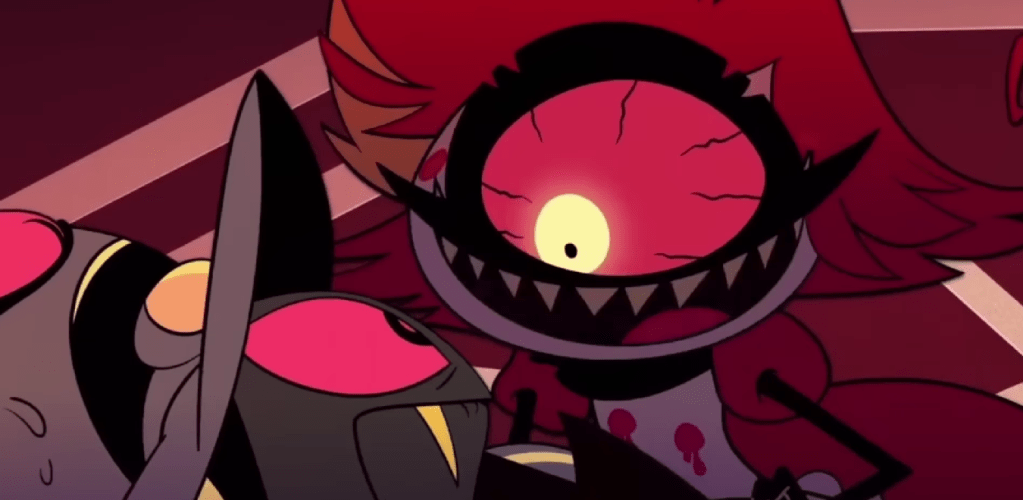
There have been a lot of breaks with Chainsaw Man Part Two but, thankfully, there was not one between Chapters 153 and 154, “Chainsaw Man Hunters” and “All Pets.”
They are, as usual, brief chapters, although they both highlight the characters.
In particular, Chapter 153 shows how great of a character Nayuta is, while Chapter 154 shows how useless Fumiko is.
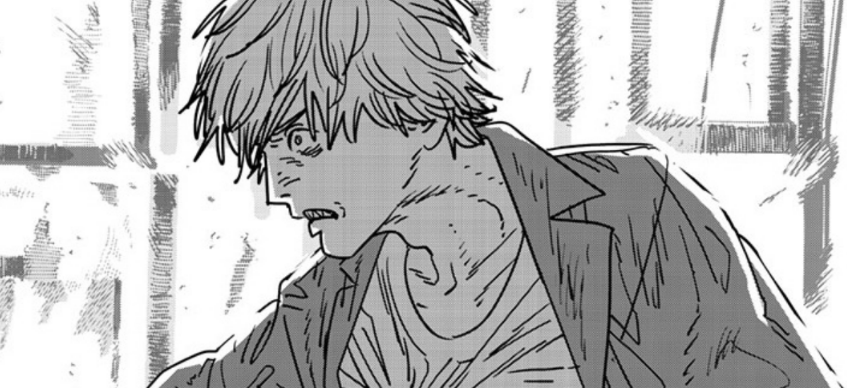
Chapter 154, “Chainsaw Man Hunters” begins in the aftermath of Denji defeating the Weapons.
Now severely wounded, he faces another threat, this being the ire of the public.
As expected, many of them are terrified of him now because of the attacking Chainsaw Man clones.
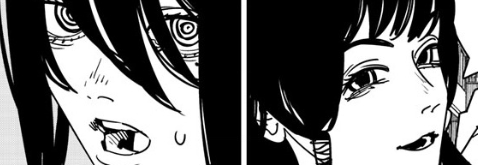
Despite Nayuta and Fumiko’s protests, the angry mob attacks Denji, throwing a net of barb wire over him and then attempting to set him on fire.
Fujimoto has done an excellent job of showing how the public has turned against Chainsaw Man out of fear.
They do not listen to reason, many of them wanting to save their own loved ones, and when Denji defends himself, it only cements his danger in their minds.
The woman who led Nayuta away in the previous chapter attempts to get her to safety, but Nayuta protests, declaring Chainsaw Man her family.
The woman insists he is not her family anymore, calling Denji a “thing” as we see a panel of him being brutalized by the mob while laughing.
We then get my favorite panels of the chapter, where the mention of family causes Nayuta to remember Denji displaying just how much he loved her in a previous chapter.
Nayuta’s decision to save her family is clear as day in the following panel, and she uses her control powers to take over the mind of the woman trying to pull her away.
The chapter then ends with the controlled woman and Nayuta screaming, “Run Chainsaw Man!”
“Chainsaw Man Hunters” is a solid chapter, which elevated my love for Nayuta’s character.
However, if Chapter 153 made me love Nayuta more, Chapter 154 brought my opinion of Fumiko to rock bottom.
Beginning with Nayuta taking over more people to help Denji, Chapter 154 “All Pets” has her turn to help from Fumiko next.
However, Fumiko is completely unwilling to help, stating that “risking my life falls outside the scope of my job.”
Newsflash, Fumiko: If you’re not prepared to risk your life defending someone, then you should not be a bodyguard in the first place.
If this were not bad enough, Fumiko makes herself look even worse by dismissing Nayuta declaring that her family just died.
“Weren’t they just pets?” she asks Nayuta, without a shred of sympathy, before making her escape.
After that display, I would say that Nayuta calling Fumiko a “diarrhea woman” is completely fair (and also hilarious).
But seriously, what has Fumiko even done at this point?
She groped Denji when they first met without his consent and has proven to be a spectacularly terrible bodyguard.
She did not help Denji during the karaoke brawl for most of the fight, spied on him taking a dump, and now abandoned him and Nayuta with barely any effort to help them.
And yet she claimed in a previous chapter that she could protect them?
If I was Yoshida, you can bet Fumiko would be out of a job with her awful track record.
Unless Fumiko leaving is some kind of bait and switch (which I doubt considering her harsh words to Nayuta), then she is easily Chainsaw Man‘s most useless character.
With Fumiko now gone, Nayuta loses control of the crowd, and they quickly turn on her, with an injured Barem stoking the flames.
Before being completely surrounded, Nayuta manages to get control of one person to rescue Denji, using this person to tell him he was wrong about not needing her.
I do have a hard time believing Denji could get away when he was completely surrounded before, but I guess the crowd’s attention had turned towards Nayuta.
The Control Devil’s last stand then begins, with Nayuta taking over more people to defend herself.
It is not enough, however, and she is quickly overwhelmed.
In a last attempt to save herself, Nayuta screams that she is just a kid.
Thankfully, the angry mob has just enough morality left to hesitate.
Barem, on the other hand, has no such morality, aiming a gun at Nayuta.
“All Pets” then ends, leaving Nayuta’s fate up in the air for another two-week break.
For these past two weeks, I have been wondering if Nayuta will survive.
I hope so because she is quickly becoming one of my favorites.
Although, Fujimoto has certainly not been afraid of killing beloved characters before, and Nayuta’s last words to Denji really felt like a goodbye, so it could happen.
When we get the next chapter tomorrow, I will have my fingers crossed that someone will save her.
Who knows, maybe Asa and Yoru will finally return to save Yoru’s sister?
If Barem does kill Nayuta though, I will be all abord the “Denji better kill him” train.
“Chainsaw-Man Hunters” and “All Pets” are both enjoyable chapters for how brief they are.
I would say I prefer Chapter 153 because of how great Nayuta was, while Chapter 154 made me wonder what the point of Fumiko’s character was.
I hope Nayuta survives in the next chapter, tomorrow.
Author: thereviewmonster
Hazbin Hotel Season One Review: One Helluva Musical.
I first became aware of Vivienne Medrano (Viziepop) when YouTube recommended me the Helluva Boss pilot.
After binging the web series, I moved onto the Hazbin Hotel pilot and was surprised by the fanbase it had amassed, despite only having a single episode.
Due to the pilot’s popularity, Viziepop was able to get the series picked up by A24, with it eventually airing on Amazon Prime; the final two episodes having aired yesterday.
I have to admit, it is quite inspiring to hear of all the hard work it took to get Hazbin Hotel to the point it is now, and Viziepop and her team have definitely earned the show’s success.

But, after so much hype for it, how is the actual series?
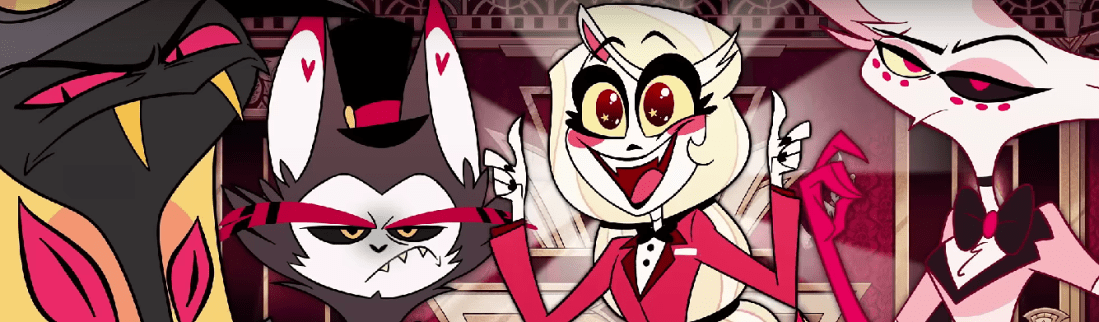
Hazbin Hotel follows the Princess of Hell, Charlie Morningstar (Erika Henningsen), who wants to stop Heaven’s yearly Extermination of sinners.
Her plan is to start the titular Hazbin Hotel, a place dedicated to redeeming sinners so that the Angels will not have to kill them.
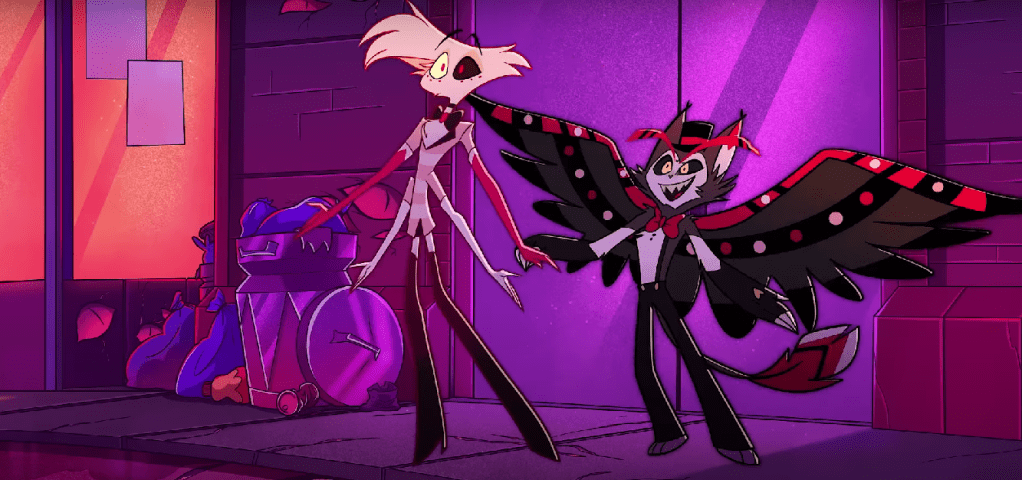
Helping Charlie is her girlfriend Vaggie (Stephanie Beatriz), Hell’s biggest porn star Angel Dust (Blake Roman), the mysterious Radio Demon Alastor (Amir Talai), his servants Husk (Keith David) and Nifty (Kimiko Glenn), and the snake demon Sir Pentious (Alex Brightman).
The story follows these and many other characters in Hell’s misadventures, and almost each and every one of them are well designed and interesting.
My favorites of the bunch is definitely Alastor as, just like in the pilot, his sketchy nature and unclear motives mix excellently with his entertaining personality.

But by far the best part of Hazbin Hotel are the musical numbers.
Yes, the series is a musical and pretty much every number is a hit.
Songs like “Happy Day in Hell”, “Stayed Gone”, and my personal favorite “Loser” are all excellent and they played in my head for days after first hearing them.
It got to the point that, every time an episode was about to air, I looked forward to hearing what the next musical number would be.

These vibrant characters and fun musical numbers are aided by mostly solid animation throughout.
There are a few dips in quality, like in the first episode where Vaggie disappears from where she was standing beside Charlie.
Aside from this and a few other issues, the animation is quite well done, especially in Episode Eight when the action pops off.
One thing I was worried about going into Hazbin Hotel was the humor.
Although I laughed at a few of the jokes in the first couple Helluva Boss episodes, it has been a long time since I laughed at any of the humor in recent episodes.
It just felt most of the jokes just boiled down to demons swearing and saying sexual things, so I was worried Hazbin Hotel’s humor would be the same.
Thankfully, the comedy in the series mostly lands, with the jokes surrounding Nifty’s craziness always making me bust a gut laughing.

Unfortunately, even though the humor works, this does not mean Hazbin Hotel is without its issues, especially when it comes to the pacing.
I would argue that the first season’s eight-episode length is its biggest issue.
Because of this short time to tell the story, it feels like we are missing multiple moments of character development.
Angel’s self-improvement mostly happens off screen, and Charlie acts like she trusts Alastor one episode and distrusts him the next.
Along with this, characters like Carmilla Carmine (Daphne Rubin-Vega) and Emily (Shoba Narayan) get these big emotional beats when we are just getting to know them and don’t have time to adjust.

If Hazbin Hotel had got twelve or thirteen episodes, like most animated shows these days, I think the quality of the story could have been a lot better.
Hopefully with the series’ impressive success, it will convince A24 and Amazon Prime to greenlight more episodes for Season Two so this problem will not be repeated.
Other than the pacing, I quite enjoyed Hazbin Hotel.
The characters are great, the humor usually lands and, of course, the musical numbers are catchy as all hell, pun intended.
I’m already looking forward to Season Two and hope it can improve upon the issues of the first.
Avatar: The Last Airbender Trailer Breakdown: The Quenchiest Trailer.
The first trailer for Netflix’s live-action adaptation of Avatar: The Last Airbender did an amazing job of hyping up fans for the show.
Now, we finally have the second trailer, which easily topped it.
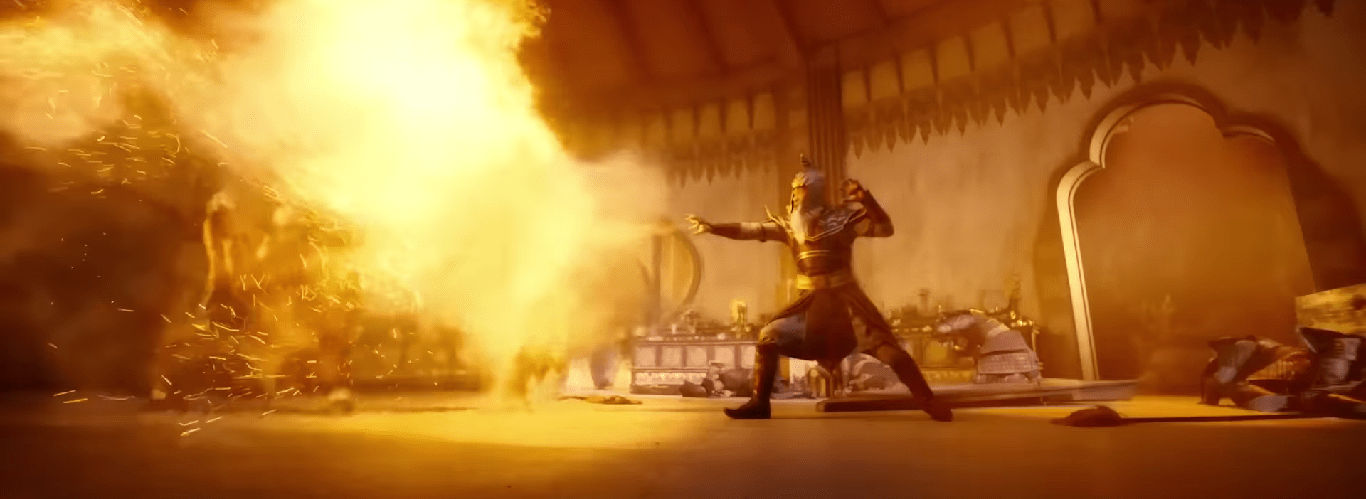
The first part of the trailer seems to be narrated by Monk Gyatso, who we then appear to see briefly fighting Fire Lord Sozin during the Air Nomad genocide.
From the brief shot we get, it looks like Gyatso has subdued many attacking Fire Benders before Sozin intervenes.
Seeing Gyatso’s last stand will be a great addition, since we did not get to see it in the original cartoon.

The trailer then shows Aang being freed from the iceberg, which is much more explosive than in the cartoon’s first episode.
The music from the original show also kicks in here, bringing a comforting feeling of nostalgia.
From here, we get a brief look at the performances we will be getting for the show.
Kiawentiio sounds good as Katara, and Ian Ousley seems to be a perfect live-action Sokka, with his bits of comic relief.
Dallas Liu also looks great as Zuko, and we get shots of him rescuing Paul Sun-Hyung Lee’s Iroh.
We also see Azula using a bow and arrow, which is interesting because I don’t think she ever used one in the original show.
They could just be holding off on showing her blue fire until the second season.
As for Gordon Cormier, he seems to play Aang’s uncertainty of his destiny well, as we see him being comforted by a wonderfully animated Appa.
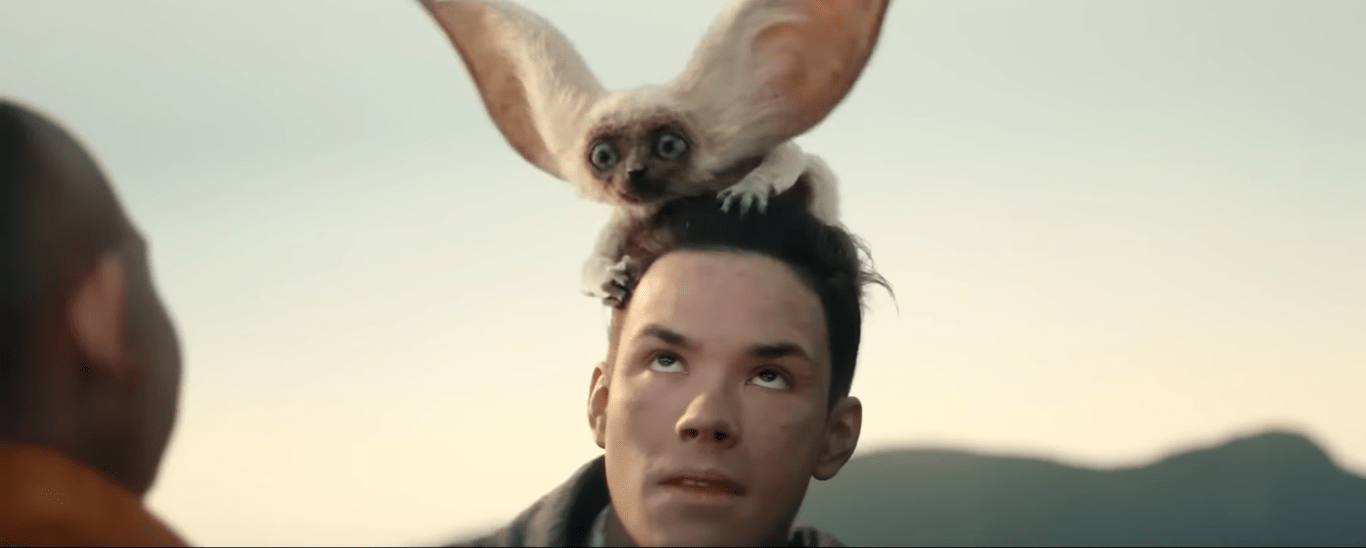
Momo also looks great when he jumps on Sokka’s head in another solid comedic bit.

The trailer then shows us brief shots of many characters from the original.
We see June, Hei Bai, Zhao, and Aang fighting alongside the Blue Spirit.
There are even hints of some of the conjoining storylines we will get in Netflix’s version of the story.
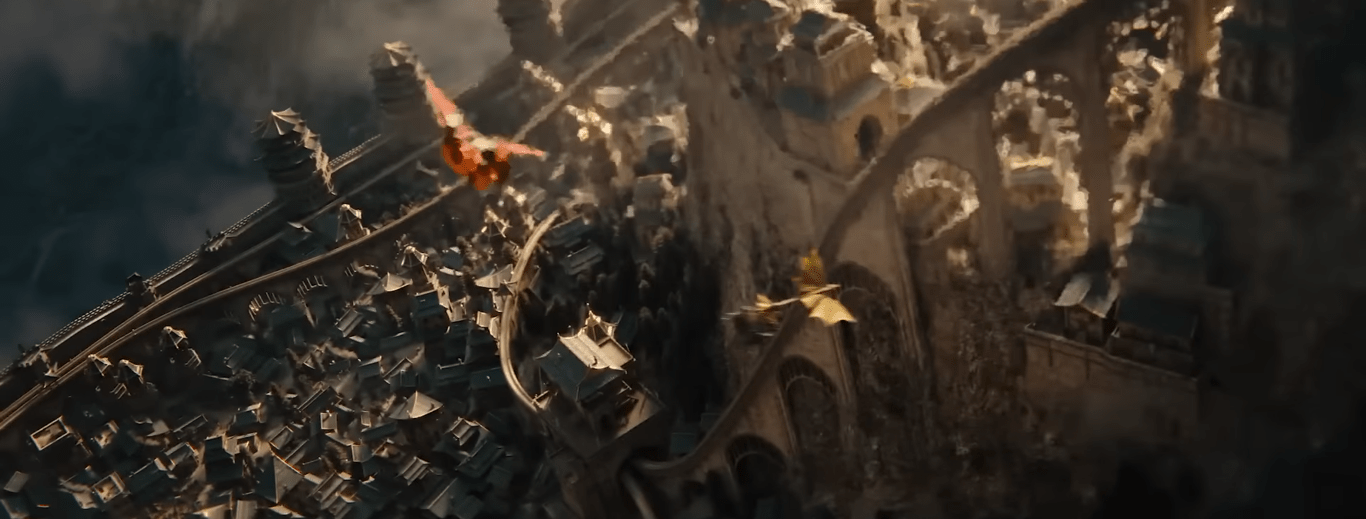
For example, we see Aang flying with Teo but, rather than being at the Northern Air Temple, they are clearly in Omashu, where Bumi’s storyline takes place.

Speaking of Bumi, we also see him briefly fighting with Aang.
The shot of him doing this is intercut with many other action shots, which flow togethor beautifully in a fantastically edited moment.
It’s the best moment of the trailer, which shows off the fighting styles of characters like Bumi, Aang, Zuko, Katara, Sokka and Jet perfectly.

The trailer then ends with the iconic music playing over Aang going into the Avatar State at the Southern Air Temple.
The first trailer for Netflix’s Avatar was great, but this second trailer brought my excitement to a whole other level.
My only criticism is that there is one CGI shot of Aang accidentally Airbending himself into a statue which looked a bit dodgy.

Otherwise, this trailer was perfect.
The CGI was mostly pretty good, the acting looks fun, and the action was edited to flow into the trailer nicely.
I am now more excited for this show than ever.
February 22nd cannot come soon enough.
Chainsaw Man Chapter 152, Massage Review: Revenge Best Served Bloody.
Chapter 151 of Chainsaw Man ended on the ominous note of Denji laughing after finally transforming into the titular Devil.
The disturbing feeling this cliffhanger left us on definitely builds well into Chapter 152, Massage, where we see Denji’s complete mental breakdown.
The chapter begins with a panel showing off Chainsaw Man in his demented glory, before revealing that there were plenty of witnesses to the transformation.
These witnesses think Denji is just another Chainsaw Man wannabe, but I think this impression is definitely proven wrong to them by the end.
Having got what they wanted, the Weapons release Fumiko and begin their own transformations.
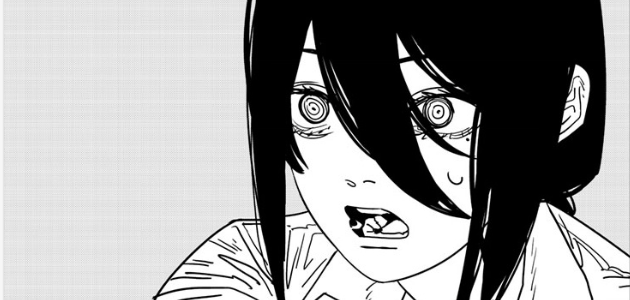
As this is happening, Nayuta tries to get Denji to run away with her, but he callously tells her to get out of his way.
The panel of Nayuta’s shocked expression when Denji says this is excellently drawn by Fujimoto.
Nayuta is led away by a woman in the crowd and Denji begins talking to Pochita again.
He states that he is the worst because, despite his apartment being burned down with his pets supposedly inside, he still feels “like a million bucks’ because he gets to be Chainsaw Man again.
What follows is, unfortunately, a messily drawn fight.
Before this point in the chapter, the art was actually really good, but when it gets to the action it is pretty hard to tell what is going on.
Perhaps Fujimoto wanted to make the fight chaotic to show the danger of Denji’s transformation?
If that was his intent, I would say that he did too good of a job.
Still, despite this fight being hard to understand in certain panels, I would still not call it bad because we can get the general gist of it.
Denji is stabbed from behind by the Spear Hybrid but then bisects the both of them so he can start to eat him.
When the Whip Hybrid tries to intervene, Denji does the same to her, while she begs Sugo to help.
It is kind of funny seeing the Weapons be so overconfident in the previous chapters, only to now be dealt a hand of extremely bloody revenge.
Sugo does attempt to fight Denji, but this goes as well as you would expect, with both impaling each other, although this clearly affects Sugo more than Denji.
Nayuta tries one more time to convince Denji to flee with her, but Denji instead says she should not be around him anymore, resulting in another gutting panel of Nayuta’s reaction.
Denji then compares the fight he is having to a massage, “where it hurts just right, and damn do I feel good!”
A chapter then ends on Denji’s maniacal laughter for the second time.
“Massage” is yet another great chapter for Chainsaw Man.
My only issue is that some of the action is hard to follow.
Otherwise, it delivers both satisfying karma for the Weapons, and gut-wrenching moments of Denji pushing Nayuta away.
This likely will not end well, considering it was Denji’s influence which stopped her from becoming another Makima.
There is also the question of what will happen to the Weapons.
Barem is still yet to jump into the fight, and the Whip and Spear Hybrids could be in danger of disappearing forever.
Keep in mind that Chainsaw Man’s power is to erase what he eats from history, and Denji did start eating them.
However, he ate Makima and this only reincarnated her, so we will have to wait and see what happens to the Weapons.
As for Denji, he seems to have completely lost his mind and is powered up by the public’s fear of Chainsaw Man.
This would be the perfect time to bring Asa and Yoru into the conflict.
They could be drawn in by the sound of battle and be the only ones capable of fighting Denji, considering they have also been powered up by the fear of war.
We will have to wait and see if this happens though.
Overall, “Massage” is another good chapter, which delivers satisfying, if a little hard to follow action.
Society of the Snow Review: A Haunting yet Inspiring True Story.
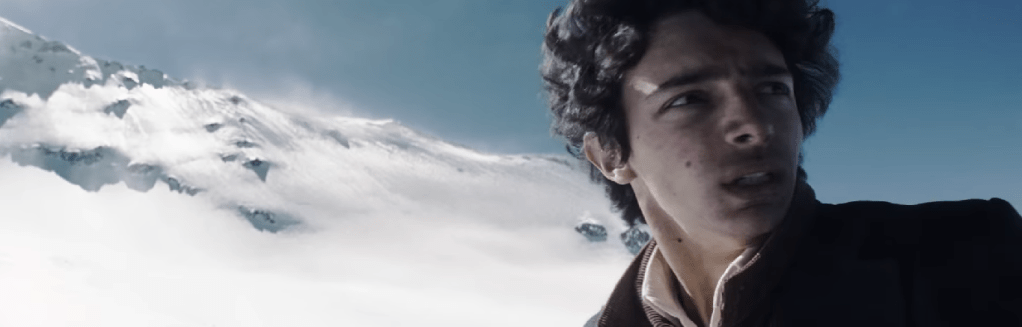
In 1972, a plane flying a rugby team from Uruguay to Chile crashed in the Andes Mountains.
The survivors hoped for a quick rescue but, as days turned into weeks, they began to realize a rescue would not be coming.
Stuck in one of the most inhospitable places on the planet, with freezing temperatures and a quickly dwindling food supply, the survivors had to do the unthinkable to survive.
Directed by J. A. Bayona, Society of the Snow tells the true story of this tragic event, resulting in a film that is both haunting and somehow inspiring.

When a film is based around real life tragedies, it is important to honor the real people involved, and Society of the Snow does this better than any other film I have seen.
The actual survivors who saw and, in some cases, actually had small roles in the movie, have praised it for its mostly accurate take on the events.
It is easy to see why because it is not just the survivors who are honored in Society of the Snow, but also those who tragically passed in the disaster.
This led to an unexpected subversion in the film, which caught me completely off guard, even though I had already heard the true story of the Andes crash before.
What helped sell the respect being paid to both the survivors and the victims were the fantastic performances.

The ones who truly shined for me were Enzo Vogrincic as Numa Turcatti, Augustín Pardella as Nando Parrado, Matías Recalt, as Roberto Canessa, and Esteban Bigliardi as Javier Methol.
The performances were so great that it left me tearing up at two specific points.
Many of the actors were newcomers as well, making their performances all the more impressive.
Along with the acting, what also sells the harrowing events of this true story is the fantastic cinematography.
The extreme wide shots of the landscape help convey just how cut off from the rest of the world the survivors of the crash were.

The depictions of what they endured and had to do to survive is haunting, yet also inspiring when we see the camaraderie between the survivors and their heroic actions towards the end of the film.
From beginning to end, Society of the Snow is a fantastic movie, which I would claim is one of the greatest depictions of a real-life tragedy ever put to film.
It left me feeling haunted, inspired, but also feeling like the movie had honored both the survivors and the victims perfectly.
Check it out on Netflix if you have not seen it yet.
Wonka Review: Charming, Family Fun.
Willa Wonka is an iconic character who has appeared in a few films over the decades, some beloved, some less so.
With a lot of prequels coming out these days to unnecessarily explain things we did not need answers to, it is understandable to hear about Wonka and get a feeling of dread.
This feeling lessened for me, though, when I learned Paul King was directing.
He directed the two Paddington films and those were both charming films.
In fact, that is the perfect word to describe Wonka: Charming.

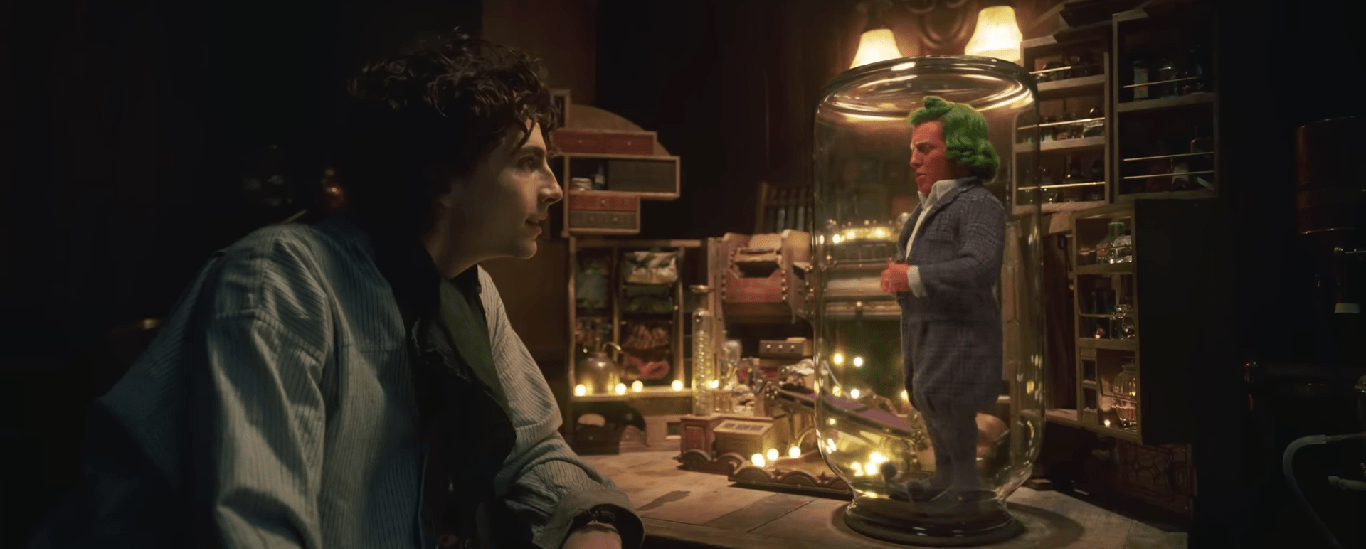
The film follows the younger Willy Wonka (Timothee Chalamet) as he sets out to begin his chocolate making career, only to meet adversity at every turn.
He quickly finds himself in debt to a pair of swindlers, his attempts to sell chocolate are sabotaged by the Chocolate Cartel, and his chocolate is consistently be stolen by an Oompa Loompa (Hugh Grant) out to be repaid.
With help from a young girl named Noodle (Calah Lane), Wonka sets out to use his chocolate making skills to create a life for himself and his newfound friends.
What follows is, as said, a charming film with solid musical numbers and a lot of good laughs.
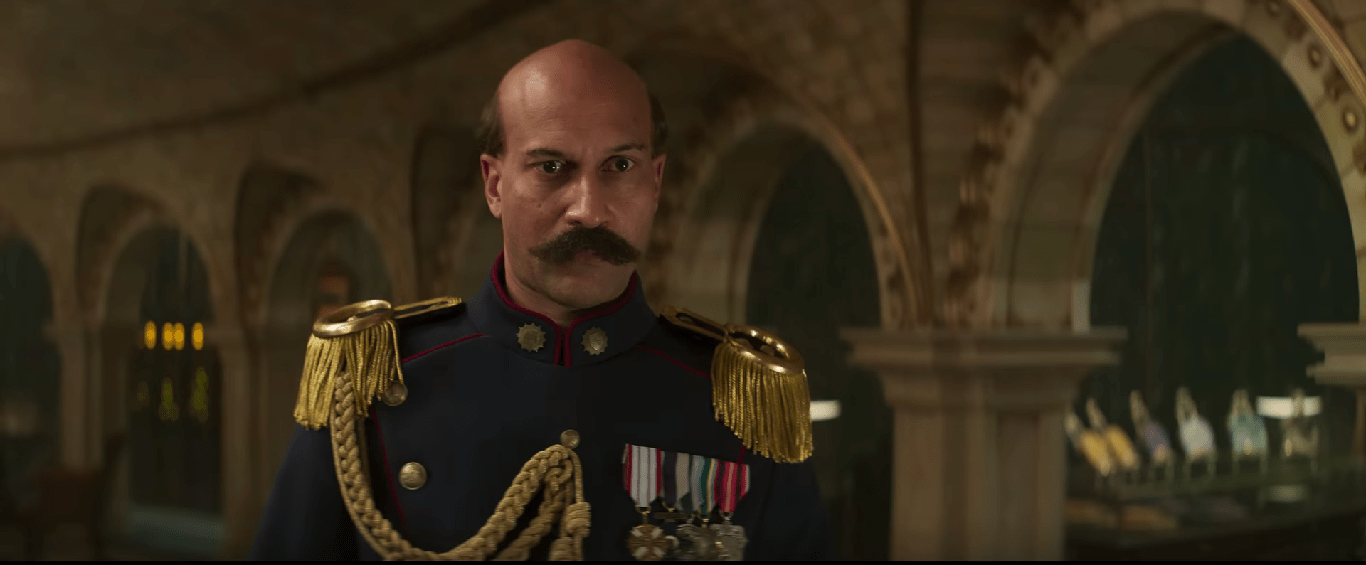
In particular, I found the physical humor of the corrupt chief of police (Keegan-Michael Key) to get the best laughs.

As for the rest of the cast, Chalamet does a great job as this younger version of Willy Wonka, showing off the character’s optimism and chocolate-making genius.
Lane also brings a lot of charm as Noodle, as do the actors playing the trio in the Chocolate Cartel.
They are catoonishly evil but I do not mean that as a criticism.
Their over-the-top performances perfectly suit the wacky world they live in, and contrasts Wonka’s own wacky goodness nicely.

All of this results in a fun film for the family, which can be enjoyed by adults just as much as kids.
The performances are good, the musical numbers are entertaining, and there are a lot of good laughs to be had.
I honestly would not mind seeing another film following this take on Willy Wonka.
The Boy and the Heron Review: Another Miyazaki Great.
It is undeniable that Hayao Miyazaki is the most celebrated anime director of all time.
Over the decades, he has delivered beloved film after beloved film, most notably Spirited Away.
My personal favourites of his are Princess Mononoke and The Wind Rises.
So, when I got the chance to see a Miyazaki film in theaters for the first time, I took it.
The Boy and the Heron is set in World War Two Japan and follows Mahito Maki, a young boy who loses his mother in a fire.
His father later remarries Natsuko, the sister of Mahito’s mother, and the two travel to her estate.
It is there that Mahito encounters a sinister talking Heron, who eventually convinces him to travel into a supernatural world where his mother supposedly awaits him.
And so begins another fantastical Miyazaki journey.

The film looks excellent, with the hand-drawn style of Studio Ghibli being very striking on the big screen.
Along with this, the voice acting is solid, at least for the English dub version.
Yes, I saw the dub over the sub, though this was mostly because all of the sub showings were late at night.
That being said, the English voice actors all did a good job, with Luca Padovan, Karen Fukuhara, Mark Hamill, Gemma Chan, Willem Dafoe, Florence Pugh, and Dave Bautista all giving life to their characters.
This is especially true for Robert Pattinson who voices the heron.
I was genuinely shocked when I heard he played the character because I did not recognize his voice at all.

Along with the animation and voice acting, the music also does a great job of bringing you into the world, with all of this being tied together by the story.
Mahito’s personal journey throughout the film is quite relatable, doubly so because we can see how Miyazaki put much of himself into the character.
One of the central themes of the movie is legacy, which shines a light on how Miyazaki is thinking of his own legacy, especially since this is supposedly his final film.
If it is then he chose a good one to send himself off on.

The Boy and the Heron is another Miyazaki great, with expectedly stellar animation, music, and voice acting, along with a story that has relatable themes.
I would rank this film highly among Miyazaki’s catalogue, maybe even in my top five favorites of his.
And, if this is truly the last Hayao Miyazaki film we ever get, then I am glad that I saw it in theaters.
Chainsaw Man Chapter 151, The Return of Chainsaw Man Review: What’s so Funny?
Chainsaw Man Chapter 151, “The Return of Chainsaw Man” features, well… the return of Chainsaw Man.
In many of my previous reviews I stated that Tatsuki Fujimoto was saving Denji transforming again for something big.
If the ending of this chapter is anything to go by, then that big moment has arrived.
But I am getting ahead of myself.
“The Return of Chainsaw Man” begins with a hostage situation, as the Weapons take Fumiko captive in another attempt to force Denji into transforming.
Sugo once again spouts off his absurd belief that tormenting Denji into becoming Chainsaw Man will save the world.
Even the Whip Hybrid calls out Sugo’s idiocy in believing this, and she has been presented as not very bright in the past.
She even says this right in front of Sugo and he still, somehow, does not catch on that he is being used.
I still believe Sugo will eventually help Denji but, at this point, it seems like it is going to take a while for him to get there.
Barem, on the other hand, is quick to arise after being shot in the previous chapter.
Nayuta is enraged by the apparent death of her and Denji’s pets so she uses her power to try and make Barem kill himself.
Unfortunately, this has no effect on Barem, as he marches towards Nayuta and grabs her by the throat.
He then speculates that the reason Nayuta could not control him was because his heart still belongs to Makima.
Even though she is dead and reincarnated, Makima is still affecting things, showing just how great of an antagonist she was.
As he holds Nayuta captive, Barem begins his own monologue, expressing his longing for the same world Makima sought to create.
He then blames Denji for the fall of this potential world, scorning him for living in peace.
It is interesting to see Barem show such disdain for Denji, since he has called himself a Chainsaw Man fan multiple times.
Then, in a panel in which Fujimoto draws him to resemble Alexandre Cabanel’s The Fallen Angel painting, Barem declares that “these flames are your punishment.”
In my opinion, Barem has been the most interesting Chainsaw Man antagonist since Makima.
Like her, he is ruthless when he attempts to achieve his goals, for which he holds a strong amount of conviction for, which we see in this chapter.
From what he says, it seems like he is trying to bring about the world Makima wanted by making Denji strong enough to defeat the Death Devil, for which he sided with Fami.
Following Barem’s declaration, Nayuta takes control of a dead Public Safety Officer’s body and uses it to shoot Bare, again, freeing herself.
This finally gives Denji the chance to transform, yet he still hesitates, only to see a vision of Pochita standing in front of his and Nayuta’s burning apartment building.
Pochita waves at him, a child Denji waves back, and Denji pulls his ripcord, transforming into Chainsaw Man for the first time since the Falling Devil arc.
He breaks out into laughter as he does so, with Nayuta questioning him about why, before the chapter ends on an ominous panel of what looks like a burning cross overlaying Denji’s transformation.
As for why Denji was laughing, I think it was relief.
For so long, he has been trying to convince himself that living a normal life was enough for him.
Now, Denji has finally let go of that lie and embraced his desire to be Chainsaw Man fully.
It is fitting then that, as soon as Denji accepts this, he pretty much exposes his identity to the world.
Fujimoto draws a random civilian spying on the situation as Denji transforms, so word is going to spread quickly about his identity.
This will not be good, since it seems most of the world is now afraid of Chainsaw Man because of what the church did.
Although, this fear is going to make Denji absurdly powerful, just like it did Yoru, so I don’t think the Weapons will do very well in the coming fight.
There are also a few other characters in the wind.
We still do not know if Meowy and the other pets were really killed, or where Asa and Yoru are.
I especially hope we see the latter soon because the two of them have taken a bit of a backseat in this arc since they joined the Chainsaw Man Church.
Sure, we got that moment where Yoru regained her power, which was great, but I hope her and Asa go back to being central characters soon.
“The Return of Chainsaw Man” is another great chapter, which leaves us on the cliffhanger of Denji’s transformation.
The wait to see what happens next would already have been enough, but the three week break because of the holidays makes it extra-long.
When the story eventually continues, I am anxious to see where Fujimoto takes it and what the fates of various characters will be.
Godzilla Minus One Review: One of the Greatest Godzilla Movies Ever Made.
I have been a Godzilla fan since I was a kid.
So once I heard all the positive buzz surrounding the latest film, Godzilla Minus One, I knew I had to see it.
I expected Minus One to be a good film, perhaps even a great one.
What I was not expecting was it to be one of the greatest Godzilla movies ever made.
It is so good that it may even surpass the 1954 original.

Written and directed by Takashi Yamazaki, the film is set in post World War Two Japan, and follows former kamikaze pilot Koichi Shikishima (Ryunosuke Kamiki).
Having lost everything during the war and stricken with survivors guilt, Shikishima eventually meets a young woman named Noriko (Minami Hamabe), who has adopted a young orphan named Akiko.
The three form a makeshift family and, as the years pass, it seems like the horrors of their pasts may fade, until a monster from Shikishima’s past rises from the depths to plunge Japan into horror once more.

Having read the synopsis I gave of the film’s plot, you are probably assuming that Minus One centers more around the human characters than Godzilla, and you would be right.
This is, in fact, usually the case for a Godzilla films
However, what separates Minus One from the rest of these movies is that the human characters are all fantastic.
In most Godzilla films, we really do not care about the people.
At best, there is sometimes one character we can latch onto but, most of the time, we are just waiting for Godzilla to show up and wreck stuff.
This is not the case for Minus One, as I found myself caring for each and every one of the characters, which made the action sequences more intense, since I was scared for each of their lives.

The last time I had this much investment in a character from a Godzilla movie, it was probably Brian Kranston’s one from the 2014 Godzilla movie, but every other character in that film was pretty bland.
Again, this is far from the case with Minus One.
I cared about the characters so much that the ending to the film actually had me tearing up, something I have never done in a Godzilla movie before.
What adds to the weight these characters have are the excellent themes of PTSD and survivors guilt, along with the scars war leaves on a nation.
Shikishima is the perfect encapsulation of these themes, making him my favourite Godzilla protaganist, with the exception of the big G himself.

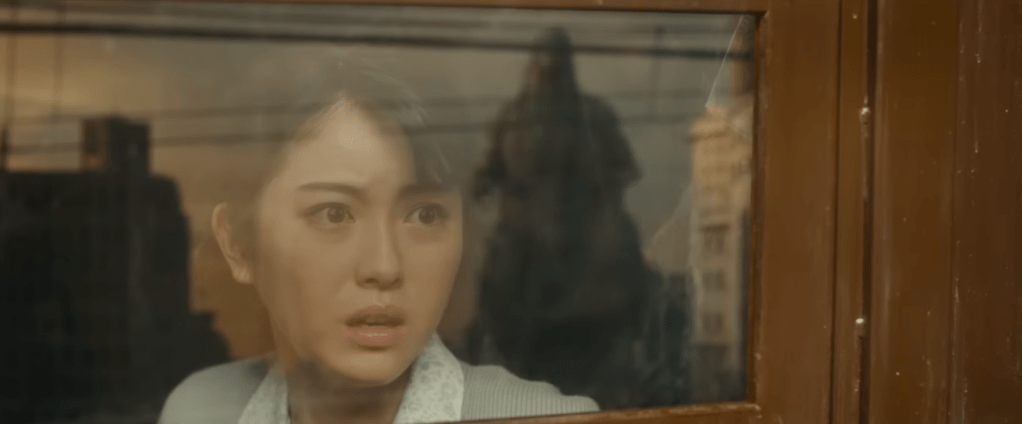
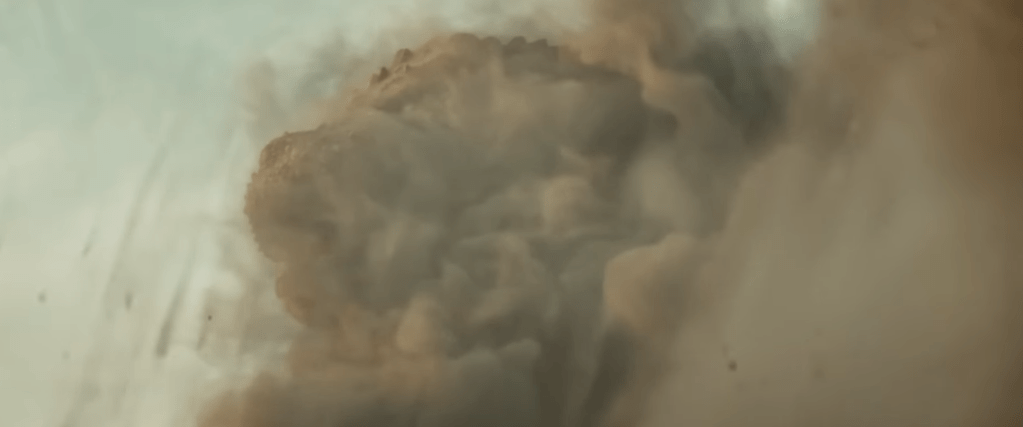
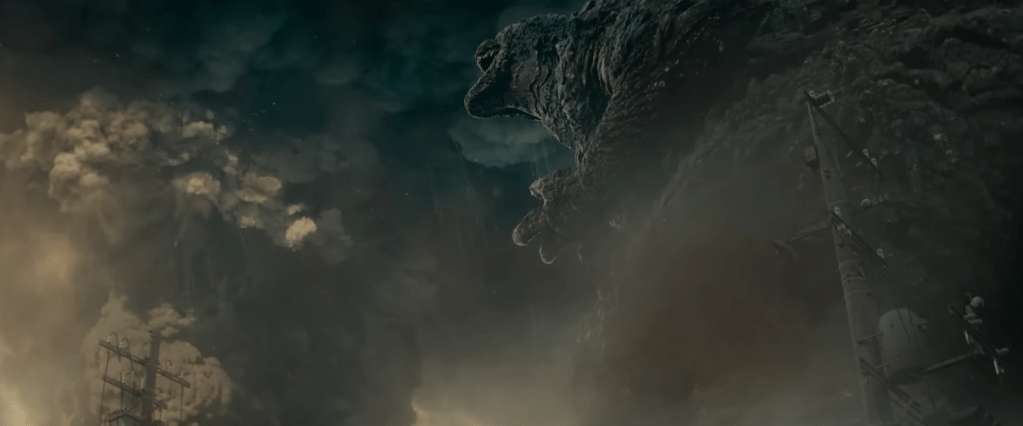
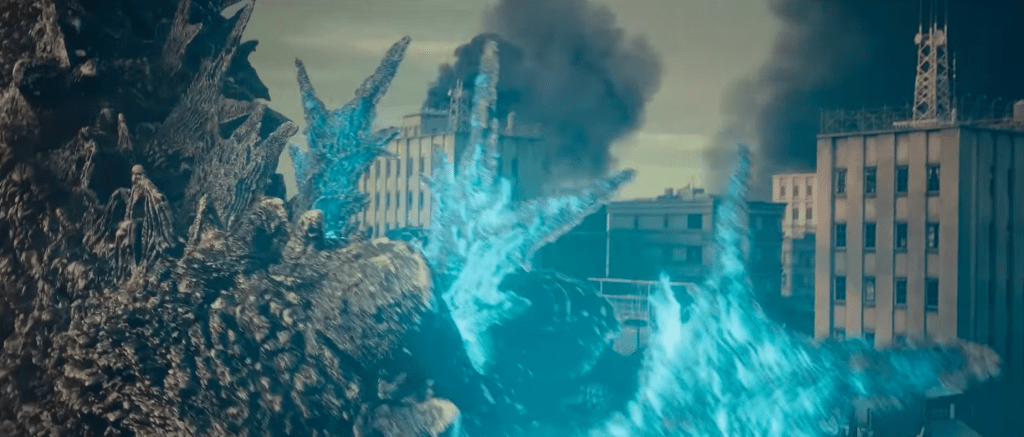
Speaking of him, Godzilla is a terrifying presence whenever he is on screen.
He is no misunderstood hero like in the recent Legendary films.
No, the Godzilla here is more in the vein of the original 1954 version and the Shin Godzilla version.
He is a horrifying force of nature who crushes everything and everyone in his destructive wake.
His atomic breath is also on par with Shin Godzilla’s in terms of the fear it creates, as it is akin to a nuclear blast.

What helps increase the fear Godzilla generates in this movie is just how fantastic the CGI is for him.
Minus One was apparently made with a budget of $15 million dollars and that is absolutely incredible, given that many blockbuster movies have ten times that budget and look considerably worse.
The way Godzilla is shot is also great, along with the score throughout the film, which adds to the intensity.

Considering every aspect of the film, I cannot think of a single flaw with it.
Godzilla is terrifying, the human characters are the best they have ever been, the CGI is excellent for the budget, and the themes, score and cinematography are all top notch.
I cannot recommend this film enough, especially if you are a Godzilla fan like me.
Godzilla Minus One is not only one of the best films of the year, but potentially the greatest Godzilla movie ever made.
The Killer Review: Another Solid Fincher Film.
David Fincher is just one of those directors you have to pay attention to.
He has made some downright incredible films like Seven, Zodiac and The Social Network.
Despite his notoriety, I somehow did not hear about his latest film, The Killer, until I learned it was streaming on Netflix.
Once I learned about it, though, I immediately sat down to watch it and was rewarded with a film more methodical than its titular killer.
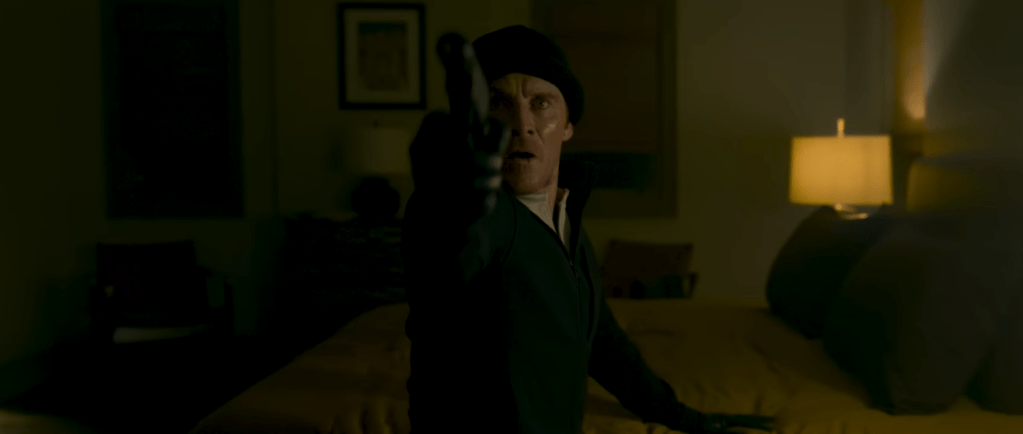
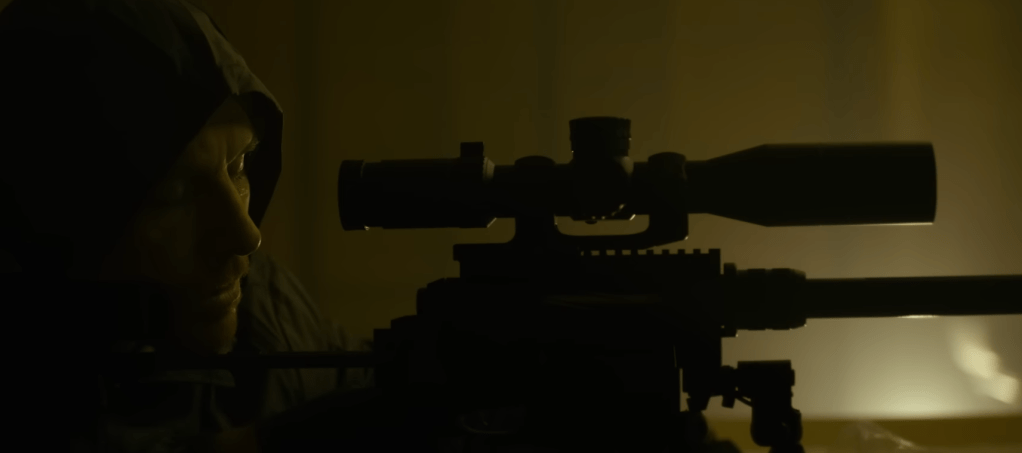
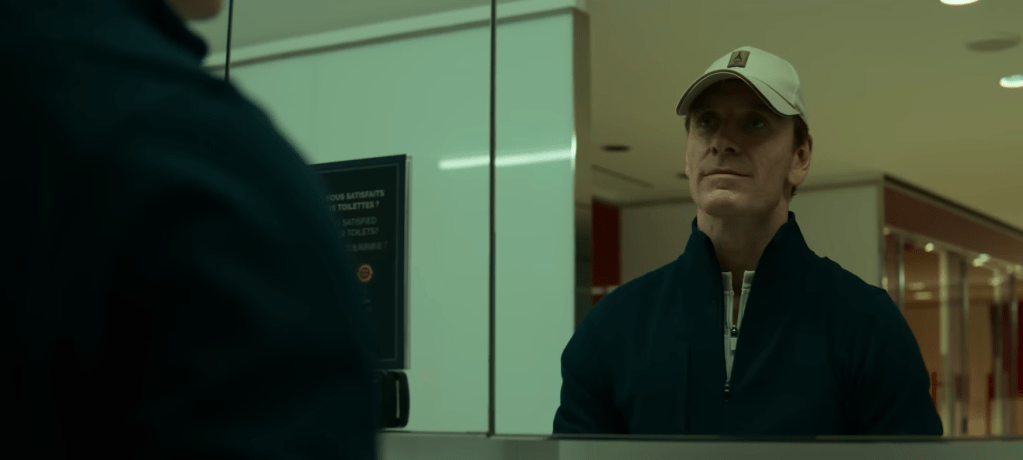
Starring Michael Fassbender as an unnamed assassin, the movie follows him after a mistake during a hit throws his life into chaos.
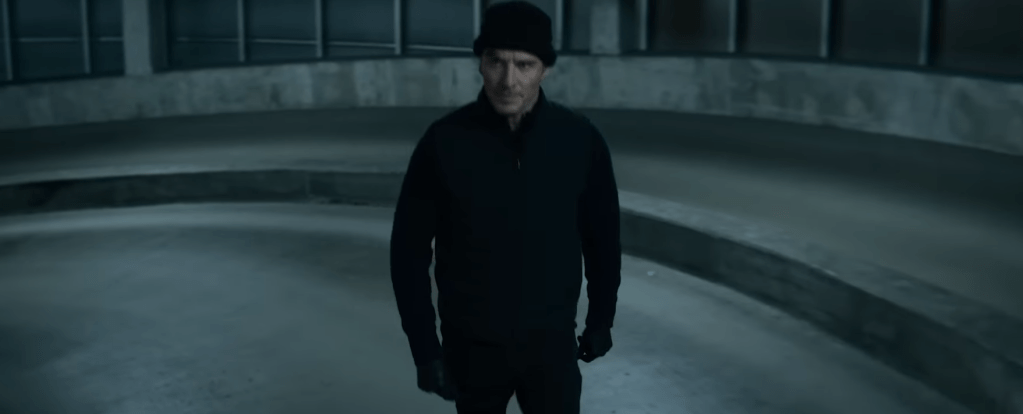
When this mistake puts the lives of those the Killer cares about in danger, he sets out on a mission of revenge.
Fassbender is fantastic as the Killer, with his inner thoughts reminding me a lot of Patrick Bateman from American Psycho.
However, just like Bateman, it is all to apparent how the Killer differs from his own opinion of himself, breaking his own rules multiple times and making his situation more complicated.
This crafts a character who is absolutely a terrible person but still fascinating to follow.

The rest of the cast also do a great job, with Tilda Swinton standing out as the Expert.
The way the film is shot and edited also adds to the feel of the movie, with the sound mixing being especially impressive whenever the Killer is listening to music.
Another thing which often gets brought up in reviews about this movie is one fight scene which, I will admit, is terrifically shot.
Although, while I did enjoy this action scene, it does feel a bit at odds with the rest of the movie.
Throughout its runtime, The Killer feels like it is a story which could actually happen in the real world so, when you get this big choreographed fight, it admittedly creates a bit of a disconnect.

This is only a minor criticism, anyway.
Other criticisms I have heard are that the film is too slow-paced and that the ending is pretty anticlimactic.
I was not surprised to see these takes after watching The Killer.
It is simply a movie, which will not be for everyone due to its pacing and structure.
Even I thought the ending could have had more of a punch, though I do understand why it ended the way it did.

Overall, I would say that The Killer is a solid film.
Even if it is not for everyone, it has a compelling main character and a great style, as expected of a David Fincher film.